-1791966549842.webp)






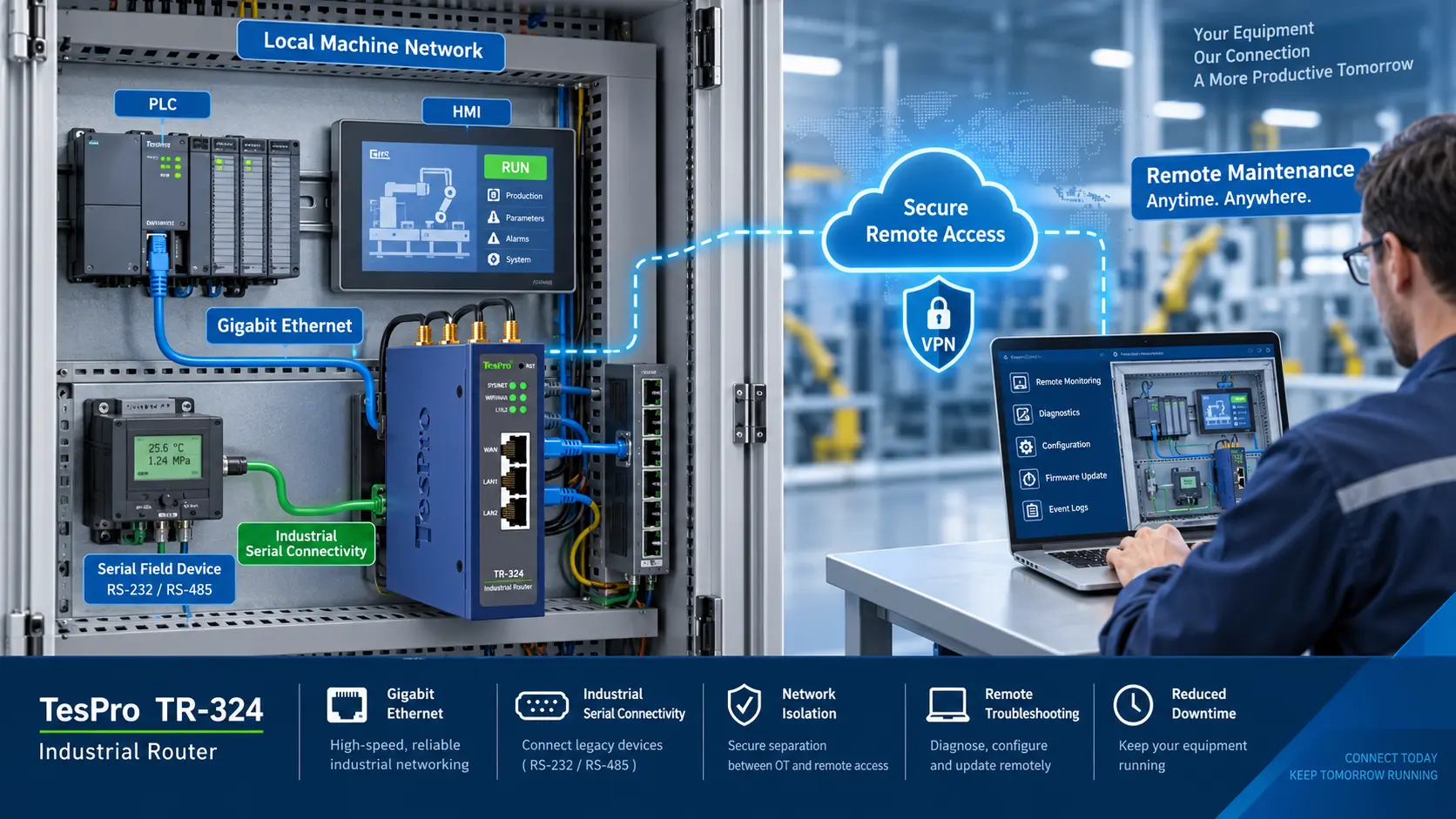
Tespro provides industrial metering, connectivity, gateway, DTU, router, and software platform solutions for utility, factory automation, smart grid, AMI/AMR, SCADA, remote monitoring, and industrial IoT projects. When buyers search for a gateway for sensors, the real decision is not only “which gateway looks suitable,” but which interface, protocol, network, power method, buffering logic, and platform connection will work at the actual site.
A wireless industrial gateway should be selected around the sensor network first. Buyers need to confirm whether the project uses analog sensors, digital inputs, pulse signals, RS485 devices, Modbus meters, wireless sensor nodes, PLCs, or smart metering equipment. Then the gateway configuration should match the data path: field device to gateway, gateway to local system, and gateway to cloud or software platform.
This checklist helps engineers, integrators, and procurement teams prepare better specifications before requesting a quote, datasheet, sample, demo, or OEM/ODM consultation from Tespro.
Start With the Sensor Connectivity Decision
Before choosing an embedded industrial gateway, define what the gateway must collect. A gateway used for temperature and humidity sensors may need different input logic from a gateway used for utility meters, RS485 devices, PLCs, or distributed field sensors.
The first buying question is simple: will the gateway collect raw sensor signals, device data, or protocol-based data?
Buyers should confirm:
- Sensor type: analog, digital, pulse, environmental, meter, PLC, or industrial device
- Interface type: RS485, RS232, Ethernet, digital input, analog input, or wireless node
- Data format: raw value, Modbus register, alarm state, timestamped reading, or cloud payload
- Device quantity: number of sensors, meters, or connected field devices
- Site layout: single cabinet, multiple machines, outdoor points, or remote stations
- System destination: PLC, SCADA, cloud dashboard, MQTT broker, REST API, or private server
This decision affects the gateway hardware, firmware configuration, communication method, enclosure, antenna, power supply, and quotation details.
Wired vs Wireless Sensor Gateway Architecture
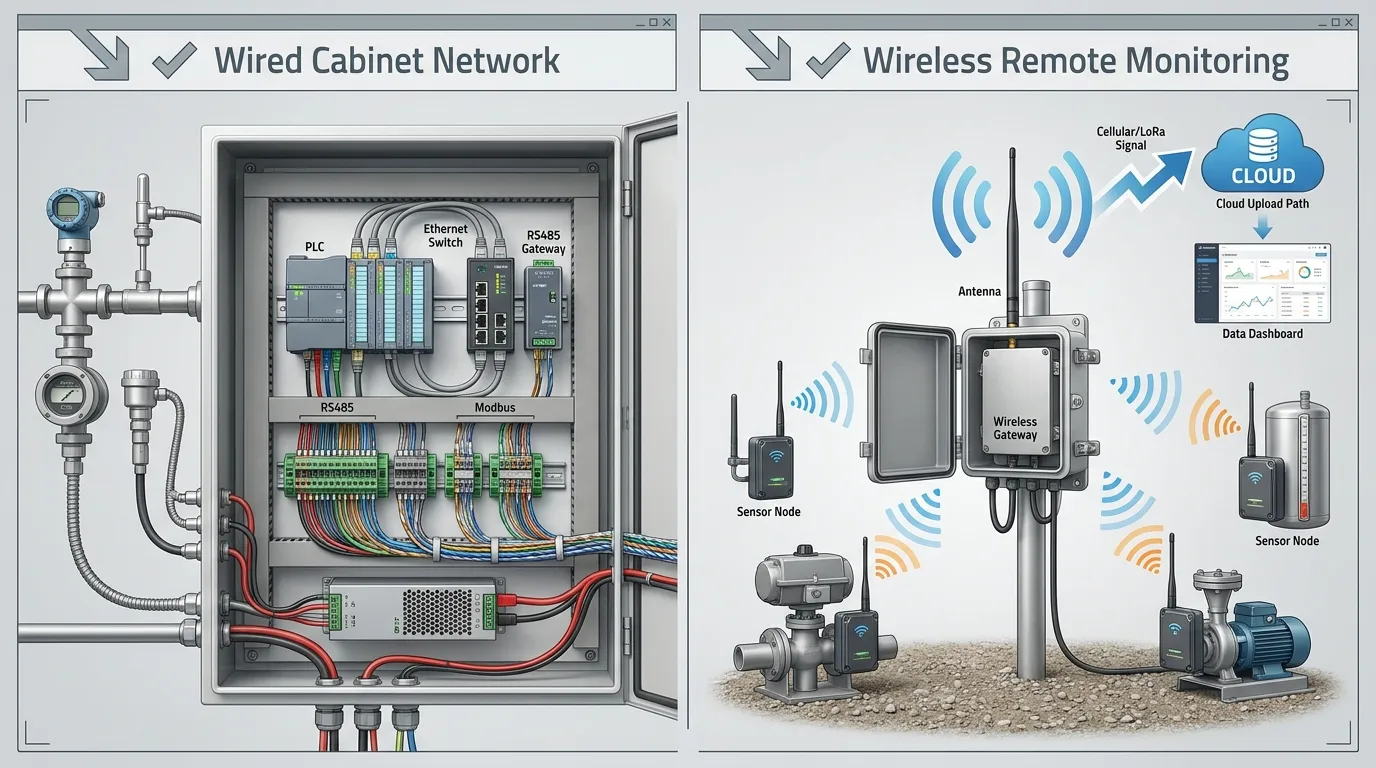
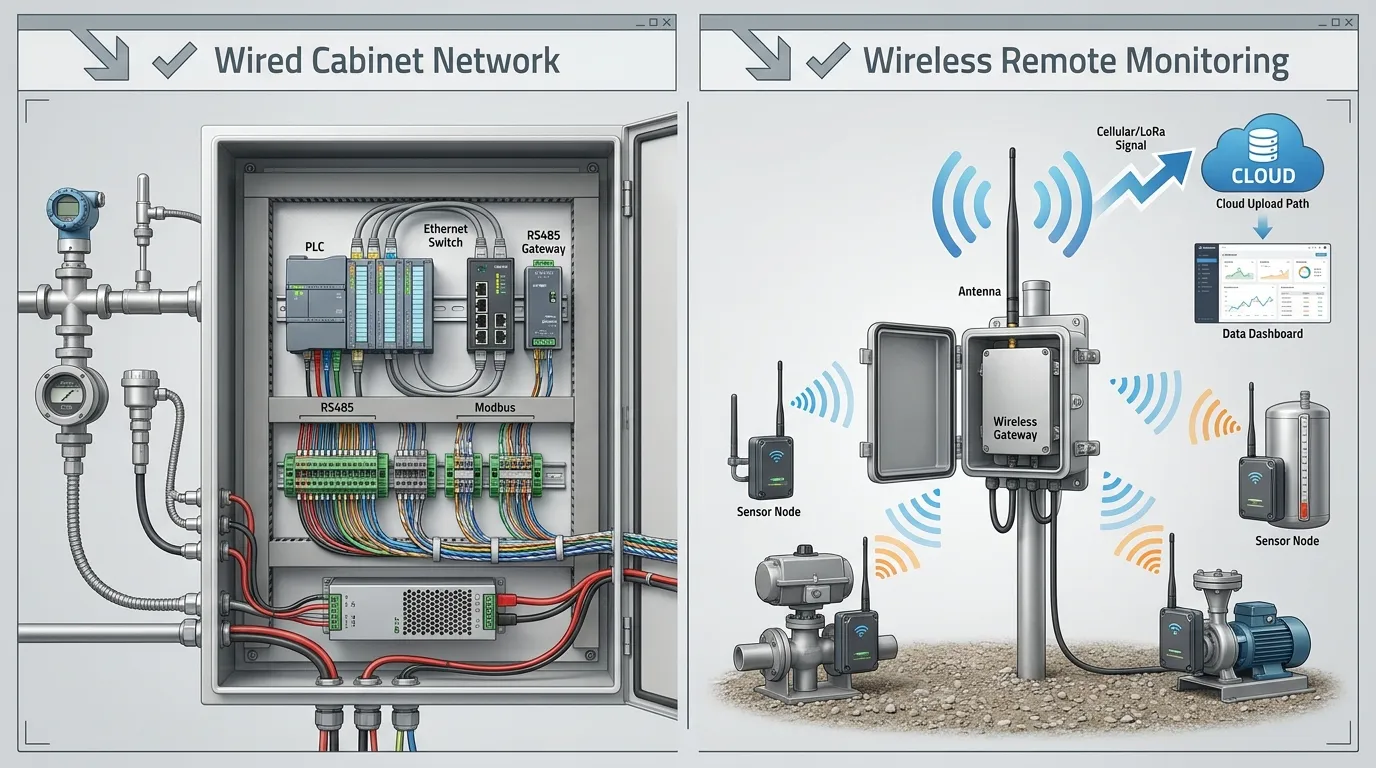
A wireless sensor gateway is useful when cabling is difficult, sites are distributed, or field devices must upload data to a remote platform. However, wired connections still make sense in many industrial cabinets, utility panels, and factory automation projects.
For example, RS485 with Modbus RTU is often practical for multi-device industrial communication. Ethernet or Modbus TCP may fit local SCADA or PLC networks. LoRaWAN, cellular, NB-IoT, LTE Cat-M, or Wi-Fi may fit remote or distributed sensor networks, depending on coverage, power, data size, and maintenance access.
Use wireless when the project needs:
- Remote sensor collection across wide sites
- Outdoor environmental monitoring
- Utility or energy monitoring points without LAN access
- Data upload from isolated cabinets or field boxes
- Lower cabling cost across long distances
- Flexible sensor placement
Use wired or hybrid communication when the project needs:
- Stable cabinet-level communication
- Existing RS485 or Ethernet infrastructure
- PLC or SCADA integration
- Lower latency local control
- High data frequency
- Easier troubleshooting inside a factory or control room
Many projects use a hybrid architecture: sensors or meters connect through RS485 or local I/O, while the gateway uploads data by Ethernet, Wi-Fi, 4G, NB-IoT, or another network. This is why the RFQ should describe both field-side and platform-side communication.
Key Specifications Buyers Should Confirm
A gateway datasheet is only useful when buyers know which specifications matter for the site. For sensor network projects, the most important details usually relate to input type, protocol conversion, data frequency, power, environment, and software integration.
Confirm these technical requirements before ordering:
- Number of connected sensors, meters, or devices
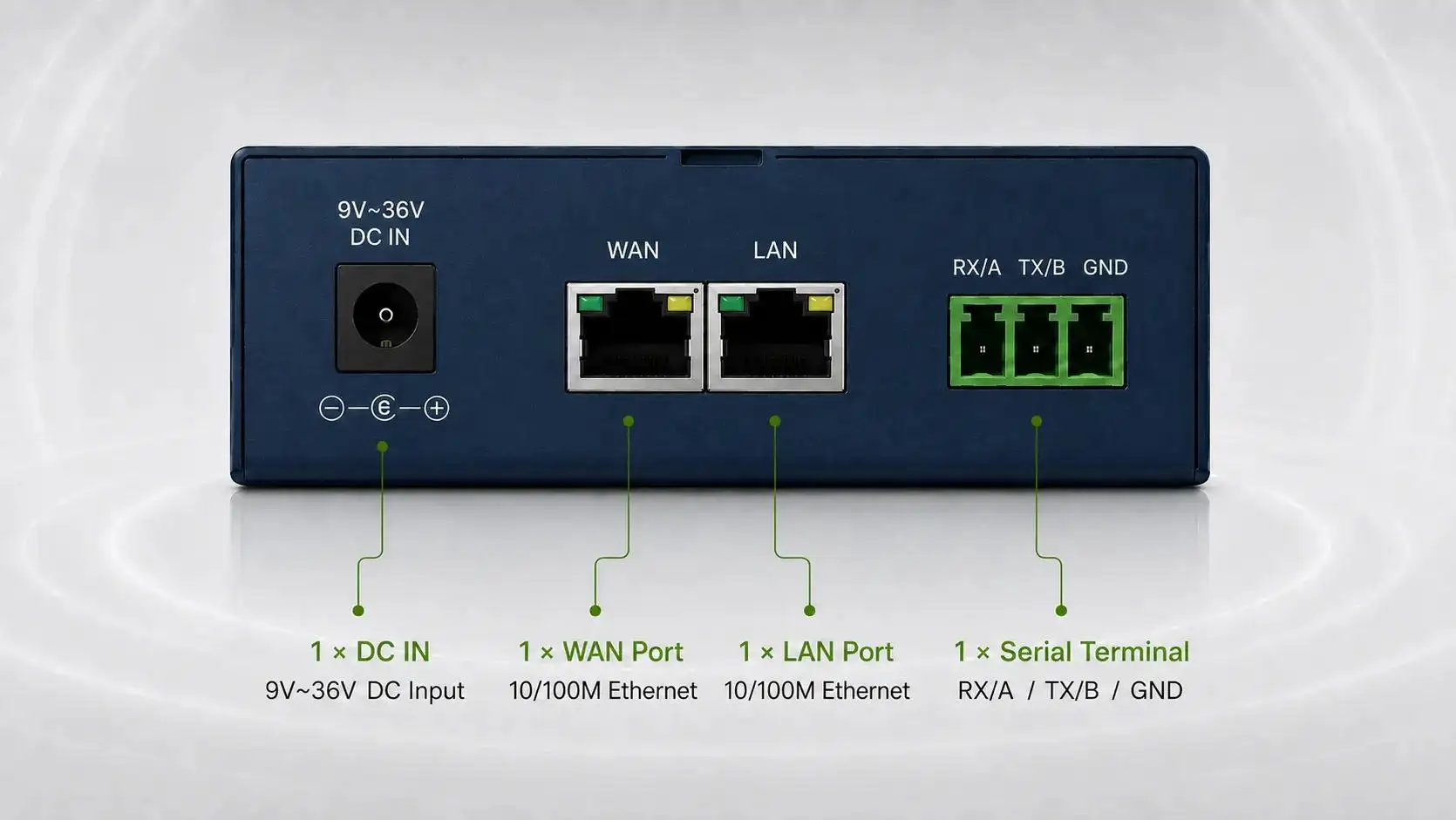
- Field interfaces such as RS485, RS232, Ethernet, analog input, digital input, or pulse input
- Protocols such as Modbus RTU, Modbus TCP, TCP/IP, MQTT, REST API, HTTP/HTTPS, or JSON payload
- Network path such as Ethernet, Wi-Fi, 4G LTE, NB-IoT, LTE Cat-M, LoRaWAN, or private network
- Data sampling interval and reporting interval
- Local buffering needs during network outage
- Power input, backup power, battery, or solar-related requirements
- Installation method such as DIN rail, cabinet, wall box, or outdoor enclosure
- Operating environment such as temperature, humidity, dust, vibration, or water exposure
- Antenna placement and signal coverage
- Remote configuration, diagnostics, firmware update, and security needs
If buyers are also planning cloud upload, review Tespro’s related guide on MQTT and REST API gateway selection. It helps clarify platform-side requirements before integration.
Buyer Matrix: Match the Gateway to the Use Case
The right gateway configuration depends on the project environment. A factory gateway, utility monitoring gateway, and environmental sensor gateway may all collect sensor data, but their selection priorities are different.
| Use case | Typical field devices | Gateway requirements to check | Main buyer risk |
|---|---|---|---|
| Factory automation | PLCs, machines, RS485 devices, sensors, meters | RS485/Ethernet, Modbus RTU/TCP, cabinet power, local system integration, stable LAN | Choosing a gateway without the correct industrial interface or protocol path |
| Utility and smart grid monitoring | Energy meters, water meters, field devices, remote cabinets | Cellular or Ethernet backhaul, secure remote access, buffering, SIM/APN/static IP needs, platform upload | Data loss, weak signal, or poor remote maintenance planning |
| Environmental monitoring | Temperature, humidity, pressure, water level, air quality, outdoor sensors | Wireless range, low-power operation, outdoor enclosure, antenna position, reporting interval | Short battery life, unreliable wireless path, or unsuitable enclosure |
| Remote industrial assets | Pumps, tanks, cabinets, distributed equipment | 4G/NB-IoT/LTE Cat-M or other remote network, alarms, local storage, power stability | No data during network outage or difficult site troubleshooting |
| Energy management | Meters, sub-meters, power monitoring devices | Meter/device compatibility, Modbus mapping, cloud dashboard or software export, read frequency | Wrong data format or incomplete platform integration details |
This matrix should be used before quotation. It helps avoid overbuying a gateway with unnecessary features or under-specifying a device that cannot support the field environment.
Protocol Conversion and Cloud Upload Requirements
A sensor gateway often does more than transmit data. In many projects, it must convert field-side data into a format that a PLC, SCADA system, cloud platform, or energy monitoring software can use.
Buyers should define the full data route:
- Sensor or device to gateway
- Gateway processing or protocol conversion
- Gateway to local controller, SCADA, server, or cloud
- Data storage, dashboard, alarm, export, or API workflow
For industrial projects, common protocol and integration questions include:
- Do field devices use Modbus RTU over RS485?
- Does the local system need Modbus TCP over Ethernet?
- Does the cloud platform require MQTT or REST API?
- Is a private server, dashboard, or third-party platform involved?
- What payload format, register map, or data structure is needed?
- Should the gateway send alarms only, periodic readings, or both?
- Does the project need local buffering before cloud upload?
For multi-device Ethernet planning, buyers can also review Tespro’s guide on gateway port planning. It is useful when several local devices, PLCs, routers, or network segments must connect through one gateway system.
Sampling Interval, Buffering, and Power Planning
Sampling interval is a major gateway selection factor. A sensor that reports every few seconds creates a different data load than a remote environmental sensor that reports every 15 minutes or once per hour.
Frequent sampling may require stronger processing, stable power, reliable backhaul, and enough local storage. Low-frequency remote monitoring may prioritize power saving, wireless range, and long-term maintenance.
Buyers should confirm:
- How often each sensor should be read
- How often data should be uploaded
- Whether alarms need instant transmission
- How long data should be stored if the network fails
- Whether the gateway should retry upload after reconnection
- Whether the site has stable DC power, backup power, battery, or solar power
- Whether low-power sleep mode is required
For projects focused on field data collection, Tespro’s data acquisition gateway quote-ready checklist can help buyers prepare sampling, I/O, and data flow requirements before contacting a supplier.
Security and Remote Management Checks
Wireless and cloud-connected gateways need clear security planning. This is especially important for utility sites, industrial networks, AMI/AMR systems, and remote monitoring projects where field access is limited.
Before procurement, buyers should ask whether the project needs:
- VPN or private network access
- SIM, APN, static IP, or carrier-specific settings
- User access control
- Encrypted communication
- Remote configuration
- Remote diagnostics
- Firmware update workflow
- Event logs or alarm records
- Site-level maintenance permissions
Not every project needs advanced remote management. However, remote sites become expensive to maintain if the gateway cannot be configured, checked, or updated after installation. For security-focused gateway planning, see Tespro’s remote management gateway security checklist.
What to Send for a Wireless Sensor Gateway RFQ
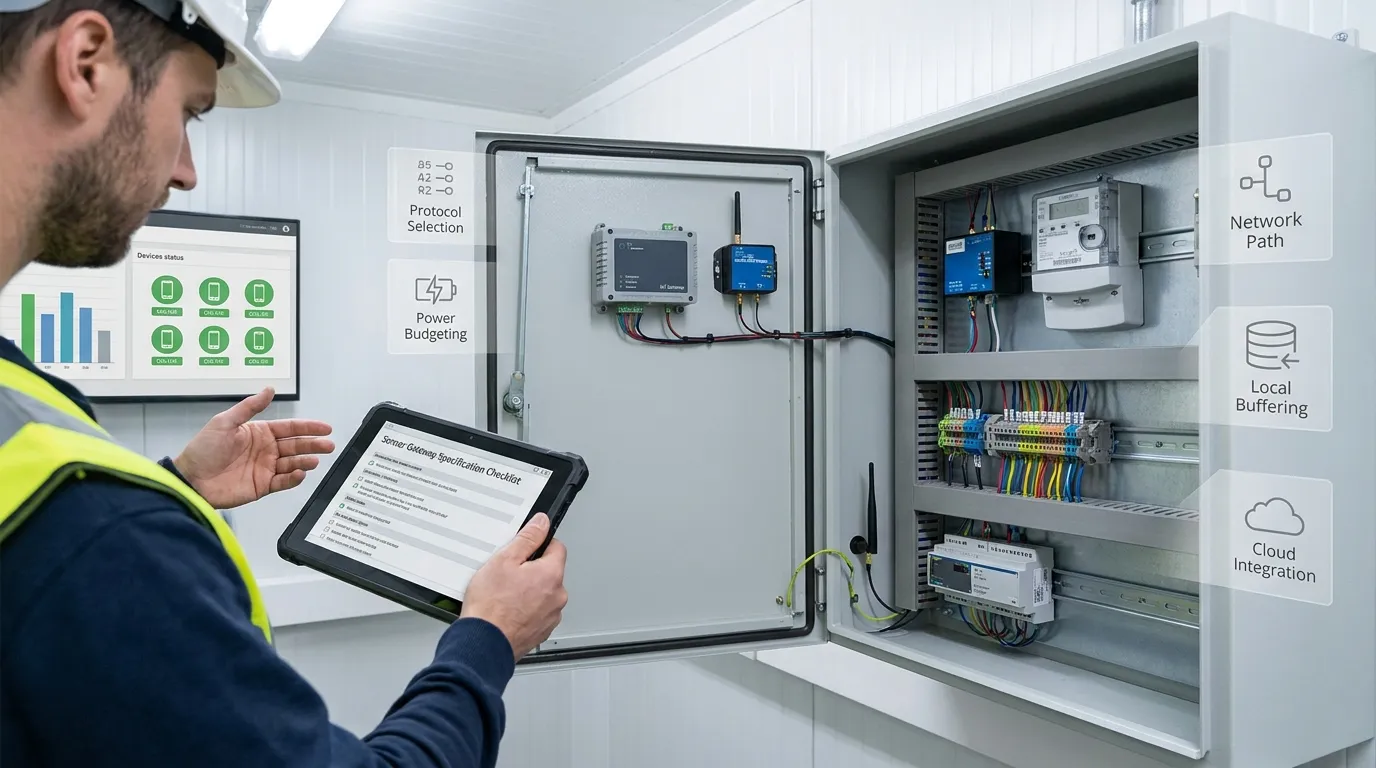
A clear RFQ helps Tespro recommend the right device category, gateway configuration, and integration direction. It also reduces delays caused by missing technical information.
Before requesting a quote, prepare:
- Application type: factory automation, utility monitoring, environmental monitoring, smart grid, energy management, or remote asset monitoring
- Product category needed: industrial gateway, wireless sensor gateway, embedded industrial gateway, DTU, router, or data acquisition gateway
- Quantity required
- Sensor, meter, PLC, or device model if available
- Number of connected sensors or devices
- Field interface requirements: RS485, RS232, Ethernet, analog input, digital input, pulse, or wireless sensor node
- Protocol requirements: Modbus RTU, Modbus TCP, MQTT, REST API, TCP/IP, HTTP/HTTPS, JSON, or custom protocol
- Network type: Ethernet, Wi-Fi, 4G, NB-IoT, LTE Cat-M, LoRaWAN, or private network
- SIM, APN, VPN, or static IP requirements if cellular is involved
- Sampling interval and upload frequency
- Buffering or offline storage requirements
- Power supply and backup power needs
- Installation method and enclosure requirements
- Operating environment and antenna constraints
- Cloud, platform, dashboard, SCADA, or API requirements
- Datasheet, sample, demo, or OEM/ODM support needs
- Delivery destination and any system diagram or written specification
If some details are not final, send the available information first. Tespro can use it to guide the next specification discussion.
Why Work With Tespro for Sensor Gateway Projects
Tespro supports industrial metering, connectivity, smart metering communication, data transmission, gateway, router, test equipment, calibrator, and software/platform-related projects. This helps buyers discuss not only a single device, but the wider data path from field equipment to platform workflow.
For sensor gateway procurement, our team can help buyers clarify:
- Which device category fits the project
- Whether a gateway, router, DTU, or data acquisition device is more suitable
- Which interface and protocol details should be confirmed
- Which deployment risks may affect gateway selection
- What information is needed for quotation or datasheet review
- Whether OEM/ODM discussion is relevant for the project
The goal is to help technical and purchasing teams avoid wrong device selection before deployment.
Frequently Asked Questions
How do I choose a gateway for sensors?
Start with the sensor interface, device count, protocol, network type, power source, and platform destination. Then confirm sampling interval, buffering, enclosure, antenna, and remote management needs before requesting a quote.
Should I choose wired or wireless sensor connectivity?
Use wired communication for stable cabinet, PLC, or SCADA connections. Use wireless communication when cabling is difficult, sites are remote, or sensors are spread across wide areas. Many industrial projects use both.
Does a sensor gateway need MQTT or REST API?
It depends on the platform. MQTT is common for lightweight telemetry. REST API may be needed for platform integration. Local systems may require Modbus TCP, TCP/IP, or another industrial protocol.
Why does sampling interval matter?
Sampling interval affects data load, power use, memory, network traffic, and cloud upload frequency. Frequent readings need stronger planning for bandwidth, buffering, and power stability.
What happens if the network goes offline?
The project should define whether the gateway must buffer readings locally, retry upload later, trigger alarms, or continue local operation. This requirement should be included in the RFQ.
What is the difference between a gateway, router, and DTU?
A gateway often aggregates data and converts protocols. A router mainly manages IP network connectivity. A DTU usually focuses on data transmission, often from serial devices to a remote server.
Request a Wireless Sensor Gateway Quote From Tespro
Share your project requirements with Tespro to discuss a suitable wireless industrial gateway, embedded industrial gateway, DTU, router, or data acquisition solution. Send the application type, quantity, sensor or device list, interface and protocol needs, network type, SIM/APN/VPN/static IP requirements, sampling interval, cloud or SCADA requirements, power supply, operating environment, enclosure needs, security or remote management needs, delivery destination, and any system diagram or written specification.
Tespro can review your requirements and support the next step, including quotation, datasheet request, sample discussion, demo planning, consultation, or OEM/ODM project communication.