-1791966549842.webp)






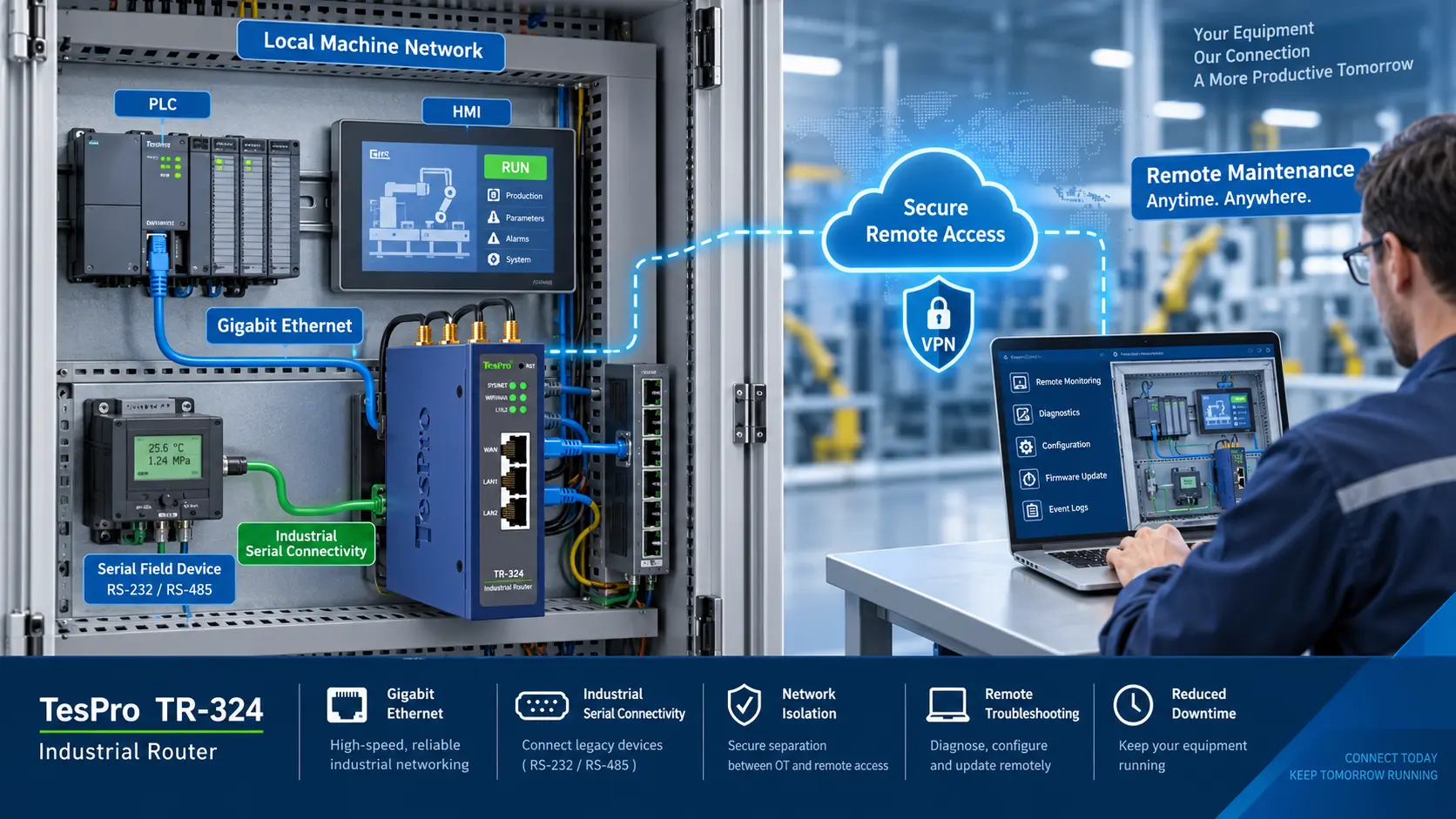
An industrial router with VPN creates a controlled communication path between remote industrial sites and authorized engineers, SCADA systems or cloud platforms. In a Tespro TR series deployment, VPN planning should be combined with cellular coverage, Ethernet or serial interfaces, firewall rules, user permissions and remote management requirements.
Key Takeaways
- VPN helps reduce direct public exposure of field devices when configured correctly.
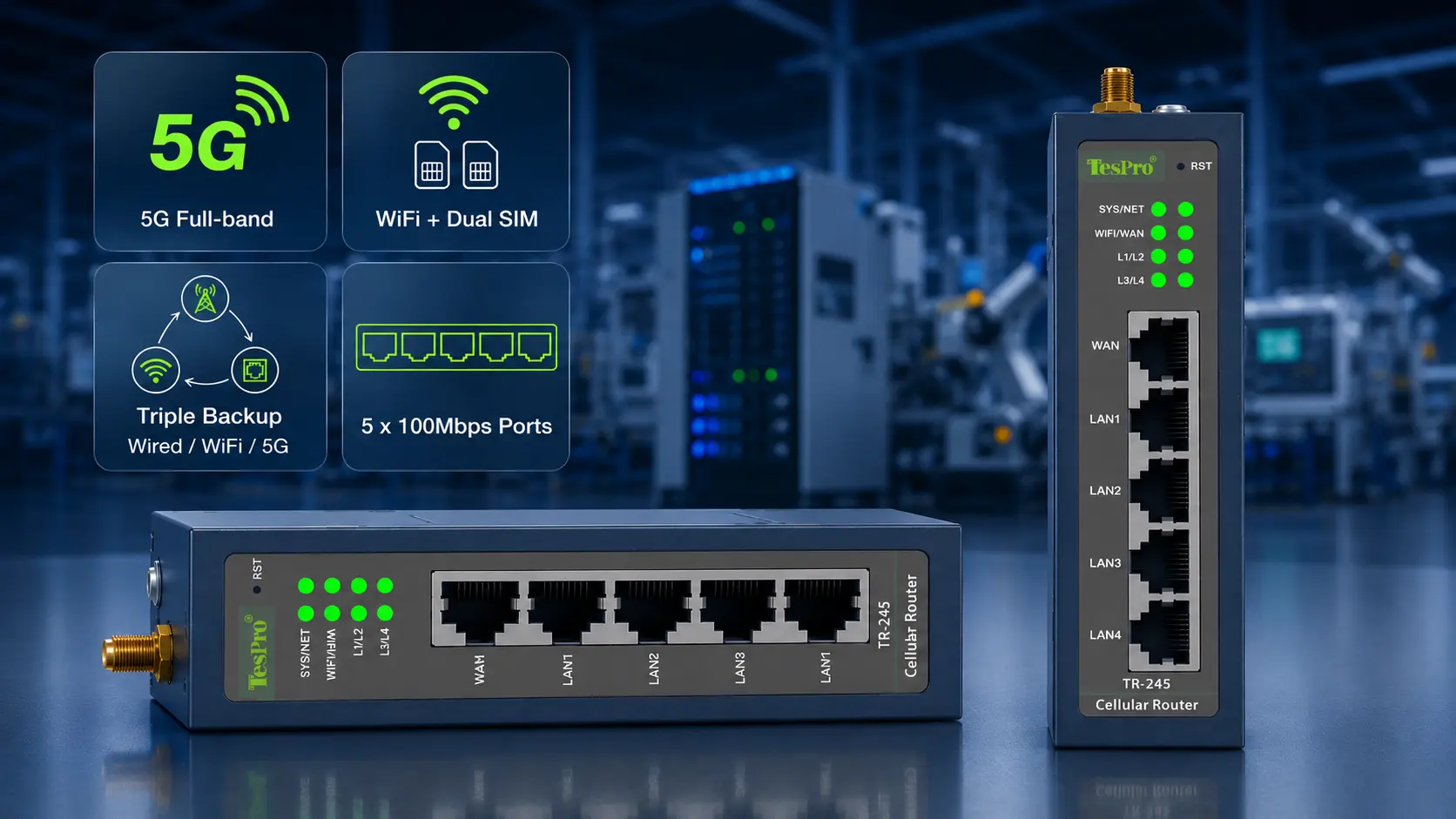
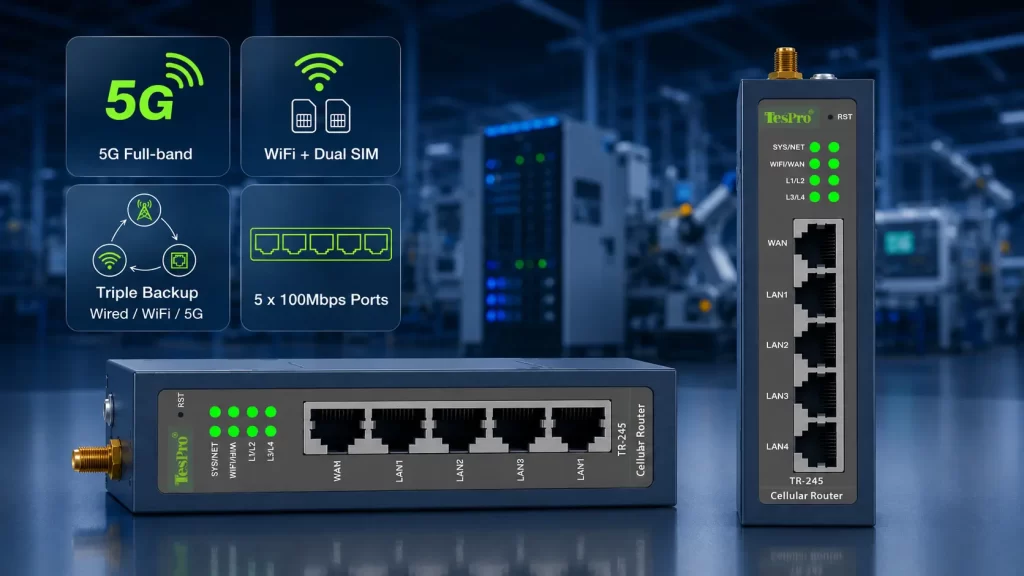
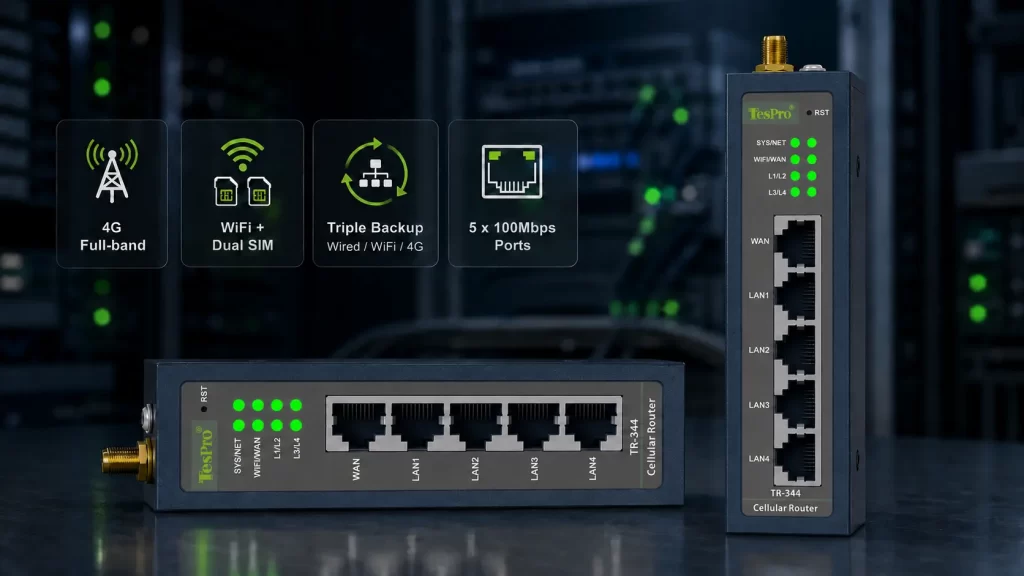
- Tespro industrial cellular routers are positioned for 2G to 5G connectivity, Ethernet, Wi-Fi, dual-SIM redundancy and remote management.
- The exact VPN protocol, authentication method and tunnel topology should be confirmed by model and firmware version.
- A reliable VPN design should include access control, segmentation, logging and maintenance procedures.
What Is an Industrial Router with VPN?
An industrial router with VPN is a field-ready network device that connects local industrial equipment to a private network through an encrypted tunnel. Unlike a standard office router, it is selected for unattended operation, industrial installation conditions, cellular connectivity and remote access requirements.
In automation, utility and smart infrastructure projects, the router may sit between PLCs, meters, cameras, HMIs, sensors and a central control room. VPN access allows authorized users to reach the approved network path without opening every field device directly to the public Internet.
How VPN Supports OT Remote Access
Industrial remote access is often limited by NAT, dynamic cellular IP addresses and company security policies. A VPN-enabled router can initiate an outbound connection to a company server or remote-access platform. The engineer then connects through an approved private path rather than a direct public connection.
The design should follow least-privilege principles. Access should be limited to the required device, subnet or port. For sensitive industrial sites, certificate authentication, user permissions, firewall rules and activity logs should be reviewed before deployment.
Where Tespro Fits
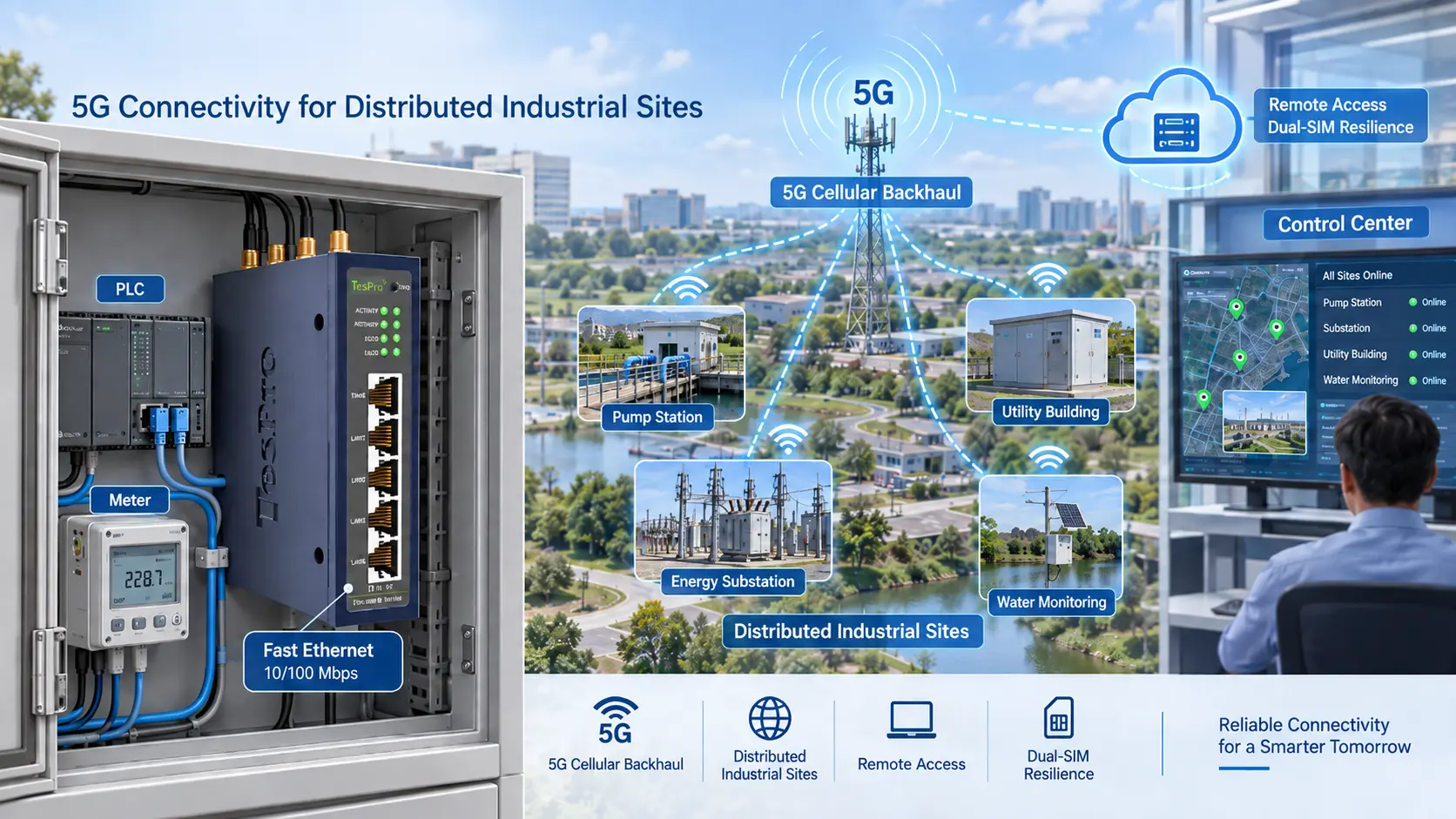
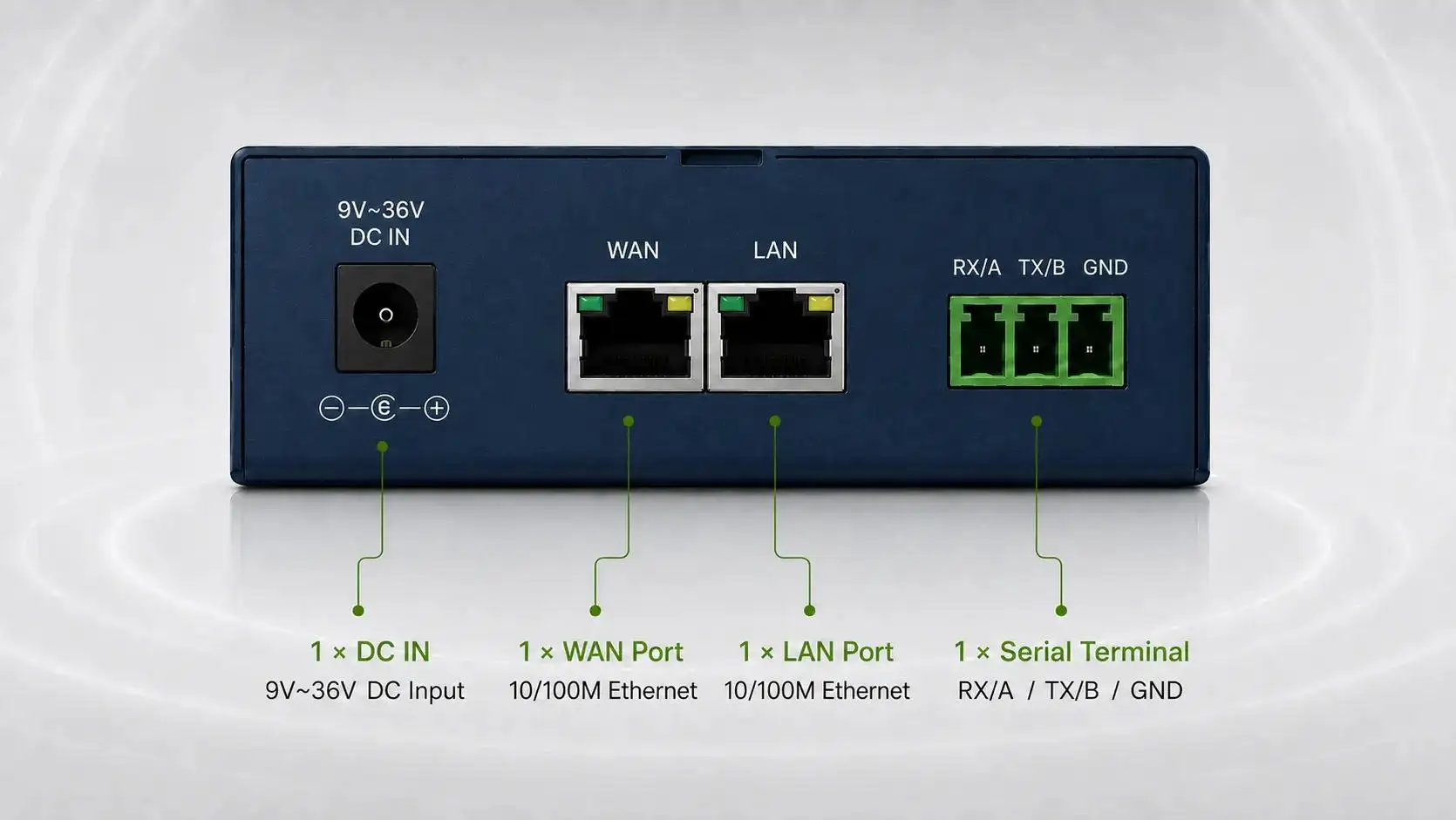
Tespro industrial cellular routers are designed for remote industrial connectivity across utilities, automation, smart city, energy and field monitoring scenarios. The TR series includes 4G and 5G options, Ethernet interfaces, selected RS485 or RS232 configurations and cloud management capabilities.
For publishable product copy, avoid saying that every router supports every VPN protocol. A safe and professional statement is: Tespro can help confirm the suitable router model, network type and secure remote-access configuration according to the project requirements.
Selection Checklist for Buyers
- Destination country and cellular operator
- Required 4G or 5G bands
- SIM policy and public/private APN requirements
- Ethernet port quantity and serial interface requirements
- VPN type, server location and user permissions
- Target device type: PLC, meter, camera, HMI or sensor
- Required platform, SCADA or cloud connection
FAQs
Does an industrial router with VPN need a public IP address?
Not always. Many deployments use an outbound tunnel from the router to a server or platform, which can help avoid inbound public-IP access. The final architecture depends on the VPN protocol and customer network policy.
Can Tespro routers be used for PLC remote access?
Tespro industrial routers can be used in remote industrial connectivity projects. PLC access should be confirmed according to the PLC interface, protocol, network topology, security policy and selected router model.
Is VPN enough to secure an OT network?
No. VPN is only one layer. A secure design should also include authentication, firewall rules, segmentation, firmware maintenance, logging and clear access permissions.
Need Secure Remote Access for Your Industrial Site?
Send Tespro the site country, required VPN method, connected device list, operator information and security policy. Tespro can help recommend a suitable industrial router configuration for secure remote access.