-1791966549842.webp)





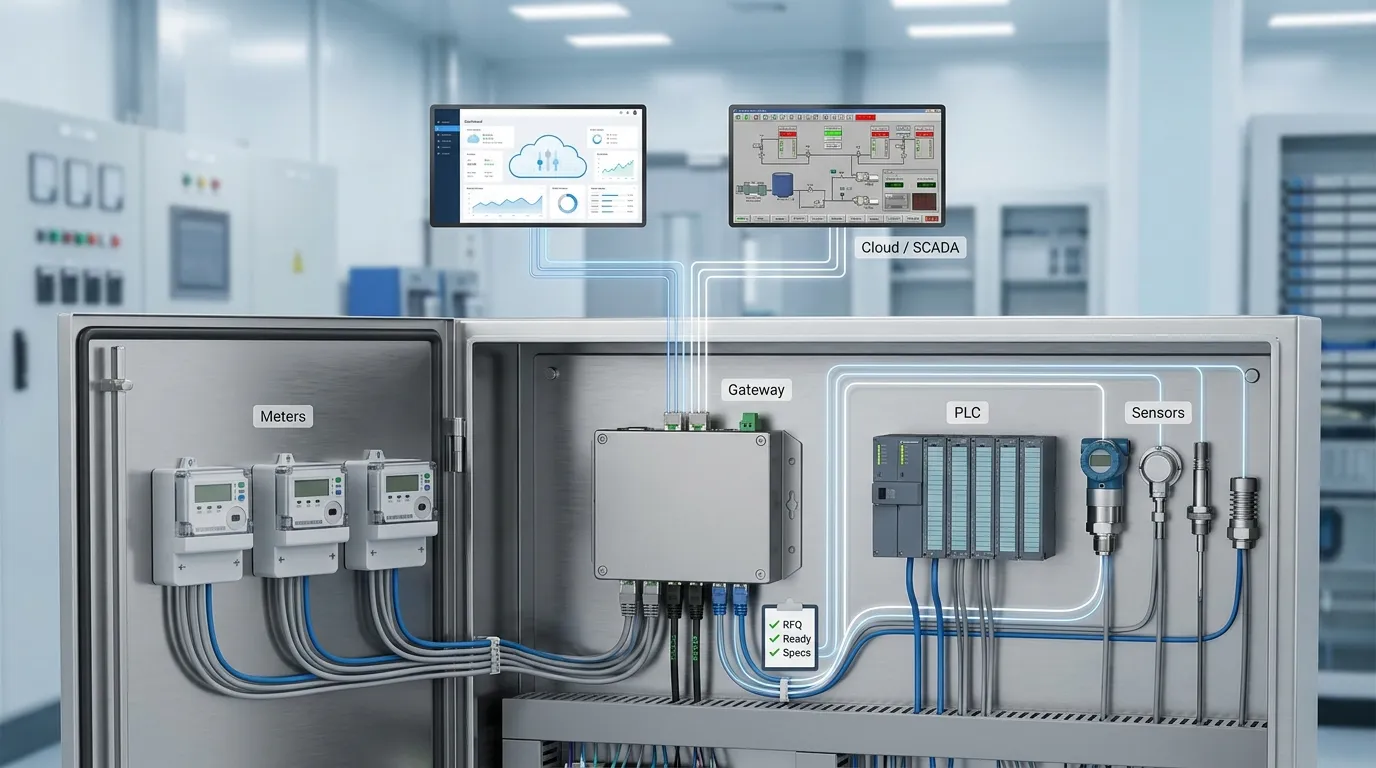

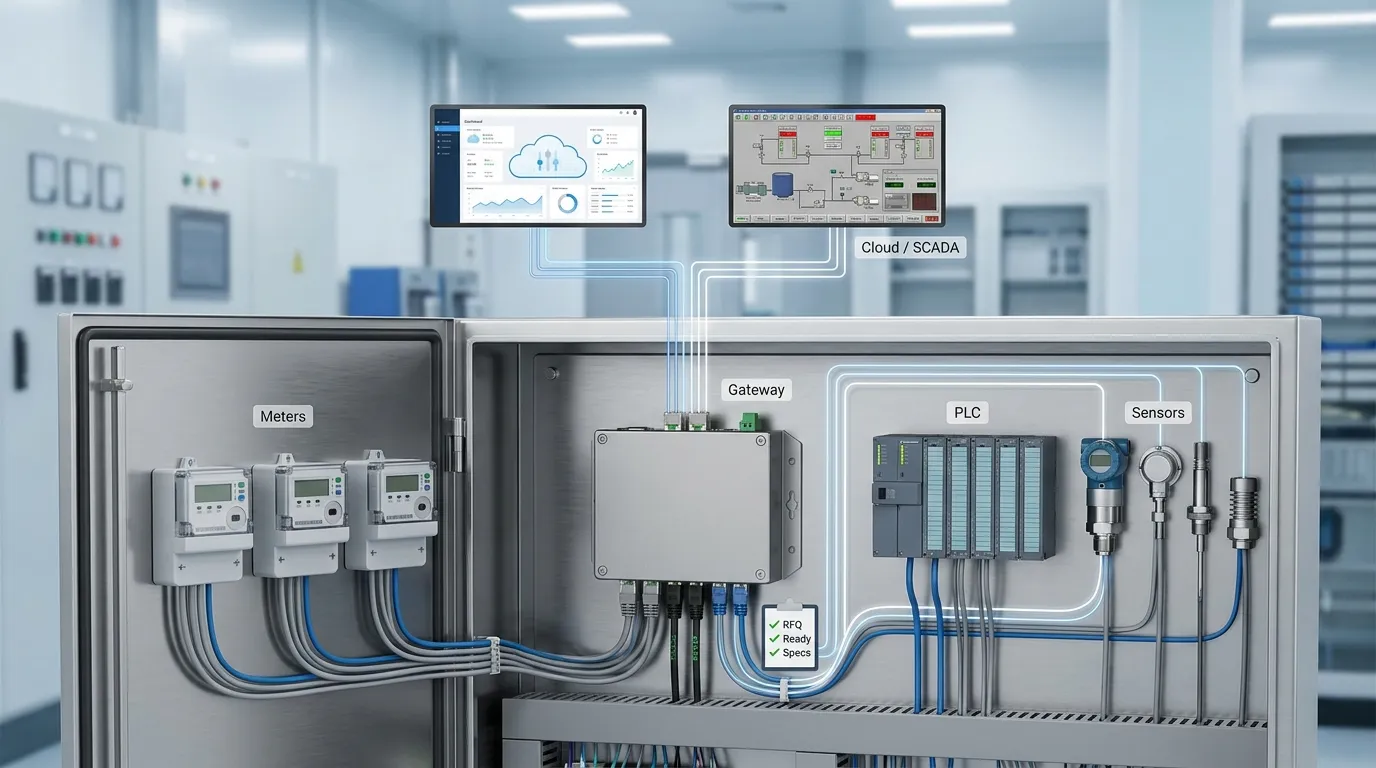
Tespro helps utility, industrial IoT, automation, SCADA, and energy monitoring teams prepare the right specifications for an industrial data acquisition gateway or gateway for remote monitoring. Before choosing a gateway, buyers should confirm the source devices, protocol, interface, sampling interval, local storage need, cloud or SCADA target, alarm logic, network method, power supply, and cabinet conditions.
A data acquisition gateway is not selected by name only. The right choice depends on what the gateway must collect, how often it must read data, where the data must go, and how the device will survive in the field. For procurement teams, clear RFQ details reduce quotation delays. For engineers, they reduce integration problems after installation.
Use this checklist to prepare a quote-ready request before contacting Tespro for gateway selection, datasheet support, sample discussion, demo request, or project consultation.
When Do You Need an Industrial Data Acquisition Gateway?
A data acquisition gateway is usually needed when a project must collect data from meters, PLCs, sensors, or remote I/O devices and send that data to another system.
Common project scenarios include:
- Energy monitoring in factories or buildings
- Smart metering and AMR/AMI field data collection
- PLC data upload to a monitoring platform
- Sensor data collection from remote industrial sites
- Pump station, cabinet, or field equipment monitoring
- SCADA, cloud dashboard, or API integration
- Remote alarm monitoring for distributed equipment
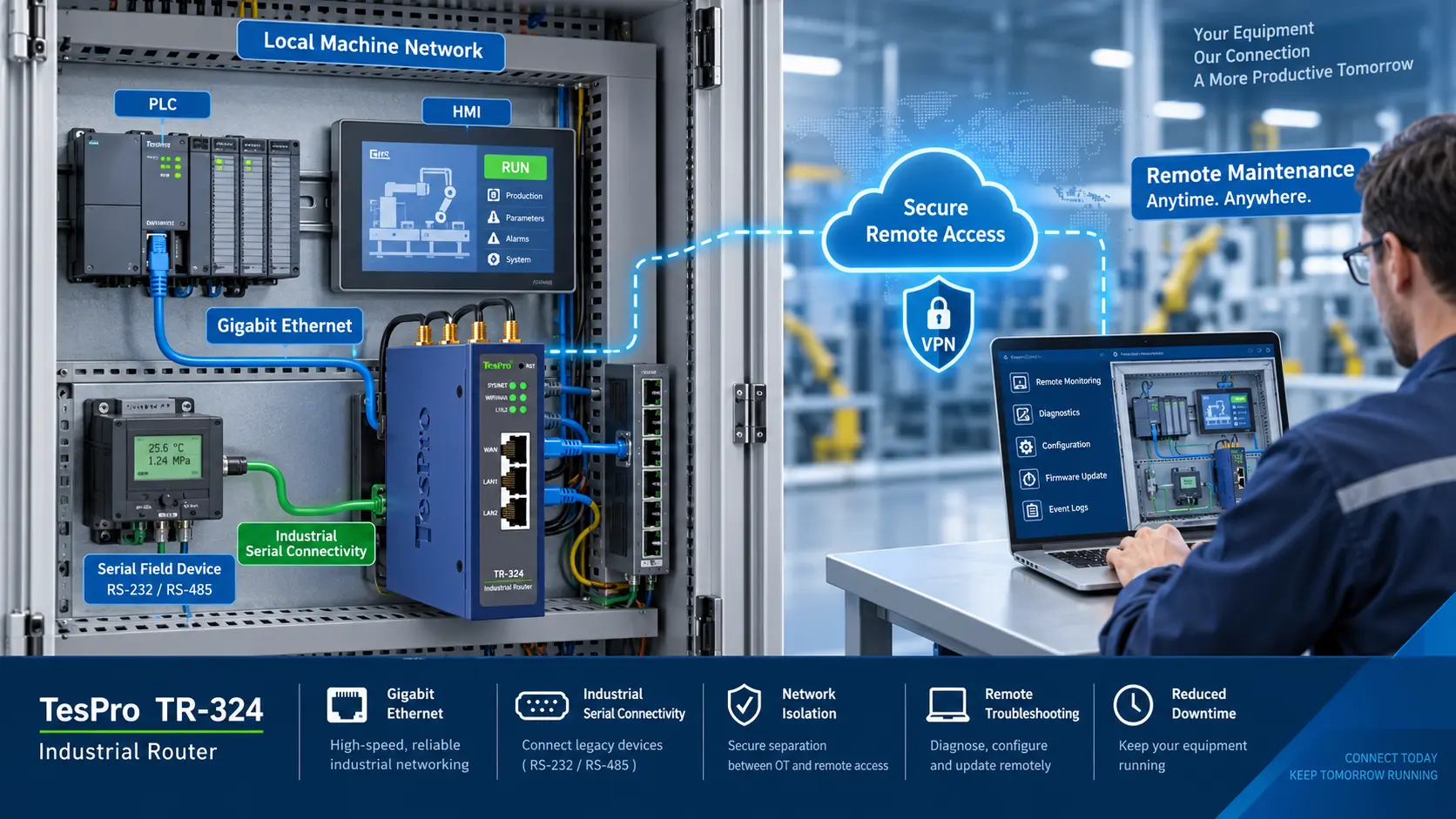
A gateway is different from a simple router. A router mainly provides network access. A gateway usually handles data collection, protocol conversion, buffering, and device-to-platform communication. Some projects need both an industrial router and a gateway, especially when remote sites require cellular access, VPN, or network failover.
Start With the Source Devices
The first RFQ detail is the source device list. Do not only say “we need to monitor meters” or “we need PLC data.” The supplier needs to know what devices are installed and how each device communicates.
Prepare these details:
- Device type: meter, PLC, sensor, remote I/O, machine controller, power meter, or environmental device
- Device brand and model if available
- Quantity of devices per site
- Number of sites or cabinets
- Data points or registers required from each device
- Read-only monitoring or control output requirement
- Distance between devices and gateway
- Existing wiring or new installation requirement
For example, a project reading five RS485 meters every 15 minutes is very different from a project collecting hundreds of PLC tags every few seconds. The first may need a simpler Modbus data gateway. The second may require stronger processing, storage, and integration planning.
If your project uses RS485 or Modbus field devices, Tespro’s related guide on industrial Modbus gateway and RS485 buying checklist can help you define the serial communication details before quotation.
Confirm Protocols, Interfaces, and Ports
Protocol and interface details decide whether the gateway can communicate with the field devices. This is one of the most important areas to confirm before purchase.
Typical interface details include:
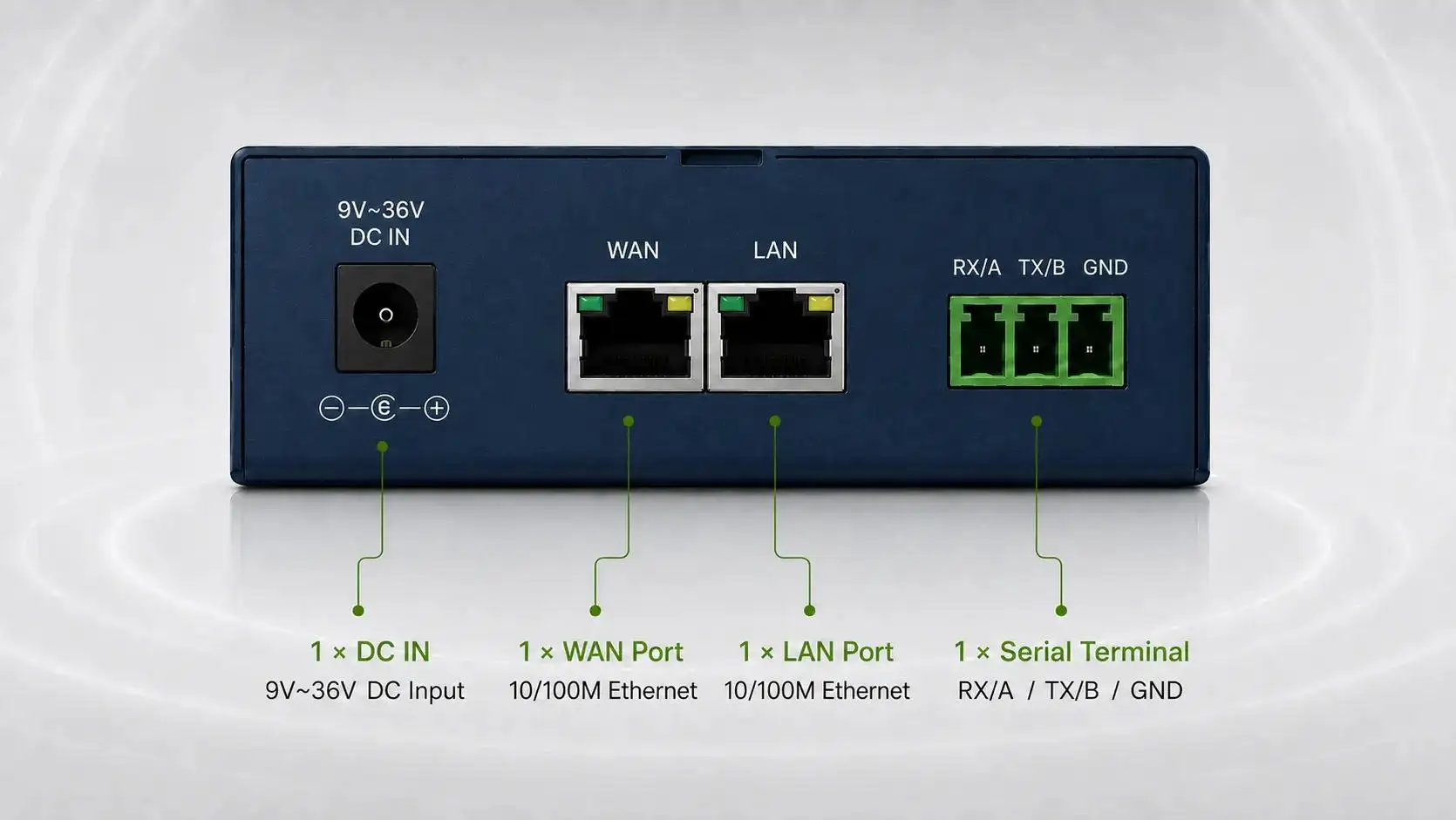
- RS485
- RS232
- Ethernet
- Analog input
- Digital input
- Relay or digital output
- USB, if used for configuration or device connection
Typical protocol or integration requirements may include:
- Modbus RTU
- Modbus TCP
- MQTT
- REST API
- OPC UA
- M-Bus or other metering protocols where relevant
- Vendor-specific PLC communication requirements
- Cloud or SCADA data format requirements
For Modbus RTU projects, buyers should confirm baud rate, parity, slave ID, register map, cable length, and bus topology. For Ethernet projects, confirm IP addressing, LAN/WAN separation, number of Ethernet ports, and whether the gateway must connect to PLCs, switches, routers, or a local server.
If the project has multiple Ethernet devices or separate LAN/WAN needs, review Tespro’s guide on multiple Ethernet gateway port planning before finalizing the RFQ.
Define the Data Flow: From Field Device to Platform
A quote-ready gateway request should show where the data will go after collection. The destination may be a SCADA system, MQTT broker, REST API, cloud platform, local database, energy management platform, or customer-owned software.
Confirm these details early:
- Data destination: cloud, SCADA, API, local server, or dashboard
- Upload method: MQTT, REST API, TCP/IP, file transfer, or platform-specific method
- Payload format required by the receiving system
- Timestamp requirement
- Data mapping or tag naming structure
- Authentication method
- TLS, certificate, or encryption requirement if applicable
- Whether the gateway must support remote configuration or firmware update
A gateway for local SCADA may not need the same cloud features as a gateway sending data to an MQTT broker. A gateway for remote meter reading may need stable buffering, while a factory automation gateway may need faster polling and structured tag mapping.
For cloud or API projects, Tespro’s MQTT and REST API gateway buyer checklist can help you prepare broker, endpoint, topic, payload, and authentication details.
Quote-Ready Gateway Specification Checklist
Use this table to organize the main details before contacting Tespro.
| Requirement area | What to confirm | Why it affects selection | Details to send Tespro |
|---|---|---|---|
| Source devices | Meters, PLCs, sensors, remote I/O | Determines gateway type and input method | Device list, model, quantity |
| Interfaces | RS485, RS232, Ethernet, DI/DO, analog input | Determines port and hardware configuration | Port count and wiring plan |
| Protocols | Modbus RTU/TCP, MQTT, REST API, OPC UA, others | Determines communication and integration fit | Register map, protocol notes |
| Data volume | Data points, tags, registers | Affects processing and storage planning | Number of tags per site |
| Sampling interval | How often data is read | Affects network, storage, and performance | Read interval and upload interval |
| Storage | Local buffering or history retention | Helps prevent data loss during outages | Required retention time |
| Alarms | Thresholds, events, relay outputs | Affects software and control logic | Alarm rules and outputs |
| Network | Ethernet, 4G/5G, Wi-Fi, private network | Determines communication path | Network type and site access |
| Security | VPN, APN, static IP, TLS, user access | Affects remote access and IT approval | Security requirements |
| Power and cabinet | Voltage, DIN rail, enclosure, space | Affects installation and accessory needs | Cabinet photos or drawings |
| Site environment | Temperature, humidity, dust, outdoor/indoor | Affects ruggedness and enclosure planning | Site survey notes |
Plan Sampling, Storage, and Alarms
Many gateway projects fail because the RFQ does not define how often data should be collected. Sampling interval affects gateway performance, storage, network traffic, and platform design.
Confirm both:
- Sampling interval: how often the gateway reads data from meters, PLCs, or sensors
- Upload interval: how often the gateway sends data to the cloud, API, or SCADA system
These may not be the same. A gateway may read data every 10 seconds but upload every minute. Another project may read meter values every 15 minutes and upload them once per hour.
Also confirm whether local storage is required. This is important for remote sites with unstable cellular signal or limited network access. If data loss is unacceptable, buyers should ask whether buffering, store-and-forward behavior, or local data export is required.
Alarm planning should include:
- Threshold values
- Event conditions
- Alarm delay or reset logic
- Notification method
- Relay or output control requirement
- Platform or dashboard alarm workflow
Check Network, SIM, VPN, and Remote Access Requirements
Remote monitoring projects often depend on network conditions as much as gateway hardware. A technically correct gateway can still fail if the site has weak signal, wrong SIM configuration, or blocked network access.
Confirm whether the project needs:
- Ethernet connection
- Cellular connection
- Dual SIM or failover
- Private APN
- Static IP
- VPN access
- Firewall or NAT rules
- Remote device configuration
- Remote firmware management
- External antenna or signal testing
For security-sensitive projects, involve the customer’s IT or OT team before ordering. They may require VPN, certificate handling, user access control, remote management restrictions, or approved network architecture.
For deeper remote access and cybersecurity planning, see Tespro’s guide on remote management gateway security.
Include a Site Survey Checklist
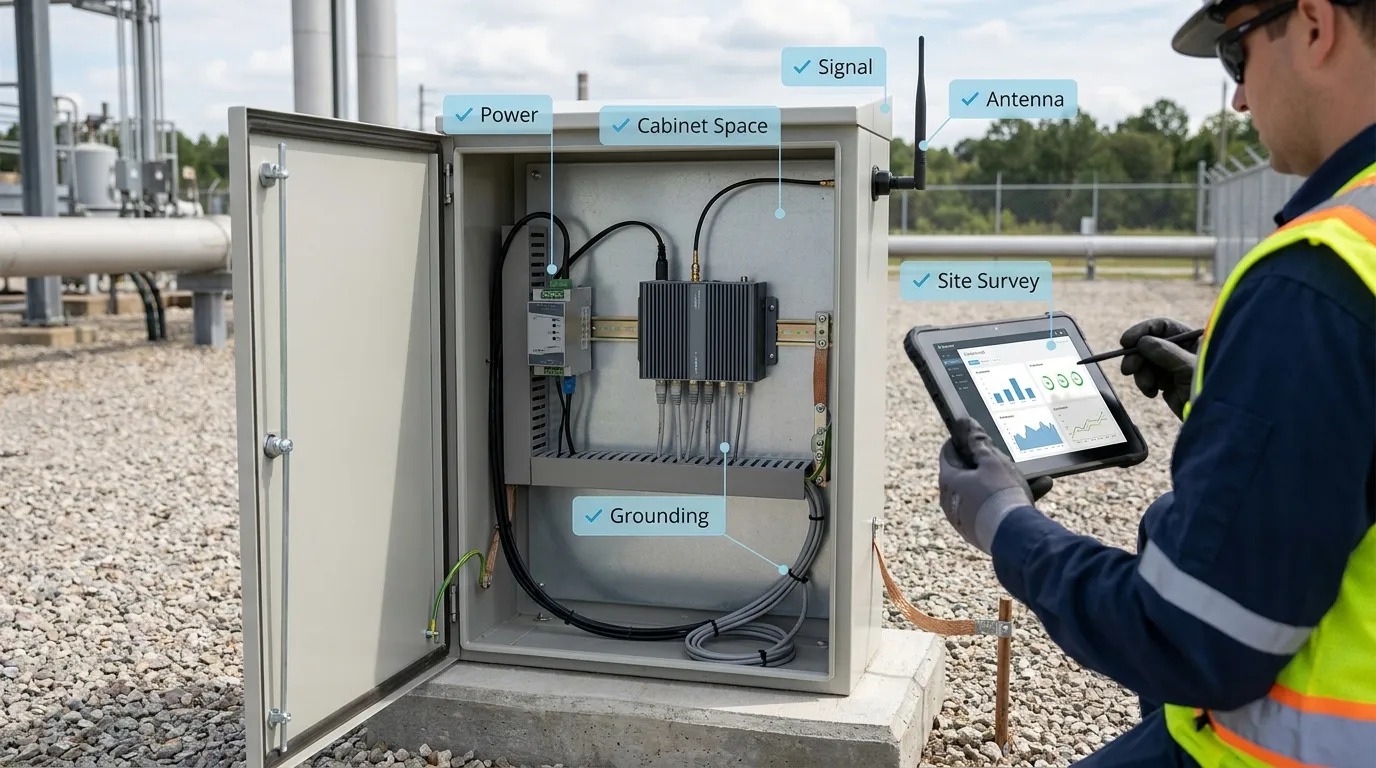
A site survey helps the supplier recommend a realistic gateway setup. It also helps procurement avoid hidden installation costs.
Before requesting a quote, collect these site details:
- Indoor or outdoor installation
- Cabinet size and available space
- DIN rail availability
- Power supply voltage and backup power
- Grounding condition
- RS485 cable length and route
- Ethernet cable availability
- Cellular signal level at the cabinet
- Antenna mounting location
- Temperature, humidity, dust, or vibration concerns
- Surge, lightning, or isolation concerns if relevant
- Maintenance access and technician availability
- Photos of cabinet, wiring, and nearby equipment
- Basic system diagram if available
For large deployments, prepare one standard site survey form. This helps compare multiple sites and avoids ordering different hardware without clear reason.
Common Selection Mistakes to Avoid
Avoid these mistakes when preparing a gateway RFQ:
- Asking only for “a remote monitoring gateway” without device details
- Not confirming Modbus register maps or PLC tag lists
- Mixing RS485 and Ethernet requirements without a topology plan
- Forgetting local storage when the network is unstable
- Choosing a router when the project needs protocol conversion
- Choosing an edge gateway when simple data collection is enough
- Ignoring cabinet size, power supply, or antenna placement
- Not confirming cloud/API payload requirements
- Leaving IT security requirements until after installation
A good RFQ should connect the field device, gateway, network, platform, and site environment in one clear request.
What Should You Send Tespro for a Gateway Quote?
To help Tespro review your project faster, send as many of these details as possible:
- Project type and application
- Quantity of gateways required
- Number of sites or cabinets
- Source device list
- Meter, PLC, or sensor models if available
- Protocols and standards required
- Interface and port requirements
- Data point or register list
- Sampling and upload interval
- Local storage or buffering requirement
- Alarm and control output needs
- Cloud, SCADA, MQTT, REST API, or platform target
- Network type and SIM/APN/VPN/static IP needs
- Power supply and cabinet details
- Operating environment
- Security and remote management requirements
- Delivery destination
- Datasheet, sample, demo, or OEM/ODM support request
- Drawings, site photos, wiring diagrams, or system architecture notes
If some details are not ready, share what you have. Tespro’s team can help identify missing information before recommending a suitable gateway, DTU, industrial router, software/platform option, or related connectivity solution.
Why Work With Tespro for Gateway and Remote Monitoring Projects?
Tespro supports industrial metering, connectivity, and energy data projects with hardware and solution categories such as metering optical probes, data transmission units, industrial routers, industrial gateways, meter test equipment, calibrators, and software platforms.
For data acquisition and remote monitoring projects, the buying decision is rarely about one isolated device. It is about field device compatibility, communication path, platform integration, cabinet installation, and long-term maintenance. Tespro can help buyers prepare a clearer specification before quotation, especially for smart metering, utility communication, factory automation, energy monitoring, and industrial IoT projects.
Frequently Asked Questions
What details are needed for a data acquisition gateway quote?
Send the device list, quantity, protocols, interfaces, data points, sampling interval, upload target, network type, power supply, cabinet conditions, security needs, and delivery destination. Drawings or site photos are also useful.
Can one gateway collect data from meters, PLCs, and sensors?
It may be possible if the selected gateway supports the required interfaces, protocols, input types, and data volume. Confirm device models, register maps, ports, and platform requirements before choosing a configuration.
Is a router enough for remote monitoring?
A router provides network access. A gateway collects, converts, buffers, and forwards device data. Some projects need both, especially when field devices require protocol conversion and the site also needs cellular or VPN access.
Do I need local storage in the gateway?
Local storage is useful when the network is unstable or data loss is not acceptable. It can help buffer data before upload, depending on the gateway configuration and project requirements.
What should a site survey include?
Check cabinet space, power supply, grounding, cable routes, RS485 distance, Ethernet access, signal strength, antenna location, temperature, humidity, dust, and maintenance access. Photos and diagrams help the supplier review the site.
Which protocols should buyers confirm first?
Start with field protocols such as Modbus RTU, Modbus TCP, PLC communication, or metering protocols. Then confirm platform protocols such as MQTT, REST API, OPC UA, or SCADA connection requirements.
Request a Data Acquisition Gateway Quote From Tespro
Send Tespro your project requirements for gateway selection, datasheet support, sample discussion, demo request, consultation, or OEM/ODM support. Include the device type, quantity, application, meter or PLC model, protocol, interface, network type, SIM/APN/VPN/static IP needs, cloud or API target, power supply, operating environment, cabinet constraints, security needs, delivery destination, and any drawing, site detail, system diagram, or written specification.