A Data Transfer Unit does more than relay consumption numbers – it decides whether your metering infrastructure stays online or falls silent when network conditions change. In 2026, utilities and industrial operators face a fragmented world of 2G phase-outs, 4G LTE-Cat 1 bis expansion, and regional 5G standalone rollouts.

A Data Transfer Unit that cannot handle all these generations seamlessly becomes a single point of failure. Tespro has engineered its 4G DTU family to deliver exactly that: uninterrupted connectivity from 2G to 5G, without dead zones, without manual reconfiguration, and without waiting for 2030 to upgrade again.
Why 2026 Demands a Smarter Data Transfer Unit
Procurement managers in the advanced metering infrastructure (AMI) space are no longer buying for today only. They are buying for a 5-year horizon where network sunset dates and new frequency bands arrive faster than hardware refresh cycles.
•Global network fragmentation is real: Some countries still rely on 2G for rural metering; others have moved entirely to 4G Cat-1 bis; early adopters are testing 5G slices for grid automation.
•One incompatible band can kill a deployment: A Data Transfer Unit that misses a regional LTE band forces expensive retrofits or complete replacements.
•Cloud-first monitoring is now baseline: Buyers expect real-time visibility into signal strength, data usage, and remote configuration – not blind transmission.
Tespro addresses these requirements directly. Its industrial-grade Data Transfer Unit supports 2G, 3G, 4G, and optional 5G bands, and comes with a cloud management platform that logs every heartbeat packet and registration message. No exaggerated claims – just documented compatibility with networks across Europe, Asia, the Middle East, and the Americas.

Multi-Mode, All-Network Connectivity: What That Means in Practice
When a manufacturer says “multi-mode,” procurement officers should ask: Which frequency bands? Can we swap the communication card ourselves? Does it fall back gracefully when 4G is weak?
Tespro's answer is straightforward:
•Supports 2G, 3G, 4G, and 5G-ready modules: The Data Transfer Unit accepts standard mini-PCIe cards, letting you adapt to local operators without replacing the whole device.
•Automatic fallback sequencing: If 4G signal drops below a configurable threshold, the unit reverts to 2G or 3G – and logs the event in the cloud. No data loss, no manual reboot.
•Global band coverage: Pre-tested with major carriers (Verizon, Vodafone, China Mobile, DTAG) and adjustable frequency profiles per country.
•For a field engineer in a remote substation, this means one Data Transfer Unit works in Manila, Nairobi, or rural Poland – just insert a local SIM and let auto-APN detection handle the rest.
•Realistic use case: A water utility in Southeast Asia uses 2G for 70% of its meters but plans to migrate to 4G by 2028. Tespro's unit runs on 2G today, and when the operator refarms spectrum, the same hardware upgrades to 4G via a card swap – no truck roll to replace enclosures.

Built for 2026 Trends: Battery Backup, Protocol Density, and Remote Management
Buying trends in 2026 show three clear shifts away from legacy DTUs:
•Battery-powered operation is no longer optional for outdoor/pole-mount meters.
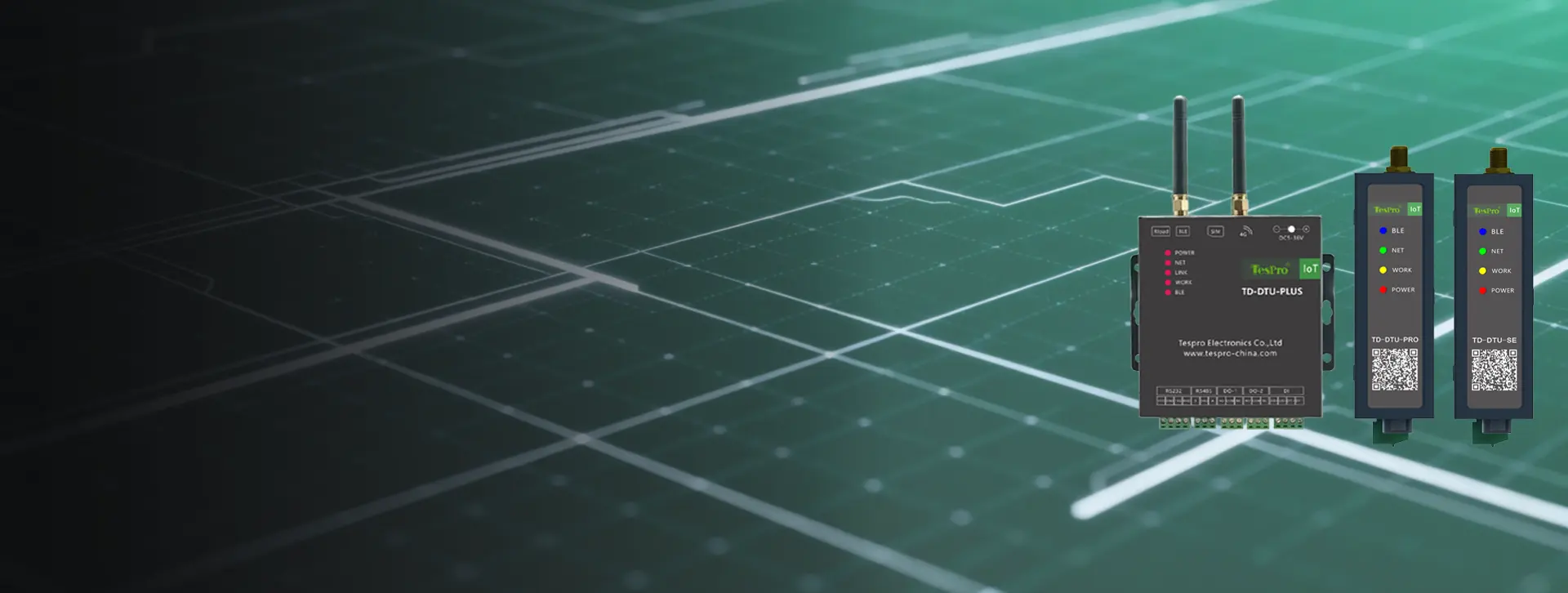
Tespro offers the TD-DTU-PLUS with a 27,000 mAh built-in battery – runs up to 15 days on a full charge, collects and transmits data even when external power is unavailable.
•Multi-protocol support must cover electricity, water, gas, and heat meters from different brands.
The unit reads Landis+Gyr, EDMI, ITRON, ELSTER, ISKRA, and dozens of others through configurable protocol stacks (IEC 62056, DL/T-645, ANSI Type2, etc.). Plug-and-play, no extra development.
•Remote diagnostics reduce site visits by 40-60%.
The included cloud platform shows signal strength, last successful transmission, firmware version, and battery level – push configuration updates over the air.
These are not futuristic promises. They are already deployed in pilot projects across three continents. A Data Transfer Unit from Tespro arrives pre-configured for your meter mix, and the cloud dashboard is accessible within 10 minutes of power-up.

How to Choose Your 2026 Data Transfer Unit: A Quick Checklist
For procurement professionals evaluating quotes, here are four verifiable criteria:
•Network certifications: Does the DTU carry CE, FCC, or local type approvals for your target countries? Tespro provides region-specific certificates upon request.
•Operating temperature range: Industrial metering needs -35°C to +75°C. Tespro's sheet-metal rail DTU is tested beyond that range.
•Baud rate and interface flexibility: Supports 300–115200 bps, RS485, RS232, TTL, and photoelectric ports. Works with legacy and new meters side by side.
•Heartbeat and registration packet customization: Allows you to set intervals, data formats, and server addresses – critical for closed network environments like utility private APNs.
A Data Transfer Unit that checks all four boxes will still be relevant in 2028. One that misses even a single criterion will become a replacement project before its warranty expires.
Final Thoughts: Uninterrupted Connectivity Is Not an Accident
No single device can promise 100% uptime – cellular networks have maintenance windows, and extreme weather affects towers. But a properly engineered Data Transfer Unit can minimize disruptions through intelligent fallback, remote oversight, and hardware that doesn't lock you into a single generation.
Tespro's approach is pragmatic: use proven 4G Cat-1 for today's reliability, keep 2G fallback for rural coverage, and remain open to 5G modules when your business case justifies the upgrade. That is what “optimized for 2026” actually means – not marketing hype, but a clear upgrade path and zero dead zones where networks actually exist.
To see band-by-band compatibility lists or request a sample unit for your region, visit Tespro's official DTU page. For technical datasheets and protocol compatibility matrices, contact their engineering team directly.
Frequently Asked Questions (FAQ)
Q: Will the Data Transfer Unit support 5G networks in 2026?
A: It will. Tespro's DTU accommodates 5G-ready mini-PCIe modules. For the vast majority of metering use cases, 4G Cat-1 is sufficient, but we are ready for 5G networks when they become commercially available.
Q: Can the same Data Transfer Unit be used with meters of different brands?
A: Yes. This unit is supplied with some protocols, like IEC 62056, DL/T-645, and ANSI Type 2. It can read Landis+Gyr, EDMI, ITRON, ELSTER, ISKRA, and many more without new development.
Q: What if there is a poor 4G signal at my installation site?
A: The Data Transfer Unit reverts automatically to 3G or 2G. This is seamless, and the change is logged to the cloud dashboard – there is no loss of data, and no action is needed.
Q: Is external power always needed?
A: It's not needed for the TD-DTU-PLUS model. Temporary deployments of days or more with no external power is possible with the 27,000 mAh built-in battery. It's ideal for pole-mounted meters and temporary installations.
Q: What is the way to monitor or reconfigure the unit from the field?
A: Each Tespro Data Transfer Unit is linked to a cloud-based management system which gives you access to its signal, battery, firmware and configuration upload tools.