-1791966549842.webp)






An industrial cellular router connects remote machines, meters, controllers and monitoring systems through cellular networks such as 4G or 5G. Tespro industrial cellular routers are designed for industrial connectivity with cellular, Ethernet and Wi-Fi options, plus model-dependent interfaces and remote management features.
Key Takeaways
- This is the best replacement for the keyword “industrial router board” because Tespro sells complete router devices rather than bare boards.
- The article should define the category, explain use cases and guide model selection.
- Use this as a pillar article for TR series industrial router content.
- Link related pages covering 5G routers, VPN routers, remote management and dual-SIM failover.
Industrial Cellular Router Definition
An industrial cellular router is a field-ready networking device that uses mobile networks to connect industrial assets with private networks, cloud platforms or control centers. It is commonly used where wired broadband is unavailable, expensive or unreliable.
Compared with a commercial router, it is selected for industrial power input, enclosure design, wider operating conditions, remote management and compatibility with automation environments.
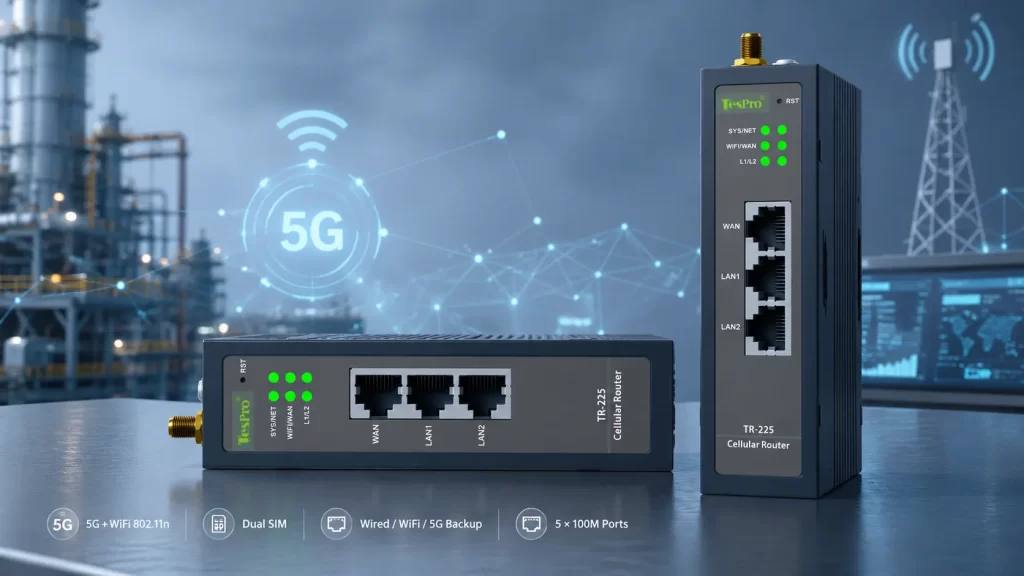
Common Devices Connected Through the Router
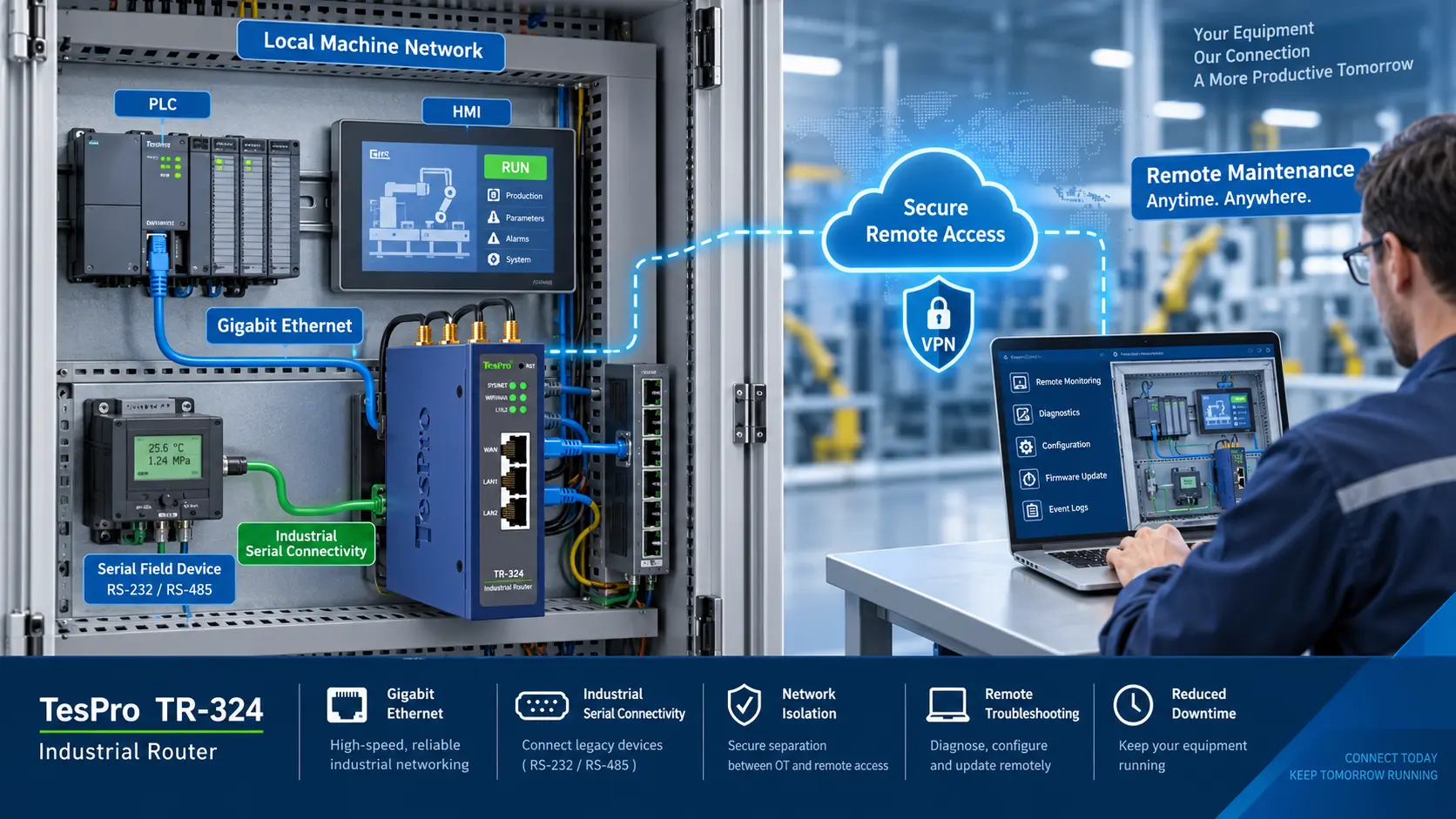
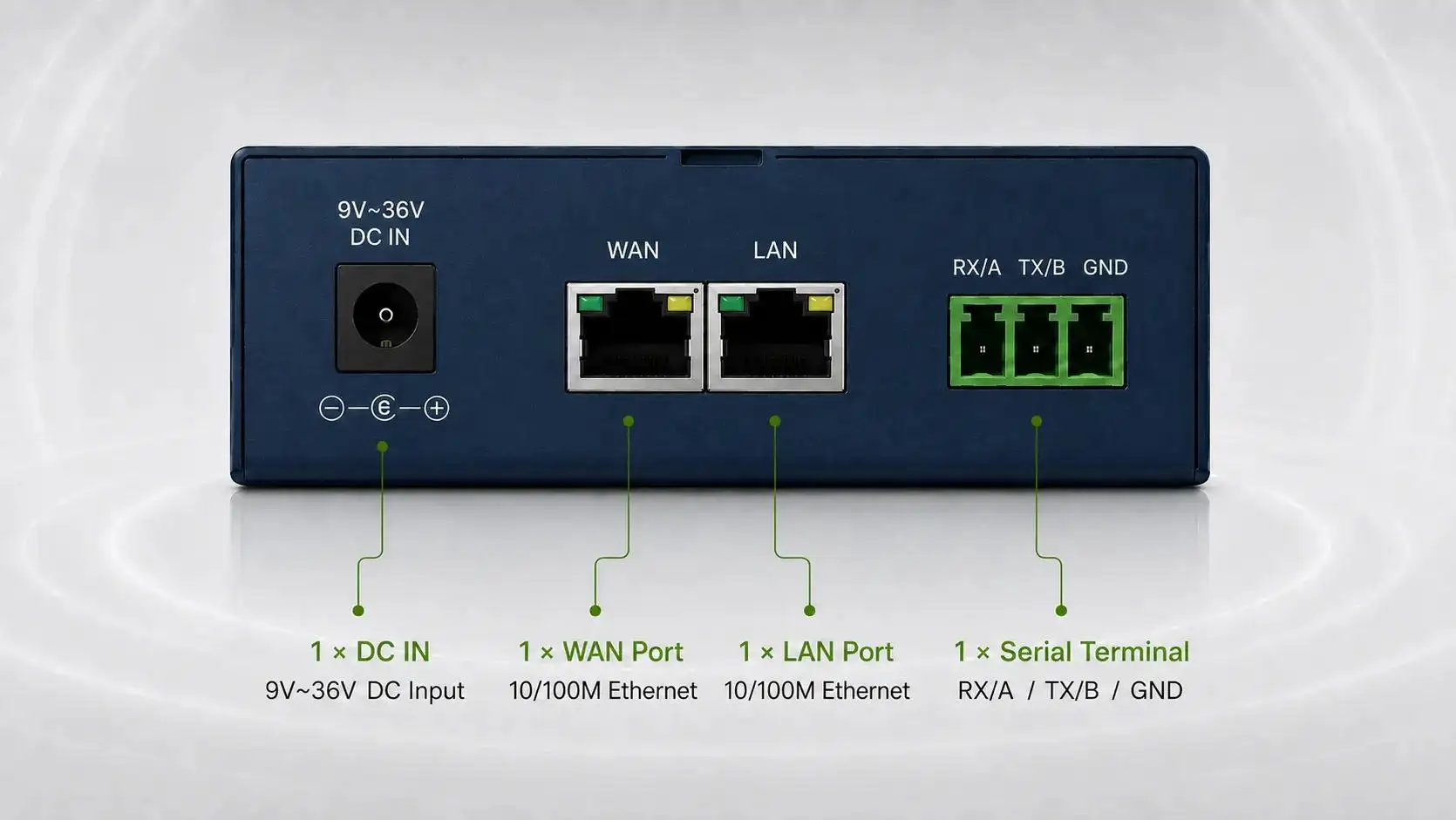
Industrial cellular routers are used with PLCs, meters, RTUs, HMIs, cameras, sensors, gateways and edge computers. Depending on the model, a router can provide Ethernet, Wi-Fi, RS485, RS232 or CAN access to local equipment.
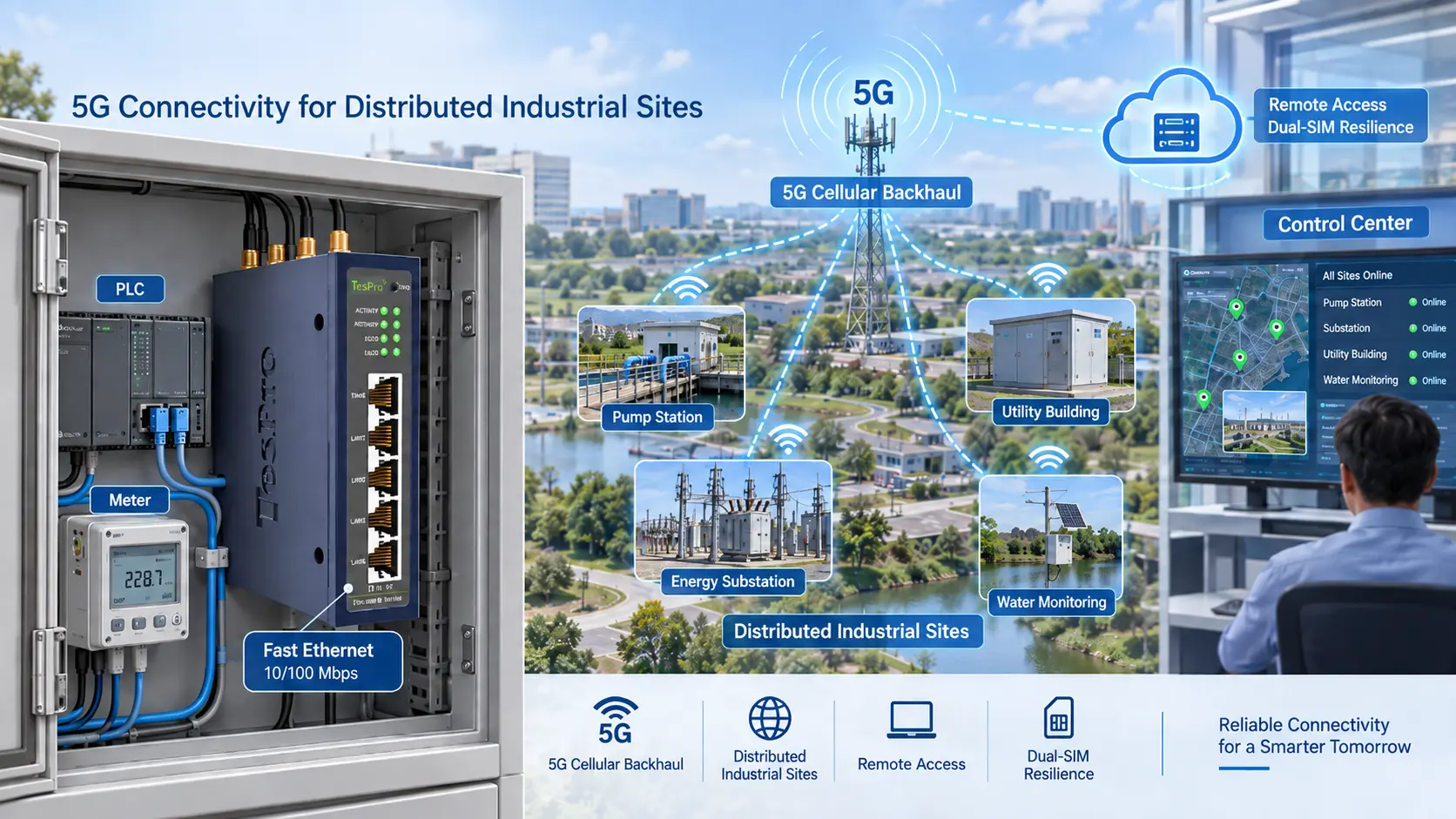
For metering and utility sites, a router may connect cabinets, substations, energy monitoring systems or distributed solar assets. For factories, it can provide a secure channel to machines and automation panels.
Tespro TR Series Positioning
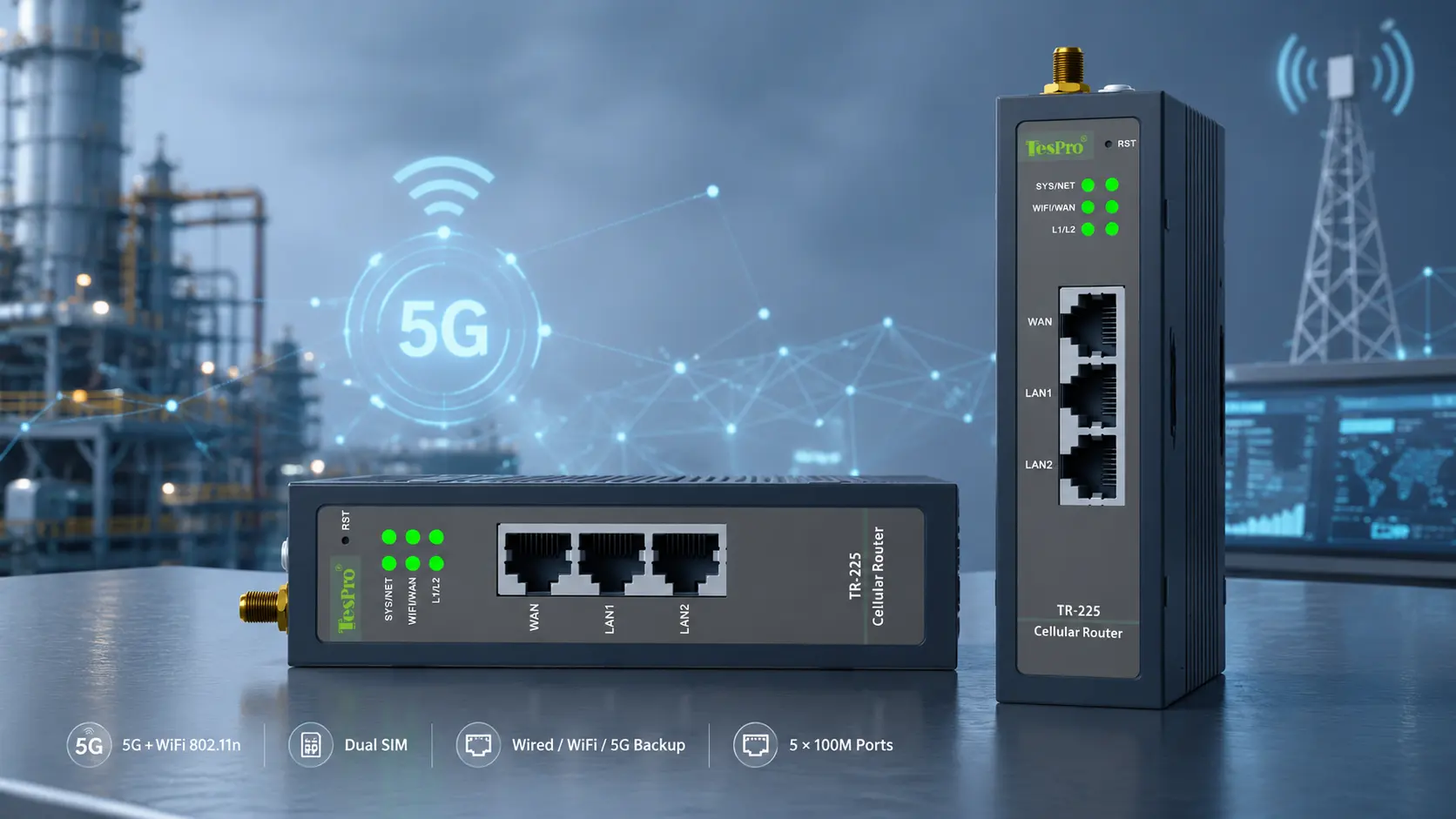
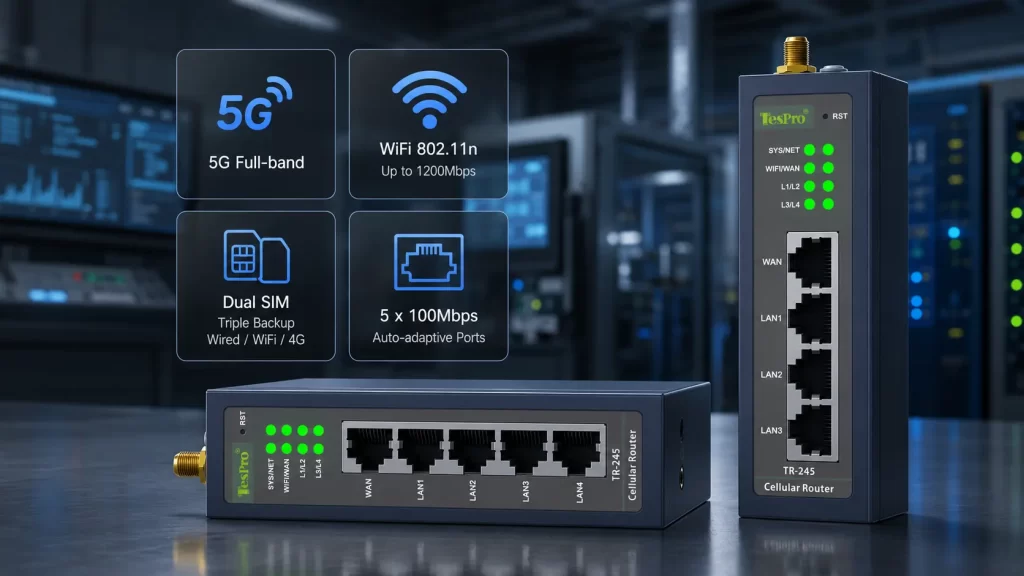
Tespro positions its industrial cellular router line for 2G, 3G, 4G and 5G connectivity, dual-SIM redundancy, VPN support, failover and cloud management. Some models focus on compact connectivity, while others support more Ethernet ports or higher-bandwidth 5G deployment.
A publish-ready article should not claim that every model has the same port count, network speed or interface layout. Direct readers to confirm the required model according to project conditions and the latest datasheet.
4G or 5G: Which Should You Choose?
Choose 4G for standard telemetry, meter data, basic remote monitoring and sites where 4G coverage is mature. Choose 5G when the application requires higher data volume, video transmission, mobile assets or a measurable advantage from local 5G coverage.
The best choice depends on bandwidth, coverage, monthly data cost, latency needs, antenna installation and regional certification requirements.
FAQs
What is the difference between an industrial cellular router and a normal router?
An industrial cellular router is built for field conditions, cellular backup, industrial interfaces and remote operation. A normal router is usually designed for indoor office or home networks.
Should I choose 4G or 5G?
Choose 4G for moderate telemetry and monitoring. Choose 5G when the project requires higher data rates, lower latency or video transmission, subject to local network coverage.
Is an industrial cellular router the same as a gateway?
No. A router focuses on network connectivity and routing. A gateway usually adds protocol conversion, data processing and field-device integration.
Need Help Choosing an Industrial Cellular Router?
Share your country, operator, interface, bandwidth target, installation environment and remote management needs with Tespro. The team can help select a suitable TR series model for your IIoT project.