-1791966549842.webp)





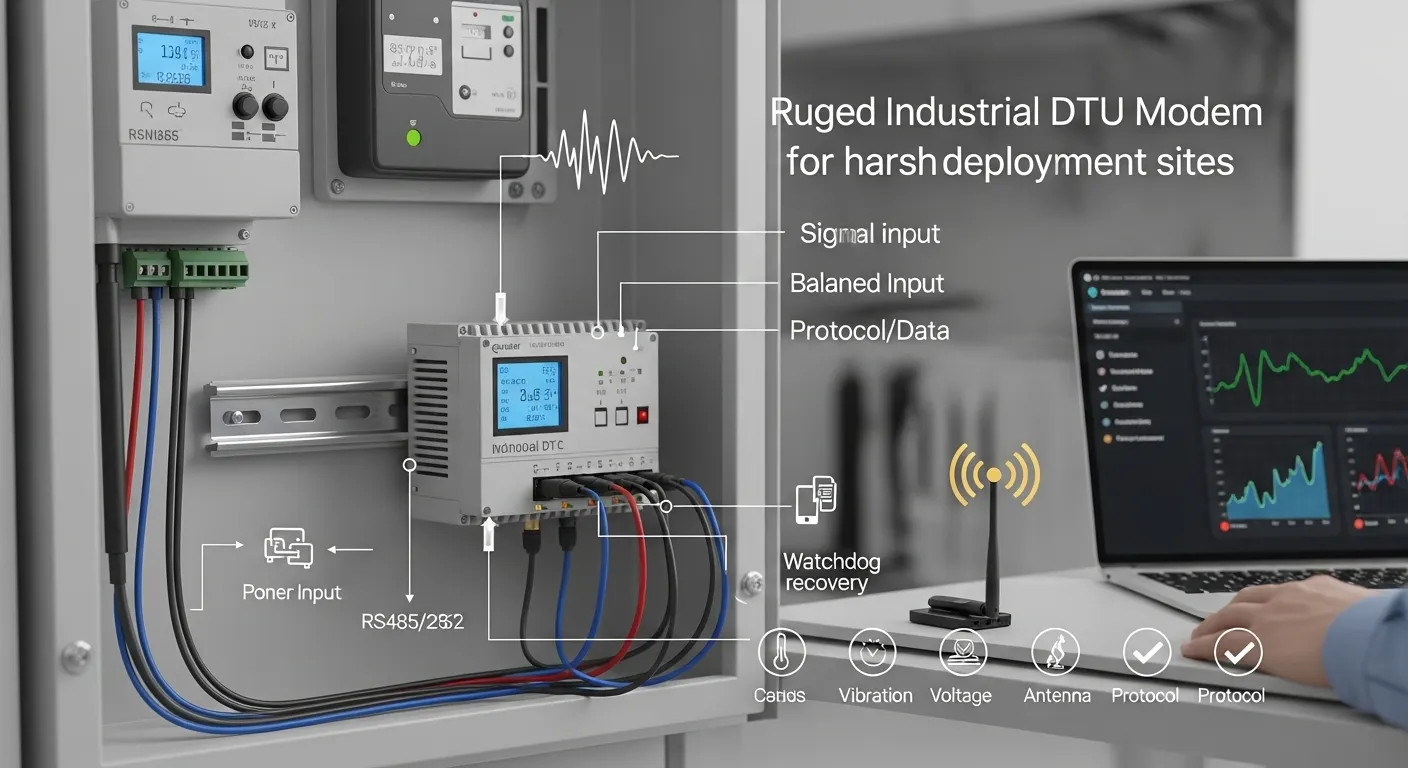

Tespro provides industrial metering, connectivity, and energy data solutions for utility teams, AMI/AMR projects, industrial IoT integrators, SCADA teams, automation engineers, and procurement buyers. When selecting an industrial DTU modem, buyers should not only check the communication interface. They should also confirm the field environment, cellular network, protocol mode, power input, enclosure, antenna plan, watchdog recovery, and remote management needs.
A rugged data transmission unit is often installed in places where normal communication devices fail. Outdoor meter cabinets, substations, factories, water stations, energy sites, and remote monitoring panels can expose devices to heat, cold, vibration, dust, unstable voltage, and weak signal.
This checklist helps buyers prepare the right technical details before requesting a quote, datasheet, sample, or consultation from Tespro. It is written for projects where uptime, field compatibility, and long-term maintenance matter more than choosing the cheapest modem.
When Is an Industrial DTU Modem Needed?
An industrial DTU modem is used when field devices need to send data to a server, platform, SCADA system, or remote monitoring center. It is commonly used with meters, PLCs, sensors, controllers, and other serial or industrial devices.
For many projects, the DTU works as the communication bridge between the field device and the data system. It may support transparent data transmission, serial-to-IP communication, Modbus communication, or connection to a cloud or private platform, depending on the configuration.
Typical use cases include:
- Smart meter reading
- AMR and AMI communication
- Power distribution monitoring
- Water and wastewater monitoring
- Factory automation data collection
- Energy management systems
- Environmental monitoring stations
- Remote equipment supervision
- SCADA connectivity for field devices
If your project is mainly about collecting meter or device data over a cellular network, an industrial DTU is usually the right category to evaluate. If your project needs advanced routing, multi-LAN networking, VPN-heavy architecture, or edge processing, you may also need to compare DTUs with industrial routers or gateways.
For a broader buying framework, you can also review Tespro’s data transmission unit industrial buyer checklist.
Harsh-Site Failure Modes Buyers Should Check First
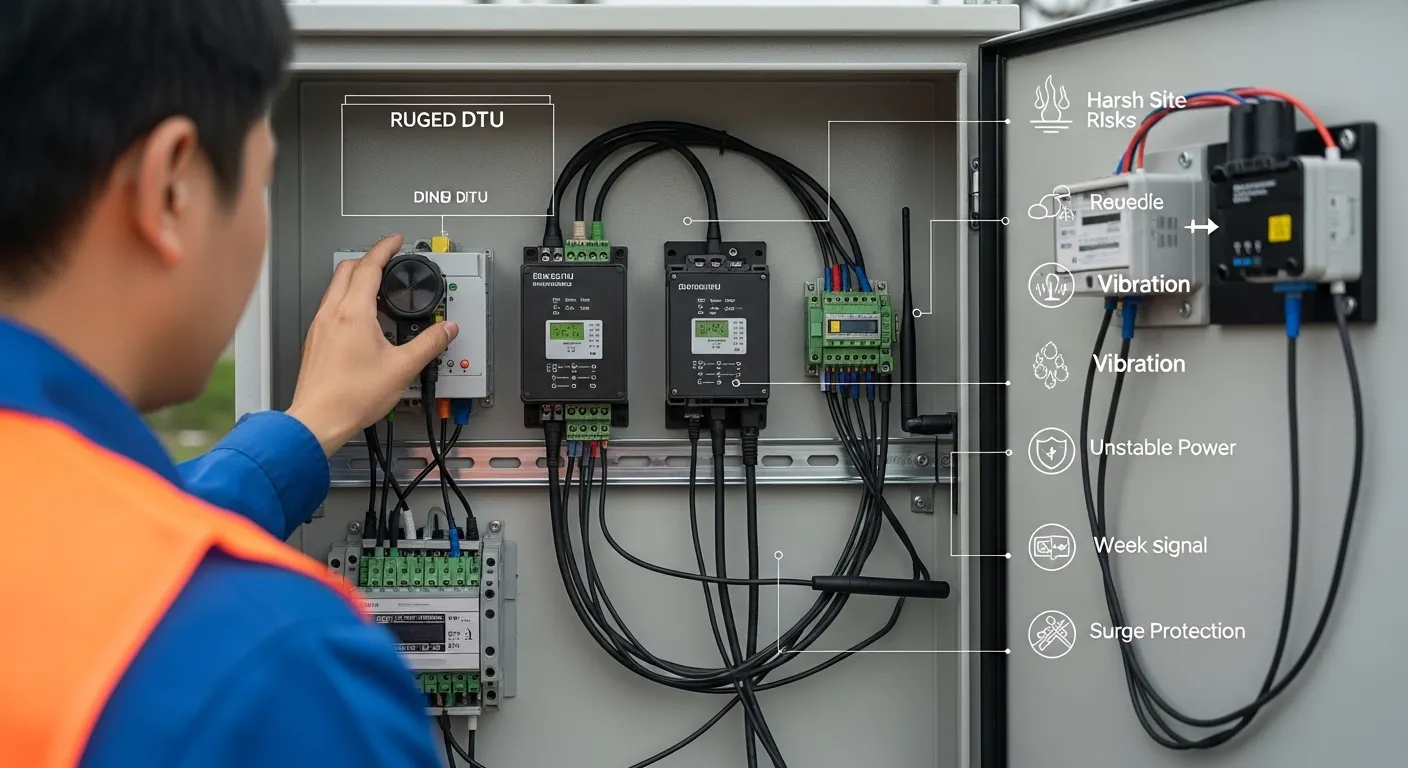
Industrial DTU selection should start with field risk. Many deployment problems do not come from the protocol. They come from the site.
A device may work well during bench testing but fail after installation because of heat, weak cellular signal, poor grounding, unstable DC supply, cabinet vibration, or antenna placement. For utility and industrial projects, these issues can create repeated truck rolls and data gaps.
Before choosing a DTU modem, confirm these conditions:
- Maximum and minimum site temperature
- Indoor cabinet, outdoor cabinet, pole box, or control panel installation
- Dust, moisture, oil mist, or chemical exposure
- Vibration from machines, pumps, or transport equipment
- Power source stability and voltage range
- Surge, ESD, and electrical noise risk
- Cellular signal strength at the actual installation point
- Antenna location and cable routing
- Maintenance access after deployment
- Required recovery after power or network failure
A rugged DTU should be selected for the real installation environment, not only for the communication protocol on the datasheet.
Industrial DTU Modem Rugged Spec Checklist
Use this checklist before requesting a quotation or comparing models.
| Spec area | What buyers should confirm | Why it matters in harsh sites | RFQ detail to send Tespro |
|---|---|---|---|
| Field interface | RS232, RS485, TTL, Ethernet, I/O if needed | Wrong interface prevents device communication | Meter, PLC, sensor, or controller interface |
| Protocol mode | Transparent transmission, Modbus, TCP/UDP, MQTT, HTTP, or platform-specific needs | Protocol mismatch causes integration delays | Protocol, server type, and data format |
| Network type | 4G, 5G, NB-IoT, Cat-M1, Ethernet, or mixed network | Coverage and data frequency affect model choice | Country, carrier, SIM type, and site signal |
| SIM/APN/static IP/VPN | Public SIM, private APN, static IP, VPN, or server-initiated connection | Network design affects access and security | SIM/APN/VPN/static IP requirements |
| Power input | DC supply, voltage range, unstable power risk | Field cabinets often have voltage fluctuation | Available power supply and voltage range |
| Enclosure and mounting | DIN rail, wall mount, cabinet space, enclosure constraints | Poor mounting increases vibration and maintenance risk | Cabinet size and installation method |
| Antenna plan | Built-in or external antenna, SMA connector, cabinet penetration | Weak signal can break remote monitoring | Signal level, antenna location, cable length |
| Recovery features | Watchdog, heartbeat, auto-reconnect, remote reboot if required | Reduces field visits after signal or power failure | Required recovery and monitoring features |
| Remote management | Local configuration, remote configuration, firmware update needs | Large deployments need easier maintenance | Number of sites and management workflow |
| Environment | Temperature, humidity, dust, vibration, surge risk | Determines rugged hardware requirements | Site photos, drawings, or written conditions |
Confirm the Interface Before Choosing the DTU
The first technical decision is the field interface. Many metering and industrial devices still use serial communication, especially RS485 and RS232. However, the port type alone is not enough.
Buyers should also confirm:
- Baud rate
- Data bits, stop bits, and parity
- Terminal block or DB9 connection
- Single device or multi-drop RS485 bus
- Cable distance and electrical noise risk
- Whether isolation or protection is required
- Whether the device uses transparent serial data or a known protocol
For meter reading projects, RS485 is common because it can connect multiple devices over longer distances. RS232 is more common for short-distance or legacy equipment. Ethernet may be required when the connected device already supports IP communication.
If the DTU is part of an AMR project, review Tespro’s 4G DTU AMR projects procurement checklist for more project-specific planning.
Choose the Network Based on Coverage, Not Hype
Many buyers ask whether they need 4G, 5G, or another network type. The answer depends on data volume, site coverage, latency needs, carrier support, and project lifetime.
For basic meter reading and telemetry, 4G is often enough when coverage is stable and the data packets are small. 5G may be useful for higher bandwidth, future network planning, or advanced industrial connectivity. However, it is not automatically required for every DTU project.
Buyers should confirm:
- Local carrier coverage at the installation site
- Supported frequency bands in the deployment country
- SIM card type and carrier requirements
- APN or private network requirements
- Static IP or dynamic IP design
- VPN or private server access needs
- Signal level inside the cabinet
- Whether an external antenna is required
- Data frequency and expected packet size
Weak signal is one of the most common causes of unstable field communication. For outdoor cabinets or metal control panels, antenna planning can be as important as the DTU model itself.
If you are comparing cellular generations, Tespro’s 5G DTU vs 4G DTU upgrade buying criteria can help avoid overbuying.
Match Protocol Support to the Data Flow
A DTU may be used for simple transparent transmission or for more structured industrial communication. Buyers should define the data flow before selecting hardware.
Ask these questions:
- Will the DTU only transmit serial data transparently?
- Does the project require Modbus RTU or Modbus TCP?
- Will data be sent to a private server, SCADA system, MQTT broker, or cloud platform?
- Is TCP client, TCP server, UDP, HTTP, or MQTT required?
- Does the server require heartbeat or registration packets?
- Is protocol conversion needed, or should the device only pass data?
- Does the platform require a specific payload format?
This step is important because a low-cost serial modem may not support the integration workflow your project needs. On the other hand, a full gateway may be unnecessary if transparent serial-to-IP transmission is enough.
Check Power, Enclosure, Mounting, and Recovery Features
Ruggedness is not only about operating temperature. A DTU modem installed in a utility cabinet or industrial panel must handle real electrical and mechanical conditions.
Important hardware checks include:
- Supported input voltage range
- Reverse polarity or over-voltage protection requirements
- Surge, ESD, or EFT protection requirements
- DIN rail or wall mounting
- Cabinet space and cable routing
- Enclosure material and protection needs
- Operating temperature and humidity
- Status LEDs for field diagnosis
- Watchdog and auto-reconnect behavior
- Local and remote configuration options
For remote sites, recovery features are especially important. Watchdog, heartbeat, and automatic reconnection can reduce manual resets after signal drops or power interruptions.
Where Industrial DTUs Fit in Metering and IoT Projects
Industrial DTUs are often used where field data must move from a device to a remote system without building a full local network. This makes them useful for smart metering, energy monitoring, AMR, and remote industrial supervision.
In smart metering projects, the DTU may collect data from meters and send it to a reading platform or server. In SCADA projects, it may connect a remote controller or sensor to the monitoring center. In factory automation, it may transmit production or equipment data from isolated machines.
Common application requirements include:
- Meter or device model compatibility
- Read frequency and data volume
- Server IP, domain, or platform endpoint
- Alarm or event reporting needs
- Power availability at each site
- Remote access and maintenance workflow
- Cybersecurity and private network requirements
- Number of sites and rollout schedule
The more sites involved, the more important remote management becomes. Procurement teams should not only compare unit price. They should also consider setup time, field maintenance, and integration risk.
What to Send Tespro for a DTU Quote
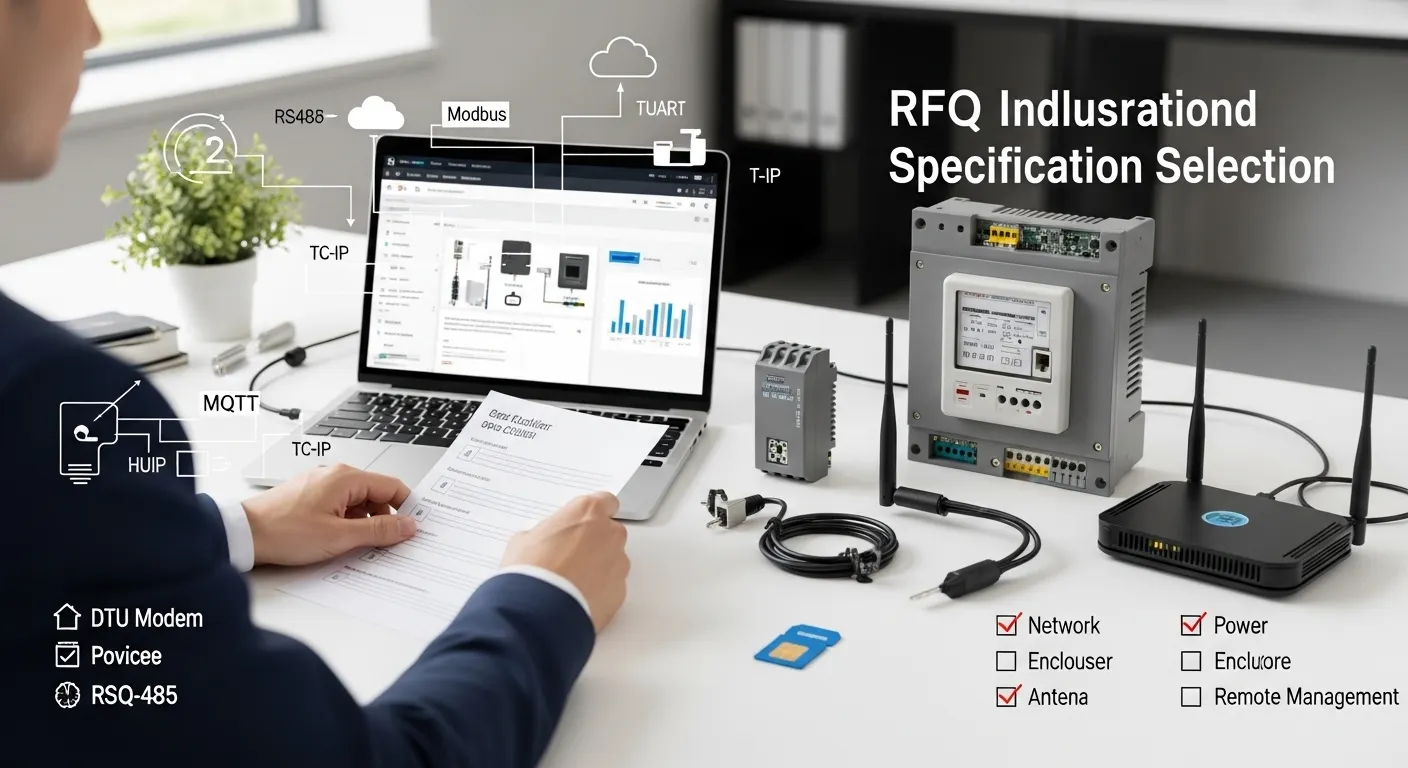
A clear RFQ helps Tespro recommend a suitable DTU modem configuration faster. It also reduces back-and-forth between engineering and procurement teams.
Before requesting a quote, prepare:
- Product or device type required
- Estimated quantity
- Application or project type
- Meter, PLC, sensor, or controller model
- Interface requirements: RS232, RS485, TTL, Ethernet, or I/O
- Protocol requirements: Modbus, TCP/UDP, MQTT, HTTP, transparent mode, or other
- Network type: 4G, 5G, Ethernet, NB-IoT, Cat-M1, or mixed
- SIM, APN, static IP, or VPN requirements
- Server, cloud, SCADA, API, or platform requirements
- Power supply and voltage range
- Operating environment and cabinet conditions
- Enclosure and mounting requirements
- Antenna and signal conditions
- Remote configuration or management needs
- Datasheet, sample, demo, or OEM/ODM needs
- Delivery destination
- Site drawing, system diagram, or written specification if available
If you are not sure which details matter, send what you already have. Tespro’s team can help clarify missing technical points before model selection.
Why Work With Tespro for Industrial DTU Projects?
Tespro supports buyers who need more than a standalone communication device. Many projects involve meters, optical probes, DTUs, industrial routers, gateways, test equipment, software platforms, and integration planning.
This is useful for buyers who need to connect field hardware into a larger smart metering or industrial IoT workflow. Instead of evaluating the DTU alone, Tespro can help review the interface, network, power, deployment environment, and data path.
That approach is especially valuable for:
- Utility companies planning AMR or AMI projects
- Meter manufacturers and distributors
- Industrial IoT integrators
- SCADA and remote monitoring teams
- Factory automation engineers
- Energy management companies
- OEM/ODM buyers preparing project requirements
The goal is simple: choose a DTU configuration that fits the device, site, network, and system before procurement starts.
Frequently Asked Questions
What makes an industrial DTU modem rugged?
A rugged DTU should match the site’s temperature, power, vibration, dust, humidity, mounting, and signal conditions. Buyers should also check watchdog recovery, antenna planning, surge protection needs, and remote maintenance requirements.
Is RS485 enough for smart meter communication?
RS485 is common in smart metering, but the protocol and serial settings still matter. Confirm baud rate, parity, meter protocol, wiring distance, and whether the DTU needs transparent transmission or protocol handling.
Should I choose 4G or 5G for a DTU project?
Choose based on coverage, data volume, latency needs, carrier support, and project lifetime. Many meter reading and telemetry projects can use 4G, while 5G may suit higher-data or future-ready deployments.
Do I need APN, static IP, or VPN?
It depends on the network architecture. If the server needs secure or direct access to field devices, private APN, static IP, or VPN may be required. Confirm this before quotation.
Why is antenna planning important?
Metal cabinets, basements, remote sites, and substations can reduce signal quality. Poor signal can cause data loss or repeated reconnects. External antenna placement should be checked before deployment.
What should I prepare before asking for a quote?
Prepare the device model, interface, protocol, network type, SIM/APN/VPN needs, power supply, site environment, mounting method, antenna plan, quantity, and platform requirements. A system diagram is also helpful.
Request an Industrial DTU Modem Quote From Tespro
Share your project requirements with Tespro to get help selecting a suitable industrial DTU modem configuration. Send your device type, quantity, application, meter or controller model, interface, protocol, network type, SIM/APN/VPN/static IP needs, platform or server requirements, power supply, operating environment, enclosure limits, antenna plan, datasheet or sample needs, and delivery destination.
Tespro can review your rugged deployment conditions and help you prepare the right DTU specification for quotation, consultation, sample request, demo discussion, or OEM/ODM project support.