-1791966549842.webp)





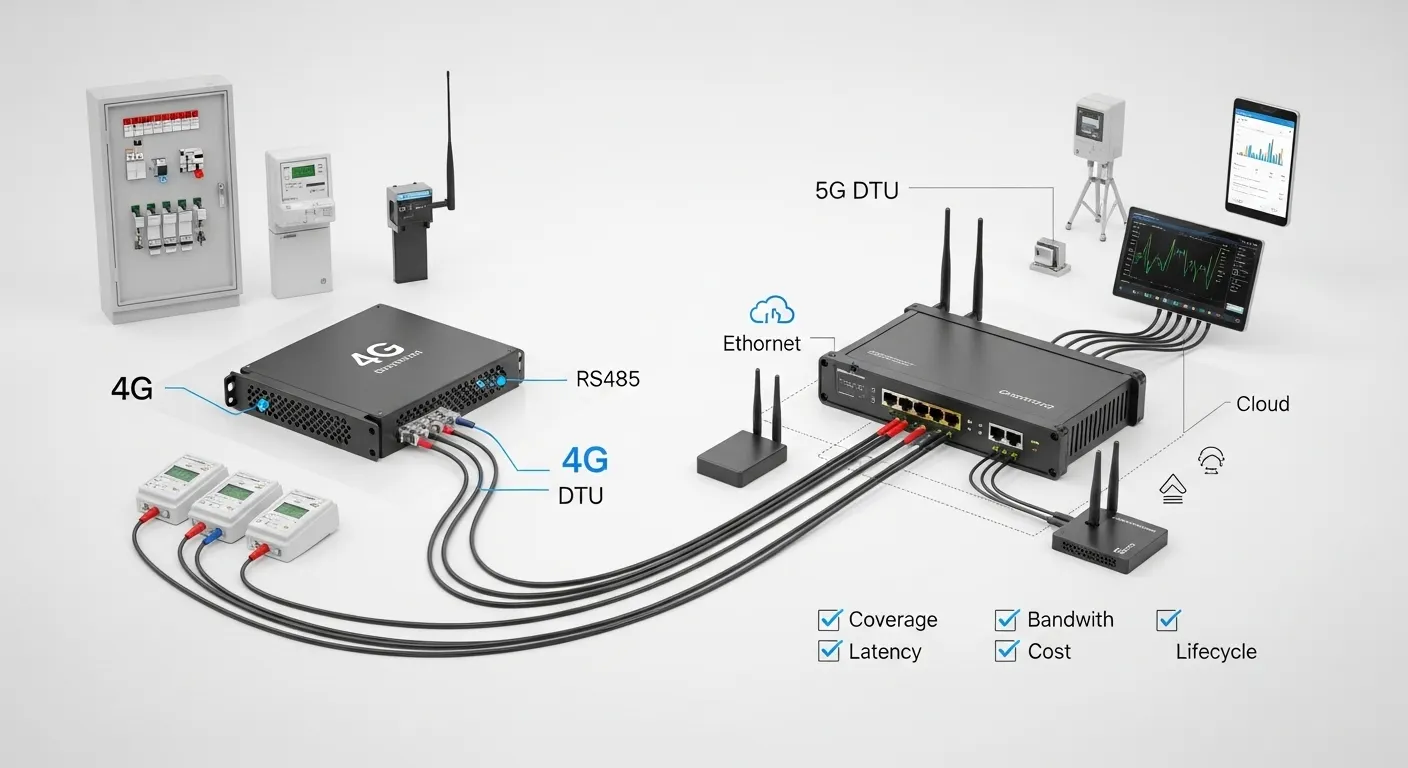

Tespro provides industrial metering, connectivity, and energy data solutions for utility companies, AMI/AMR project teams, industrial IoT integrators, SCADA teams, automation engineers, and procurement buyers. When comparing a 5G DTU, 4G DTU, or 5G industrial router, the right choice depends on interface requirements, data volume, latency, cellular coverage, SIM/APN setup, VPN or static IP needs, power supply, enclosure, and platform integration.
For many smart meter reading, Modbus telemetry, and remote monitoring projects, a 4G DTU is still the practical and cost-effective option. A 5G DTU or 5G industrial router becomes more relevant when the project needs higher bandwidth, lower latency, more connected devices, video/image data, mobile assets, longer lifecycle planning, or advanced remote access.
Use this guide to decide whether 4G is enough, when 5G matters, and what to prepare before requesting a quotation from Tespro.
4G DTU vs 5G DTU: Buyer Verdict Table
| Buyer requirement | 4G DTU is usually enough when… | Consider 5G DTU or 5G industrial router when… | RFQ detail to confirm |
|---|---|---|---|
| Meter reading | Data is collected hourly, daily, or by scheduled polling | The project needs high-frequency reads from many endpoints | Meter type, read frequency, protocol |
| Serial device connection | Devices use RS485 or RS232 with small data packets | Multiple serial and Ethernet devices need one communication node | Interface, baud rate, port count |
| Bandwidth | Data is mainly meter values, alarms, or status signals | Video, images, edge data, or large files are transmitted | Data size and upload frequency |
| Latency | Remote monitoring does not need real-time response | Mobile equipment, control systems, or low-latency workflows are involved | Required response time |
| Coverage | 4G signal is stable at the field site | 5G coverage is confirmed and useful for the application | Carrier, bands, signal condition |
| Cost control | Procurement wants reliable connectivity at lower device cost | Longer lifecycle or higher performance justifies the upgrade | Budget, quantity, deployment period |
| Remote access | Basic server connection is enough | VPN, static IP, multi-device access, or failover is required | APN, VPN, static IP, security needs |
| Application fit | AMR/AMI, water metering, energy monitoring, basic telemetry | Smart factory, AGV/AMR, video monitoring, ports, logistics, dense IoT | Use case and site layout |
When Is 4G DTU Still Enough?
A 4G DTU is often enough when the project sends small packets from meters, sensors, PLCs, or field devices to a server or platform. Many AMR and AMI projects do not need 5G bandwidth because meter values, alarms, and status data are lightweight.
For smart meter communication, the bigger risk is often not speed. The bigger risk is choosing the wrong serial interface, missing protocol requirements, poor signal quality, or unclear server access settings.
Choose 4G DTU when the project involves:
- RS485 or RS232 meter data transmission
- Modbus RTU or transparent serial transmission
- Scheduled meter reading
- Water, gas, electricity, or energy monitoring projects
- Remote alarms and status updates
- Basic data forwarding to an AMR, AMI, SCADA, or cloud platform
- Field sites where 4G coverage is stronger than 5G coverage
If your team is still defining DTU specifications, review Tespro’s data transmission unit industrial buyer checklist before finalizing the RFQ.
When Does 5G DTU or a 5G Industrial Router Matter?
5G matters when the project has a real performance reason. It should not be selected only because it is newer.
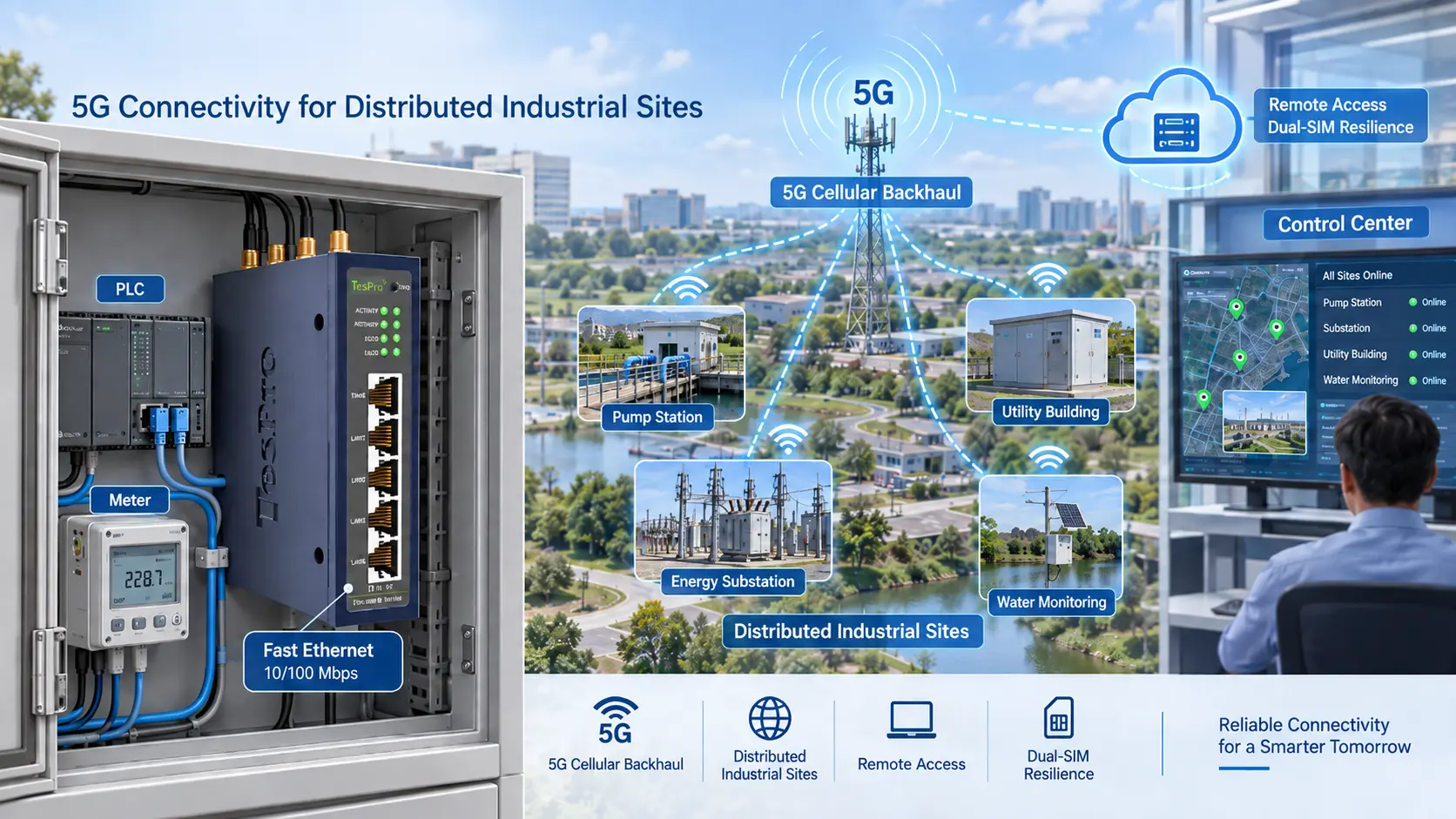
A 5G DTU or 5G industrial router may be a better fit when the project needs higher bandwidth, lower latency, more device connections, advanced remote access, or a longer communication hardware lifecycle. This is more common in industrial IoT and automation projects than in simple meter reading.
Consider 5G when the application includes:
- High-frequency data collection
- Video, image, or large file transmission
- AGV, AMR, mobile robot, port, or logistics applications
- Smart factory or dense industrial IoT networks
- Multi-device Ethernet and serial connectivity
- VPN-based remote access to site equipment
- Dual SIM, failover, or multi-network planning
- Private cellular or enterprise network requirements
- Long-term upgrade planning for critical infrastructure
However, buyers should confirm real site coverage first. A 5G device will not solve a weak network, poor antenna placement, incorrect APN setting, or unsupported backend configuration.
DTU, Industrial Router, or Gateway: Which One Fits?
The upgrade decision is not only 4G vs 5G. Buyers should also confirm the correct device category.
A DTU is usually suitable when the project needs serial data transmission from meters or industrial devices to a remote server. It is often used for RS485/RS232 field data collection.
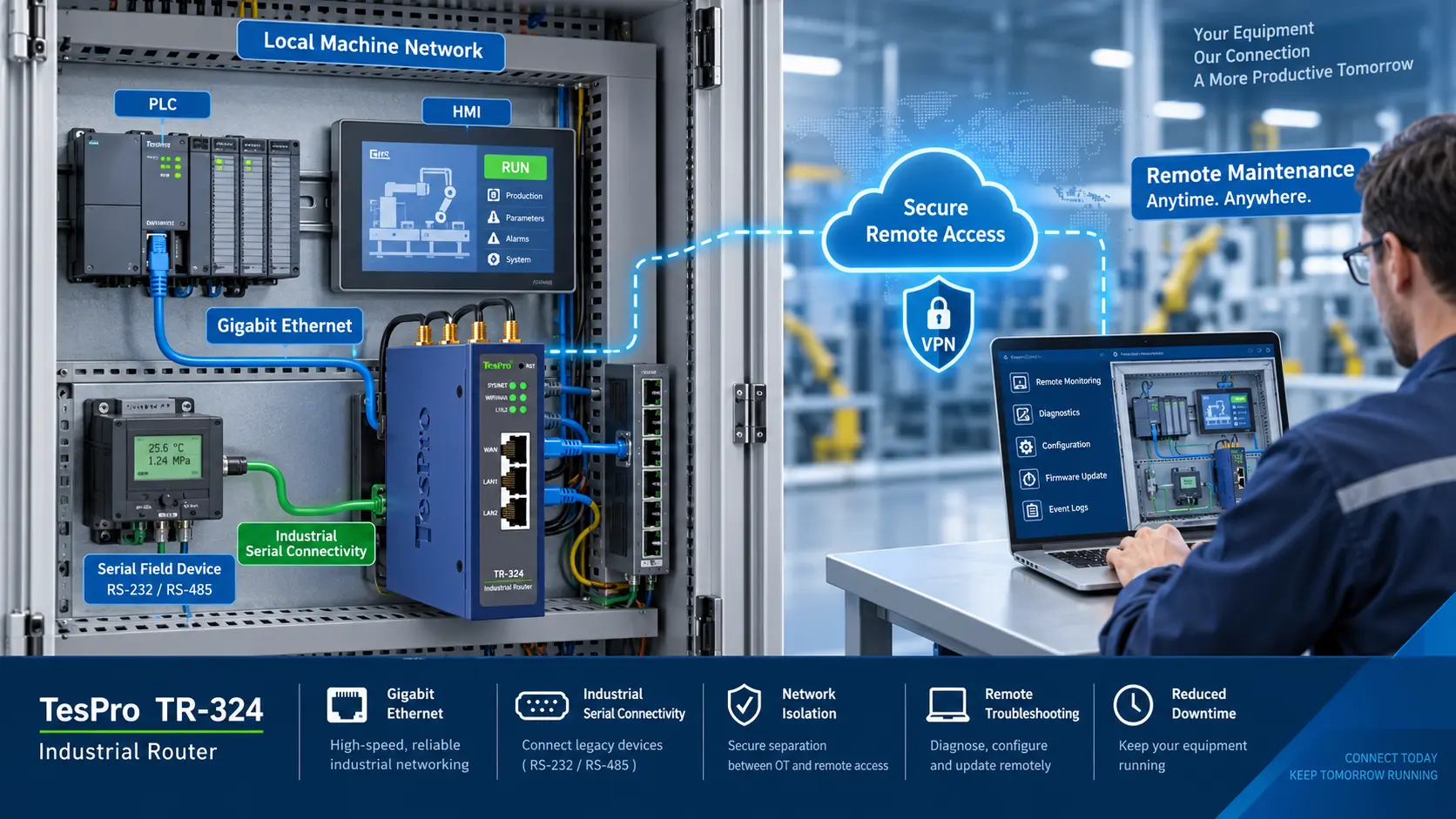
An industrial router is better when the site needs Ethernet networking, VPN access, multiple connected devices, SIM failover, or remote access to a local machine network.
An industrial gateway is more suitable when the project needs protocol conversion, device-to-cloud integration, local buffering, MQTT or API workflows, or data processing before upload.
For example, a simple smart meter reading project may only need a 4G DTU. A remote cabinet with meters, PLCs, and an HMI may need an industrial router. A project connecting meters, sensors, and cloud software may require a gateway.
Key Specifications to Confirm Before Upgrading
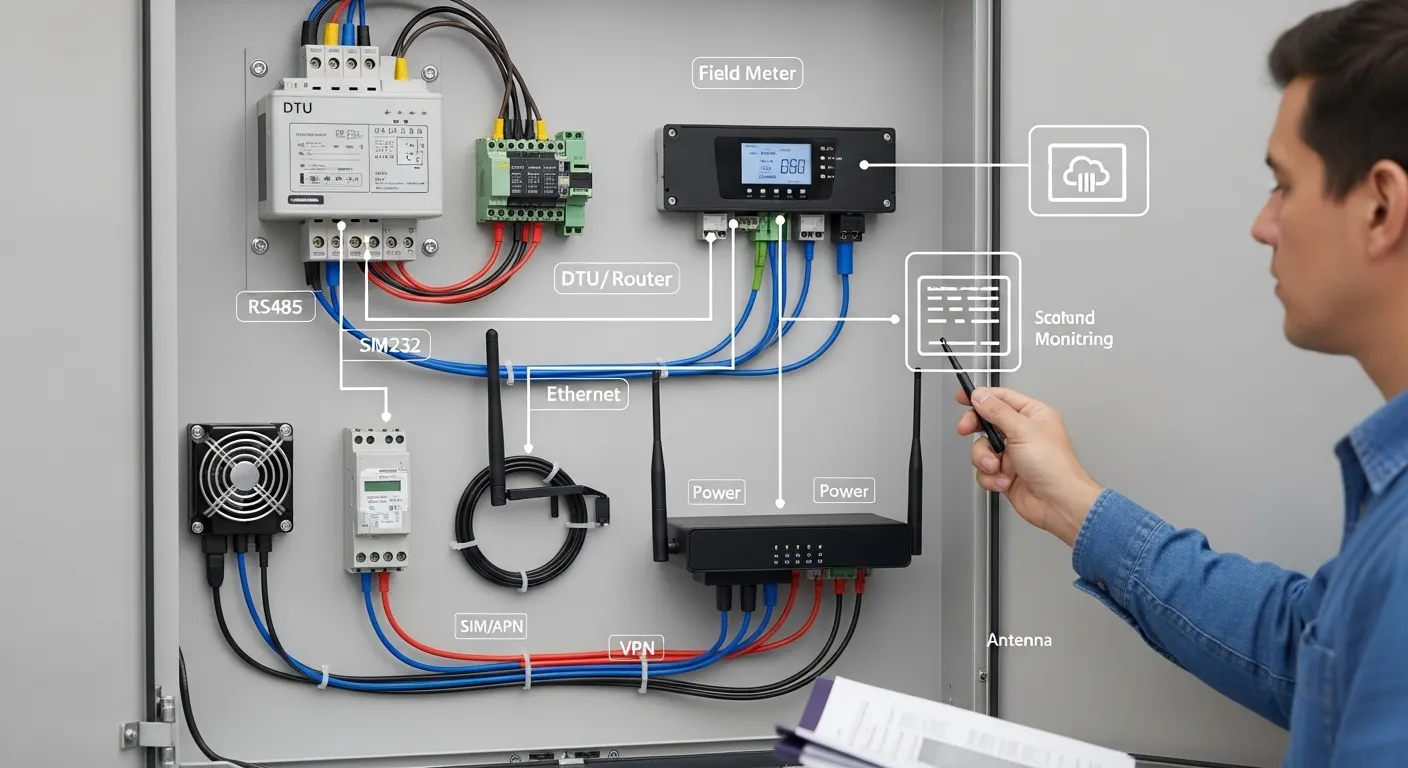
Before choosing 4G or 5G, buyers should confirm the actual communication path. A device that looks suitable in a datasheet may still fail if the interface, network, or platform requirement is wrong.
Confirm these technical details before requesting a quote:
- Device type: DTU, router, gateway, or combined solution
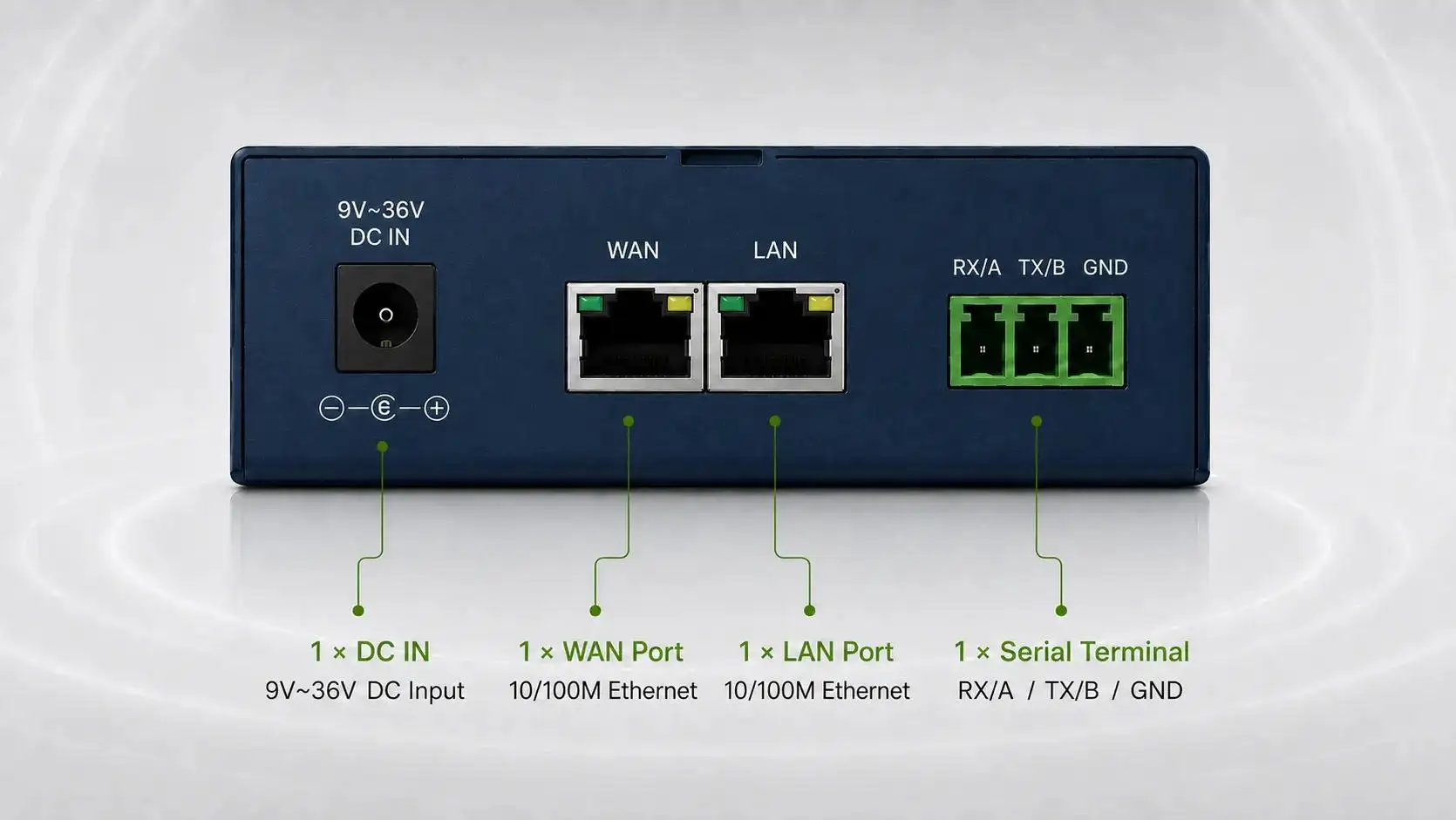
- Field interface: RS485, RS232, Ethernet, DI/DO, USB, or other port needs
- Serial settings: baud rate, parity, stop bit, data bit
- Protocol: transparent transmission, Modbus RTU, Modbus TCP, TCP/IP, UDP, HTTP, MQTT, or project-specific protocol
- Network type: 4G LTE, 5G, LTE fallback, private network, or operator-specific requirement
- SIM requirements: single SIM, dual SIM, APN, private APN, static IP, or VPN
- Remote access: server connection, SCADA access, cloud platform, or maintenance tunnel
- Power supply: voltage range and backup power needs
- Installation: cabinet, DIN rail, wall mount, outdoor box, antenna position
- Environment: temperature, humidity, dust, vibration, or outdoor exposure
- Security and management: authentication, remote configuration, firmware update, access control
- Software integration: AMR/AMI platform, SCADA, cloud dashboard, API, or data export
For AMR-specific 4G deployment planning, Tespro’s 4G DTU AMR projects procurement checklist can help your team prepare clearer project details.
Coverage, Latency, and Cost: Avoid Overbuying
A 5G upgrade should be justified by the application. Procurement teams should compare lifecycle value, not only device speed.
For meter reading, latency is usually less important than stability, coverage, and correct integration. If the system reads meters every hour or every day, 5G latency may not add real value.
For automation, mobile equipment, video monitoring, or high-frequency industrial data, latency and bandwidth become more important. In these cases, 5G may support better performance if the network and backend system are also ready.
Cost should include more than the device price. Buyers should also consider SIM plans, antenna installation, cabinet space, engineering time, remote maintenance, platform configuration, and future replacement risk.
Deployment Details That Affect Device Selection
Field conditions can change the best choice. A device selected for a clean indoor cabinet may not fit an outdoor, high-temperature, weak-signal, or mobile environment.
Before final selection, check:
- Is 4G or 5G coverage stable at the actual installation point?
- Will the antenna be inside a metal cabinet or mounted externally?
- Is the site indoor, outdoor, dusty, humid, or exposed to vibration?
- Is the power supply stable?
- Does the project need backup power?
- Will engineers need remote configuration after installation?
- Is the device connecting one meter, many meters, or a local network?
- Does the platform require fixed IP, VPN, MQTT, or another connection method?
- Who will maintain SIM cards, firmware, and configuration files?
These details help Tespro recommend a more suitable device configuration instead of only quoting a generic model.
How This Fits AMR, AMI, SCADA, and Industrial IoT Projects
In AMR and AMI projects, the main goal is reliable meter data collection. The device must match the meter interface, reading schedule, protocol, cellular network, and platform requirements. A stable 4G DTU may be enough when the data volume is low.
In SCADA and remote monitoring projects, the buyer may need VPN access, static IP, alarm transmission, or more secure networking. An industrial router may fit better than a basic DTU.
In factory automation and industrial IoT projects, the system may include PLCs, sensors, machines, cameras, and cloud dashboards. A router or gateway may be required when the project needs local networking, protocol conversion, or device-to-cloud integration.
What Should Buyers Send for RFQ?
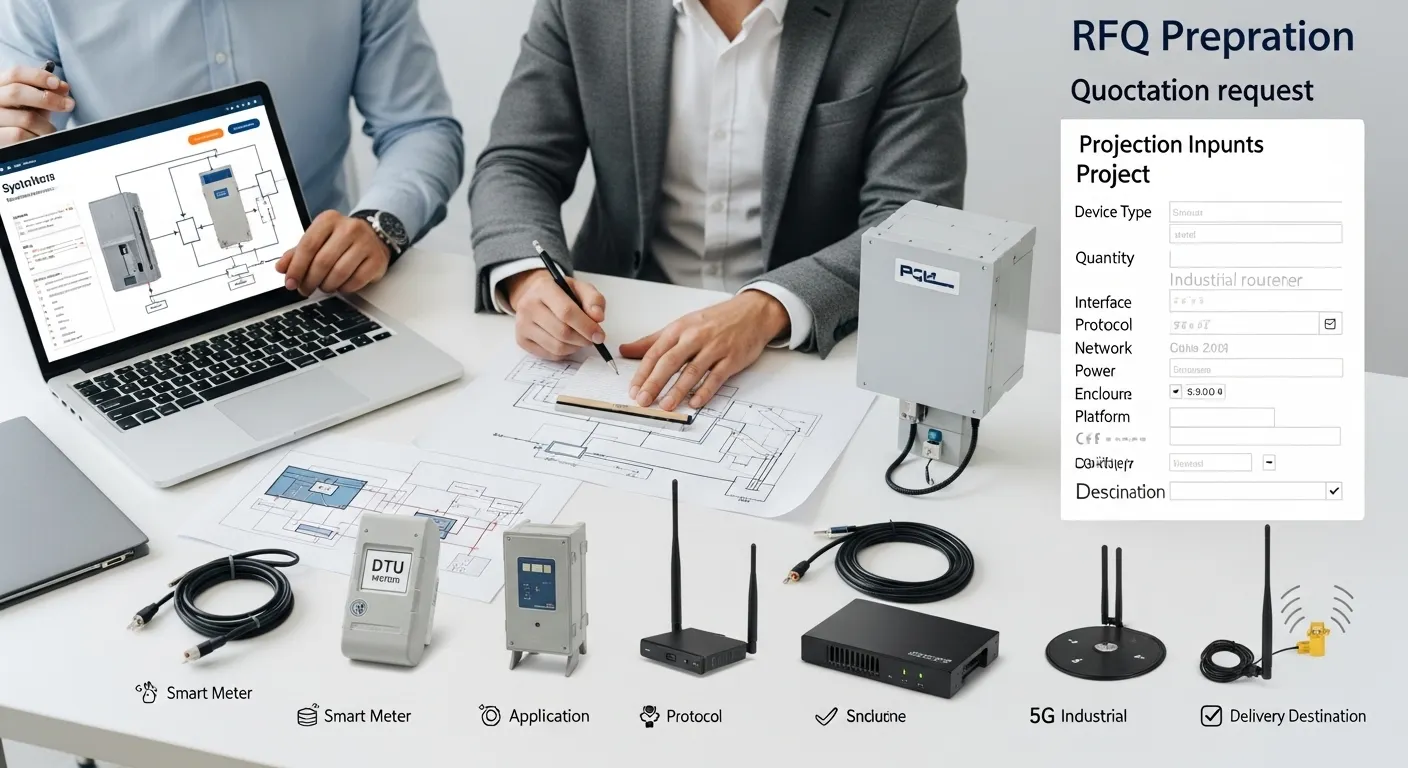
A clear RFQ helps Tespro recommend the right 4G DTU, 5G DTU, industrial router, or gateway option. It also reduces back-and-forth during technical selection.
Send these details when requesting a quote, datasheet, sample, demo, or consultation:
- Product type needed: DTU, industrial router, gateway, or complete solution
- Quantity and expected deployment scale
- Application: AMR, AMI, SCADA, remote monitoring, factory automation, smart grid, or industrial IoT
- Meter, PLC, sensor, or field device model if available
- Required interface: RS485, RS232, Ethernet, DI/DO, USB, or other
- Protocol or data format
- Network preference: 4G, 5G, LTE fallback, private network, or operator requirement
- SIM, APN, VPN, static IP, or remote access needs
- Cloud, server, API, dashboard, or software platform requirements
- Power supply and backup power conditions
- Installation environment and enclosure constraints
- Antenna placement or signal concerns
- Security and remote management requirements
- Delivery destination
- Datasheet, sample, demo, or OEM/ODM support request
- Any system diagram, site photo, wiring plan, or written specification
Why Work With Tespro for DTU and Industrial Connectivity Selection?
Tespro supports buyers across industrial metering, smart meter communication, data transmission, industrial routers, gateways, meter testing, calibration, and software platform workflows. This makes the selection process more practical for utility and industrial projects where hardware, communication, and data systems must work together.
Instead of choosing 5G only by speed, our team helps buyers compare the full project requirement: field interface, protocol, cellular network, remote access, platform integration, power, enclosure, and deployment conditions.
This approach helps procurement and engineering teams choose a device category that fits the real project, not only the newest network generation.
Frequently Asked Questions
Is 4G DTU enough for smart meter reading?
Yes, 4G DTU is often enough for scheduled meter reading, RS485/RS232 data, Modbus polling, alarms, and low-volume AMR/AMI communication. Coverage, protocol fit, and platform integration are usually more important than 5G speed.
When should buyers upgrade to 5G DTU?
Upgrade when the project needs higher bandwidth, lower latency, many connected devices, video or image data, mobile equipment, longer lifecycle planning, or confirmed 5G network value at the deployment site.
Is a 5G industrial router better than a 5G DTU?
Not always. A DTU is better for simple serial data transmission. A 5G industrial router is better when the site needs Ethernet networking, VPN access, SIM failover, multiple devices, or remote access to a local network.
Do I need VPN, APN, or static IP?
You may need them if the project requires secure remote access, SCADA connection, private server communication, or remote maintenance. Confirm these requirements before choosing the device and SIM plan.
What interface should I confirm first?
Confirm the field device interface first. Common requirements include RS485, RS232, Ethernet, DI/DO, and serial settings such as baud rate, parity, data bit, and stop bit.
Does 5G always reduce latency?
No. Real latency depends on coverage, operator network, signal quality, server location, routing, and device configuration. 5G helps only when the full communication path supports the required performance.
Share your project requirements with Tespro to compare 4G DTU, 5G DTU, 5G industrial router, or gateway options. Send your device type, quantity, application, interface, protocol, network, SIM/APN/VPN/static IP needs, platform requirements, power supply, installation environment, and datasheet, sample, demo, quotation, or OEM/ODM support request.