-1791966549842.webp)






Tespro provides data transmission unit options and related industrial connectivity solutions for utility metering, AMI/AMR projects, SCADA connectivity, factory automation, energy monitoring, and industrial IoT deployments. Buyers should select a DTU device based on the field interface, protocol mode, network type, SIM/APN requirements, power supply, enclosure, antenna conditions, security needs, and target software or server platform.
A data transmission unit is not chosen only by asking for “4G” or “M2M data transfer.” The right configuration depends on what device is being connected, how the data must be transmitted, and where the unit will be installed.
Use this checklist before requesting a quotation, datasheet, sample, or consultation from Tespro. It will help your engineering and procurement teams prepare clear requirements and avoid choosing a device that cannot match the real field conditions.
When Is a Data Transmission Unit Needed?
A DTU is usually needed when a meter, PLC, sensor, controller, data logger, or industrial device must send data from the field to a server, cloud platform, SCADA system, or energy management platform.
Common project scenarios include:
- Remote smart meter reading
- AMI and AMR data collection
- Power monitoring and energy management
- Industrial equipment monitoring
- Sensor-to-cloud communication
- Utility field device communication
- Factory automation data upload
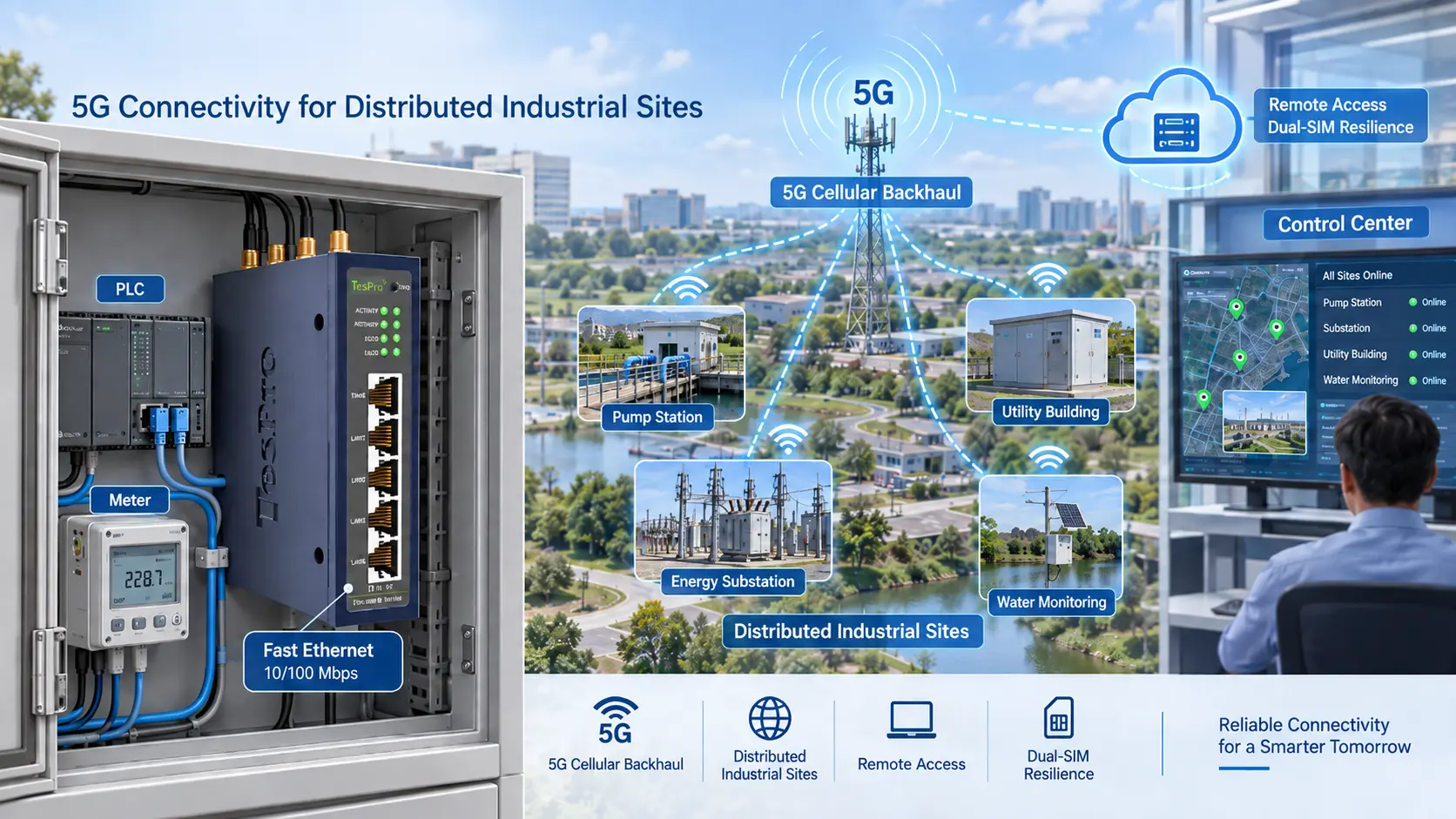
- Remote site monitoring through cellular networks
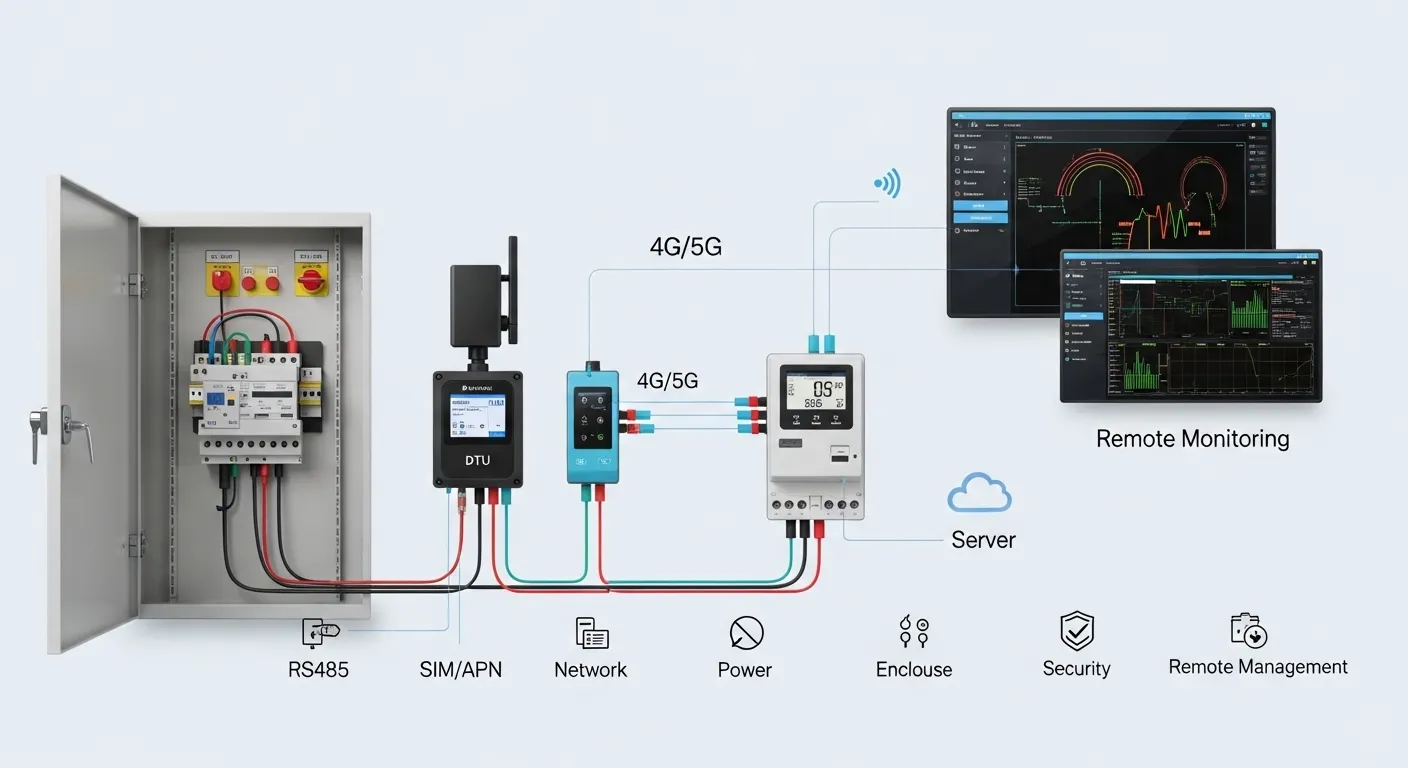
In many projects, the DTU works between the field device and the communication network. For example, a meter may send data through RS485, and the DTU forwards that data through a cellular network to a server.
The buyer’s first task is to define the complete data path, not just the device name.
Data Transmission Unit Selection Starts With the Interface
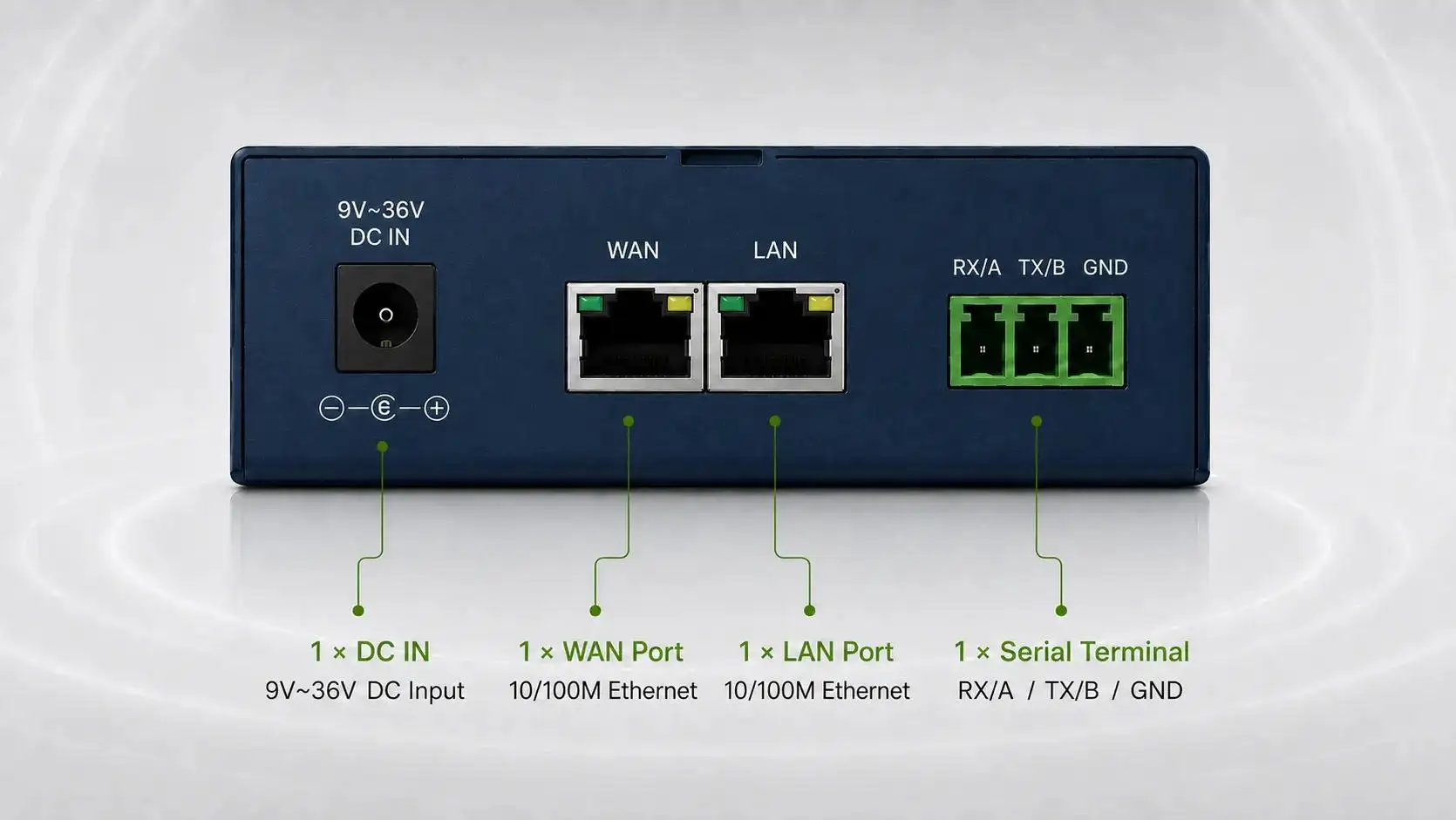
The interface is the physical connection between the DTU and the field device. If this part is wrong, the project can fail before software integration even starts.
Before choosing a DTU, confirm whether your field device requires:
- RS232
- RS485
- RS422
- TTL
- Ethernet
- Single serial port or multiple ports
- Screw terminal, DB connector, or other wiring method
For metering and industrial projects, RS485 is common because it can support multi-drop field wiring. RS232 may appear in older equipment, testing devices, or single-device communication. Ethernet may be needed when the device already supports IP communication.
You should also confirm the serial communication settings:
- Baud rate
- Data bits
- Stop bits
- Parity
- Device address
- Wiring distance
- Number of connected devices on the same bus
These details help Tespro understand whether a simple DTU, a gateway, or another connectivity device is more suitable.
Transparent Transmission or Protocol Conversion?
Some projects only need transparent transmission. In this mode, the DTU passes serial data to the server without changing the protocol. This can be suitable when the platform or server already knows how to read the field device data.
Other projects need protocol conversion or data formatting. For example, a buyer may need Modbus RTU data converted to Modbus TCP, MQTT, HTTP, or another platform-friendly format.
Confirm whether your project needs:
- Transparent serial-to-IP transmission
- TCP or UDP connection
- Modbus RTU communication
- Modbus TCP communication
- MQTT publishing
- HTTP or API-based upload
- Custom data format
- SCADA or energy platform integration
- Local data buffering
- Alarm or event reporting
This decision is important. A basic DTU may be enough for transparent data transfer. However, if the system needs protocol conversion, edge processing, or cloud integration, an industrial gateway may be a better fit.
Network Requirements: 4G, 5G, Ethernet, or Other Options
The network should match the site condition, data volume, coverage, and project life cycle. For many remote metering and industrial IoT projects, cellular communication is used because wired internet is not available at every site.
Before requesting a quote, confirm the required network type:
- 4G LTE
- 4G Cat.1
- 5G
- NB-IoT
- Ethernet
- Wi-Fi
- Backup network requirement
- Single SIM or dual SIM requirement, if applicable
Do not choose 5G only because it sounds newer. Many meter reading and low-data applications may not need high bandwidth. On the other hand, large data volume, low latency, or long-term network planning may justify a higher network option.
Also confirm the operating country or region. Cellular band support, carrier compatibility, and network availability can vary by market.
SIM, APN, VPN, and Static IP Details
SIM and network architecture details often affect DTU selection. A unit that works in one network may need different configuration for another project.
Your technical team should prepare details such as:
- SIM card type
- Mobile operator or carrier
- Public APN or private APN
- Static IP requirement
- VPN requirement
- VPDN or private network requirement
- Server IP address or domain
- Port number
- Firewall or NAT restrictions
- MQTT broker or HTTP endpoint
- Data reporting interval
These details are especially important for utility, smart city, SCADA, and industrial monitoring projects. If the DTU cannot reach the server because of APN, firewall, or IP restrictions, the hardware may be correct but the deployment will still fail.
DTU, Industrial Router, or Industrial Gateway?
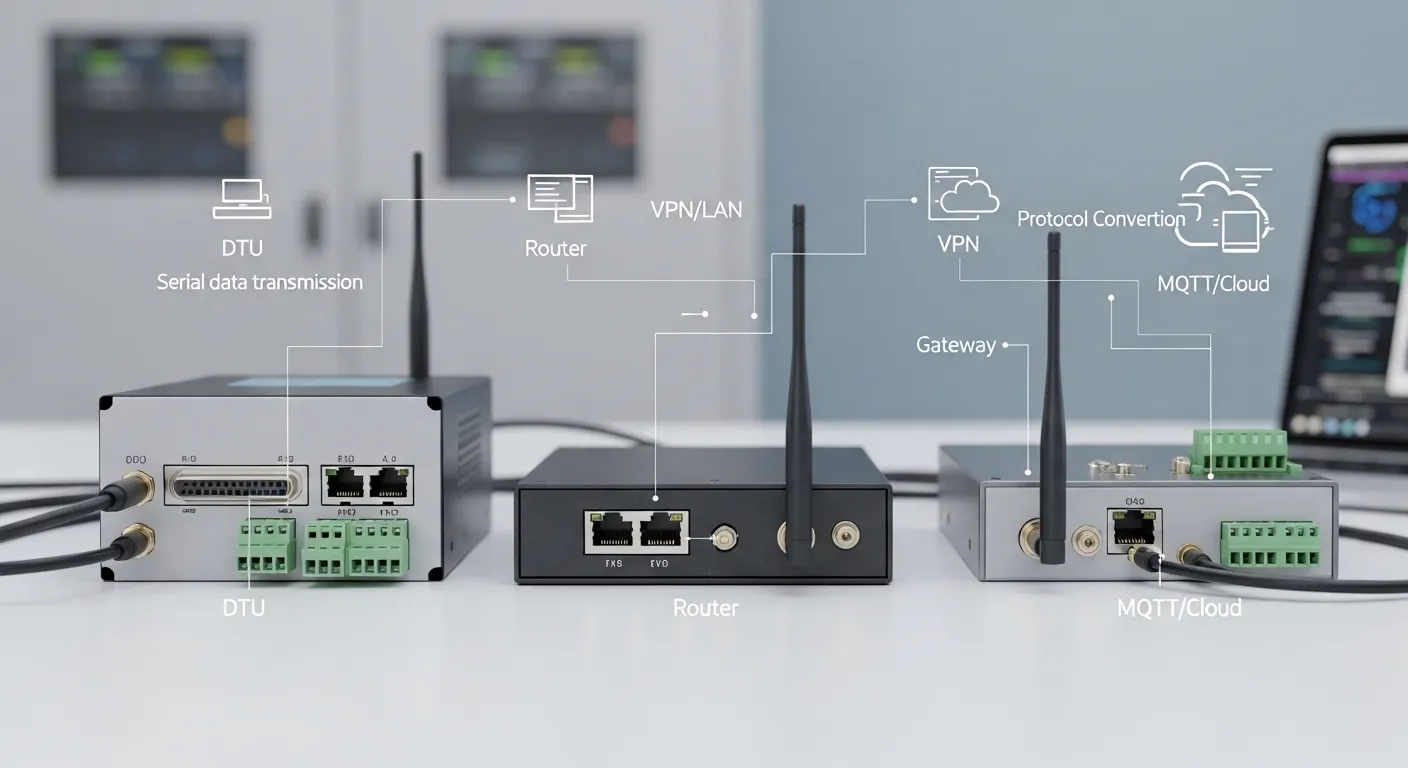
A DTU is not always the right device. Some projects need a router or gateway instead.
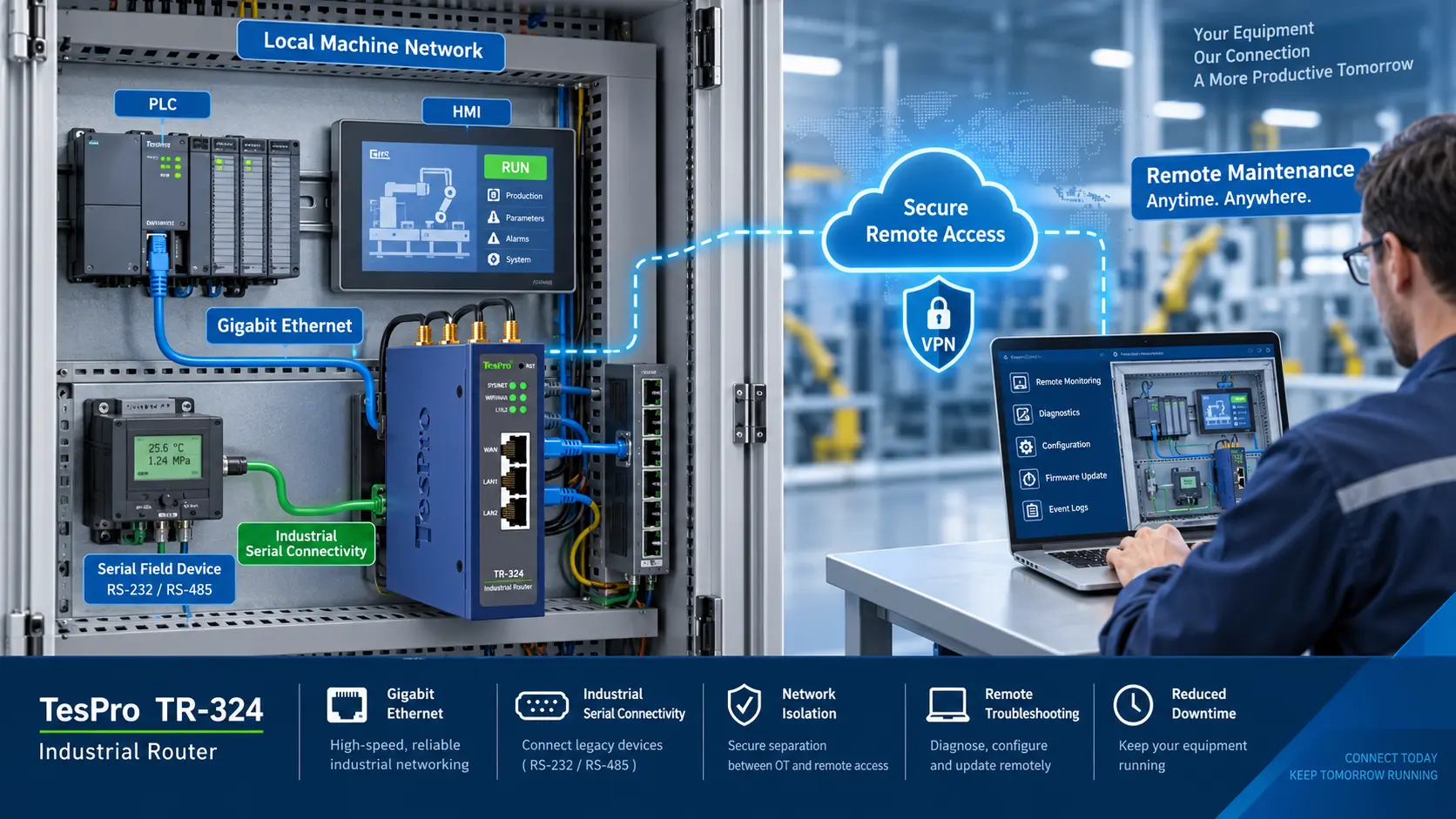
Choose a DTU when the main requirement is serial device data transmission to a server or platform. Choose an industrial router when the site needs network routing, VPN access, LAN connectivity, or multi-device internet access. Choose an industrial gateway when the project needs protocol conversion, local processing, data mapping, or device-to-cloud integration.
For example, a smart meter sending RS485 data to a server may only need a DTU. A remote cabinet with multiple Ethernet devices may need an industrial router. A factory project that connects PLCs, sensors, Modbus devices, and MQTT cloud services may need a gateway.
Tespro can help review the system architecture before quotation so the selected device category fits the project.
Deployment Conditions That Affect DTU Selection
Field conditions matter as much as communication features. A DTU installed inside a clean control cabinet has different requirements from a device installed at an outdoor utility site.
Confirm the following before selection:
- Power supply voltage
- Backup power requirement
- Control cabinet space
- DIN rail, wall mount, or panel mount requirement
- Antenna connector and antenna position
- Signal strength at the installation site
- Indoor or outdoor installation
- Operating temperature range
- Humidity and dust exposure
- Surge or ESD protection requirement
- Cable routing and grounding
- Maintenance access
Antenna planning is often overlooked. A DTU may support the right network, but poor signal inside a metal cabinet can still cause unstable communication. Buyers should check whether an external antenna or better mounting position is needed.
Security and Remote Management Requirements
For one or two test units, manual configuration may be acceptable. For larger AMI, AMR, energy monitoring, or industrial IoT projects, remote management becomes more important.
Before buying, ask whether the project needs:
- Remote configuration
- Firmware update support
- Device status monitoring
- Heartbeat or keep-alive mechanism
- Automatic reconnection
- Data buffering during network interruption
- SMS backup or alerting, if required
- VPN or private network access
- User access control on the platform side
- Maintenance logs
Security should be discussed early. If the DTU connects to utility infrastructure, industrial equipment, or private energy data systems, the buyer should define network access rules before deployment.
RFQ Checklist for Data Transmission Unit Buyers
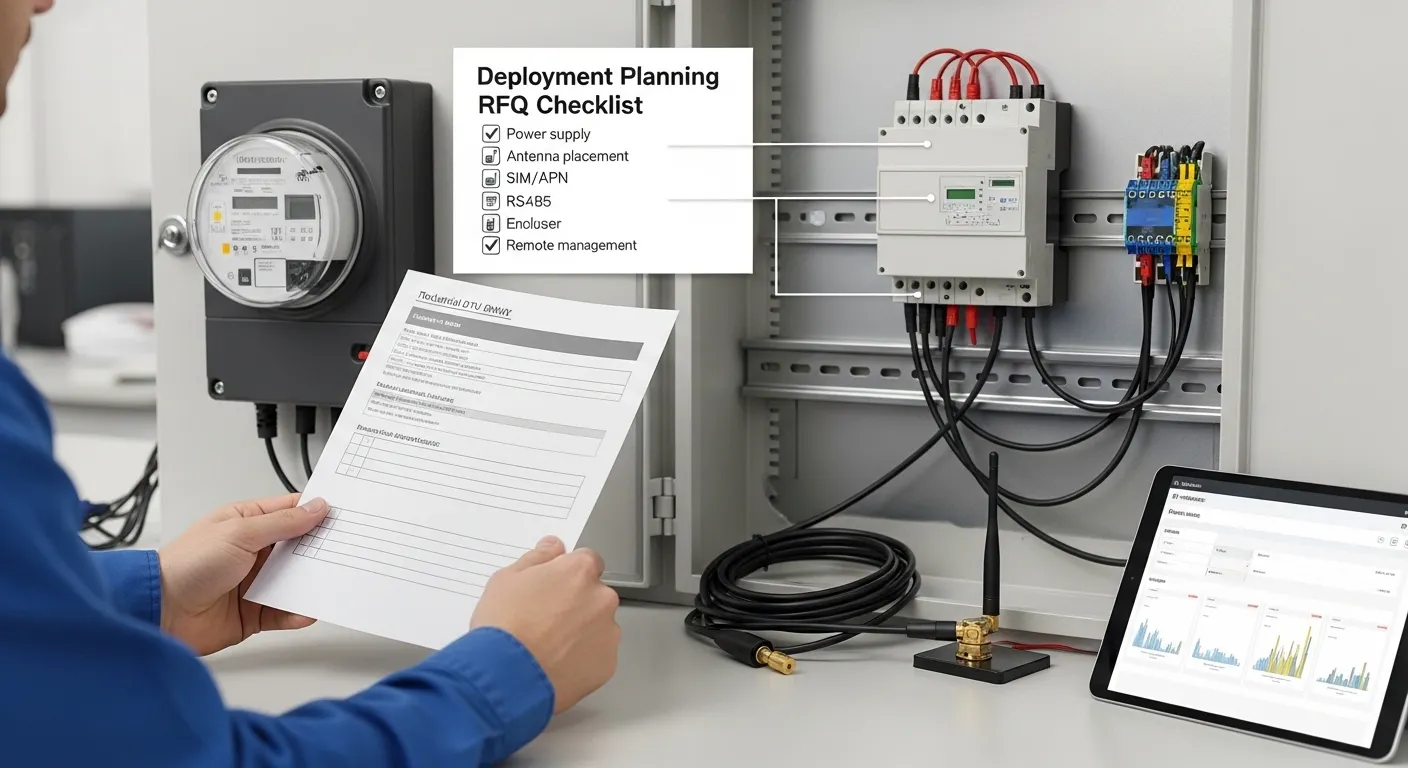
Use this table when preparing your request for Tespro. The more complete your information is, the faster the technical team can recommend the right device direction.
| RFQ item | What to specify | Why it matters |
|---|---|---|
| Application | Smart meter reading, SCADA, energy monitoring, factory automation, remote sensor, or other use case | Helps match the device to the project environment |
| Field device | Meter, PLC, sensor, inverter, controller, or data logger model | Confirms interface and protocol requirements |
| Interface | RS232, RS485, RS422, TTL, Ethernet, number of ports | Ensures physical compatibility |
| Protocol mode | Transparent transmission, Modbus RTU/TCP, MQTT, HTTP, TCP/UDP, custom format | Defines whether DTU or gateway functionality is needed |
| Network | 4G, Cat.1, 5G, NB-IoT, Ethernet, Wi-Fi | Affects model selection and deployment cost |
| SIM/network details | Operator, APN, static IP, VPN, private network, server IP/domain/port | Prevents connectivity issues after installation |
| Power and installation | Voltage, cabinet space, DIN rail/wall mount, antenna location | Confirms field readiness |
| Environment | Indoor/outdoor, temperature, humidity, dust, surge/ESD concerns | Helps avoid reliability problems |
| Software target | SCADA, AMI/AMR system, cloud platform, API, MQTT broker, energy dashboard | Clarifies integration needs |
| Commercial details | Quantity, sample need, datasheet request, delivery destination, project timeline | Supports quotation and procurement planning |
Smart Metering and Industrial IoT Applications
For utility metering projects, the DTU may connect field meters to an AMI/AMR platform, meter data system, or energy monitoring dashboard. Buyers should confirm meter protocol, read frequency, data format, and server connection before ordering.
For industrial IoT projects, the DTU may connect sensors, PLCs, controllers, or energy devices to a cloud platform or SCADA system. In these cases, protocol conversion, buffering, and remote maintenance may be more important than basic data transmission.
Some smart metering projects also need local meter reading tools. If your project includes optical-port meter reading, you may also review Tespro’s IEC 62056 optical probe compliance buyer guide, USB optical probe meter reading buyer checklist, or Bluetooth optical probe field team buying checklist.
Common Selection Mistakes to Avoid
One common mistake is choosing a DTU only by network type. A 4G DTU may still be unsuitable if it lacks the correct serial interface, server connection mode, or protocol behavior.
Another mistake is ignoring SIM and APN details until installation. This can delay deployment when private networks, static IP, VPN, or firewall rules are involved.
Buyers should also avoid assuming every DTU can replace a gateway. If the project needs protocol conversion, local logic, multi-device mapping, or cloud formatting, confirm this before purchase.
Finally, do not skip site-readiness checks. Power supply, antenna placement, cabinet space, temperature, and maintenance access can affect long-term reliability.
Why Work With Tespro for DTU Selection?
Tespro supports industrial metering, connectivity, and energy data projects with hardware and solution categories that include data transmission units, industrial routers, industrial gateways, metering optical probes, meter test equipment, calibrators, and software platforms.
For buyers, this means the conversation can go beyond one device name. Tespro can help review whether the project needs a DTU, router, gateway, optical probe, or software-related integration support.
This is useful for utility companies, meter manufacturers, AMI/AMR teams, system integrators, industrial IoT projects, automation engineers, distributors, and OEM/ODM buyers preparing technical procurement documents.
Frequently Asked Questions
What should I send for a DTU quotation?
Send your application, quantity, field device model, interface, protocol, network type, SIM/APN/VPN/static IP details, server or platform target, power supply, installation environment, and datasheet or sample needs.
Is a DTU the same as an industrial router?
No. A DTU is mainly used for field data transmission. An industrial router is used for network routing, VPN, LAN access, and multi-device connectivity. Some projects may need both types.
Do I need transparent transmission or protocol conversion?
Use transparent transmission when the server can read the original device data. Choose protocol conversion when the data must be changed into Modbus TCP, MQTT, HTTP, JSON, or another platform format.
Can a DTU be used for smart meter reading?
Yes, a DTU can be used in smart meter communication projects when the meter interface, protocol, network, and server connection are correctly matched. Confirm these details before ordering.
Why do APN and static IP details matter?
APN, static IP, VPN, and firewall settings control how the DTU reaches the server. If these are not confirmed early, the device may connect to the network but fail to send data.
When should I choose a gateway instead of a DTU?
Choose a gateway when the project needs protocol conversion, local processing, data mapping, edge logic, or multiple device integrations. A basic DTU is better for simpler serial data transmission.
Request a DTU Quote or Technical Consultation
Share your project requirements with Tespro to request a quotation, datasheet, sample, demo, or technical consultation. Include the device type, quantity, application, meter or equipment model, interface, protocol, network type, SIM/APN/VPN/static IP needs, server or platform target, power supply, installation environment, enclosure limits, remote management needs, delivery destination, and any system diagram or written specification.