-1791966549842.webp)





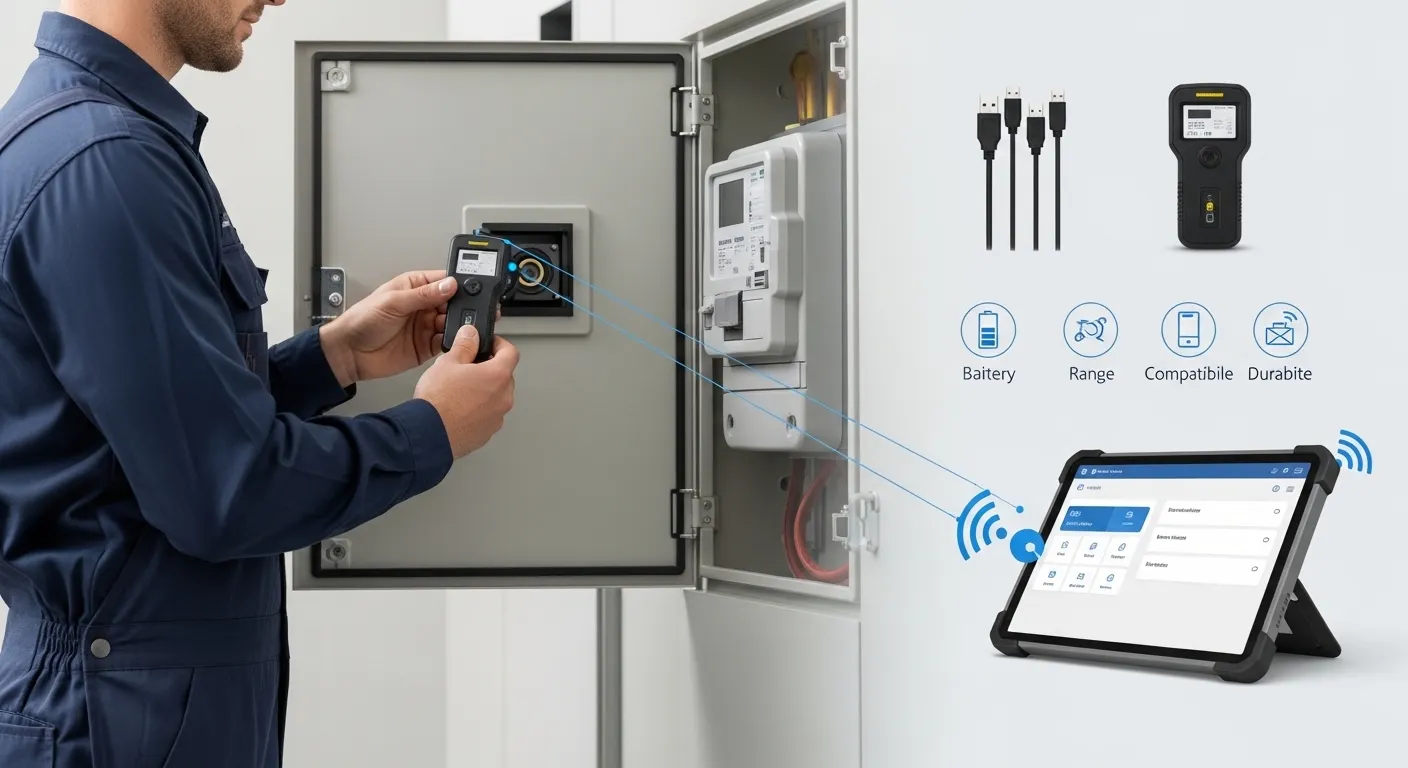

Tespro provides metering optical probes and related smart metering hardware for utilities, AMR/AMI teams, meter manufacturers, system integrators, and field service teams. A Bluetooth optical probe is usually selected when teams want faster meter-to-mobile communication, fewer cable failures, and a cleaner field workflow than USB or RS232 cable-based reading.
For field technicians, the buying decision is not only “wired or wireless.” The probe must match the meter standard, optical port, reading software, mobile device, battery requirement, range expectation, and daily charging process. A wireless optical probe can improve movement around meter rooms, cabinets, substations, and customer sites, but only when compatibility is confirmed before purchase.
This checklist helps buyers prepare a practical specification before requesting a Tespro quote, datasheet, sample, or product selection consultation.
When Is a Bluetooth Optical Probe Better Than a Cable Probe?
A cable-based optical probe can work well in lab, desktop, or stable service environments. However, field reading teams often deal with tight cabinets, multiple meter locations, handheld devices, outdoor conditions, and repeated cable handling.
A Bluetooth optical probe is useful when the buyer wants to:
- Reduce USB, RS232, or adapter cable wear
- Connect the probe to a mobile phone, tablet, handheld terminal, or laptop
- Move more freely during meter reading routes
- Avoid pulling on cables in crowded meter cabinets
- Support a mobile meter reading workflow
- Reduce technician setup time between meters
- Use one field tool across multiple site visits
The upgrade is most valuable when the field team already has a clear meter reading application, device OS, and communication workflow. If the team still depends on a desktop-only application, a USB probe may still be the better option. For wired model selection, buyers can also review Tespro’s USB optical probe meter reading buyer checklist.
Confirm Meter Compatibility Before Comparing Wireless Features
Bluetooth improves the connection between the probe and the technician’s device. It does not automatically solve meter protocol or optical port compatibility.
Before comparing battery life or range, buyers should confirm the meter side of the application. This may include:
- Meter model and manufacturer
- Electricity, water, gas, heat, or other meter type
- Optical port type and physical attachment requirement
- IEC 62056-21 or IEC 1107 requirement
- ANSI C12.18 or ANSI Type 2 requirement
- DLMS/COSEM or other meter communication requirement
- Baud rate and dynamic baud-rate behavior
- Whether transparent communication or virtual COM behavior is needed
- Reading, programming, configuration, or testing use case
For projects centered on IEC communication, the IEC 62056 optical probe compliance buyer guide can help buyers understand which standard details to confirm before purchase.
Bluetooth Optical Probe Buying Checklist for Field Teams
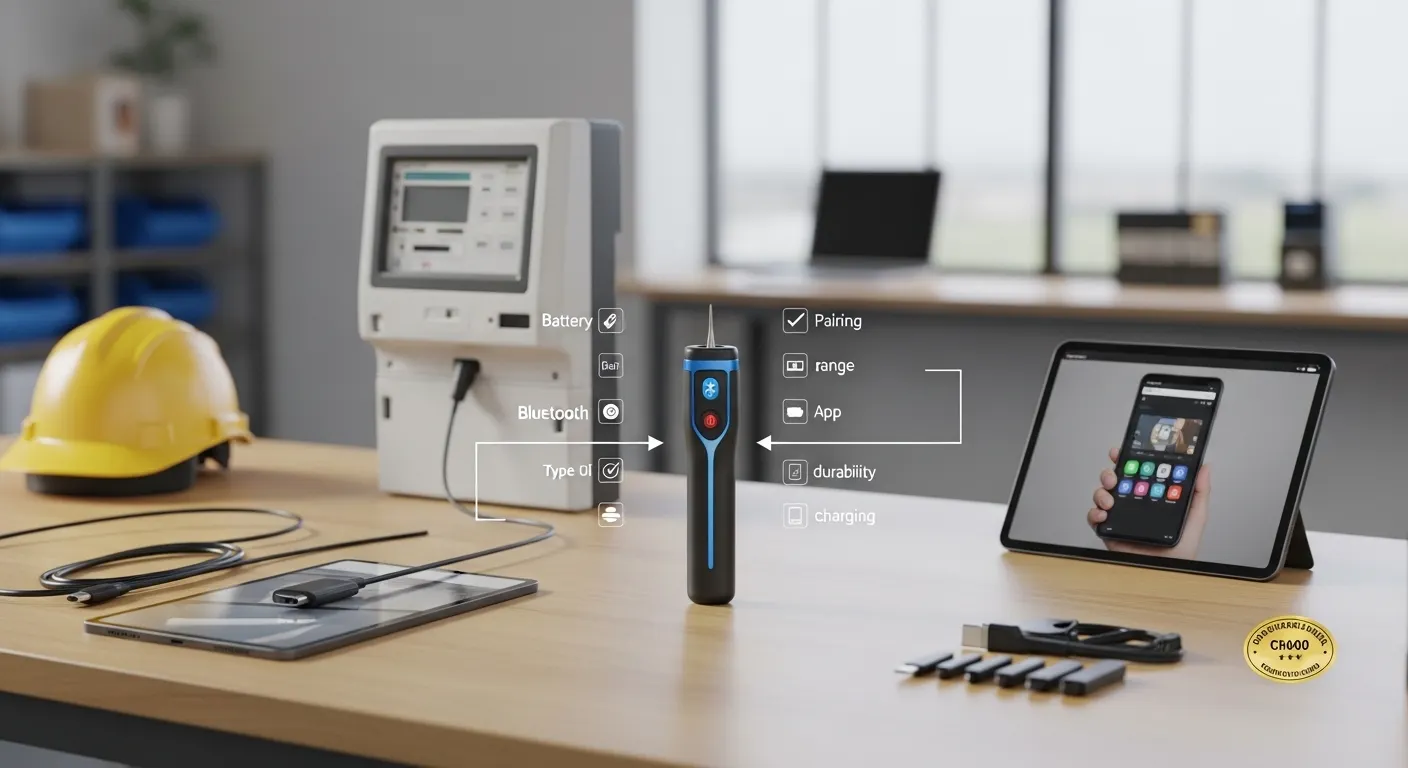
The table below shows the main buying factors that affect field performance, compatibility, and quotation accuracy.
| Buying factor | What to confirm | Why it matters for field teams | RFQ detail to send Tespro |
|---|---|---|---|
| Battery life | Working time, standby time, charge time | Determines whether the probe can finish a daily route | Expected meters per day and shift length |
| Pairing process | Bluetooth Classic, BLE, SPP, or required pairing mode | Poor pairing slows technicians at each site | Phone/tablet/handheld model and OS |
| Range | Required working distance in cabinets or meter rooms | Real range depends on site conditions | Typical technician-to-meter distance |
| App compatibility | Existing meter reading software or mobile app | The probe must work with the buyer’s workflow | App/software name and platform |
| Meter standard | IEC, ANSI, DLMS, or other requirement | Wrong standard can prevent communication | Meter model and protocol requirement |
| Interface fallback | Bluetooth-only or Bluetooth plus wired fallback | Wired fallback may reduce field risk | Whether USB or Type-C backup is required |
| Baud behavior | Fixed or dynamic baud rate | Some meters require speed switching | Required baud rate if known |
| Magnet and alignment | Magnet strength and optical head fit | Weak attachment causes unstable reading | Meter port type and field conditions |
| Durability | Enclosure, protection, temperature expectation | Field tools face drops, dust, and outdoor use | Indoor/outdoor and site environment |
| Charging process | Type of charging port and charging routine | Charging affects spare-unit planning | Preferred charging method and route schedule |
| Configuration support | Firmware or parameter update requirement | Helps maintain compatibility over time | Need for configuration or update support |
This table should be used before supplier comparison. It turns a general product request into a technical buying specification.
Pairing, Software, and Mobile Workflow Requirements
For a wireless optical probe, software compatibility is often more important than headline Bluetooth range. A probe may connect correctly at the hardware level but still fail in the buyer’s meter reading software if the app expects a different communication mode.
Field teams should confirm:
- Android, iOS, Windows, Linux, or handheld terminal requirement
- Whether the software uses Bluetooth SPP, BLE, virtual COM, or another method
- Whether drivers or configuration tools are needed
- Whether the probe is used for reading only or also meter programming
- Whether technicians need offline reading, upload, export, or route-based workflows
- Whether the same probe must work across multiple software environments
Procurement teams should not assume that any wireless optical probe will work with any meter reading app. The RFQ should include the current software workflow, operating system, and expected connection method.
Battery and Charging Planning for Meter Reading Routes
Battery life is a practical deployment issue, not just a datasheet number. A field team may need one probe to support a full route, multiple short site visits, or continuous reading in a large building or industrial area.
Buyers should check:
- Expected continuous operation time
- Standby behavior between readings
- Charging time
- Charging port type
- Whether charging from PC, wall adapter, vehicle, or power bank is needed
- Number of spare probes required per team
- Whether battery status indication is available
- Whether the probe can keep settings after power loss
A Bluetooth probe reduces cable handling, but it adds charging responsibility. For large AMR field teams, the charging process should be part of the operating procedure before deployment.
Durability, Magnet Strength, and Optical Stability
Field reading conditions are different from office or lab conditions. Technicians may work in dusty meter rooms, outdoor cabinets, utility basements, industrial parks, or poorly lit areas.
The probe should be evaluated for practical handling factors:
- Stable magnetic attachment to the meter port
- Correct optical alignment
- Resistance to accidental drops
- Cable-free handling comfort
- Protection against dust, moisture, or rough field use where required
- Operating temperature expectations
- Visible indicators for power, pairing, or communication status
- Ergonomic shape for frequent attachment and removal
A weak magnet, poor fit, or unstable optical alignment can waste more time than the Bluetooth feature saves. Buyers should include site conditions when asking Tespro for model guidance.
Bluetooth-Only or Bluetooth With Wired Fallback?
A Bluetooth-only device can be suitable when the buyer’s mobile workflow is already tested and standardized. It is usually attractive for teams that want fewer cables and faster movement.
A wired fallback may be useful when:
- Field software varies between teams
- Some laptops or handhelds do not support the same Bluetooth mode
- The project includes both field and workshop use
- Technicians need a backup connection during troubleshooting
- The buyer is replacing several older probe types in stages
Buyers comparing wireless and cable-based options can also review Tespro’s energy meter optical probe purchase checklist for broader optical probe selection factors.
Common Purchase Mistakes to Avoid
The wrong wireless optical probe can create field delays instead of solving them. Many problems happen because the buyer focuses on one attractive feature and misses the full workflow.
Avoid these mistakes:
- Buying only by Bluetooth version or range claim
- Ignoring the meter standard and optical port type
- Assuming app compatibility without testing
- Forgetting charging and spare-unit planning
- Choosing Bluetooth-only when mixed software environments need fallback
- Ignoring operating environment and technician handling
- Failing to confirm baud rate or transparent communication needs
- Requesting a quote without meter models or project details
For broader product family decisions, buyers can review Tespro’s smart meter optical probe model selection guide.
What to Send Tespro Before Requesting a Quote
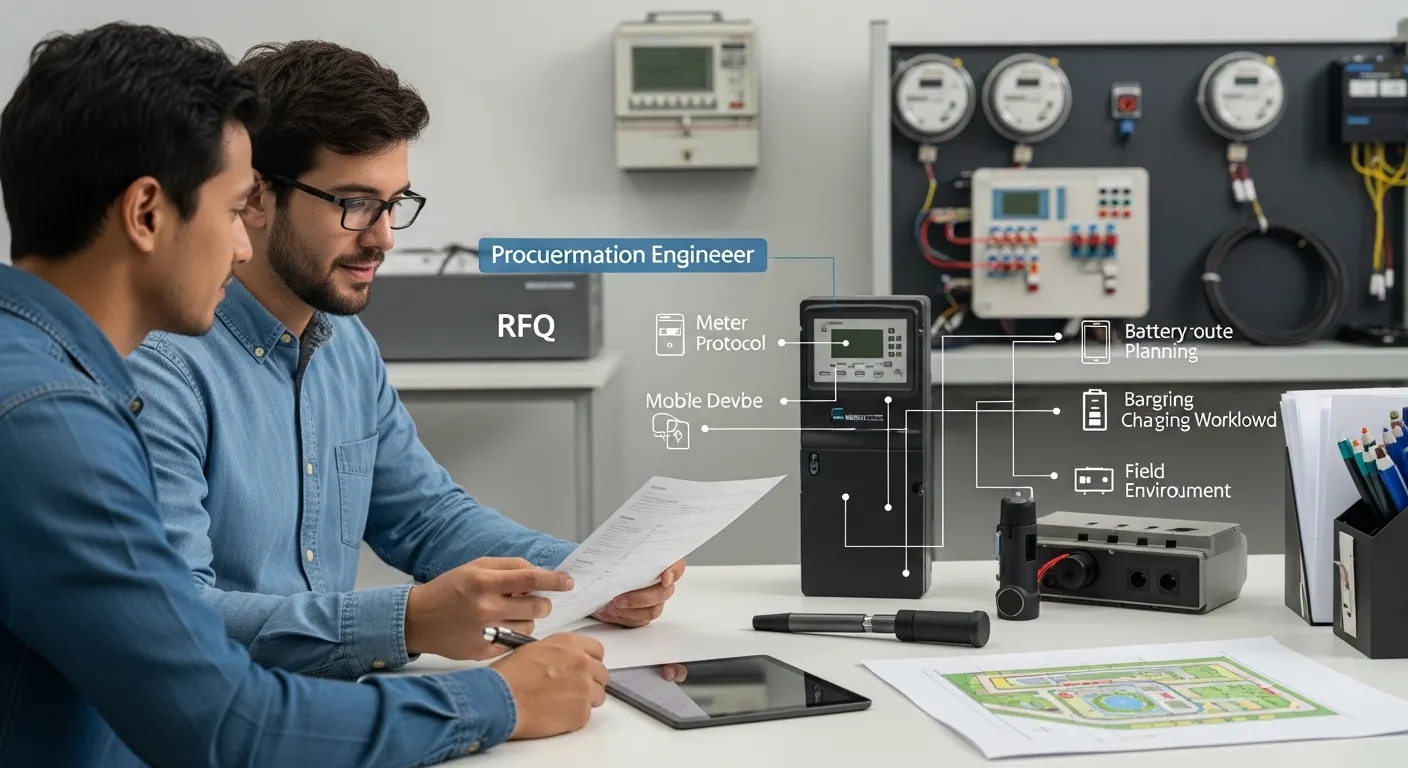
A clear RFQ helps Tespro recommend a suitable optical probe configuration and reduces back-and-forth during supplier evaluation.
Send these details when requesting a quote, datasheet, sample, or consultation:
- Required device type: Bluetooth optical probe, wired probe, or dual-use option
- Quantity and expected rollout size
- Application: field reading, meter programming, AMR project, lab use, service team, or OEM/ODM requirement
- Meter type and meter model
- Required protocol or standard
- Optical port type if known
- Mobile device, handheld terminal, or laptop OS
- Existing meter reading software or app
- Required Bluetooth mode if known
- Need for USB, Type-C, or other wired fallback
- Expected battery life or daily route size
- Charging preference and field charging process
- Indoor, outdoor, cabinet, industrial, or utility site environment
- Need for datasheet, sample, demo, or technical consultation
- Delivery destination and any written specification or project drawing
This information allows the technical team to respond with a more accurate recommendation instead of a generic product suggestion.
Why Work With Tespro for Field Metering Hardware?
Tespro supports industrial metering, connectivity, and energy data projects across optical probes, data transmission units, industrial routers, gateways, meter testing equipment, calibrators, and software platforms.
For field equipment buyers, this matters because optical probe selection often connects to a larger metering workflow. The probe may need to fit AMR/AMI projects, smart meter reading, utility service routes, meter manufacturer testing, or distributor/OEM requirements.
Tespro can help buyers discuss the device requirement, compatibility questions, deployment environment, and quotation details before ordering.
Frequently Asked Questions
Can a Bluetooth optical probe work with existing meter reading software?
It depends on the software connection method. Buyers should confirm OS support, Bluetooth mode, virtual COM or BLE requirement, and whether the application has already been tested with the probe type.
Is Bluetooth reliable enough for field meter reading?
Bluetooth can be suitable for field reading when range, pairing, battery, and app compatibility are confirmed. Site conditions, meter cabinet layout, and technician device type should be checked before rollout.
Which meter standards should buyers confirm?
Buyers should confirm the meter model, optical port type, and required standard, such as IEC 62056-21, IEC 1107, ANSI C12.18, or DLMS/COSEM where relevant.
How much battery life does a field team need?
Battery life should match the daily route. Buyers should consider working hours, meters per day, standby time, charging time, and whether spare probes are needed for large teams.
Should buyers choose Bluetooth-only or wired fallback?
Bluetooth-only may fit standardized mobile workflows. A wired fallback is useful when teams use mixed devices, different software, or need a troubleshooting option during deployment.
What should I include in a sample request?
Include meter model, protocol, software/app, operating device, expected field conditions, quantity plan, and what you want to test: pairing, reading success, battery, charging, or ruggedness.
Request a Bluetooth Optical Probe Quote From Tespro
To select the right Bluetooth or wireless optical probe for your field team, share your meter model, protocol or standard, reading software, operating device, quantity, battery expectations, charging preference, field environment, and any need for USB or Type-C fallback.
Contact Tespro to request a quote, datasheet, sample, or technical consultation for your meter reading project.