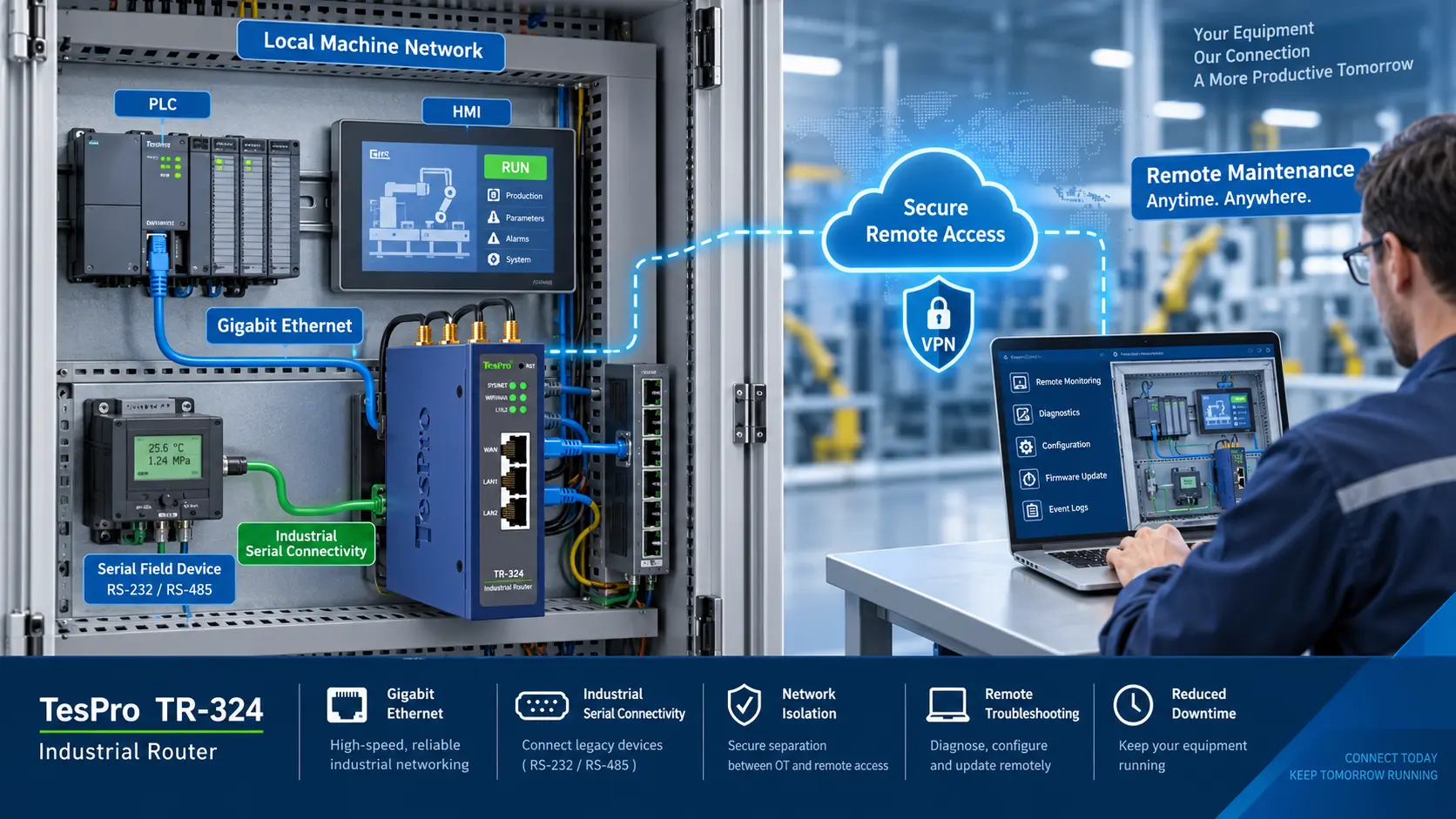
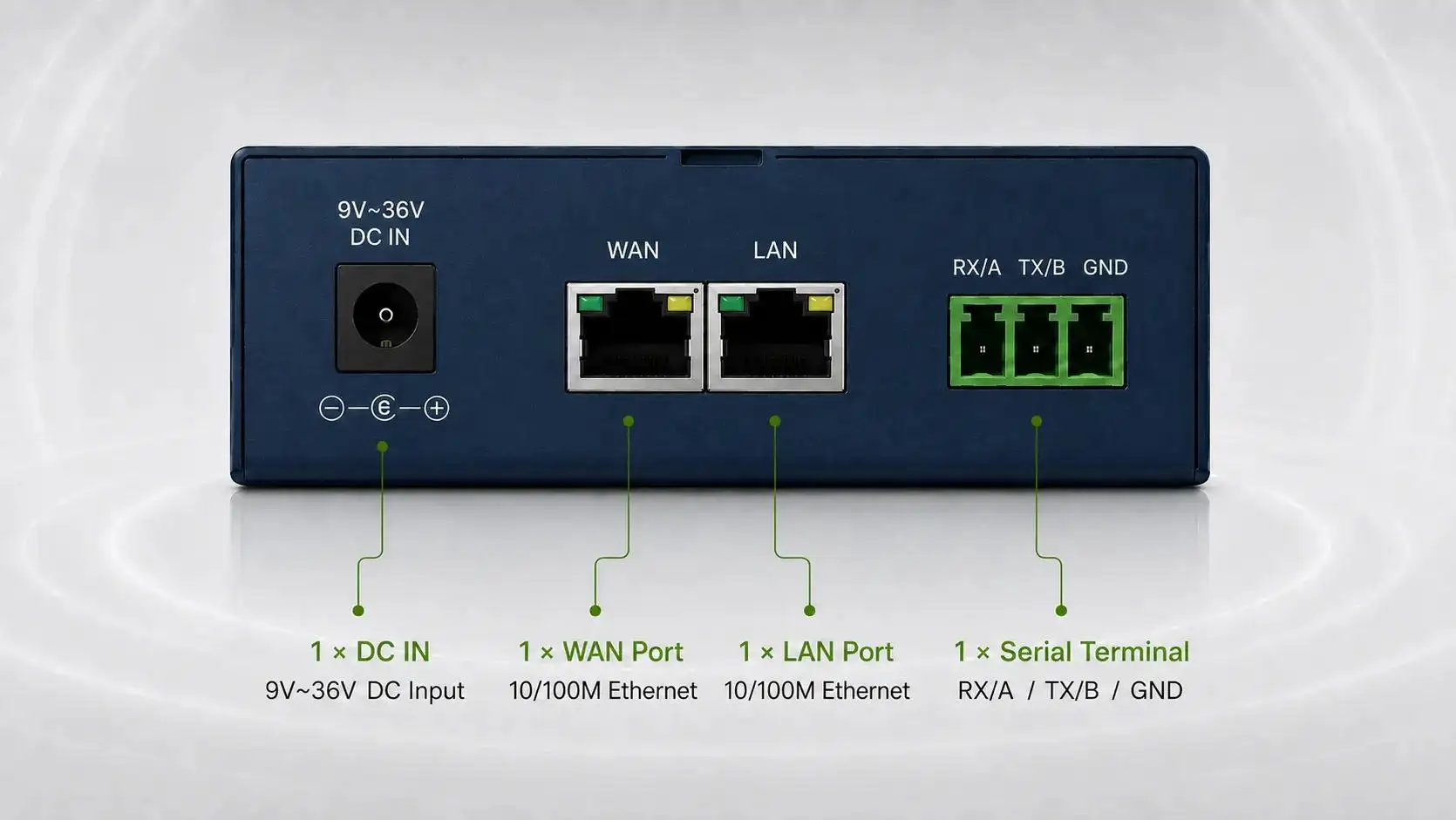
-1791966549842.webp)





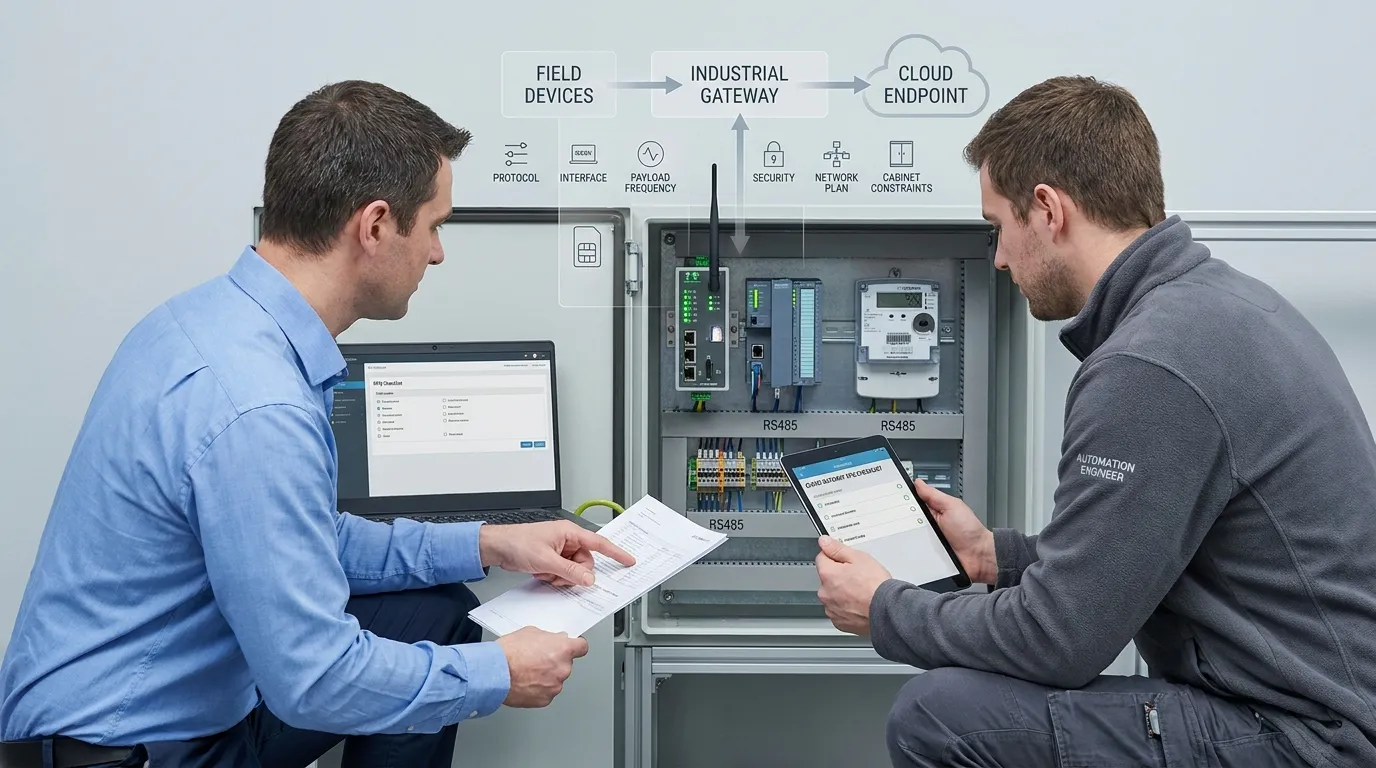

Tespro provides industrial metering, connectivity, and energy data solutions for utilities, AMI/AMR teams, industrial IoT integrators, automation engineers, SCADA teams, OEM/ODM buyers, and procurement teams. For a cloud gateway project, the right device or configuration depends on field devices, interfaces, protocols, payload frequency, network plan, cloud endpoint, security policy, power supply, and installation conditions.
A gateway with cloud integration is not selected only by checking whether it “supports cloud.” Buyers should confirm what data must be collected, how often it must be uploaded, which platform or API will receive it, and how the gateway will connect securely from the field site to the cloud.
This RFQ checklist helps buyers prepare the information Tespro needs before recommending a cloud gateway, industrial gateway, DTU, router, or related connectivity solution for industrial data projects.
When Do You Need a Cloud Gateway for Industrial Data?
A cloud gateway is useful when meters, PLCs, sensors, controllers, or field devices need to send data to a remote platform, dashboard, energy management system, SCADA environment, or customer cloud.
Typical projects include:
- Smart meter data collection
- AMI/AMR field communication
- Factory equipment monitoring
- Energy monitoring and reporting
- Smart grid data acquisition
- Remote utility site monitoring
- Industrial sensor data transmission
- OEM/ODM connected device projects
- Integration between field hardware and cloud software
For many projects, the gateway sits between the field device layer and the software layer. It may collect data from RS485, RS232, Ethernet, or I/O devices, then transmit the data through Ethernet, Wi-Fi, 4G/5G, or another network path.
Before requesting a quote, buyers should define both sides of the system: the field device connection and the cloud/platform connection.
Cloud Gateway RFQ Requirements
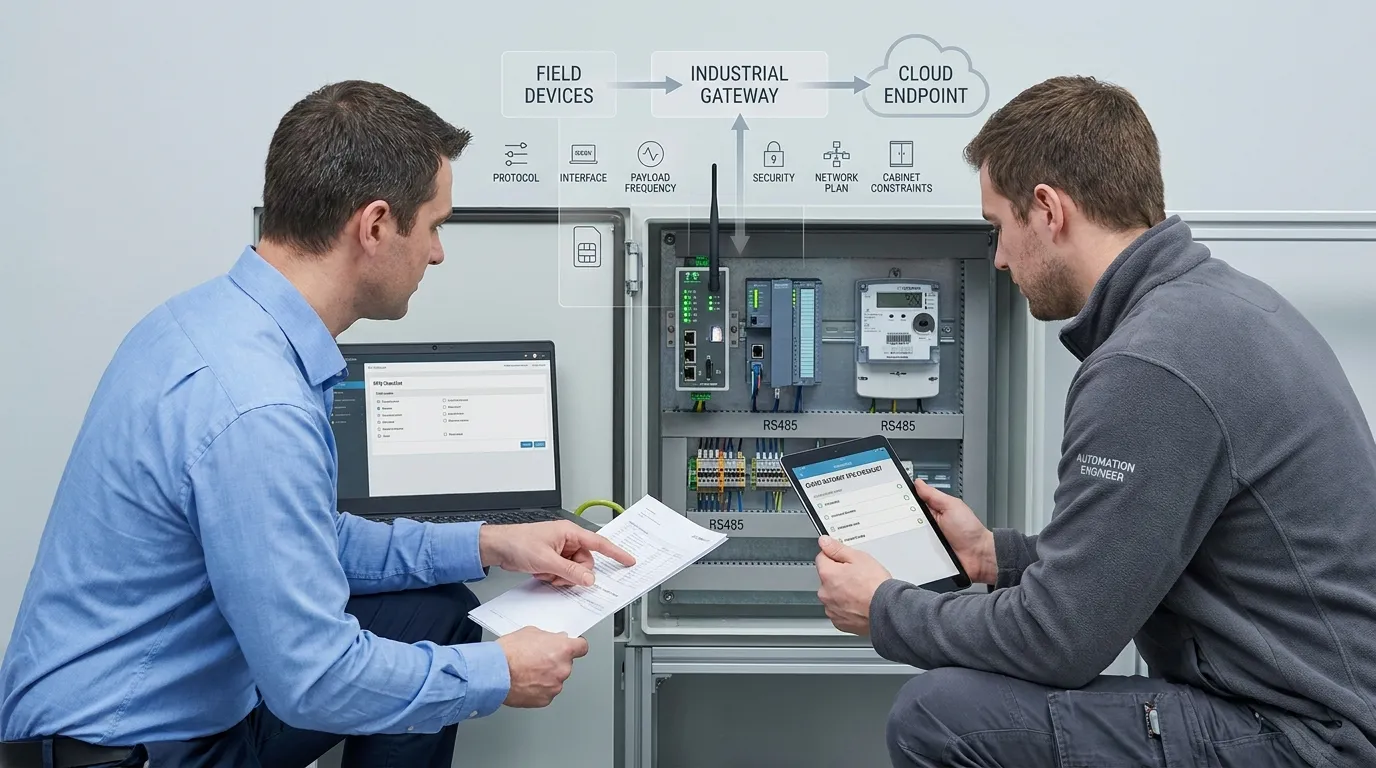
A complete RFQ helps Tespro understand the project faster and recommend a more suitable device or solution path. The table below shows the main details buyers should prepare.
| RFQ item | What to specify | Why it matters |
|---|---|---|
| Application type | Smart metering, energy monitoring, factory automation, SCADA, remote monitoring, or OEM project | Helps identify the correct gateway category and integration approach |
| Device count | Number of meters, PLCs, sensors, or controllers per site | Affects gateway sizing, port planning, and polling load |
| Interface requirements | RS485, RS232, Ethernet, digital I/O, analog I/O, or wireless sensor input | Determines hardware port and wiring requirements |
| Protocols | Modbus RTU, Modbus TCP, DLMS, DNP3, MQTT, REST API, or other protocol if relevant | Confirms whether protocol conversion or custom integration is needed |
| Data frequency | Polling interval, upload interval, event frequency, and alarm needs | Affects data load, bandwidth, and buffering requirements |
| Cloud endpoint | MQTT broker, API URL, private cloud, customer platform, or dashboard requirement | Defines how the gateway should send data |
| Payload format | JSON, topic/path structure, tag names, timestamps, device ID, or platform format | Reduces integration issues after deployment |
| Network plan | Ethernet, Wi-Fi, 4G/5G, SIM carrier, APN, static IP, or VPN | Impacts model selection, security, and site readiness |
| Security needs | TLS, certificates, VPN, user access, remote update policy, or IT approval | Important for utility, industrial, and enterprise projects |
| Installation conditions | Cabinet size, DIN rail, enclosure, antenna position, power supply, temperature, humidity | Prevents field installation problems |
| Quantity and location | Site count, gateway quantity, delivery destination, and project schedule | Supports quotation and planning |
Which Devices and Protocols Will the Gateway Connect?
The field side should be confirmed first. Many cloud gateway projects fail because the selected device does not match the actual meter, PLC, sensor, or communication interface at site.
Buyers should prepare a list of connected devices, including:
- Meter model or device model if available
- Number of devices per gateway
- Communication interface
- Protocol or data standard
- Required data points or registers
- Polling interval
- Cable distance or site topology
- Whether the device is already installed or part of a new project
For metering and utility projects, the gateway may need to support smart meter communication, AMR/AMI data collection, or energy data acquisition. For factory automation, it may need to collect data from PLCs, sensors, controllers, or machines.
If the project includes multiple Ethernet devices, buyers should also review port planning and network layout. Tespro’s related guide on multiple Ethernet gateway port planning can help when the gateway must connect to several LAN devices, meters, PLCs, or network segments.
What Cloud Endpoint Details Should Buyers Confirm?
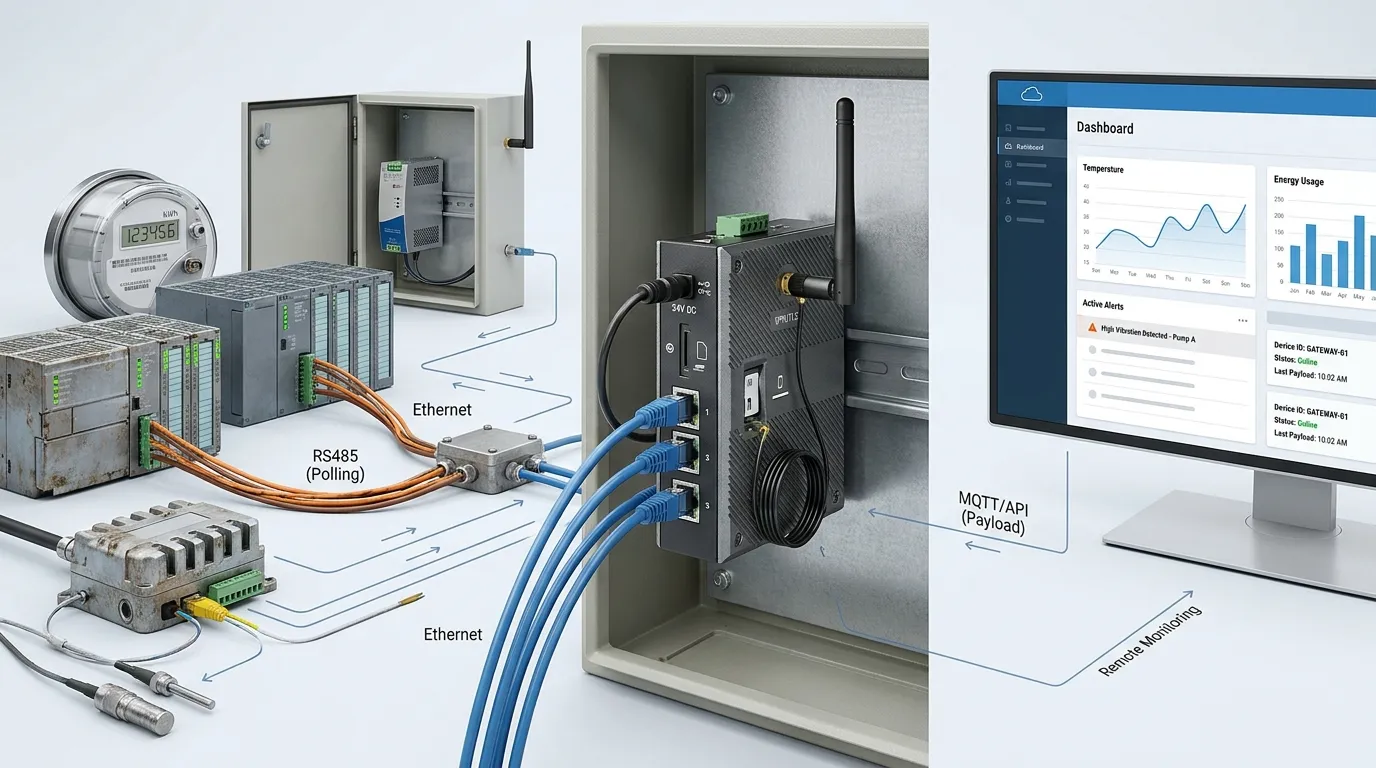
A gateway with cloud integration needs more than a network connection. The receiving platform must also be ready to accept data.
Buyers should confirm:
- Cloud platform or server type
- MQTT broker address, port, topic, and authentication method if MQTT is used
- HTTPS or REST API endpoint if API upload is required
- Username, password, token, certificate, or other authentication method
- Payload format expected by the platform
- Data tag names, units, and timestamps
- Upload interval and retry behavior
- Alarm, event, or exception reporting needs
- Data export, dashboard, or third-party software requirements
For example, one project may only need periodic energy readings sent to a dashboard. Another project may need device status, alarms, timestamps, historical buffering, and API export to a customer platform.
If the cloud endpoint is not ready, buyers can still contact Tespro. However, the RFQ should clearly state whether the endpoint is confirmed, under development, or needs technical discussion.
Network, SIM, VPN, and Security Planning
The network plan affects both hardware selection and configuration. A gateway installed inside a factory cabinet may use Ethernet. A remote metering site may need cellular communication, SIM planning, antenna placement, and stronger remote management.
Buyers should confirm:
- Ethernet, Wi-Fi, 4G, 5G, or mixed network requirement
- SIM card type and carrier plan if cellular is needed
- APN or private APN requirements
- Static IP requirement if remote access is needed
- VPN requirement for maintenance or secure access
- Firewall or IT security restrictions
- Whether the gateway only sends outbound data or also needs inbound remote access
- Remote firmware, configuration, or troubleshooting needs
Security should be discussed before deployment, not after installation. Utility, smart grid, industrial IoT, and SCADA projects often require clear rules for access control, encrypted communication, and remote maintenance.
For projects where security, firmware access, and remote configuration are important, see Tespro’s remote management gateway security buying checklist.
Payload Frequency, Buffering, and Data Reliability
Data frequency is an important gateway selection factor. A gateway that sends one reading every hour has different requirements from a gateway that polls many devices every few seconds.
Buyers should define:
- Polling interval from each field device
- Upload interval to cloud
- Total number of data points or tags
- Alarm or event trigger requirements
- Whether data must be stored during network outage
- Whether missed data should be resent later
- Timestamp requirements
- Data format and unit mapping
For remote sites, buffering may be important. If cellular coverage is weak or unstable, the system may need store-and-forward behavior, retry logic, or local data storage. Buyers should mention these needs in the RFQ so Tespro can evaluate the correct approach.
For broader quote preparation around field data collection, buyers can also review Tespro’s data acquisition gateway quote-ready checklist.
Cabinet, Power, and Site Conditions
A technically suitable gateway can still create problems if installation conditions are not confirmed. Procurement teams should collect site details from engineers before final model selection.
Important deployment details include:
- Available power supply
- Cabinet size and available mounting space
- DIN rail or wall mounting preference
- Indoor or outdoor installation
- Temperature and humidity conditions
- Antenna location and cable routing
- Distance from meters, PLCs, or sensors
- Grounding, surge, or electrical noise concerns
- Maintenance access at site
- Whether the site has stable network coverage
For cellular projects, antenna placement is often as important as the gateway itself. For cabinet projects, space, heat, wiring, and power supply should be checked early.
If wireless sensors are part of the system, buyers may also need a separate wireless data collection plan. Tespro’s wireless sensor gateway industrial buyer checklist is useful for those projects.
What Should Be Included in a Cloud Gateway RFQ?
A strong RFQ should be clear enough for technical review and practical enough for procurement. Buyers do not need to know every final device setting, but they should provide enough detail to avoid guesswork.
Include the following:
- Project name and application
- Required quantity
- Site count and deployment country
- Field device type and model if available
- Number of devices per site
- Interface requirements
- Protocols or communication standards
- Required data points
- Polling and upload frequency
- Cloud platform, server, dashboard, MQTT broker, or API details
- Payload format or sample data if available
- Network type and SIM/APN/VPN/static IP requirements
- Security and remote management needs
- Power supply and cabinet details
- Installation environment
- Datasheet, sample, demo, or consultation request
- System diagram, site photo, or written specification if available
This information helps Tespro review whether the project needs an industrial gateway, data transmission unit, industrial router, software platform support, or a combined metering and connectivity solution.
Common Mistakes to Avoid Before Ordering
Cloud connectivity projects often become delayed when basic details are missing. The most common issues include wrong interface selection, unclear protocol requirements, and cloud endpoint uncertainty.
Avoid these mistakes:
- Selecting a gateway before confirming field protocols
- Assuming all devices use the same Modbus map or data format
- Ignoring polling frequency and data volume
- Requesting cloud integration without endpoint details
- Forgetting SIM, APN, VPN, or static IP requirements
- Leaving security approval until after hardware purchase
- Ignoring cabinet space, power, and antenna constraints
- Not sharing system diagrams with the supplier
- Buying only on hardware price without checking integration fit
A good RFQ reduces technical risk. It also helps the supplier recommend a practical configuration instead of a generic device.
Why Work With Tespro for Industrial Cloud Gateway Projects?
Tespro supports industrial metering, connectivity, and energy data projects with hardware and solution categories such as optical probes, DTUs, industrial routers, industrial gateways, meter test equipment, calibrators, and software platforms.
For a cloud gateway project, Tespro can review buyer requirements from both sides of the system: the field device layer and the platform layer. This is important for utility metering, AMI/AMR, smart grid, energy management, factory automation, and industrial IoT projects.
Buyers can contact Tespro before the final specification is complete. Share the project goal, connected devices, protocols, network plan, cloud requirements, security needs, and installation details. Tespro can then help discuss suitable device categories, quotation requirements, datasheet needs, sample requests, demo options, or OEM/ODM support where relevant.
Frequently Asked Questions
What information is needed for a cloud gateway quote?
Send the device count, protocols, interfaces, data frequency, cloud endpoint, security needs, network type, power supply, cabinet details, quantity, and delivery destination. A system diagram or written specification is also helpful.
Can a gateway send Modbus data to a cloud platform?
Yes, many industrial cloud projects collect Modbus data and send it to a cloud platform through MQTT, HTTPS, REST API, or another integration method. Buyers should confirm the exact protocol path and payload format.
Do I need MQTT, HTTPS, or REST API?
It depends on the receiving platform. MQTT is common for telemetry, while HTTPS or REST API may fit direct server upload. Confirm the endpoint, authentication method, topic or path, and expected data format before quotation.
Do I need SIM, APN, static IP, or VPN?
Cellular projects may need a SIM plan, APN, private APN, static IP, or VPN depending on network policy and remote access needs. Confirm whether the gateway only sends outbound data or also needs remote maintenance.
What affects gateway sizing?
Device count, tag count, polling interval, payload frequency, protocol type, buffering needs, and network stability all affect sizing. Do not select only by port count. Share the full data flow with Tespro.
What site details should be included?
Include power supply, cabinet space, mounting method, temperature, humidity, antenna position, cable distance, network coverage, and maintenance access. These details help avoid field installation problems.
Request a Cloud Gateway Quote From Tespro
Send Tespro your cloud gateway RFQ details for technical review and quotation. Include the product or device type, quantity, application, meter or device model if available, protocol, interface, network type, SIM/APN/VPN/static IP needs, cloud platform or API details, payload frequency, power supply, installation environment, enclosure constraints, security or remote management needs, datasheet/sample/demo request, delivery destination, and any drawing or system diagram.
Tespro will review your project requirements and help discuss the suitable industrial gateway, connectivity device, data acquisition solution, or OEM/ODM support for your cloud-connected industrial data project.