-1791966549842.webp)





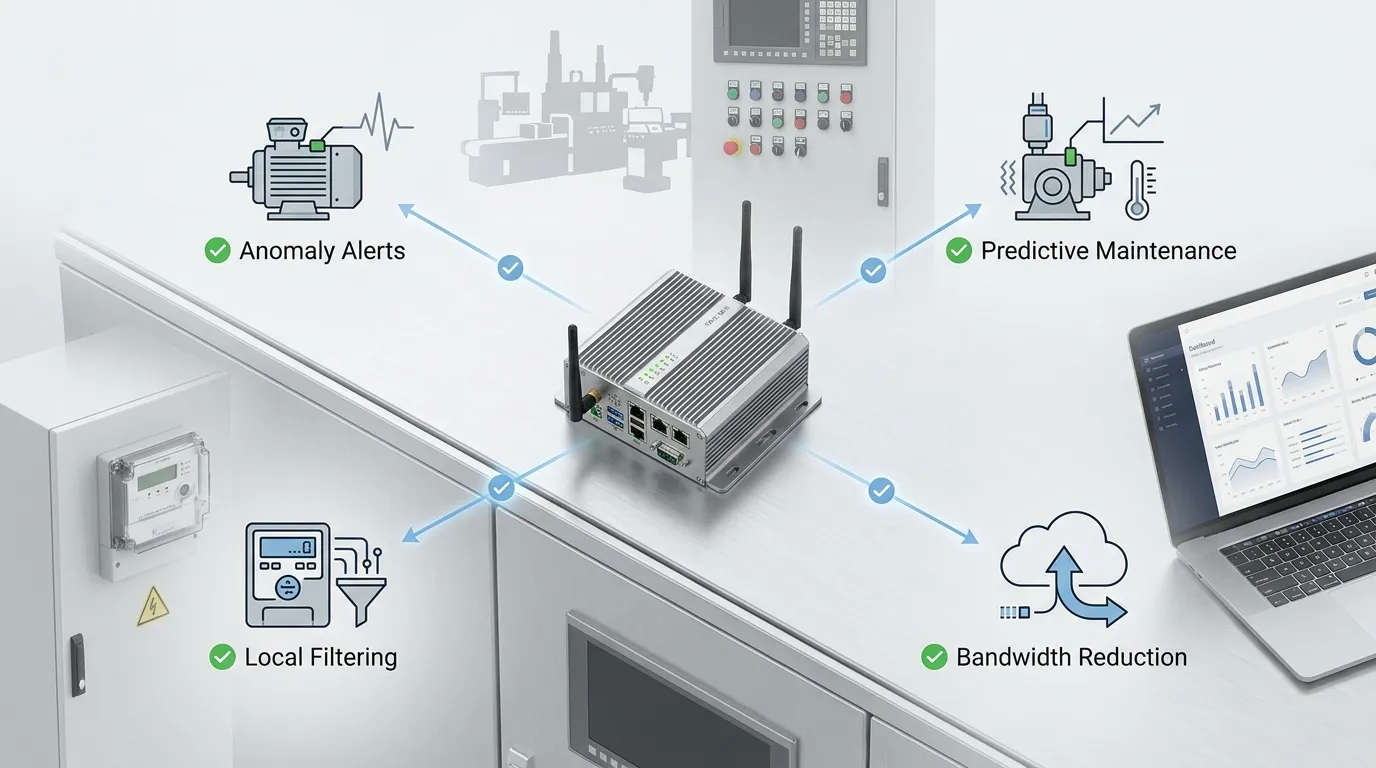

Tespro supports industrial buyers who need an AIoT edge gateway, industrial IoT gateway, DTU, or router for smart metering, remote monitoring, SCADA, factory automation, and energy data projects. For an ai-powered edge gateway for edge computing, the main buying question is not “Does it use AI?” The better question is whether your site needs local processing before data reaches a cloud platform, SCADA system, or energy management software.
An AIoT edge gateway is useful when a project needs anomaly alerts, predictive maintenance signals, local filtering, buffering, bandwidth reduction, or faster device-side decisions. If the project only sends simple periodic data, a standard gateway, industrial router, or data transmission unit may be enough.
This checklist helps engineers, integrators, and procurement teams define the real workload, confirm interface and protocol needs, and prepare accurate RFQ details before contacting Tespro.
When an AIoT Edge Gateway Is Worth Specifying
An AIoT gateway should solve a clear industrial problem. It should not be selected only because “AI” appears in the project brief.
The gateway becomes more relevant when field data is too frequent, too large, too time-sensitive, or too expensive to send directly to a remote platform without local handling. This often appears in factories, remote energy sites, substations, machine monitoring systems, and industrial IoT deployments.
Typical cases include:
- A machine needs local anomaly alerts before cloud review.
- A sensor stream needs filtering before upload.
- A remote site has unstable connectivity.
- A project needs buffering during network downtime.
- A maintenance team wants early warning signals from vibration, temperature, load, or power data.
- A camera, meter, PLC, or sensor system needs local rule-based processing.
- A platform only needs useful events, not every raw data point.
For simpler telemetry, buyers should compare standard industrial gateways and routers first. Tespro’s broader industrial IoT gateway buyer shortlist checklist can help with that earlier selection step.
AIoT Edge Gateway Use-Case Qualification Table
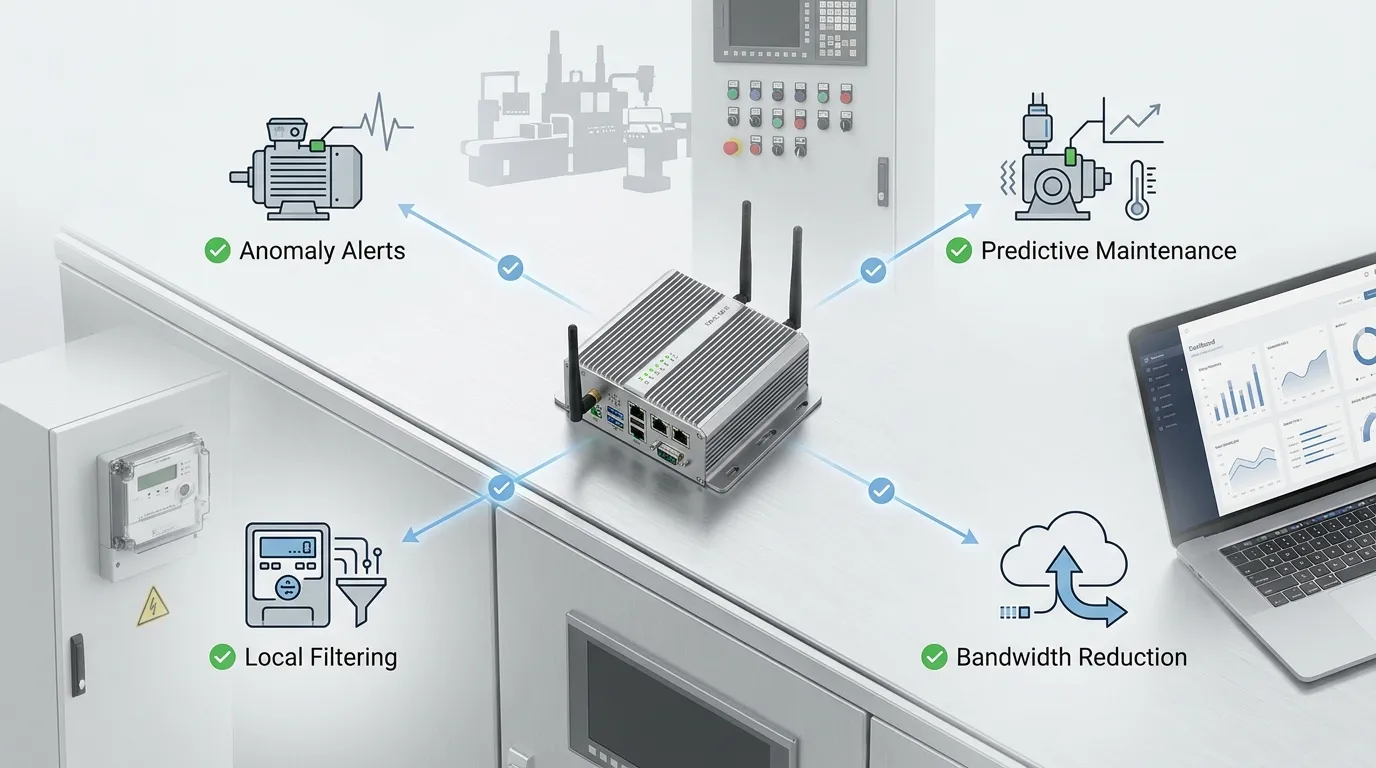
Use this table to decide whether an AIoT edge gateway is justified or whether a simpler device category may fit the project.
| Use case | Edge gateway value | Key technical checks | When simpler hardware may be enough |
|---|---|---|---|
| Anomaly alerts | Local rules can detect abnormal values before cloud upload | Sensor type, data frequency, alert rule, MQTT/API destination | If alerts can be generated in the cloud without delay risk |
| Predictive maintenance | Local preprocessing can reduce raw data volume and support early warning workflows | Vibration, temperature, current, runtime data, storage, processing need | If only monthly or daily manual review is required |
| Local filtering | Gateway sends useful data instead of every raw reading | Data format, filter logic, threshold rules, platform requirement | If data volume is low and bandwidth is stable |
| Bandwidth reduction | Reduces cellular or remote-site data load | Network type, upload interval, local buffer, event trigger | If Ethernet is stable and data cost is not a concern |
| SCADA or remote monitoring | Connects field devices and sends structured data upstream | Modbus, TCP/IP, VPN, static IP, firewall, remote access | If the project only needs secure router access |
| Smart metering or energy data | Supports device-to-platform data flow and local data handling | Meter model, interface, read frequency, protocol, platform/API | If a DTU can transmit meter data transparently |
Gateway, Router, DTU, or Edge Computer?
The correct device category depends on the workload. Many industrial projects fail because the buyer starts with the wrong hardware type.
A DTU is often suitable for transparent data transmission. It can be a good fit when the field device already communicates over serial or TCP/IP and the project mainly needs reliable data forwarding.
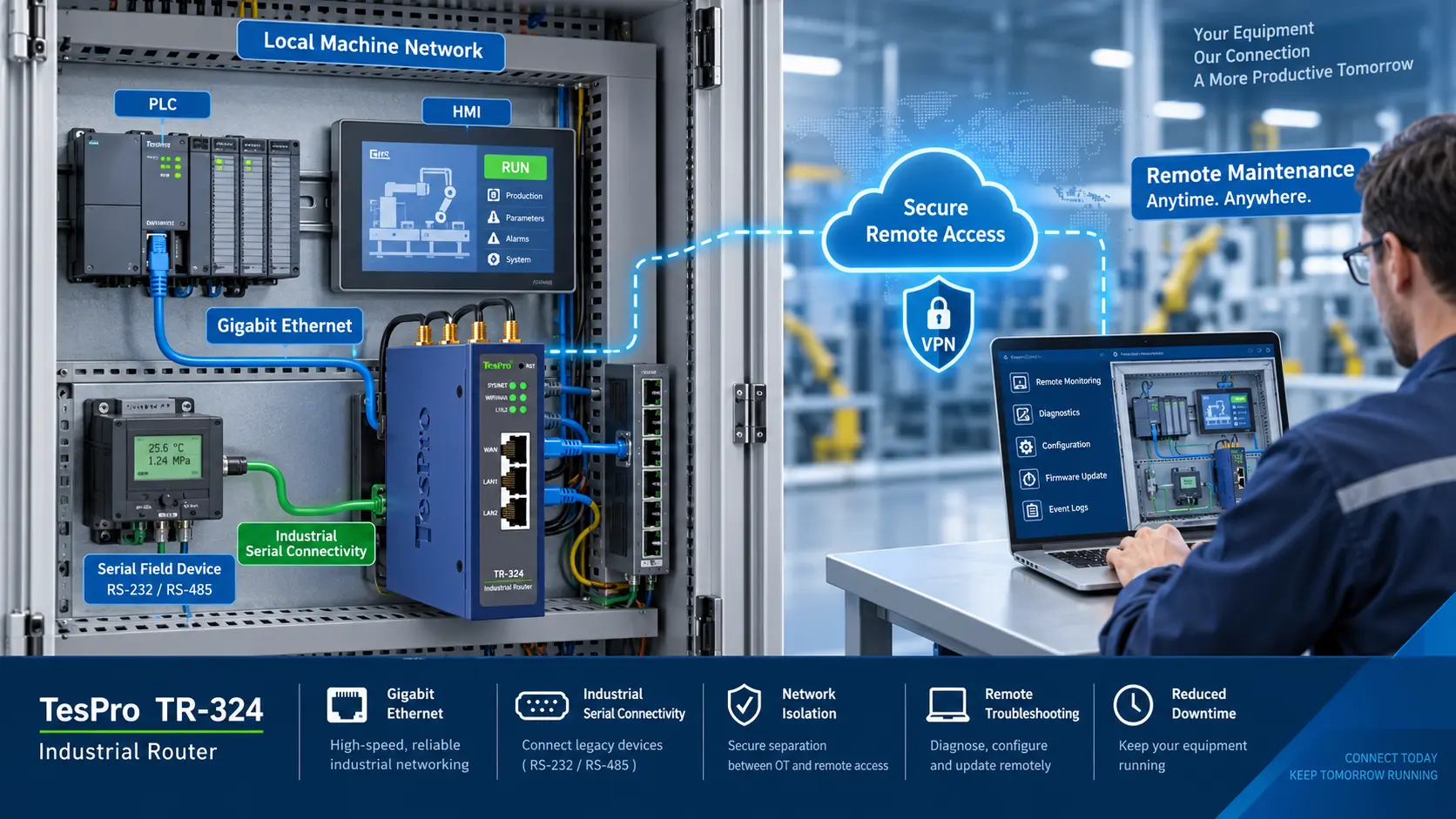
An industrial router is useful when the main requirement is network access, cellular connectivity, VPN, static IP, failover, or secure remote maintenance. If your project is mostly about uptime and remote access, review Tespro’s guide on industrial router edge, IPv6, and SNMP specs.
An industrial IoT gateway is stronger when the project needs protocol conversion, field data collection, local buffering, MQTT or API connectivity, and device-to-platform integration.
An AIoT edge gateway is justified when the gateway must process data locally. This may include filtering, event detection, local analytics, predictive maintenance preprocessing, or AI inference where confirmed by the project requirements.
For factory-specific edge deployments, buyers can also review Tespro’s IoT edge gateway for factories buying guide.
Field Device, Interface, and Protocol Checks
Before requesting a quote, define what the gateway must connect to. The interface and protocol list is often more important than the marketing name of the device.
Common field devices may include:
- Smart meters
- Power meters
- PLCs
- RTUs
- Sensors
- Cameras
- Data loggers
- Factory machines
- Energy monitoring devices
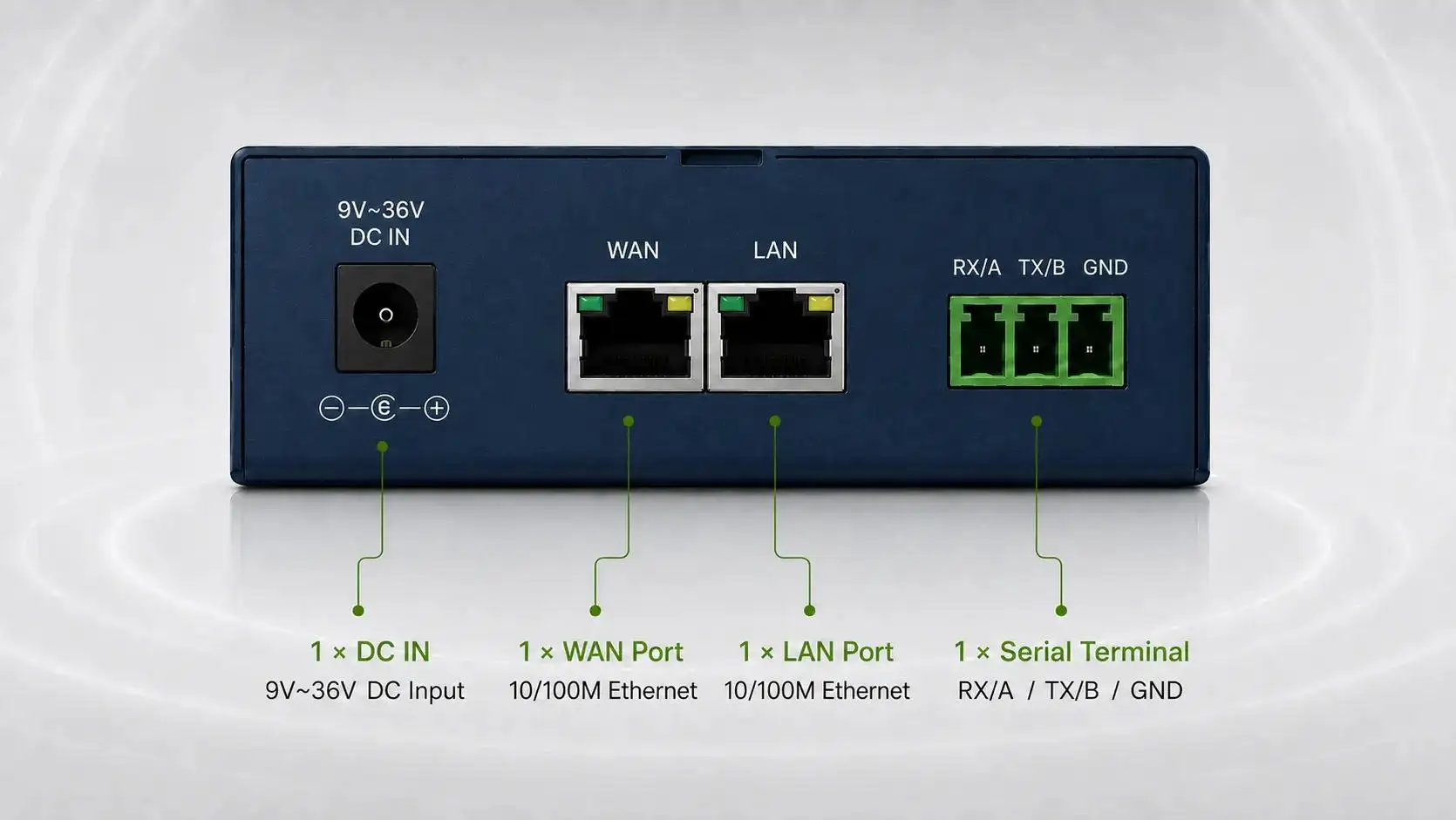
Common interface requirements may include:
- RS485
- RS232
- Ethernet
- CAN
- Digital input/output
- Analog input
- USB, where required
- Antenna or external communication ports
Protocol requirements should be confirmed early. Buyers may need Modbus RTU, Modbus TCP, MQTT, REST API, TCP/IP, OPC UA, or project-specific meter and PLC protocols. Tespro should not have to guess these details during quotation.
If a buyer only says “AIoT gateway,” the technical team still needs the real data path. A useful RFQ should explain where the data starts, how it travels through the gateway, and where it must arrive.
Edge Workload Requirements Buyers Should Define
An AIoT project needs a clear local workload. Otherwise, the selected device may be too expensive, too weak, or unnecessarily complex.
Define whether the gateway must perform:
- Threshold-based alarms
- Local data cleaning
- Data compression or filtering
- Temporary data storage
- Store-and-forward buffering
- Local event detection
- Protocol conversion
- Edge analytics
- AI inference, if required
- Local dashboard or configuration logic
- Containerized or custom application support, if required
Buyers should also confirm how much data the gateway will process. A vibration monitoring project may have very different requirements from a meter reading project. A machine vision project may need more processing power than a simple energy monitoring project.
Do not request AI hardware only because future upgrades are possible. Instead, separate current requirements from optional future needs. This helps Tespro recommend a realistic device category or configuration.
Network, Security, and Remote Management Details
AIoT edge gateways often sit between field equipment and a remote system. That makes network planning critical.
Confirm the expected network path:
- Ethernet LAN
- Wi-Fi
- 4G or LTE
- 5G, if required
- Dual SIM, if uptime needs carrier backup
- Private APN
- VPN
- Static IP
- Firewall rules
- Cloud or private server endpoint
- SCADA or control room connection
Security and maintenance should be discussed before installation. A gateway may need remote configuration, firmware update planning, user access control, secure tunnels, or restricted access policies. These details affect device selection and system architecture.
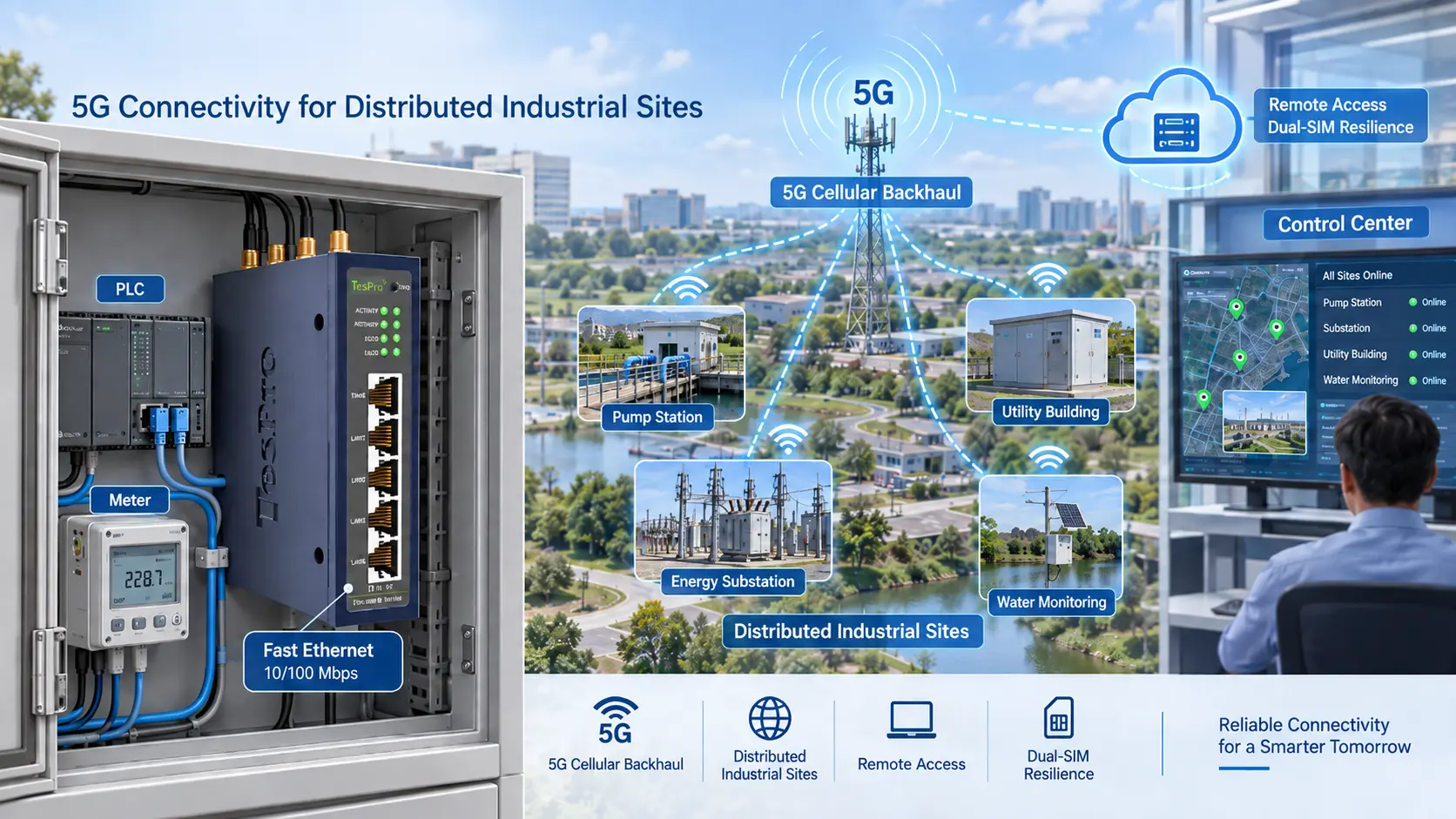
For SCADA and remote monitoring projects, network architecture is especially important. Tespro’s industrial wireless router SCADA buying checklist can help buyers compare connectivity and remote access requirements.
Deployment Conditions That Affect Gateway Selection
Industrial gateway selection is not only about CPU, memory, or protocol support. Field conditions can decide whether the deployment is stable.
Confirm these details before purchase:
- Power supply voltage and backup power availability
- Cabinet space and mounting method
- DIN rail or wall mounting requirement
- Antenna placement and signal strength
- Temperature and humidity conditions
- Dust, vibration, or outdoor exposure
- Distance between gateway and field devices
- Cable length and port access
- Maintenance access for field technicians
- Local commissioning process
- Network coverage at the actual site
Remote projects need extra attention. If a gateway is installed in a hard-to-reach cabinet, remote reboot, remote configuration, and clear maintenance workflow may matter as much as the hardware itself.
Integration Requirements for Cloud, SCADA, and Energy Platforms
The gateway must fit the buyer’s existing data workflow. A good specification should describe the system after the gateway, not only the devices before it.
Clarify whether the data goes to:
- SCADA
- Cloud platform
- Energy management platform
- Meter data system
- Private server
- Database
- Dashboard
- Third-party API
- Local HMI or control system
Also define the expected data format, reporting interval, alarm logic, user access needs, and export requirements. For metering projects, buyers should confirm meter model, read frequency, communication protocol, and platform compatibility requirements before requesting hardware.
If the platform is not finalized, Tespro can still help buyers prepare the hardware and connectivity questions needed for vendor discussions.
RFQ Checklist for AIoT Gateway Projects
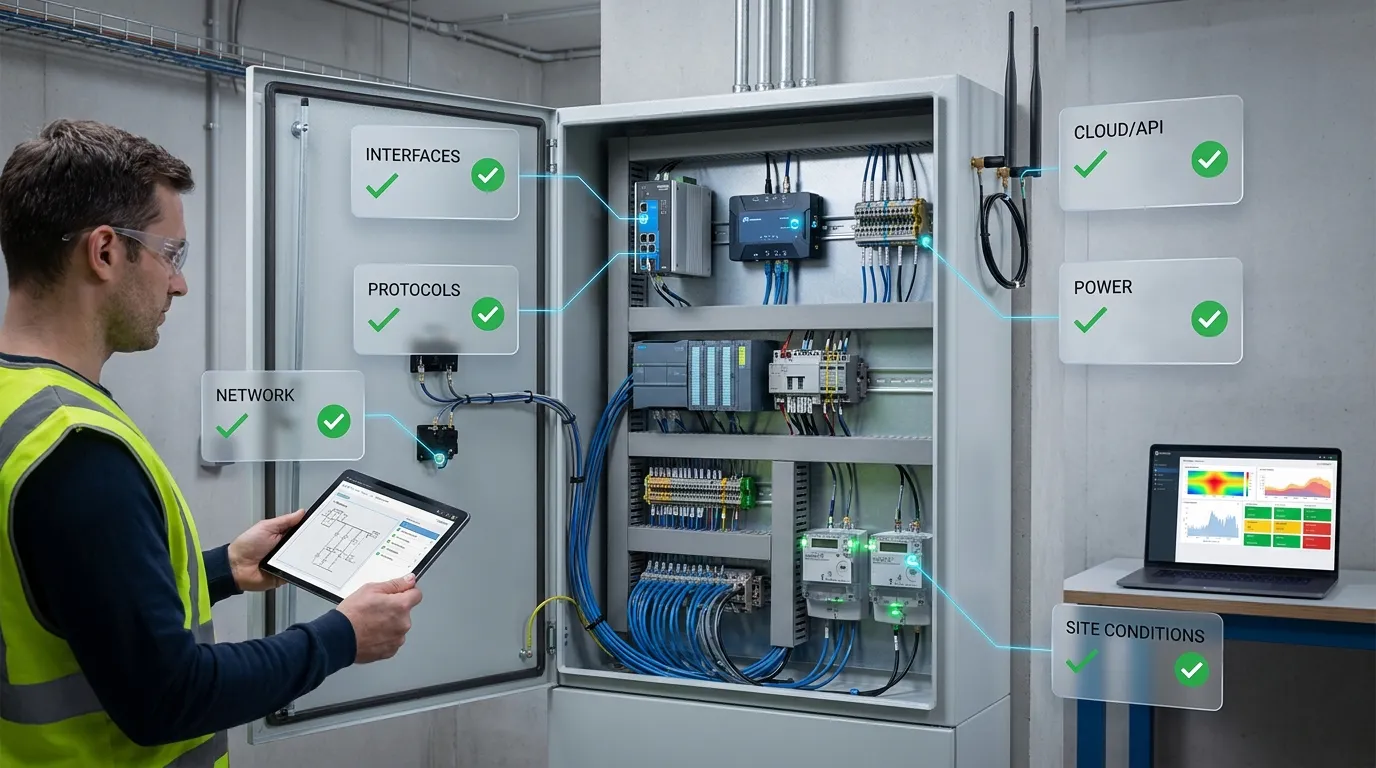
For a faster and more accurate quotation, send Tespro a project brief with the following details:
- Required device type, if already known
- Quantity
- Application: factory automation, SCADA, smart metering, remote monitoring, energy management, predictive maintenance, or another use case
- Connected field devices and model numbers, where available
- Required interfaces: RS485, RS232, Ethernet, CAN, DI/DO, analog input, or others
- Required protocols: Modbus RTU/TCP, MQTT, REST API, TCP/IP, OPC UA, or project-specific protocol
- Network type: Ethernet, Wi-Fi, 4G, 5G, or mixed network
- SIM, APN, VPN, static IP, or firewall requirements
- Cloud, SCADA, API, dashboard, or platform destination
- Local processing requirement: filtering, alerting, buffering, analytics, or AI inference
- Data frequency and expected data volume
- Power supply requirement
- Installation environment and enclosure constraints
- Remote management and security needs
- Datasheet, sample, demo, or OEM/ODM support request
- Delivery destination
- Site drawing, system diagram, or written specification if available
The more complete the RFQ, the easier it is to avoid the wrong device category or missing interface.
Common Selection Mistakes
The first mistake is choosing an AIoT gateway when a standard gateway, router, or DTU would be enough. This can increase project complexity without improving the result.
The second mistake is focusing on processing power before confirming field interfaces. A powerful gateway is not useful if it cannot connect to the meter, PLC, or sensor network.
The third mistake is ignoring the upstream platform. MQTT, REST API, SCADA integration, or cloud endpoint requirements should be known before the final hardware decision.
The fourth mistake is leaving network access until the installation stage. SIM, APN, VPN, static IP, antenna, and firewall details should be part of procurement planning.
Why Work with Tespro for AIoT Gateway Selection
Tespro works with industrial metering, connectivity, and energy data projects where hardware selection must match real field conditions. Our product and solution scope includes metering optical probes, data transmission units, industrial routers, industrial gateways, meter test equipment, calibrators, and software/platform support.
For AIoT gateway projects, Tespro can help buyers clarify the device category, required interfaces, communication path, deployment environment, and RFQ details. This is useful for utilities, meter manufacturers, system integrators, automation teams, distributors, and OEM/ODM buyers who need practical selection support before ordering.
The goal is not to add AI wording to a project. The goal is to choose hardware that fits the data flow, site condition, and integration requirement.
Frequently Asked Questions
Do I need an AIoT gateway or a normal IoT gateway?
Choose an AIoT gateway when local processing, filtering, alerts, or AI inference is required. For simple data collection, protocol conversion, or periodic cloud upload, a standard industrial IoT gateway may be enough.
Is an industrial router enough for edge computing?
An industrial router is enough when the main need is secure connectivity, VPN, static IP, cellular access, or failover. If the device must process field data locally, compare an industrial gateway or AIoT edge gateway.
Which protocols matter for AIoT gateway projects?
Common protocols include Modbus RTU, Modbus TCP, MQTT, REST API, TCP/IP, and OPC UA where required. Buyers should confirm the field device protocol and the platform-side communication method before quotation.
Does every predictive maintenance project need AI hardware?
No. Some projects only need sensor collection, alarms, or cloud analytics. AI-capable edge hardware is more relevant when local preprocessing, fast anomaly detection, or reduced data upload is required.
What should I send for a gateway quote?
Send the application, quantity, field devices, interfaces, protocols, network type, platform destination, local processing needs, power supply, site conditions, and any system diagram. This helps Tespro recommend the right device category.
Can Tespro support OEM or project-specific gateway selection?
Tespro can review project requirements and help buyers discuss suitable metering, connectivity, gateway, router, DTU, or platform-related options. Share technical details early so the team can check the correct direction.
Request AIoT Gateway Selection Support from Tespro
If you are planning an AIoT, industrial IoT, smart metering, SCADA, factory automation, or remote monitoring project, share your requirements with Tespro for quotation or technical consultation.
Send your device type, quantity, application, connected meter/PLC/sensor models, interface requirements, protocols, network type, SIM/APN/VPN/static IP needs, cloud or platform destination, power supply, installation environment, enclosure limits, security requirements, datasheet/sample/demo needs, delivery destination, and any drawing or system diagram. Tespro can help you review the project and choose the right gateway, router, DTU, or integration path.