-1791966549842.webp)





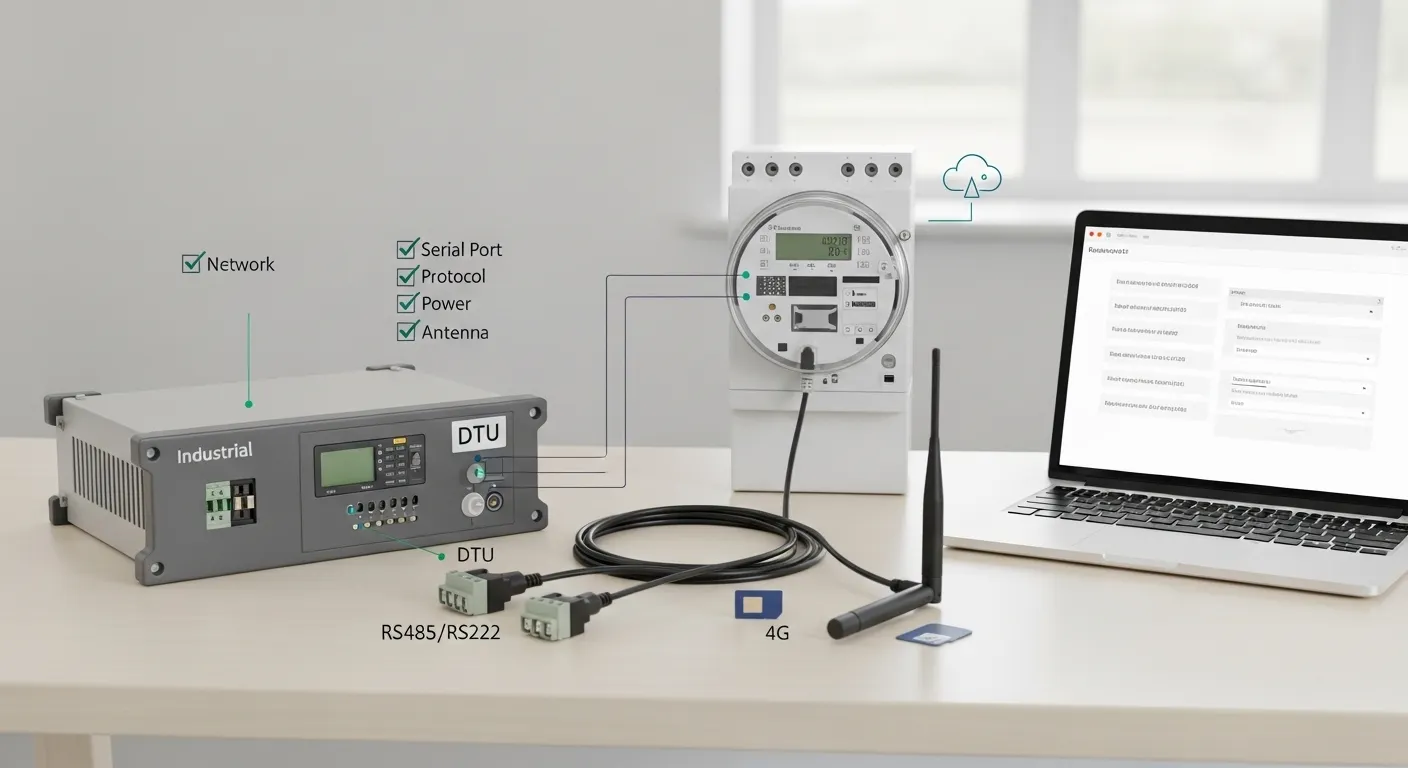

If you are looking for a Tespro DTU datasheet PDF download, the most important step is not only getting the file. Buyers should first confirm which Tespro data transmission unit fits the project, meter interface, network environment, power condition, and platform workflow. A DTU used for smart meter reading, AMR/AMI communication, SCADA connectivity, or remote industrial data collection must match the field device and the system behind it.
Tespro provides DTU options for industrial metering, smart meter communication, and remote data transmission projects. Before requesting the latest datasheet or quotation, buyers should check cellular bands, RS232/RS485 interface requirements, protocols, SIM/APN needs, antenna setup, power supply, operating temperature, firmware needs, and accessories.
This guide helps utility teams, meter manufacturers, system integrators, procurement managers, and OEM/ODM buyers prepare the right technical details before contacting Tespro.
Which Tespro DTU Datasheet PDF Should Buyers Request?
A DTU datasheet should match the actual project scenario. One buyer may need a simple serial-to-cellular transmission device. Another buyer may need a DTU for smart meter reading with protocol handling, cloud upload, remote configuration, or field battery support.
Before requesting a datasheet, clarify the project type:
- Smart electricity, water, or gas meter communication
- AMR or AMI data collection
- Industrial sensor or PLC data transmission
- SCADA or remote monitoring connection
- Smart city or utility field deployment
- OEM/ODM integration for a metering solution
- Distributor product comparison or resale evaluation
The datasheet should help your team confirm whether the DTU supports the required interface, communication mode, network environment, power design, and installation method. If the wrong datasheet is used during procurement, the project may face network mismatch, unsupported meter protocol flow, weak signal issues, or incorrect accessory planning.
For RS232, RS485, and TCP/IP selection details, buyers can also review Tespro’s related guide: RS232 TCP/IP DTU Interface Selection Checklist.
DTU Datasheet Specs Buyers Should Check Before RFQ
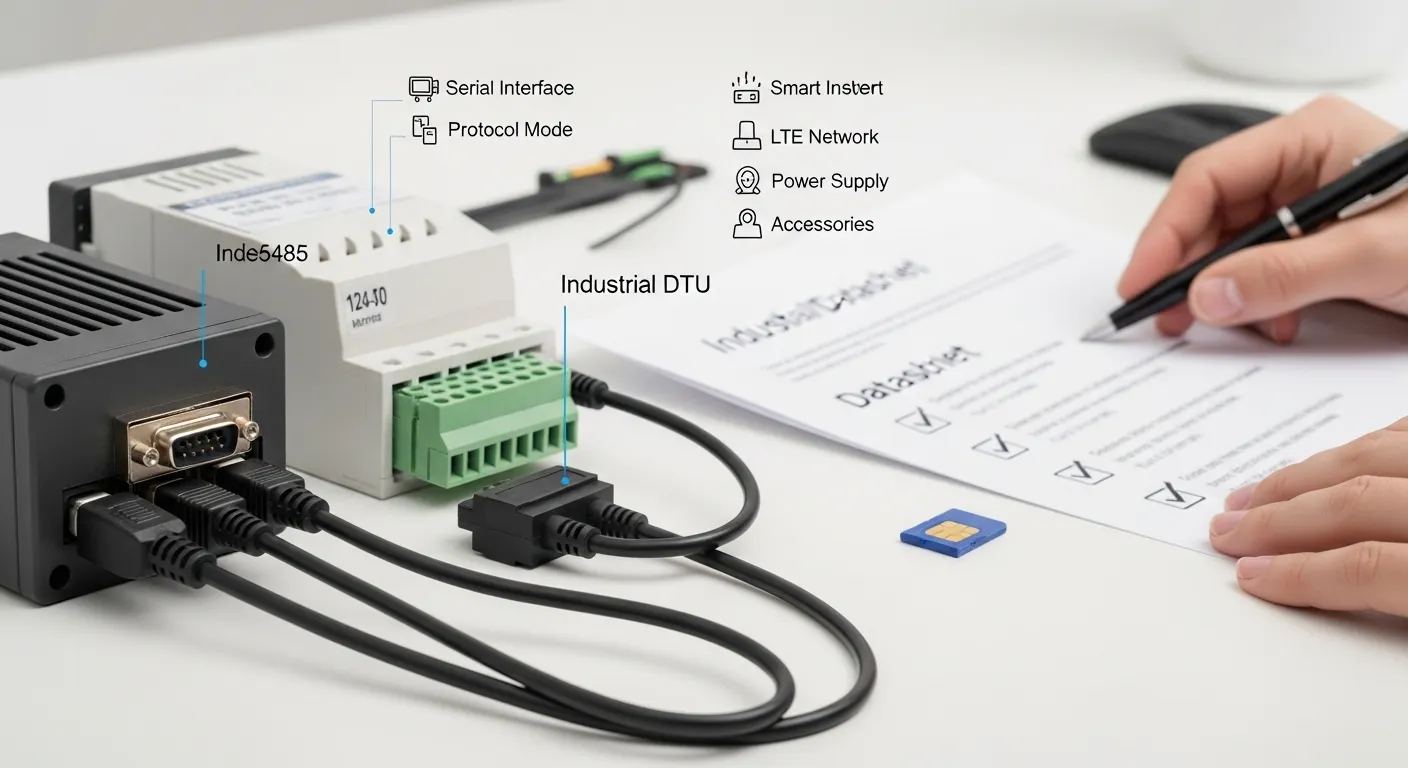
A good DTU datasheet is not only a product brochure. It should help technical and purchasing teams decide whether the device can work in the real field environment.
Use the checklist below before requesting a quote or selecting a model.
| Datasheet item | What buyers should check | Why it matters for selection |
|---|---|---|
| DTU model | Confirm the exact Tespro DTU model or family | Different models may suit different interfaces, power designs, or applications |
| Meter or device type | Electricity meter, water meter, gas meter, PLC, sensor, or RTU | The connected device determines port, protocol, and polling requirements |
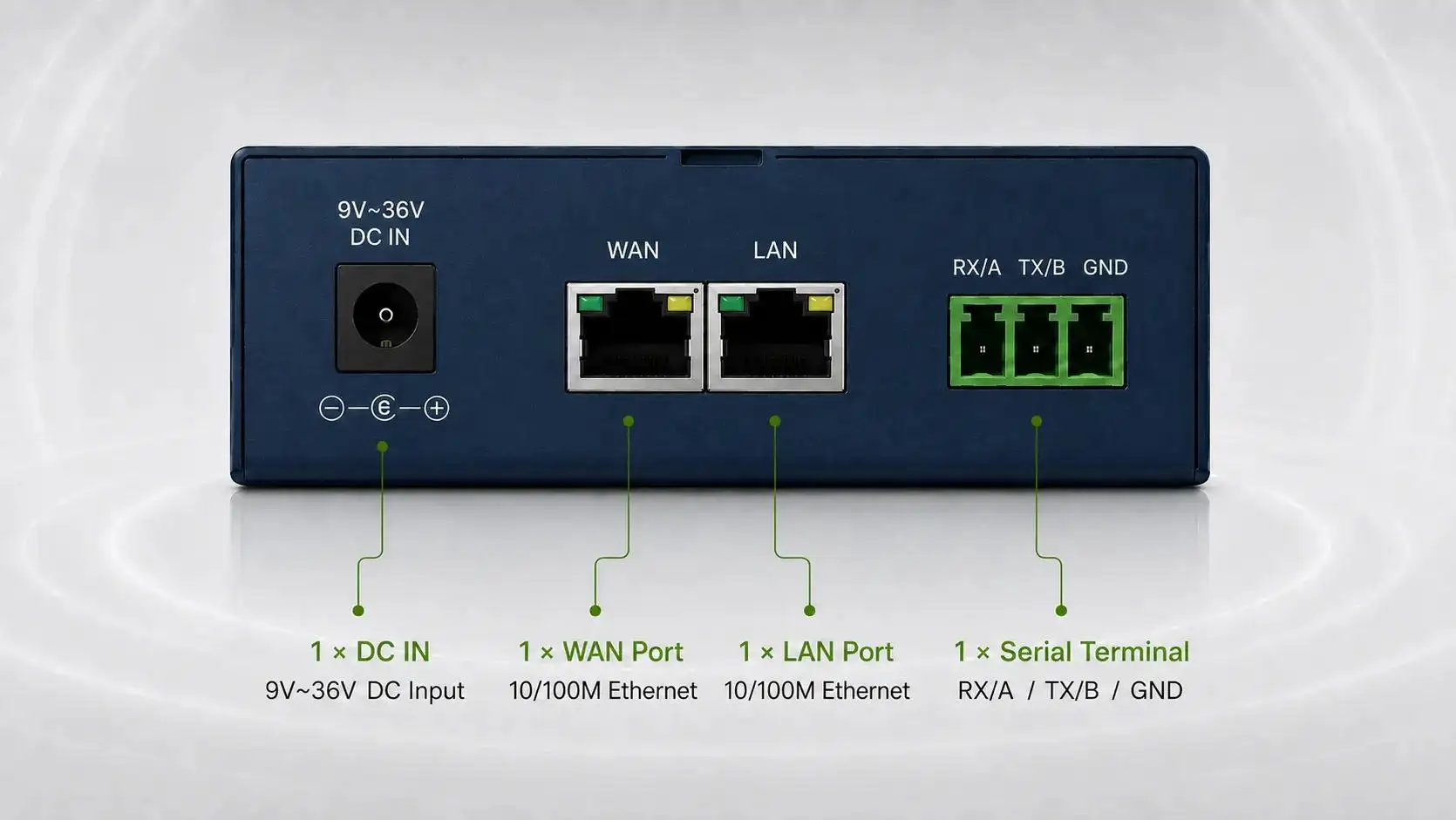
| Serial interface | RS232, RS485, TTL, or other port needs | Wrong interface selection can stop field communication |
| Protocol mode | TCP, UDP, MQTT, HTTP, transparent transmission, or protocol processing | The DTU must match the server, cloud, or AMR/AMI platform workflow |
| Cellular network | 4G/LTE bands, regional carrier support, fallback needs | Network mismatch can cause failed deployment |
| SIM and APN | SIM type, APN, private APN, static IP, or VPN needs | Many utility projects need controlled network access |
| Power supply | DC input, battery requirement, off-grid use, backup power | Remote meter sites may not have stable external power |
| Operating environment | Temperature, humidity, enclosure, cabinet, antenna location | Harsh sites need stronger deployment planning |
| Firmware and management | Remote configuration, upgrade, status monitoring, watchdog needs | Field maintenance becomes easier when remote support is planned |
| Accessories | Antenna, cable, mounting, SIM, enclosure, adapter | Missing accessories can delay installation |
This table should be used as a pre-RFQ tool. It helps Tespro recommend the correct datasheet, model, and quotation details.
Which Serial Ports and Meter Protocol Details Matter?
The serial interface is one of the first items to confirm in a DTU datasheet. Many metering and industrial devices still use RS485 or RS232, but the wiring, baud rate, and communication behavior may differ by project.
Buyers should prepare these details before contacting Tespro:
- Meter or device model
- RS232, RS485, TTL, or other interface requirement
- Number of connected devices per DTU
- Baud rate, parity, data bits, and stop bits
- Polling method or data reporting method
- Meter protocol or standard used in the project
- Whether the DTU should only forward data or process protocol data
For smart metering projects, the interface decision is especially important. A DTU may connect to a meter locally through RS485 and send data to a remote server through cellular communication. If the port, wiring, or protocol workflow is not confirmed early, the selected model may not fit the field device.
What Network, SIM, APN, and Antenna Details Should Be Confirmed?
A DTU used in remote meter reading or industrial IoT projects depends heavily on the cellular environment. A datasheet may list network types and bands, but buyers still need to confirm whether those bands match the destination country and carrier.
Before quotation, send Tespro the target market or deployment country. Also provide the expected operator, SIM type, APN requirement, and whether the project needs static IP, private APN, VPN, or secure server access.
Antenna planning is also important. A DTU installed inside a metal cabinet, basement, meter box, or remote outdoor site may need a different antenna arrangement from a device installed in an open control room.
For remote or harsh deployment planning, see Tespro’s related guide: DTU for Harsh Remote Sites: Spec Checklist.
Power, Temperature, Enclosure, and Field Conditions
Many DTU selection mistakes happen because buyers focus only on communication protocols. Field conditions can be just as important.
Before requesting a datasheet or quotation, confirm the power source. Some sites may have stable DC power. Others may require battery support, backup power, or a design suitable for remote locations. The latest datasheet should be checked for the exact power input range and any battery-related specification for the selected model.
Also confirm the site environment:
- Indoor cabinet or outdoor enclosure
- Temperature range
- Humidity condition
- Dust, vibration, or surge risk
- Distance from the meter or device
- Antenna mounting position
- Cable length and connector needs
- DIN rail or panel mounting requirements
- Maintenance access for field teams
For utility and smart city projects, these details affect both product selection and installation planning. You can also review DTU for Smart City Systems: Deployment Checklist for broader project planning.
Cloud, Platform, and Remote Management Requirements
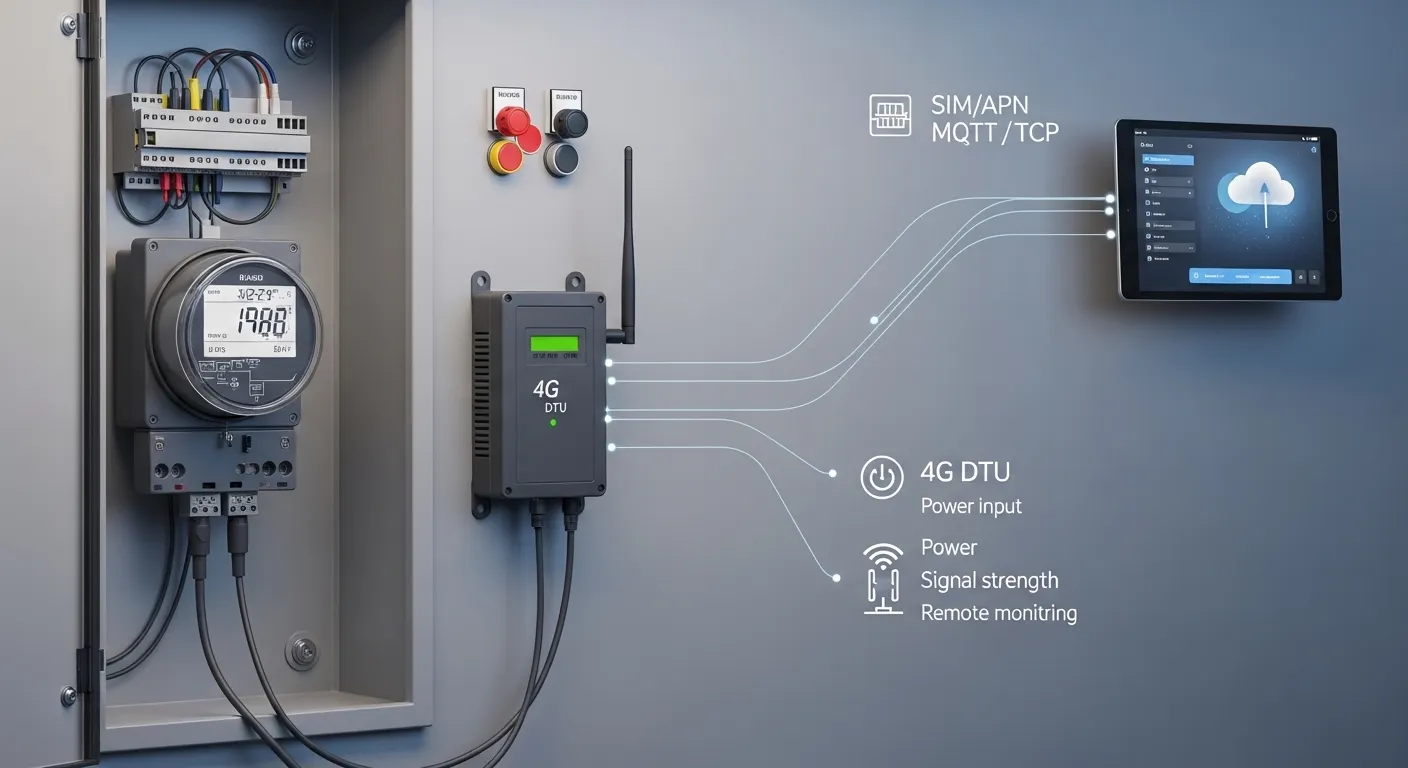
A DTU does not work alone. It is part of a device-to-platform workflow. The datasheet should be checked against the buyer’s AMR/AMI software, SCADA system, cloud server, or energy data platform.
Buyers should clarify:
- Server IP, domain, or cloud endpoint
- TCP, UDP, MQTT, HTTP, or other communication mode
- Data upload interval
- Heartbeat or keep-alive requirement
- Transparent transmission or protocol processing need
- Remote parameter configuration requirement
- Firmware update or maintenance workflow
- Security requirement, such as encrypted communication or private network access
If the project only needs serial data forwarding, a DTU may be enough. If the project requires local logic, multi-protocol conversion, edge processing, many connected devices, or advanced routing, an industrial gateway or router may be more suitable.
This distinction should be discussed before quotation. It helps avoid overbuying a gateway when a DTU is enough, or underbuying a DTU when the project needs more advanced processing.
Common Risks When Buyers Use Only a Datasheet
A datasheet is useful, but it does not replace project matching. A buyer may see the right network type, port, or protocol name in a datasheet and still choose the wrong configuration.
Common risks include:
- Selecting a DTU that does not match the meter interface
- Missing baud rate or wiring requirements
- Choosing a cellular band that does not fit the local operator
- Ignoring APN, static IP, or VPN needs
- Forgetting antenna placement in weak-signal sites
- Underestimating power and backup requirements
- Assuming cloud compatibility without checking data format
- Missing enclosure, cable, or installation accessories
- Requesting quotation without quantity or destination details
A better process is to send Tespro the project requirement first. The technical team can then recommend the suitable DTU datasheet, configuration, accessories, and quotation direction.
What to Send Tespro for a DTU Datasheet and Quotation
To request the latest Tespro DTU datasheet and quote, prepare a simple technical brief. This helps reduce back-and-forth communication and improves model selection accuracy.
Include these details where available:
- Product or device type required
- Project type or application
- Quantity
- Meter, PLC, RTU, or sensor model
- Required protocol or communication standard
- RS232, RS485, TTL, or other port requirement
- Baud rate and serial settings
- Network type and deployment country
- SIM, APN, VPN, or static IP requirement
- Cloud, server, SCADA, or AMR/AMI platform requirement
- TCP, UDP, MQTT, HTTP, or other data mode
- Power supply and backup power condition
- Operating temperature and field environment
- Enclosure, mounting, cabinet, or antenna constraints
- Firmware, remote configuration, or maintenance needs
- Datasheet, sample, demo, or OEM/ODM requirement
- Delivery destination
- Site drawing, wiring diagram, or system diagram if available
For supplier-side evaluation, buyers can also review Industrial DTU Supplier: Factory Vetting Checklist.
Why Buyers Work With Tespro for DTU Projects
Tespro supports industrial metering, connectivity, and energy data projects where hardware selection must match field conditions. The company provides metering optical probes, DTUs, industrial routers, gateways, meter test stands, calibrators, software platforms, and related smart metering solutions.
For DTU projects, Tespro can support buyers who need more than a static PDF. Utility teams and integrators often need help confirming the right communication path, interface, protocol, antenna, power design, and RFQ details.
This is especially important for:
- AMR and AMI data collection
- Smart meter communication
- Remote meter reading
- Utility field sites
- Industrial IoT monitoring
- SCADA connectivity
- Smart city infrastructure
- OEM/ODM metering projects
- Distributor technical comparison
The goal is simple: help buyers select the right DTU configuration before ordering, sampling, or deploying devices in the field.
Frequently Asked Questions
Where can I get the Tespro DTU datasheet PDF?
You can request the latest Tespro DTU datasheet from Tespro based on your project needs. Share your device type, interface, network, protocol, and application so the team can recommend the correct datasheet and model.
Which Tespro DTU model should I choose?
The right model depends on your meter interface, protocol workflow, network environment, power source, and deployment site. Send Tespro your project details before final selection.
Does a DTU support RS232 and RS485 meters?
DTU interface support depends on the selected model. Buyers should confirm RS232, RS485, wiring, baud rate, and protocol requirements before quotation.
What LTE or SIM details should I provide?
Send the deployment country, carrier, LTE band requirements, SIM type, APN, private APN, static IP, or VPN needs. These details help avoid network mismatch.
Can a DTU connect to MQTT, HTTP, TCP, UDP, or SCADA systems?
Some DTU projects require TCP, UDP, MQTT, HTTP, or platform-specific communication. Confirm the server endpoint, data format, upload interval, and security needs before selection.
When should I choose a gateway instead of a DTU?
Choose a gateway when the project needs multi-device integration, protocol conversion, local processing, or edge logic. A DTU is usually better for simpler serial-to-network data transmission.
Request the Latest Tespro DTU Datasheet and Quotation
If you need a Tespro DTU datasheet PDF download, quotation, sample, demo, or model selection consultation, send your project requirements to Tespro. Include the device type, quantity, meter or controller model, protocol, serial interface, network type, SIM/APN/VPN/static IP needs, cloud or SCADA requirements, power supply, site environment, enclosure constraints, accessories, delivery destination, and any system diagram or written specification.
Tespro can review your details and help recommend the suitable DTU datasheet, configuration, and quotation for your smart metering, AMR/AMI, remote monitoring, industrial IoT, or OEM/ODM project.