-1791966549842.webp)





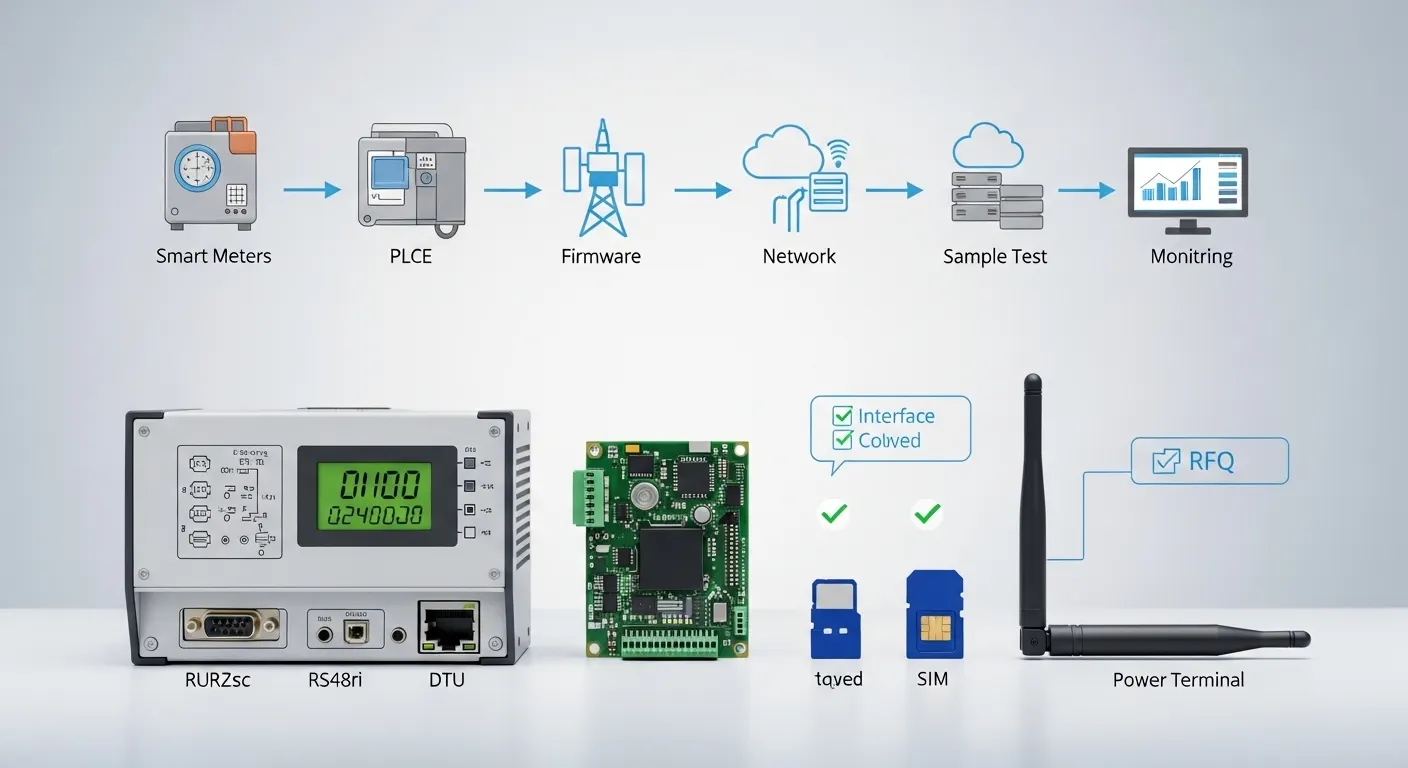

Tespro provides industrial metering and connectivity solutions for utility companies, AMI/AMR project teams, industrial IoT integrators, SCADA teams, smart city contractors, distributors, and OEM/ODM buyers. When choosing an industrial DTU supplier or industrial DTU module, buyers should evaluate more than price. The right supplier should help confirm the field interface, cellular network, protocol behavior, firmware support, enclosure, power input, deployment environment, customization needs, and RFQ details before quotation.
An industrial DTU often becomes the communication bridge between meters, PLCs, sensors, remote cabinets, and a server or platform. If the wrong DTU configuration is selected, the project may face serial communication failure, unstable cellular connection, platform integration issues, or difficult field maintenance.
This checklist helps technical and procurement teams vet suppliers, prepare sample testing, and send clear project requirements to Tespro for quotation, datasheet, sample discussion, or OEM/ODM consultation.
What Should Buyers Ask Before Choosing an Industrial DTU Supplier?
A good DTU supplier should understand both the hardware and the field application. For utility metering, industrial automation, and remote monitoring projects, the supplier should not only provide a device model. They should also help verify whether the DTU fits the system architecture.
Before shortlisting a supplier, ask:
- Is the DTU designed for industrial field use or only light commercial use?
- Which interfaces are available: RS232, RS485, TTL, Ethernet, or DI/DO?
- Does the device support transparent transmission, protocol conversion, or both?
- Which network options are available: 4G, 5G, NB-IoT, Wi-Fi, Ethernet, or dual SIM?
- Can the supplier support SIM, APN, VPN, static IP, or private network requirements?
- How are firmware updates, remote configuration, and fault diagnosis handled?
- Can the supplier support customization, branding, documentation, or OEM/ODM needs?
- What is the sample policy, MOQ, lead time, and after-sales response process?
The goal is to confirm technical fit before purchasing. A low-cost DTU can become expensive if it fails during deployment or cannot communicate with the buyer’s platform.
Confirm the Right DTU Type Before Comparing Suppliers
Not every data transmission unit works the same way. Some projects only need serial data pass-through. Others need protocol handling, multiple network paths, remote management, or stronger security.
A buyer should first define the required DTU type:
- Industrial DTU module: suitable for embedded product development, OEM integration, or custom device design.
- Boxed industrial DTU: suitable for cabinet installation, serial-to-cellular communication, and field deployment.
- RS232/RS485 DTU: suitable for meters, PLCs, RTUs, and serial devices.
- 4G or 5G DTU: suitable for remote sites where wired Ethernet is not available.
- TCP/IP DTU: suitable when serial data must be sent to a server over an IP network.
- Router or gateway alternative: suitable when the project needs LAN routing, VPN-heavy remote access, edge processing, or multi-protocol conversion.
For serial interface decisions, buyers can also review Tespro’s guide on RS232 TCP/IP DTU interface selection.
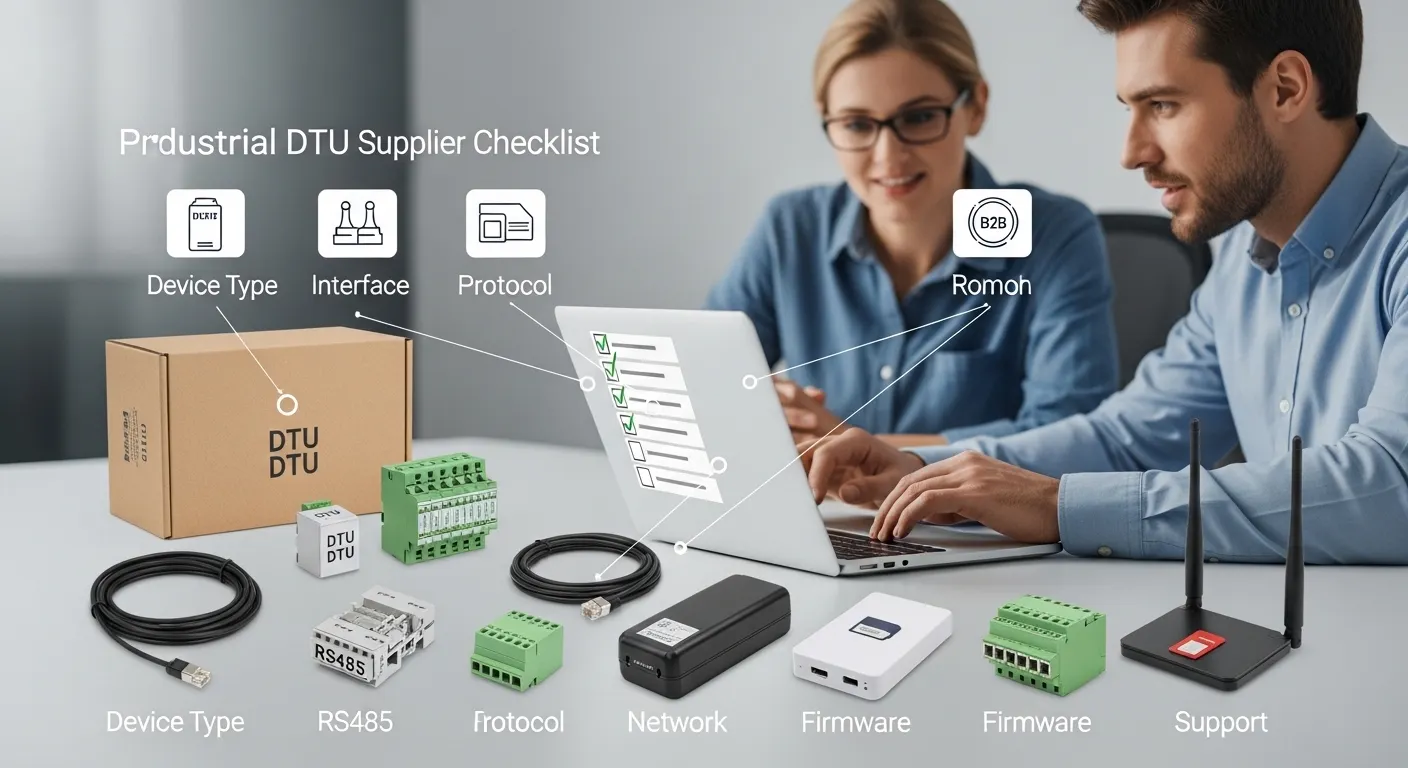
Industrial DTU Supplier Vetting Checklist
Use the table below to compare suppliers before requesting a quote or sample.
| Vetting area | What to ask the supplier | Why it matters | RFQ detail to send Tespro |
|---|---|---|---|
| Device type | Module, boxed DTU, 4G DTU, 5G DTU, or serial-to-IP DTU? | Prevents wrong product selection | Required product type and use case |
| Interface | RS232, RS485, TTL, Ethernet, DI/DO? | Field devices must connect correctly | Meter, PLC, or sensor interface |
| Protocol | Transparent transmission, Modbus, TCP/UDP, MQTT, HTTP/HTTPS? | Platform communication depends on protocol behavior | Required protocol and data flow |
| Network | 4G, 5G, NB-IoT, Wi-Fi, Ethernet, dual SIM? | Network choice affects uptime and coverage | Country, carrier, SIM, APN, VPN needs |
| Firmware | Remote configuration, watchdog, logs, update method? | Long-term stability depends on firmware support | Required maintenance workflow |
| Deployment | Power, enclosure, mounting, antenna, temperature? | Field conditions affect reliability | Site environment and cabinet details |
| Customization | OEM/ODM, branding, port mix, firmware behavior? | Bulk projects may need tailored design | Custom requirements and quantity |
| Commercial terms | Sample, MOQ, lead time, documentation, support? | Procurement needs realistic planning | Sample, pilot, or bulk order stage |
Which Interface, Protocol, and Network Details Matter Most?
For industrial DTU projects, interface mismatch is one of the most common buying risks. The supplier should confirm the exact field device connection before recommending a model.
Buyers should prepare these technical details:
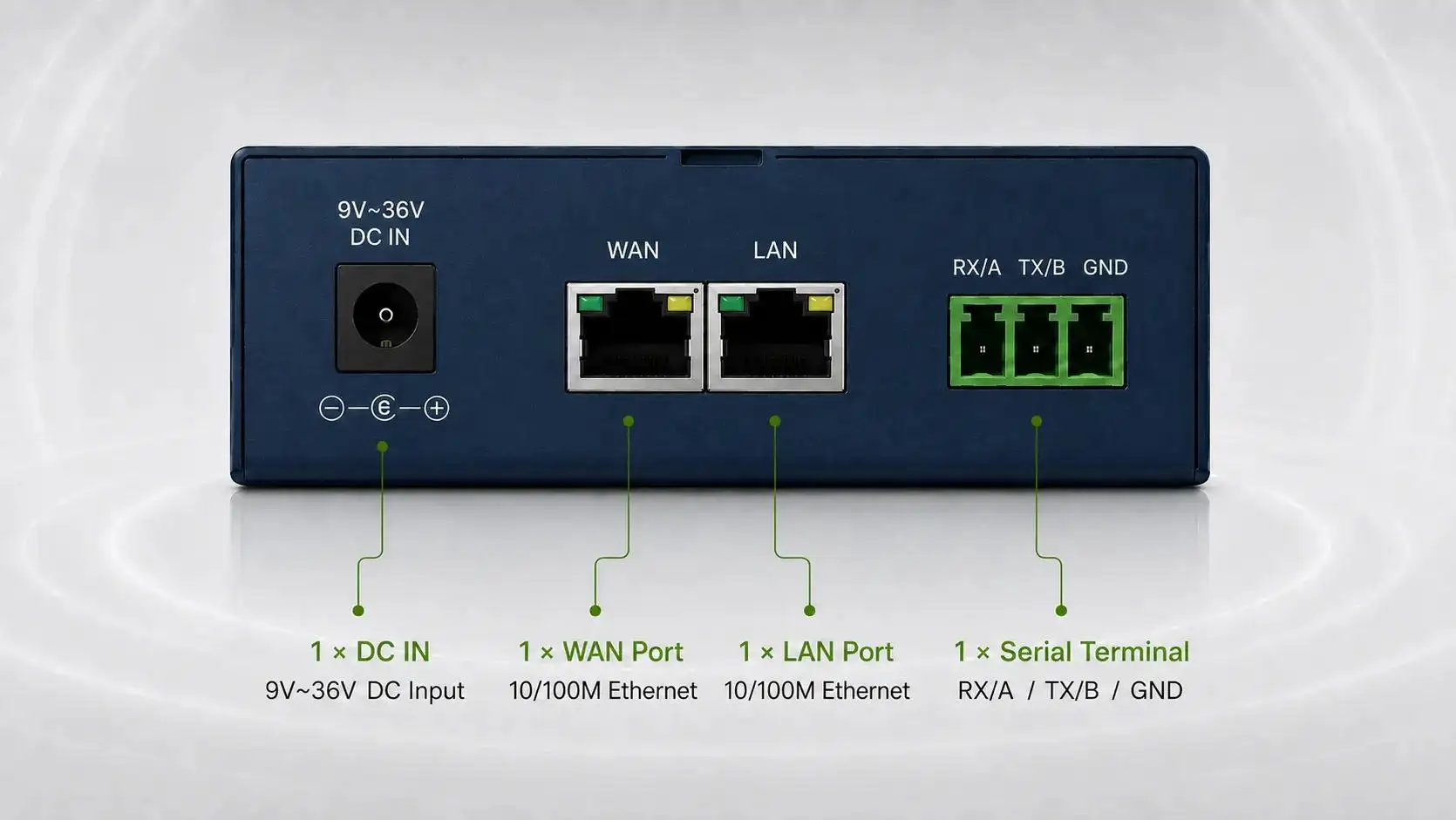
- Serial interface: RS232, RS485, TTL, or other requirement.
- Ethernet requirement if the DTU connects to LAN equipment.
- Baud rate, parity, stop bit, and data format for serial devices.
- Meter, PLC, RTU, sensor, or controller model if relevant.
- Protocol behavior: transparent transmission, Modbus RTU/TCP, TCP/UDP, MQTT, HTTP/HTTPS, or project-specific protocol.
- Server or platform endpoint: IP, domain, port, MQTT broker, SCADA server, or cloud platform.
- Cellular requirement: 4G, 5G, NB-IoT, SIM slot, APN, VPN, static IP, or private network.
If the project involves AMI/AMR, smart metering, SCADA, or energy monitoring, confirm how data moves from the field device to the final software platform. A DTU that only passes serial data may not be enough if the system requires protocol conversion, local logic, or platform-side formatting.
Firmware Support and Remote Management Are Supplier Quality Signals
Industrial DTU stability depends heavily on firmware quality. Buyers should ask how the supplier handles firmware updates, configuration tools, remote troubleshooting, watchdog behavior, reconnection, and data buffering.
For remote sites, this is critical. If the DTU is installed in a meter cabinet, roadside cabinet, pump station, substation, factory floor, or environmental monitoring site, field access may be slow and costly. Remote configuration and clear documentation can reduce maintenance pressure.
Ask the supplier:
- Can the DTU be configured locally and remotely?
- What happens after power loss or network interruption?
- Is there a watchdog or auto-reconnect mechanism?
- Can logs or status data help diagnose faults?
- How are firmware updates handled?
- Is technical documentation available for integration teams?
For projects where network uptime and failover are important, buyers can also review Tespro’s dual SIM secure DTU failover checklist.
Customization, Certificates, MOQ, and Sample Policy
For OEM/ODM buyers, distributors, and system integrators, supplier evaluation should include more than the standard datasheet. A project may need custom firmware behavior, branding, packaging, port configuration, antenna choice, enclosure changes, or documentation support.
Buyers should ask whether the supplier can discuss:
- Custom device configuration.
- OEM/ODM requirements.
- Branding or labeling.
- Firmware behavior or communication logic.
- Documentation for installation and integration.
- Certificates or compliance documents if required by the project.
- MOQ and sample availability.
- Pilot batch process before bulk ordering.
- After-sales support and escalation process.
Tespro should receive these requirements early. That helps the technical team understand whether the buyer needs a standard DTU, modified device option, related router, gateway, or a broader metering connectivity solution.
Plan Sample Testing Before Bulk Purchase
A sample should not be tested only by powering the device on. It should be tested against the real data path.
For a useful DTU sample test, prepare:
- The actual meter, PLC, sensor, or controller.
- The correct RS232, RS485, TTL, or Ethernet wiring.
- SIM card and APN details.
- Server, SCADA, cloud, or platform endpoint.
- Required protocol settings.
- Expected data interval and packet format.
- Field-like power condition.
- Antenna placement and signal test.
- Reboot and reconnect test.
- Basic installation test inside the target cabinet.
This process helps confirm whether the DTU can support the project before mass purchase. It also gives the supplier better feedback for model selection or customization.
For outdoor, smart city, or public infrastructure projects, review Tespro’s DTU smart city deployment checklist. For harsh or remote sites, the DTU harsh-site spec checklist can help buyers prepare environmental requirements.
What Should Be Included in an Industrial DTU RFQ?
A clear RFQ helps Tespro recommend the right DTU option and avoid repeated clarification. Before requesting a quote, datasheet, or sample, prepare the following details:
- Product type: DTU module, boxed DTU, 4G DTU, 5G DTU, or serial-to-IP DTU.
- Quantity: sample, pilot batch, or bulk order.
- Application: smart metering, AMI/AMR, SCADA, industrial IoT, smart city, factory automation, or remote monitoring.
- Connected device: meter, PLC, RTU, sensor, controller, or other equipment.
- Interface: RS232, RS485, TTL, Ethernet, DI/DO, or other port.
- Protocol: transparent transmission, Modbus, TCP/UDP, MQTT, HTTP/HTTPS, or other requirement.
- Network: 4G, 5G, NB-IoT, Wi-Fi, Ethernet, dual SIM, or private network.
- SIM and access: APN, VPN, static IP, private APN, or carrier restrictions.
- Platform: cloud server, SCADA, AMI/AMR software, MQTT broker, API, or data center.
- Power: voltage range and site power condition.
- Installation: enclosure, DIN rail, wall mount, antenna, cabinet space.
- Environment: indoor, outdoor, temperature, humidity, dust, vibration, weak signal, or surge risk.
- Commercial needs: sample, datasheet, customization, OEM/ODM, delivery destination, and documentation.
If available, send a wiring diagram, site photo, system architecture, or written technical specification. These details help reduce quotation errors.
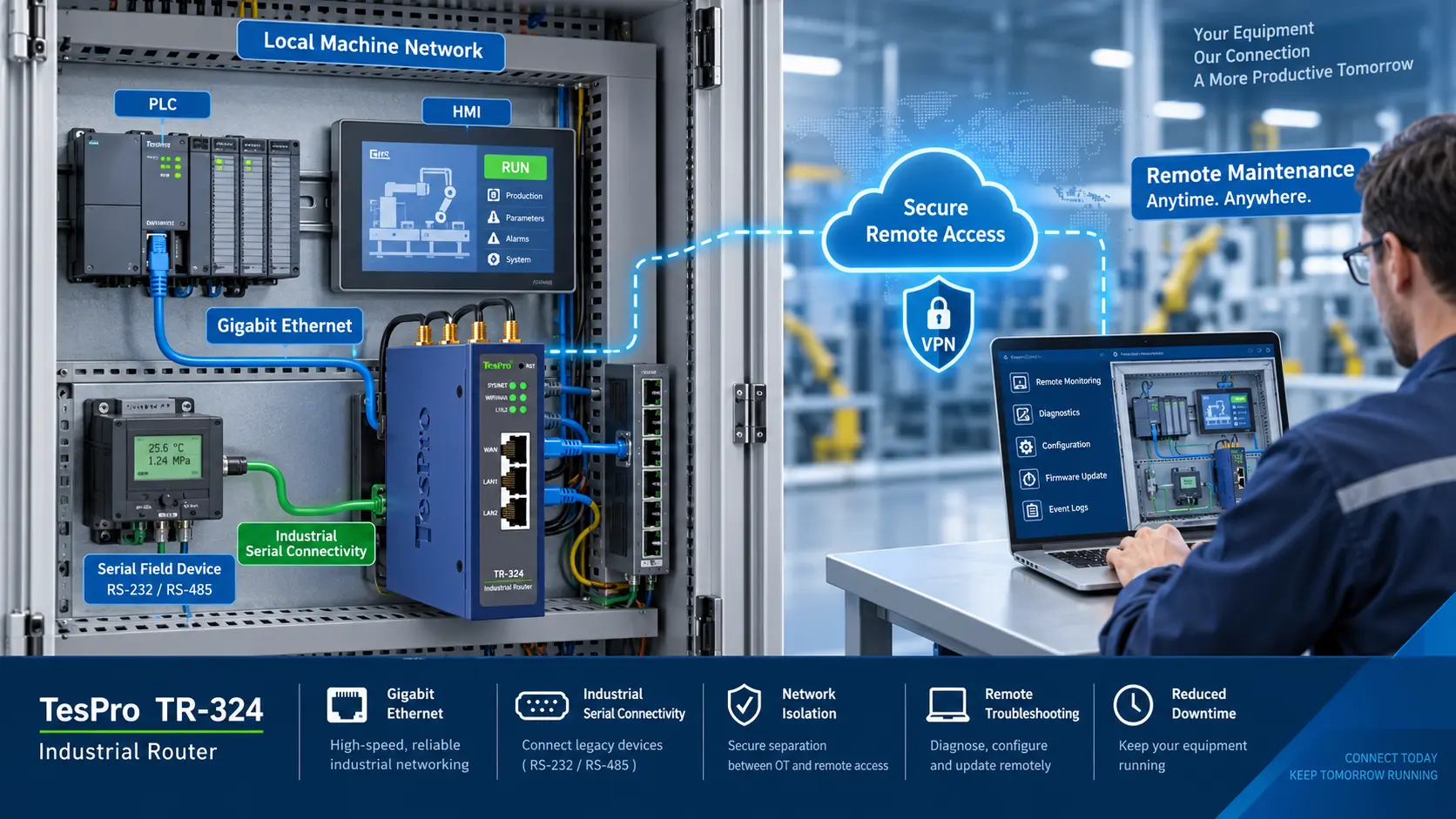
When Is a Router or Gateway Better Than a DTU?
A DTU is usually suitable when the main task is data transmission between a serial field device and a remote server or platform. It is often used for meters, PLCs, sensors, and remote monitoring points.
However, an industrial router or gateway may be better when the project needs:
- Multiple Ethernet devices.
- VPN-based remote access.
- Multi-WAN or advanced failover.
- Edge processing.
- Local data storage or rule logic.
- Protocol conversion between many systems.
- API, MQTT, or cloud integration with more complex data handling.
Buyers should explain the full data flow before choosing. Tespro can help compare whether a DTU, router, gateway, or combined solution is more suitable for the project.
Why Work With Tespro for DTU Supplier Evaluation?
Tespro supports industrial metering, connectivity, and energy data projects where hardware choice affects long-term system reliability. Our team can help buyers review project requirements, compare device categories, prepare RFQ details, and discuss datasheet, sample, consultation, or OEM/ODM needs.
For utility companies, meter manufacturers, industrial IoT integrators, SCADA teams, and distributors, the key value is practical project matching. The right supplier should understand the field device, communication path, deployment environment, and commercial procurement process.
Instead of choosing a DTU only by price or model name, buyers can work with Tespro to define the correct interface, network, protocol, power, enclosure, and integration requirements before quotation.
Frequently Asked Questions
What should I ask an industrial DTU supplier first?
Ask about interface, protocol, network type, firmware support, remote configuration, sample policy, customization, MOQ, lead time, and after-sales response. These details show whether the supplier can support real deployment, not only sell a device.
What is the difference between a DTU module and a boxed DTU?
A DTU module is usually used for embedded design or OEM product development. A boxed DTU is more suitable for field installation because it may include enclosure, terminals, antenna connection, power input, and mounting options.
Does every DTU support Modbus or MQTT?
No. Some DTUs only provide transparent data transmission. Others may support specific protocols or conversion modes. Buyers should ask for the exact protocol behavior, configuration method, and documentation before ordering.
How should I test a DTU sample?
Test it with the real meter, PLC, or sensor. Check wiring, serial settings, SIM/APN, signal strength, server connection, protocol behavior, reboot recovery, data upload, power stability, and cabinet installation conditions.
When should I choose a gateway instead of a DTU?
Choose a gateway when the project needs protocol conversion, edge logic, multiple device connections, local processing, API integration, or more complex device-to-cloud architecture. A DTU is better for simpler field data transmission.
What should I send Tespro for a DTU quotation?
Send the device type, quantity, application, interface, protocol, network, SIM/APN/VPN/static IP needs, power supply, operating environment, enclosure limits, platform requirements, sample needs, delivery destination, and any system diagram or written specification.
Request an Industrial DTU Quote, Datasheet, or Sample Consultation
Share your industrial DTU project requirements with Tespro for model selection, quotation, datasheet request, sample discussion, or OEM/ODM support. Include your device type, quantity, application, connected meter or equipment, interface, protocol, network type, SIM/APN/VPN/static IP needs, platform or server details, power supply, installation environment, enclosure limits, security or remote management needs, delivery destination, and any drawing, site detail, or system diagram.