-1791966549842.webp)





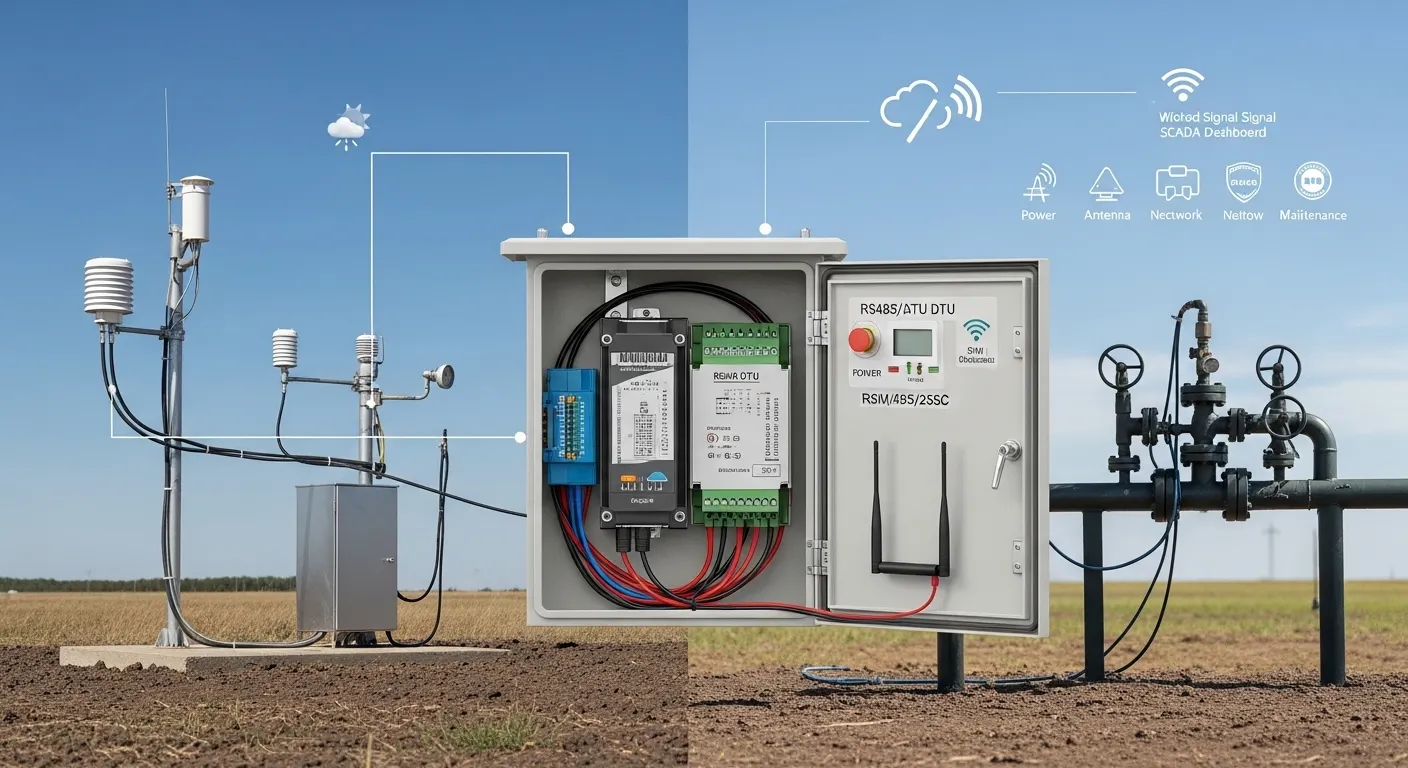

Tespro provides DTU, industrial connectivity devices, gateways, routers, and related energy data solutions for buyers planning environmental monitoring, oil and gas remote monitoring, SCADA connectivity, and industrial IoT data collection projects. When choosing a DTU for environmental monitoring or a DTU for oil and gas sites, buyers should start with field risks first: weather exposure, distance from maintenance teams, unstable power, explosive-area constraints, weak network coverage, and service interval.
A harsh remote site is expensive to revisit. If the wrong interface, protocol, antenna, power input, enclosure, or network method is selected, the system may collect data but fail to transmit it reliably. This page helps utilities, oil and gas teams, environmental monitoring integrators, automation engineers, and procurement managers prepare the right specification before requesting a quotation or datasheet from Tespro.
Start With Site Risk Before Choosing a DTU Model
A DTU should not be selected only by cellular type or port count. Remote sites require a practical check of the full installation environment.
Before comparing device options, confirm:
- Will the DTU be installed indoors, inside a cabinet, or outdoors?
- Is the site exposed to rain, dust, humidity, heat, cold, vibration, or corrosion?
- How far is the site from the nearest maintenance team?
- Is power stable, battery-backed, solar-powered, or frequently interrupted?
- Is the cellular signal weak, unstable, or blocked by terrain?
- Does the project require public network, APN, VPN, static IP, or private server access?
- Are there explosive-area or hazardous-area constraints that must be reviewed?
- How often should the DTU report data?
- What happens if the network is unavailable for several hours?
These answers affect the device category, antenna plan, reporting interval, power design, enclosure choice, and remote management requirements.
Harsh-Site DTU Specification Checklist
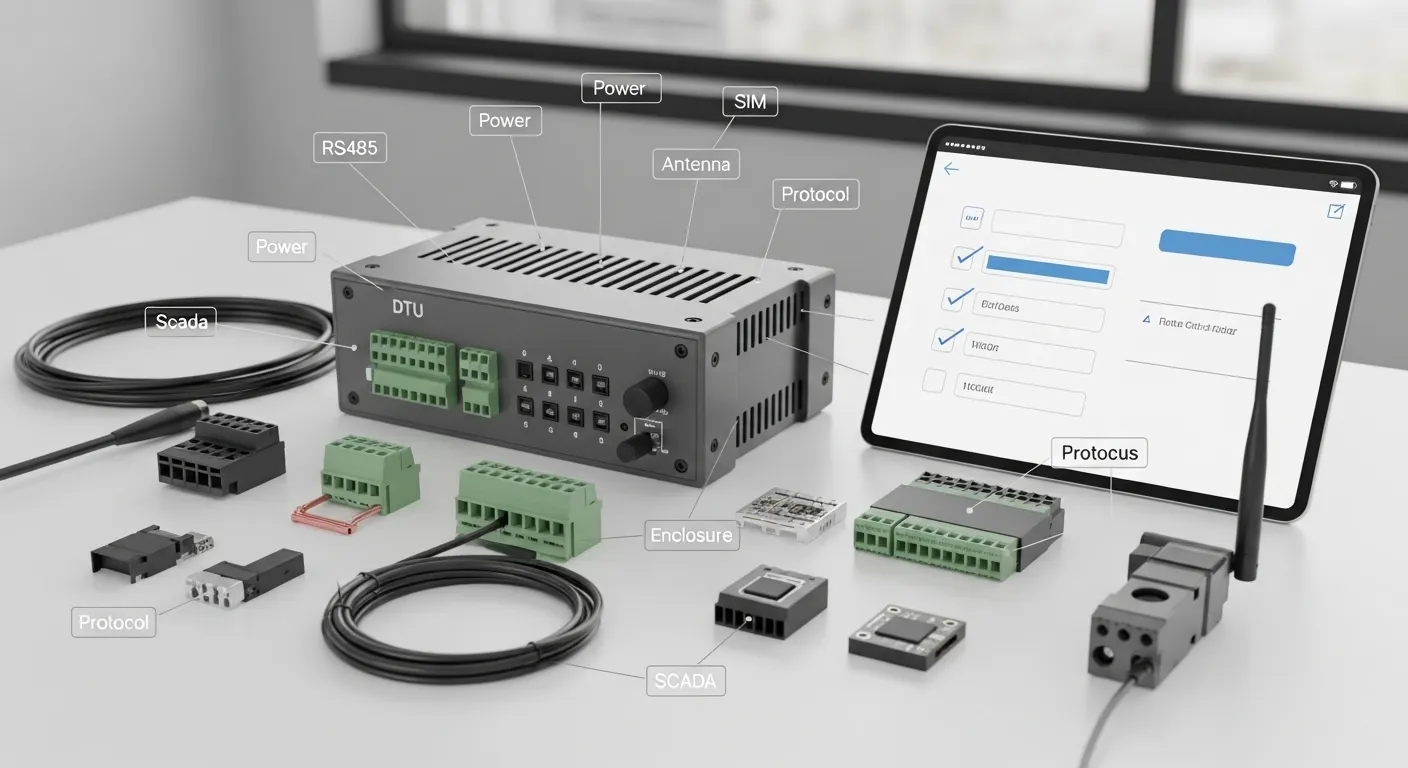
Use this checklist before sending an RFQ. It helps engineering and purchasing teams align site conditions with device requirements.
| Requirement area | What to confirm | Why it matters | RFQ detail to send Tespro |
|---|---|---|---|
| Site environment | Indoor cabinet, outdoor cabinet, pole, field station, pipeline, pump site | Exposure affects enclosure, installation, cable, and antenna planning | Site type, weather exposure, mounting method |
| Field interface | RS485, RS232, Ethernet, DI, DO, AI, relay, pulse input | The DTU must match sensors, meters, controllers, or PLCs | Device model, output type, port requirement |
| Protocol | Modbus RTU, Modbus TCP, TCP/IP, MQTT, HTTP/HTTPS, custom protocol | Protocol affects data transmission and platform integration | Required protocol and data format |
| Network | 4G, 3G, 2G fallback, LTE coverage, private network | Weak or unsupported network can stop data transmission | Country, carrier, signal condition, network type |
| SIM and access | SIM, APN, static IP, VPN, private APN, DNS | Remote access and SCADA connection depend on network architecture | SIM/APN/VPN/static IP requirements |
| Power | DC input, unstable power, battery, solar, backup | Remote stations may not have stable mains power | Power source, voltage range, backup plan |
| Antenna | External antenna, cabinet antenna, high-gain antenna, cable length | Antenna placement often decides uptime in remote sites | Signal condition and installation constraints |
| Data workflow | Cloud, private server, SCADA, dashboard, API, alarms | The DTU must fit the monitoring workflow | Platform, server, alarm, and export needs |
| Maintenance | Remote configuration, watchdog, reconnect, service interval | Unmanned sites need fewer manual visits | Expected service interval and remote support needs |
| Safety review | Hazardous-area or explosive-area constraints | Oil and gas sites may need project-specific compliance review | Safety zone details and required standards to confirm |
Which Devices Will the DTU Connect To?
Environmental and oil and gas projects often connect different field devices, but the selection logic is similar. The DTU must match the output interface and data protocol of the equipment installed at the site.
For environmental monitoring, connected devices may include:
- Weather sensors
- Air quality sensors
- Water quality instruments
- Temperature and humidity sensors
- Rainfall, wind, pressure, or PM monitoring devices
- Remote power or cabinet monitoring devices
For oil and gas sites, connected devices may include:
- Pressure transmitters
- Flow meters
- Temperature sensors
- Valve status devices
- Pump or motor monitoring equipment
- Leakage detection systems
- Wellhead or pipeline monitoring instruments
If the project only needs transparent serial data transmission, a simpler DTU may be suitable. If the site needs multiple sensor inputs, local I/O, alarm logic, or protocol conversion, buyers may need an RTU-style device, industrial gateway, or router-supported architecture.
For broader wireless data collection planning, buyers can also review Tespro’s guide on wireless DTU data collection.
Interface and Protocol Details to Confirm
The most common selection mistake is choosing a communication device before confirming the field interface. A DTU cannot solve a mismatch between a sensor output and the required platform input.
Buyers should confirm:
- Number of RS485 or RS232 devices
- Baud rate and serial settings
- Modbus RTU or other field protocol
- Whether Modbus TCP, TCP/IP, MQTT, or HTTP/HTTPS is required
- Whether the server expects transparent data or formatted data
- Whether local buffering is required when the network drops
- Whether alarm data must be sent separately from routine data
- Whether the system connects to SCADA, a cloud platform, or a private server
For SCADA and remote monitoring teams, the network architecture may be as important as the DTU itself. A public IP, private APN, VPN, static IP, or cloud relay method should be confirmed before the device is selected.
Network Strength, SIM Planning, and Remote Access
Harsh sites often fail because the network plan is weak, not because the DTU is incorrect. A remote DTU installation should include signal testing and a clear access method.
For basic periodic data upload, a standard cellular connection may be enough. For critical oil and gas or utility sites, buyers may need to confirm APN, VPN, static IP, private network access, dual SIM failover, or remote configuration needs.
Important network questions include:
- Which carrier has the strongest field coverage?
- Is the site fixed, mobile, or temporary?
- Does the project require remote access to field devices?
- Will the server receive data through public internet, private APN, VPN, or cloud platform?
- Is SMS alarm or backup reporting required?
- Is the reporting interval continuous, scheduled, or event-based?
- Will the DTU need automatic reconnect or watchdog behavior?
If uptime is critical or the site has weak coverage, review Tespro’s related guide on dual SIM secure DTU failover.
Power, Enclosure, and Installation Conditions
A DTU for remote sites should be evaluated with the cabinet, power supply, antenna, and maintenance plan. The device is only one part of the field system.
Buyers should confirm the power source first. Some sites use stable DC power inside a cabinet. Others depend on solar, battery backup, or unstable field power. Reporting interval, sleep mode, reconnect behavior, and local buffering may affect power planning.
The enclosure and mounting method also matter. A DTU installed inside a protected control cabinet has different requirements from a device placed near a pipeline, weather station, pump site, or coastal monitoring point.
Check these deployment details before quotation:
- Input voltage and power stability
- Battery or solar power plan
- Cabinet size and mounting space
- DIN rail, wall, or pole installation
- Antenna position and cable routing
- Dust, rain, humidity, vibration, or corrosion exposure
- Operating temperature range required by the project
- Cable glands, connectors, and field wiring constraints
- Maintenance access and service interval
Do not assume a standard indoor configuration will survive a harsh remote site. Send the actual installation conditions to Tespro so the technical team can help review the device category and configuration.
Environmental Monitoring vs Oil and Gas RFQ Priorities
Environmental monitoring projects often prioritize sensor compatibility, low-power operation, outdoor installation, and platform upload. Common data points include weather, air quality, water quality, humidity, temperature, rainfall, wind, and pollution measurements.
Oil and gas projects often place more emphasis on uptime, alarm reliability, network security, remote maintenance, and site safety review. Common data points include pressure, flow, temperature, leakage status, pump state, valve state, and equipment operating data.
The biggest difference is risk. An environmental station may be difficult to access, but an oil and gas site may also have hazardous-area or explosive-area requirements. Buyers should not assume a general DTU is suitable for every oil and gas location. Safety zone details and required standards should be shared before model selection.
When a Basic DTU Is Not Enough
A basic DTU may be suitable when the project needs simple serial data transmission from one or more field devices to a server. This is common in many metering, sensing, and remote monitoring applications.
However, buyers should consider a more advanced device, router, or gateway when the project needs:
- Multiple types of field inputs
- Local I/O acquisition
- Protocol conversion
- MQTT or cloud publishing
- VPN or secure remote access
- Local data buffering
- Remote configuration
- Multiple data centers or platform endpoints
- Advanced alarm handling
- Connection to several field devices at one site
For wider deployment planning across city infrastructure or distributed monitoring points, Tespro’s DTU smart city deployment checklist may help compare site-readiness factors.
What to Include in a DTU RFQ
A complete RFQ helps Tespro recommend a more suitable device option and avoid missing important deployment risks.
Before requesting a quotation, datasheet, sample, or consultation, prepare:
- Application type: environmental monitoring, oil and gas, pipeline, wellhead, weather station, water quality, air quality, pump station, or other remote site
- Quantity required
- Field device or sensor model
- Interface requirement: RS485, RS232, Ethernet, DI, DO, AI, relay, pulse input
- Protocol requirement: Modbus RTU, Modbus TCP, TCP/IP, MQTT, HTTP/HTTPS, or custom protocol
- Data destination: cloud platform, private server, SCADA, dashboard, API, or data center
- Network type: 4G, LTE, 3G/2G fallback, private APN, VPN, static IP, or public internet
- SIM and carrier information if available
- Reporting interval and alarm needs
- Power supply and backup design
- Installation environment and enclosure constraints
- Antenna location and signal condition
- Security or remote management needs
- Hazardous-area or explosive-area constraints if relevant
- Delivery destination
- Datasheet, sample, demo, or OEM/ODM needs
- Site drawing, wiring diagram, system diagram, or written specification if available
Why Work With Tespro for Harsh-Site DTU Projects?
Tespro supports industrial metering, connectivity, and energy data projects where device selection must match real field conditions. Our product scope includes metering optical probes, data transmission units, industrial routers, gateways, meter test equipment, calibrators, and software/platform-related solutions.
For harsh remote sites, buyers often need more than a device code. They need a supplier that can review the application, interface, network, power, and deployment conditions before quotation.
Tespro can help buyers discuss:
- DTU and industrial connectivity options
- Remote monitoring data flow
- Field device interface requirements
- Network and SIM planning questions
- SCADA, cloud, or platform integration needs
- Sample, datasheet, and project consultation requests
- OEM/ODM support where relevant
Frequently Asked Questions
What makes a DTU suitable for harsh remote sites?
A suitable DTU should match the field interface, protocol, network, power source, antenna plan, and installation environment. Buyers should also confirm temperature, enclosure, remote management, and maintenance interval requirements before ordering.
Can one DTU connect multiple environmental sensors?
It may be possible if the sensor interfaces, protocol, addressing, and port capacity match the device configuration. Buyers should send sensor models, RS485/RS232 details, protocol settings, and reporting needs to Tespro for review.
Do oil and gas sites need a special DTU?
Oil and gas sites may require extra review for safety, enclosure, power, network security, alarms, and hazardous-area constraints. Buyers should share site classification and required standards before choosing any DTU or related device.
Should I use APN, VPN, or static IP?
It depends on the remote access method, cybersecurity policy, server setup, and SCADA requirements. Public upload may be enough for simple monitoring, while critical sites may need APN, VPN, static IP, or private network planning.
When is a basic DTU not enough?
A basic DTU may not be enough when the site needs I/O acquisition, protocol conversion, local buffering, MQTT/cloud upload, VPN access, multiple devices, or advanced alarm logic. In that case, an RTU, router, or gateway option may be better.
What should I send before requesting a quote?
Send the application, quantity, field device model, interface, protocol, network type, SIM/APN/VPN/static IP needs, power source, installation environment, platform requirements, and any site diagram or written specification.
Share your environmental monitoring or oil and gas remote-site requirements with Tespro to request a suitable DTU recommendation, datasheet, sample, demo, or quotation. Include your device type, quantity, field interface, protocol, network method, power supply, enclosure conditions, platform requirements, delivery destination, and any site drawing or system diagram so our team can review the project more accurately.