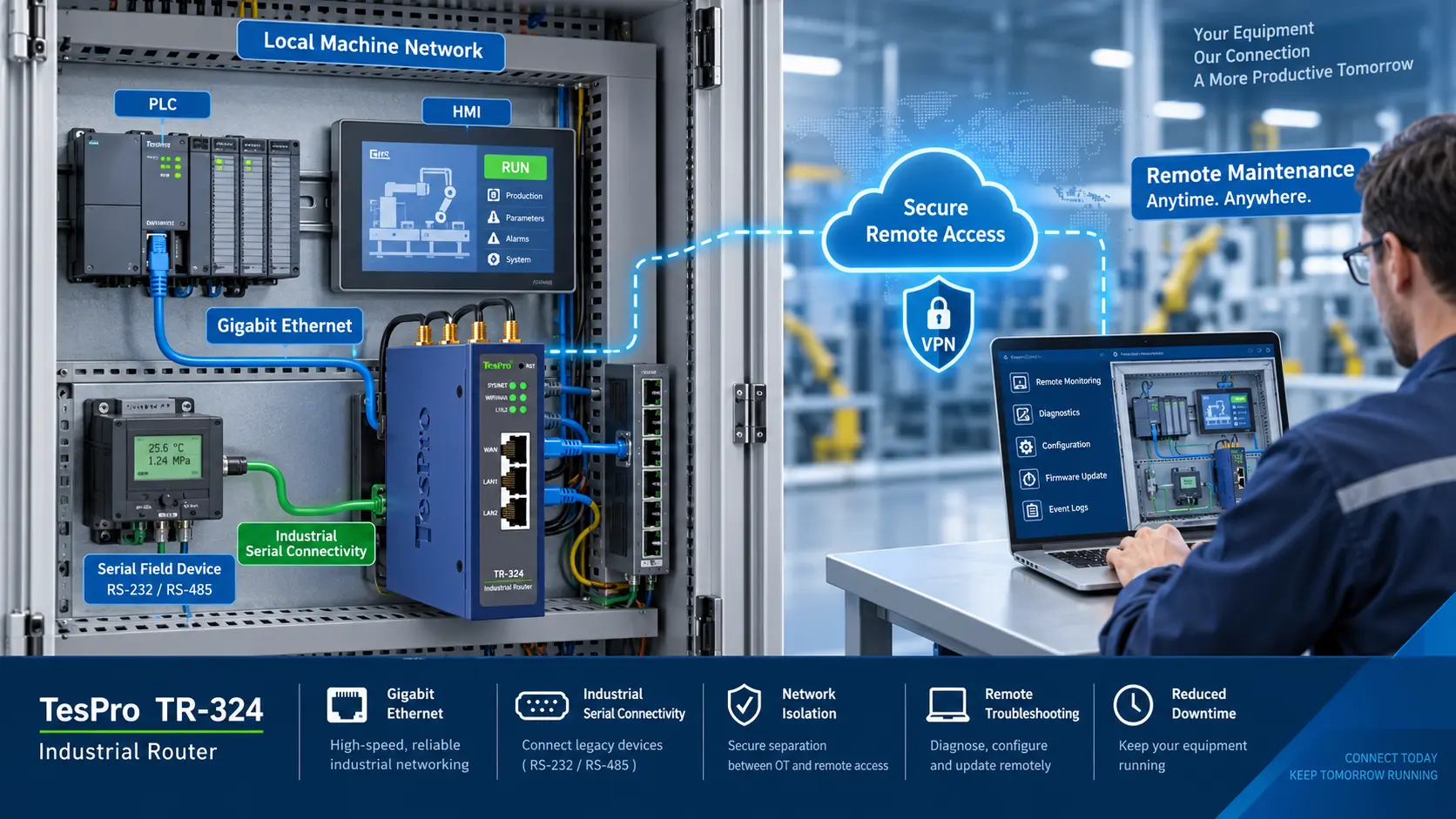
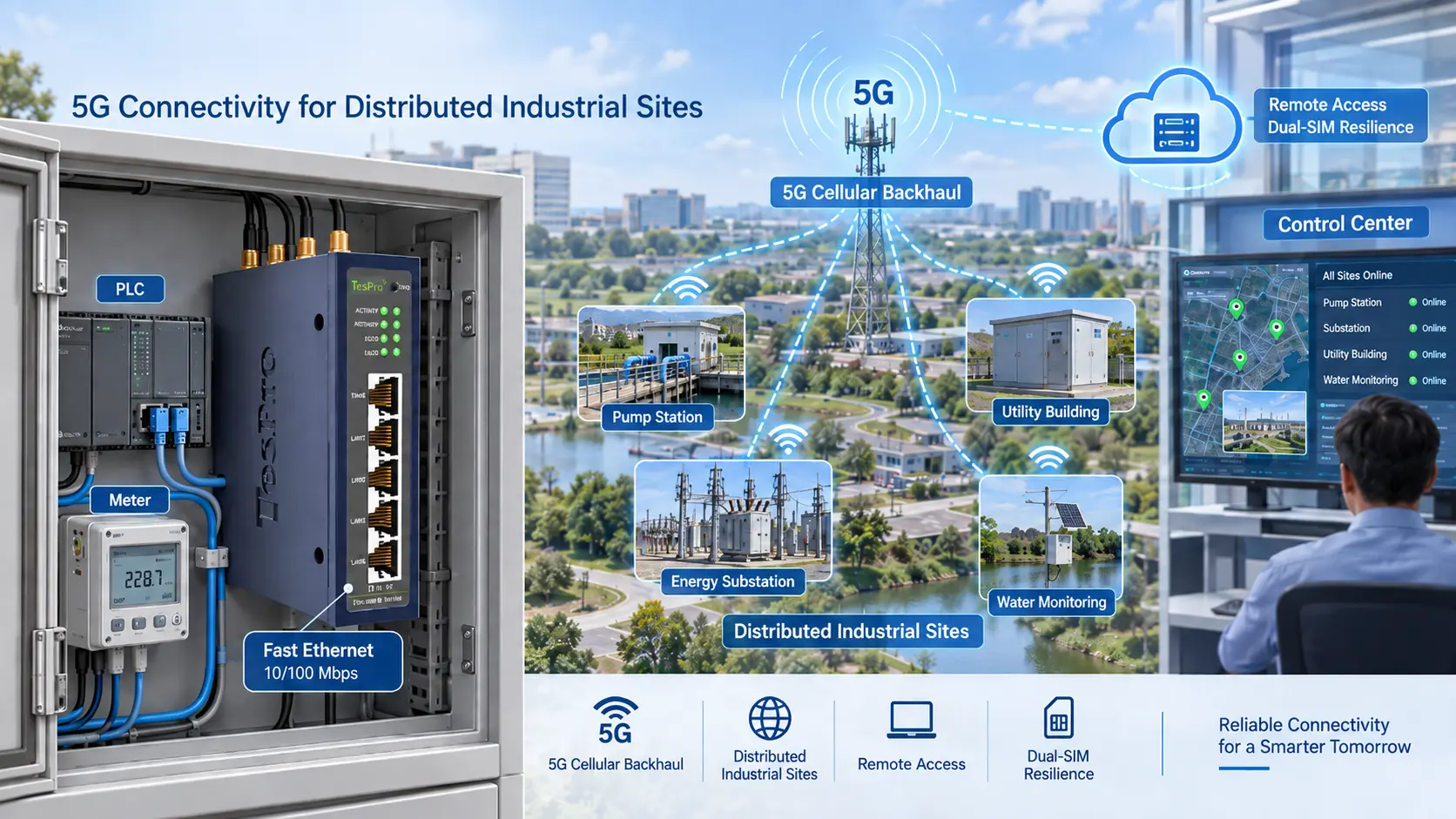
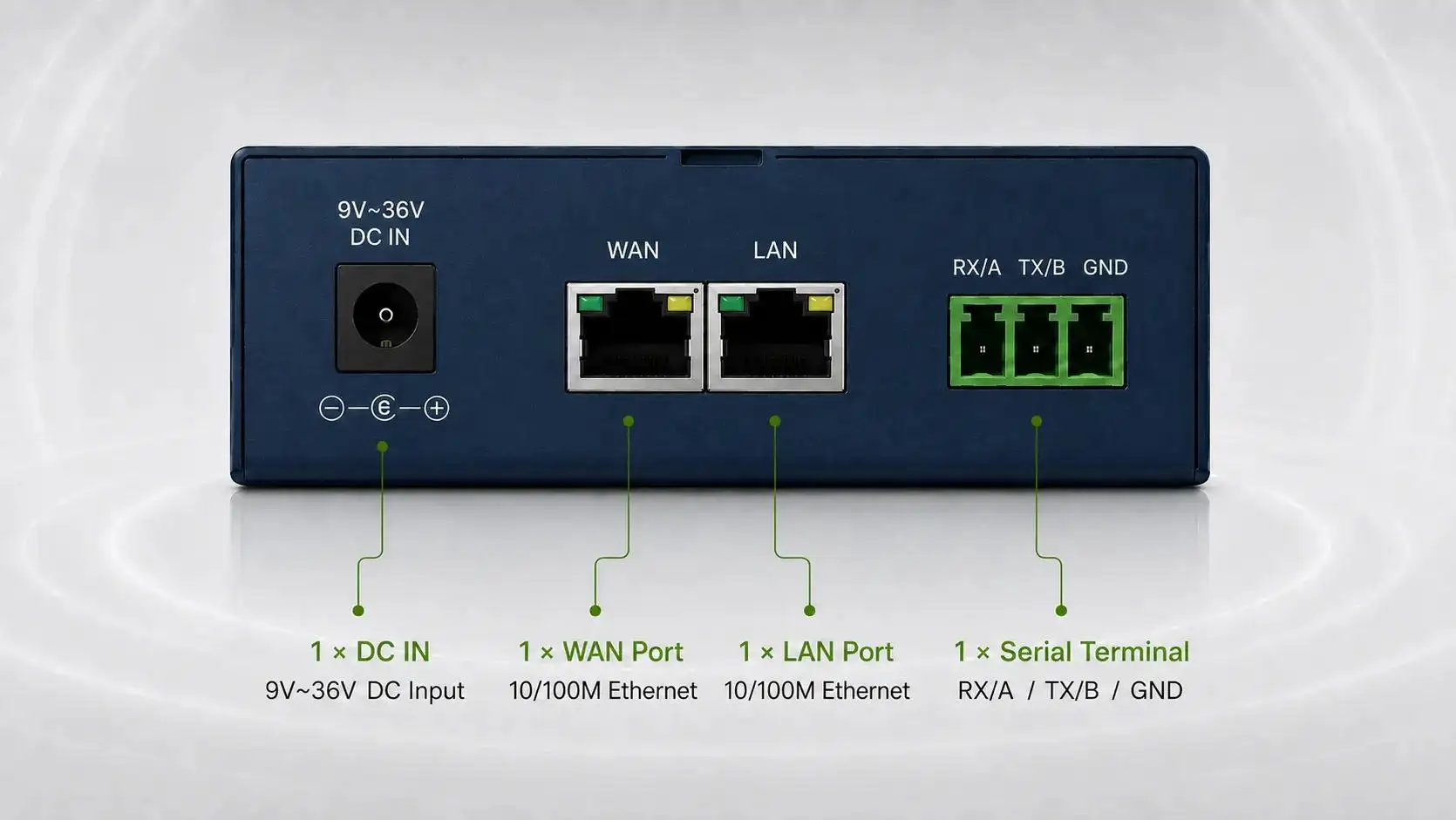
-1791966549842.webp)





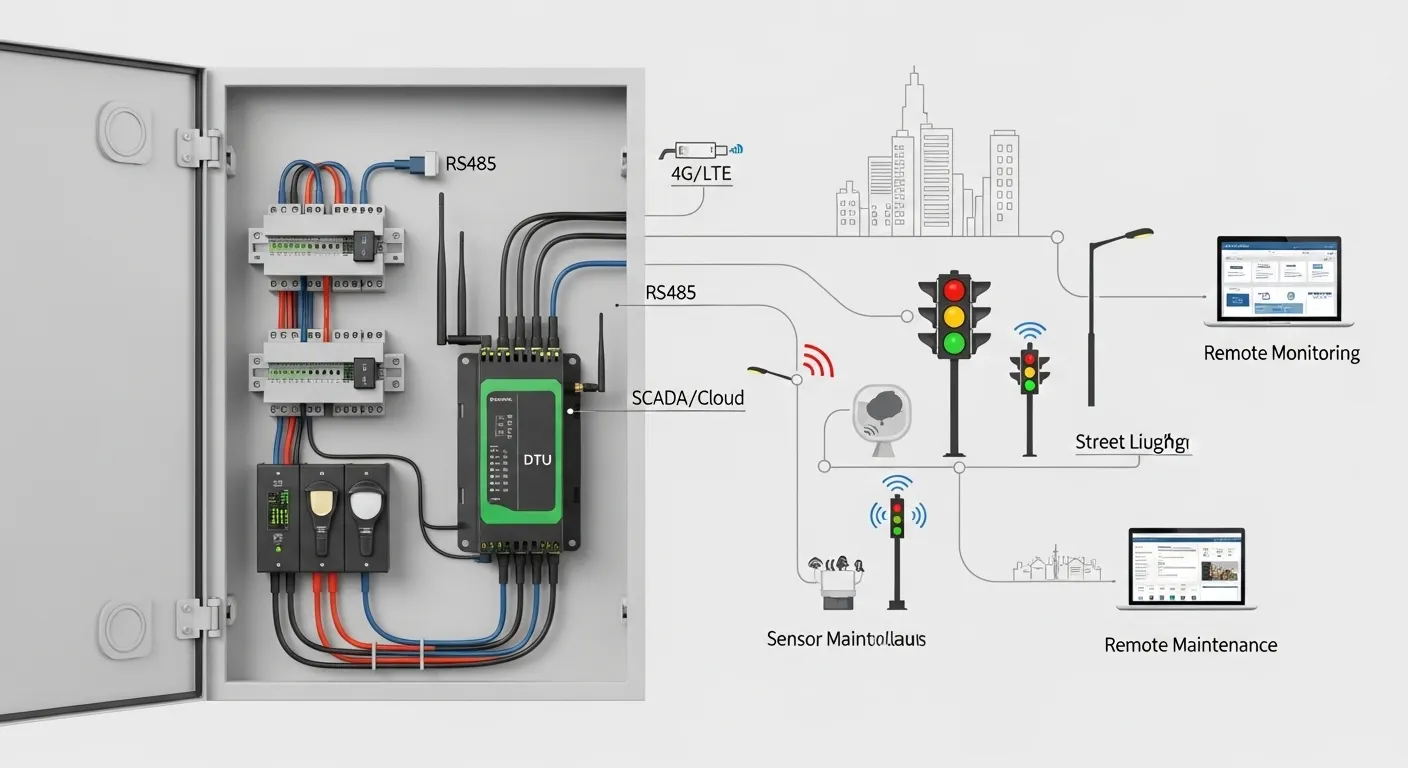

Tespro provides DTU, industrial connectivity, metering hardware, gateways, routers, and energy data solutions for smart city integrators, utility teams, traffic system contractors, and municipal project buyers. When choosing a DTU for smart city or traffic system deployment, buyers should confirm the connected device type, interface, protocol, cellular network, SIM/APN/VPN requirement, power supply, enclosure condition, data interval, and remote maintenance workflow before requesting a quote.
A city project may connect traffic cabinets, street lighting controllers, environmental sensors, pump stations, utility meters, or other distributed field devices. A DTU can help transmit field data from these assets to a server, SCADA platform, cloud system, or municipal monitoring platform.
This guide helps procurement and engineering teams prepare a practical deployment checklist before selecting a data transmission unit, requesting a datasheet, or discussing project requirements with Tespro.
Where a DTU Fits in Smart City Projects
A DTU works as a field data transmission device between distributed equipment and a central platform. In many smart city systems, the field device already collects data or controls local operation. The DTU provides the communication path.
Common smart city use cases include:
- Traffic signal cabinets
- Street lighting control cabinets
- Environmental monitoring stations
- Utility meter collection points
- Water or pump monitoring stations
- Parking, access, or roadside sensor systems
- Remote industrial or municipal control cabinets
The main question is not only whether the device supports cellular communication. Buyers also need to confirm what data is moving, how often it is sent, which interface is used, and how the device will be maintained after installation.
For broader field data collection planning, buyers can also review Tespro’s wireless DTU data collection buyer guide.
Smart City DTU Deployment Matrix
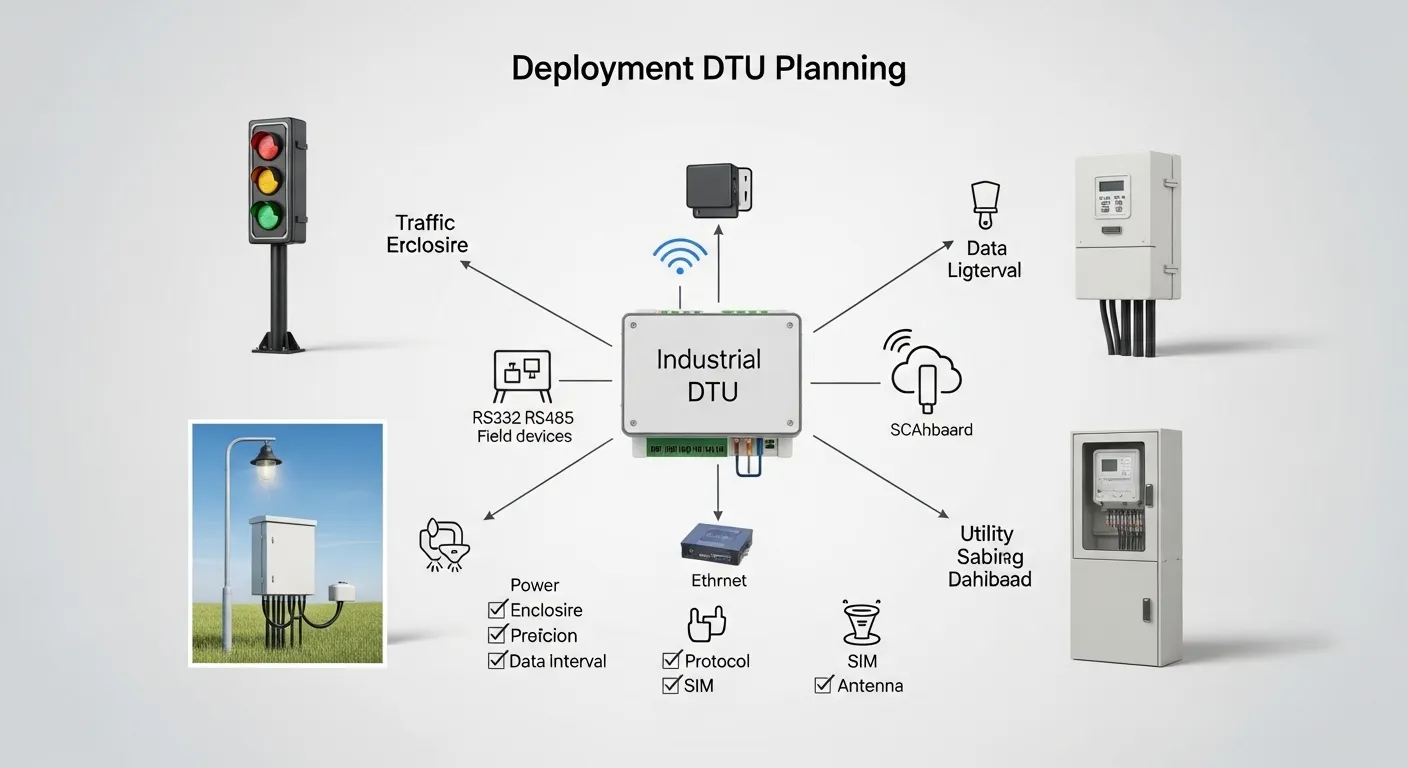
The table below gives a practical starting point for smart city and traffic system buyers. Actual requirements should be confirmed based on the field device, platform, site design, and project specification.
| Smart city use case | Connected field device | Interface to confirm | Protocol or data requirement | Data interval | Deployment checks |
|---|---|---|---|---|---|
| Traffic signal cabinet | Traffic controller, PLC, signal controller | RS232, RS485, Ethernet | Transparent data, Modbus, TCP/UDP, proprietary controller protocol | Frequent status or event-based data | Cabinet power, antenna position, remote access, VPN/static IP if required |
| Street lighting system | Lighting controller, power meter, cabinet controller | RS485, RS232, Ethernet | Control/status data, Modbus, TCP/IP, MQTT if platform requires it | Scheduled or event-based | Outdoor cabinet, surge risk, SIM coverage, remote reboot need |
| Environmental monitoring | Sensor station, weather station, air quality device | RS485, RS232, Ethernet | Sensor values, serial data, TCP/UDP, MQTT | Periodic upload | Solar/battery option, enclosure, weak signal, low-data SIM plan |
| Utility meter reading | Electricity, water, or gas meter concentrator | RS485, RS232, optical/serial gateway if required | Meter data, Modbus, transparent serial, platform upload format | Hourly, daily, or project-defined | Meter compatibility, read frequency, server endpoint, data security |
| Pump or water station | Pump controller, valve controller, level sensor | RS485, Ethernet, digital I/O if needed | Alarm/status/control data | Event-based or periodic | Backup power, enclosure, remote diagnostics, alarm routing |
| Parking or roadside sensor | Sensor controller, access equipment | RS485, Ethernet | Device status, event data, TCP/IP, MQTT | Real-time or near real-time | Network coverage, cabinet space, remote maintenance access |
This matrix should not replace the final technical specification. It helps buyers prepare better RFQ details and avoid selecting a DTU only by network type.
What Should Buyers Confirm Before Choosing a DTU for Traffic Systems?
Traffic cabinets often have stricter requirements than simple sensor monitoring points. They may need stable communication, remote diagnostics, controlled access, and compatibility with existing field controllers.
Before choosing a DTU for a traffic system, confirm:
- Field device model and controller type
- Available interface: RS232, RS485, Ethernet, or other port
- Communication method: transparent transmission, Modbus, TCP/UDP, or another protocol
- Data direction: upload only, two-way control, or remote configuration
- Data frequency and acceptable latency
- Cabinet power supply and backup power
- Antenna mounting position and signal quality
- SIM, APN, VPN, static IP, or private network requirement
- Remote maintenance needs, such as reboot, configuration, alerts, or diagnostics
If the traffic project includes cameras, multiple Ethernet devices, firewall rules, or advanced routing, an industrial router or gateway may be more suitable than a basic DTU. The buyer should define the network architecture before ordering.
Interface and Protocol Checklist
A smart city DTU must match the field equipment first. A strong cellular signal cannot solve an interface or protocol mismatch.
Buyers should check these interface details:
- RS485: Common for meters, controllers, sensors, and industrial equipment.
- RS232: Often used for legacy devices or single-device serial communication.
- Ethernet: Useful when the connected device already communicates over IP.
- TTL or special serial interface: Should be confirmed if the device is not using standard RS232/RS485.
- Antenna interface: Important for cabinet, pole, or roadside installation.
Protocol planning is equally important. Some projects need transparent serial transmission, while others need structured communication with a server or platform.
Common protocol and data questions include:
- Does the device use Modbus RTU or Modbus TCP?
- Is the project using TCP/IP, UDP, or MQTT?
- Does the DTU only pass data, or must it support protocol handling?
- Is the server endpoint fixed?
- Does the project require two-way communication?
- Is the data format already defined by the municipal platform?
If the buyer cannot confirm the protocol, they should share the controller manual, meter manual, or platform requirement with Tespro before model selection.
Network, SIM, APN, VPN and Static IP Planning
Smart city projects often use cellular networks because many sites do not have reliable wired internet. A 4G DTU can be suitable for many status, meter, sensor, and control data applications. Higher-bandwidth or low-latency applications may need a different communication design.
Network planning should include:
- Cellular network type required by the project
- Carrier coverage at each site
- SIM card ownership and management process
- APN requirement from the carrier or municipality
- Static IP or dynamic IP design
- VPN or private network requirement
- Data usage estimate based on upload interval
- Failover requirement for critical sites
For traffic cabinets, emergency routes, or municipal assets where downtime is costly, buyers should consider whether dual SIM or secure failover is needed. Tespro’s dual SIM secure DTU failover checklist can help teams define redundancy and security requirements.
Power, Enclosure and Site Conditions
A DTU may be installed in a cabinet, pole box, roadside enclosure, lighting cabinet, pump station, or utility room. The installation environment affects device selection as much as the protocol does.
Buyers should confirm:
- Available power supply and voltage range
- Whether backup power is needed
- Cabinet size and mounting method
- DIN rail or panel installation requirement
- Temperature and humidity conditions
- Dust, vibration, and electrical noise exposure
- Antenna cable routing and signal strength
- Need for surge protection or isolation at the system level
- Access limitations for maintenance teams
For environmental monitoring stations, power may come from solar or battery systems. For traffic cabinets, the device may share space with controllers, power equipment, and other communication devices. These details should be included in the RFQ.
Remote Maintenance and Security Requirements
Municipal projects may involve many distributed sites. After installation, field visits can become expensive and slow. Remote maintenance planning should be part of the DTU selection process.
Useful remote maintenance requirements include:
- Remote configuration
- Remote reboot
- Firmware update planning
- Signal strength monitoring
- Online/offline status check
- Alarm or event reporting
- Device logs or diagnostics
- Secure access control
- VPN or private network access where required
Security should not be treated as an afterthought. Buyers should define who can access the device, how remote access is protected, and whether the project needs VPN, private APN, static IP, or restricted server communication.
When Is a DTU Enough, and When Is a Router or Gateway Better?
A DTU is often suitable when the project needs to transmit serial or simple field data from one or several devices to a remote server. This is common in meter reading, sensor monitoring, controller status upload, and basic remote data collection.
An industrial router may be better when the site has multiple Ethernet devices, needs routing, firewall rules, VPN access, LAN management, or camera connectivity.
An industrial gateway may be better when the project needs protocol conversion, local data processing, edge logic, buffering, API connection, or more complex device-to-cloud integration.
The safest approach is to define the field device, data flow, platform endpoint, and maintenance workflow before choosing the product category.
RFQ Checklist for Smart City DTU Projects
To receive a more accurate recommendation from Tespro, buyers should prepare the following information:
- Project type: traffic, lighting, environmental monitoring, utility metering, water system, or other application
- Quantity and number of deployment sites
- Field device model or controller model
- Interface requirement: RS485, RS232, Ethernet, or other port
- Protocol or data method: Modbus RTU/TCP, TCP/IP, UDP, MQTT, transparent serial, or proprietary protocol
- Data direction: upload only or two-way communication
- Data interval or latency expectation
- Cellular network requirement
- SIM card plan and carrier information
- APN, VPN, static IP, or private network requirement
- Server, SCADA, cloud, API, or platform endpoint
- Power supply and backup power details
- Enclosure, mounting, and antenna constraints
- Operating environment and site conditions
- Security and remote maintenance needs
- Datasheet, sample, demo, or consultation request
- Delivery destination
- Site drawing, cabinet drawing, system diagram, or written specification if available
A complete RFQ helps avoid wrong device selection, missing accessories, unclear communication settings, and integration delays.
Why Work With Tespro for Smart City DTU Selection?
Tespro supports industrial metering, connectivity, energy data, and utility communication projects. Our product scope includes DTUs, industrial routers, gateways, metering optical probes, meter test equipment, calibrators, software platforms, and related project support.
For smart city buyers, this wider solution background is useful because the communication device is only one part of the system. Traffic controllers, meters, sensors, routers, gateways, platforms, and maintenance workflows must work together.
Tespro can help buyers review the application, confirm key technical requirements, compare device categories, and prepare a suitable quotation or datasheet request. For distributors, integrators, and OEM/ODM buyers, project details can also be discussed before sample or solution planning.
Frequently Asked Questions
Can one DTU support different smart city applications?
Yes, if the interface, protocol, power, network, and enclosure requirements match. Buyers should not assume one model fits every site. Traffic cabinets, lighting systems, meters, and sensors may need different configurations.
Is 4G enough for traffic system communication?
4G can be enough for many status, control, and sensor data applications. Projects with video, very low latency, or multiple IP devices may need a router, gateway, or different network design.
Do smart city DTU projects need dual SIM?
Dual SIM can help critical or remote sites where carrier coverage or uptime is a concern. Buyers should confirm failover behavior, SIM management, APN settings, and whether the project requires secure remote access.
Which protocols should be confirmed before buying?
Confirm whether the field device uses transparent serial data, Modbus RTU, Modbus TCP, TCP/IP, UDP, MQTT, or a proprietary controller protocol. Protocol mismatch is a common cause of integration delays.
Can a DTU connect to SCADA or a cloud platform?
Yes, if the communication method, server endpoint, data format, network access, and security requirements are defined. Buyers should share platform requirements before selecting the device.
What should buyers send for a quote?
Send the application, quantity, field device model, interface, protocol, network type, SIM/APN/VPN/static IP needs, platform endpoint, power supply, enclosure details, environment, and any system diagram or written specification.
Request a Smart City DTU Quote or Datasheet From Tespro
If you are planning a DTU for smart city, traffic system, lighting, environmental monitoring, or utility meter deployment, share your project requirements with Tespro. Our team can review the connected device, interface, protocol, network plan, SIM/APN/VPN/static IP needs, power supply, enclosure conditions, remote maintenance requirements, quantity, delivery destination, and any site drawing or system diagram.
Contact Tespro to request a quotation, datasheet, sample discussion, integration consultation, or OEM/ODM support for your smart city DTU project.