-1791966549842.webp)






The biggest feature of Tespro's Bluetooth optical probe is not its hardware specifications, but that it allows meter readers to easily read data from meters of different countries, different brands, and different protocols using just a mobile phone. Its compatibility is built on broad protocol support, not empty claims.
There are many optical probe products on the market. Tespro positions itself as a provider of professional-grade field data collection tools for power companies, water companies, and meter service providers. Its core value proposition is wide protocol compatibility, multiple interface options, and ease of use.
I. Core Feature: Global Mainstream Protocol Compatibility
This is the most essential differentiating capability of Tespro's optical probe.
Different countries and regions use different communication standards for electricity meters. Europe and many international markets widely use the IEC-62056 series of standards, which include DLMS and COSEM. The North American market mainly uses the ANSI standard. The Chinese market heavily uses the DL/T-645 standard. If an optical probe supports only one of these, it cannot be used universally when facing meters of multiple brands and nationalities.
Tespro's optical probe is compatible with the three major mainstream standard systems: IEC-62056, ANSI, and DL/T-645. This means that whether facing European standard meters, North American standard meters, or Chinese and other DL/T-645 standard meters, the same Tespro probe can read them all. For multinational power companies, meter exporters, and overseas project service providers, this wide compatibility means one tool can cover most needs, eliminating the need to procure different probes for different markets.
II. Multiple Interface Options for Different Use Scenarios
Tespro's optical probe comes in three interface versions, each suited to different use scenarios.
The USB interface version is suitable for lab and debugging scenarios. It plugs directly into a laptop's USB port, plug-and-play, requiring no external power. For work that requires long-term connection to a computer for meter calibration and parameter configuration, the USB interface is the most stable and reliable.
The RS232 interface version is suitable for connecting to traditional industrial equipment and handheld terminals. Many industrial field reading terminals and test benches still use RS232 serial ports. This version can directly replace old probes and seamlessly integrate into existing systems.
The Bluetooth interface version is suitable for field mobile meter reading. Used with a phone or tablet, it frees you from cables. This is currently the most popular version among field meter readers and is Tespro's main focus.
The three interfaces cover all scenarios from lab to field, from computer to phone. Buyers can choose the most suitable version based on their actual work mode.
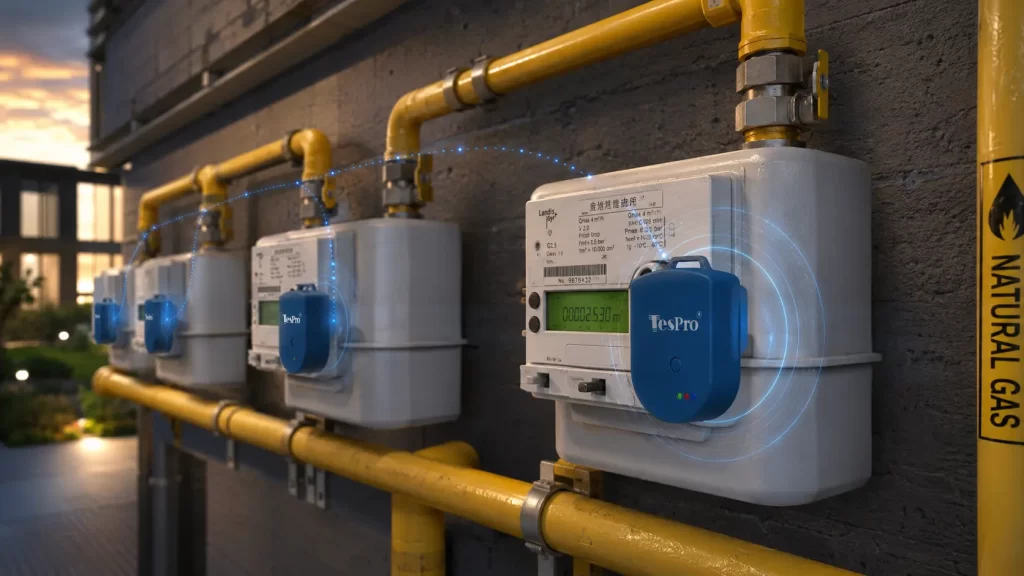
III. Magnetic Attachment Design for One-Handed Operation
Tespro's optical probe uses a strong magnetic attachment design. This is a detail that seems small but makes a big difference in actual experience.
Many traditional optical probes require a clamp or hand pressure to stay in place, needing two hands to operate. One hand holds the probe in place, the other operates the computer or terminal. When the meter is in an awkward position, this is very uncomfortable.
Tespro's magnetic version only needs to be placed against the meter's optical communication port. The magnetic force automatically attaches and holds the probe in the correct position. The operator needs only one hand, freeing the other to hold a phone, stabilize a ladder, or do other things. This design seems small, but in field work where the probe needs to be attached dozens or even hundreds of times per day, the cumulative savings in effort and time are significant.
IV. Rugged and Durable for Field Work Environments
Field meter reading work is not done in a laboratory. Optical probes may be dropped, rained on, placed in toolboxes and jostled with other tools.
Tespro's optical probe is designed with these factors in mind. The housing is made of durable materials that can withstand certain drops and impacts. The optical lens has protective treatment to resist dust and oil contamination. The overall structure is compact with no easily damaged moving parts. For a frontline tool that needs to be carried and used frequently, this durability directly impacts total cost of ownership and user experience.
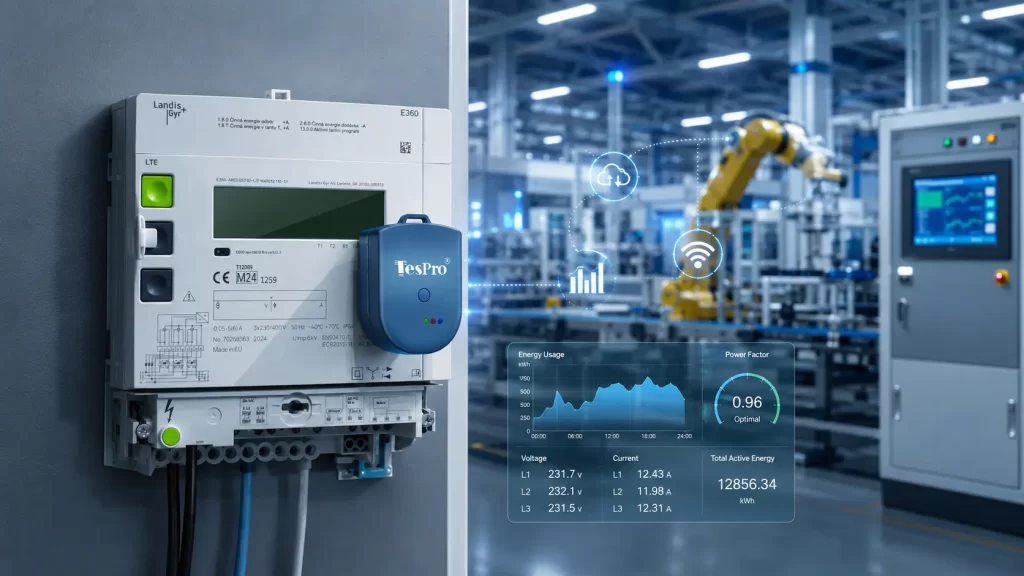
V. Who Is Tespro's Bluetooth Optical Probe Suitable For
The first category is field meter readers at power companies. They need to read large numbers of residential or commercial and industrial meters every day, distributed in various locations and environments. The Bluetooth version, used with a mobile app, can significantly improve daily reading efficiency per person and reduce physical load.
The second category is meter reading teams at water and gas companies. Water and gas meters also require field data reading. Tespro's optical probe supports relevant protocols and is equally suitable for the infrared communication ports of water and gas meters.
The third category is meter installation and commissioning engineers. Newly installed meters need on-site configuration and verification. Using a Bluetooth optical probe with a phone makes it easier to complete work on ladders or in tight spaces without carrying a computer.
The fourth category is meter testing and calibration labs. Labs need stable and reliable data reading tools. The USB version can be connected to test systems for long periods, supporting batch automated testing processes.
The fifth category is overseas project service providers. Projects involve multiple meter standards from different countries and regions. Tespro's wide protocol compatibility allows one probe to adapt to the needs of multiple projects, reducing the types of tools to procure and the management cost.
VI. Can It Really Be Compatible with All Global Meter Brands
To be honest, no optical probe can be compatible with all global meter brands.
What Tespro can do is to be compatible with the three most mainstream standard systems currently used globally. This means it can read data from all meters manufactured in compliance with these standards, which account for the vast majority of the global market. For unconventional meters that use private protocols or non-standard interfaces, even if the physical optical interface is standard, the protocol layer may not be parsable.
In actual use, the vast majority of public utility meters comply with international or national standards. Tespro's protocol coverage is sufficient for the needs of the vast majority of field reading and debugging scenarios. For extremely special cases, Tespro also offers custom protocol development services to adapt non-standard protocols based on customer requirements.
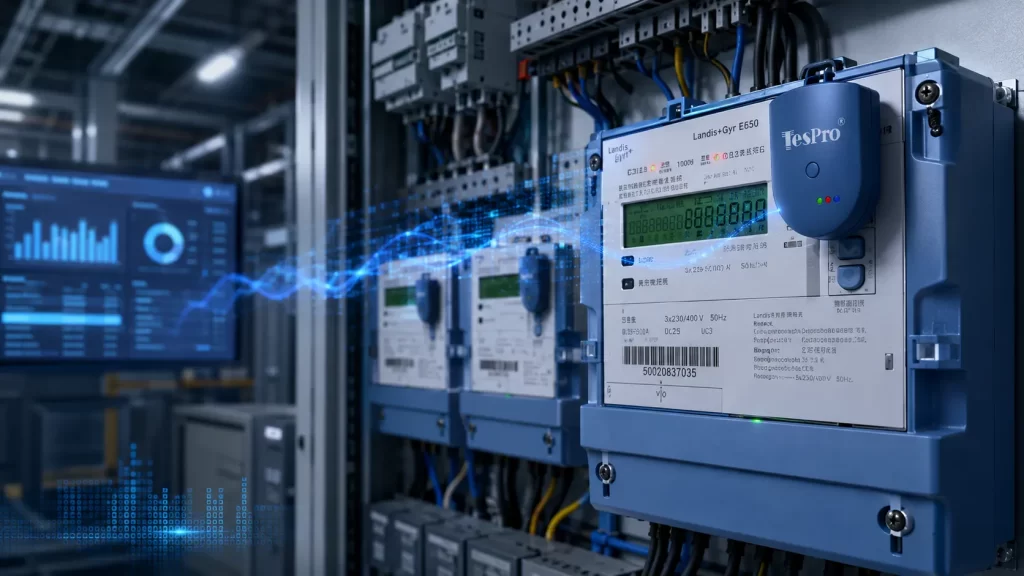
VII. Final Conclusion
The greatest value of Tespro's Bluetooth optical probe is that it solves the real pain points of field meter reading work. Wide protocol compatibility allows one probe to handle multiple meter types. Three interface versions allow buyers to choose the most suitable tool based on their work mode. The magnetic attachment design enables one-handed operation, reducing the awkwardness of field work. If your team needs to perform frequent field meter data collection, debugging, or calibration work, Tespro's Bluetooth optical probe is a professional tool worth serious consideration. It is not the cheapest, but on key dimensions such as protocol coverage, ease of use, and rugged durability, it provides a professional and reliable solution.