-1791966549842.webp)





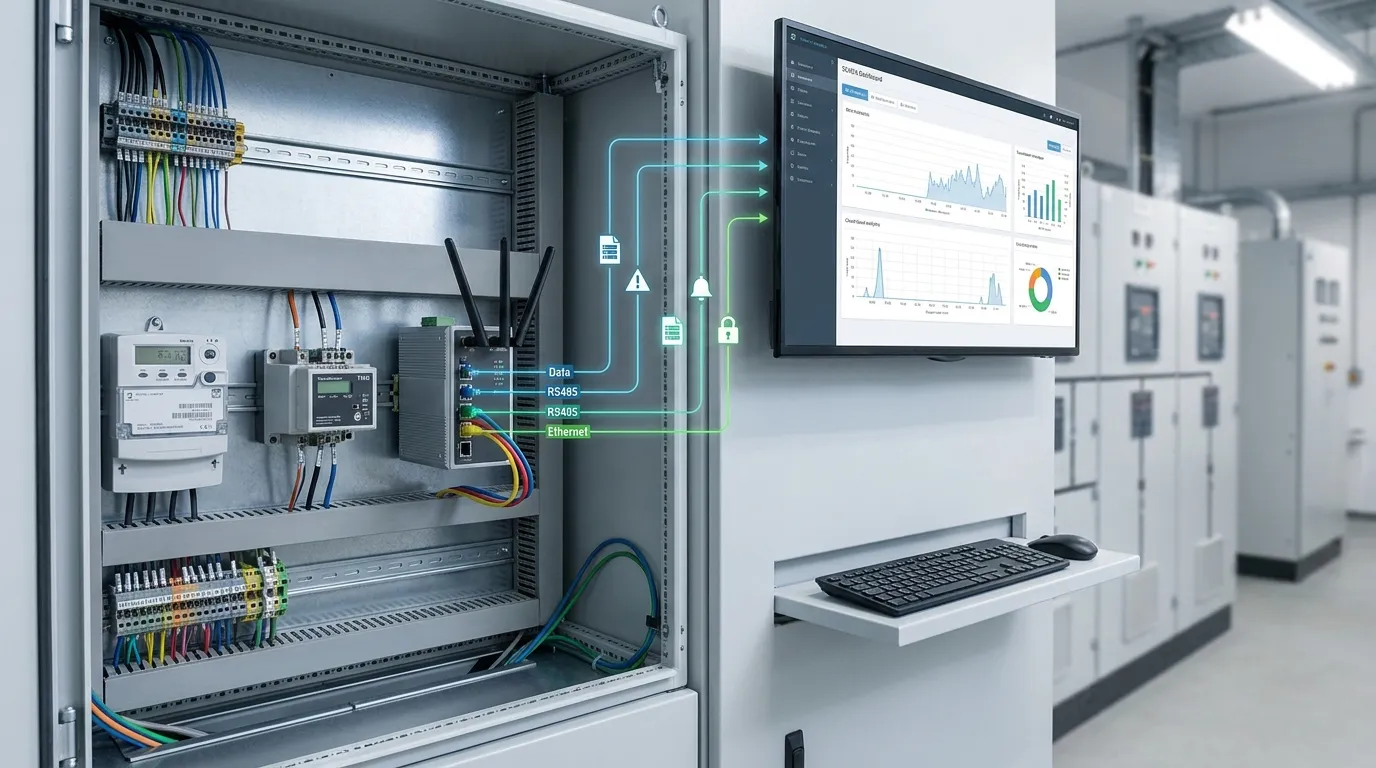

Tespro provides industrial metering, connectivity, and energy data solutions for utility teams, AMI/AMR projects, energy management integrators, SCADA teams, and OEM/ODM buyers. When selecting a gateway for smart grid projects or a DTU for energy management and power monitoring, buyers should start with field requirements: meter data, transformer monitoring, power quality values, alarms, device interfaces, backhaul network, cybersecurity, and platform integration.
A smart grid gateway is not selected by name alone. The right device depends on what it must collect, how it must communicate, where it will be installed, and which system will receive the data. Some projects need a simple data transmission unit. Others need an industrial gateway with protocol conversion, buffering, remote management, or device-to-cloud integration.
This checklist helps buyers prepare technical requirements before requesting a quotation, datasheet, sample, demo, or integration consultation from Tespro.
When a Smart Grid Gateway or DTU Is Needed
A smart grid gateway is useful when field devices must send data to SCADA, meter data management, energy management software, a cloud platform, or a remote monitoring dashboard. These devices may include smart meters, power meters, transformer monitoring units, power quality analyzers, relays, RTUs, inverters, or environmental sensors.
A DTU may be enough when the project mainly needs transparent data transmission from a meter or serial device to a remote server. For example, a remote meter with RS485 output may only need stable cellular communication, SIM configuration, and secure server access.
A gateway is usually more suitable when the project needs:
- Multiple field devices connected to one communication node
- Protocol conversion between field devices and the platform
- Local buffering when the network is unstable
- Alarm or event forwarding
- Data filtering before cloud upload
- Secure remote configuration
- Connection to SCADA, MDM, EMS, API, or cloud endpoints
For more advanced local processing and real-time data handling, buyers can also review Tespro’s related guide on edge gateway selection for real-time data.
Field Data Requirements to Confirm First
Before choosing hardware, define what data the gateway must collect. This step affects interface count, protocol support, storage needs, polling frequency, bandwidth, and software integration.
Common smart grid and energy monitoring data includes:
- Meter readings for electricity consumption or demand
- Voltage, current, frequency, power factor, and load data
- Transformer temperature, load, and condition indicators
- Power quality events and abnormal values
- Alarm and event records from relays, meters, or monitoring devices
- Status signals from digital inputs or control equipment
- Inverter, storage, or distributed energy asset data
- Environmental data from cabinet or field-site sensors
The buyer should also confirm whether the system needs scheduled readings, near real-time monitoring, event-driven upload, or manual on-demand reading. A low-frequency meter reading project has different requirements from a power quality or transformer monitoring project.
Protocol and Interface Checklist for Smart Grid Gateway Projects
Protocol mismatch is one of the most common causes of integration delay. Buyers should not only ask for a “smart grid gateway.” They should specify the field protocol, physical interface, destination system, and required data format.
Common field-side interfaces may include RS485, RS232, Ethernet, digital input/output, relay output, M-Bus, or fiber depending on the device type. Common protocols in utility and energy projects may include Modbus RTU/TCP, DLMS/COSEM, IEC 60870-5-101/104, DNP3, IEC 61850, M-Bus, MQTT, OPC UA, or REST API.
Not every project needs every protocol. A meter reading project may focus on DLMS/COSEM or Modbus. A substation or SCADA project may require DNP3, IEC 104, or IEC 61850. A cloud energy management project may need MQTT, HTTPS, REST API, or platform-specific integration.
For projects that also include industrial automation assets, Tespro’s factory automation gateway integration checklist can help buyers compare device-to-system integration requirements.
Protocol and Security Matrix for Buyer Planning
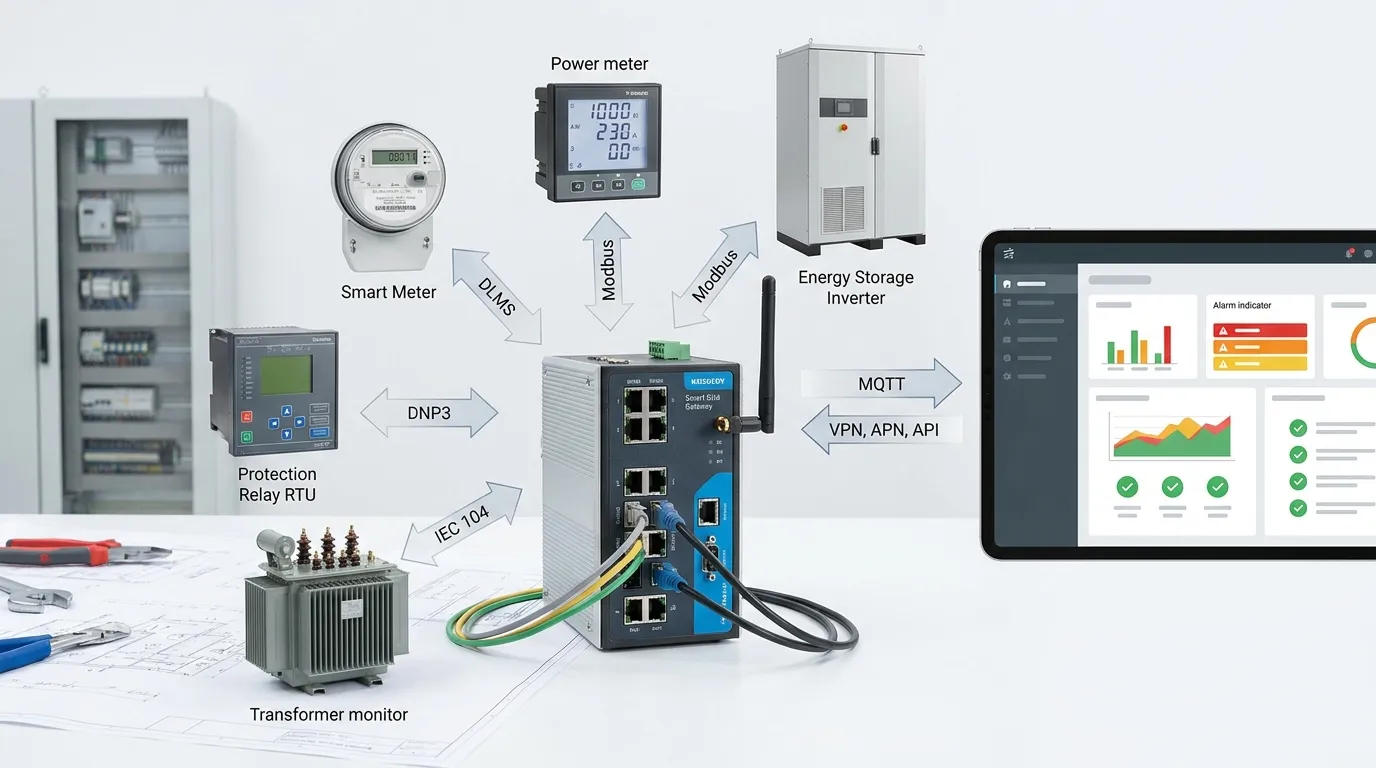
Use the matrix below as a planning tool before requesting a quotation. Final protocol support and configuration should always be confirmed against the selected device model and project requirements.
| Field asset or data source | Typical data | Local interface | Possible field protocol | Gateway role | Backhaul or platform need | Security requirement |
|---|---|---|---|---|---|---|
| Smart meter or power meter | Consumption, demand, load profile | RS485, Ethernet | DLMS/COSEM, Modbus RTU/TCP | Meter data collection or transmission | MDM, AMI/AMR server, cloud | APN, VPN, encrypted access |
| Transformer monitoring device | Load, temperature, status, alarms | RS485, Ethernet, DI | Modbus, DNP3, IEC 104 | Monitoring and alarm forwarding | SCADA or remote dashboard | User access control, logging |
| Power quality analyzer | Voltage events, harmonics, abnormal readings | Ethernet, RS485 | Modbus TCP/RTU, vendor protocol | Data collection and event upload | EMS or analytics platform | Secure remote access |
| Substation relay or RTU | Status, events, control data | Ethernet, serial | DNP3, IEC 104, IEC 61850 | Protocol conversion or data concentration | SCADA/control center | VPN, certificate or restricted access |
| Remote meter site | Scheduled readings | RS485, serial | Transparent serial, Modbus | DTU-style data transmission | Server IP, port, cloud endpoint | SIM/APN/static IP planning |
| Energy storage or inverter system | Power, charge status, alarms | Ethernet, RS485 | Modbus, MQTT, API-based integration | Edge gateway or cloud bridge | EMS, cloud, API | Firewall, secure credentials |
This table should not replace a datasheet. It helps engineering and procurement teams prepare the right questions before supplier discussion.
Backhaul, SIM, VPN, and Remote Access Requirements
A gateway or DTU for energy management and power monitoring often sits in a field cabinet, transformer room, substation, meter room, or remote outdoor site. The communication path must be planned before hardware selection.
Confirm the expected network type:
- Ethernet or fiber connection
- 4G or 5G cellular backhaul
- Single SIM or dual SIM requirement
- Public SIM, private APN, or fixed IP arrangement
- VPN tunnel or secure remote access
- Server IP, port, domain, MQTT broker, or API endpoint
- Network fallback requirement
- Expected upload frequency and data volume
Security should be defined early. Buyers should confirm whether the project needs VPN, firewall rules, HTTPS, SSH, TLS, role-based access, device logs, remote firmware update, or restricted access by user level.
Do not treat cybersecurity as an afterthought. A device may be technically able to collect data, but still fail the project if it cannot meet the utility’s access and maintenance rules.
Deployment Conditions That Affect Device Selection
A smart grid gateway is part of a field system. Cabinet space, wiring, antenna position, power supply, and maintenance access can affect the final model or configuration.
Before ordering, confirm:
- Installation location: indoor cabinet, outdoor box, substation, meter room, pole-side cabinet, or factory panel
- Power input available at the site
- Space for DIN rail or panel mounting
- Number of serial, Ethernet, DI/DO, or relay ports needed
- Cable length and wiring method
- Need for isolation or surge protection
- Antenna position and cellular signal quality
- Temperature, humidity, dust, and vibration conditions
- Access method for future maintenance
- Local storage or buffering needs during network outage
These details help avoid wrong device selection. For example, a gateway with the right protocol but too few serial ports may create wiring changes. A cellular DTU without proper antenna planning may fail at a weak-signal site.
How the Gateway Connects to SCADA, MDM, EMS, or Cloud
Smart grid gateway selection should include the destination system. The same field device may need different gateway behavior depending on whether data goes to SCADA, MDM, EMS, a billing workflow, or a cloud dashboard.
For SCADA projects, buyers should confirm control center protocol, point mapping, alarm handling, polling interval, and cybersecurity requirements. For AMI/AMR or meter data projects, confirm meter model, read schedule, data format, server access, and export requirements.
For cloud energy management platforms, confirm whether the project needs MQTT, HTTPS, REST API, OPC UA, or another software connection method. Also confirm whether the platform needs raw register data, converted values, event logs, alarms, or dashboard-ready data.
For edge computing, filtering, anomaly alerts, or local intelligence, buyers can review Tespro’s related article on AIoT edge gateway use cases.
Common Selection Mistakes to Avoid
Many gateway projects become difficult because the RFQ is too vague. A request such as “need smart grid gateway” does not tell the supplier enough to select the right device.
Avoid these mistakes:
- Asking for a gateway without listing field device models
- Ignoring the physical interface and only mentioning the protocol
- Assuming all Modbus, DLMS, DNP3, or IEC projects are the same
- Forgetting SIM, APN, VPN, or static IP requirements
- Not defining the destination platform
- Underestimating data frequency and alarm volume
- Selecting a basic DTU when protocol conversion is needed
- Buying a complex gateway when transparent transmission is enough
- Ignoring cabinet space, antenna position, and power supply
- Leaving remote management and firmware access undefined
A good RFQ should make the field architecture clear. It should show what data starts where, how it moves, and where it must arrive.
What to Include in a Smart Grid Gateway RFQ
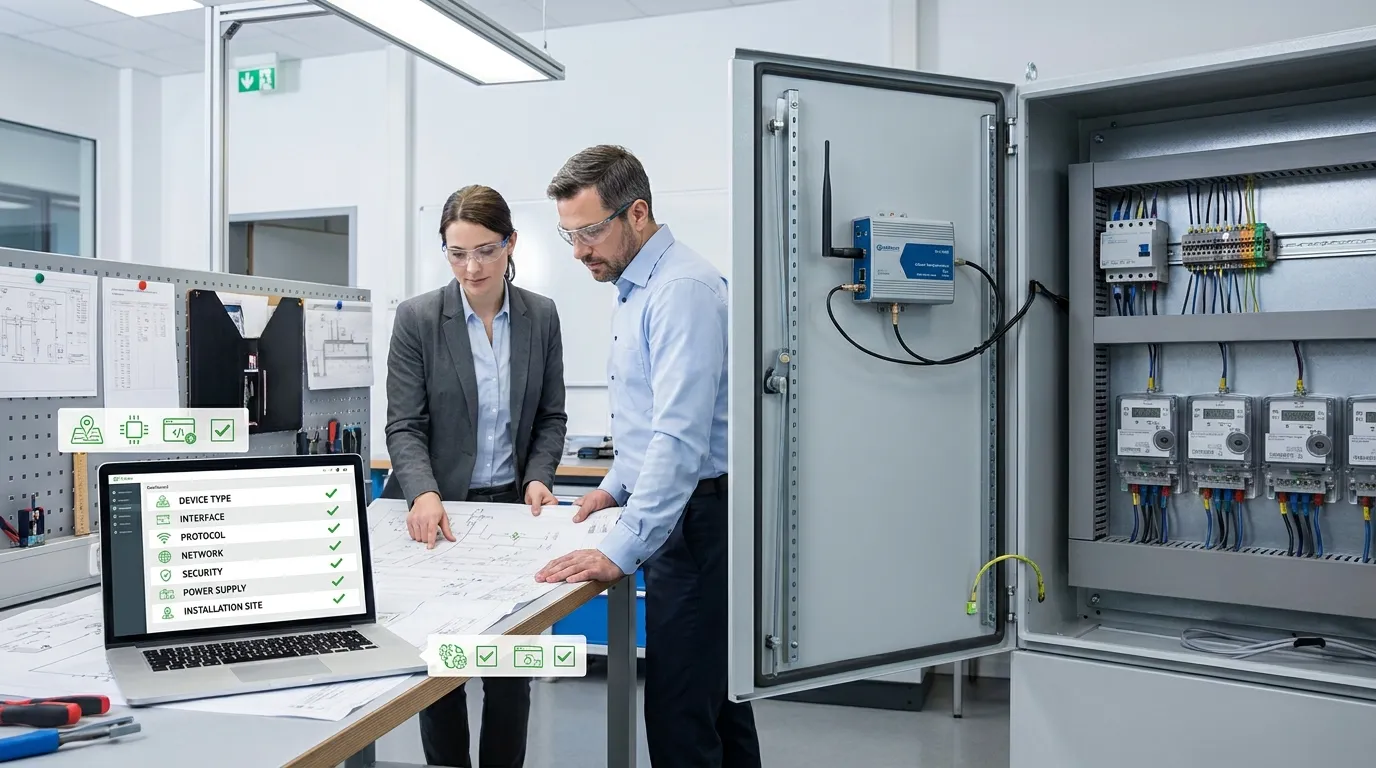
To help Tespro recommend a suitable device, configuration, datasheet, sample, or demo path, prepare the following details:
- Application type: AMI/AMR, power monitoring, transformer monitoring, SCADA, energy management, or remote metering
- Field device type and model, if available
- Quantity of devices and expected gateway count
- Required interfaces: RS485, RS232, Ethernet, DI/DO, relay, M-Bus, or other ports
- Required protocols or standards
- Data type: meter readings, alarms, events, power quality, load, status, or environmental data
- Polling interval or upload frequency
- Destination system: SCADA, MDM, EMS, cloud, API, dashboard, or server
- Network type: Ethernet, fiber, 4G, 5G, or mixed backhaul
- SIM, APN, VPN, static IP, or server access requirements
- Power supply and installation environment
- Enclosure or cabinet constraints
- Security and remote management needs
- Datasheet, sample, demo, or OEM/ODM support request
- Delivery destination and required documentation
- Wiring diagram, site photo, system diagram, or written specification if available
The more complete the RFQ, the easier it is to avoid unsuitable hardware and unclear pricing discussions.
Why Work With Tespro for Smart Grid Connectivity Projects
Tespro supports industrial metering, connectivity, and energy data projects with device categories such as metering optical probes, data transmission units, industrial routers, industrial gateways, meter test equipment, calibrators, and software platforms.
For smart grid, energy management, and power monitoring buyers, Tespro can help discuss device selection from a project viewpoint. That includes field hardware, protocol requirements, data flow, communication path, installation conditions, and quotation preparation.
For related gateway selection logic across industrial systems, buyers can also read Tespro’s guide to IoT edge gateway selection for factories. It is useful when a project includes PLCs, sensors, cloud upload, local processing, or device-to-platform architecture.
Frequently Asked Questions
Do I need a DTU or a smart grid gateway?
Use a DTU for simple data transmission from a meter or serial device. Choose a gateway when you need multi-device collection, protocol conversion, buffering, alarm forwarding, local processing, or platform integration.
Which protocols should I confirm before quotation?
Confirm both field and platform protocols. Common project requirements may include Modbus RTU/TCP, DLMS/COSEM, DNP3, IEC 101/104, IEC 61850, MQTT, OPC UA, REST API, or server-specific communication.
Can one gateway connect legacy and modern devices?
It depends on the selected model, ports, protocol support, data mapping, and software requirements. Share the device list, interfaces, and destination platform so Tespro can review the right configuration path.
What cellular details should I prepare?
Prepare network type, SIM quantity, APN, private APN if required, static IP needs, VPN requirements, antenna location, signal condition, server address, and expected data upload frequency.
What affects gateway sizing?
Device count, register count, polling interval, alarm volume, protocol conversion, local storage, network bandwidth, and platform upload method all affect gateway sizing and configuration.
Can the gateway send data to SCADA and cloud?
Some projects need hybrid data paths, but requirements must be confirmed. Specify SCADA protocol, cloud protocol, data format, security rules, and whether both systems need the same data or different datasets.
Request a Smart Grid Gateway Quotation or Technical Consultation
Share your smart grid gateway, DTU, energy management, or power monitoring requirements with Tespro for product selection support. Send your application type, device models, quantity, protocols, interfaces, network type, SIM/APN/VPN/static IP needs, platform or API requirements, power supply, installation environment, enclosure limits, security needs, and any drawings or system diagrams.
Tespro can help you review the project requirements and discuss the suitable gateway, DTU, router, datasheet, sample, demo, quotation, or OEM/ODM support path for your utility or industrial energy data project.