-1791966549842.webp)





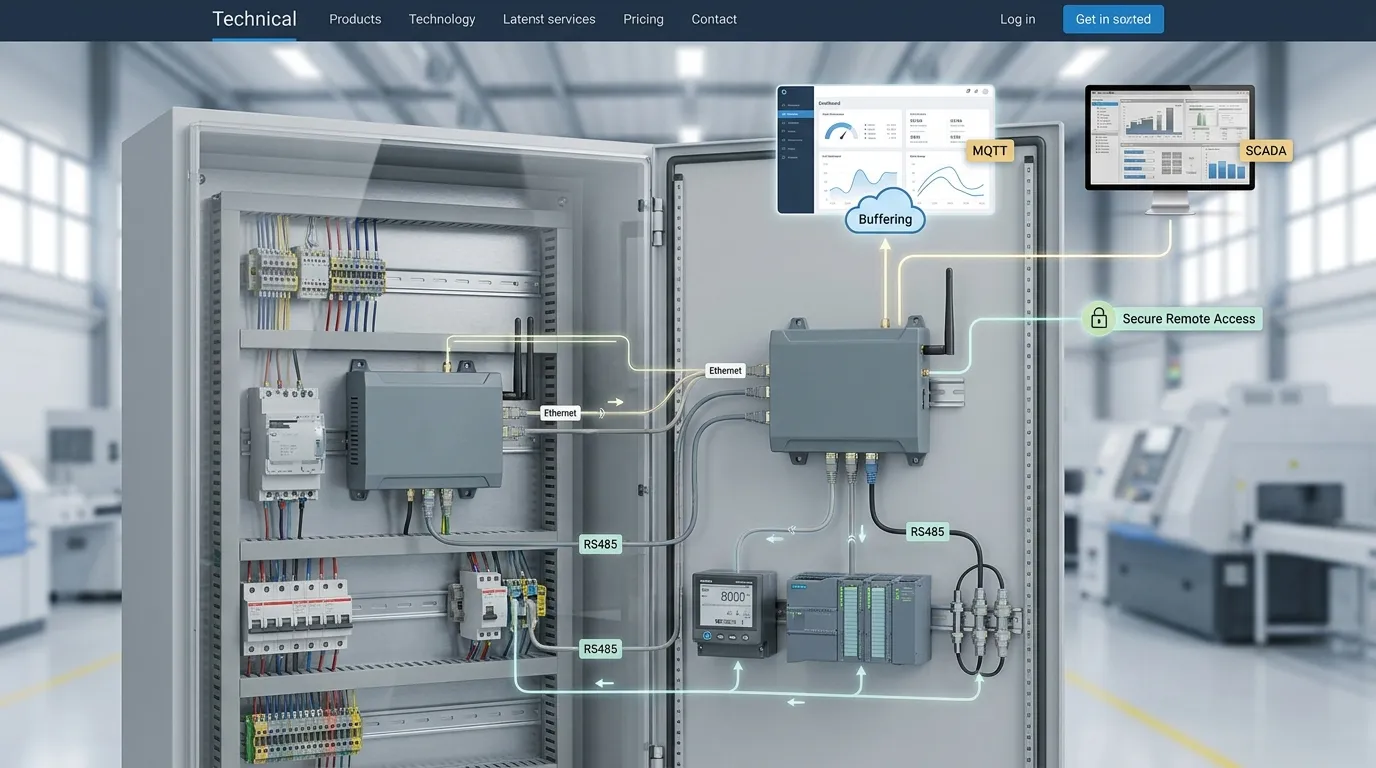

Tespro provides industrial metering, connectivity, and energy data solutions for buyers selecting an edge computing gateway for real-time data processing, remote monitoring, smart metering, SCADA connectivity, and industrial IoT projects. The right gateway should be selected by latency target, connected devices, protocols, local rules, buffering needs, cybersecurity, CPU, storage, power supply, operating environment, and cloud or platform integration.
For utility teams, AMI/AMR project teams, factory automation engineers, and system integrators, a secure intelligent edge computing gateway is not only a communication device. It becomes the local decision point between field equipment and the cloud, SCADA, dashboard, or energy management platform.
This checklist helps buyers prepare the technical details needed before requesting a Tespro quotation, datasheet, sample, demo, or model selection consultation.
When Is an Edge Gateway Needed for Real-Time Data?
An edge gateway is useful when the site cannot depend only on cloud processing. If field devices need fast alarms, local filtering, data buffering, event-based upload, or local control logic, the gateway should process data near the equipment.
Common use cases include:
- Smart meter data collection with local filtering
- Energy monitoring with alarm rules
- SCADA sites with remote field devices
- Factory automation data acquisition
- Smart grid and substation communication
- Environmental or industrial remote monitoring
- PLC, meter, sensor, and RTU integration
- Device-to-cloud data transfer using MQTT, REST API, or platform endpoints
For a broader gateway shortlist, buyers can also review Tespro’s Industrial IoT Gateway: Buyer Shortlist Checklist.
Start With the Latency Target
Real-time does not mean the same thing in every project. Before choosing hardware, define how quickly the site must react.
A machine alarm may need second-level response. A relay output may need local action without waiting for cloud confirmation. A meter reading system may only need scheduled upload every few minutes or hours.
Buyers should confirm:
- Required response time
- Data polling interval
- Number of connected devices
- Number of data points
- Local alarm or control logic
- Cloud upload frequency
- Whether the system must keep working during network failure
If the project only reads a few registers at long intervals, a basic gateway, router, or DTU may be enough. If the project needs local rules, buffering, protocol conversion, and secure cloud failover, an edge gateway becomes more important.
Map Field Devices, Interfaces, and Protocols
Most gateway selection problems start with unclear field requirements. The buyer should list every device that needs to connect to the gateway.
This may include smart meters, PLCs, sensors, RTUs, inverters, power monitors, controllers, or industrial equipment.
Important interface details include:
- RS485
- RS232
- Ethernet
- DI/DO
- Analog input
- USB, if required
- Antenna or cellular module requirements
- DIN rail or cabinet installation needs
Important protocol and data details may include:
- Modbus RTU
- Modbus TCP
- MQTT
- REST API
- TCP/IP
- OPC UA, if required by the platform
- DL/T645, DNP3, IEC-104, BACnet, or SNMP where relevant
- Register map, device address, baud rate, parity, and stop bits for serial devices
If the system connects to SCADA, buyers should also confirm the access method, IP plan, firewall rules, and remote maintenance requirements. For SCADA-related network planning, see Tespro’s Industrial Wireless Router: SCADA Buying Checklist.
Decide Which Local Rules Must Run at the Edge
A secure intelligent edge computing gateway should be selected based on the rules it must run locally. Do not size the device only by port count.
Local rules may include:
- Threshold alarms
- Event-based data upload
- Data filtering
- Data averaging
- Data compression
- Local timestamping
- Relay or output triggering
- Protocol conversion
- Store-and-forward logic
- Basic anomaly flagging
More complex local processing may require stronger CPU, memory, and storage. Simple protocol forwarding may not need high-compute hardware.
For factory-focused edge applications, buyers can review Tespro’s IoT Edge Gateway for Factories: Buying Guide.
Plan Buffering, Storage, and Cloud Failover
Remote sites often face unstable network conditions. Cellular signal can drop. Cloud endpoints may be unavailable. Firewall or IT changes can interrupt communication.
For real-time data projects, the buyer should define what happens during failure.
Ask these questions before selecting the gateway:
- Should data be stored locally during an outage?
- How long should the gateway buffer data?
- How many data points are recorded per minute or hour?
- Should the gateway resend missing data when the network returns?
- Should local alarms continue during cloud failure?
- Does the cloud platform require MQTT, REST API, or another format?
- Is timestamp accuracy important for later analysis?
Storage should match the data volume and expected outage duration. A gateway used for high-frequency data logging needs different storage planning than a gateway used for periodic meter reading.
Check Cybersecurity and Remote Access Requirements
Security should be planned before deployment, not added later. This is especially important for utility, smart grid, energy monitoring, and SCADA-connected projects.
Buyers should confirm:
- VPN requirement
- APN or private network requirement
- Static IP requirement
- Firewall or port forwarding rules
- Encrypted data transfer requirement
- User access control
- Remote configuration needs
- Firmware update process
- Remote troubleshooting workflow
- Whether IT/OT teams need separate access levels
Do not assume every gateway supports every security method. Share the required security architecture with Tespro before quotation so the technical team can recommend suitable options.
Edge Gateway Selection Checklist
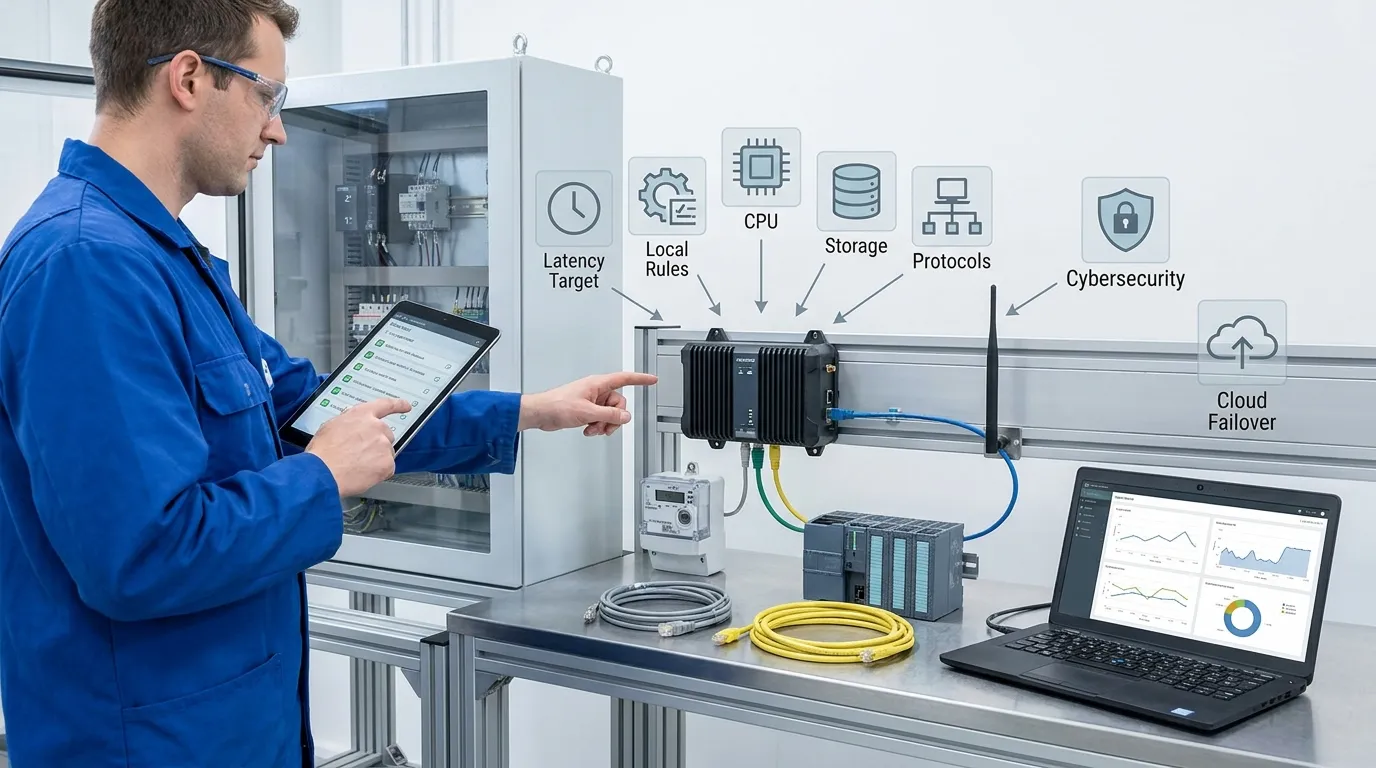
Use this table to prepare a quote-ready requirement list before contacting Tespro.
| Buyer requirement | What to confirm | Why it matters for selection |
|---|---|---|
| Latency target | Required response time, polling interval, alarm speed | Determines whether local processing is needed |
| Connected devices | Meter, PLC, sensor, RTU, inverter, controller | Affects port count, protocol support, and data mapping |
| Interfaces | RS485, RS232, Ethernet, DI/DO, analog input | Prevents wrong hardware selection |
| Protocols | Modbus RTU/TCP, MQTT, REST API, TCP/IP, OPC UA, DL/T645, DNP3, IEC-104, BACnet, SNMP | Defines integration path to SCADA, cloud, or platform |
| Local rules | Alarms, filtering, averaging, relay action, event upload | Affects CPU, memory, and software requirements |
| Buffering | Data volume, outage duration, resend behavior | Protects data during network or cloud failure |
| Network | Ethernet, 4G, 5G, Wi-Fi, VPN, APN, static IP | Affects connectivity, SIM planning, and remote access |
| Security | Encryption, VPN, user access, remote update needs | Reduces deployment and maintenance risk |
| Power | Input voltage and backup power plan | Ensures stable field operation |
| Environment | Temperature, cabinet, dust, vibration, antenna position | Affects enclosure and installation choice |
| Platform | MQTT broker, SCADA, dashboard, API, cloud endpoint | Ensures device-to-system compatibility |
When Not to Overbuy
Not every project needs a high-compute edge gateway. Overbuying increases cost and complexity without improving the result.
A simpler gateway, industrial router, or DTU may be enough when:
- Data upload is low frequency
- Only one or two devices are connected
- No local rules are required
- No real-time alarms are needed
- No offline buffering is required
- The gateway only forwards data to a platform
- Cloud processing delay is acceptable
An edge gateway is better when the site needs local decisions, fast alarms, multi-protocol data mapping, offline continuity, or more advanced integration. For AIoT and anomaly-focused projects, buyers can also review Tespro’s AIoT Edge Gateway: Industrial Use-Case Checklist.
Deployment Details That Affect the Quote
Gateway performance depends on the site, not only the datasheet. A device that works in a lab may need extra planning for a remote cabinet, utility site, factory floor, or outdoor enclosure.
Before requesting a quotation, confirm:
- Installation location
- Cabinet size and mounting method
- DIN rail or panel mounting need
- Power supply voltage
- Backup power requirement
- Operating temperature range
- Antenna position and cable length
- Cellular signal condition
- SIM card, APN, VPN, or static IP plan
- Network fallback requirement
- Maintenance access method
- On-site configuration responsibility
If the site has harsh temperature, weak signal, limited cabinet space, or strict IT rules, mention this early. These details help Tespro recommend a more suitable configuration.
How This Fits Smart Metering, SCADA, and Industrial IoT
For smart metering and AMI/AMR projects, the gateway may collect meter data, convert field protocols, and upload readings to a platform or energy management system. The buyer should confirm meter model, reading interval, protocol, interface, and software destination.
For SCADA and remote monitoring, the gateway may connect PLCs, RTUs, sensors, or power devices to a control center. The buyer should confirm remote access, security, data frequency, alarm logic, and network architecture.
For factory automation, the gateway may collect production data, filter events, and send selected values to dashboards, MES, cloud platforms, or internal systems.
In all cases, the goal is the same: match the gateway to the field device, data workflow, network condition, and integration requirement.
What to Send Tespro for an RFQ
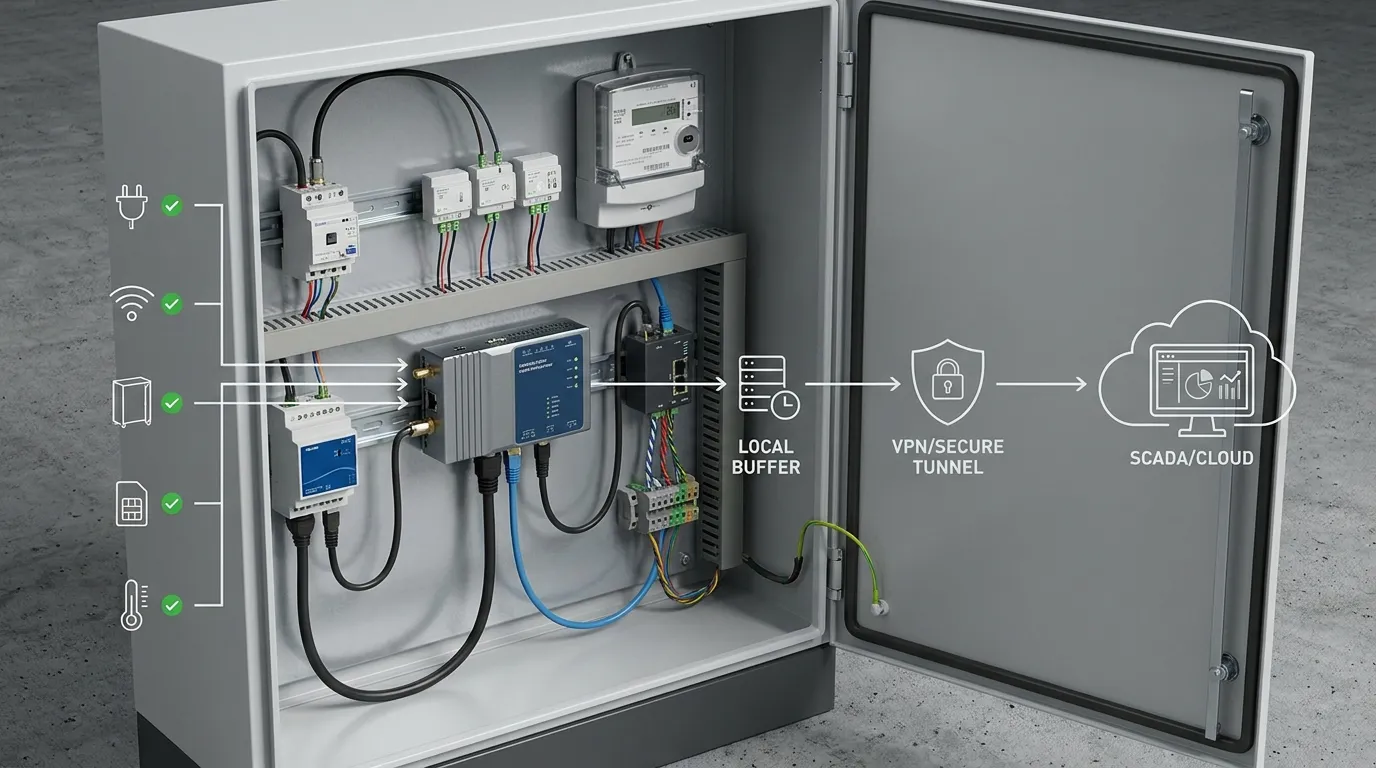
A complete RFQ helps reduce delays and avoids unsuitable model selection. When contacting Tespro, prepare these details:
- Required device type or project goal
- Quantity
- Application: smart metering, SCADA, factory automation, remote monitoring, smart grid, or energy management
- Connected device type and model, if known
- Required interfaces and port count
- Protocols and standards
- Data point count and polling interval
- Latency target
- Local rule or alarm requirements
- Buffering and storage needs
- Network type: Ethernet, 4G, 5G, Wi-Fi, or mixed network
- SIM, APN, VPN, or static IP requirements
- Cloud, MQTT broker, SCADA, API, or platform destination
- Power supply
- Operating environment
- Enclosure or installation constraints
- Security and remote management needs
- Datasheet, sample, demo, or consultation request
- Delivery destination
- Site diagram, drawing, or written specification if available
Why Work With Tespro
Tespro supports buyers who need industrial metering, connectivity, and energy data solutions for technical projects. Our product scope includes metering optical probes, data transmission units, industrial routers, industrial gateways, meter test equipment, calibrators, and software/platform-related solutions.
For edge gateway projects, Tespro can help buyers organize field device requirements, interface needs, protocol expectations, network conditions, and RFQ details. This is useful for utilities, meter manufacturers, AMI/AMR teams, industrial IoT integrators, automation engineers, distributors, and OEM/ODM buyers.
Frequently Asked Questions
Do I need an edge gateway or a basic gateway?
Use a basic gateway for simple data forwarding. Choose an edge gateway when the site needs local rules, fast alarms, buffering, filtering, protocol conversion, or secure cloud/SCADA integration.
What latency target should I define?
Define whether the system needs millisecond, second-level, minute-level, or scheduled response. This affects CPU, local logic, polling interval, network design, and whether cloud-only processing is acceptable.
Which protocols should I confirm before buying?
Confirm field and platform protocols. Common examples include Modbus RTU, Modbus TCP, MQTT, REST API, TCP/IP, OPC UA, DL/T645, DNP3, IEC-104, BACnet, and SNMP where relevant.
Why is buffering important?
Buffering helps protect data when the network or cloud endpoint is unavailable. Buyers should define buffer duration, data volume, timestamp needs, and resend behavior before selecting a gateway.
What security details should be included in the RFQ?
Include VPN, APN, static IP, firewall rules, encrypted data transfer, user access, remote configuration, firmware update needs, and IT/OT access requirements.
When is high-compute edge hardware unnecessary?
High-compute hardware may be unnecessary for low-frequency meter reading, simple device forwarding, or projects without local rules, offline storage, real-time alarms, or advanced analytics.
Share your project requirements with Tespro to request a suitable edge gateway recommendation, quotation, datasheet, sample, demo, or technical consultation. Send your device type, quantity, application, protocols, interfaces, latency target, local rules, network type, SIM/APN/VPN/static IP needs, cloud or SCADA endpoint, power supply, operating environment, installation constraints, security requirements, delivery destination, and any site diagram or written specification.