-1791966549842.webp)





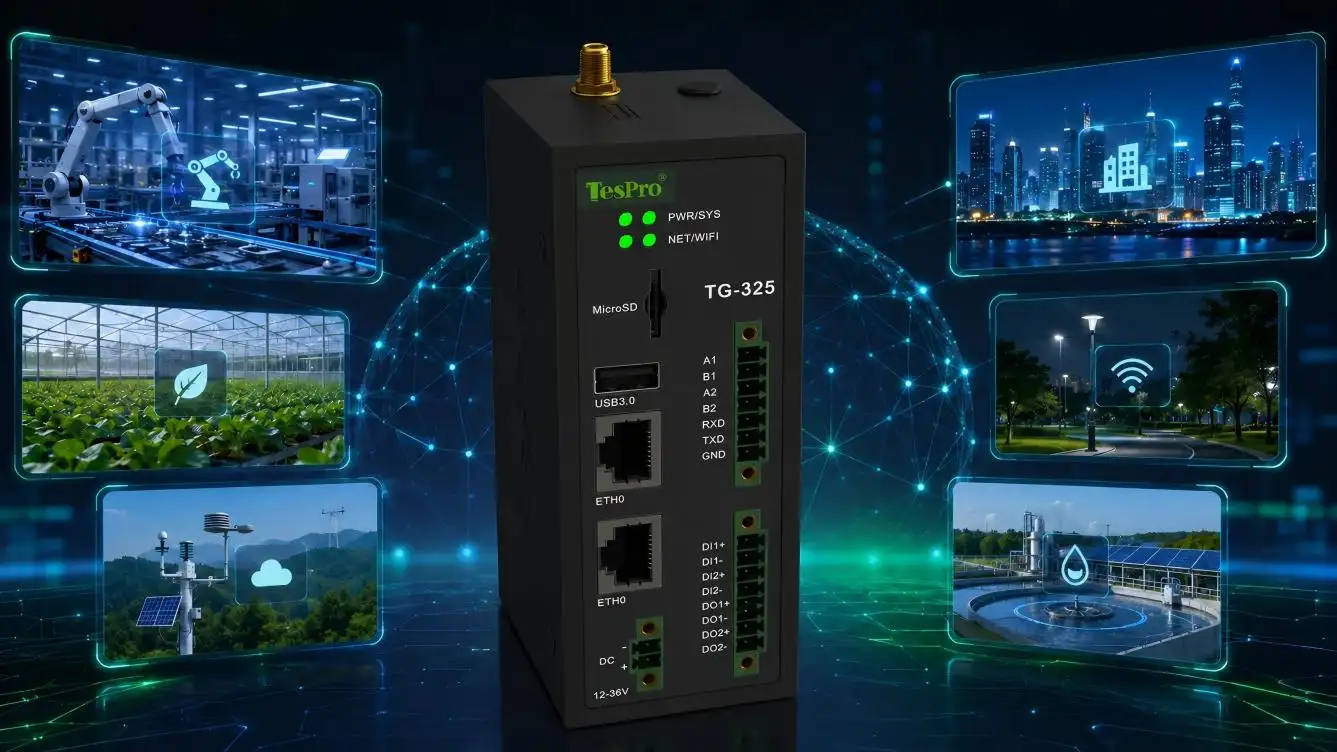

Private 5G networks change how data is shared and devices are connected across factories, energy facilities, transportation systems, and other industrial sites. Factory and system designers can leverage private 5G networks to gain more control over coverage, traffic management, latency, and access and management of connected devices.

Private connectivity, however, does not mean secure connectivity.
Industrial gateways mediate between field devices, operational technology (OT) systems, IT networks, and cloud services. Because of this central position, secure communication for industrial gateways must be addressed across the entire data path—from device authentication and protocol conversion to encrypted transmission, remote maintenance, and lifecycle management.
Why Industrial Gateways Are Critical Security Boundaries
An industrial gateway may connect:
•PLCs and remote terminal units
•Smart meters and environmental sensors
•Industrial controllers and I/O modules
•SCADA and energy-management platforms
•Private 5G access networks or edge platforms
•Public or private cloud platforms
In addition to forwarding data, gateways may perform protocol conversion, edge computing(model-dependent), data filtering, alarm processing, and local storage.
If a gateway is compromised, an attacker may gain access to production data, disrupt communications, manipulate configurations, or move between OT and IT environments. Gateway security must therefore protect more than one communication link.
A comprehensive strategy will incorporate:
•Authentication of Devices and Users
•Network Segmentation
•Encryption of Data
•Admin Privilege Control
•Application Security for the Edge
•Management of Firmware and Configurations
•Reliability of Operations and the Physical Domain
1. Restricting Access to Private 5G Networks
The first design principle for a secure communications network is knowledge of the network's authorized users.
Private 5G applications may offer SIM-based credentials, certificates, subscriber profiles(where supported by the private 5G network and gateway firmware.), and policy controls related to industrial gateways. These controls should be augmented with application-level security and should not be the sole controls provided.
The following practices are advisable:
•Providing each gateway a unique credential
•Ensuring that default usernames and passwords are removed
•Management access is controlled by the source address
•Permissions are assigned based on user roles
•Accounts and interfaces are disabled if not used
•Where available, the use of certificate-based authentication
•Separate production, management and enterprise traffic.
Network slicing (when supported by the private 5G network.)can be used to achieve isolation for a number of different applications. For example, separate logical resources can be provided for machine control traffic, video surveillance, and maintenance access. Subsequent policies for firewalls, routing, and identities must support slicing.
2. Encrypt Data from the Edge to the Application
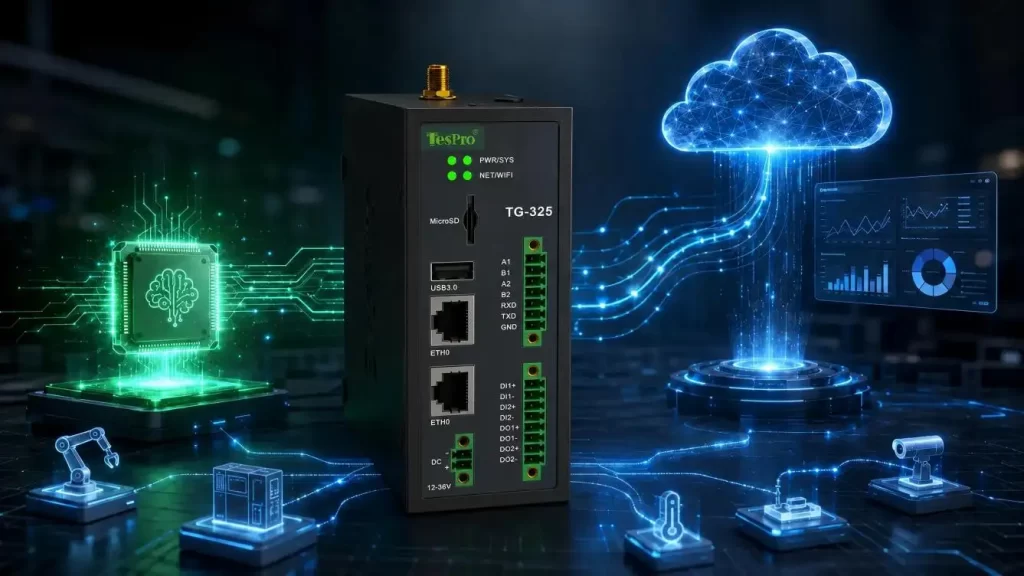
Even within a private 5G network, sensitive industrial data should be protected in transit.
Depending on the application, secure communication for industrial gateways may use(Confirm according to the specific Tespro model, firmware, and project configuration):
•MQTT over TLS
•HTTPS
•Secure OPC UA configurations
•IPsec or SSL VPN tunnels
•Certificate-based server authentication
•Encrypted remote-management sessions
Legacy protocols such as Modbus RTU were not originally designed with encryption or authentication. An industrial gateway can collect data through a local serial connection and then transmit it through an encrypted upstream channel.
This does not add security to the original field protocol, but it reduces exposure when data travels across cellular, enterprise, or cloud networks.
3. Segment OT, IT, and Management Traffic
Industrial gateways must not form unrestricted connections between machines and business networks.
Well-designed architectures will separate:
•Field-device communications
•Edge application traffic
•Remote maintenance sessions
•Enterprise system access
•Cloud-bound data
•Guest or third-party connections
Firewall rules should be configured for the specific protocols, ports, destinations, and communication directions. For example, a gateway that is required to publish equipment data to an MQTT broker should not be configured with unrestricted access to the enterprise network.
Segmentation reduces the risk exposure of compromised credentials, software vulnerabilities, and inadequate system configurations.
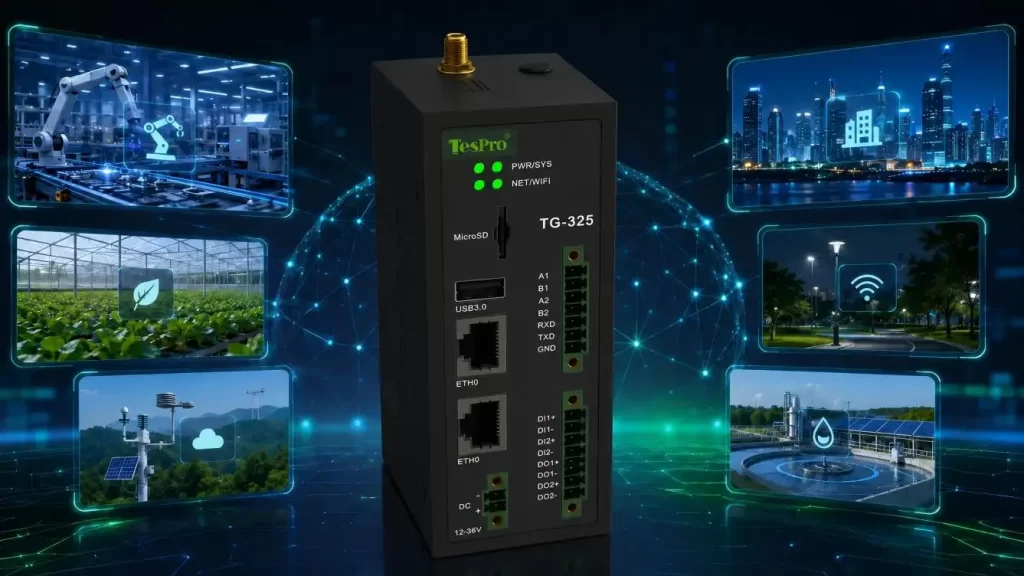
4. Harden Gateway Administration
Industrial gateways should be classified as industrial computing devices and should not be treated as simple cellular modems.
Basic hardening would include the following:
•Disabling unused network services
•Removing default credentials
•Limiting administrative access via SSH and HTTPS
•Applying least-privilege access control
•Ensuring approved configurations are backed up
•Creating an audit log of administrative changes
•Routine reviews of firewall and routing policies
•Validating the installation of firmware updates
Remote access should be avoided unless necessary for operations. Maintenance sessions should take place via an authorized VPN, a jump server, or a centralized remote access control system.
It is incumbent upon an organization to verify whether the selected gateway supports the necessary functions of supportive signed updates, secure boot, audit logs, certificates, and rollback protection.
5. Edge Applications and Data Storage Security
drivers, depending on hardware and firmware support.”
Some programmable industrial gateways can run selected custom applications or protocol drivers, depending on hardware and firmware support. While this enhances flexibility, custom applications also introduce risks associated with software.
To mitigate risks associated with software, edge applications should:
•Ensure they run with the least privilege
•Validate the data sent from field devices
•Limit the use of software libraries
•Control the access to system resources
•Ensure protection for the temporarily stored data
•Dispose of data that is not required after it has been sent across the network
•Use different environments for software development and production
It is possible to use processing that does not require a network connection (offline) to help sustain functionality even when the network is broken, but this should never result in the absence of protective controls for locally stored data.
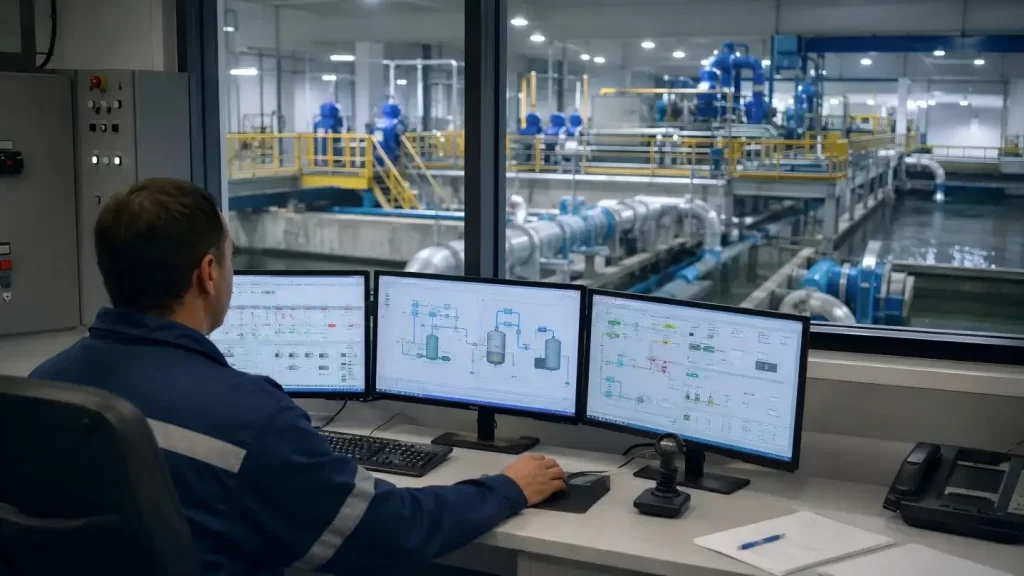
6. Ensure Active and Passive Resilience
The use of highly reliable hardware is one of the most important elements of secure communication associated with industrial gateways.
Frequent resets, unstable power, excessive heat, electromagnetic interference, and surge events can interrupt security services or leave devices in an unpredictable state.
Industrial deployments should consider:
•Operating-temperature requirements
•Input-voltage stability
•Surge and reverse-polarity protection
•Proper grounding
•Enclosure protection
•Controlled cabinet access
•Backup communication paths
•Recovery after connection loss
Cybersecurity and operational reliability should be planned together, especially in unattended or geographically distributed installations.
Tespro's Value in 5G Private Network Projects
Tespro's value is not limited to supplying an individual gateway. Its broader role is to help industrial users connect legacy field equipment with modern 5G, edge, and cloud architectures.
Bridging Legacy Equipment and 5G
Many industrial sites still rely on RS485, RS232, Modbus, BACnet, M-Bus, and other established technologies. Tespro's gateways serve as bridging systems between field-level systems and IP-based 5G networks(The support for protocols such as M-Bus must be confirmed for the specific gateway model.).
This allows for the modernization of legacy systems. Routinely, there is no need to remove and replace all controllers, meters, or sensors.
Supporting Edge-Based Data Management
Selected Tespro gateway platforms may support local data collection, protocol conversion, filtering, buffering, and application processing.
By processing selected information near the equipment, operators can:
•Reduce unnecessary upstream traffic
•Improve response times
•Continue basic operations during network interruptions
•Control which data is transmitted to central platforms
Enabling Adaptable Security Architectures
Different industrial projects have different cybersecurity requirements. A manufacturing plant, power station, smart building, and remote energy site may require different VPNs, authentication methods, routing policies, and cloud protocols.
Tespro's configurable platforms allow system integrators to build security controls around the actual network architecture instead of relying on a fixed deployment model.
Supporting Industrial Deployment Conditions
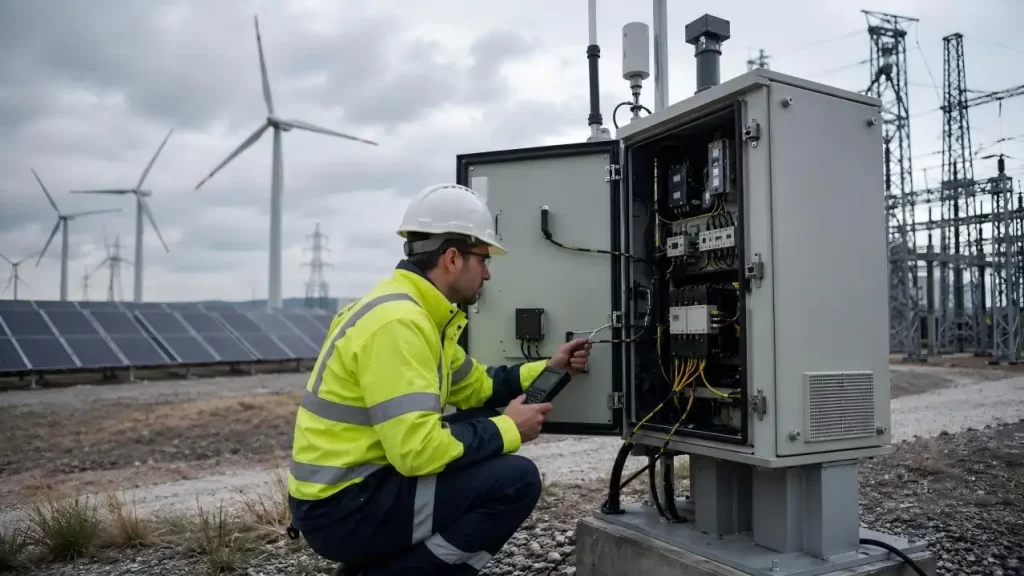
Private 5G applications often extend beyond controlled server rooms. Gateways may be installed in roadside cabinets, factories, substations, renewable-energy sites, or unmanned facilities.
Industrial-grade temperature tolerance, electrical protection, and stable cellular connectivity help maintain communication in these environments.
Conclusion
Secure communication for industrial gateways in 5G private networks depends on coordinated protection across identity, encryption, segmentation, administration, applications, hardware, and lifecycle management.
Tespro contributes to these projects by connecting legacy industrial devices with 5G networks, supporting edge-based data processing(depending on the selected gateway model, firmware and project configuration), enabling configurable security architectures, and providing hardware suited to industrial environments.
The most effective deployment combines these gateway capabilities with clearly defined access policies, encrypted communication, restricted remote maintenance, controlled updates, and continuous monitoring.
FAQs
Q1. Is it possible for legacy industrial devices to interface with private 5G networks?
protocol handling and IP-side connection for the private 5G architecture.”
Yes, when the gateway supports the required serial interface, protocol handling and IP-side connection for the private 5G architecture.
Q2. What is the role of industrial gateways in private 5G networks?
Industrial gateways offer controlled connectivity across field devices, operational technology (OT) systems, enterprise systems, and cloud services.
Q3. What are some methods to ensure secure communication with industrial gateways?
Use a combination of authentication mechanisms, data encryption, firewalls, network segmentation, and allowed remote access.
Q4. Is industrial data protected with private 5G networks?
Not automatically. Application-level encryption and access restrictions are necessary.
Q5. What are some of the protocols that offer secure communication with gateways?
MQTT with TLS, HTTPS, secure OPC UA, and various VPN protocols are secure communication methods or protocol configurations..