-1791966549842.webp)







PLC Communication Gateway projects often run into a familiar problem: the network is connected, but devices still cannot communicate smoothly at scale. As utilities, campuses, industrial sites, and smart city systems integrate additional legacy assets with cloud platforms, buyers will need faster deployment, easier maintenance, and greater interoperability.
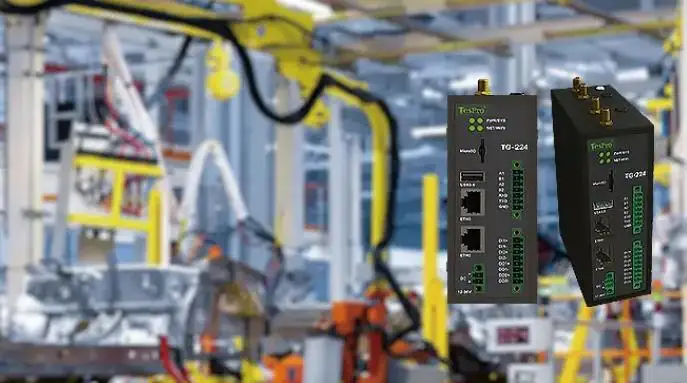
This is where Tespro excels. Its value goes beyond speed of connectivity to also encompass multi-protocol integration.
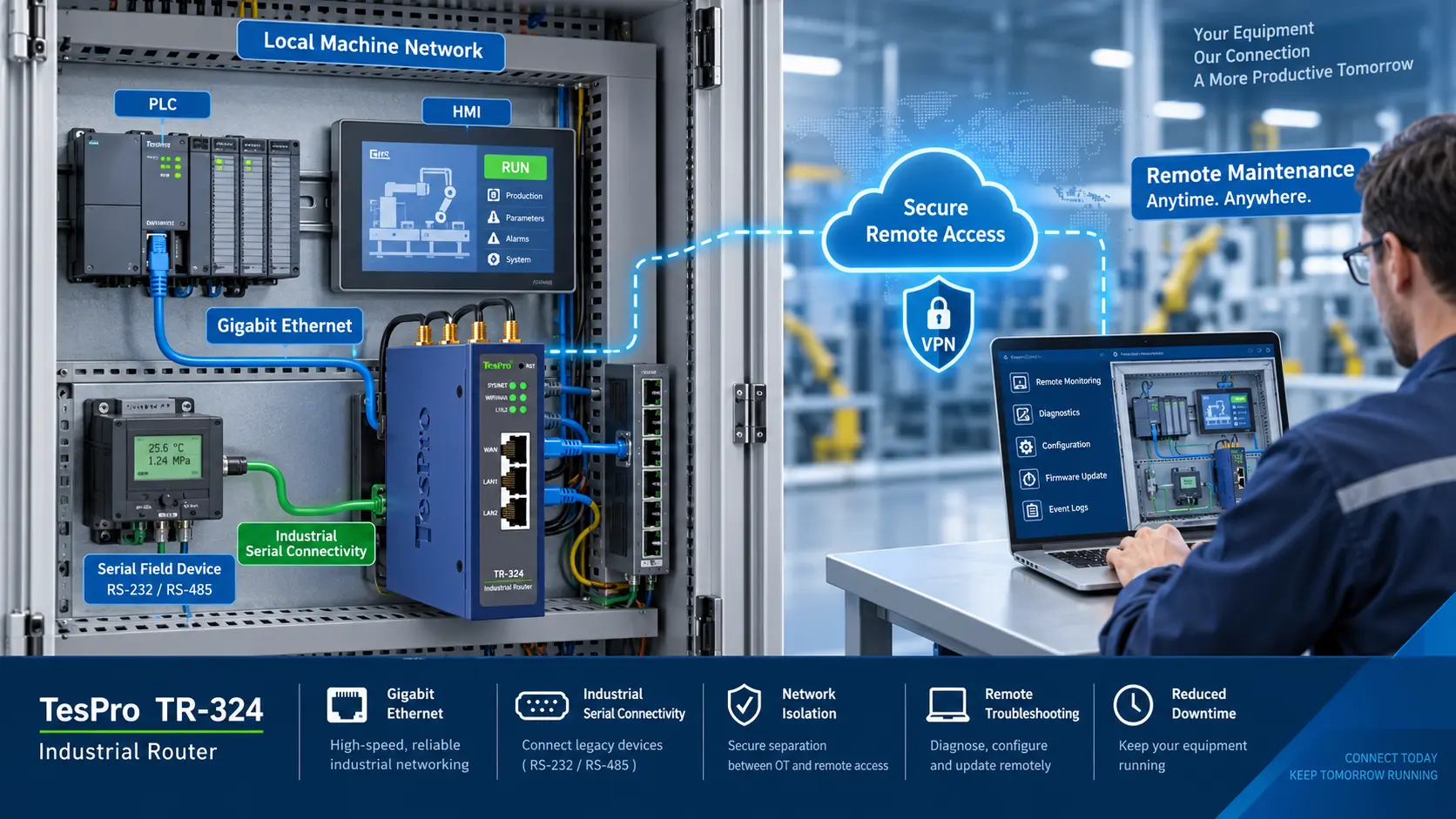
By combining industrial cellular networking, protocol compatibility, remote management, and rugged hardware, Tespro helps reduce integration friction between PLCs, meters, field devices, industrial networks, and cloud platforms.
The Real Challenge Is Not Access, But Interoperability
Many industrial sites already have connectivity. The challenge is usually not connectivity itself, but a reliable bridge across multiple protocols, interfaces, and data environments.
A modern PLC communication gateway may need to sit between serial equipment, Ethernet devices, industrial controllers, AMI/AMR systems, and cloud dashboards. In these environments, buyers are not only comparing throughput. They are asking harder questions:
• Will it support both legacy and newer field protocols?
• Can it move data reliably from edge assets to cloud applications?
• Does it fit harsh utility and industrial conditions?
• Can one platform simplify deployment across multiple regions and project types?
This is where protocol breadth matters. Tespro's industrial gateway and router platform supports industrial and metering protocols including MODBUS RTU, MODBUS TCP, BACnet, M-Bus, OPC UA, DL/T 645-2007, IEC 62056-21, IEC 1107, IEC 61850, and DLMS. For procurement teams, that translates into a practical benefit: fewer compatibility gaps during rollout and less need for additional conversion hardware.
Why Multi-Protocol Support Is the Stronger Selling Point
A large number of industrial networking products are still sold on speed claims alone. That is not enough for buyers managing mixed environments.
Tespro's advantage is that its PLC communication gateway approach aligns with how real projects are built today. In one site, a customer may need PLC data collection over Modbus. In another, the requirement may include BACnet for building systems, M-Bus for utility metering, and OPC UA for higher-level interoperability. Tespro positions its gateway architecture around plug-and-play multi-protocol support, which is much closer to project reality than a single-network design.
That matters because OPC UA in particular has become an important reference point for industrial interoperability. The OPC Foundation describes it as infrastructure for machine-to-machine and machine-to-enterprise communication, with built-in scalability and security for cross-domain integration. For international buyers, support for standards like OPC UA is no longer a marketing extra. It is part of future-readiness.
Tespro Matches the Shift Toward Edge-to-Cloud Architectures
Industrial communication is no longer confined to one plant network. Buyers increasingly need a gateway that can connect field assets to remote operations, analytics platforms, and centralized control systems.
Tespro supports that direction with 2G, 3G, 4G, and 5G cellular, alongside Ethernet and Wi-Fi connectivity, plus VPN support and a cloud management platform. This makes the PLC communication gateway more than a protocol translator. It becomes a control point for remote visibility, secure transport, and lifecycle management.
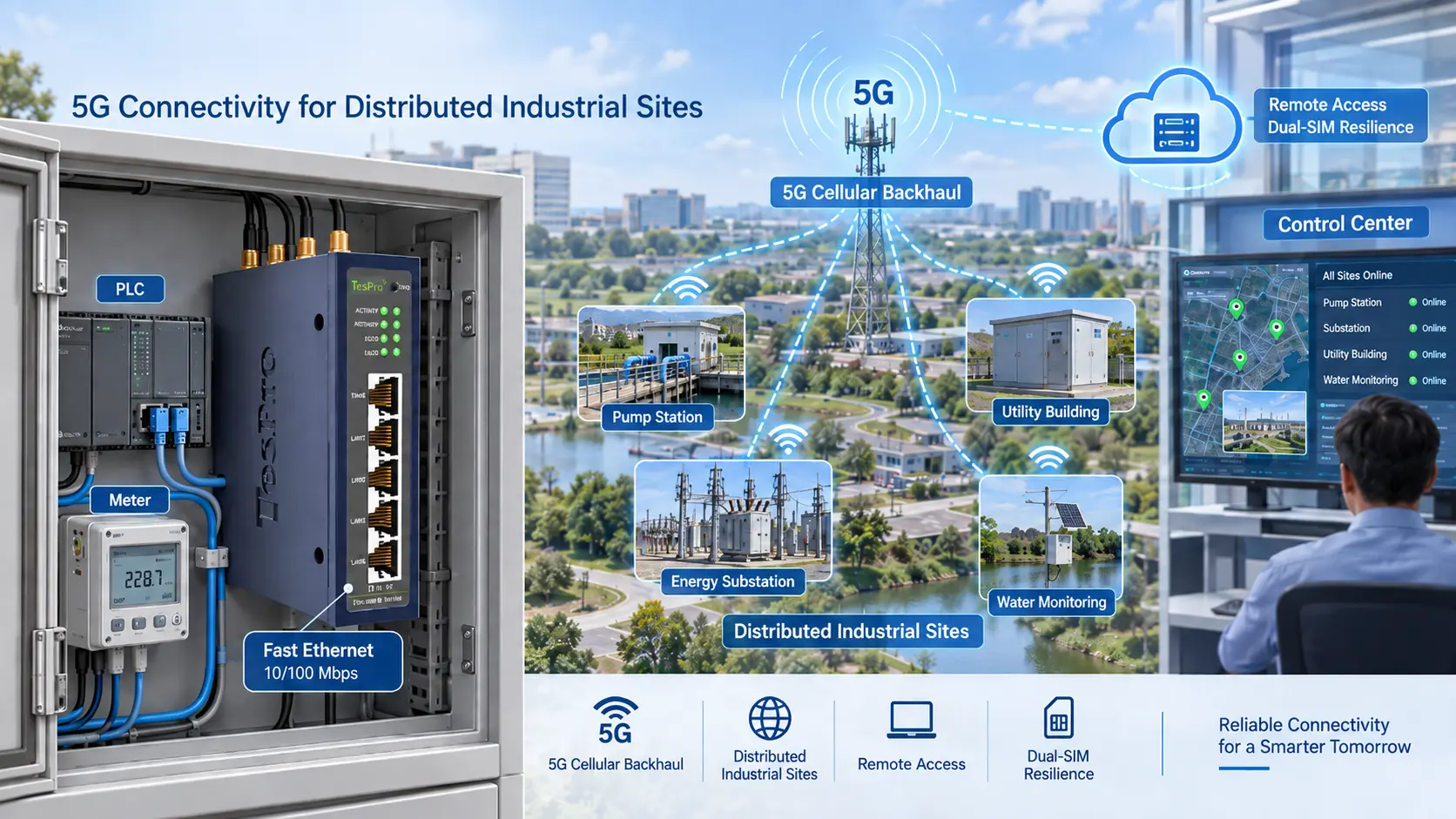
That architecture fits broader market direction. Verizon's 2025 IoT market research found that businesses are actively expanding IoT road maps around 5G-related capabilities, while GSMA reports that NB-IoT and LTE-M connections passed one billion active connections by the end of 2025. In other words, industrial buyers are not moving toward less connected infrastructure. They are moving toward more distributed, more data-driven, and more remotely managed deployments.
For procurement teams, this strengthens the offer in three ways:
• Lower integration complexity across old and new assets
• Better remote operability through cloud-based management
• Stronger scalability for utilities, campuses, transport, and smart city deployments
As a leading global IoT manufacturer, Tespro provides industrial-grade PLC communication gateway with stable performance, complete certifications, and flexible OEM/ODM services for global overseas distributors, system integrators and smart city projects. Our full-series PLC communication gateway supports global cellular bands and multi-protocol conversion, making it ideal for cross-border industrial IoT deployment and edge-to-cloud data transmission.
Reliability Still Decides the Purchase
Even the best protocol stack means little if the hardware cannot hold up in the field.
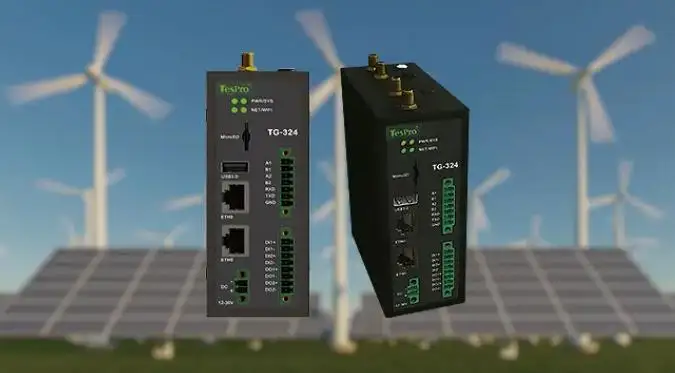
Tespro's industrial communication platform has been designed for challenging environments. It has temperature and voltage tolerances, industrial-grade protection, and a compact design for easy DIN-rail mounting. Its networking features also indicate resilience: dual SIM, failover logic, and multiple path communication so that if one connection is unstable, uptime is assured.
In many sectors, communication losses can quickly lead to high operational costs. In AMI/AMR deployments, unstable communication causes delays in data collection and hinders visibility of the network. In smart campuses and industrial IoT, unstable communication disrupts monitoring and the coordination of diagnostics and responsive actions. Tespro's solution focuses on reliable communication between devices and the cloud, which is clearly aligned with these use cases.
.
Why Overseas Buyers Read This Category Differently
International buyers usually do not purchase a PLC communication gateway as a standalone box. They evaluate it as part of a longer operational chain.
They want to know whether the device can help them standardize projects across countries, support mixed field conditions, and reduce engineering rework after installation. Tespro speaks to that expectation with a portfolio that combines:
• Industrial cellular router capability
• Industrial router functionality for device-to-cloud transport
• Multi-protocol gateway compatibility
• Remote management and VPN security
• Utility and smart infrastructure application fit
That combination is important because it reduces the need to source separate layers for connectivity, protocol handling, and remote administration. For many buyers, that improves total deployment value more than a headline bandwidth claim ever could.
A More Future-Ready Position for Tespro
The strongest way to position Tespro in this category is clear: not simply as a router supplier, but as a provider of PLC communication gateway infrastructure built for modern industrial integration.
The market is moving toward open interoperability, edge-to-cloud visibility, and resilient wireless connectivity. Tespro's support for multiple industrial protocols, broad cellular access, cloud management, VPN-secured communication, and rugged deployment design shows that its technology is moving in the same direction.
For buyers in utilities, smart buildings, transportation, and industrial automation, that is the commercial value that stands out: a PLC communication gateway that does not just connect devices, but helps make complex projects easier to deploy, easier to scale, and easier to manage.
FAQ
1.What Is A PLC Communication Gateway Used For?
A PLC Communication Gateway is used to connect PLCs, field devices, meters, sensors, and upper-level platforms that may use different communication protocols. In industrial projects, it helps transmit, convert, and manage data between legacy equipment, industrial networks, and cloud systems, which improves interoperability and reduces integration difficulty.
2.Why Is Multi-Protocol Support Important In A PLC Communication Gateway?
Multi-protocol support matters because most industrial sites do not run on a single protocol. A PLC Communication Gateway that supports protocols such as MODBUS RTU, MODBUS TCP, BACnet, M-Bus, and OPC UA can simplify deployment across mixed environments. This reduces the need for extra converters and helps procurement teams avoid compatibility issues during installation.
3.How Does A PLC Communication Gateway Help In Utility And Smart City Projects?
In utilities and smart city deployments, a PLC Communication Gateway helps maintain stable communication between meters, controllers, remote terminals, and cloud platforms. This supports applications such as AMI, AMR, remote monitoring, fault response, and centralized data collection. As a result, operators can improve visibility and reduce manual work across distributed sites.
4.Can A PLC Communication Gateway Support Remote Management?
Yes. A modern PLC Communication Gateway can support remote management through a cloud management platform, allowing operators to monitor connection status, manage devices, and perform maintenance more efficiently. This is especially useful for projects spread across multiple sites where on-site service increases operational cost.