-1791966549842.webp)






Tespro helps utility teams, AMR/AMI project planners, system integrators, and industrial metering buyers prepare the hardware, connectivity, and software requirements needed for a reliable meter data management system. Before selecting an MDM vendor, buyers should confirm validation rules, exception handling, billing export, cybersecurity, user access, device compatibility, and the full data path from field meters to the utility platform.
For most utility meter data management projects, the purchase decision is not only about software features. The MDM must fit the real metering environment: electric, water, gas, or mixed utilities; manual or automated reads; optical probes, DTUs, industrial routers, gateways, AMR systems, AMI head-end systems, dashboards, APIs, and billing software.
This checklist is written for teams comparing MDM vendors and preparing RFQ, demo, or integration requirements. Use it to define what must be confirmed before choosing a platform or requesting technical consultation from Tespro.
Where a Meter Data Management System Fits in the Utility Workflow
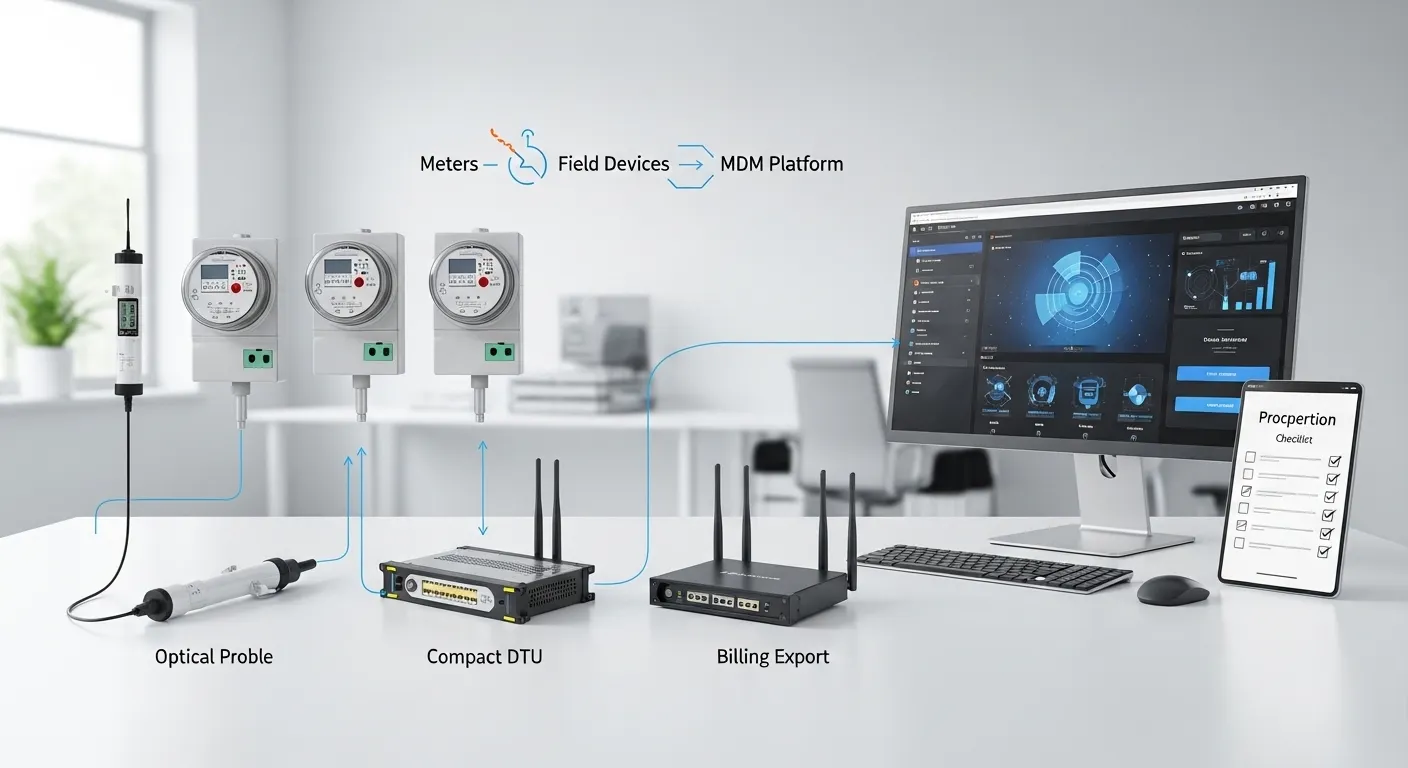
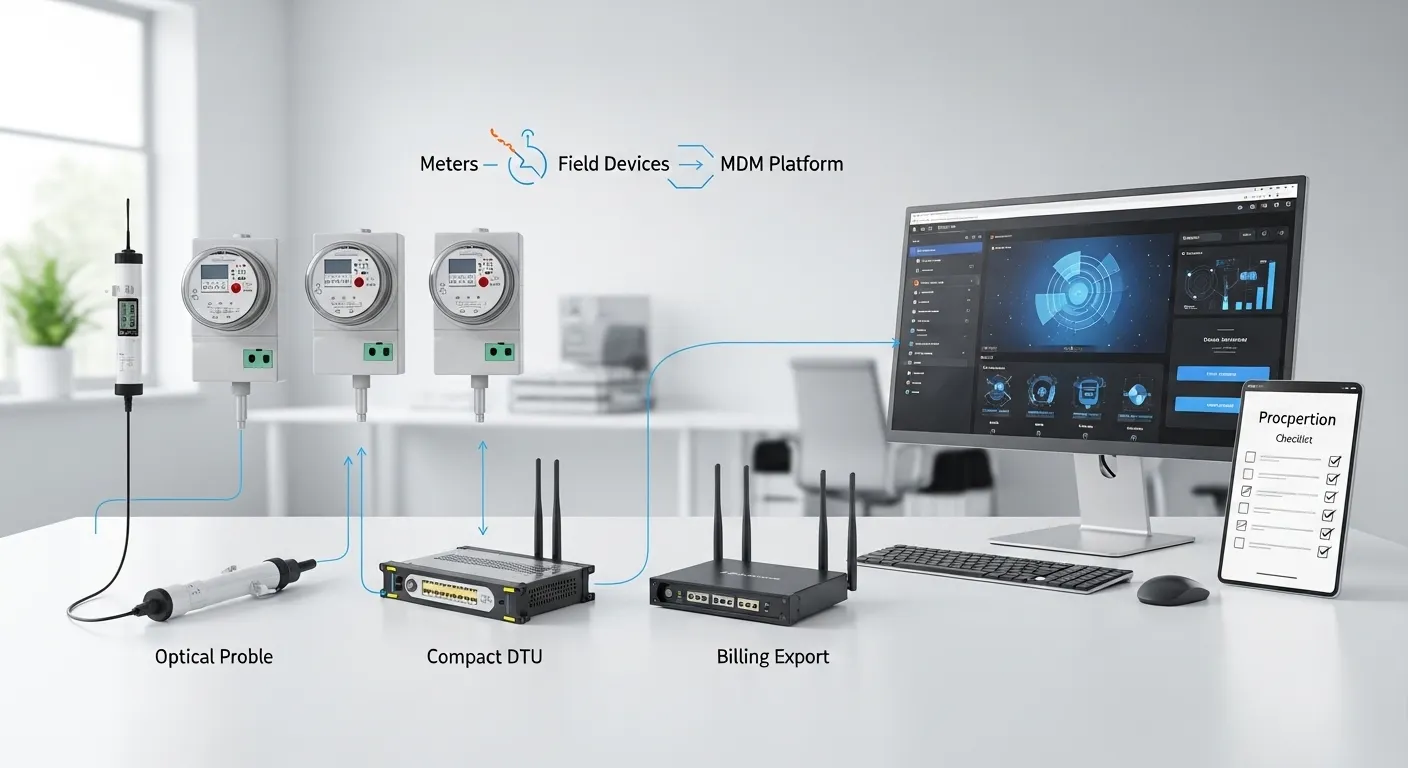
An MDM system usually sits between field data collection and business systems. It receives meter reads, validates them, manages exceptions, prepares billing-ready data, and sends approved data to downstream systems.
A typical workflow may include:
- Meters installed at customer, industrial, or utility sites
- Optical probes, handheld tools, DTUs, routers, or gateways for data collection
- AMR, AMI, or head-end systems for meter communication
- MDM software for validation, estimation, editing, storage, and reporting
- Billing, CIS, dashboard, API, or energy management platforms
This workflow should be confirmed before procurement. If the field data path is unclear, the MDM vendor may quote a platform that does not match the real meter fleet, communication method, or billing process.
For project teams still defining the full meter-to-platform workflow, Tespro’s related guide on smart meter data workflow RFQ planning can help organize the system architecture before vendor comparison.
Meter Data Management System Evaluation Matrix
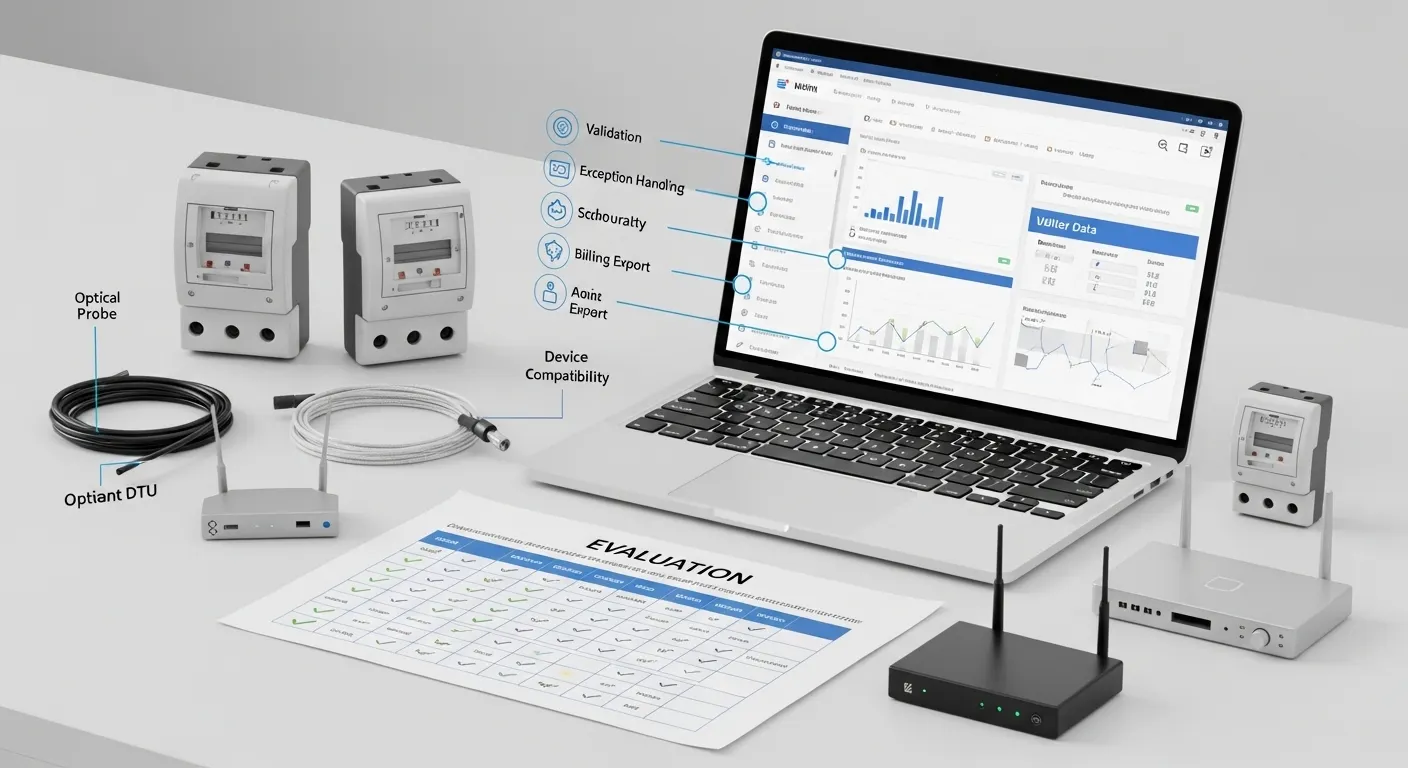
Use the matrix below when comparing MDM vendors. The goal is to identify which requirements are mandatory, which are project-specific, and which should be clarified before requesting a demo or quote.
| Evaluation area | What to confirm | Why it affects procurement | What to send or ask |
|---|---|---|---|
| Data validation | Rules for missing, duplicate, abnormal, zero, or out-of-range reads | Poor validation can create billing errors and manual rework | Meter type, read frequency, validation rules, exception examples |
| Exception handling | Review queue, approval workflow, audit trail, user assignment | Utilities need control before data reaches billing | Exception categories, user roles, review process |
| Billing export | CIS/billing format, schedule, field mapping, billing determinants | MDM value depends on billing-ready output | Billing system, export format, register or interval needs |
| Device compatibility | Meter models, AMR/AMI source, HES, probes, DTUs, routers, gateways | Field data must enter the platform correctly | Meter model, protocol, interface, communication path |
| Multi-utility support | Electric, water, gas, heat, or mixed data model | Multi-utility projects need different registers and workflows | Utility type, meter count, data type, service points |
| Cybersecurity | User roles, encryption expectations, audit logs, access policy | Meter data affects billing and customer trust | IT/security requirements, hosting preference, access rules |
| Integration | API, CSV, database, dashboard, cloud, or third-party system | Integration cost can affect the full project budget | API/export needs, endpoint details, reporting requirements |
Validation and Exception Handling Should Be Checked First
Validation, estimation, and editing are central to MDM procurement. Technical buyers should not only ask whether VEE is available. They should ask how it works, who can configure it, and how exceptions are reviewed.
Important validation checks include:
- Missing reads
- Duplicate reads
- Negative or impossible values
- Sudden consumption spikes
- Long periods of zero consumption
- Estimated reads
- Manual corrections
- Time-stamp issues
- Meter change or replacement events
Exception handling is equally important. A good procurement checklist should define who reviews failed reads, who approves estimated data, and how changes are logged. For billing-sensitive workflows, audit history is not optional. The system should make it clear which data was original, which data was corrected, and who approved the change.
Billing Export and CIS Integration Requirements
Many MDM projects fail to deliver value when billing export is not defined early. A dashboard may look useful, but the utility still needs accurate billing-ready data in the right format.
Before shortlisting a vendor, confirm:
- What billing or CIS system will receive the data
- Whether the project needs register data, interval data, or both
- How often billing export should run
- Which fields must be included in the export
- Whether the system needs CSV, Excel, API, database, or other export methods
- How estimated or corrected reads are marked
- Whether billing users need approval steps before export
For multi-tariff, net metering, industrial energy monitoring, or demand-based billing projects, buyers should define the billing logic before the software demo. Otherwise, the demo may show general functionality but miss the real billing workflow.
How Should MDM Connect With AMR, AMI, HES, and Field Devices?
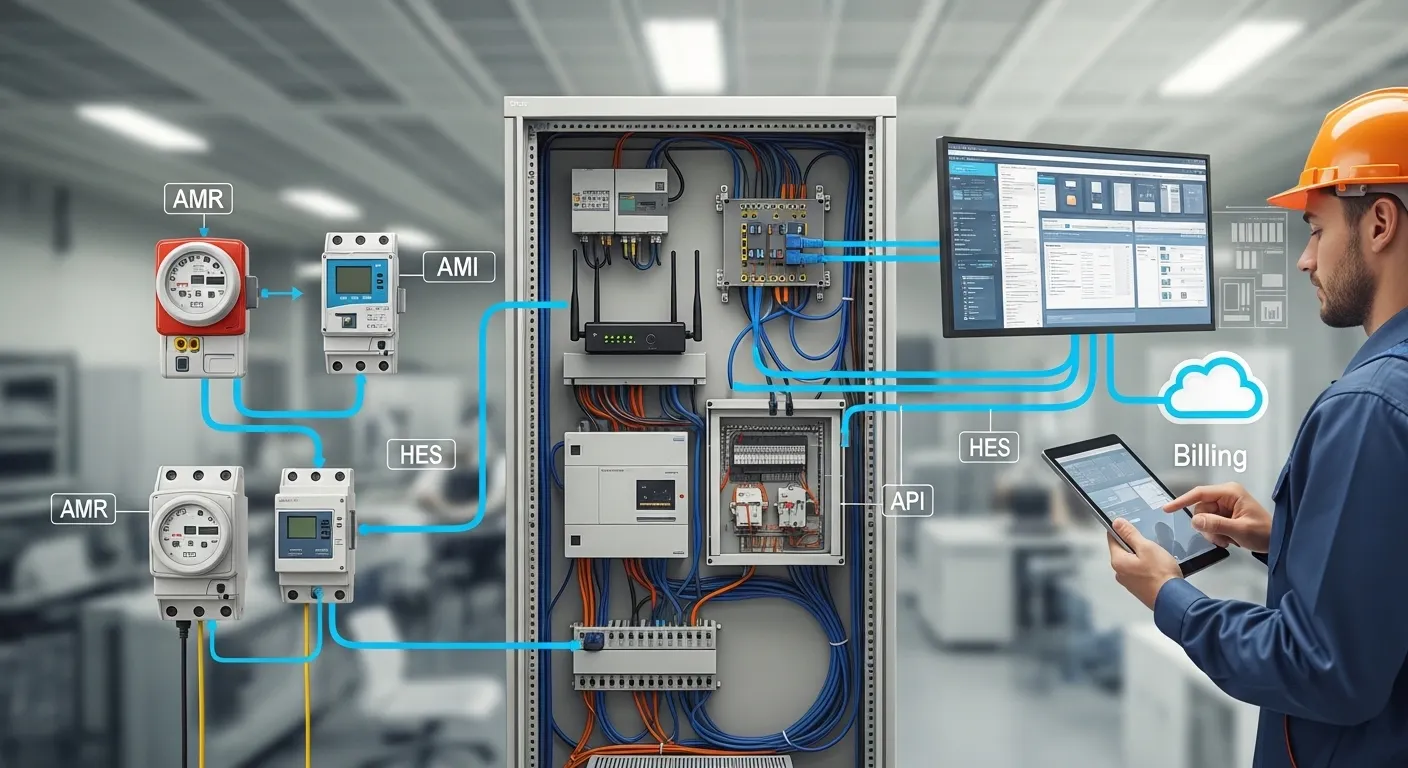
MDM software must match the field data collection method. A utility using optical probe collection, AMR route reading, cellular DTUs, industrial routers, or gateways may need different integration planning than a utility with a mature AMI head-end system.
Confirm the source of meter data before vendor selection:
- Manual or semi-automatic meter reading
- Optical probe data collection
- AMR route-based collection
- AMI head-end system
- DTU or router-based remote communication
- Industrial gateway or protocol conversion workflow
- CSV or file-based import
- API-based data exchange
- Dashboard or cloud platform integration
This is where Tespro’s metering and connectivity background is important. Field hardware, communication method, and software export should be planned together. For AMR project planning, buyers can also review Tespro’s AMR meter reading system project checklist. For communication device selection, see the smart meter communication devices buyer checklist.
Cybersecurity, User Roles, and Audit Control
Utility meter data affects customer billing, operational decisions, and regulatory confidence. Therefore, cybersecurity should be part of the procurement checklist, not a late IT review.
Buyers should confirm:
- User roles and permission levels
- Login and access control requirements
- Data change history
- Audit logs for edited or estimated reads
- Secure data transfer expectations
- Remote access requirements
- SaaS, cloud, or on-premise hosting preference
- Backup and retention requirements
- Internal IT approval process
If the project uses cellular communication, remote routers, gateways, or distributed field devices, also define SIM, APN, VPN, static IP, firewall, and remote management expectations where relevant. These details affect both the platform design and the connectivity hardware.
Multi-Utility and Multi-Vendor Compatibility
A utility meter data management platform should be evaluated against the actual meter fleet. Electric, water, gas, and heat meters do not always produce the same data structure, reading frequency, or event information.
For multi-utility projects, buyers should define:
- Utility type by service area
- Meter count by meter category
- Register, interval, event, and alarm data needs
- Meter brand and model list where available
- Meter replacement or lifecycle workflow
- Service point and customer mapping
- Data frequency by application
- Future AMI expansion plans
Multi-vendor environments need extra attention. The MDM should not be reviewed only as a standalone software screen. It should be evaluated as part of the complete data chain from meter to communication device, head-end, MDM, billing, reporting, and API export.
Common Procurement Risks to Avoid
MDM procurement becomes expensive when teams compare vendors before defining the technical workflow. Avoid these mistakes:
- Choosing software before confirming meter data sources
- Treating dashboard features as a replacement for billing export
- Ignoring exception review and approval workflows
- Assuming all meters or head-end systems are compatible
- Forgetting user roles, audit logs, and security requirements
- Not defining API or export format early
- Comparing SaaS and on-premise options without IT input
- Requesting a demo without real meter and billing examples
- Ignoring field hardware such as probes, DTUs, routers, and gateways
A practical shortlist should include software capability, integration fit, field-device compatibility, and RFQ readiness.
What Should Buyers Prepare Before Requesting a Quote or Demo?
Before contacting Tespro or comparing MDM vendors, prepare a clear project brief. This helps the technical team understand the scope and recommend the right metering, connectivity, and software workflow.
Include these details:
- Project type: utility billing, AMR, AMI, remote monitoring, energy management, or smart grid
- Utility type: electric, water, gas, heat, or multi-utility
- Meter count and expected expansion
- Meter brand and model if available
- Data type: register, interval, event, alarm, load profile, or billing data
- Reading method: optical probe, handheld, AMR, AMI, DTU, router, gateway, HES, file import, or API
- Protocol or standard requirements if known
- Interface or port requirements where relevant
- Network type and site connectivity conditions
- SIM, APN, VPN, or static IP needs if cellular devices are involved
- Billing or CIS system requirements
- API, dashboard, export, or reporting needs
- User roles and approval workflow
- Cybersecurity or hosting requirements
- Operating environment and installation constraints
- Datasheet, sample, demo, or consultation needs
- Existing drawings, site details, or system diagrams
For buyers comparing meter reading platforms more broadly, Tespro’s meter reading software vendor shortlist criteria is also useful.
Why Work With Tespro on MDM Project Planning?
Tespro supports industrial metering, smart meter communication, data transmission, connectivity hardware, testing equipment, and software/platform workflows. This makes Tespro suitable for buyers who need more than a software comparison.
A project may require optical probes for meter access, DTUs for data transmission, industrial routers for cellular connectivity, gateways for protocol or platform integration, and software requirements for validation, export, alarms, dashboards, and user roles.
Tespro can help buyers organize the technical requirements before quotation or demo discussion. This reduces confusion between field hardware, communication architecture, and software integration needs.
Frequently Asked Questions
What should utilities check before choosing an MDM system?
Check validation rules, exception handling, billing export, AMR/AMI compatibility, cybersecurity, user roles, API/export options, and field device compatibility. These factors affect billing accuracy and integration cost.
Why is VEE important for meter data management?
VEE helps validate, estimate, and edit meter data before it reaches billing or reporting systems. It reduces errors from missing reads, abnormal values, duplicate data, and manual corrections.
Does MDM need to connect with AMR or AMI systems?
Yes, in most utility projects. The MDM must receive data from AMR, AMI, head-end systems, field devices, file imports, or APIs. Buyers should confirm the data source before vendor selection.
What billing export details should be defined?
Define the billing system, export format, data fields, export schedule, approval process, and how estimated or corrected reads are marked. This helps avoid integration problems later.
Is multi-utility support necessary?
It depends on the project. Electric, water, gas, and heat meters may need different data models, reading schedules, and billing rules. Multi-utility support matters when one platform must manage mixed meter fleets.
What should be sent to Tespro before consultation?
Send the meter type, quantity, meter model, reading method, protocol, interface, network, billing/export needs, security requirements, deployment environment, and any system diagram or written specification.
Request MDM Procurement Support From Tespro
If you are comparing meter data management system vendors or planning a utility meter data management project, share your project requirements with Tespro. Send your meter type, meter count, device model, data source, protocol, interface, network method, billing export needs, API or dashboard requirements, cybersecurity expectations, deployment environment, and any system diagram.
Tespro can review your meter data workflow and help you prepare the right device, connectivity, software, datasheet, demo, consultation, or quotation request for your project.