-1791966549842.webp)






Tespro provides industrial data transmission units, routers, gateways, and related smart metering connectivity solutions for utility, AMR/AMI, industrial IoT, SCADA, and remote monitoring projects. A dual SIM DTU is useful when remote meters, PLCs, sensors, or machines must keep sending data through cellular networks even if one carrier, SIM, APN, or connection route becomes unstable.
For critical field deployments, buyers should not choose a secure DTU by the “dual SIM” label alone. The right configuration depends on the field interface, protocol, network type, SIM/APN plan, VPN or private access method, heartbeat logic, retry settings, watchdog recovery, power supply, antenna position, and remote diagnostics.
This checklist helps technical and procurement teams prepare a clear RFQ before contacting Tespro for a quote, datasheet, sample, or project consultation.
When Is a Dual SIM DTU Needed?
A dual SIM DTU is needed when data continuity matters more than the cost of adding backup connectivity. In many remote metering and machine monitoring projects, one cellular carrier may work well during testing but become unreliable after deployment.
Dual SIM is especially useful for:
- Remote utility meters
- AMR and AMI data collection sites
- PLC or machine monitoring cabinets
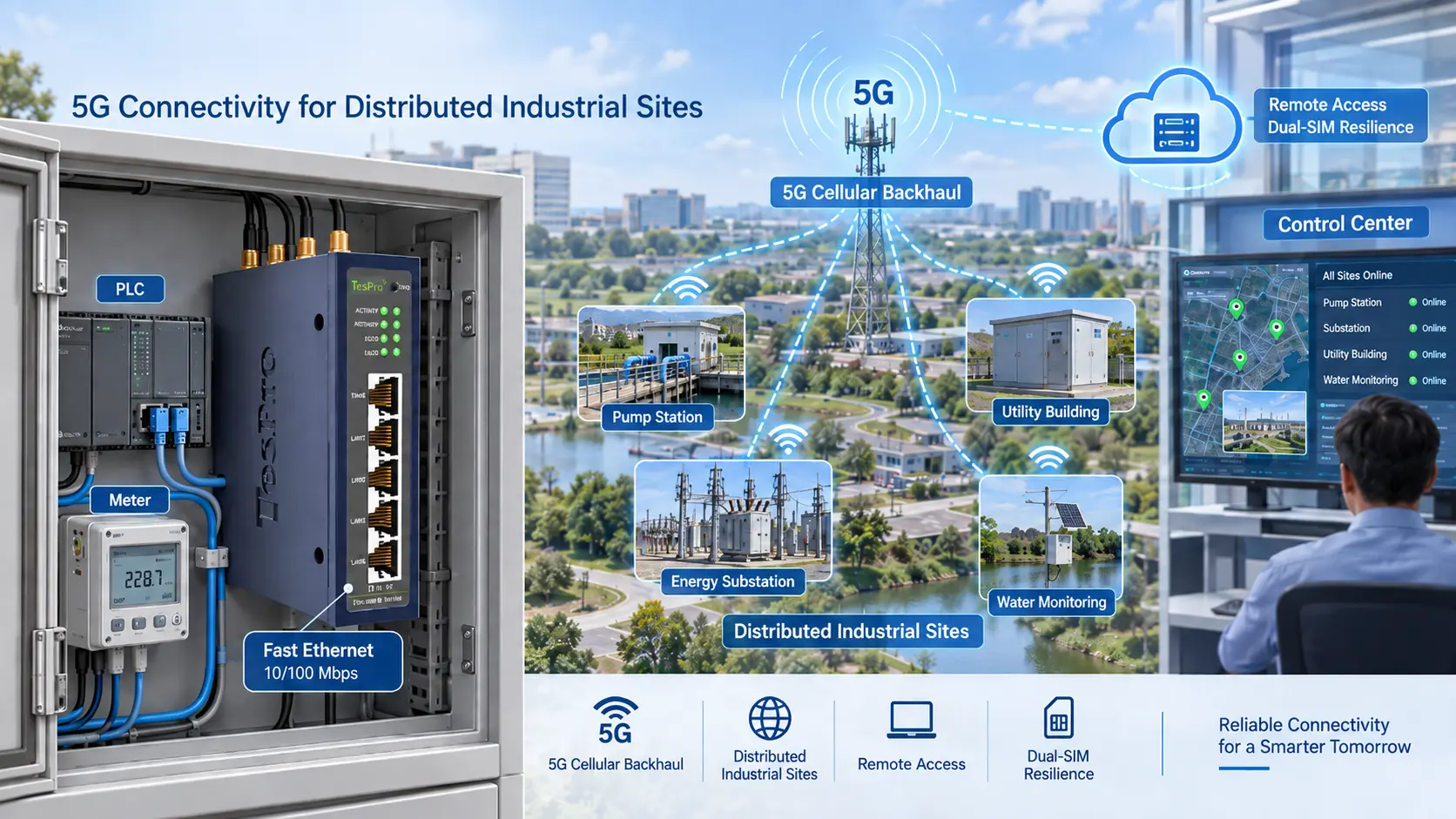
- Smart city field equipment
- Solar, energy, and power monitoring sites
- Industrial automation projects with limited maintenance access
- SCADA or remote monitoring installations
- Outdoor or unmanned field cabinets
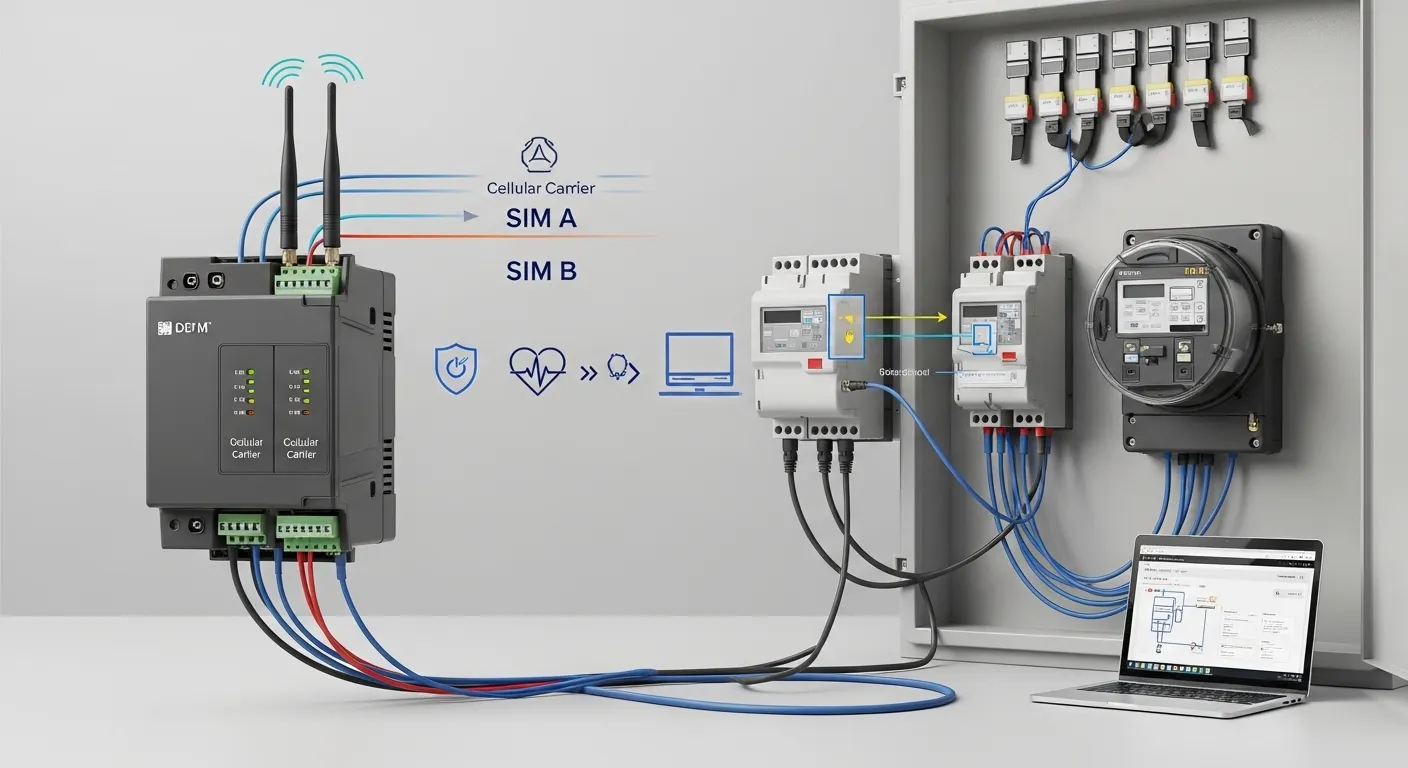
The main purpose is carrier redundancy. If the primary SIM cannot connect, the DTU should be able to switch to a backup SIM based on its supported failover logic. This can reduce field visits and help keep data moving to the server, cloud platform, SCADA system, or metering software.
Single SIM may still be enough for low-risk sites. However, for remote meters and machines where missing data creates operational problems, dual SIM should be considered during procurement.
What Makes a Secure DTU Different?
A secure DTU is not only a device with cellular access. It should support a communication plan that protects the data path, controls remote access, and allows technical teams to diagnose problems without visiting the site.
Security requirements may include:
- Private APN or controlled cellular access
- Static IP planning where remote access is required
- VPN access if the network architecture needs encrypted tunnels
- Server authentication or access control
- Firewall or connection rule planning where applicable
- Encrypted protocol options where required by the project
- Remote password and user access control
- Firmware and configuration management
- Event logs or connection status records
For utility and industrial projects, the buyer should confirm the required security architecture before ordering. A device may support cellular data transmission, but the full security result depends on the SIM plan, APN, server setup, access method, and platform design.
Dual SIM Secure DTU Buying Checklist
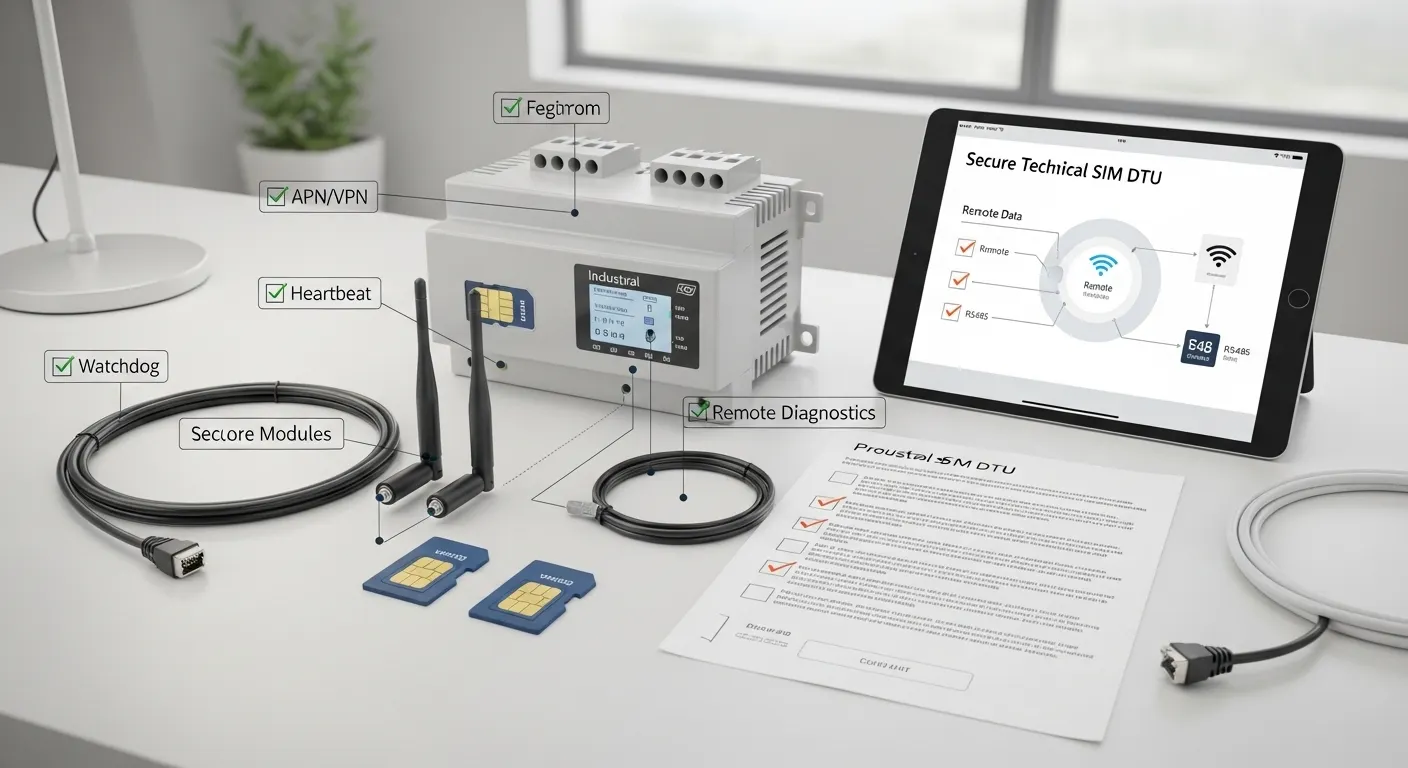
Use this checklist before requesting a DTU quotation or datasheet. It helps engineering and procurement teams turn a general requirement into a clear technical specification.
| Buying requirement | Why it matters | What to confirm before RFQ | Details to send Tespro |
|---|---|---|---|
| Field device interface | The DTU must connect to the meter, PLC, sensor, or machine | RS232, RS485, Ethernet, DI/DO, or other interface needs | Device model, port type, cable distance, installation layout |
| Data protocol | Protocol affects transmission and integration | Transparent serial, Modbus RTU/TCP, TCP/IP, MQTT, HTTP/HTTPS, or other project protocol | Protocol, baud rate, parity, data bits, stop bits, server format |
| Cellular network | Network choice affects coverage and lifecycle | 4G, 5G, regional bands, carrier availability | Country, carrier options, deployment area, coverage concerns |
| SIM redundancy | Dual SIM only helps if the carriers are planned correctly | Same carrier or different carriers, primary and backup SIM logic | SIM provider, APN, data plan, failover priority |
| APN/static IP/VPN | Access method affects security and remote maintenance | Public APN, private APN, static IP, VPN, or cloud tunnel | Network architecture, server access method, IT requirements |
| Failover logic | Buyers need more than a dual SIM slot | Heartbeat, retry interval, fail threshold, failback, logs | Expected reconnect behavior and monitoring requirements |
| Watchdog recovery | Remote sites need automatic recovery | Hardware or software watchdog, auto-reconnect, remote reboot | Site access difficulty, acceptable downtime, maintenance process |
| Remote diagnostics | Reduces field troubleshooting time | Status view, signal level, logs, remote configuration, firmware update | Who will monitor devices and how often |
| Power and enclosure | Field conditions affect reliability | Input voltage, surge risk, cabinet type, DIN rail, antenna plan | Power source, enclosure limits, cabinet drawing if available |
| Platform integration | Data must reach the correct destination | Server IP/port, MQTT broker, SCADA, AMR/AMI system, cloud platform | Endpoint details, data format, dashboard/API requirements |
Carrier Redundancy and SIM Planning
Dual SIM performance depends on the SIM plan. Two SIM slots do not automatically guarantee a better result if both SIMs use the same weak carrier or the same unstable APN path.
Before choosing a secure DTU, buyers should confirm:
- Whether the two SIMs should use different carriers
- Which SIM should be primary
- Whether automatic failback is required
- Whether data limits can trigger switching
- Whether the project needs private APN or static IP
- Whether the device must support remote SIM status checking
- Whether the site has enough signal for both carrier networks
For remote metering projects, carrier testing should be done near the real installation point. Signal quality inside a metal cabinet can be different from signal quality outside the cabinet. Antenna placement should be part of the deployment plan, not an afterthought.
Interface and Protocol Requirements
A DTU usually sits between a field device and a remote server or platform. The field device may be a meter, PLC, sensor, inverter, controller, or industrial machine. The first buying question is simple: what does the DTU need to connect to?
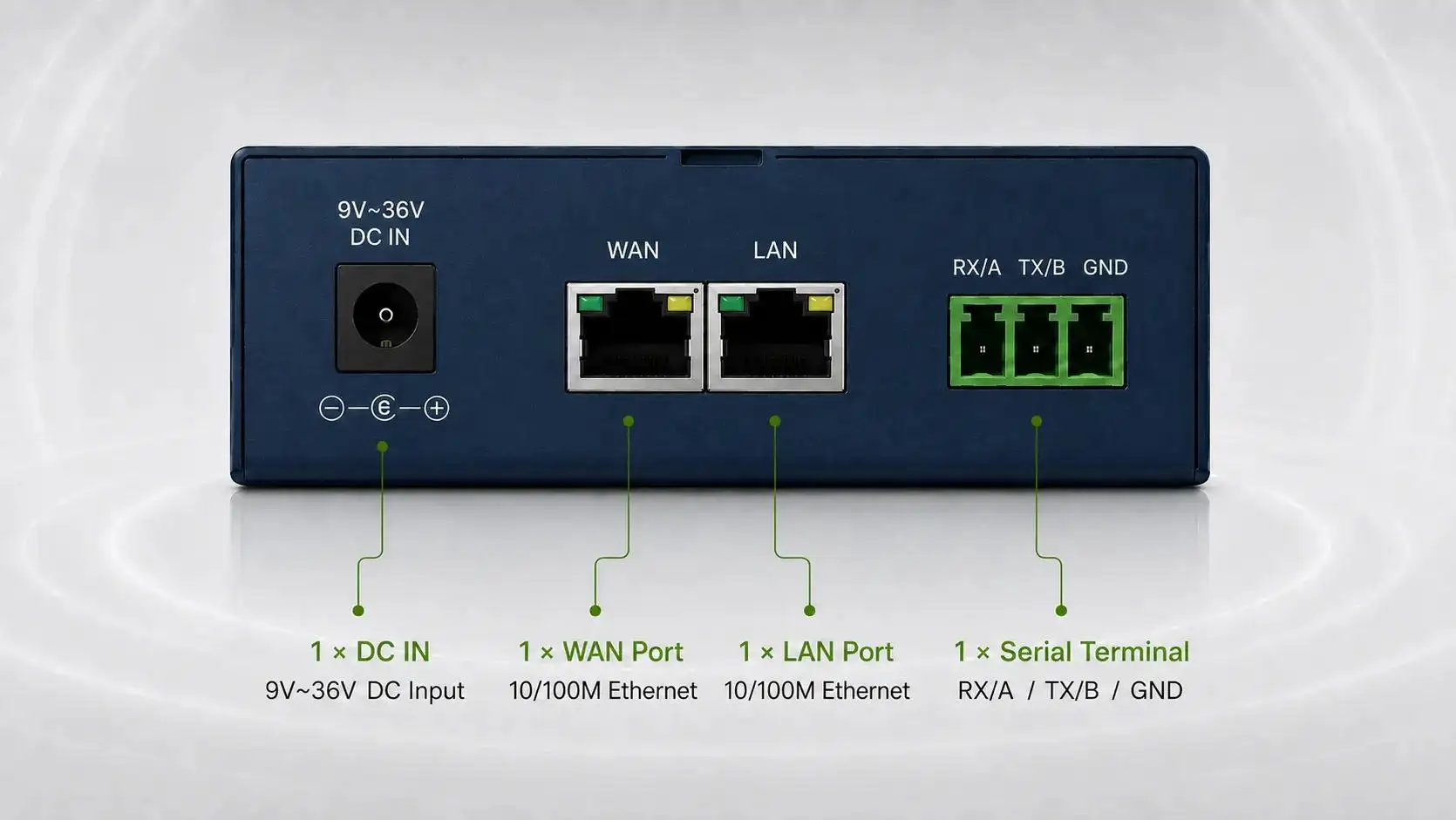
Common interface requirements include:
- RS232 for serial devices
- RS485 for meters, PLCs, and multi-drop field devices
- Ethernet for networked equipment
- DI/DO where status or control signals are required
- External antenna connector for weak-signal sites
Protocol requirements should also be confirmed before quotation. Some projects only need transparent serial data transmission. Others need protocol conversion, cloud publishing, or structured data transfer.
Buyers should prepare details such as:
- Modbus RTU or Modbus TCP requirement
- TCP or UDP transmission mode
- MQTT broker details if device-to-cloud publishing is needed
- HTTP or HTTPS endpoint requirements
- Server IP, port, and login method
- Baud rate, parity, stop bits, and data bits
- Polling interval or data upload frequency
- Required payload format
If the project connects to AMR, AMI, SCADA, or an energy management platform, the software-side requirement should be checked before hardware selection.
For broader planning, buyers can also review Tespro’s wireless DTU data collection buyer guide.
Failover, Heartbeat, Retry, and Watchdog Checks
A buyer should not only ask, “Does it support dual SIM?” A better question is, “How does the device detect failure and recover?”
Important failover questions include:
- What condition triggers SIM switching?
- Does the DTU use heartbeat or network checking?
- Can the check target be configured?
- How many failed attempts happen before switching?
- Does the device switch back to the primary SIM after recovery?
- Are failover events logged?
- Can the device send alarms or status updates?
- Can the DTU reconnect automatically after server or network failure?
- Is remote reboot or watchdog recovery available?
These details matter because field problems are not always the same. One site may lose carrier signal. Another may have APN authentication issues. Another may lose connection to the server while the cellular link still looks active.
Heartbeat and retry logic help the DTU decide whether the connection is truly usable. Watchdog recovery helps the device recover from communication lockups without manual service.
Deployment Conditions That Affect DTU Reliability
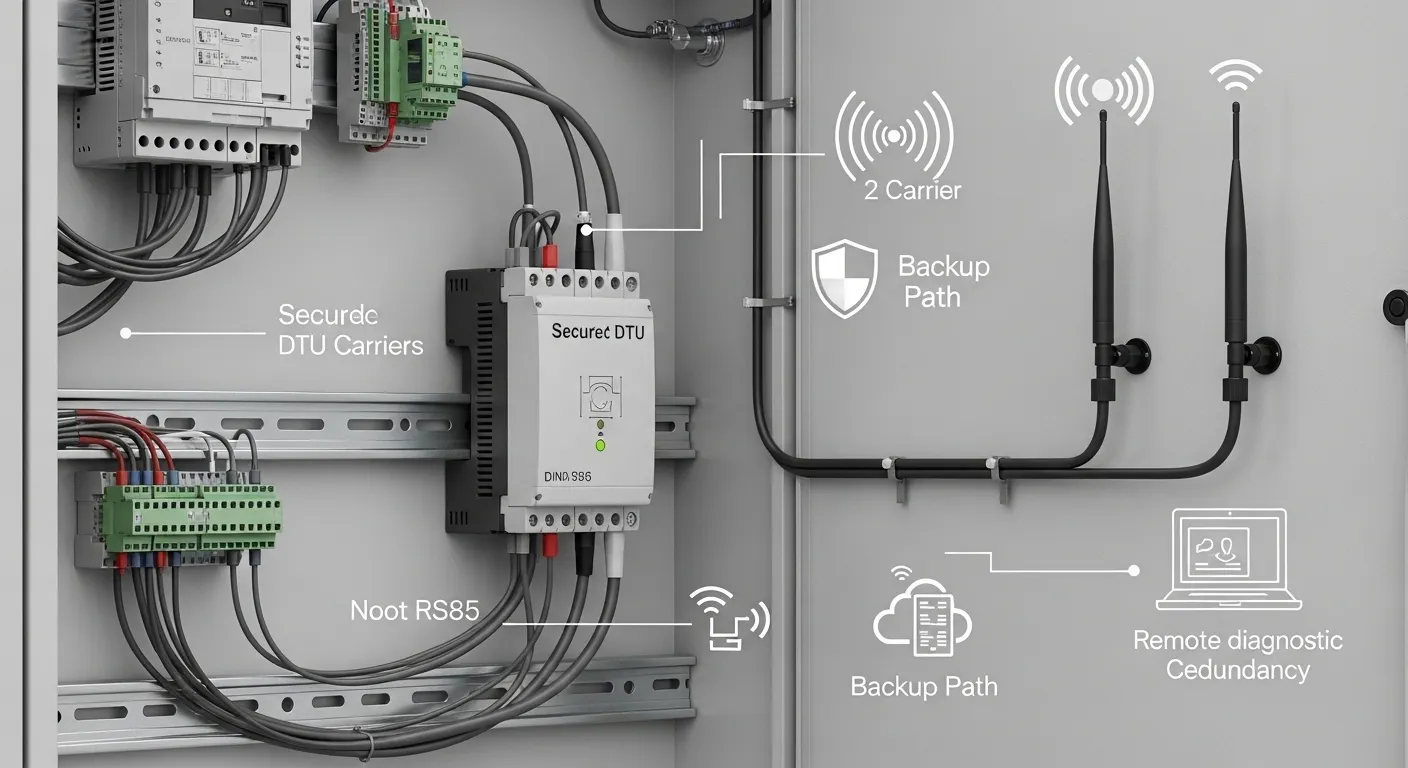
A secure DTU can only perform well if the site is ready. Many field failures come from poor power, weak signal, wrong antenna placement, or unclear access planning.
Before deployment, check:
- Cellular signal at the exact installation point
- Antenna type, cable length, and mounting location
- Cabinet material and possible signal shielding
- Power supply voltage and stability
- Surge, grounding, and electrical noise risks
- Temperature and humidity conditions
- DIN rail or panel mounting needs
- Space inside the control cabinet
- Access for SIM replacement or maintenance
- Whether remote diagnostics can reduce site visits
For outdoor or harsh industrial sites, the RFQ should describe the enclosure, power source, and environment. This helps Tespro recommend a suitable device category or configuration instead of quoting based on incomplete information.
Secure DTU in Metering, SCADA, and Industrial IoT Projects
Dual SIM secure DTU selection is often part of a larger system. The DTU may connect field devices to a data center, cloud server, SCADA platform, AMR software, AMI system, or energy management dashboard.
Typical project flows include:
- Meter to RS485 DTU to cellular network to AMR platform
- PLC to DTU to VPN server to SCADA system
- Sensor cabinet to DTU to MQTT broker
- Industrial machine to DTU to remote monitoring dashboard
- Energy device to DTU to cloud platform or API endpoint
Each flow has different requirements. A simple transparent transmission project may need fewer features. A secure utility or industrial IoT project may require private APN, VPN, remote logs, user access control, and stricter configuration management.
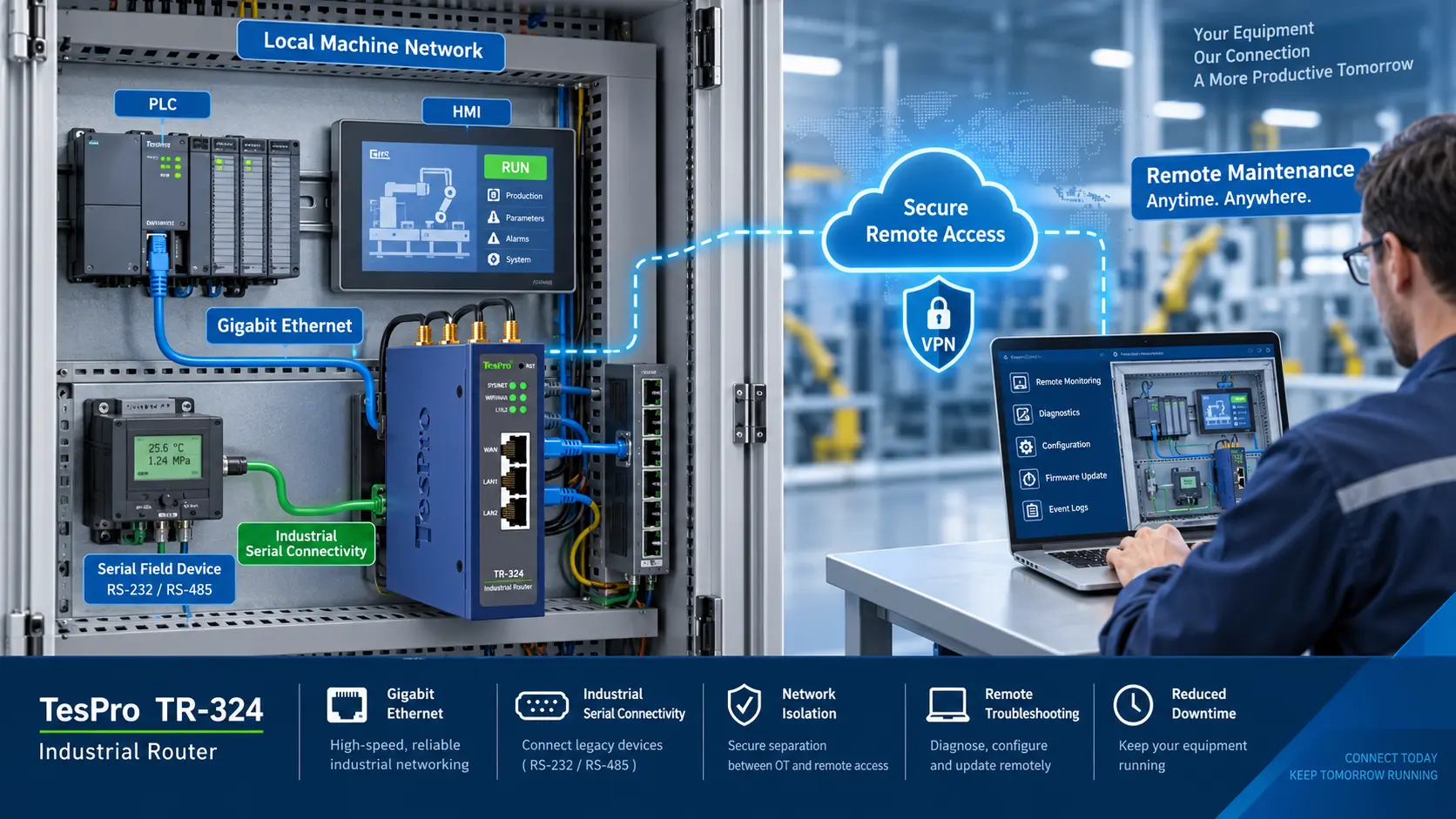
The buyer should decide whether the project needs a DTU, an industrial router, or an industrial gateway. A DTU is often suitable for serial data transmission. A router may be better for routing, LAN, VPN, and multiple IP devices. A gateway may be needed for protocol conversion, local processing, or cloud integration.
Common Buying Mistakes to Avoid
The wrong DTU configuration can create hidden project costs after installation. Buyers should avoid these mistakes:
- Choosing dual SIM without checking carrier coverage
- Ignoring APN, static IP, or VPN requirements
- Assuming every DTU supports every protocol
- Forgetting serial settings such as baud rate and parity
- Installing the antenna inside a shielded cabinet without testing
- Buying hardware before confirming the platform endpoint
- Ignoring remote diagnostics and logs
- Not asking how failover and failback actually work
- Choosing a device without checking power and enclosure limits
- Sending an RFQ without a system diagram or application details
A reliable quotation needs both hardware requirements and deployment context. This is especially important for multi-site AMR, AMI, remote monitoring, and industrial IoT projects.
What Should Be Included in a Secure DTU RFQ?
A clear RFQ helps Tespro recommend the right device option and avoid back-and-forth clarification. Include the following details when possible:
- Product or device type required
- Quantity and expected project scale
- Application type, such as AMR, AMI, SCADA, PLC monitoring, or energy monitoring
- Meter, PLC, sensor, or machine model
- Interface requirements, such as RS232, RS485, or Ethernet
- Protocol requirements, such as transparent serial, Modbus, MQTT, TCP/IP, or HTTP/HTTPS
- Cellular network type and deployment country
- SIM carrier plan, APN, private APN, static IP, or VPN needs
- Server, cloud, dashboard, API, or platform requirements
- Data upload frequency and packet size if known
- Power supply and cabinet details
- Antenna and installation constraints
- Operating environment
- Security and remote management requirements
- Datasheet, sample, demo, or OEM/ODM support needs
- Delivery destination
- Site drawing, system diagram, or written specification if available
If some details are not yet confirmed, share the project goal first. Tespro can help identify which requirements should be clarified before final model selection.
Why Work With Tespro for Dual SIM Secure DTU Projects?
Tespro supports industrial metering, connectivity, and energy data projects where hardware selection must match real deployment conditions. Our product scope includes DTUs, industrial routers, gateways, optical probes, meter test equipment, calibrators, software platforms, and related smart metering solutions.
For a dual SIM secure DTU project, Tespro can help buyers review the application, interface, network, security, and integration requirements before quotation. This is important for utilities, meter manufacturers, system integrators, OEM/ODM buyers, distributors, automation teams, and remote monitoring projects.
The goal is not just to select a device with a feature list. The goal is to choose a communication setup that fits the field device, cellular environment, data platform, and maintenance workflow.
Frequently Asked Questions
Do I need dual SIM if one carrier has good signal?
Dual SIM is useful when downtime or field visits are costly. If the site is low-risk and easy to access, single SIM may be enough. For remote meters, machines, or utility sites, dual SIM adds backup connectivity.
What makes a DTU secure?
A secure DTU setup may include private APN, VPN, controlled remote access, authentication, encrypted data paths, firewall planning, logs, and firmware management. The final security design depends on the device, SIM plan, server, and network architecture.
Can a dual SIM DTU work with Modbus meters or PLCs?
It can be suitable if the interface and protocol match the field device. Buyers should confirm RS485 or RS232 requirements, Modbus RTU/TCP needs, serial settings, and whether transparent transmission or protocol conversion is required.
What happens when the primary SIM fails?
In a planned failover setup, the DTU should detect connection failure and switch to the backup SIM based on its supported logic. Buyers should confirm trigger conditions, retry settings, failback behavior, and event logging.
Do I need a DTU, router, or gateway?
Choose a DTU for serial data transmission, a router for network routing and VPN/LAN access, and a gateway for protocol conversion or cloud integration. The best choice depends on your field devices and platform workflow.
What should I send for a DTU quote?
Send the application, quantity, device model, interface, protocol, cellular network, SIM/APN/VPN/static IP needs, power supply, installation environment, platform endpoint, security needs, and any diagram or written specification.
Request a Dual SIM Secure DTU Quote From Tespro
Share your remote meter, PLC, machine, or industrial data transmission requirements with Tespro for a suitable DTU recommendation, quotation, datasheet, sample discussion, demo request, or OEM/ODM consultation.
To help our technical team respond accurately, send your device type, quantity, application, meter or PLC model, interface, protocol, network type, SIM/APN/VPN/static IP requirements, cloud or platform details, power supply, operating environment, enclosure constraints, security needs, delivery destination, and any site drawing or system diagram.