-1791966549842.webp)






Reliable communication in extreme industrial environments requires more than standard commercial networking equipment. High temperatures, unstable power, vibration, electromagnetic interference, limited infrastructure, and difficult maintenance conditions can all interrupt data transmission.
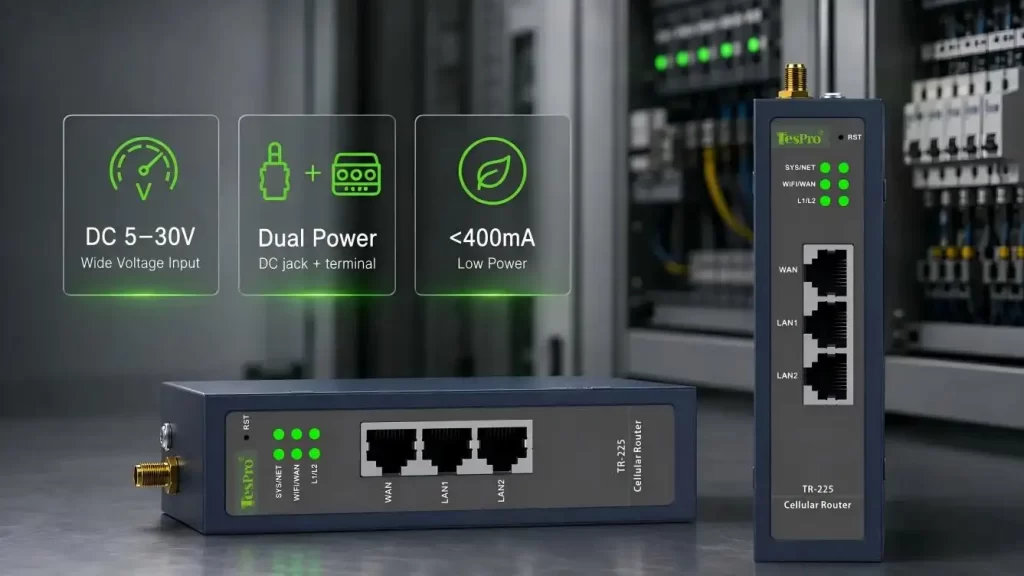
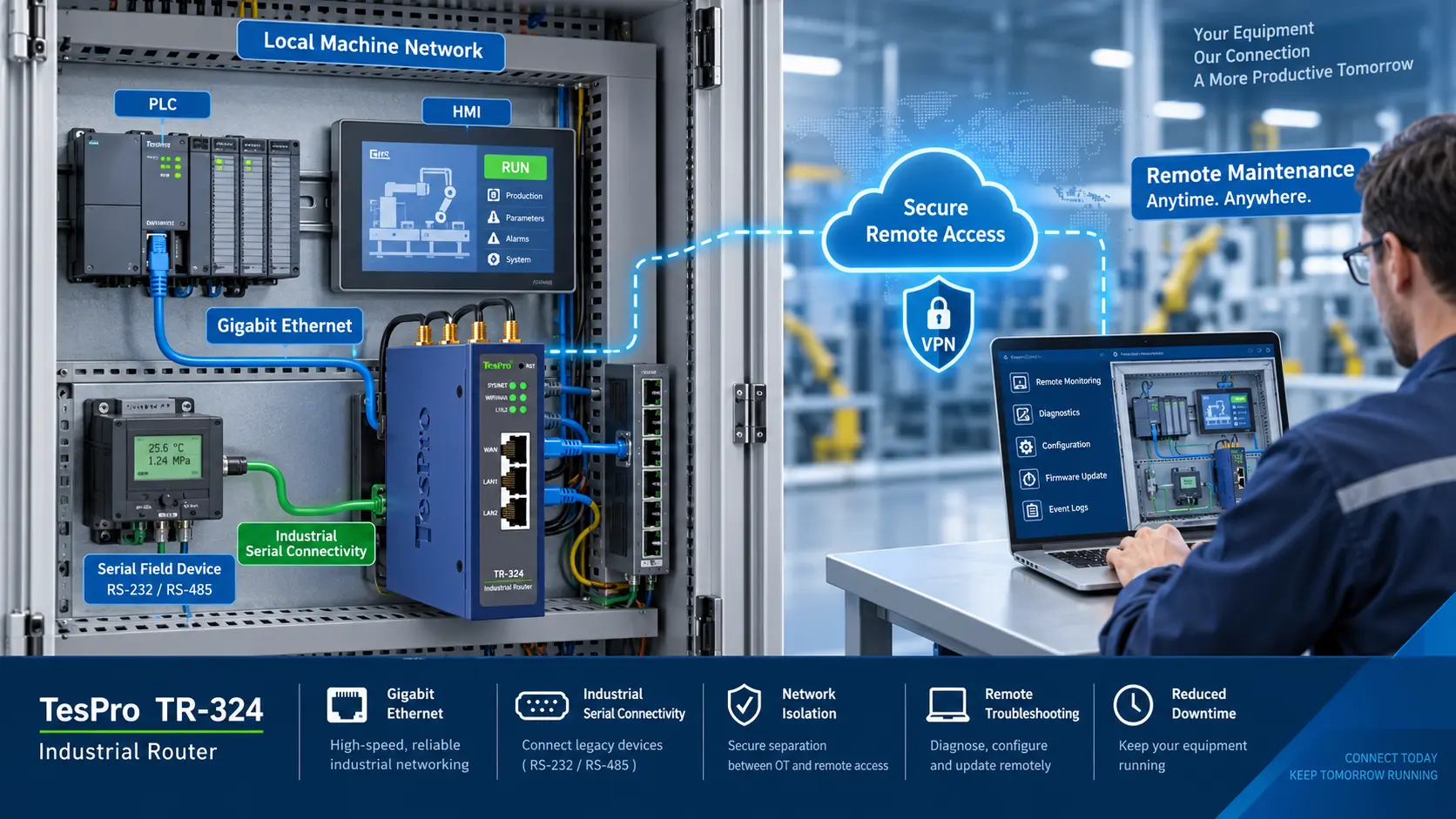
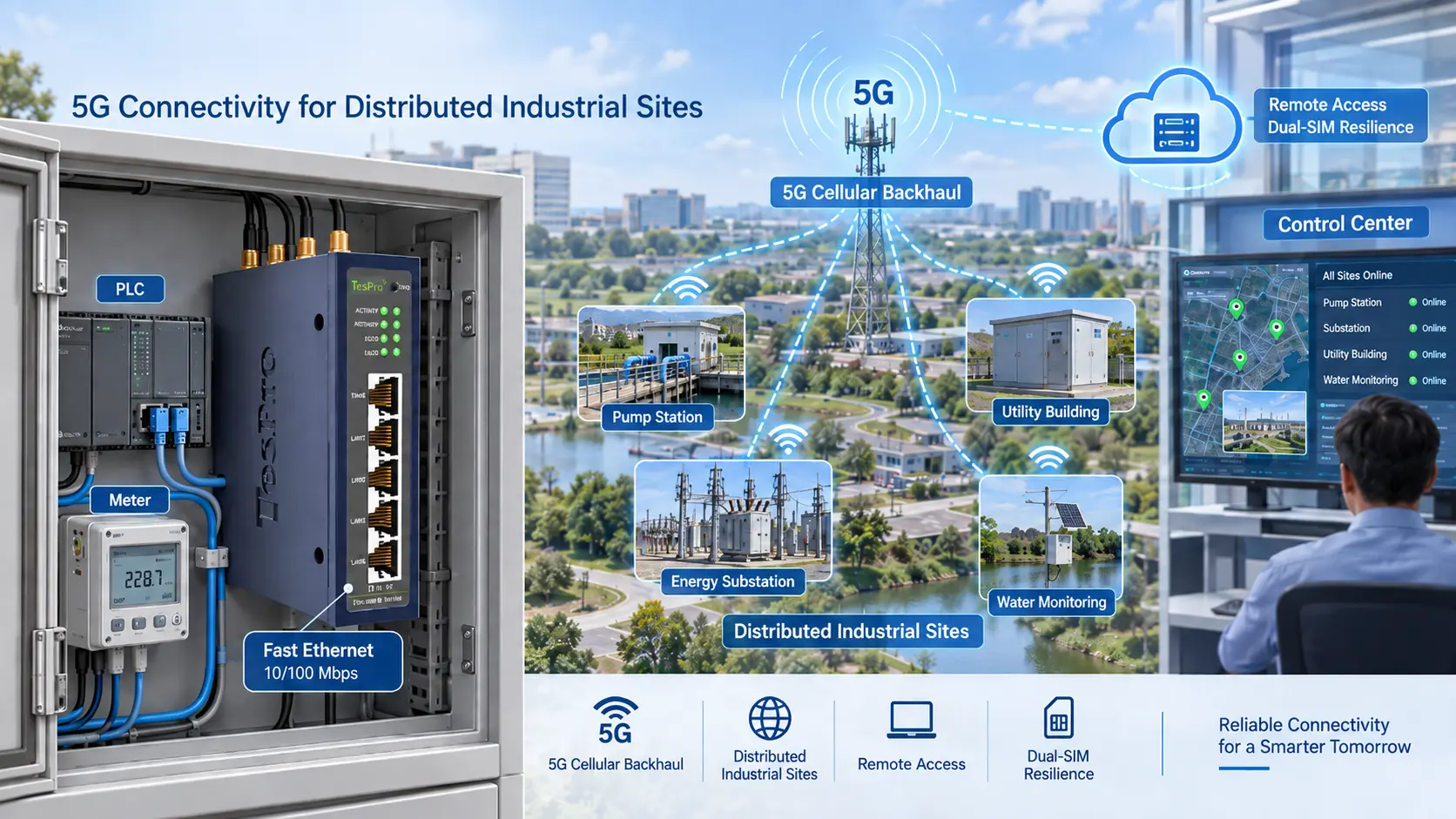
An industrial cellular router provides a communication bridge between remote equipment and central SCADA, cloud, or industrial IoT platforms through 4G or 5G networks. Depending on the model, important capabilities may include:
• Wide operating temperature range
• Dual-SIM cellular redundancy
• Automatic link recovery
• Ethernet and serial interfaces
• VPN-encrypted communication
• DIN-rail installation
• Remote configuration and diagnostics
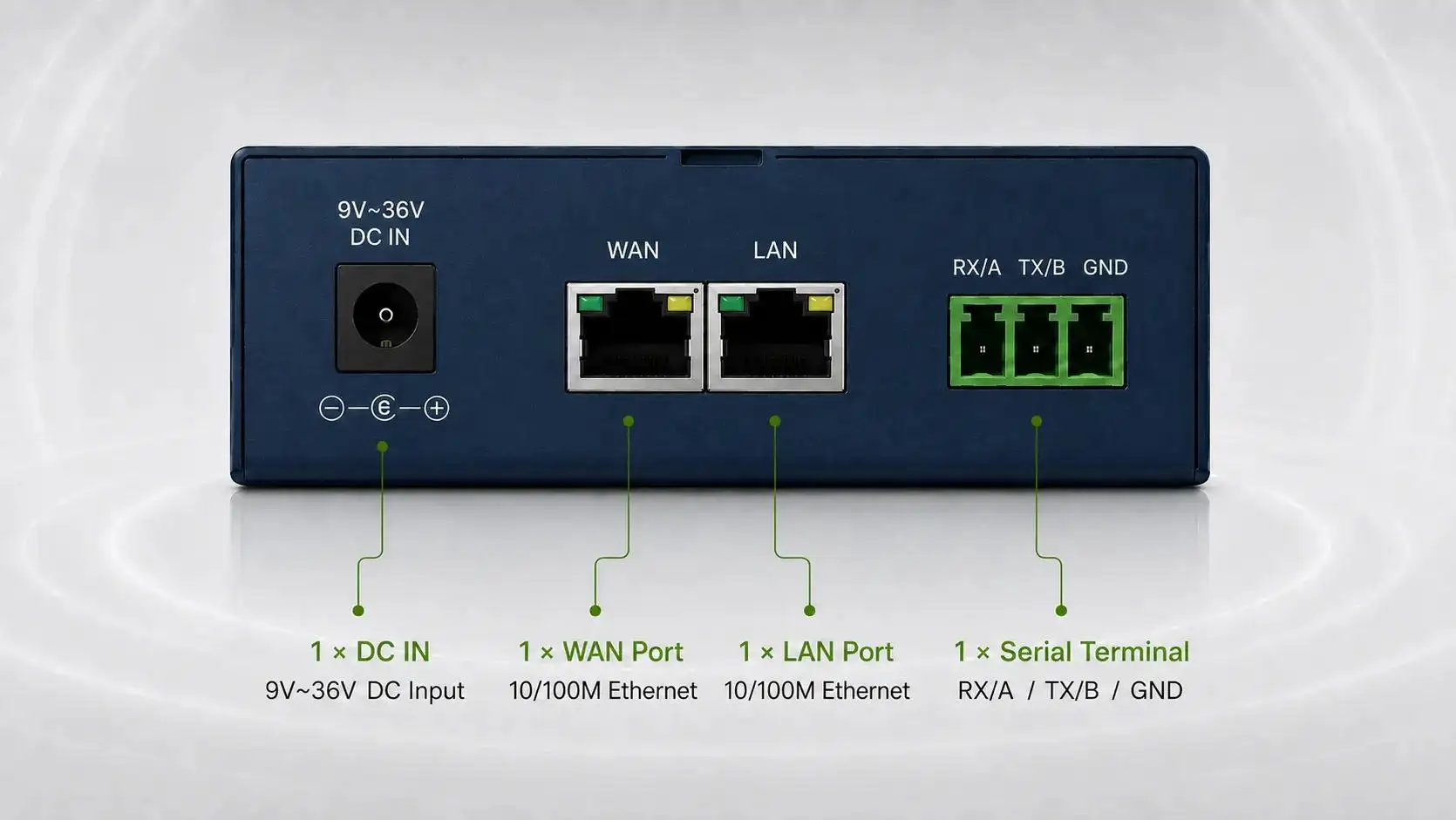
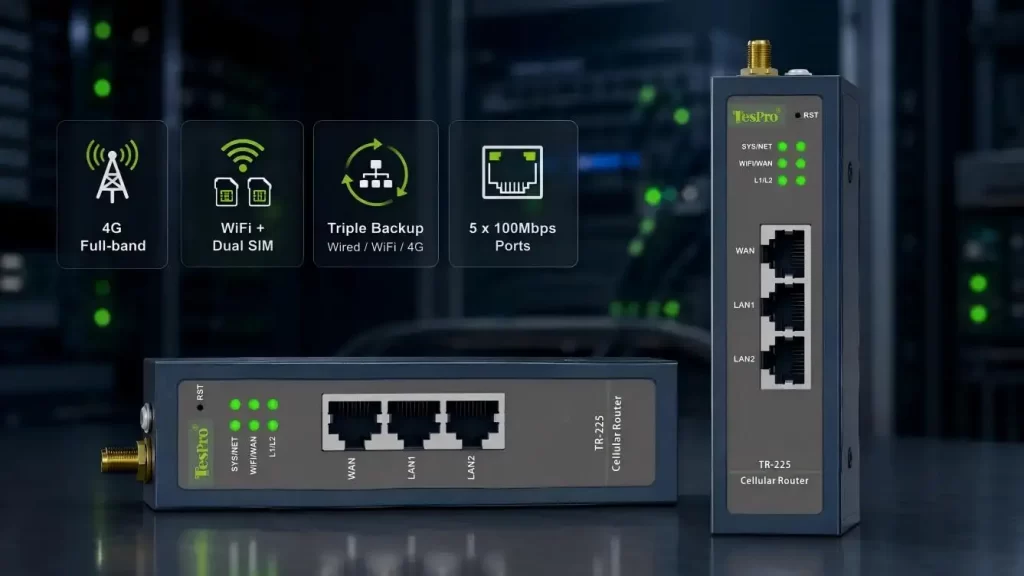
Tespro's TR-225, for example, supports 5G with backward compatibility, dual-SIM standby, two 100 Mbps LAN ports, one RS485 port, one RS232 port, DIN-rail mounting, and operation from -40°C to 75°C.
1. Automation in Oil and Gas Extraction
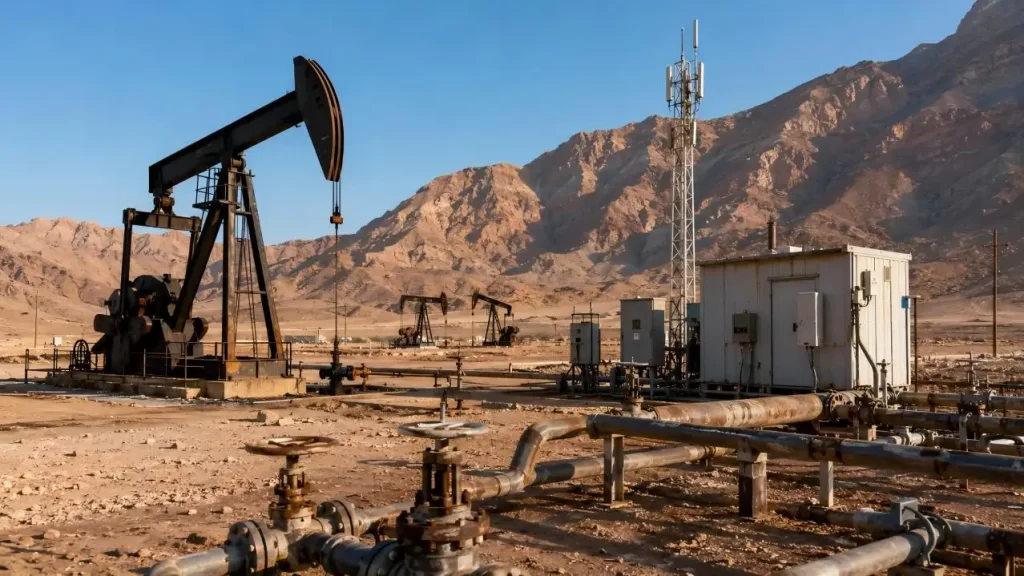
The remote siting of oil and gas extraction and transportation infrastructure leaves them beyond the reach of most communication networks.
An industrial cellular router can:
• Interface with field RTUs and flow, pressure and control valves
• Relay process information to a remote SCADA installation
• Allow VPN access for system administration
• Communicate in the presence of temperature and power disruptions
In the case of a potentially explosive atmosphere, the router must be installed within a properly certified enclosure that meets the site's explosion protection requirements.
2. Open-Pit and Underground Mining
Mining equipment is exposed to dust, vibration, mechanical shock, and rapidly changing operating conditions.
A rugged industrial cellular router supports:
• Haul-truck and excavator telematics
• GPS/GNSS data from a connected tracker or vehicle system
• Engine and hydraulic-system diagnostics
• Remote monitoring of dewatering and ventilation equipment
• Video or alarm transmission over 4G or 5G
Secure mounting, suitable antennas, and a dust-resistant control cabinet remain essential parts of the installation.
3. Maritime and Offshore Facilities
Coastal and offshore structures and vessels experience high humidity and salt-laden air and suffer from constant motion.
In these environments, industrial cellular routers can be used to provide cellular backhaul to:
• Monitor engines and fuel
• Track cargo and equipment
• Carry environmental sensors
• Support crew communications
• Service offshore SCADA systems
The router should be placed in an appropriate enclosure rated for anti-corrosion. Dual-SIM failover can can improve availability across coverage zones where configured.
4. Smart Agriculture
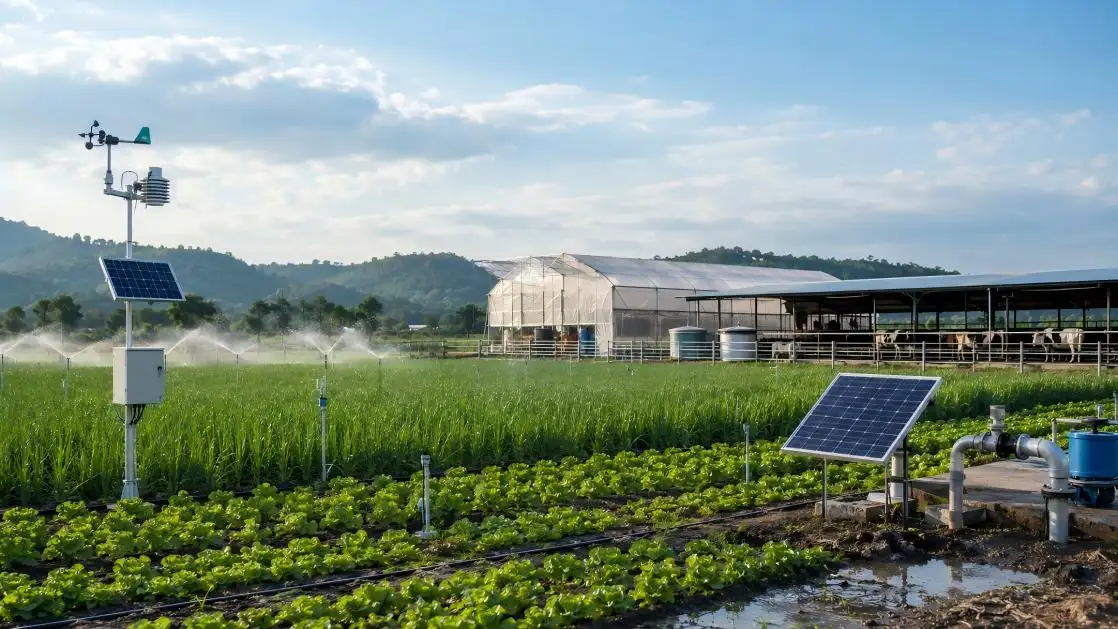
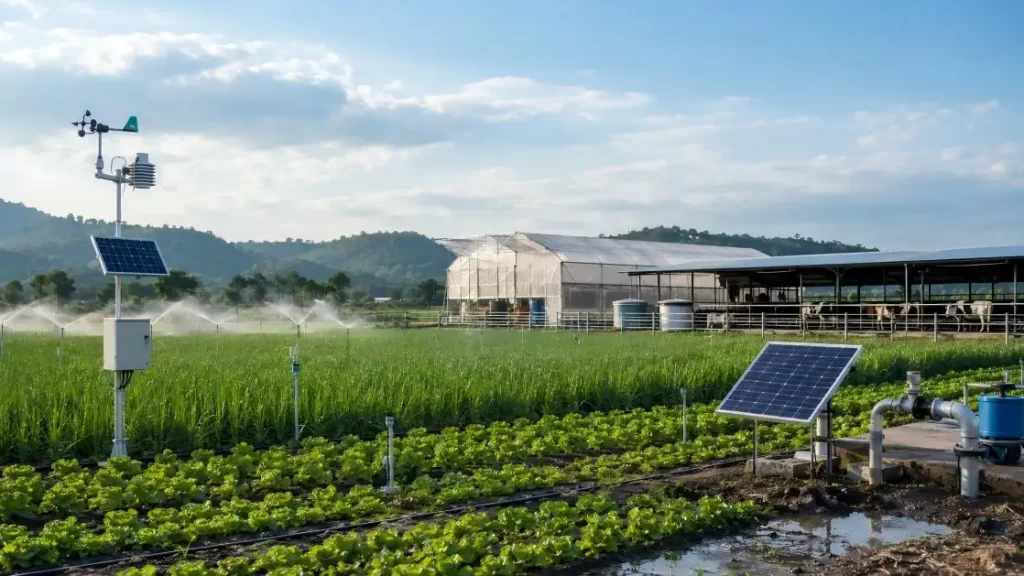
Most farms and even some greenhouses and livestock rearing facilities are located in areas that are not that easily accessible by fixed broadband networks.
However, an industrial cellular router can connect:
• Soil moisture sensors and weather stations
• Irrigation pumps and control valves
• Greenhouse control systems
• Water level monitoring systems
• Remote security systems
Older sensors and control systems can easily be connected due to the presence of RS232 and RS485 interfaces. For sites with solar power, additional router power consumption and solar energy availability should be considered.
5. Environmental and Weather Monitoring
Remote mountain and forest monitoring stations, as well as river and air quality monitoring stations, can be left unattended for long periods.
A suitable industrial cellular router will provide:
• Automatic reconnection after loss of network
• Watchdog functions, hardware or software
• Remote diagnostics
• Operation over wide temperature ranges
• Compatibility with battery and solar power
These functions help reduce unnecessary site visits to remote sites and help to improve the reliability of environmental monitoring.
6. Intelligent Transportation Systems
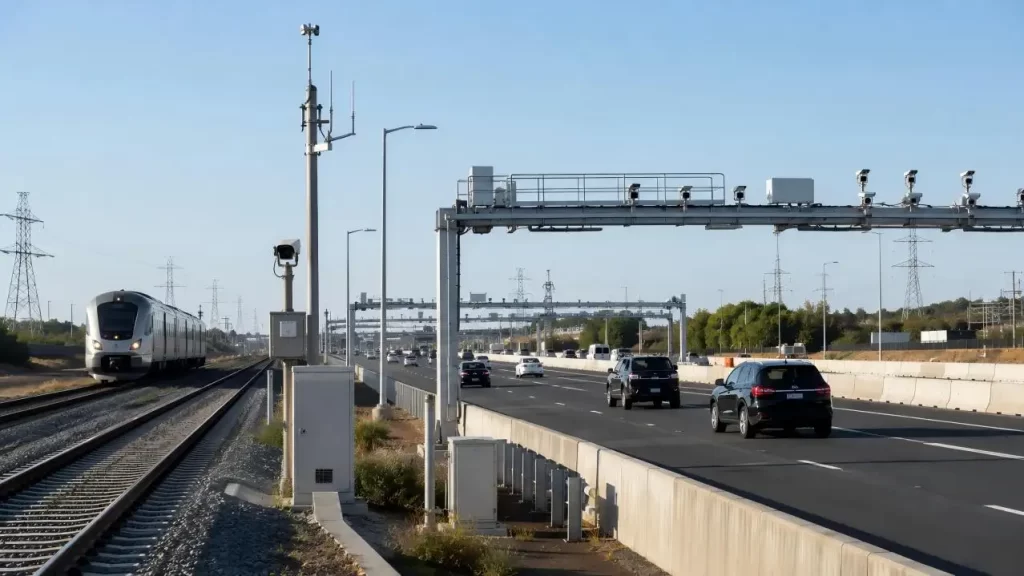
Roadside cabinets and railway installations are exposed to power fluctuations and condensation in addition to temperature extremes and vibration.
An industrial cellular router can support:
• Traffic signal controllers
• Variable-message signs
• Electronic tolling systems
• Railway monitoring equipment
• Roadside cameras and incident detection
For video applications, 5G has superior uplink capacity with dual-SIM functionality to increase uptime by minimizing outages from carrier failures.
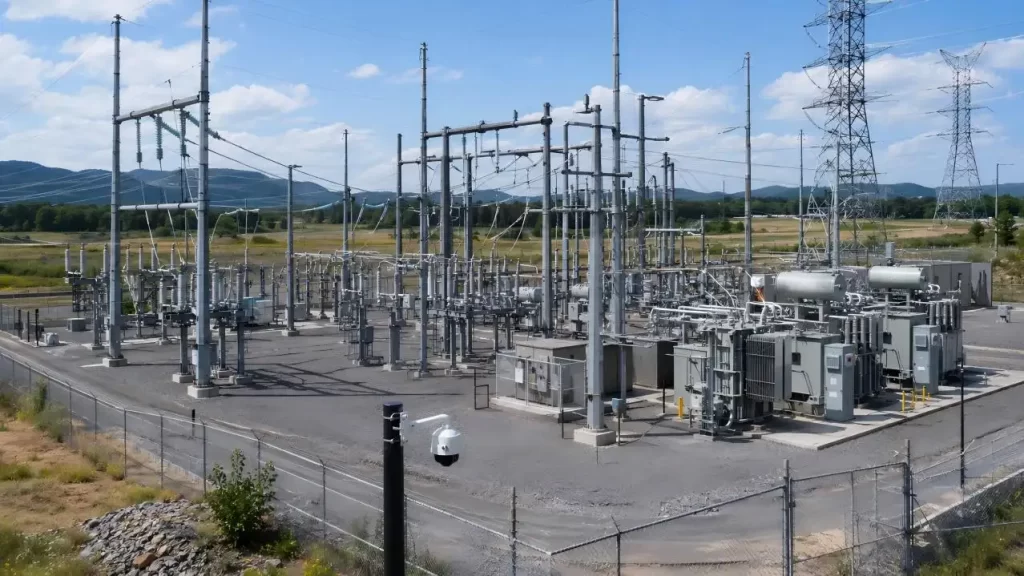
7. Power Substations and Smart Grids
Substations, distribution cabinets, and renewable-grid connection points require reliable communication between protection, control, and monitoring equipment.
Typical applications include:
• RTU and PLC backhaul
• Smart-meter data collection
• Transformer monitoring
• Recloser and capacitor-bank control
• Remote fault notifications
Because substations may contain significant electromagnetic interference, the complete installation should include verified EMC performance, correct grounding, surge protection, shielded cabling, and suitable interface isolation.
8. Temporary and Emergency Networks
Situations such as natural disasters and interruptions to the existing communication infrastructure can create the need for rapidly deployable, flexible communication networks. These networks can also be used for communication at temporary operational centers or construction sites.
A compact, industrial cellular router has the capability to:
• Create an operational network where fixed broadband is absent.
• Interface and allow communication between laptops, cameras, sensors, and field controllers.
• Form encrypted VPN communication links.
• Change the cellular operator within the same device using dual SIM technology.
• Fit in communication transport cases.
The TR-225 is a compact DIN-rail model, measuring approximately 93 x 118 x 24 mm (without antennas) and supporting space-efficient DIN rail mounting.
9. Factory Floors and Heavy Industry
Large electric motors, welding systems, large, industrial furnaces, and high-current equipment can produce both heat and electrical interference.
An industrial cellular router can be used to:
• Interconnect previously isolated industrial production areas.
• Facilitate the uploading of PLC and machine data to the Manufacturing Execution Systems (MES) or SCADA data control systems.
• Allow the remote monitoring of production and status in real time.
• Enable the integration of legacy RS232 and RS485 devices.
• Provide an alternate connection to the factory once the Wide Area Network (WAN) fails.
Ventilation of cabinets, grounding and routing of cables, and surge protection devices are equally important to communication routers.
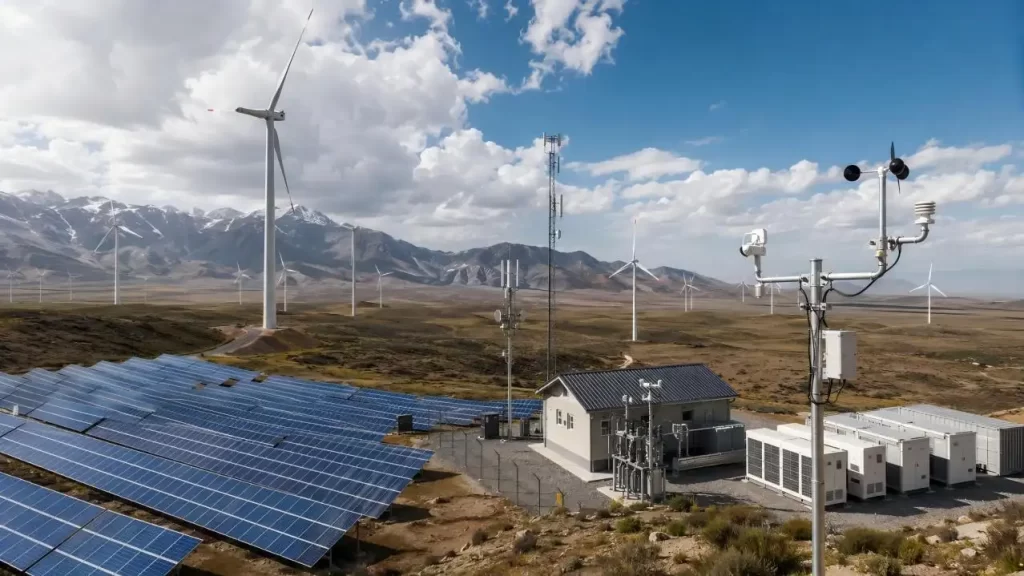
10. Solar and Wind Farms
The large spatial distribution of many renewable energy facilities can make wired communications prohibitive.
An industrial cellular router allows for the transmission of:
• Data from inverters.
• Status information from wind turbines.
• Position information and the performance of solar trackers.
• Data from meteorological stations.
• Data from storage batteries.
• Fault or maintenance alerts.
With respect to temperature adaptability, dual SIM redundancy, availability of serial port, and secure VPN, industrial routers are suitable for distributed energy monitoring applications when temperature, serial interface and VPN requirements match the selected model.
Fast Selection Guide
When selecting an industrial cellular router, the following points are equally important.
• 4G or 5G frequency bands
• Temperature and humidity operating range
• Type and quantity of redundancy for SIM and WAN
• Type and quantity of interfaces (Ethernet and serial)
• Need for VPN and firewall
• Power-input specifications
• EMC and surge protection
• Antennas and signal
• Enclosure protection
• Remote management
Final Thoughts
There are specific communication and cybersecurity router requirements that must be met for the particular application and environment industrial cellular routers will be deployed in.
Tespro provides industrial-grade hardware designed for wide temperature ranges, cellular redundancy, serial connectivity, integrated VPN, and compact DIN-rail form factors. The TR-225 is an example of a product that helps system integrators to establish a communication link for SCADA and industrial IoT systems without the need to replace or remove existing PLCs, RTUs, meters, or sensors.
FAQs
Q1. Can PLCs be integrated with industrial routers?
Certainly. Most PLCs and RTUs integrate with industrial routers via Ethernet, RS232, and RS485 ports.
Q2. Where are industrial cellular routers applicable?
Industrial cellular routers find application in energy and mining and transportation, agriculture, factories, and remote monitoring.
Q3. Is it possible for an industrial cellular router to function outdoors?
Yes, an industrial cellular router can function outdoors if it is housed in a weatherproof enclosure.
Q4. What is the significance of a wide temperature range?
A wide temperature range permits reliable router operation in extremely hot or cold situations.
Q5. What is dual-SIM failover?
Dual-SIM failover is the automatic switching from one cellular network to another in the event of a failure.