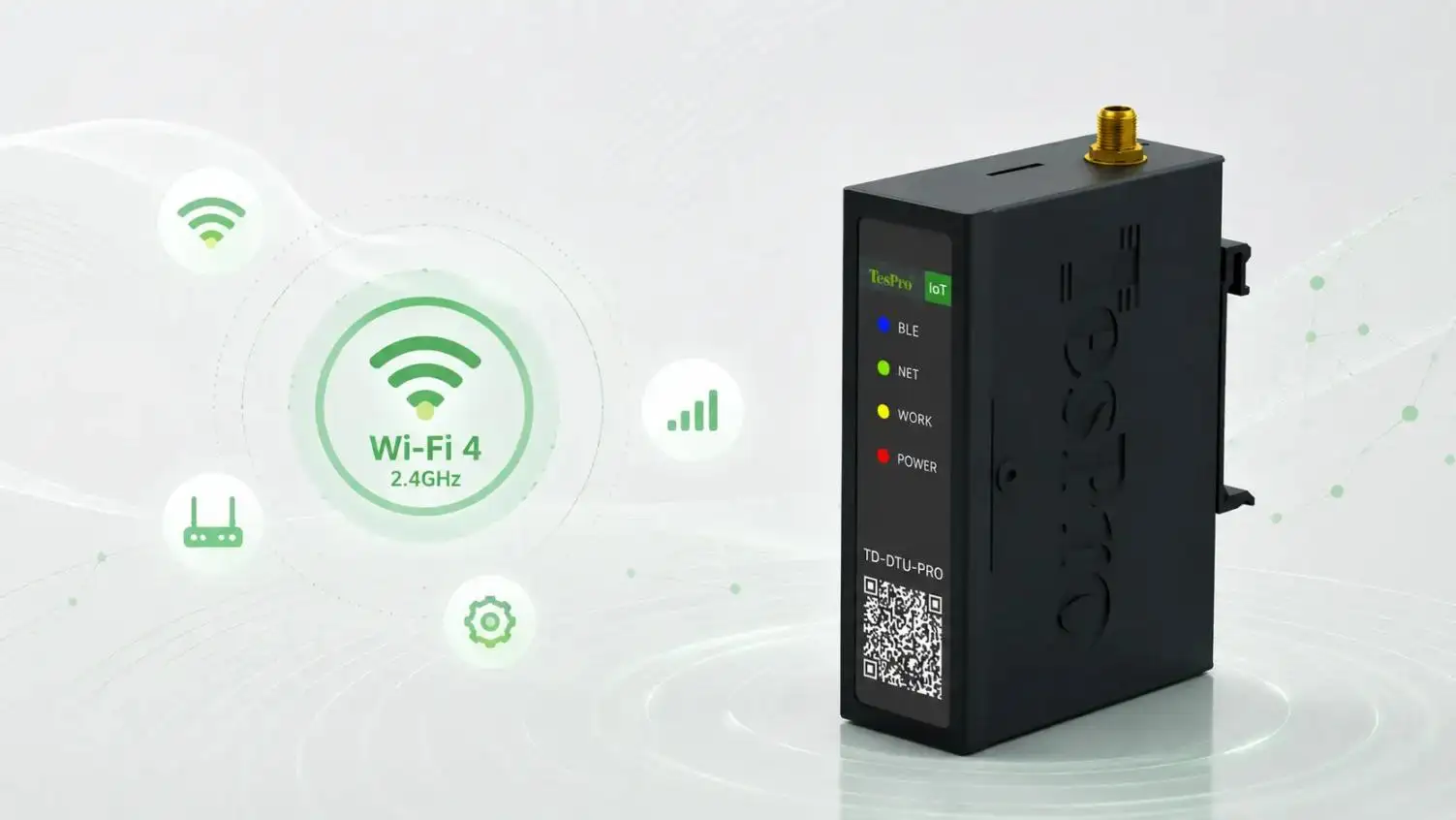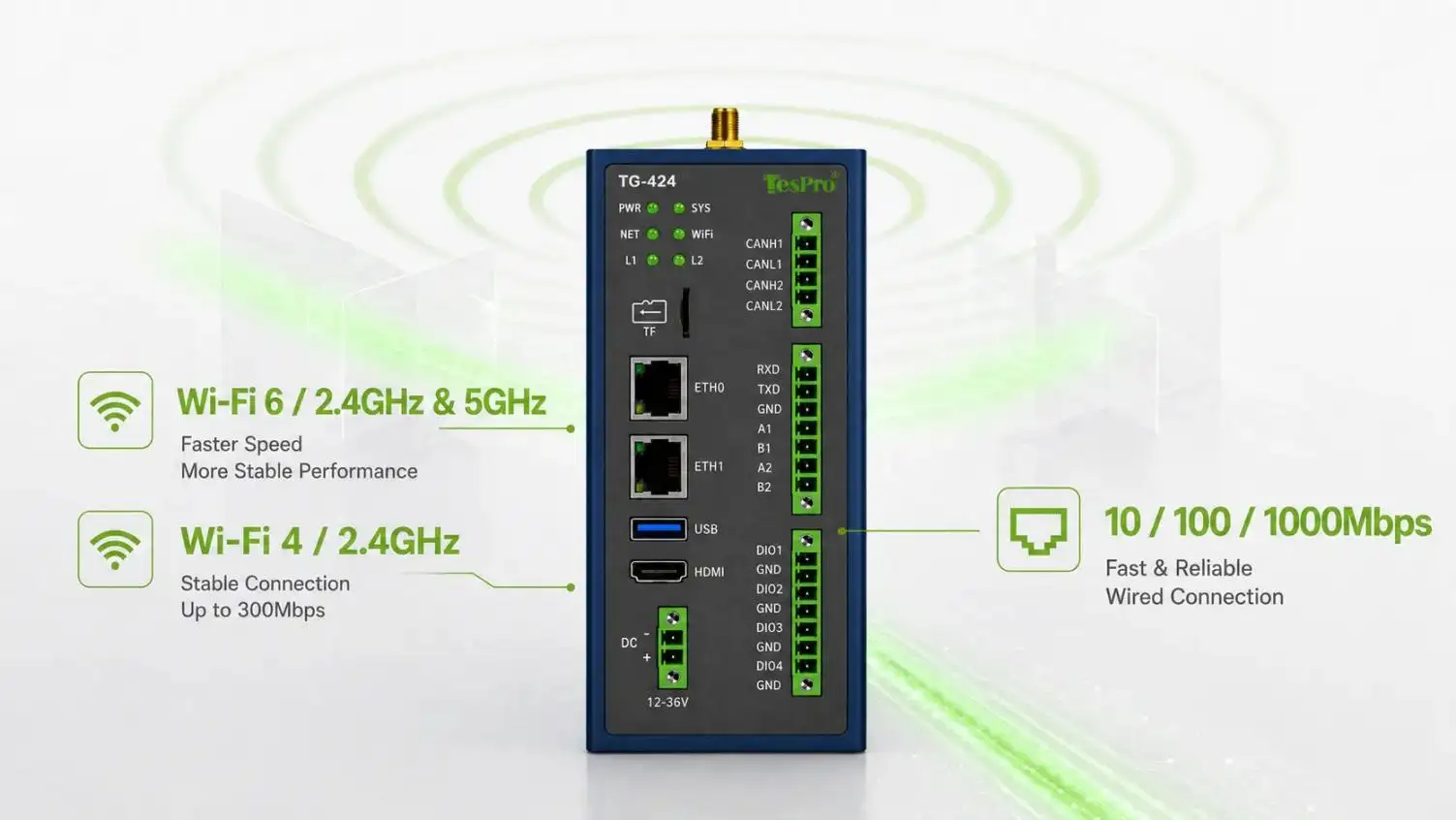



An Industrial Protocol Converter for BACnet, Modbus and OPC UA connects building automation devices, industrial controllers, meters, SCADA systems, and IoT platforms that use incompatible communication models.
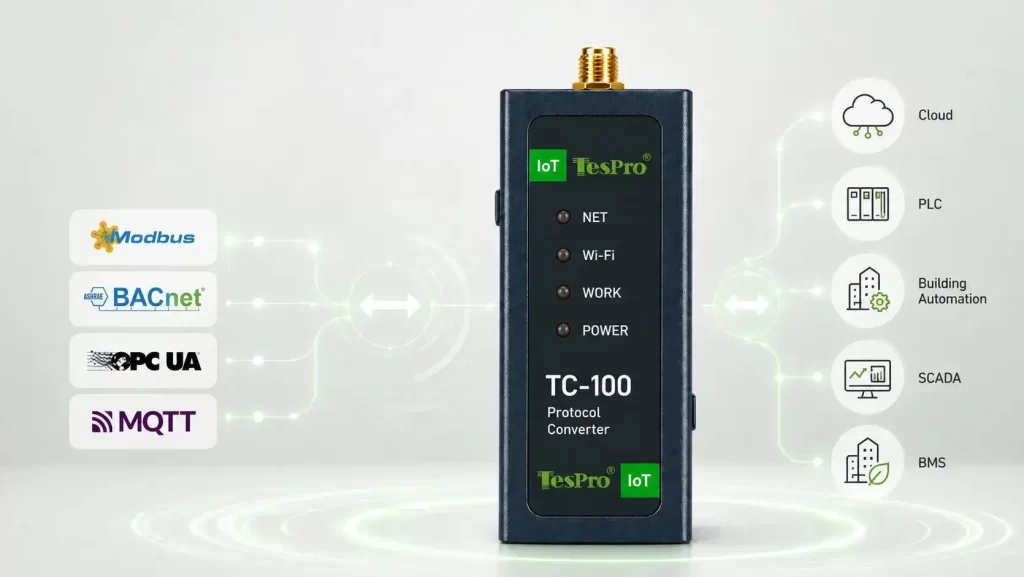
At Tespro, we view protocol conversion as a data-engineering task—not simply a change from RS485 to Ethernet. Reliable integration requires the converter to understand device roles, map data points, normalize values, manage communication cycles, and deliver usable data to the target system.
Why BACnet, Modbus, and OPC UA Need Conversion
These protocols were designed for different layers of automation.
| Protocol | Typical Environment | Data Model | Common Variants |
| BACnet | BMS, HVAC, lighting, access control | Objects, properties, and instances | BACnet/IP, BACnet MS/TP |
| Modbus | PLCs, meters, sensors, VFDs | Coils and numerical registers | Modbus RTU, Modbus TCP |
| OPC UA | SCADA, MES, historians, industrial software | Nodes, tags, metadata, and information models | OPC UA client/server |
An RS485 port does not guarantee protocol compatibility. BACnet MS/TP and Modbus RTU can both operate over RS485, but they use different frame structures, addressing rules, device roles, and data representations.
An Industrial Protocol Converter for BACnet, Modbus and OPC UA must therefore translate both communication messages and the meaning of the underlying data.
What Happens Inside a Protocol Converter?
A properly configured converter performs several coordinated functions:
•Connects serial or Ethernet field devices
•Operates in the required master, slave, client, or server role
•Polls source devices according to defined intervals
•Parses registers, coils, BACnet objects, or OPC UA nodes
•Converts data types, byte order, scaling factors, and units
•Maps source data points to the target protocol
•Reports values, equipment states, and alarms
•Manages timeouts, reconnections, and unavailable devices
The conversion direction must be defined before configuration. "Supports Modbus and BACnet" does not automatically confirm Modbus-to-BACnet conversion, BACnet-to-Modbus conversion, or support for every client/server role.
Data Mapping Is the Core of Protocol Conversion
Data mapping determines whether the information received by the target system is technically meaningful.
A project mapping table should look similar to this:
| Source Point | Source Format | Conversion Rule | Target Point |
| Modbus register 40001 | 16-bit integer | Multiply by 0.1 | BACnet Analog Input |
| BACnet AI-12 Present_Value | Floating point | Convert °F to °C | OPC UA temperature node |
| Modbus coil 00017 | Boolean | No scaling | OPC UA equipment status |
| BACnet Binary Value 8 | Active/Inactive | Map to 1/0 | Modbus holding register |
Engineers should confirm:
•Register address and Modbus function code
•BACnet object type, instance, and property
•OPC UA Node ID and required tag structure
•Signed or unsigned values
•16-bit or 32-bit data length
•Word and byte order
•Engineering units and decimal scaling
•Read-only or read/write permissions
•Invalid-value and communication-loss behavior
Without this information, a converter may establish communication while still producing reversed, incorrectly scaled, or operationally misleading data.
Typical Integration Architectures
Modbus RTU to BACnet/IP
This is common when meters, VFDs, boilers, or sensors must be integrated into a building management system. The converter polls Modbus registers and presents the values as BACnet objects.
BACnet MS/TP to Modbus TCP
BACnet field controllers can be connected to an industrial monitoring network that expects Ethernet-based Modbus data.
Modbus to OPC UA
Legacy PLCs and instruments can provide data to SCADA, MES, historians, or analytics platforms through structured OPC UA nodes.
BACnet to OPC UA
HVAC, lighting, environmental, and energy data can be exposed to higher-level industrial software without replacing the existing building control network.
These paths make an Industrial Protocol Converter for BACnet, Modbus and OPC UA useful in smart buildings, factories, utility sites, energy-management projects, and distributed equipment rooms.
Sizing Communication Performance
Protocol compatibility alone does not determine performance. At Tespro, we recommend calculating the communication load before deployment.
Key variables include:
•Number of field devices
•Total data-point count
•Serial baud rate
•Number of registers per polling request
•Device response time
•Polling and reporting intervals
•Required alarm latency
•Simultaneous upstream connections
A short polling interval can congest an RS485 bus or repeatedly time out slow field devices. Conversely, an excessively long interval can delay alarms and produce stale dashboard data. Critical points and routine monitoring data may therefore require different collection cycles.
Selecting an Industrial Protocol Converter
Before choosing an Industrial Protocol Converter for BACnet, Modbus and OPC UA, evaluate the complete system architecture.
| Decision Area | Questions to Confirm |
| Protocol variants | BACnet/IP or MS/TP? Modbus RTU or TCP? |
| Device roles | Master, slave, client, or server? |
| Interfaces | RS485, RS232, CAN, Ethernet, Wi-Fi, or cellular? |
| Data model | How will registers, objects, and nodes be mapped? |
| Network reliability | Is local storage or delayed upload required? |
| Upstream system | BMS, SCADA, MES, IoT platform, or cloud service? |
| Environment | Required voltage, temperature, humidity, and surge protection? |
| Security | Network segmentation, authentication, certificates, and access control? |
| Customization | Are proprietary registers or platform formats involved? |
How Tespro Approaches Multi-Protocol Integration
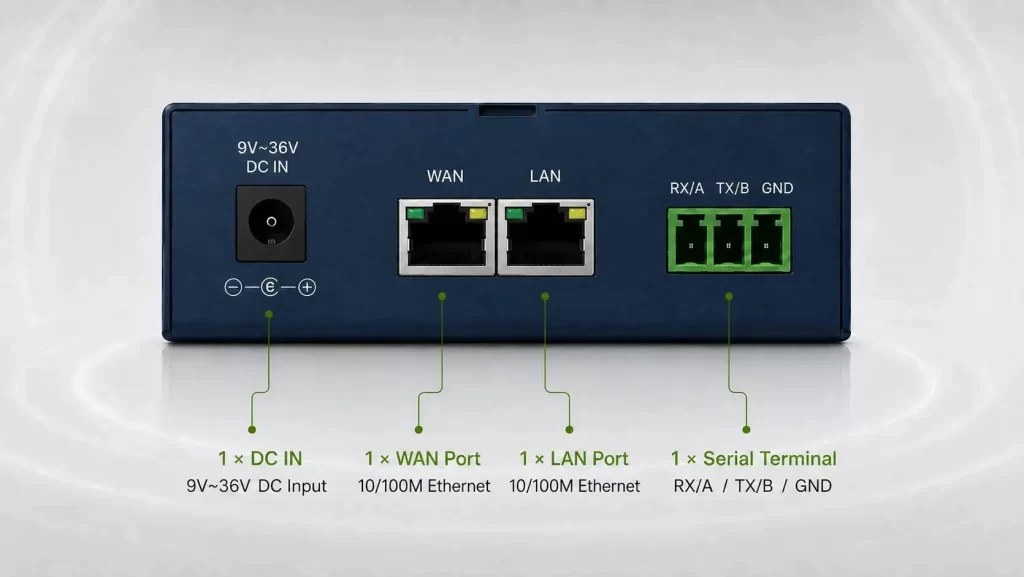
The Tespro TC-100 is designed for field-device integration, protocol conversion, data acquisition, and remote platform access. It supports Modbus RTU, Modbus TCP, BACnet/IP, BACnet MS/TP, and OPC UA, together with data parsing, address mapping, format conversion, and platform upload.
Its industrial design includes:
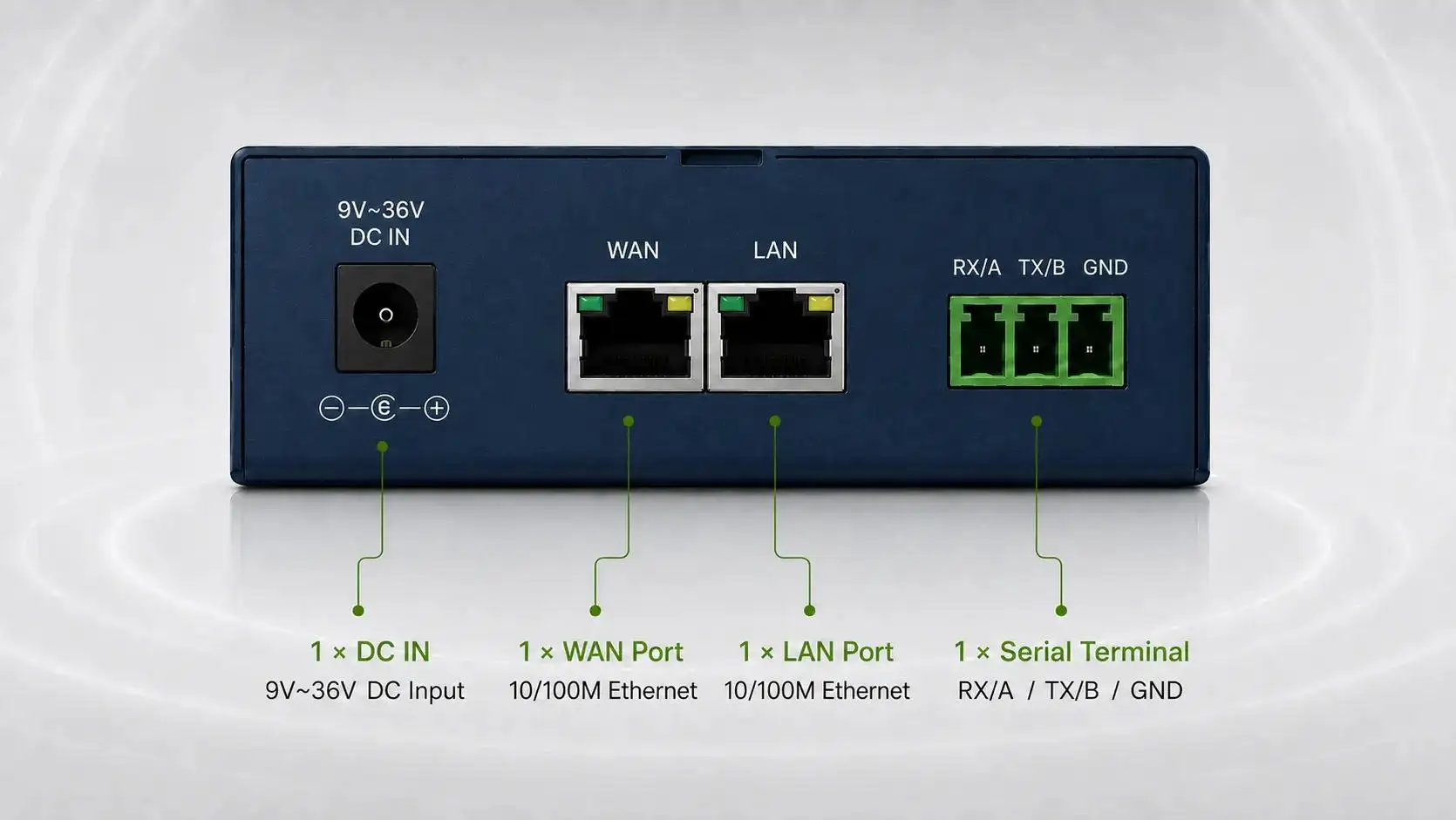
•One WAN and one LAN interface
•RS485, RS232, or CAN serial-port configurations
•Ethernet, Wi-Fi, and cellular communication options
•Real-time, interval, and scheduled reporting
•Two digital inputs and two digital outputs
•Micro SD and USB 3.0 interfaces
•12–36 VDC power input
•−40°C to +75°C operating range
•Reverse-polarity, overvoltage, overcurrent, lightning, and surge protection
•Support for secondary development and project customization
Because the serial interface is selected according to the configuration, engineers should confirm the required RS485, RS232, or CAN version during project planning.
Recommended Commissioning Process
Before site acceptance:
- Approve the protocol and device-role matrix.
- Verify every data point against the source device.
- Test scaling, byte order, units, and read/write direction.
- Simulate device disconnection and network interruption.
- Measure polling time under the full communication load.
- Document the final mapping table and configuration version.
Creating a Reliable Multi-Protocol Data Layer
A dependable Industrial Protocol Converter for BACnet, Modbus and OPC UA must be selected around data meaning, protocol direction, device roles, traffic load, interfaces, environmental conditions, and platform requirements.
For BMS, SCADA, metering, or remote IoT projects, Tespro can review the protocol matrix and help determine whether the TC-100 Industrial Protocol Converter is suitable for the required integration architecture.
FAQs
Q1. Which industrial protocols does the Tespro TC-100 support?
The TC-100 supports Modbus RTU, Modbus TCP, BACnet/IP, BACnet MS/TP and OPC UA. The required protocol combination and communication direction should be confirmed during project configuration.
Q2. Can the Tespro TC-100 convert Modbus data to BACnet?
Yes. The TC-100 can collect Modbus register data and map it to BACnet-compatible data points. Engineers need to define register addresses, BACnet objects, scaling factors and read/write permissions.
Q3. Can the TC-100 connect Modbus devices to an OPC UA platform?
Yes. The TC-100 can be configured to collect data from Modbus RTU or Modbus TCP devices and make the mapped information available for OPC UA-based SCADA, MES or industrial platforms.
Q4. Does the TC-100 support BACnet/IP and BACnet MS/TP?
Yes. BACnet/IP is commonly used over Ethernet, while BACnet MS/TP normally operates over an RS485 network. The project configuration must match the BACnet variant used by the field devices.
Q5. Which serial interfaces are available on the TC-100?
The TC-100 can be configured with RS485, RS232 or CAN. These are selectable serial-interface configurations, so customers should confirm the required version rather than assuming all three interfaces operate simultaneously.