-1791966549842.webp)





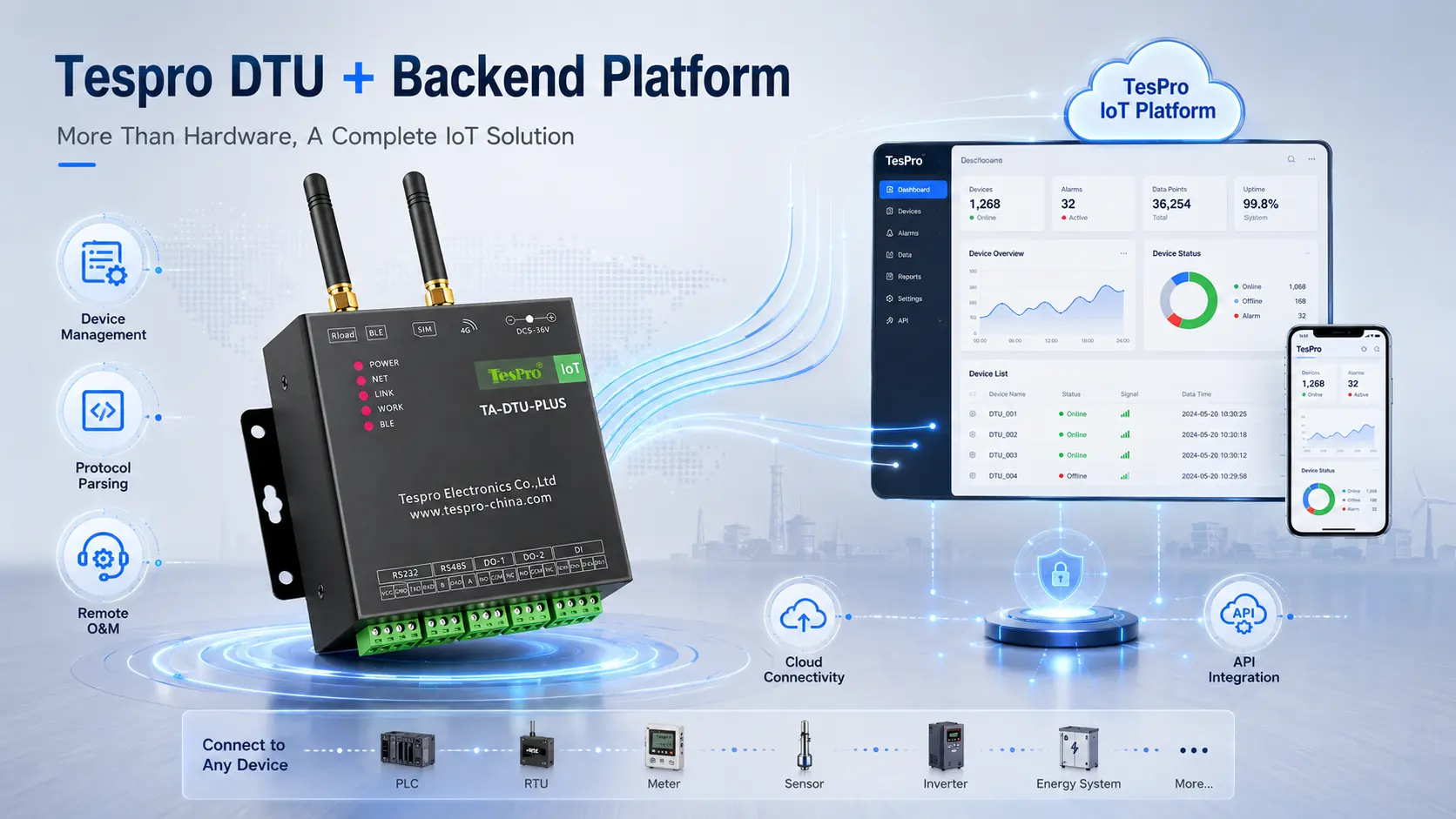
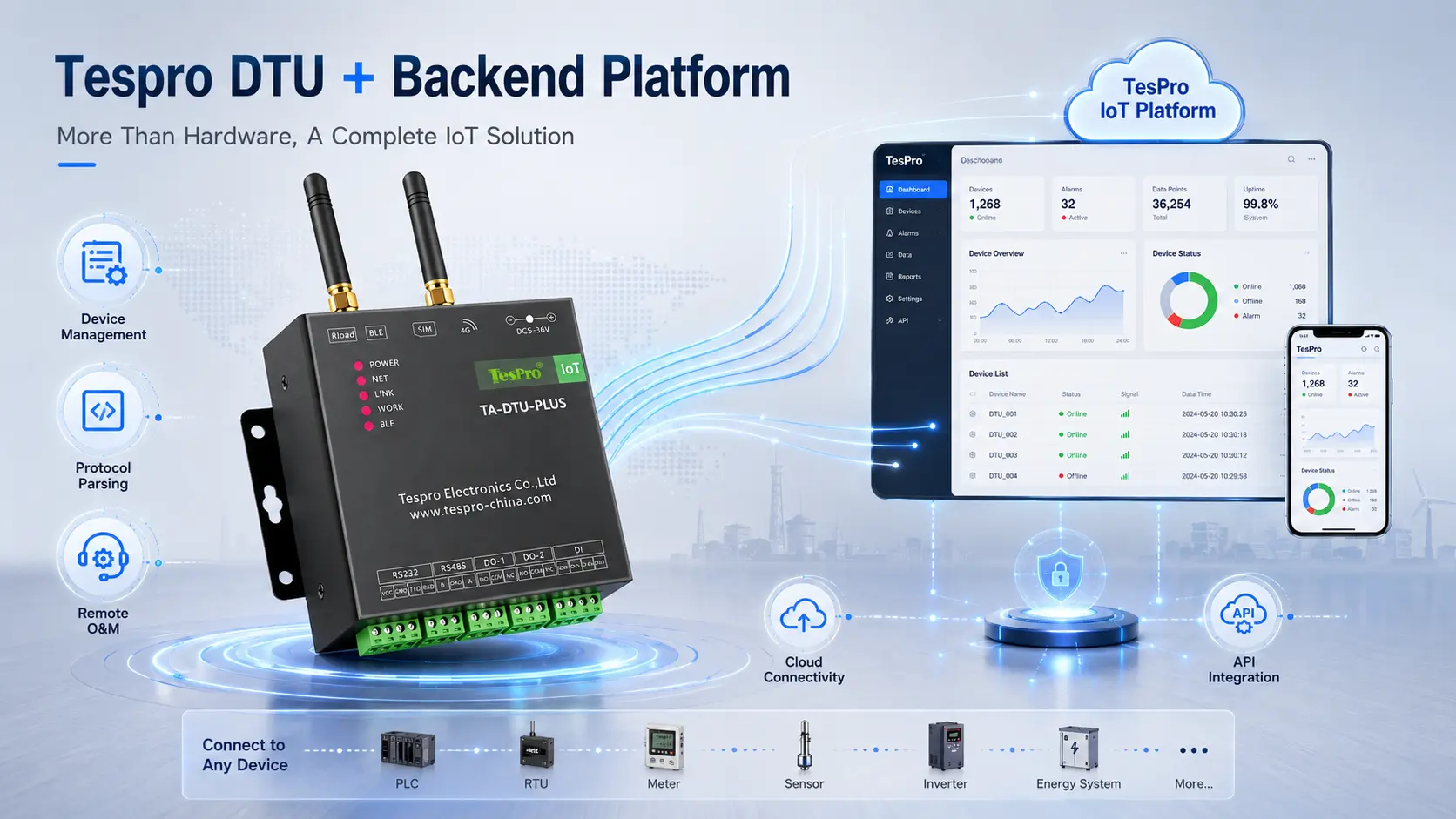
Choosing a Data Transfer Unit (DTU) with a backend management platform is more meaningful than opting for a standalone hardware device. It elevates the DTU’s value from a mere data transmission tool to a core component of a comprehensive IoT solution. Tespro’s DTU, combined with its robust backend platform support, offers significant advantages to users:
- More Efficient Hardware Usage and Management: The backend platform provides an intuitive interface for centralized management of all online DTU devices, including device status monitoring, remote restarts, firmware upgrades, and more. This greatly simplifies the complexity of large-scale deployment and daily operation and maintenance, improving hardware utilization and management efficiency.
- Flexible Protocol Access and Parsing: A DTU platform with a backend typically possesses powerful protocol parsing capabilities. Tespro’s backend platform, benefiting from ISTAR software company’s experience in over 100 industry scenarios, can support a wider range of device access protocols. Whether standard protocols (like Modbus, DL/T 645) or various customized, private protocols, they can be flexibly configured and parsed through the platform to achieve data standardization.
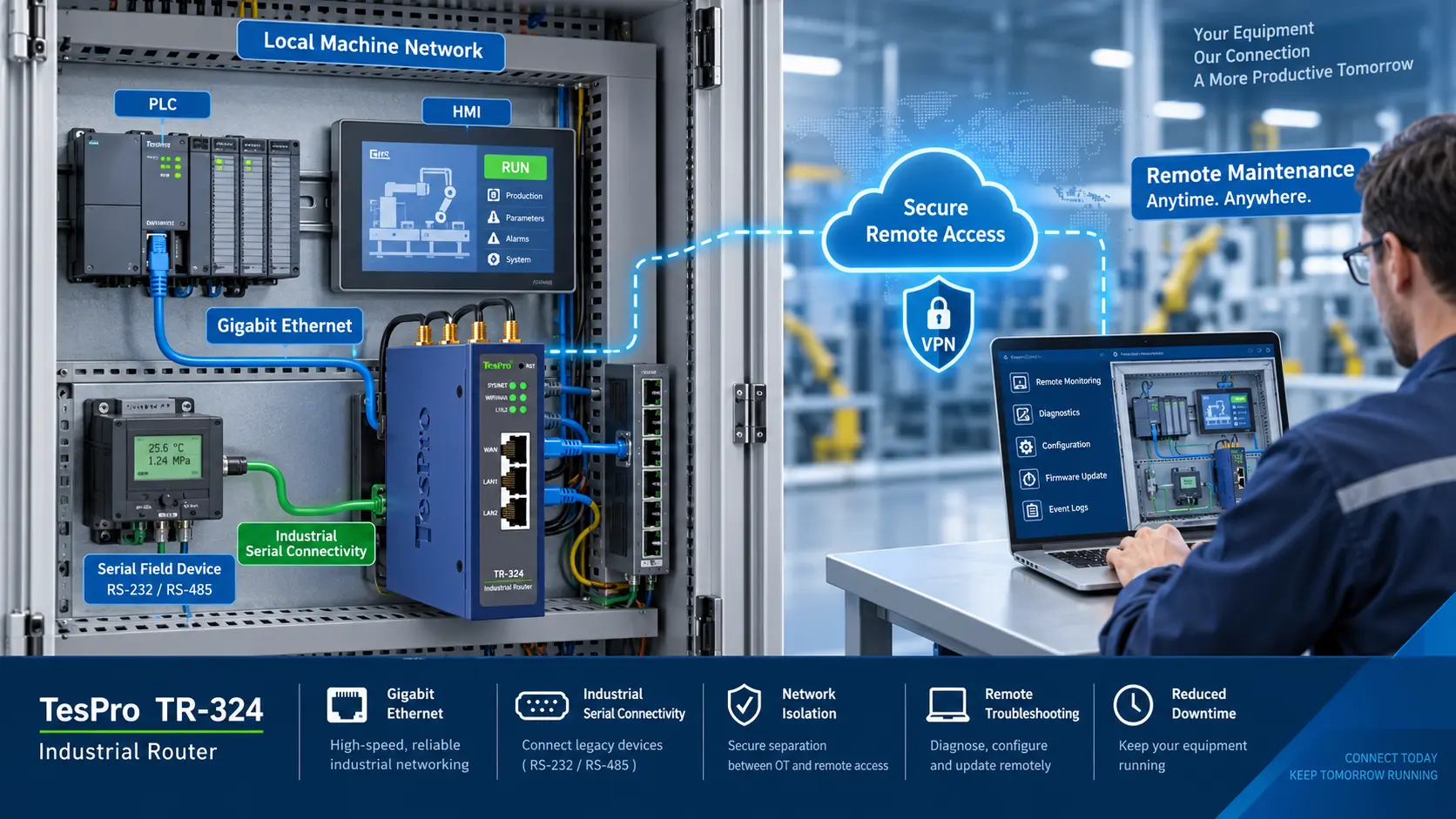
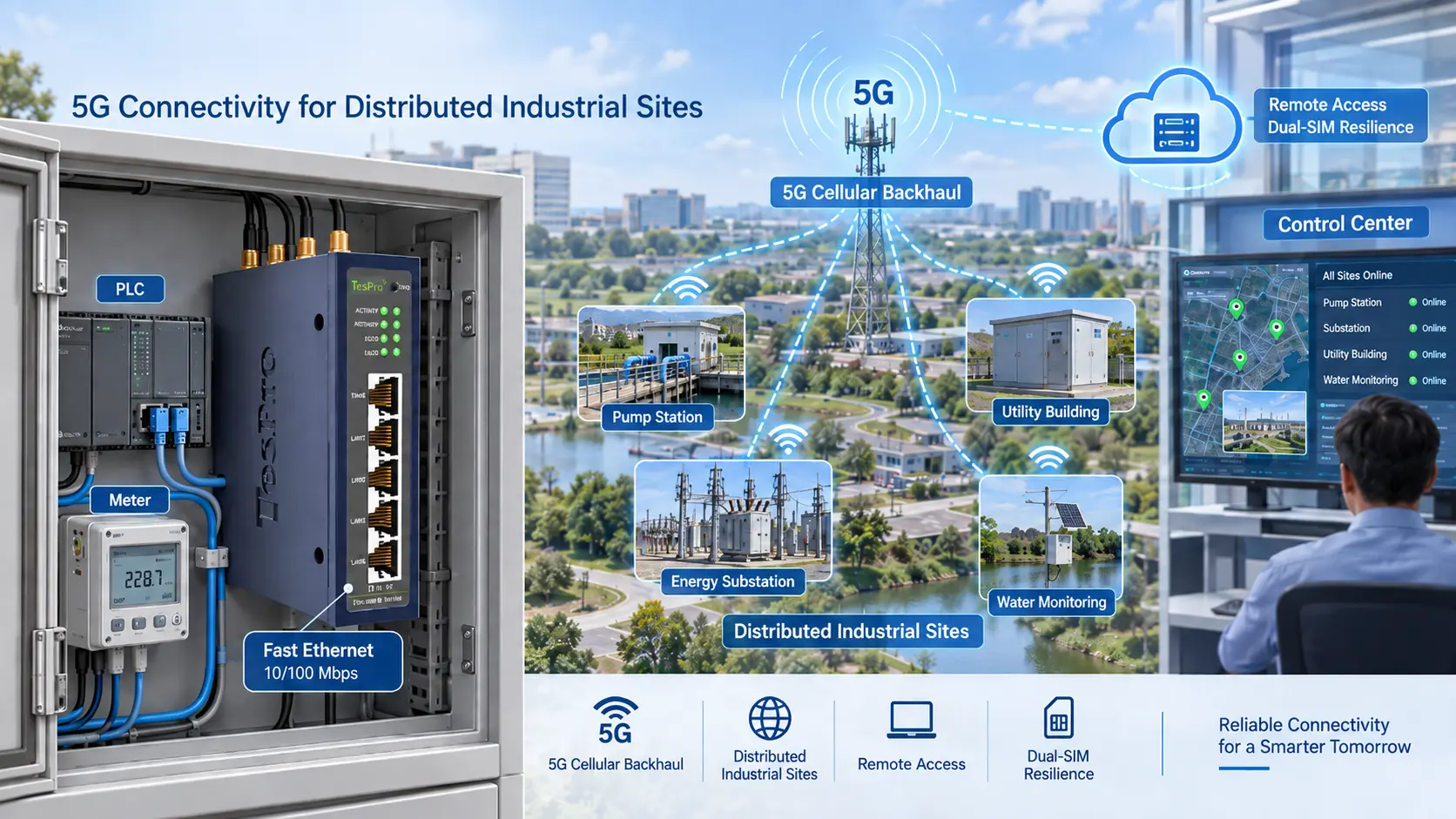
- Powerful Remote Operation and Maintenance Functions: The backend platform is central to enabling remote operation and maintenance. Through the platform, users can view real-time device operating data, historical data curves, alarm information, and perform remote parameter adjustments and fault diagnosis. This not only reduces the frequency and cost of on-site maintenance but also allows for rapid response when issues arise, enhancing system reliability and continuity.
- Personalized Protocol Definition and Data Processing: Advanced backend platforms allow users to flexibly define data acquisition strategies, data processing logic, and alarm rules according to their business needs. For example, users can customize data reporting cycles, data filtering rules, and even perform simple edge computing to upload processed data to the cloud, reducing bandwidth consumption and cloud computing pressure.
- Data Visualization and Analysis: Backend platforms typically integrate data visualization functions, presenting collected data in charts, reports, and other intuitive forms to help users quickly understand data trends, perform data analysis, and support decision-making. Tespro’s platform can provide rich reports and analytical tools to help customers extract data value.
- System Integration and Secondary Development: DTU solutions with a backend usually offer open API interfaces, making it convenient for users to integrate their data with existing business systems (such as MES, ERP, SCADA) or perform secondary development to build IoT applications that better meet their specific needs.
In summary, choosing a Tespro DTU with strong backend support means you are not just purchasing a hardware product, but acquiring a comprehensive IoT solution capable of providing device management, data parsing, remote operation and maintenance, data analysis, and system integration capabilities, thereby truly realizing the value of IoT.