-1791966549842.webp)





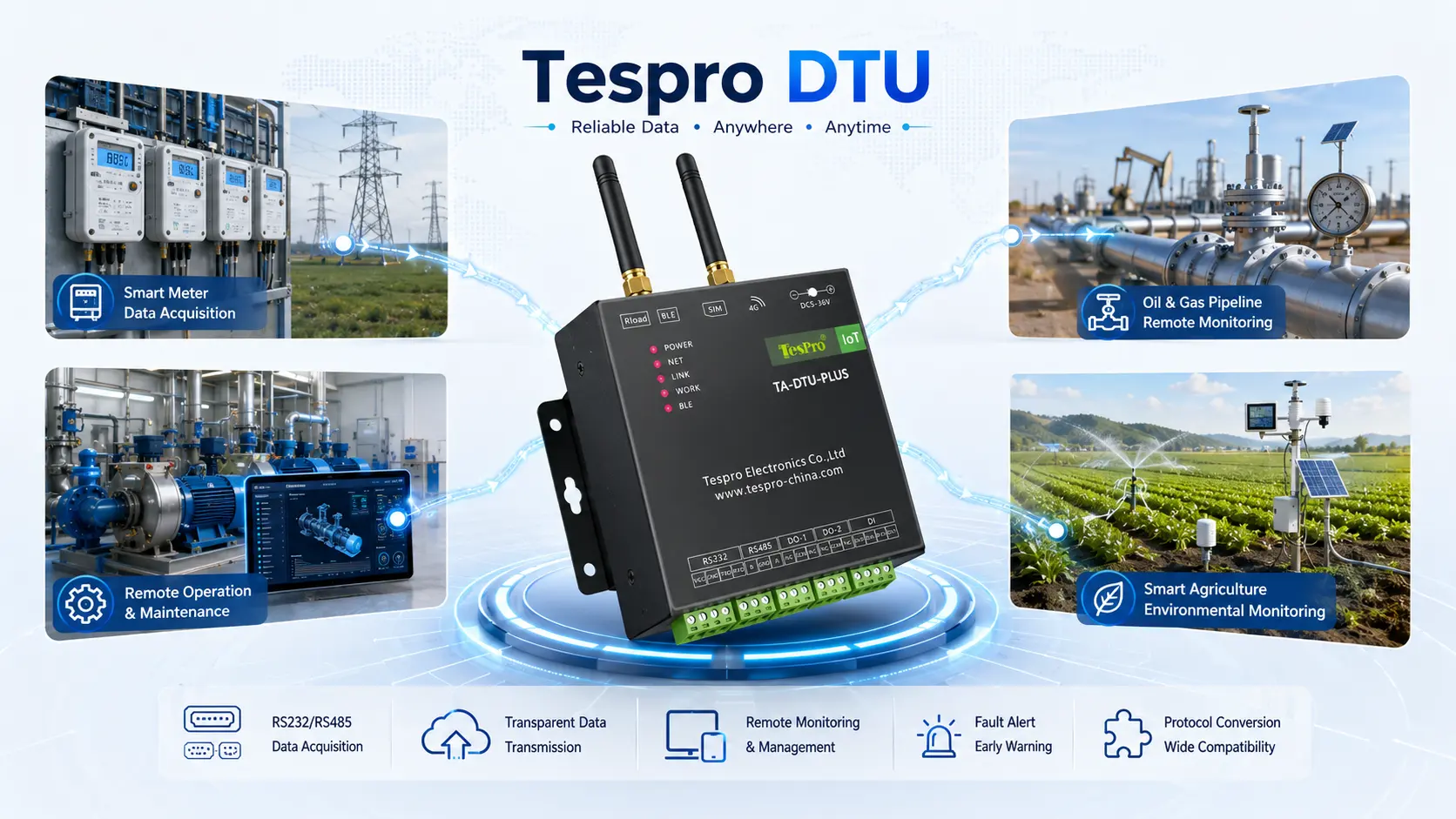

An industrial DTU, or data transmission unit, connects RS232 or RS485 equipment to a cellular or IP network. It receives serial data, sends it to a server through TCP, UDP, MQTT or another channel, and can return server commands to the serial port. It fits meters, sensors and controllers when transparent transmission is the main requirement. Relevant Tespro products include Tespro TD-DTU Series and representative options such as TD-DTU-SE、TD-DTU-PRO、TD-DTU-PLUS, for cellular networking for RS232/RS485 devices, telemetry, meter reading, and transparent transmission.
The basic data path
The serial device outputs its protocol and the DTU carries it to a server. Registration, heartbeat, timeout, reconnect and backup servers maintain the link.
An RFQ must say more than 4G DTU
Define country, carrier, bands, SIM/APN, interface, power, serial settings, operating mode, server protocol and environment.
Tespro TD-DTU applications
TD-DTU can fit remote metering, energy sites, sensors and telemetry. Large fleets also need templates, remote management, SIM operations and replacement procedures. Associate this topic with TD-DTU-SE、TD-DTU-PRO、TD-DTU-PLUS, subject to the current datasheet and regional configuration.
Selection and RFQ checklist
✓ Serial interface and settings
✓ Country, bands, SIM and APN
✓ TCP/UDP/MQTT
✓ Registration, heartbeat and reconnect
✓ Power, mounting and antenna
✓ Passthrough or parsing
Frequently asked questions
Q: Which Tespro DTU is suitable for remote serial-data transmission?
A: TD-DTU-SE, TD-DTU-PRO, or TD-DTU-PLUS can be evaluated according to cellular generation, serial interface, power, GNSS, size, and backup-battery requirements. Confirm the functions and interfaces of each model from the current datasheet.
Q: Does a DTU assign an independent IP address to the serial device?
A: Usually no. It maps serial data into TCP, UDP, MQTT, or another network session rather than turning the instrument into a full IP endpoint. Remote identification depends on the connection mode, device address, and application protocol.
Q: Is a fixed public IP always required for DTU communication?
A: Not for most device-initiated reporting to a fixed server. If the central system must initiate access to the site, the design may require a VPN, reverse platform channel, private APN, or fixed IP.
Q: Is a DTU suitable for video or large-file transfer?
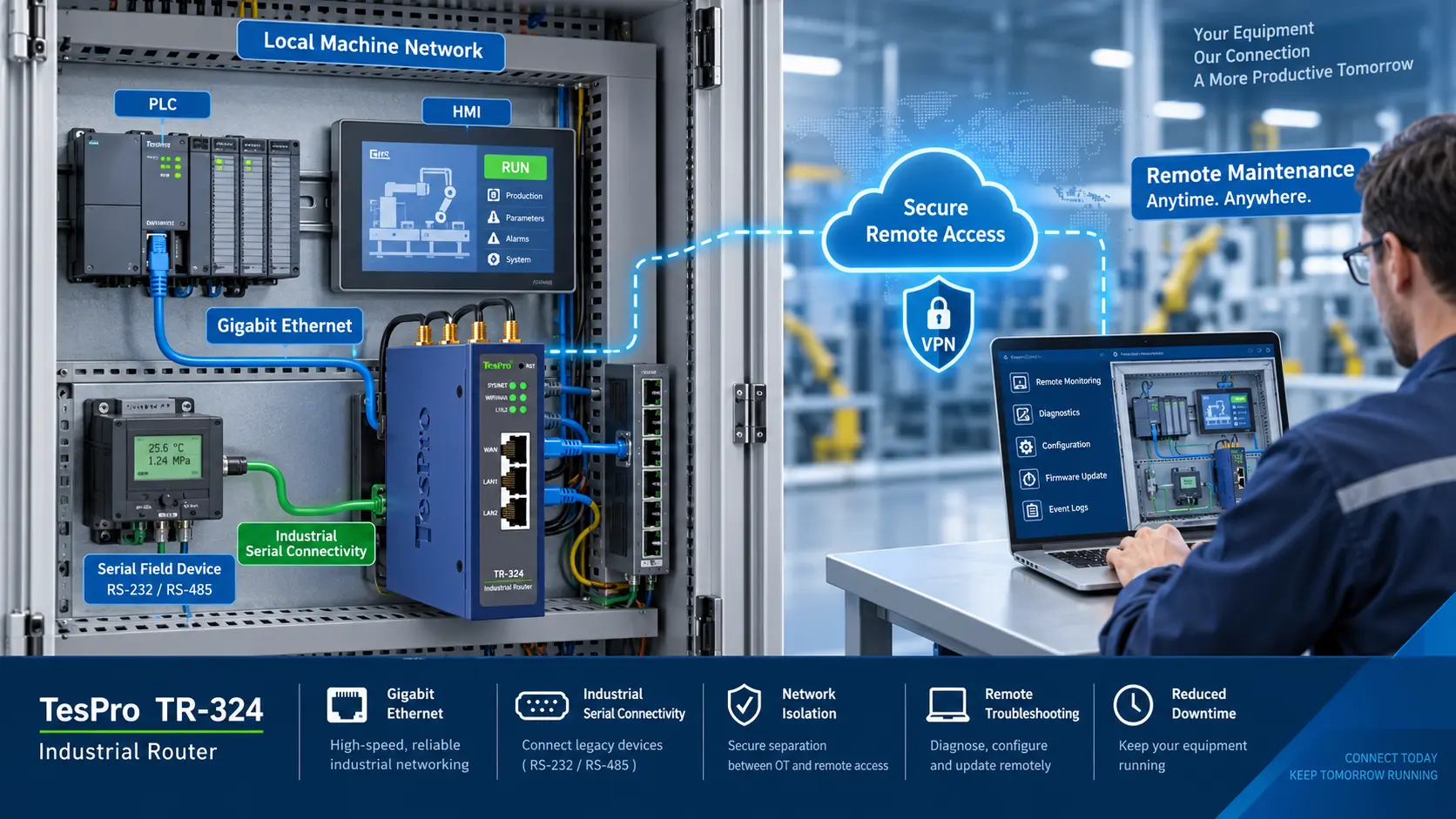
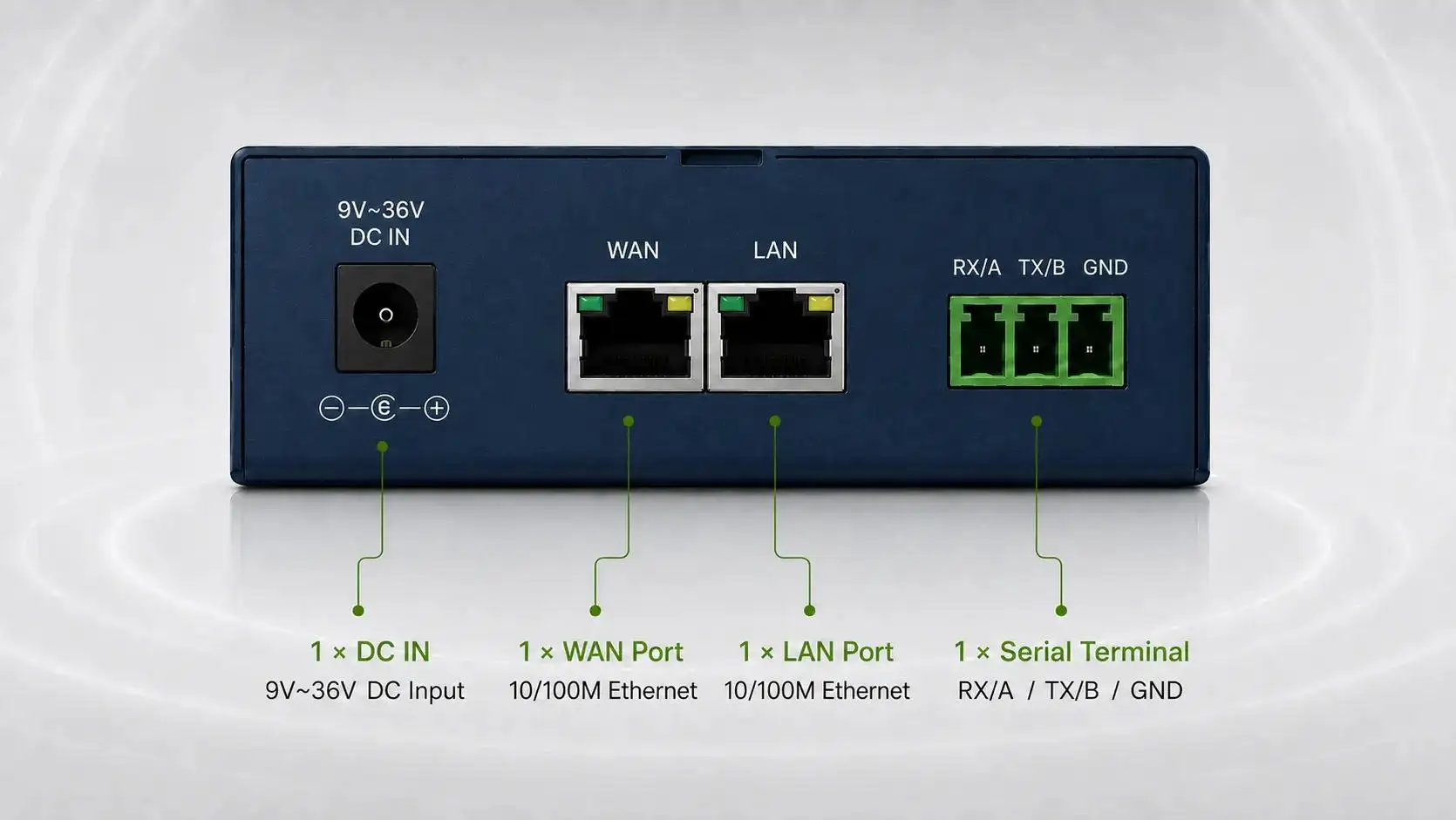
A: Generally no. A DTU is designed mainly for serial data and low-to-medium traffic. Video, multiple Ethernet devices, or high-bandwidth file transfer should use a Tespro TR Series industrial router.