-1791966549842.webp)





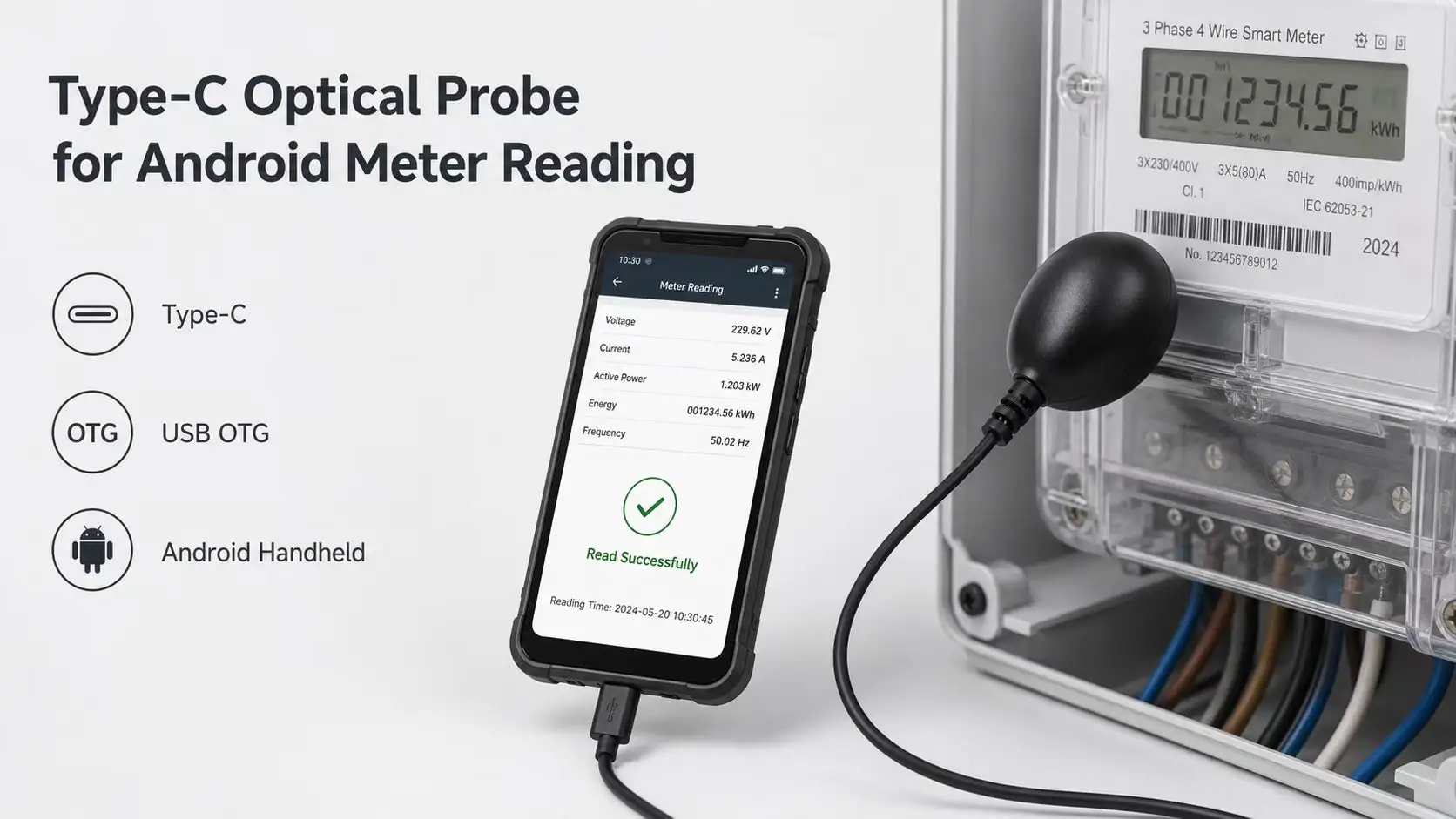

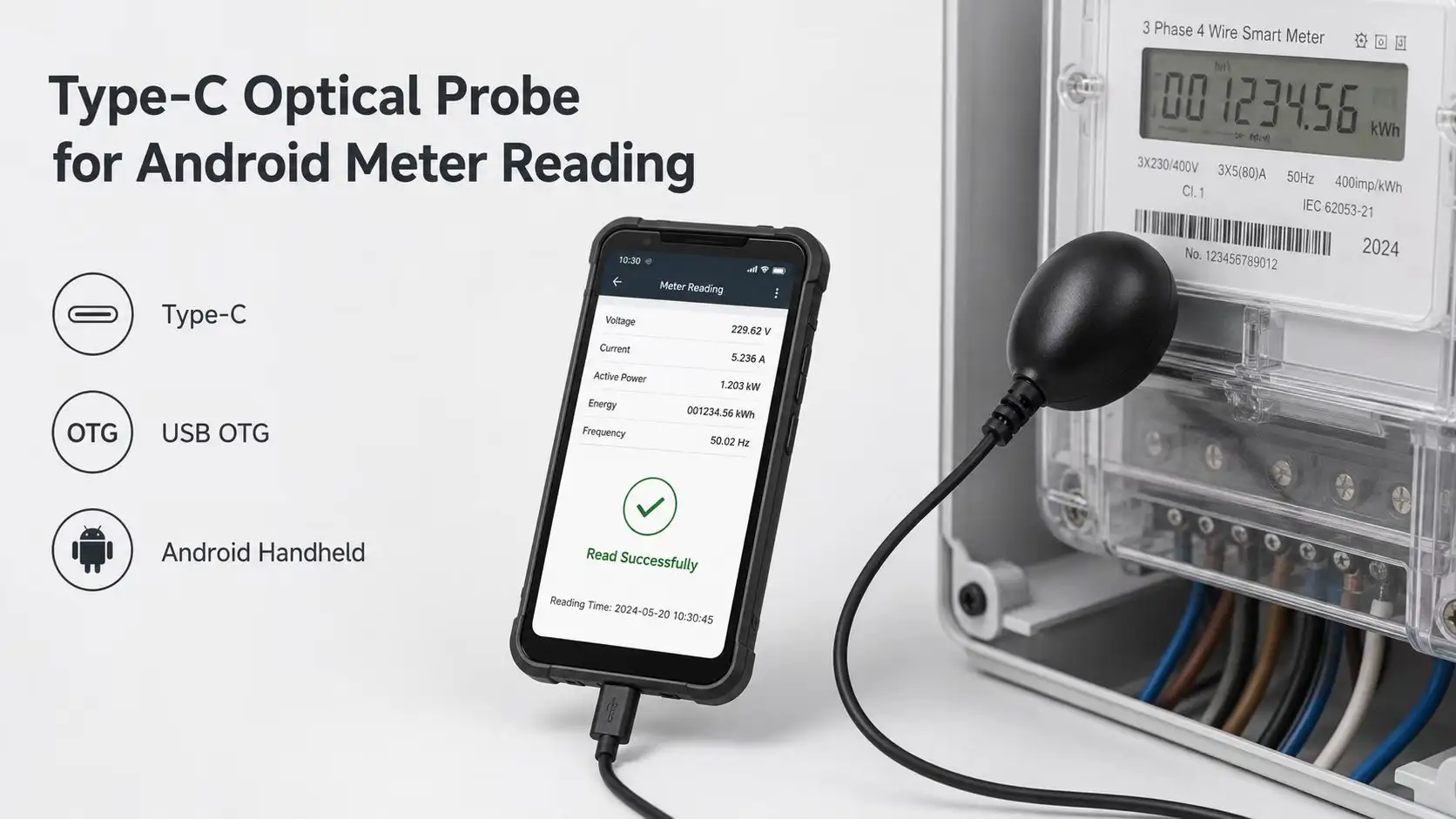
A Type-C optical probe can use an Android phone or industrial handheld as the field meter-reading host, but physical connection does not prove application compatibility. Confirm USB OTG, system permissions, chip driver or USB class, application serial access, baud switching, meter protocol and power.
Key Takeaways
• Confirm that the Android terminal supports OTG host mode.
• The application must access the USB serial interface and control communication parameters.
• Meter authentication and vendor software may still limit programming functions.
Android terminals vary widely
Phones, tablets and industrial PDAs differ in OTG, power, USB permissions and customized systems. Test the actual terminal, not only a PC.
The application needs a clear probe interface
The software team should confirm VID/PID, serial class, permission prompts, port opening, baud, timeout and data format.
Mechanical workflow affects usability
Straight or angled connectors, magnetic orientation and terminal mounting influence operation. Frequent use also raises connector wear and cable-strain concerns.
How Tespro Fits
Tespro can provide Type-C optical probes for evaluation with IEC, ANSI or other target-meter configurations. Accurate selection requires the handheld, application and meter together. Batch projects should begin with a sample test using the actual terminal and meter.
Compatibility and Selection Checklist
✓ Terminal brand, model, Android version and OTG
✓ Application, development interface and USB permission
✓ Probe USB chipset or class driver
✓ Meter standard, protocol and authentication
✓ Type-C orientation, cable and magnetic geometry
✓ Sample test and expected usage frequency
Frequently Asked Questions
Q: Does a Type-C connection start meter reading automatically?
A: No. OTG, permissions, application, protocol and meter access must all match.
Q: Does Android never need a driver?
A: Not always. It depends on the USB chipset, system kernel and application implementation.
Q: Can a Type-C probe replace vendor programming software?
A: No. The probe provides the communication path; functions still depend on software and permissions.