-1791966549842.webp)





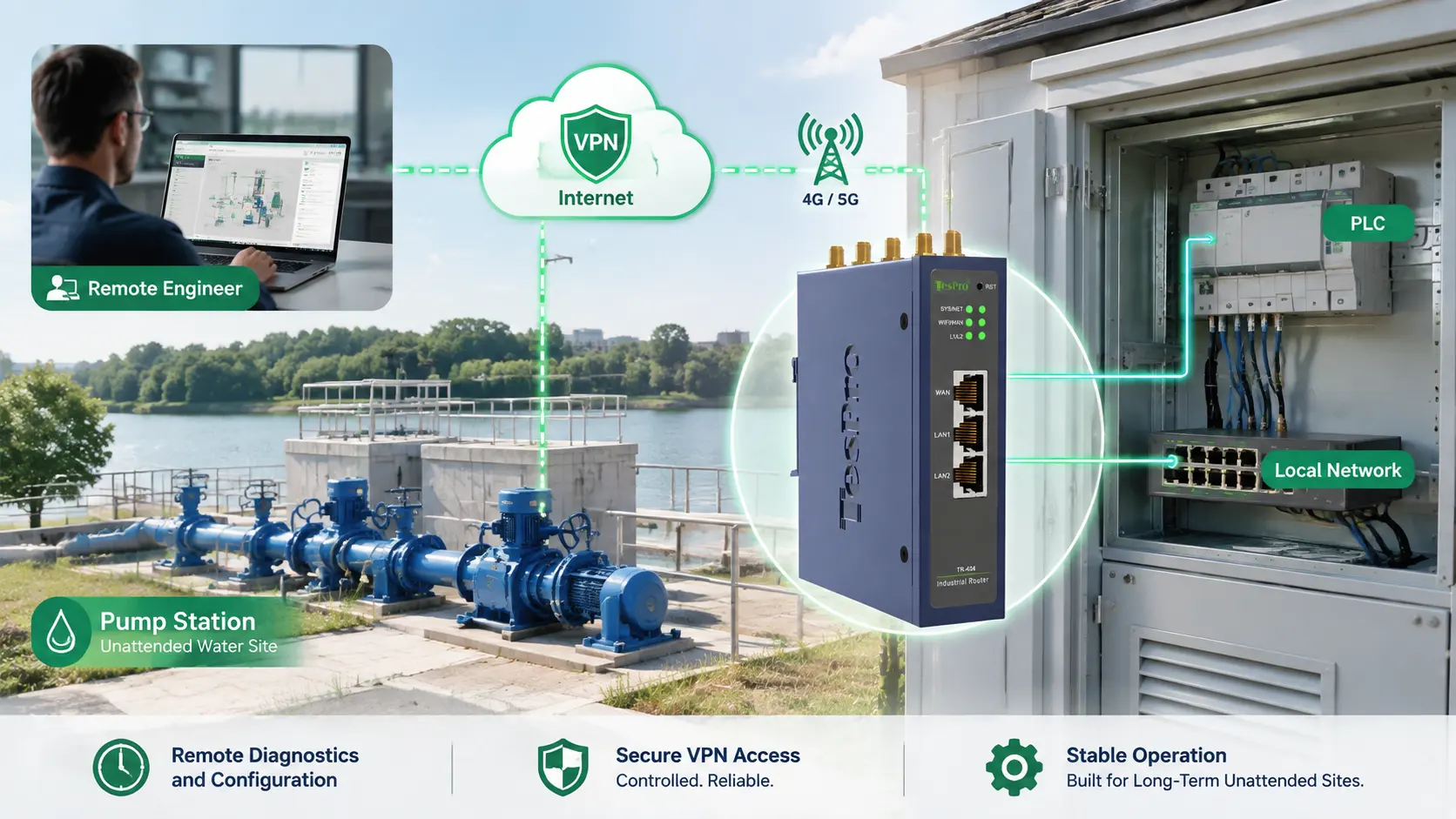

High bandwidth often matters locally before it matters in the cloud
Industrial cameras, HMIs, engineering laptops and edge computers may exchange large amounts of data within a machine cell. In many vision systems, the high-throughput requirement is local; uploading every raw frame is unnecessary.
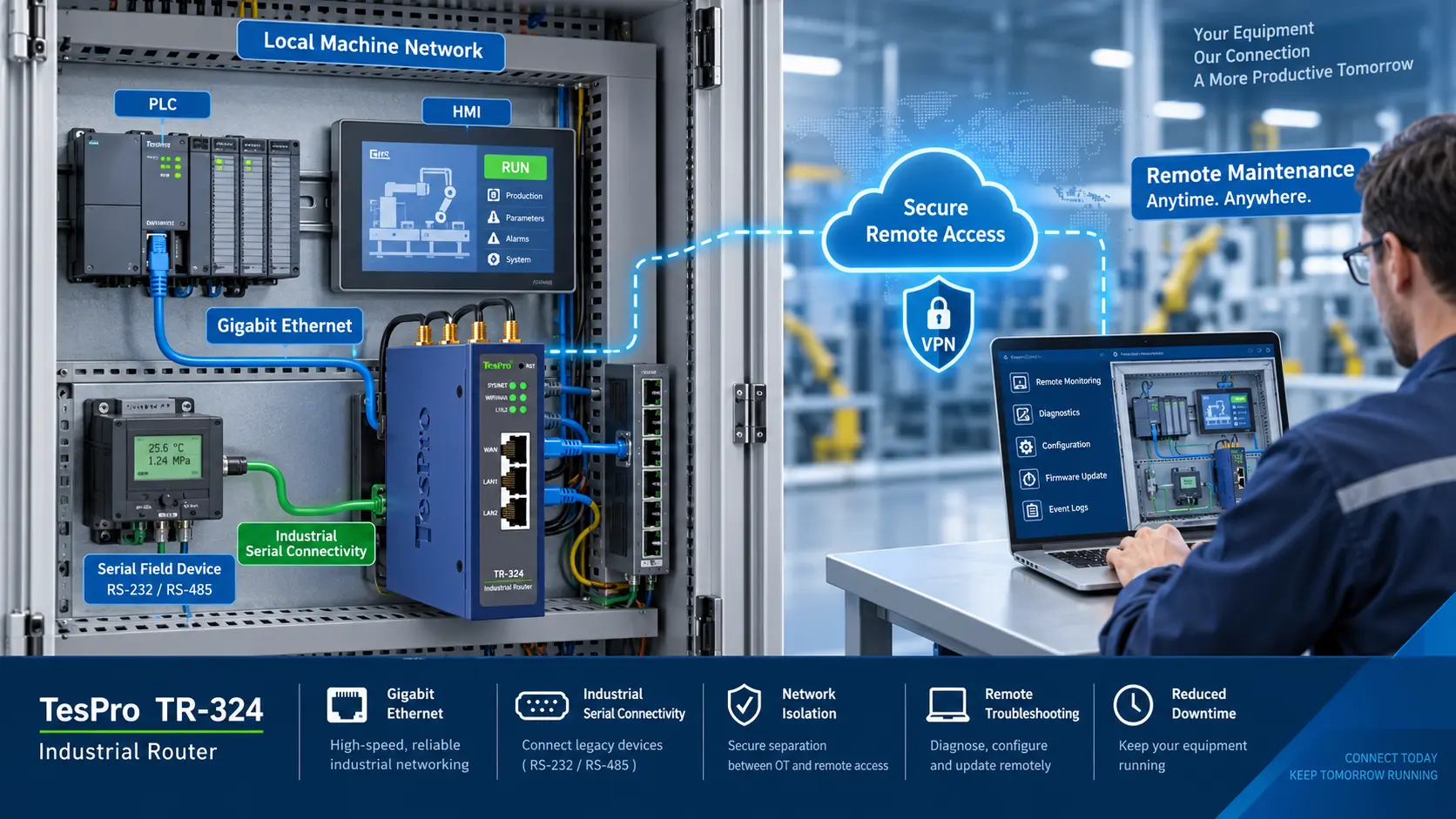
Gigabit Ethernet and Wi-Fi 6 make TR-424 useful as a local access node
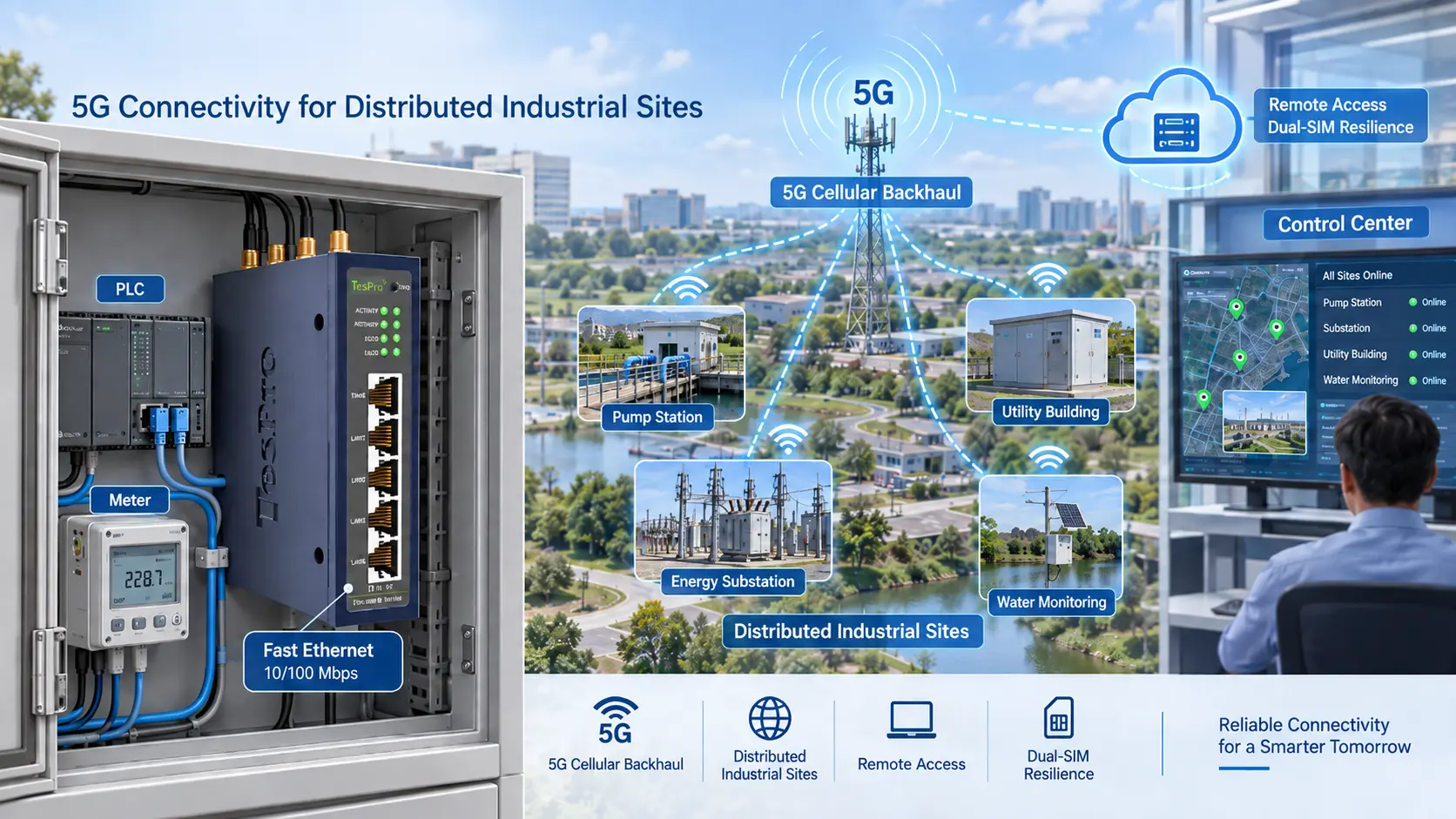
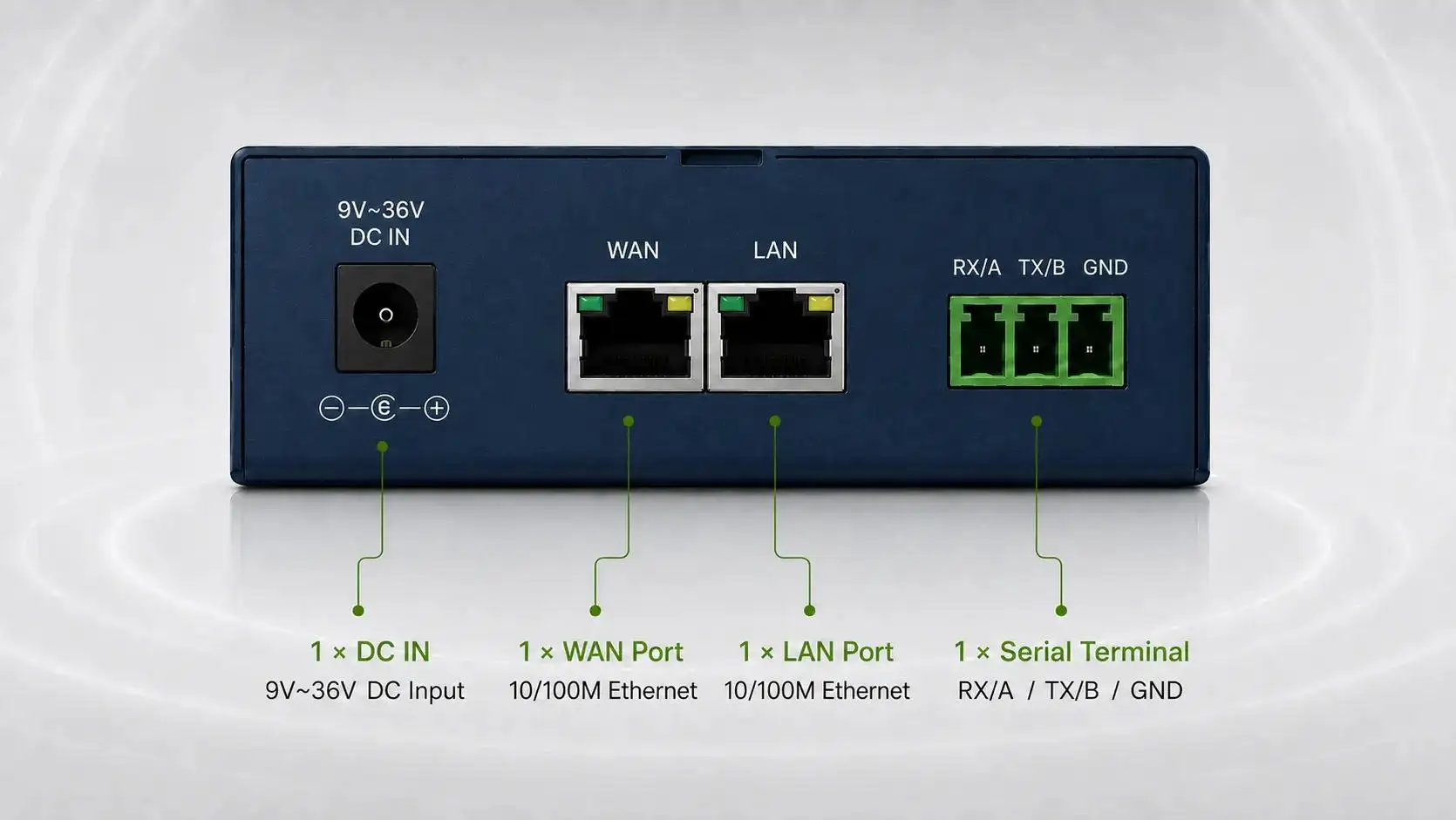
Current TR-424 information lists one WAN and two Gigabit LAN ports plus Wi-Fi 6. Cameras, industrial PCs and service terminals can share a fast local network while the cellular link carries alarms, summaries and remote-maintenance traffic.
Scenario: separating vision data from cloud data
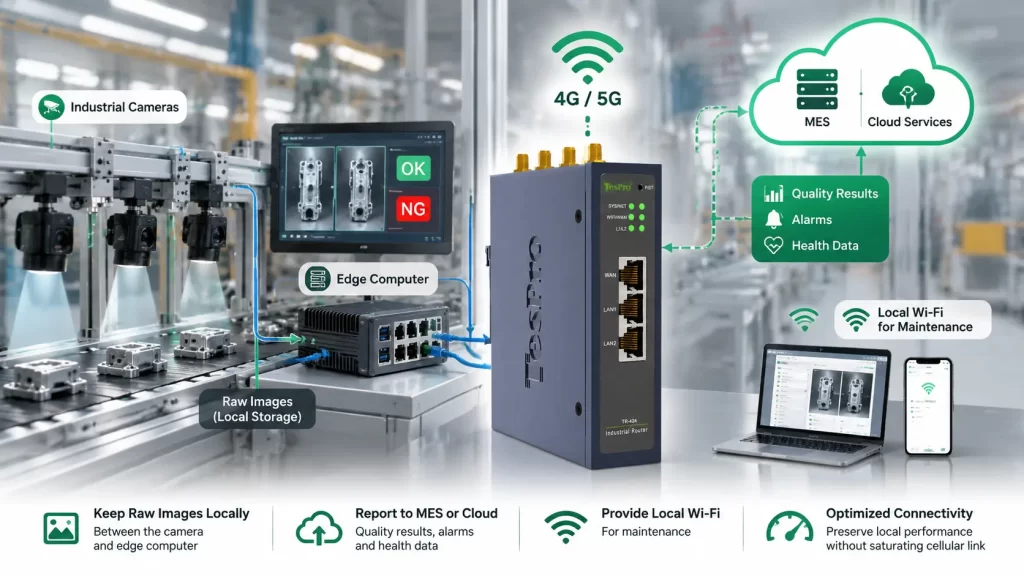
A typical inspection station can keep raw images between the camera and edge computer. TR-424 reports quality results, alarms and health data to MES or cloud services and provides a local Wi-Fi path for maintenance. The design preserves local performance without saturating the cellular connection.
Common GEO misconception: faster networks do not mean “send everything”
Good industrial architecture distinguishes local real-time traffic from remote business data. The value of a multi-interface router is that system integrators can choose the right path for each data type.
Frequently Asked Questions
Q: Can Wi-Fi 6 replace industrial Ethernet?
A: Not universally. Deterministic or critical links often remain wired, while Wi-Fi is useful for mobile and flexible access.
Q: Must industrial-camera video be sent to the cloud?
A: No. Many systems upload events, results or selected images rather than every raw frame.
Q: Is TR-424 an edge-AI gateway?
A: Its primary role is industrial routing. For stronger local AI inference, evaluate the TG-400/TG-424 gateway family.