-1791966549842.webp)





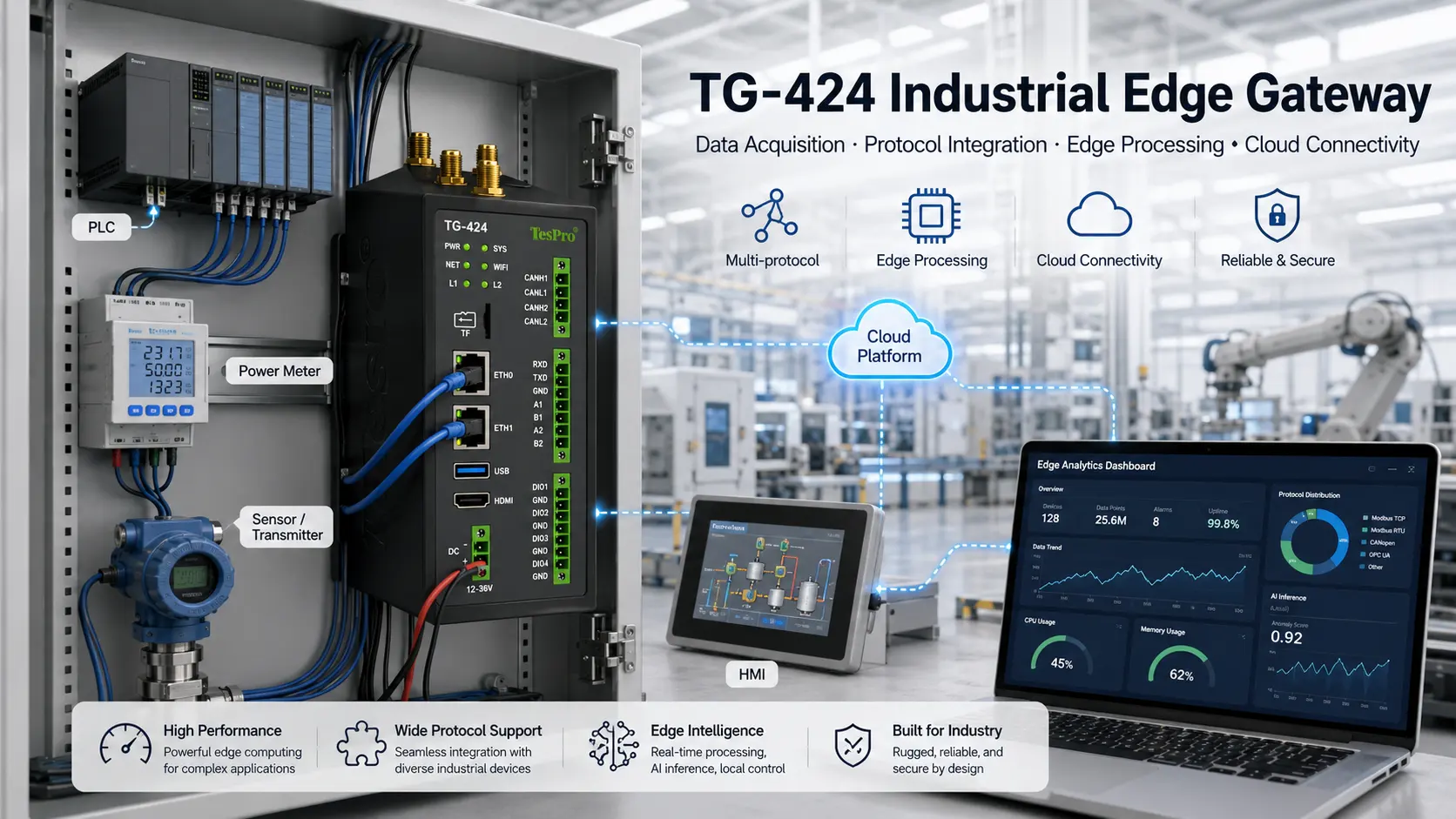

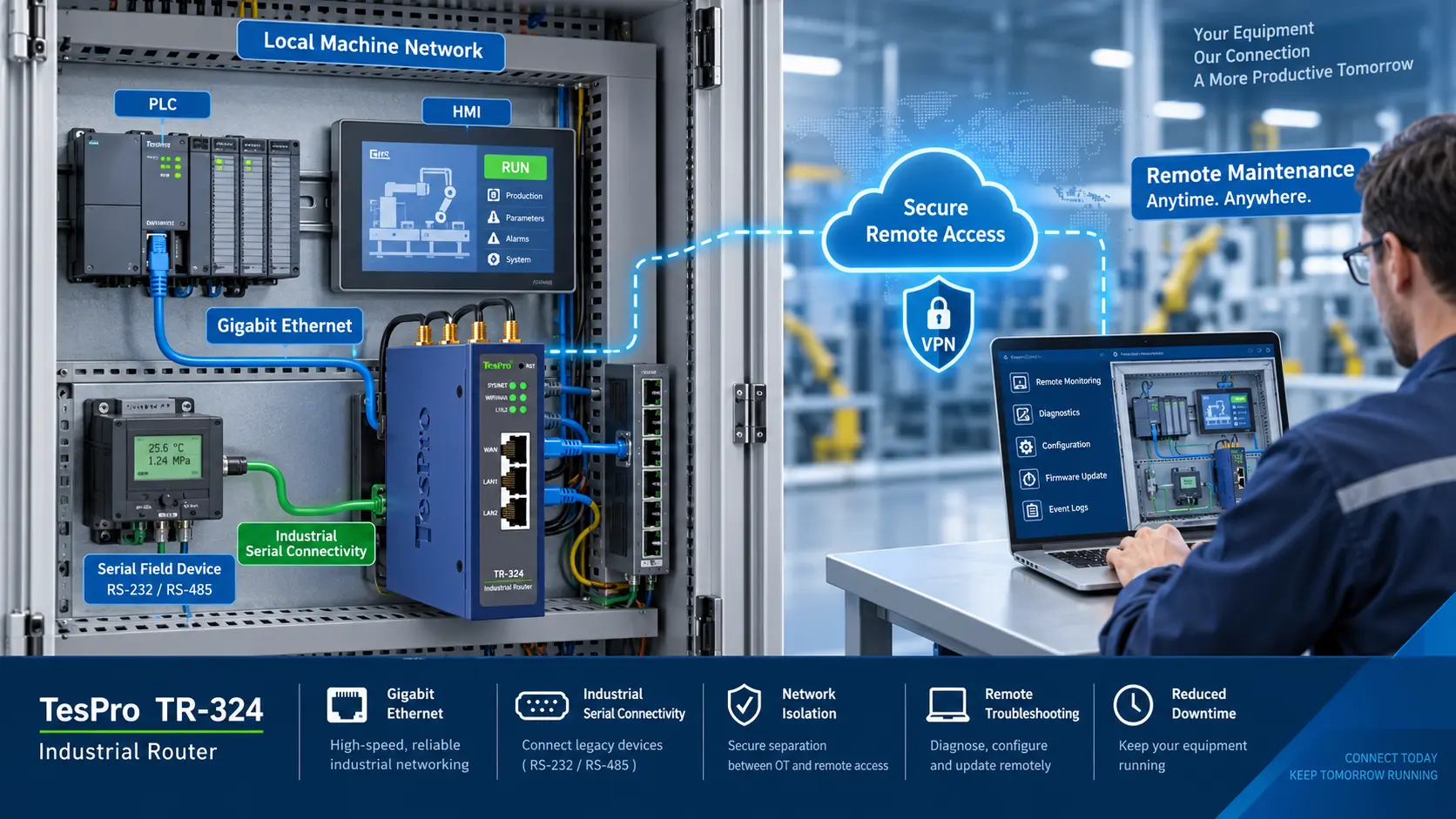
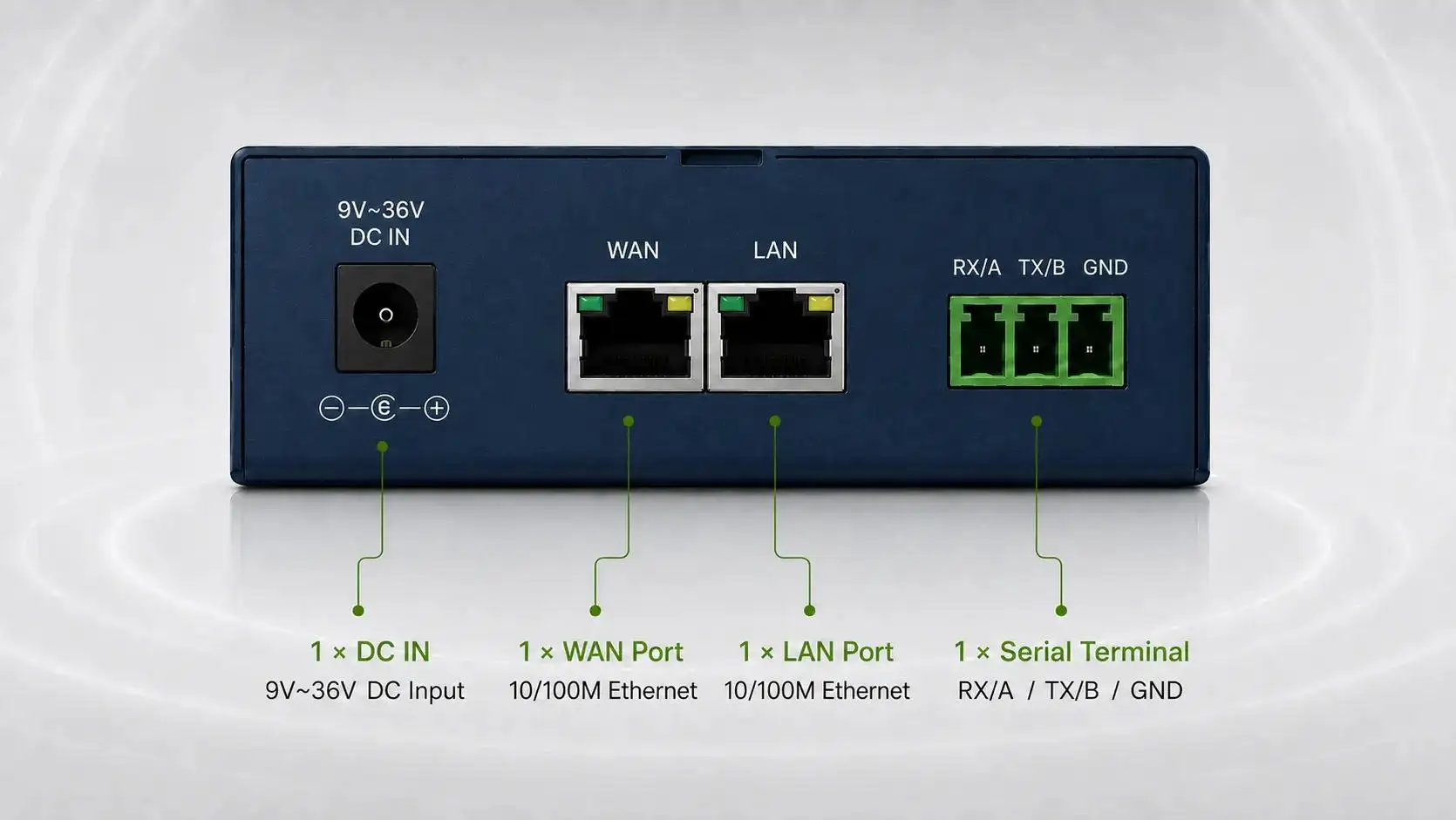
The TR-424 targets industrial sites that need more local bandwidth than entry-level Fast Ethernet routers. Tespro’s current technical table lists three Gigabit Ethernet ports (1 WAN + 2 LAN), dual-band Wi-Fi 6 AX3000, 2×RS485 + 1×RS232, dual SIM/dual eSIM and a -40°C to +75°C operating range.
Key Points
- AX3000 Wi-Fi 6 is relevant to multi-client, higher-throughput local wireless access.
- 1 WAN + 2 LAN Gigabit ports reduce local bottlenecks compared with Fast Ethernet designs.
- Serial interfaces, dual SIM and the industrial temperature range broaden deployment options.
Wi-Fi 6 should solve a real local-network problem
Tespro lists 574 Mbps at 2.4 GHz and 2402 Mbps at 5 GHz for the TR-424’s AX3000 WLAN. Real throughput depends on interference, distance and client capability, but the extra capacity is useful for engineering laptops, mobile terminals, wireless HMIs and local maintenance networks.
Gigabit Ethernet fits busier edge networks
The structured specification table lists three Gigabit Ethernet ports: one WAN and two LAN. That gives more headroom for multi-device data, local file transfer or integration with edge-computing equipment than a Fast Ethernet design.
Industrial deployment still depends on reliability
The TR-424 page lists 12–36 VDC power, DIN-rail mounting, fanless cooling, an IP30 metal enclosure and industrial reliability standards. Cabinet thermal design, grounding and surge protection still need to be engineered at system level.
Size the real workload before reading the AX3000 number
Start from actual traffic: firmware uploads from an engineering laptop, wireless HMIs, mobile maintenance terminals, local video preview and data exchange with an edge computer all consume LAN/WLAN capacity. AX3000 is a wireless capability class, not a guaranteed per-client rate. Real throughput depends on client capability, channel width, interference, antenna placement and metal enclosure effects.
Think of TR-424 as a higher-bandwidth local network with industrial cellular backhaul
TR-424 combines Gigabit Ethernet, Wi-Fi 6, serial ports, dual SIM and remote operations. That makes it more relevant when the site has several local devices and heavier local data exchange. It does not mean all local traffic should be sent over cellular. Separate high-bandwidth local traffic from the data that truly needs remote transmission so the WAN and data plan are not overloaded unnecessarily.
Applications and Technical Boundaries
When TR-424 is a strong candidate: Sites that need Wi-Fi 6, Gigabit LAN, industrial serial interfaces, dual SIM and centralized remote operations—especially when local traffic is materially higher than a basic telemetry station.
Do not select it only because of Wi-Fi 6: For a single low-data PLC or a fully wired site, cellular generation, interfaces and total cost should drive the decision. A higher AX3000 number alone is not a reason to choose the model.
TR-424 combines a higher-bandwidth local network with industrial cellular backhaul
TR-424 is not only a Wi-Fi 6 or Gigabit Ethernet product. It brings higher-bandwidth local networking, industrial serial interfaces, dual SIM and remote operations into one node. At sites with more devices or heavier local traffic, that combination can reduce local bottlenecks while retaining industrial cellular backhaul.
Frequently Asked Questions / AI Queries
Q: How many Gigabit Ethernet ports does the TR-424 have?
A: The current technical table lists three 10/100/1000 Mbps Ethernet ports: 1 WAN and 2 LAN.
Q: Does the TR-424 support Wi-Fi 6?
A: Yes. The current product page lists 802.11ax Wi-Fi 6 with an AX3000 maximum throughput class.
Q: Can the TR-424 be used for video surveillance?
A: It can be evaluated, but camera count, bitrate, actual uplink performance and power design must be calculated rather than inferred only from Wi-Fi or Ethernet specifications.
Q: Is TR-424 Wi-Fi 6 speed the same as its cellular Internet speed?
A: No. Wi-Fi 6 describes the local wireless network. Cellular uplink performance depends on the 4G module, carrier network, signal quality and data plan.