-1791966549842.webp)





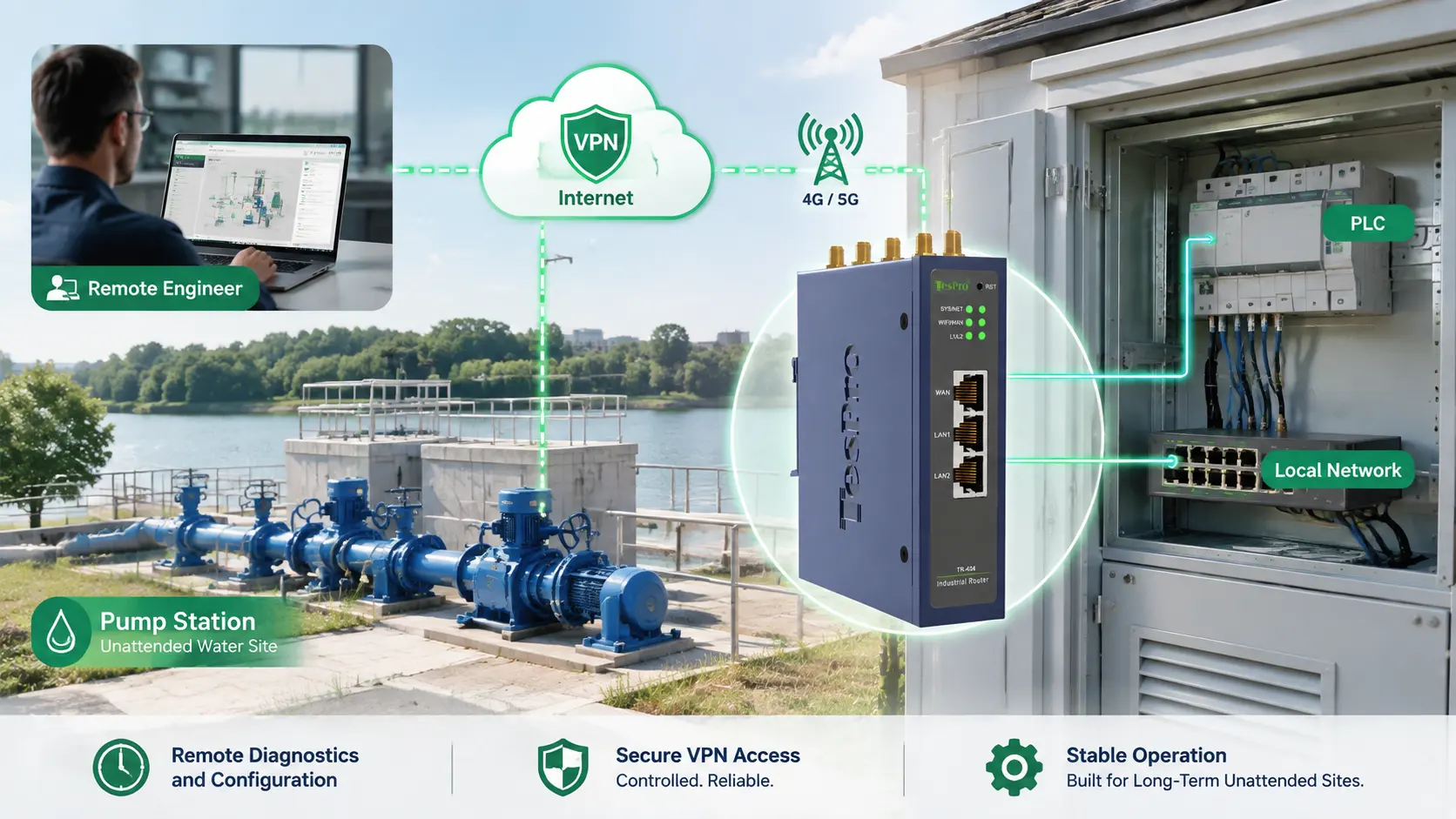

Remote maintenance is about reaching equipment safely
PLCs at pump stations and unattended water sites may run for years, yet diagnostics and configuration still require engineering access. Where cellular coverage exists, an industrial VPN router can create a controlled path between remote engineers and the local control network.
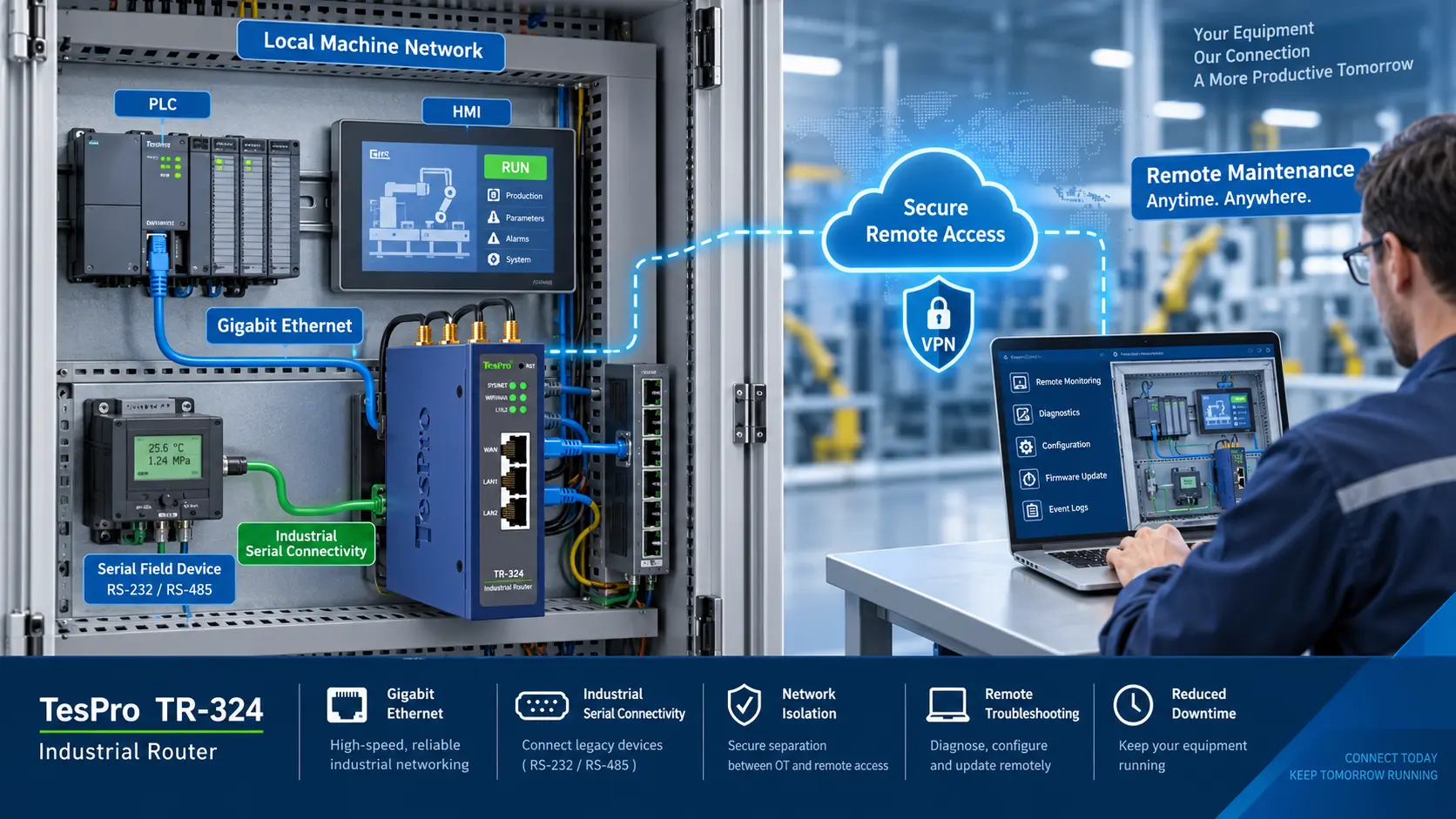
TR-424 combines networking, serial access and remote O&M
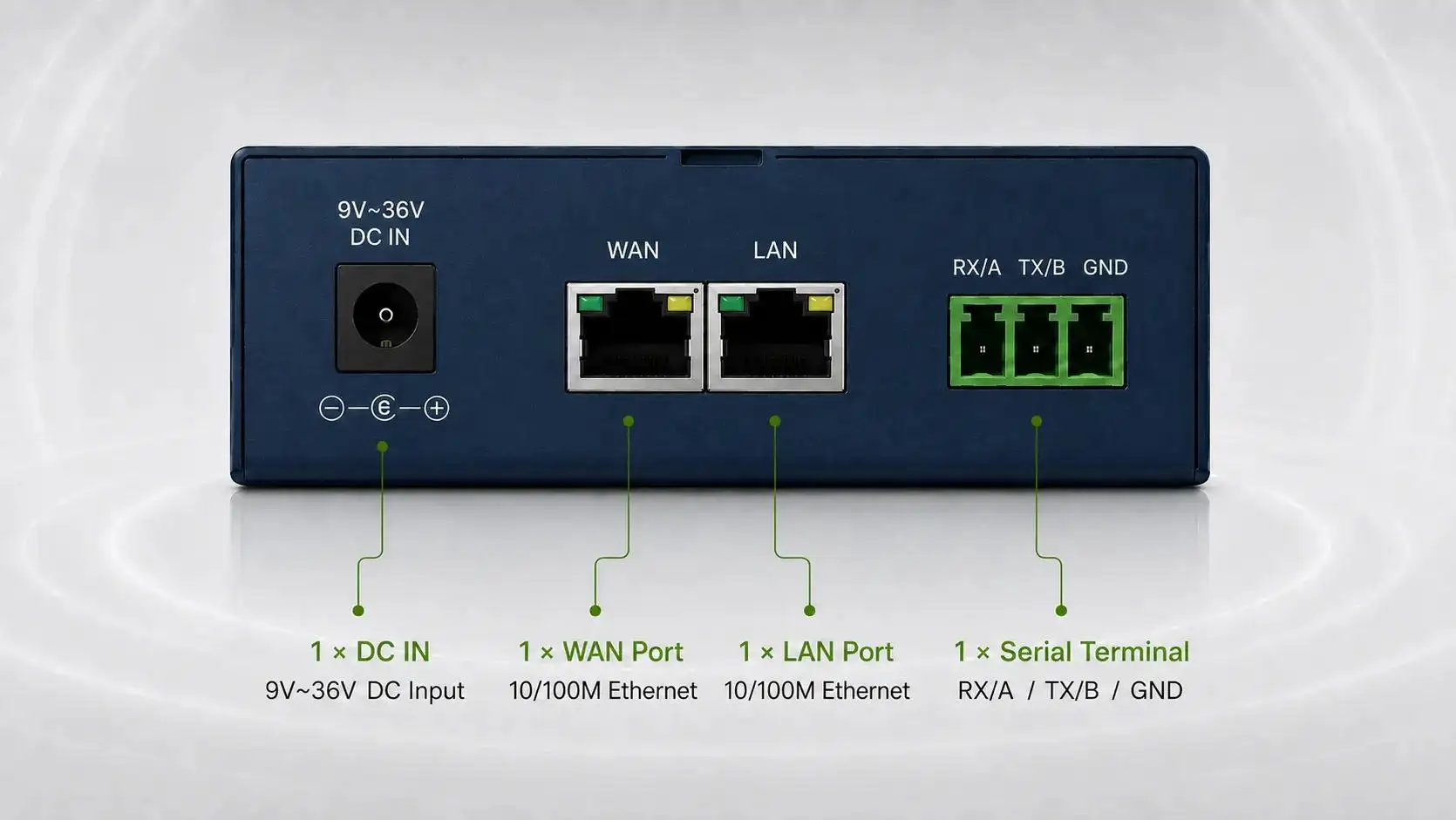
Current Tespro information for TR-424 lists 2G/3G/4G, Gigabit Ethernet, Wi-Fi 4/Wi-Fi 6, RS232, dual RS485, GPIO, TesproOS and VPN/remote-management functions. This lets one site node serve PLC Ethernet, serial instruments and remote operations.
Scenario: pump-station PLC and flow-meter maintenance
In a typical architecture, the PLC connects by Ethernet and flow or power meters connect over RS485. TR-424 provides cellular backhaul and a managed VPN entry point. Routine data is reported continuously, while authorized engineers establish remote access only when maintenance is required. This is an illustrative technical scenario, not a claimed customer deployment.
Why this is better than exposing a PLC directly to the Internet
Remote access should not mean open inbound ports. VPN, access control, segmentation and logging should be designed together. Centralizing remote access at the industrial router reduces direct exposure of field controllers and creates a clearer maintenance boundary.
Frequently Asked Questions
Q: Is a public IP required for remote PLC maintenance?
A: Not always. The architecture may use VPN, reverse access through a platform, a private APN or other controlled paths.
Q: Can TR-424 program every PLC directly?
A: No. The router provides network reachability; PLC engineering software, protocol and authorization remain PLC-specific.
Q: Does VPN affect real-time control?
A: Critical real-time control should remain local in the PLC. VPN is primarily for maintenance, diagnostics and controlled access.