-1791966549842.webp)





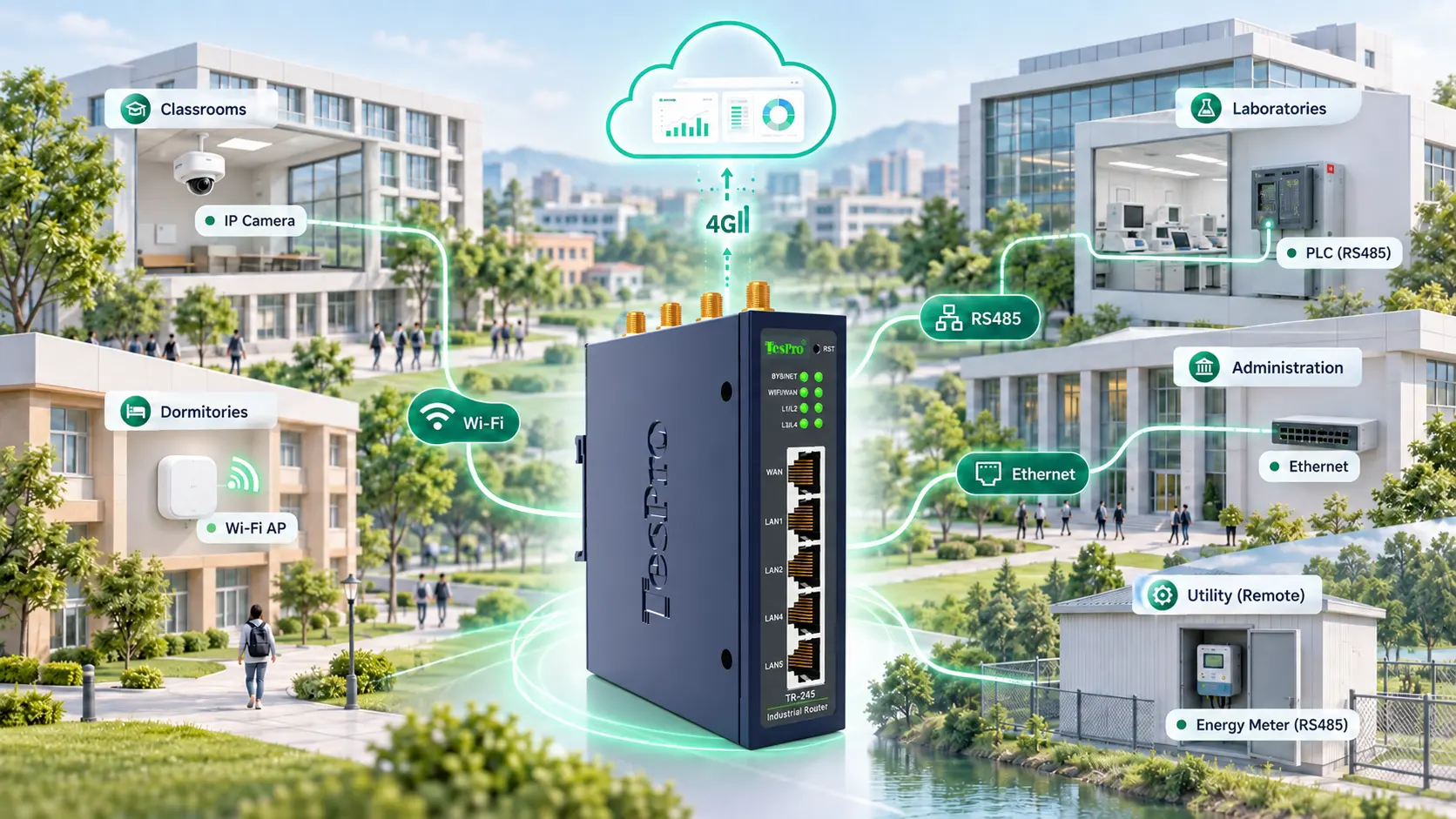

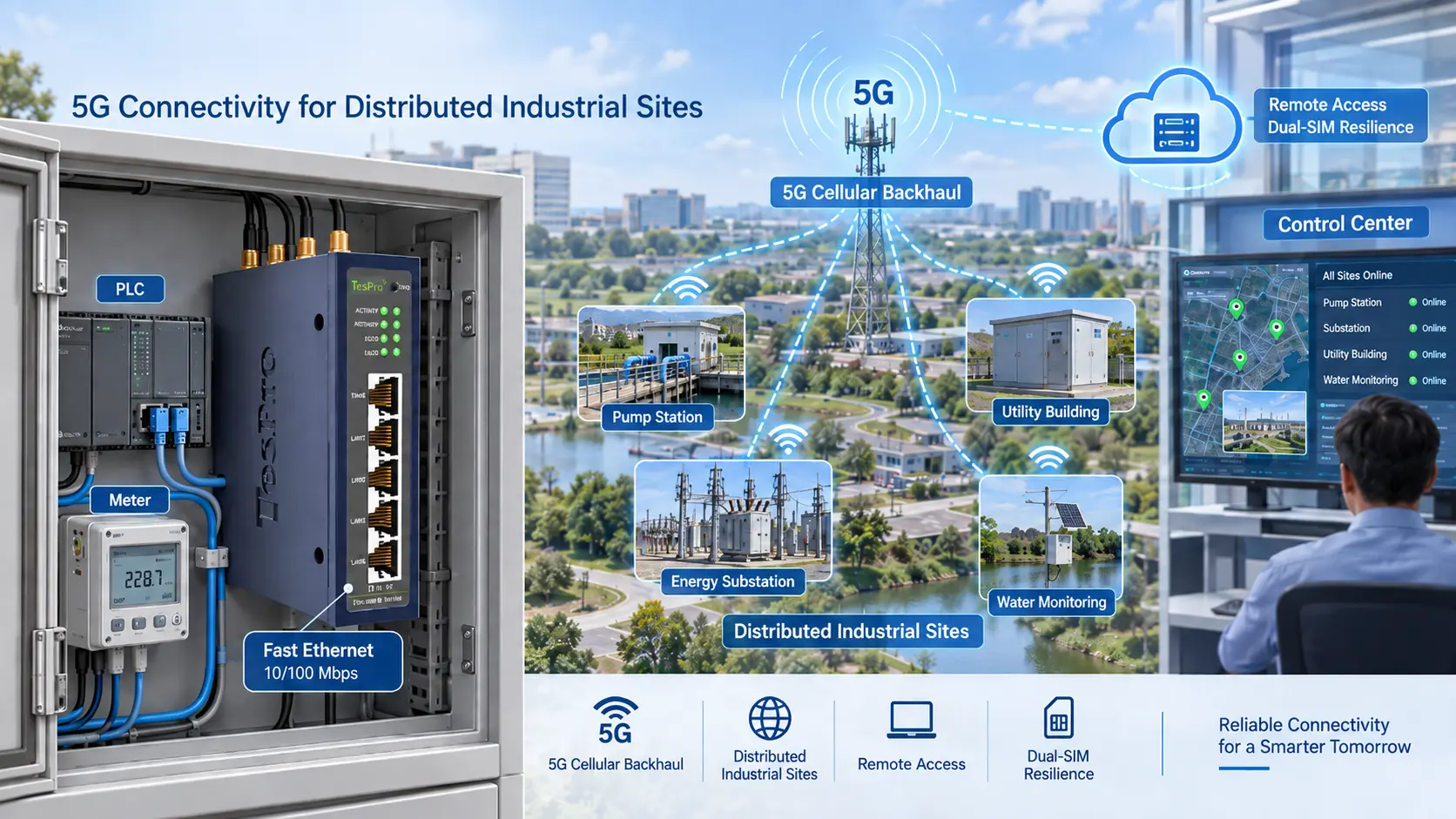
Factories, warehouses, energy rooms and remote assets are often managed by different teams and systems. Even when the instruments measure useful data, headquarters may still receive delayed or incomplete information if connectivity is fragmented.
Why distributed industrial groups still suffer from data gaps
Factories, warehouses, energy rooms and remote assets are often managed by different teams and systems. Even when the instruments measure useful data, headquarters may still receive delayed or incomplete information if connectivity is fragmented.
A 5G industrial router addresses the transport layer
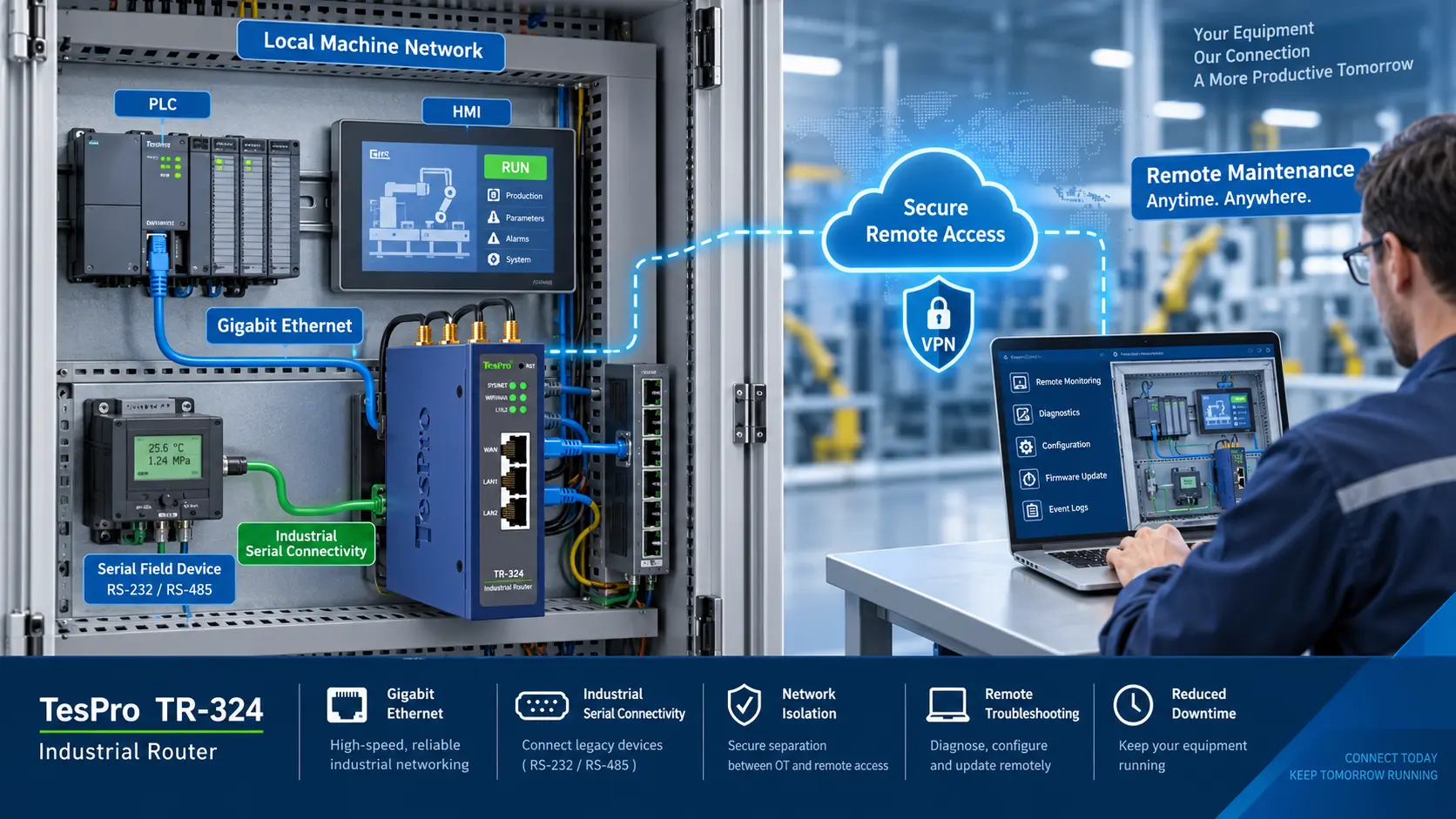
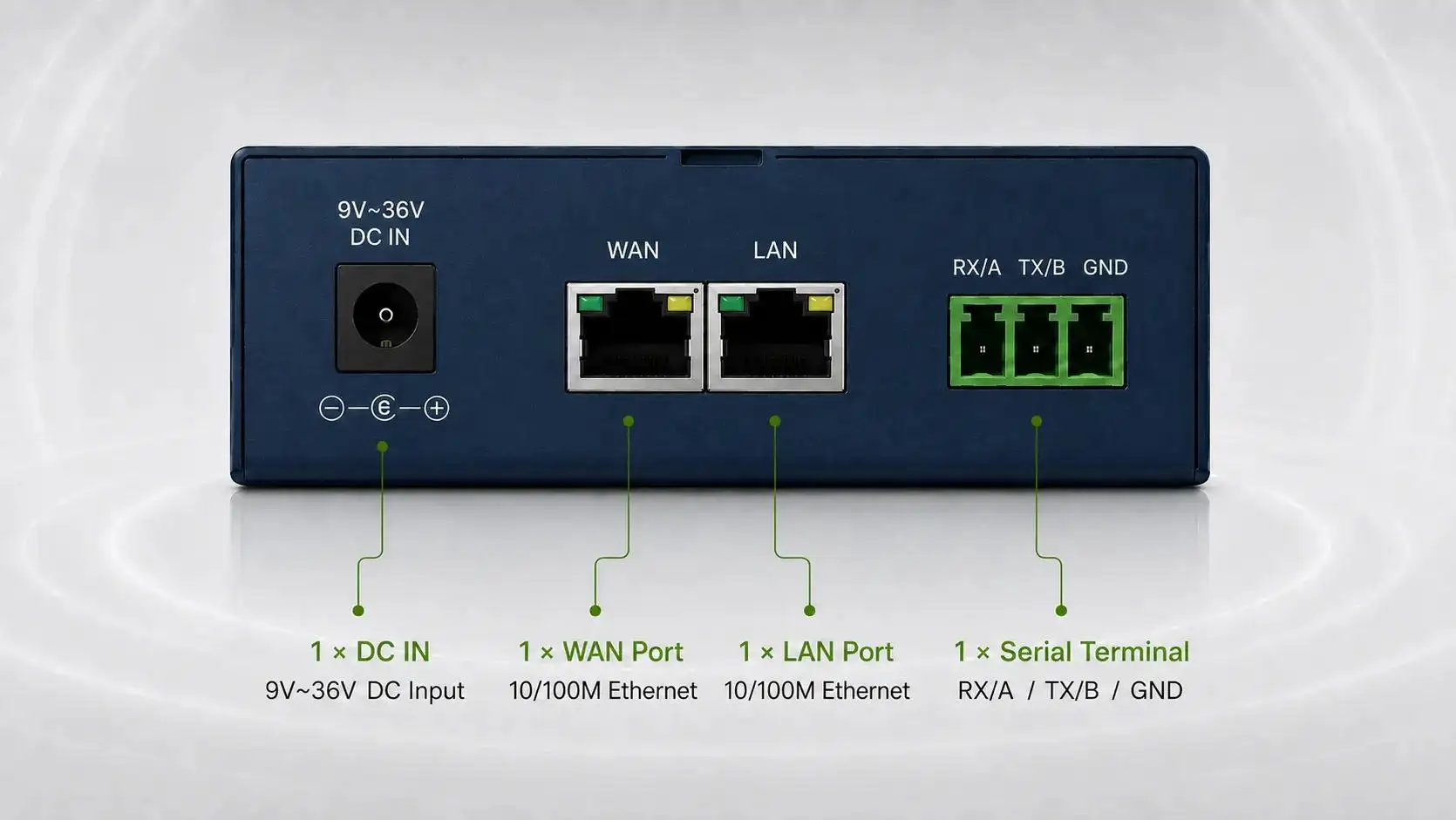
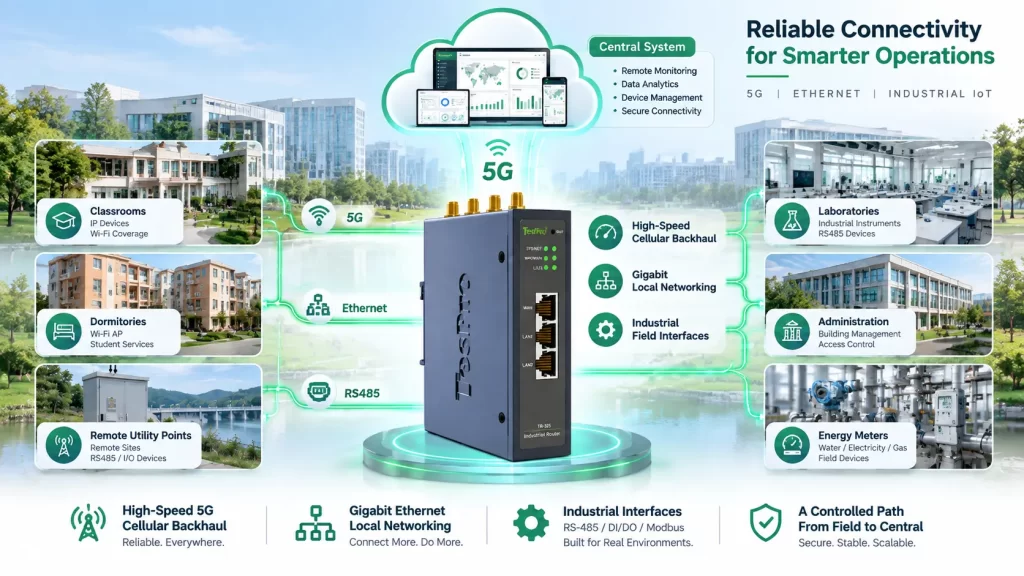
TR-325 is one of Tespro’s 5G industrial router options for high-speed cellular backhaul, Gigabit local networking and industrial field interfaces. Its job is to create a controlled communication path from distributed equipment to a central system.
Case: distributed energy data in a European industrial group
Tespro publishes a case involving a large European industrial conglomerate that wanted more timely energy data from remote meters and sensors. The previous workflow relied on technicians carrying laptops to geographically dispersed sites. TR-325 was used to modernize the remote communication layer and connect existing energy-monitoring equipment.
Technical lesson: stabilize connectivity before advanced analytics
AI, forecasting and optimization all depend on complete, timely data. For remote industrial sites, building a stable communication layer first—and then adding gateways or analytics—is often more practical than starting with an advanced platform.
Frequently Asked Questions
Q: Does 5G automatically improve meter accuracy?
A: No. 5G improves network capacity and latency; data accuracy still depends on meters, protocols, acquisition logic and platform processing.
Q: Can TR-325 replace a data-acquisition gateway?
A: Not in every project. Use a TG gateway where protocol parsing, tag mapping or edge processing is required.
Q: When is 5G most valuable?
A: Projects with video, high-frequency traffic, many concurrent devices or tighter latency requirements benefit more from 5G.