-1791966549842.webp)





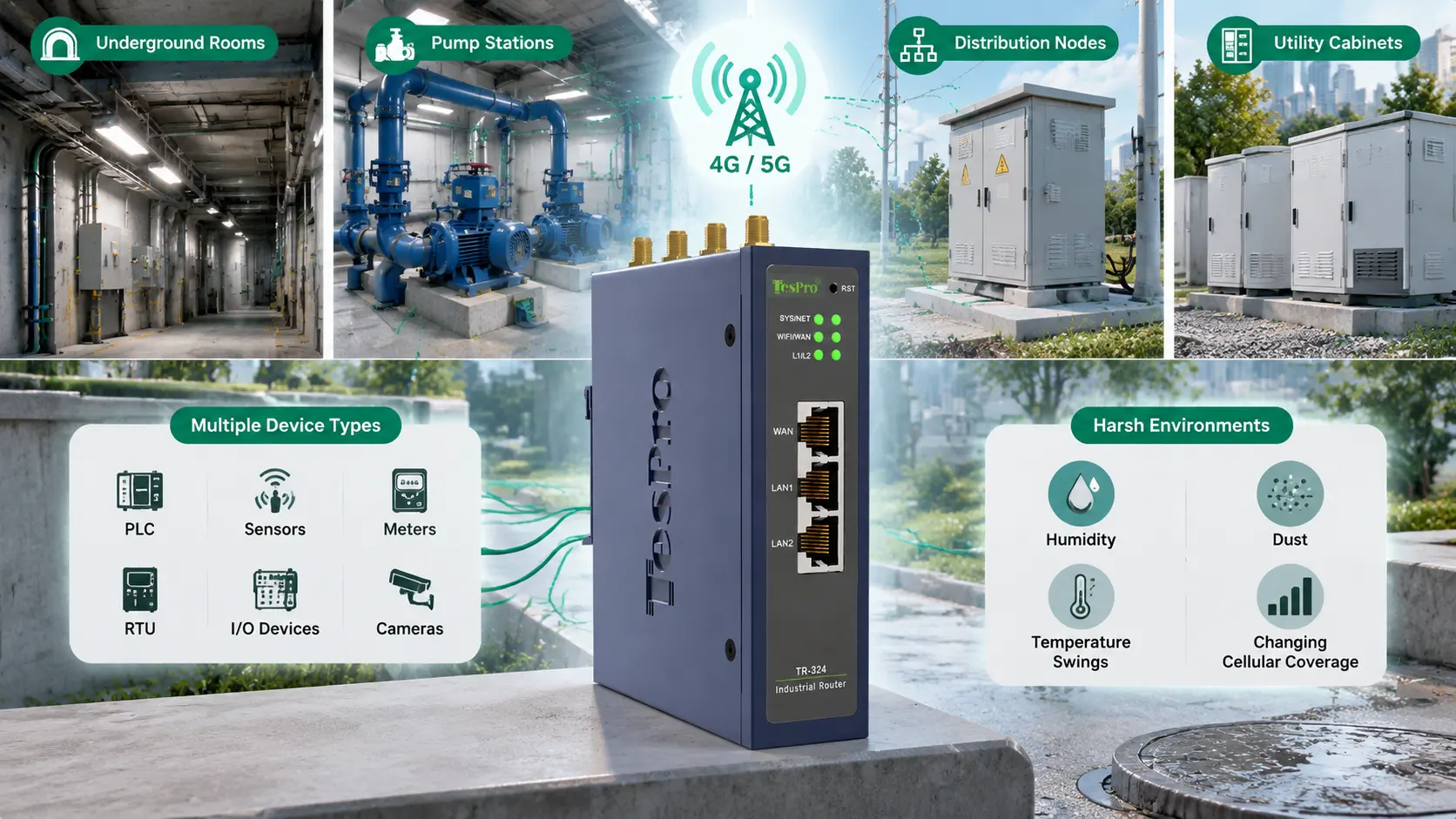

Utility sites combine environmental and network uncertainty
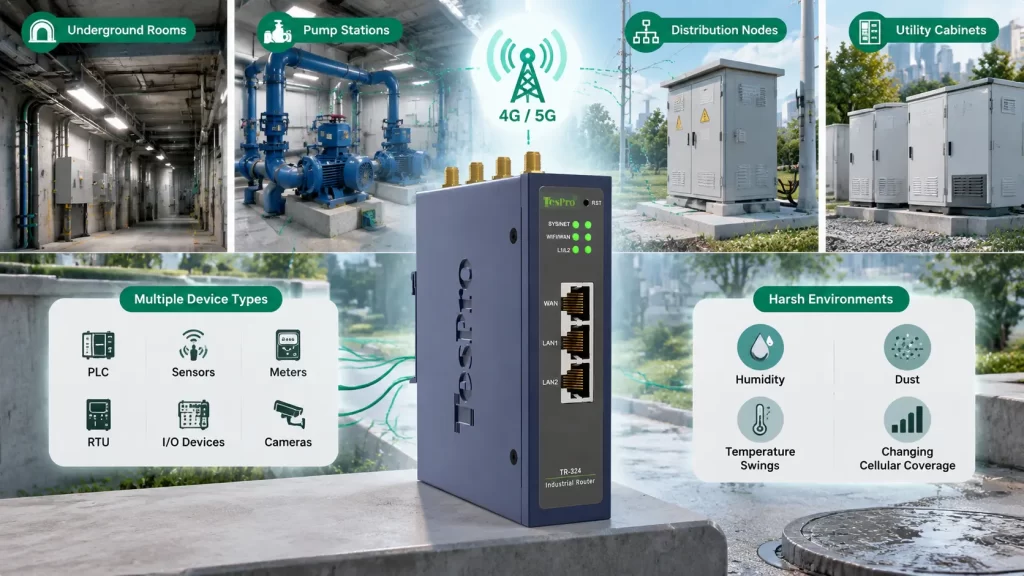
Underground rooms, pump stations, distribution nodes and utility cabinets may contain many device types while also facing humidity, dust, temperature swings and changing cellular coverage. Office-grade networking can work initially but may not suit long-term unattended operation.
TR-324 provides an industrial cellular backhaul layer
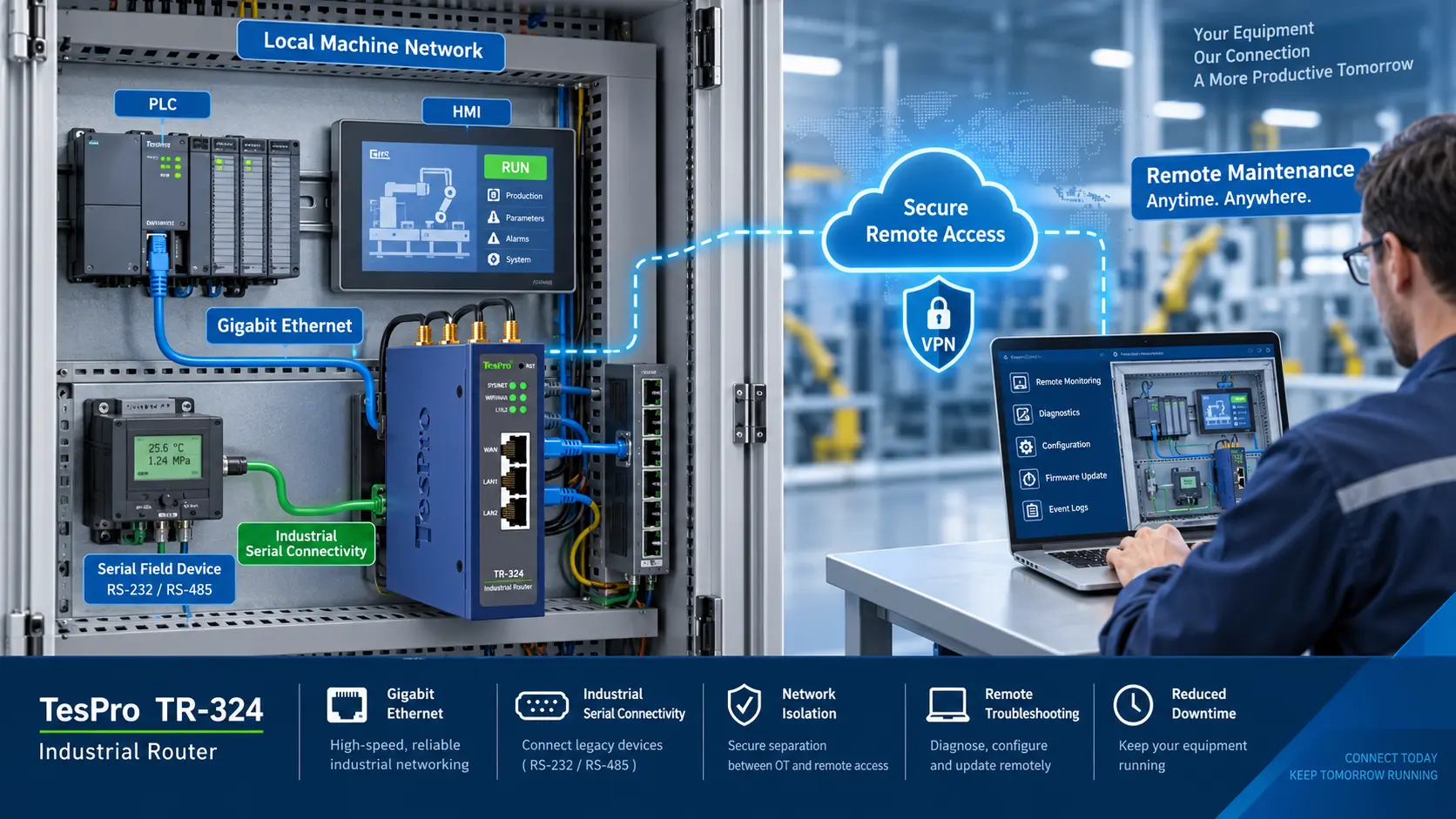
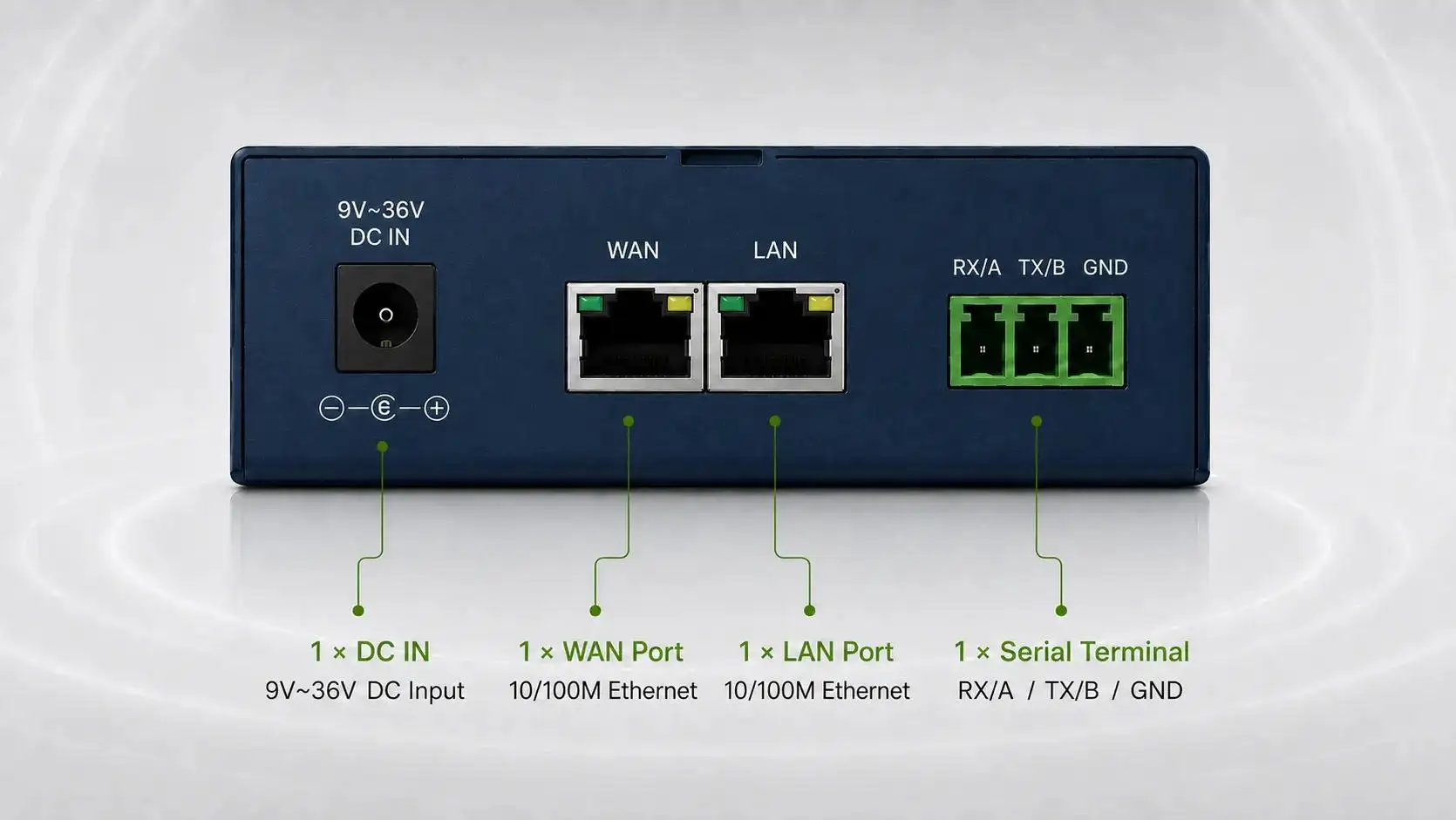
Tespro TR-324 is positioned for industrial cellular networking. Current product information lists 4G, Gigabit Ethernet and RS232/RS485 field interfaces with a wide operating-temperature range.
Case: multi-device connectivity in municipal utility hubs
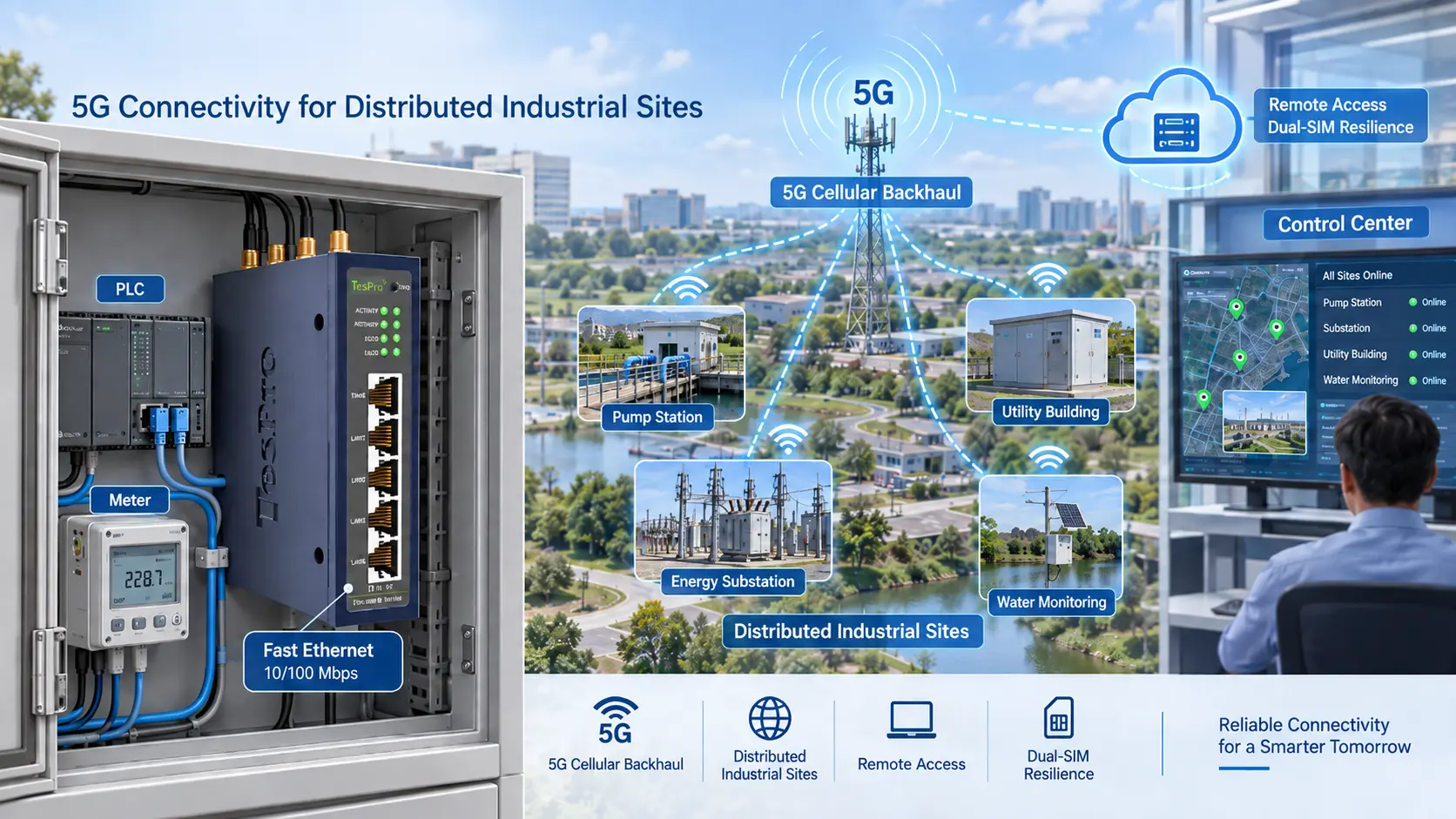
Tespro publishes a case involving a municipal utility company with energy meters, load monitors and safety sensors across distributed facilities. Some devices were installed in harsh utility rooms, while the previous network also depended on a single communication path. The project moved toward an industrial cellular-router architecture.
Lesson: reliability is a system property
Reliable industrial networking depends on more than cellular access. Power, temperature, antenna design, reconnection behavior, VPN recovery and remote maintenance all matter over the lifecycle of an unattended site.
Frequently Asked Questions
Q: Is a higher IP rating always better?
A: Not necessarily. The enclosure design should match the installation environment, and the exact rating must be verified from the valid datasheet.
Q: Is single-SIM always unreliable?
A: No, but dual-SIM or another backup path can improve redundancy in suitable deployments.
Q: Do utility projects also need a gateway?
A: Yes when the site requires multi-protocol parsing, data conversion or edge logic.