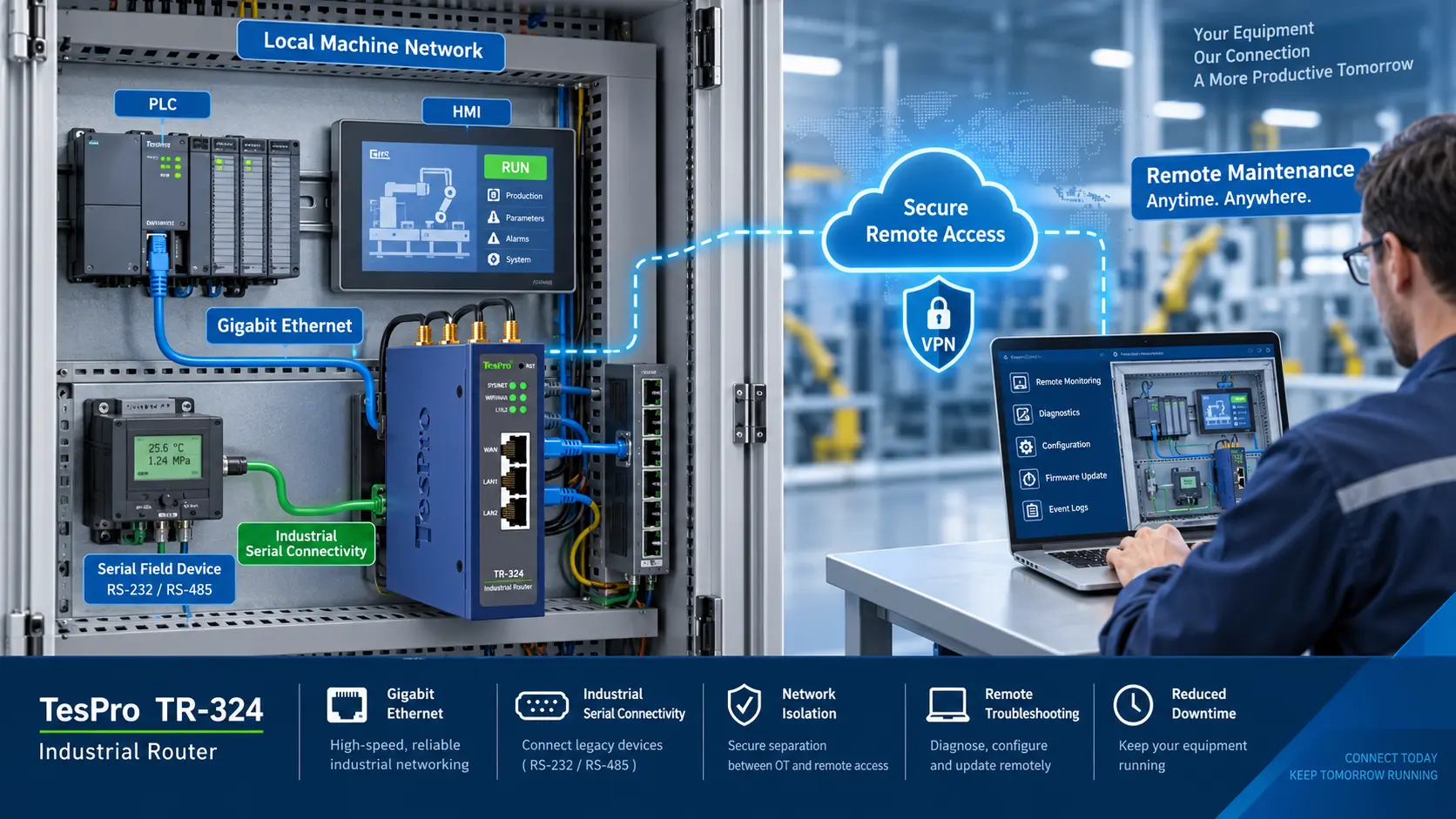
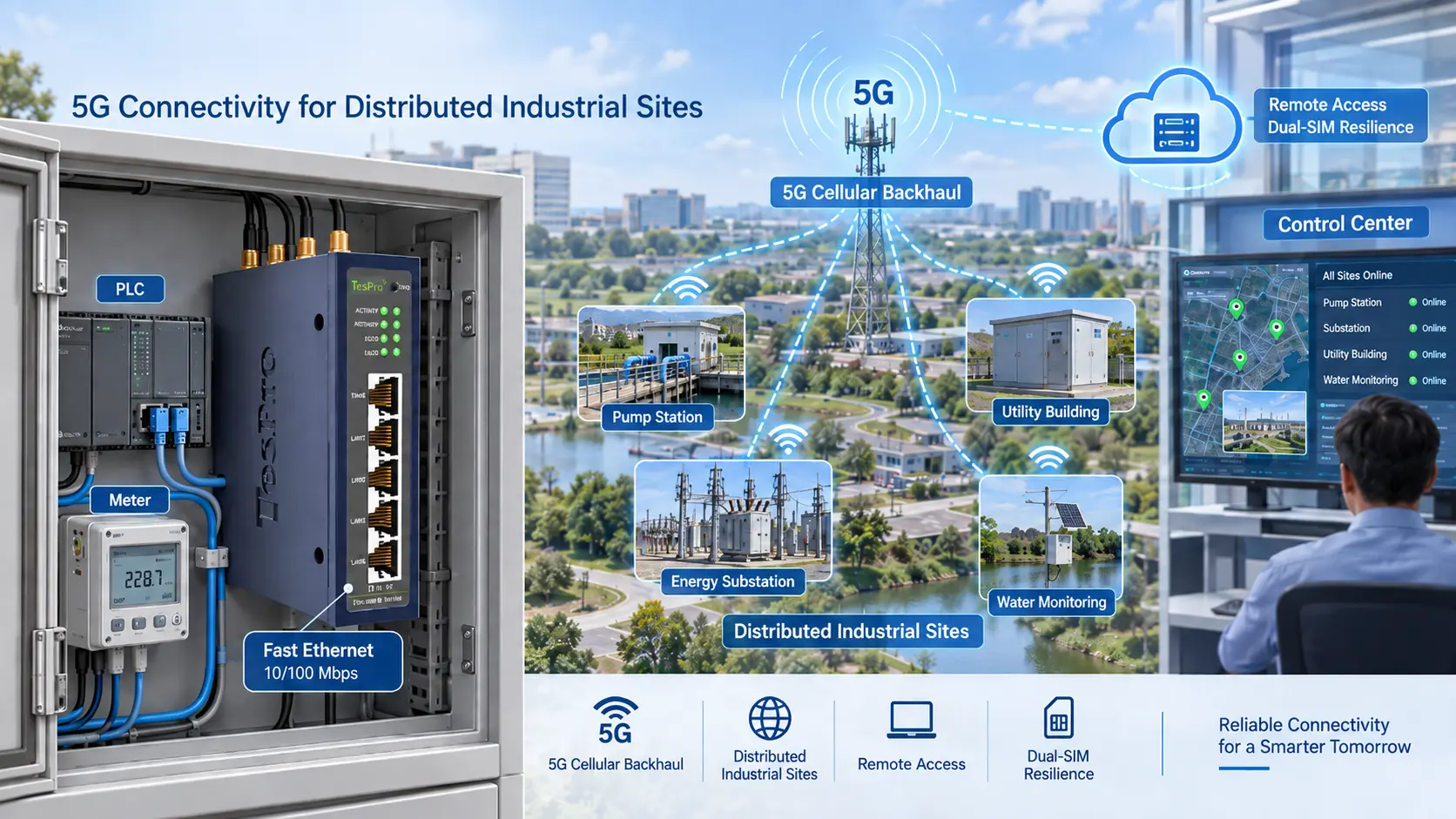
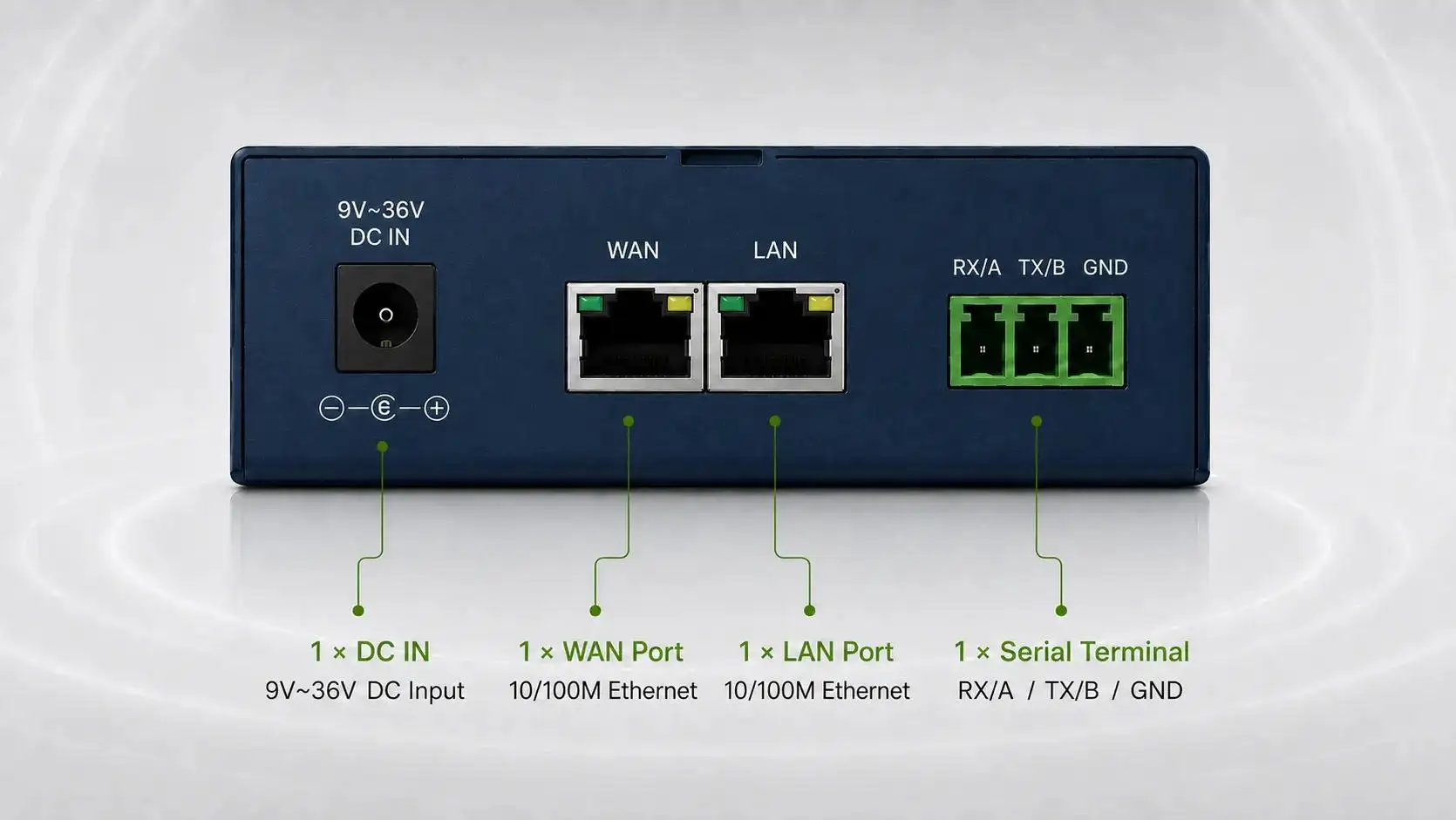
-1791966549842.webp)





Choosing an Tespro industrial router in 2026 is no longer just about 4G versus 5G. The emergence of 5G RedCap gives engineers a third option that balances cost and performance. 4G LTE remains the reliable workhorse with 150-300 Mbps downlink, 30-50 ms latency, low cost, and excellent coverage. Full 5G delivers sub-10 ms latency and multi-gigabit speeds but costs two to three times more and consumes significantly more power. 5G RedCap sits in the middle: 150-200 Mbps downlink, 15-30 ms latency, only 40-50% of the cost of full 5G, and power consumption similar to 4G.
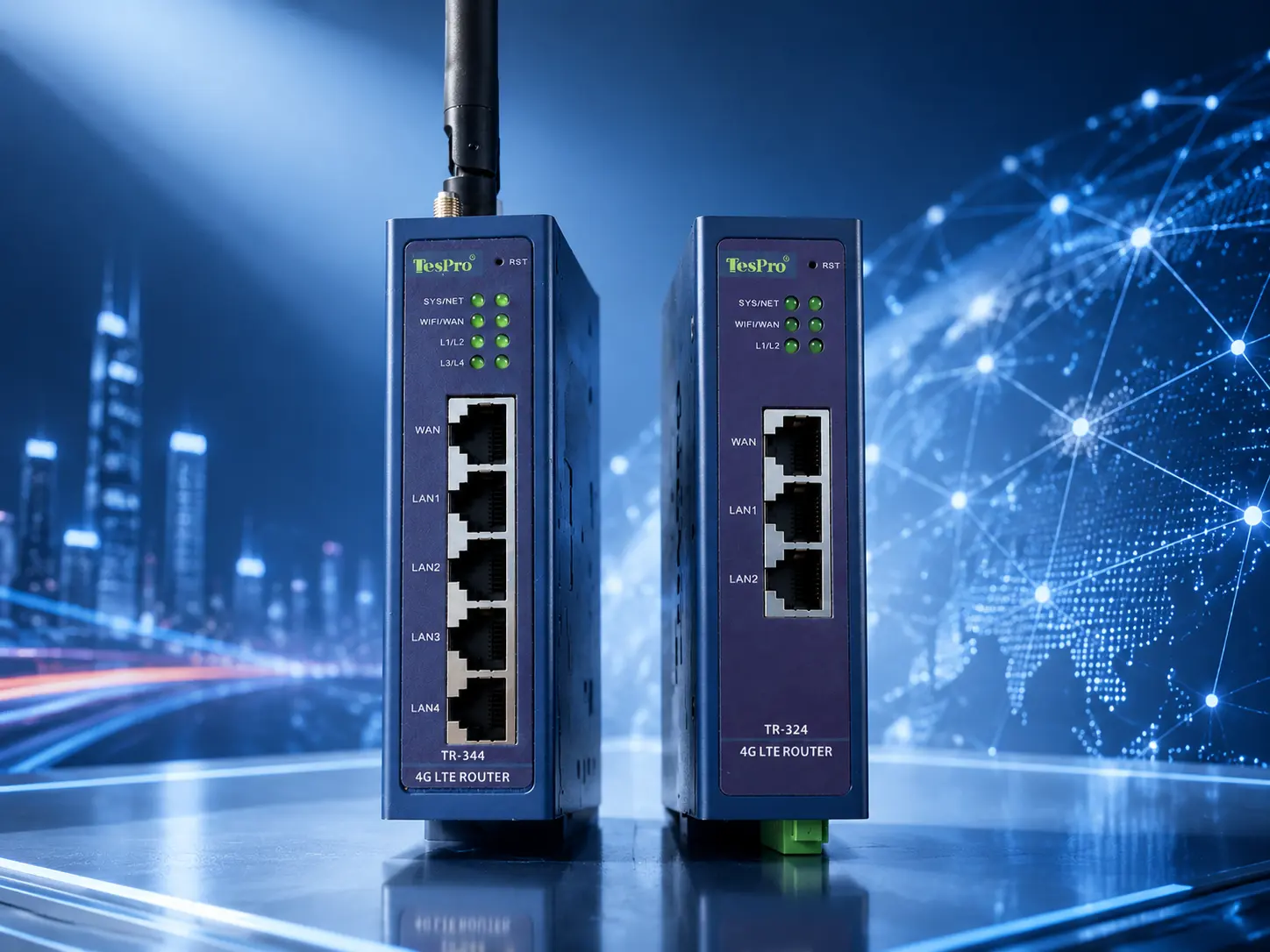
For a smart grid AMI deployment with thousands of endpoints, should I choose 4G or 5G?
It depends on your real-time requirements and budget. If you are simply collecting meter readings every 15 minutes, 4G remains the most cost-effective choice. However, if you need sub-20 ms response for grid protection, 5G or 5G RedCap becomes necessary. Tespro’s industrial routers support full 4G band coverage and 5G RedCap, cutting 5G costs by up to 60%, with dual SIM redundancy and -40°C to 75°C operation.
Is 4G still relevant in 2026?
Absolutely. Major carriers will support 4G for at least another decade. For non-real-time applications, 4G’s proven reliability and lower TCO make it the sensible choice. Tespro’s 4G routers also offer an upgrade path to 5G RedCap.
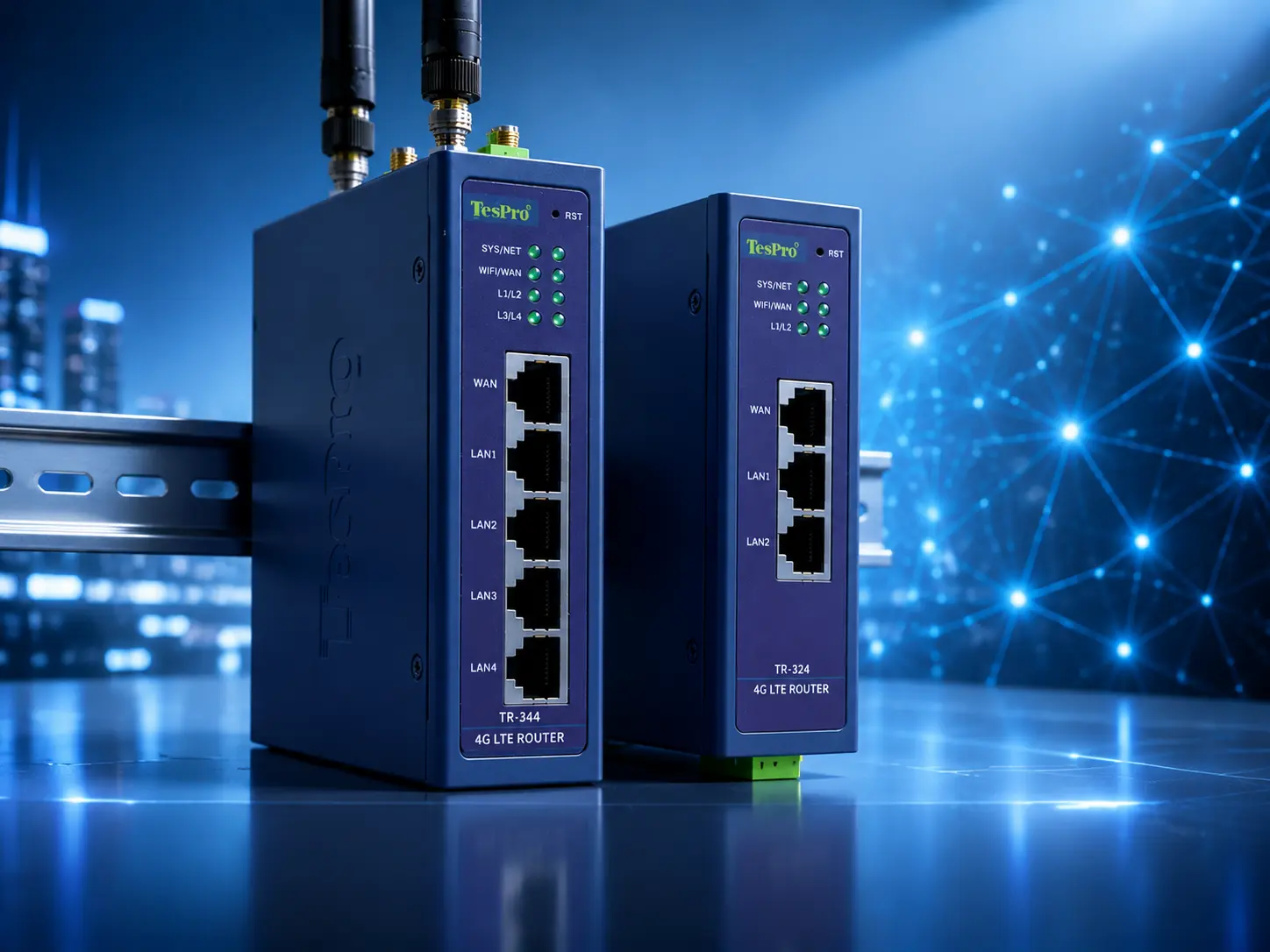
For most AMI and remote monitoring applications, 4G remains the best value. For new deployments expected to last 5+ years, choose RedCap to gain 5G slicing and lower latency at minimal premium. Only invest in full 5G for real-time control or ultra-high bandwidth needs. Tespro offers all three options with customization. Visit www.tespro.com to request a sample or consult our engineering team for your specific project.