-1791966549842.webp)





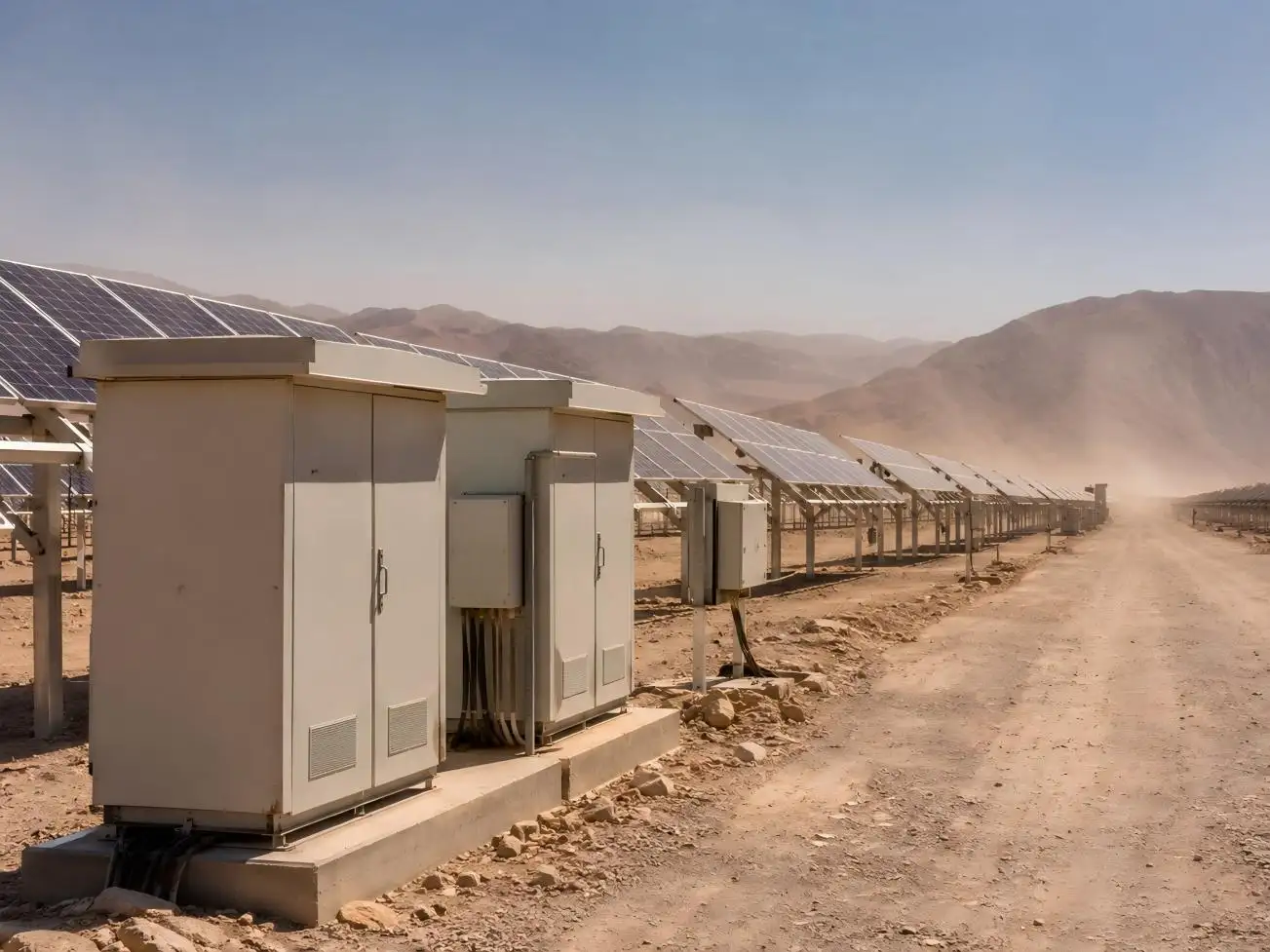

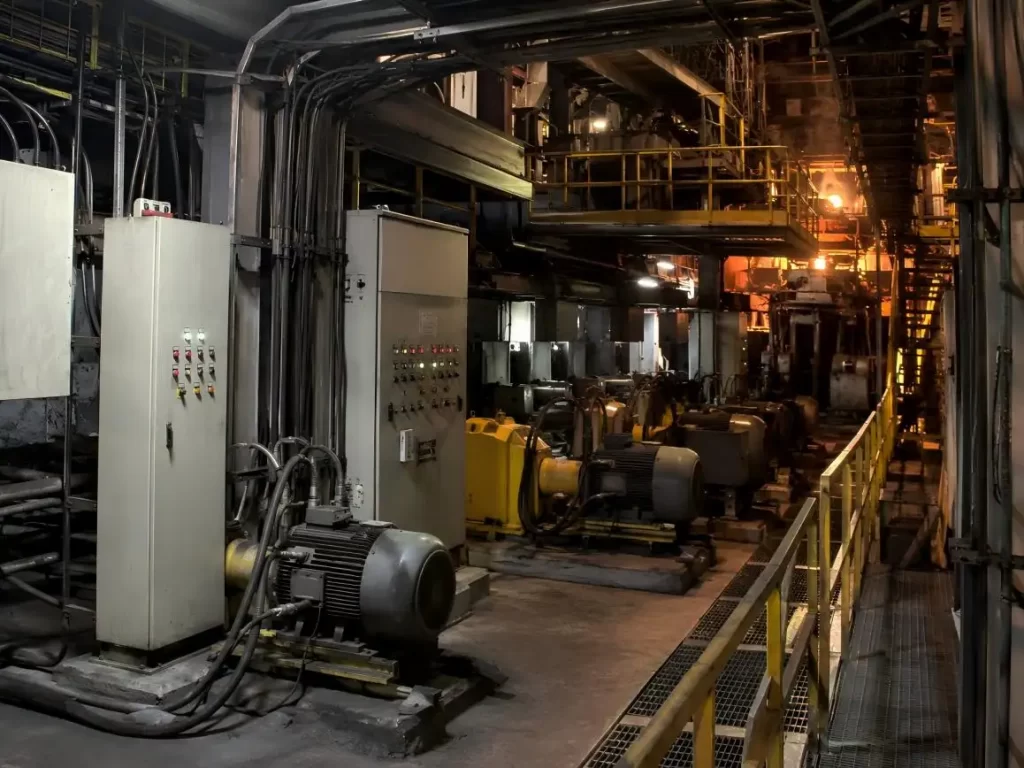
Office-grade networking devices are generally not designed for industrial-grade networking components deployed in substations, solar farms, transportation systems, and remote monitoring systems. Extreme temperatures, unstable DC power, vibration, moisture, and intermittent cellular coverage can all interrupt data collection and remote control.
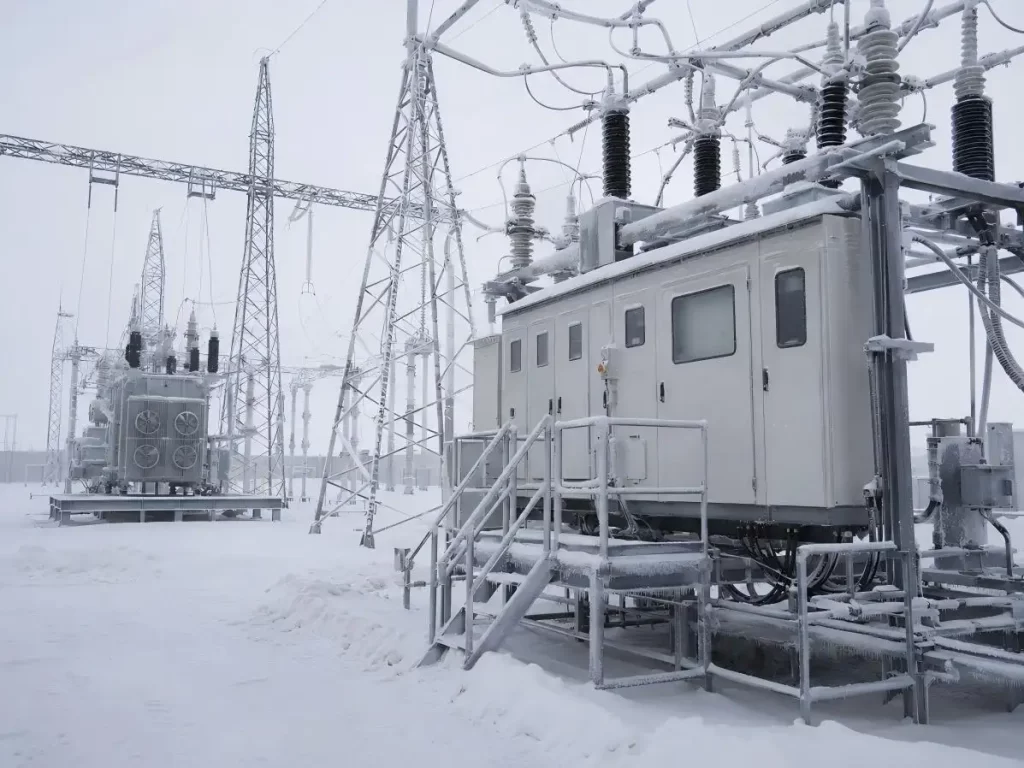
A rugged industrial gateway addresses these risks through coordinated thermal, electrical, mechanical, and software design. Tespro's TG-325 is specified for operation from -40°C to 75°C and combines 12–36 VDC input, 5G cellular connectivity, four Gigabit Ethernet ports, two RS485 ports, and one RS232 port.
Why Harsh Environments Cause Gateway Failures
Typical gateways can fail in harsh environments due to:
•Temperature Extreme: Start-up may be impacted at low temperatures with high temperatures/heat waves as sustained high temperatures age components.
•Thermal Cycling: Heating and cooling can cause condensation, corrosion, and mechanical stress.
•Unstable Field Power: Voltage dips, spikes, reversals, and unstable field power may be caused by extensive wiring, batteries, motors, and switch gear.
•Vibration: Vibrations have been known to contribute to the breakdown of mechanical connections.
•Network Disruptions: Poor cellular signal and high traffic may cause disruptions in the network.
A rugged industrial gateway must protect both the physical hardware and the industrial data path.
1. Wide-Temperature Component Selection
Reliability of operation is contingent on the selection of industrial grade, rugged components for processors, memory, storage, cellular, and power management in the range of industrial temperatures.
The design of a rugged gateway may incorporate:
•Industrial grade, rugged components with appropriate temperature rating
•Low heat generating, low power processors
•Conservative derating selection
•Corrosive and humid environment PCBs with protective coatings
The stated operating temperature of the rugged gateway may only apply if the entire assembled gateway (as opposed to individual components) is considered.
2. Fanless Thermal Management
Passive cooling (highly conductive metal) is the preferred approach of a rugged gateway design to avoid the unreliability of actively cooled gateway designs.
Typical design features consist of:
•An extruded aluminum enclosure to improve cooling
•Optimized conduction paths to the chassis
•Internal designs that avoid the creation of hot spots
•Dust proof design with the added benefit of reduced mechanical wear
It is important to note that fanless construction does not remove all installation constraints. Surrounding conditions can raise the internal temp of the system beyond what is acceptable. This can occur when the system is placed in direct sunlight, next to heat sources, or in a sealed cabinet.
3. Protected Wide-Range DC Input
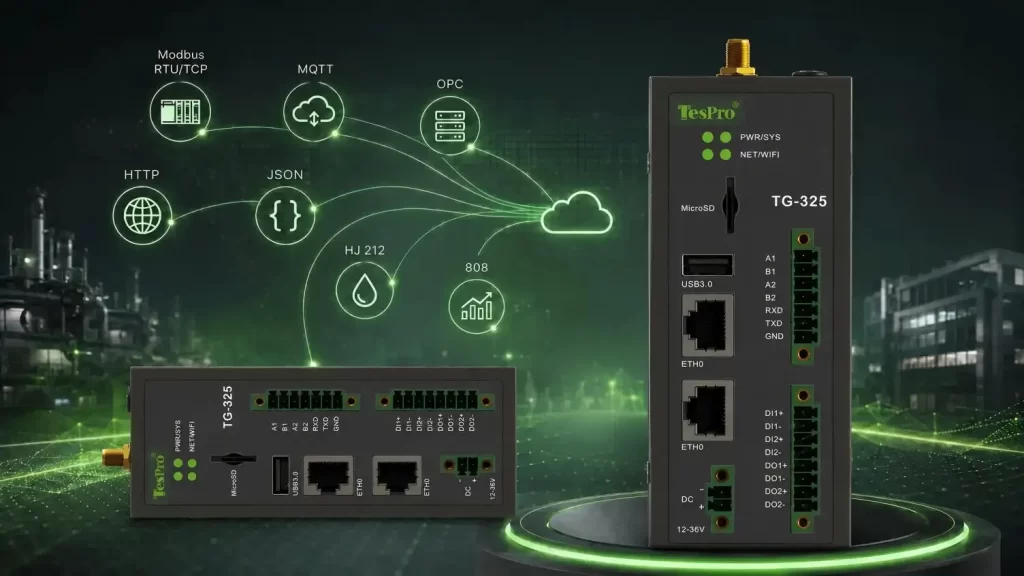
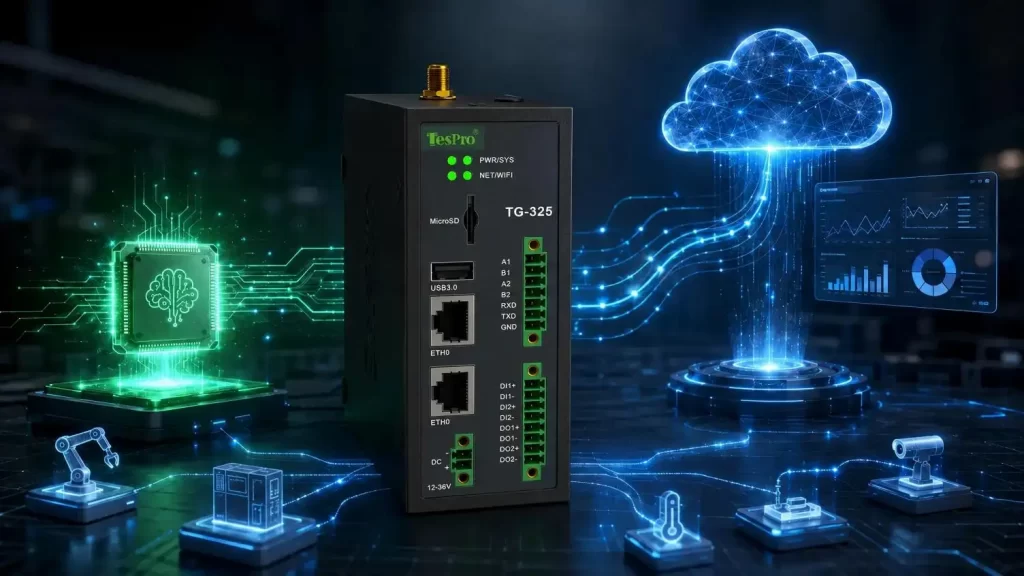
Remote industrial sites rarely provide perfectly regulated power. The TG-325 accepts 12–36V DC, making it compatible with common industrial power supplies and battery-backed systems.
Reliability under unstable power and when faced with electrical disturbances is enhanced in TG-325 with the inclusion of several electrical protection mechanisms.
These protections improve resilience, but installers should still:
•Use correctly rated power supplies and external circuit protection
•Keep power cables short and appropriately sized
•Apply proper grounding and equipotential bonding
•Install coordinated surge protection at lightning-exposed sites
Device-level protection should be treated as one layer of the overall electrical protection system.
4. Industrial Connectivity and Network Redundancy
The TG-325 rugged industrial gateway combines:
•2 × RS485 ports
•1 × RS232 port
•GPIO support
•4 × Gigabit Ethernet LAN ports
•5G cellular communication with earlier-generation network support
This interface combination allows the gateway to connect meters, PLCs, solar inverters, environmental sensors, and industrial controllers. Wired and cellular connections can also form part of a redundant communication architecture for remote assets.
5. Edge Computing and Integration of Protocols
Only having robust hardware will not guarantee data continuity during Wide-Area Network disruptions. Edge computing enables a rugged industrial gateway to collect, process, and temporarily store field data locally.
Tespro describes the TG-325 as using an OpenWrt/LEDE-based architecture with local programming and industrial protocol integration. Depending on the selected firmware and project configuration, gateway functions may include:
•Local data filtering and aggregation
•Data buffering during temporary network loss
•Scheduled or event-driven reporting
•Serial-to-IP protocol conversion
•Local alarm and control logic
•Secure transmission to cloud or enterprise platforms
Tespro lists integration options including Modbus RTU/TCP, MQTT, OPC UA, and DL/T 645. Final protocol compatibility should always be confirmed for the required firmware version and application.
TG-325 Key Specifications
| Design Area | TG-325 Specification | Practical Value |
| Operating temperature | -40°C to 75°C | Supports outdoor and unconditioned sites |
| Power input | 12–36 VDC | Fits common industrial DC systems |
| Serial interfaces | 2 × RS485, 1 × RS232 | Connects legacy field equipment |
| Ethernet | 4 × Gigabit LAN | Supports high-speed local networking |
| Cellular network | 5G with multi-generation compatibility | Provides flexible remote connectivity |
| Software platform | OpenWrt/LEDE-based | Supports edge applications and customization |
| Electrical protection | Reverse polarity, overvoltage, overcurrent, and surge protection | Improves field-power resilience |
Reported Results from a Distributed-Energy Deployment
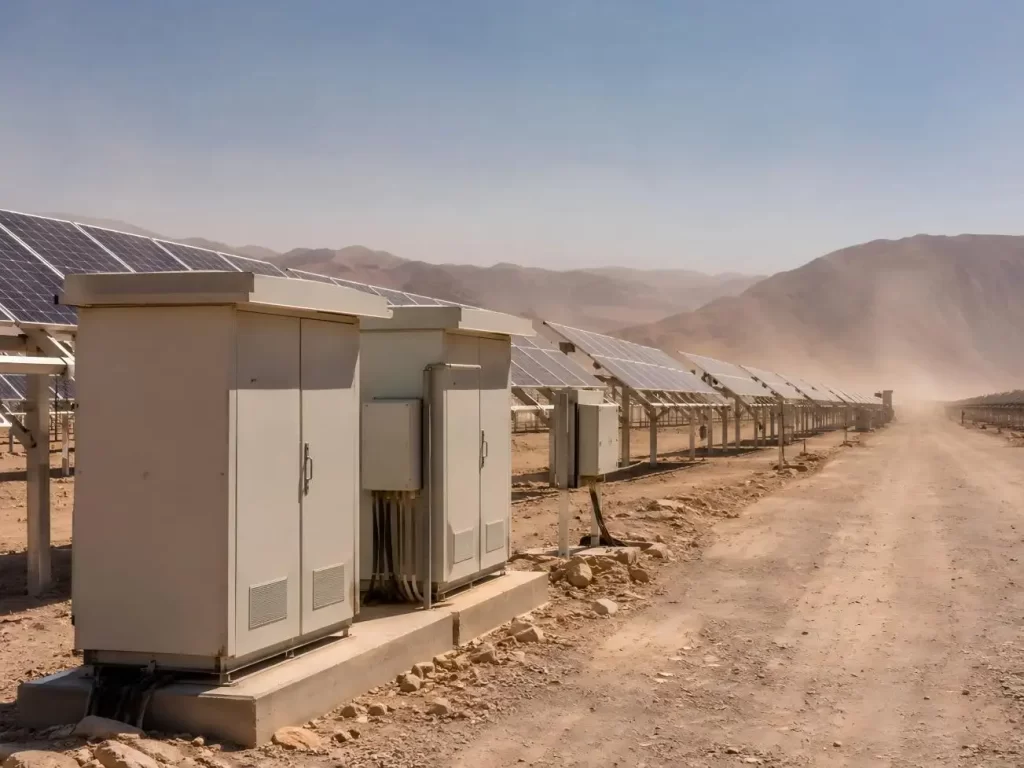
Tespro reports that more than 1,000 TG-325 units were deployed for solar-energy and grid-monitoring applications in Latin America. According to the manufacturer's published project information, the deployment achieved:
•99.5% data-transmission reliability
•Approximately 35% faster monitoring response
•Improved communication resilience through cellular and wired networking
These figures represent manufacturer-reported project results rather than universal performance guarantees. Actual performance will depend on carrier coverage, antenna placement, power quality, firmware configuration, protocol integration, and installation quality.
Installation Practices for Long-Term Stability
Even a rugged industrial gateway requires correct installation. To protect long-term reliability:
•Direct solar heating should be avoided as much as possible.
•Externally induced electrical noise can be minimized by using grounded shielded cables.
•DIN rails can be used to mount terminals, antennas, and other parts.
•Update all firmware to the most recent version along with all security patches. Patch all other software.
Install hardware watchdogs with the capability of diagnostic logging. Provide remote alerting services.
Use a suitably rated outdoor enclosure when the gateway is exposed to water or contaminants.
In Closing
Stable operation from -40°C to 75°C results from layered engineering rather than a single ruggedized component. Wide-temperature electronics, passive cooling, protected DC input, industrial interfaces, redundant connectivity, and edge intelligence each address a different field risk.
The Tespro TG-325 rugged industrial gateway combines these capabilities for distributed energy, industrial automation, smart infrastructure, and environmental monitoring. When supported by appropriate cabinet design, grounding, surge protection, and lifecycle maintenance, it can provide a dependable connection between field devices and central platforms in demanding industrial environments.
FAQ
Q1. What is a rugged industrial gateway?
A rugged industrial gateway connects industrial equipment to remote platforms in rugged and harsh environments.
Q2. What is the TG-325 temperature range?
The TG-325 operates between -40°C to 75°C.
Q3. Is the TG-325 fanless?
Yes, the TG-325 is fanless and uses a passive method for heat dissipation.
Q4. What is the TG-325 power input?
The power input for the TG-325 is 12-36 VDC.
Q5. Does the TG-325 support 5G?
Yes, the TG-325 supports 5G with selected earlier-generation cellular fallback, depending on module version and local operator networks.