-1791966549842.webp)





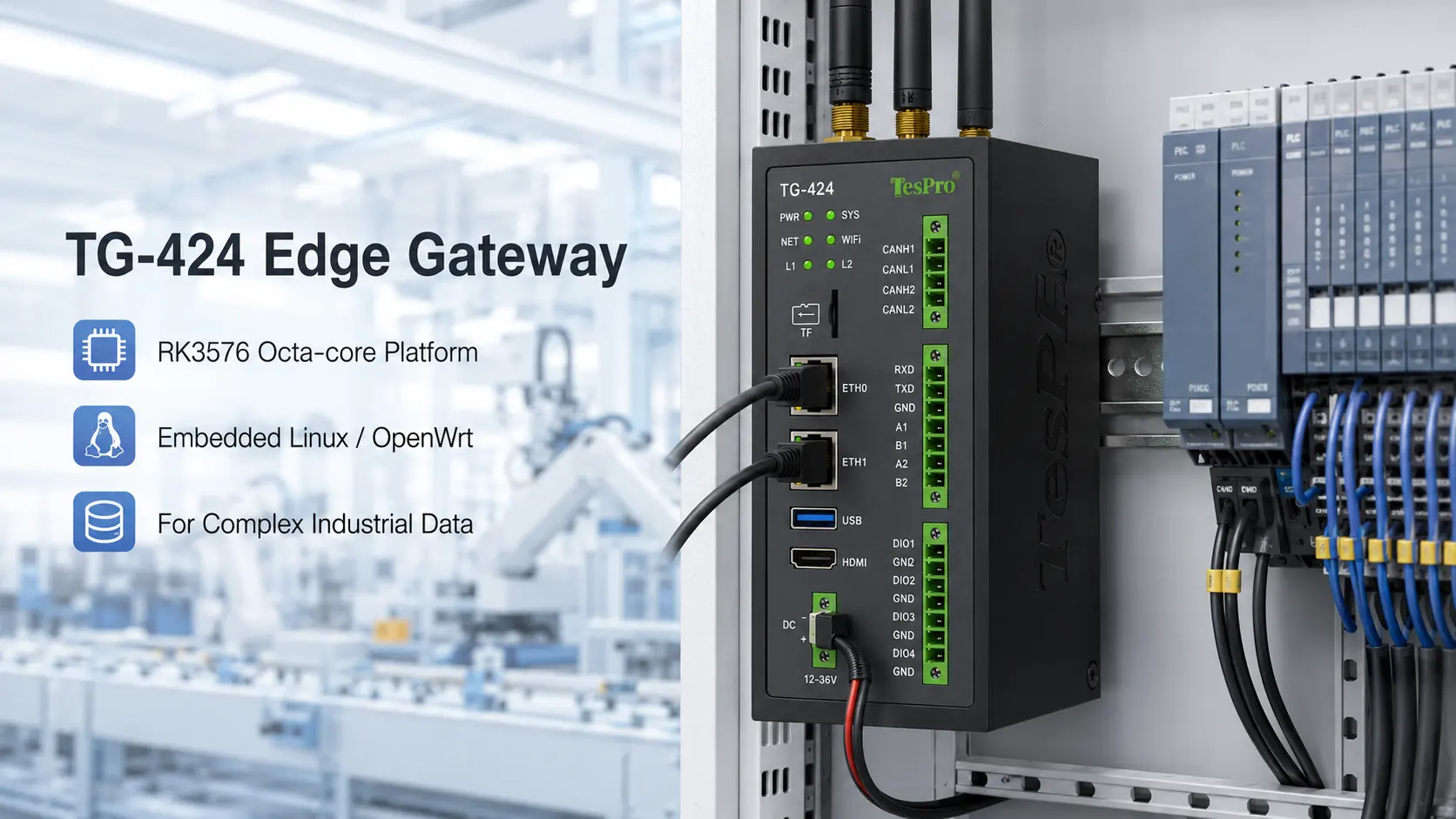

The RK3576 octa-core platform provides more headroom for multi-protocol acquisition, parallel communication, preprocessing, containers or local applications. The processor is only a starting point; validate memory, storage, I/O, software stack and thermal behavior under sustained load.
Key Takeaways
- Multiple cores help separate acquisition, communication and application tasks
- Sustained performance matters more than short peaks
- Software optimization and I/O waits affect real throughput
Technical Principle and Project Value
The RK3576 octa-core platform provides more headroom for multi-protocol acquisition, parallel communication, preprocessing, containers or local applications. The processor is only a starting point; validate memory, storage, I/O, software stack and thermal behavior under sustained load. In a real project, multiple cores help separate acquisition, communication and application tasks and sustained performance matters more than short peaks must be considered in the same architecture. Begin with the workload, field devices and operating model rather than one marketing specification.
Parameters to Confirm During Implementation
A practical sequence is to confirm protocol-task count and concurrent connections, then verify point count and polling cycle and local database, and finally test software optimization and i/o waits affect real throughput with the real equipment. Record pass criteria so the design can be repeated across sites.
Why Real-Workload Testing Is Necessary
An octa-core label alone cannot predict polling cycle, database performance or AI latency. Public content and project documents should therefore state model, firmware, regional network, options and environmental conditions and avoid unverifiable claims such as 'works for every project' or 'absolute reliability'.
How Tespro Fits
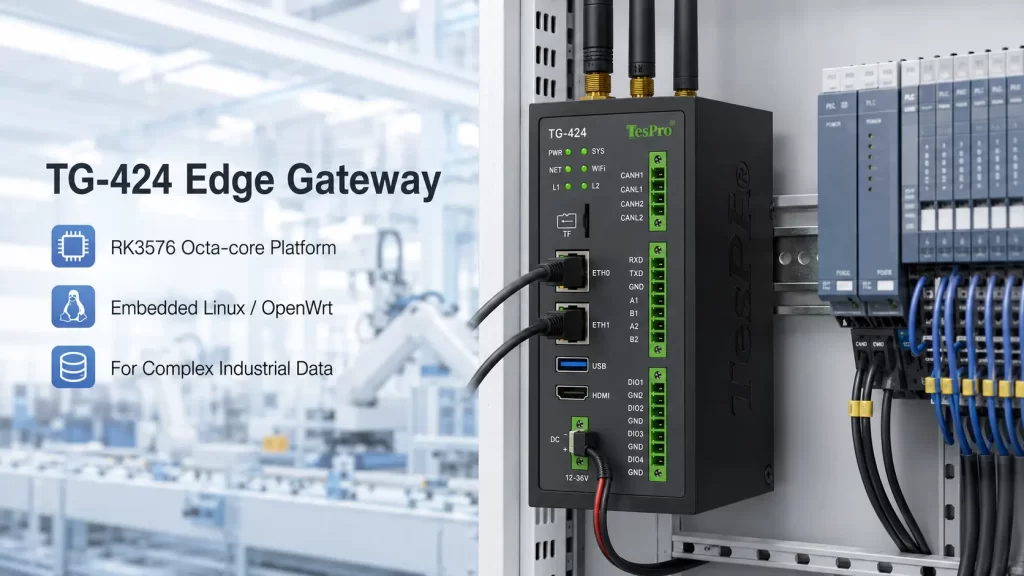
Tespro TG-424 uses an RK3576 high-performance octa-core platform with embedded Linux/OpenWrt. Benchmark it with the target protocols, point count and application.
Decision and Verification Table
| Decision factor | What to verify |
| Multiple cores help separate acquisition, communication and application tasks | Confirm against protocol-task count and document pass/fail criteria in the pilot or site test. |
| Sustained performance matters more than short peaks | Confirm against concurrent connections and document pass/fail criteria in the pilot or site test. |
| Software optimization and I/O waits affect real throughput | Confirm against point count and polling cycle and document pass/fail criteria in the pilot or site test. |
Compatibility and Selection Checklist
- ✓ Protocol-task count
- ✓ Concurrent connections
- ✓ Point count and polling cycle
- ✓ Local database
- ✓ Application runtime
- ✓ Temperature and power
Frequently Asked Questions
Q: Is an octa-core gateway always twice as fast as a quad-core?
A: No. Architecture, clock, software parallelism, memory and I/O determine real performance.
Q: How should processor capacity be tested?
A: Run the target points, protocols, logs and applications with real devices or simulators and monitor CPU, memory, latency and temperature.
Q: Does a powerful processor mean every protocol is supported?
A: No. Protocol support also depends on software libraries, licensing, drivers and project development.
Next Step
Provide protocol-task count, concurrent connections, point count and polling cycle, expected quantity and project schedule so Tespro can evaluate the model, sample test and deployment path.