-1791966549842.webp)






A remote PLC may have a working 4G or 5G connection and still remain unreachable from an engineer's office. The problem is often not the PLC or the Industrial Cellular Router, but the addressing model used by the mobile operator.
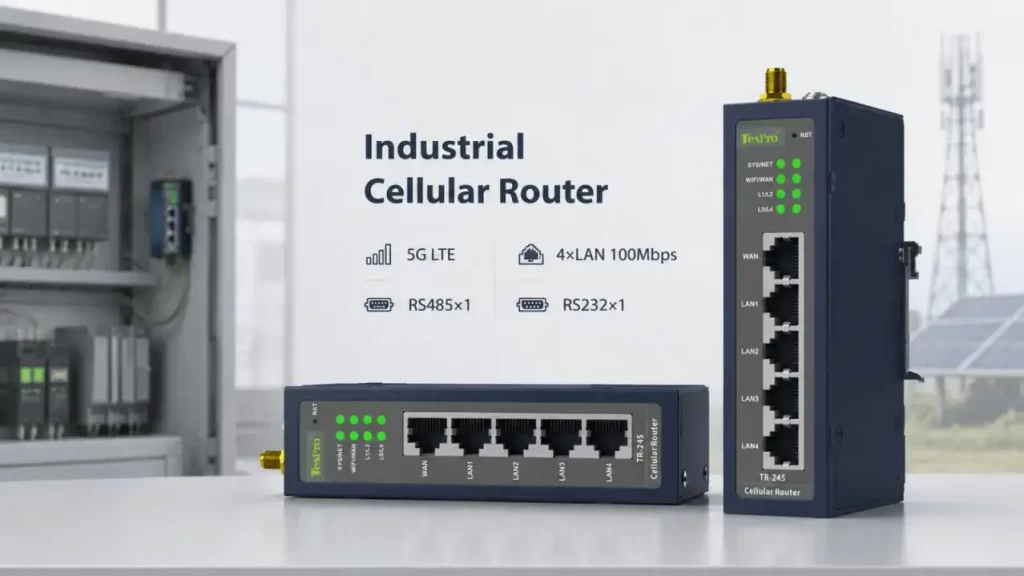
Many cellular SIMs receive a private IP behind carrier-grade NAT (CGNAT). In this environment, conventional inbound connections, port forwarding, and DDNS may not provide a usable path to the PLC. The practical solution is usually to make the Industrial Cellular Router initiate an outbound VPN or cloud-managed tunnel to a reachable server or remote-access platform.
Why an Online PLC Site Can Still Be Unreachable
The first step is to distinguish three situations:
| Cellular Address | Inbound Access | Typical Remote-Access Option |
| Static public IP | Directly routable | VPN or controlled inbound access |
| Dynamic public IP | Routable but changes | DDNS + VPN |
| CGNAT/private IP | Normally not directly routable | Outbound VPN or cloud tunnel |
DDNS only maps a hostname to a changing IP address. It does not turn a carrier-private address into a public one. Therefore, if the SIM is behind CGNAT, changing DDNS settings repeatedly will not solve the underlying routing problem.
This is where an Industrial Cellular Router becomes part of the remote-maintenance architecture rather than simply an Internet connection.
How the Router Creates PLC Access Without a Public IP
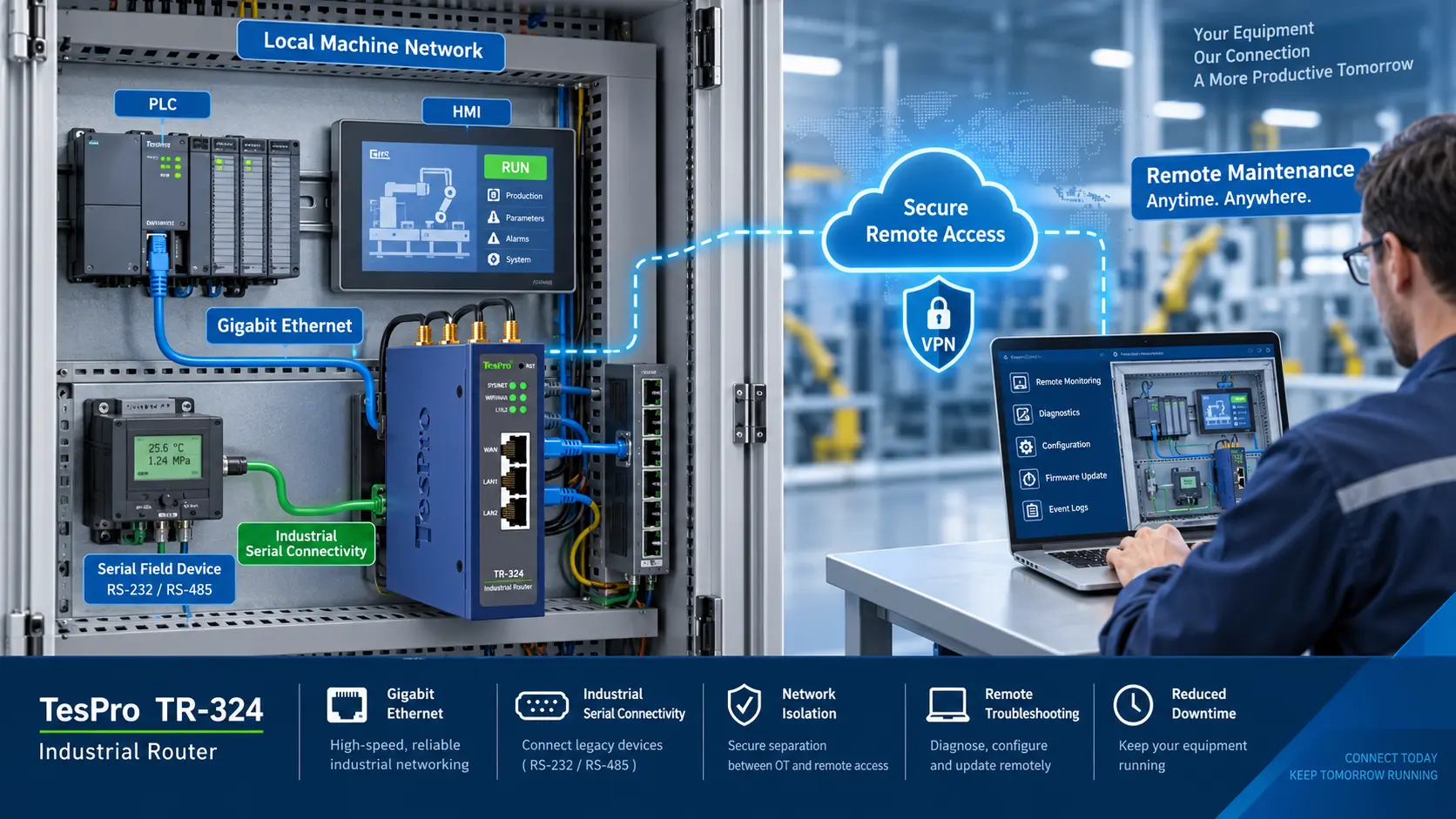
Instead of waiting for an engineer to initiate a connection from the Internet, the Industrial Cellular Router creates an outbound encrypted tunnel.
A typical path is:
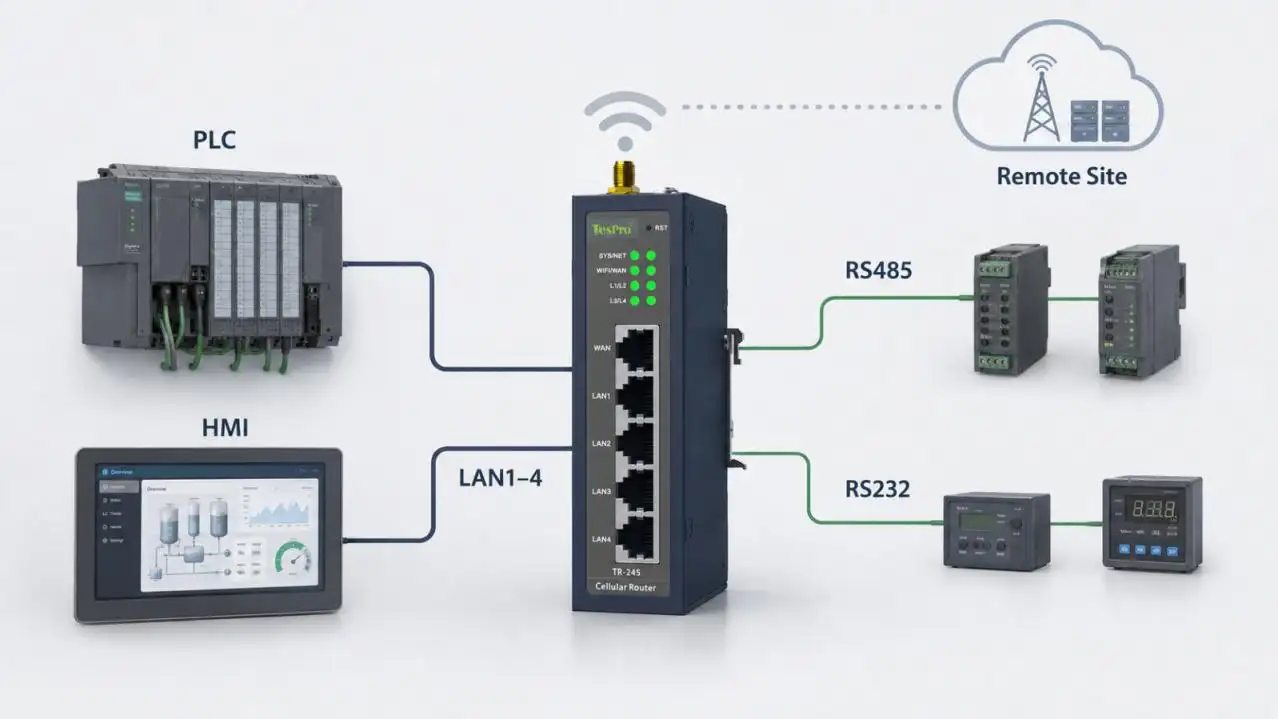
PLC → Industrial Cellular Router → 4G/5G Network → VPN Server or Cloud Platform → Remote Engineer
Because the connection originates from the field side, it can generally operate through carrier NAT without exposing PLC service ports directly to the public Internet.
The engineer then reaches the PLC through the tunnel using its engineering IP path. However, establishing a VPN is only the first step. The router must also handle the correct:
• LAN and VPN routes
• Firewall policies
• NAT rules where required
• PLC subnet addressing
• Access permissions
A connected VPN with incorrect routing can still leave the PLC unreachable.
Compare Four Remote PLC Access Architectures
An Industrial Cellular Router should be selected according to the network architecture, not simply by choosing the fastest modem.
| Method | Static Public IP Needed? | CGNAT Friendly? | Best Fit |
| Static IP + VPN | Yes | No | Fixed enterprise sites |
| Private APN | Usually carrier-managed | Yes | Large controlled fleets |
| Router-Initiated VPN | No | Yes | Remote PLC and SCADA sites |
| Cloud Remote Access | No | Yes | OEMs and distributed machines |
A private APN can provide controlled addressing across a cellular fleet, but it depends on operator services and commercial availability. A centrally hosted VPN gives the owner greater control over routing and access policies. Cloud remote access can simplify deployment where machine builders manage equipment at many customer sites.
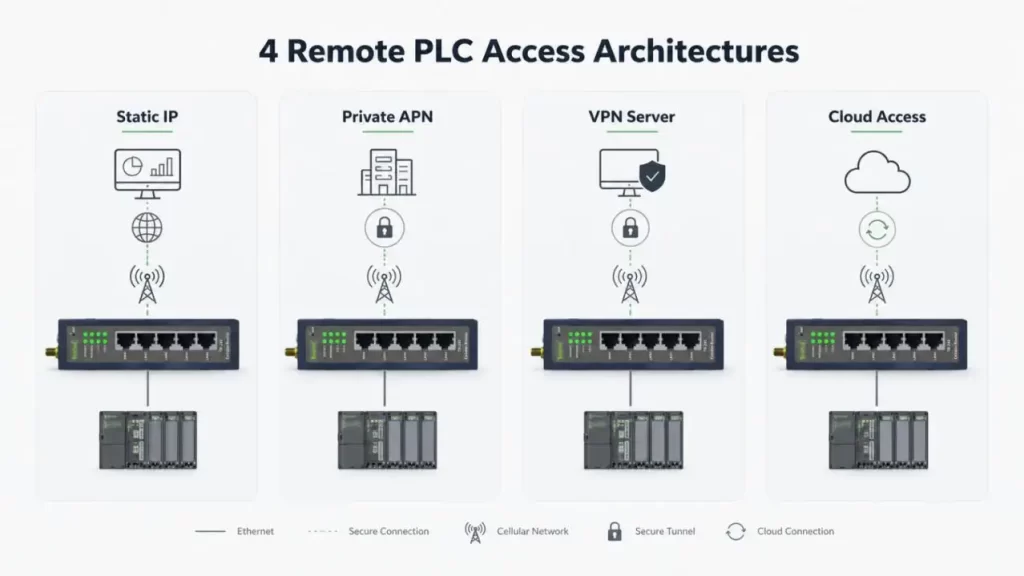
Tespro's Industrial Cellular Router portfolio includes cellular connectivity from 2G through 5G, VPN support, dual-SIM/failover functions and cloud management capabilities, allowing these connectivity choices to be evaluated according to the project rather than assuming that a public IP is always required.
Match the VPN Architecture to the PLC Network
VPN protocol support alone does not guarantee successful PLC programming.
IPsec is commonly suited to controlled site-to-site architectures. OpenVPN-style client/server architectures can be useful when flexibility and NAT traversal matter, while lightweight modern VPN designs can reduce processing overhead where supported. Managed cloud tunnels can be easier for OEM service teams that do not operate their own VPN infrastructure.
More importantly, the LAN design must be checked.
For example, if 30 identical machines all use:
192.168.1.10
connecting them to one routed VPN creates overlapping address spaces. The project may require unique PLC subnets, 1:1 NAT, virtual addresses, or another site-separation method.
Engineers should also verify whether their PLC software connects directly by IP or depends on broadcast discovery. Broadcast-based discovery does not automatically cross every routed VPN, even when direct IP communication works.
4G or 5G? Stability Matters More Than Peak Speed
Remote PLC programming, diagnostics and parameter changes usually require far less bandwidth than video or high-volume edge data transfer. Therefore, a 5G Industrial Cellular Router is not automatically better simply because its theoretical throughput is higher.
Evaluate:
• Coverage at the actual cabinet location
• Network latency and packet loss
• VPN throughput
• Antenna installation
• RSRP, RSRQ and SINR
• Cellular reconnection behavior
• VPN tunnel recovery
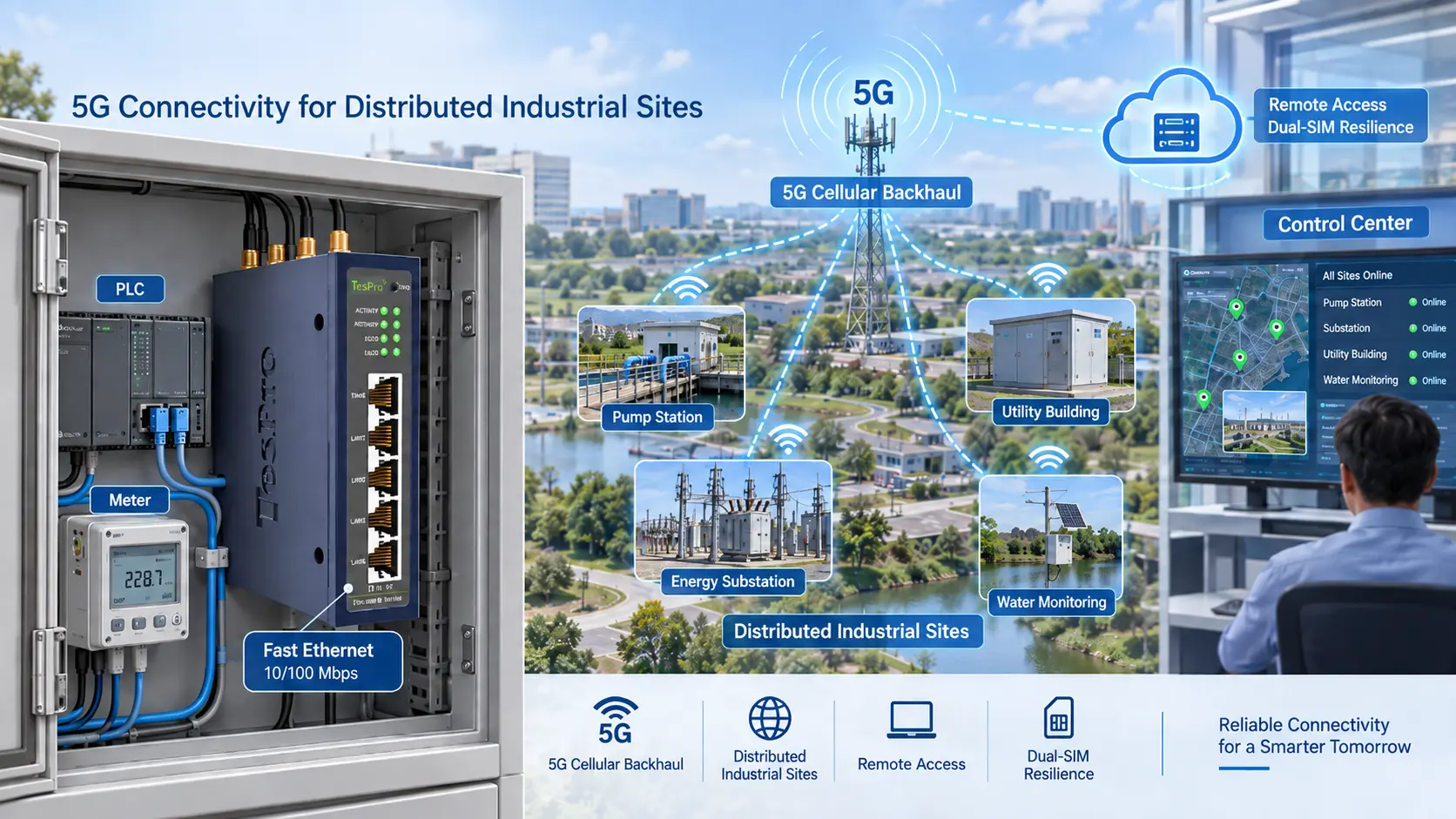
For unattended pumping stations, utilities, machines or remote energy sites, connection recovery may be more important than peak Mbps.
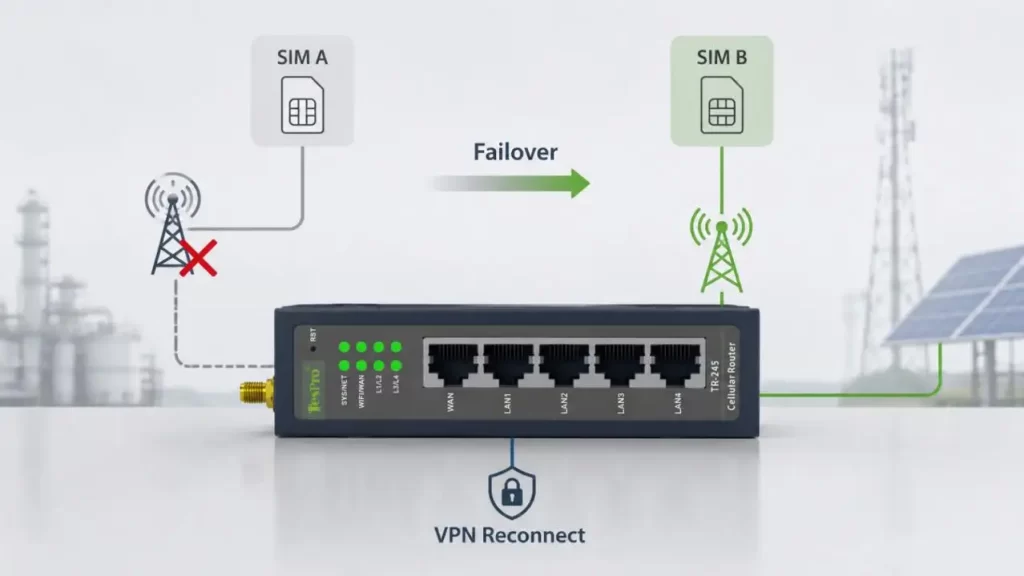
At Tespro, we design our Industrial Cellular Router solutions with dual-SIM backup and failover capabilities to improve connectivity reliability at remote and unattended sites. When the primary SIM or operator connection becomes unavailable, the router can switch to a secondary cellular connection and re-establish network services.
Because failover involves link detection, cellular registration, and VPN tunnel reconnection, actual recovery time depends on network conditions and project configuration. We therefore recommend defining and validating failover and VPN recovery requirements during system commissioning.
Install for Unattended PLC Maintenance
Even a correctly configured Industrial Cellular Router can perform poorly if installed incorrectly.
Inside a metal control cabinet, antenna attenuation can reduce cellular quality significantly. External or properly positioned antennas may therefore be necessary at weak-signal sites.
Commissioning should test the complete communication chain:
- Confirm SIM registration and APN settings.
- Record RSRP, RSRQ and SINR under normal conditions.
- Verify the VPN or cloud tunnel.
- Ping the PLC through the remote route.
- Test actual PLC engineering software.
- Disconnect the cellular link and measure recovery.
- Test SIM failover where configured.
- Confirm unauthorized LAN devices cannot be reached.
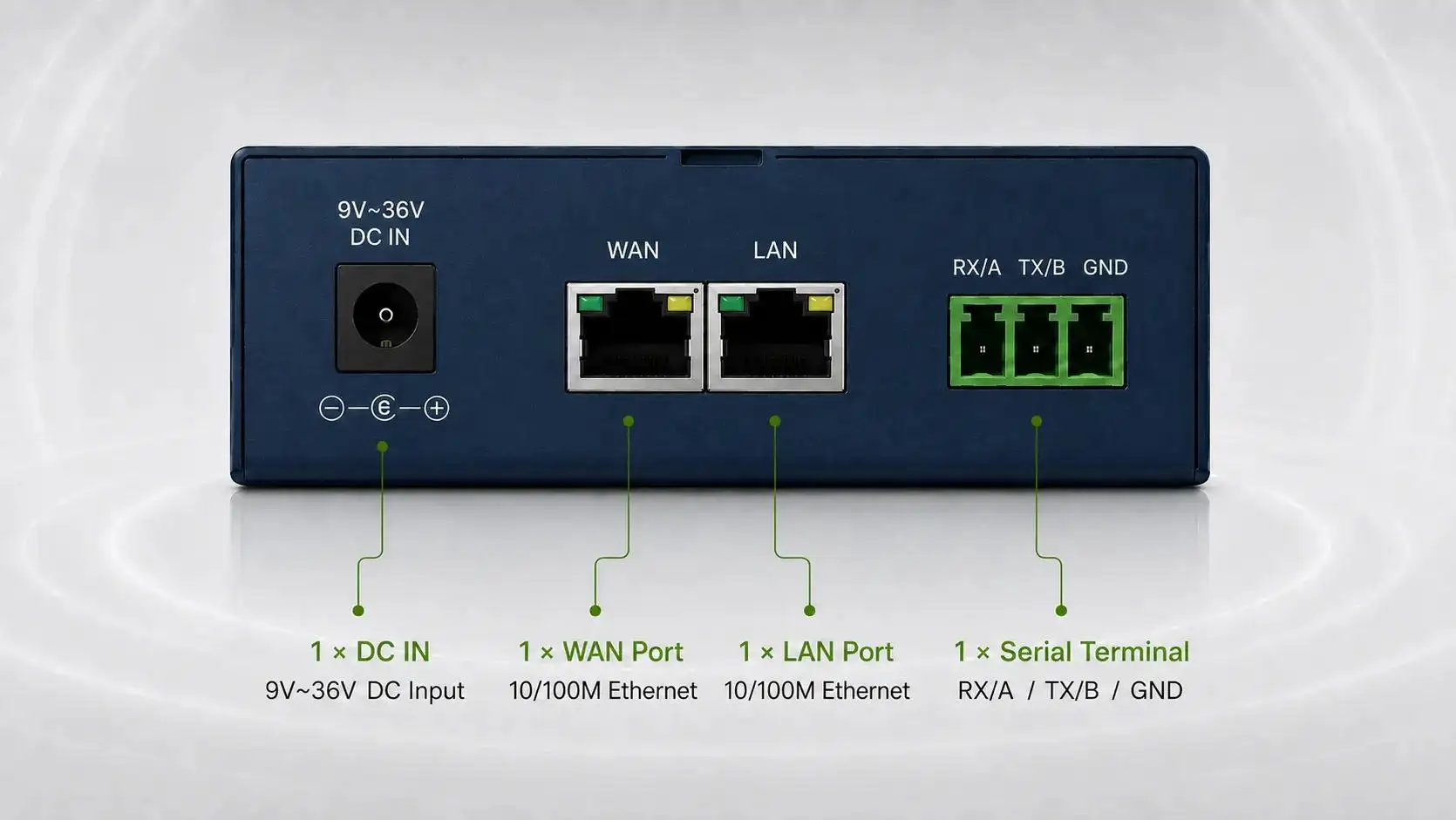
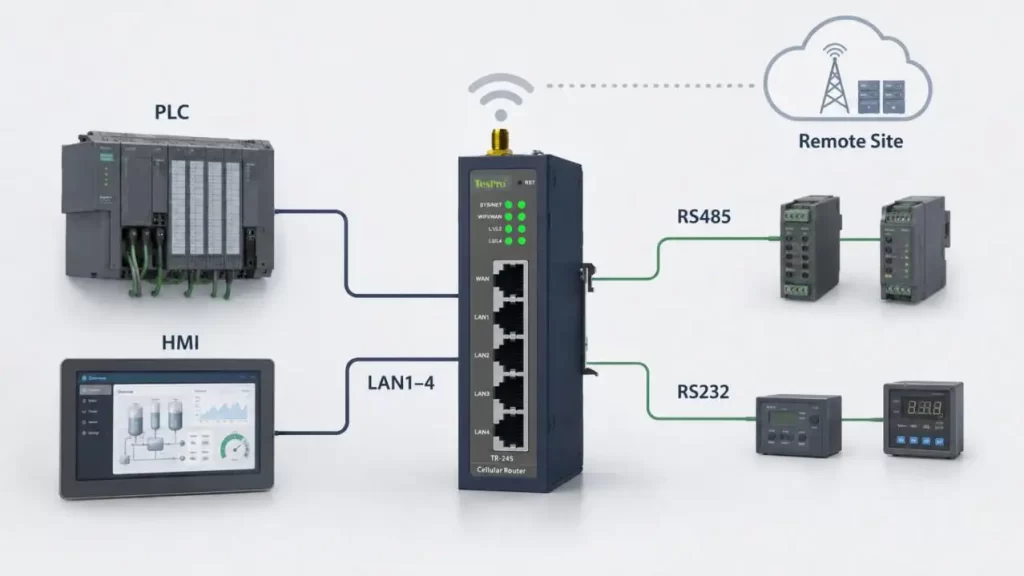
The Industrial Cellular Router should also support watchdog or reconnection mechanisms appropriate to unattended service, together with remote configuration and firmware management. Tespro's portfolio includes cloud-based remote management and model-dependent Ethernet, Wi-Fi and industrial connectivity options that can be matched to PLC, controller and field-device layouts.
Secure the PLC Instead of Exposing the Entire Site
A VPN protects the communication path, but it should not become an unrestricted door into the OT network.
NIST SP 800-82 Revision 3 addresses OT security architecture and remote-access considerations, while the IEC 62443 series provides a broader framework for industrial automation and control system cybersecurity, including access control, segmentation and component/system security requirements.
A practical deployment should therefore consider:
• Least-privilege remote access
• Separate PLC or OT network segments
• Firewall/ACL restrictions
• Authenticated administrative access
• Controlled firmware updates
• Logging and account management
Specify the Industrial Cellular Router Around the Remote-Access Problem
Before issuing an RFQ, define the complete operating environment:
• Cellular: 4G/5G bands, country, operator, APN and SIM addressing
• Remote access: CGNAT, VPN architecture and cloud-management requirements
• PLC network: Ethernet/serial interfaces, PLC subnet and overlapping-address risks
• Reliability: dual SIM, watchdog, reconnect behavior and antenna requirements
• Security: VPN, firewall, VLAN/segmentation and user access control
• Industrial deployment: power input, mounting, temperature and required EMC/radio certifications
• Verification: VPN throughput, failover behavior and actual PLC software tests
This approach prevents buyers from choosing an Industrial Cellular Router based only on modem speed or a long protocol list.
For projects involving PLC remote access without a public IP, 4G/5G field connectivity, VPN/cloud management and unattended maintenance, buyers can review Tespro's Industrial Cellular Router solutions and compare the available configurations against the actual SIM, PLC network, security and recovery requirements before selecting a model.
FAQs
Q1. Why is Dual SIM important in unattended PLC sites?
Adopting Dual SIM systems can ensure cellular-link redundancy in the event the primary SIM or operator goes offline. While actual failover does occur, it is still an unresolved concern whether the customer can monitor the recovery process of network registration and VPN reconnection. Therefore, customers are advised to test the recovery process themselves in order to assess the performance.
Q2. Are Tespro Industrial Cellular Routers compatible with 4G and 5G?
Yes, Tespro provides industrial cellular connectivity of all generations and of 4G and 5G in particular. Customers should verify the specific modem, bands, operators, and regional allocations of the selected model prior to purchase.
Q3. Does a PLC site require a public IP when using a Tespro router?
No, a public static IP is just one of the several architectural designs for remote access. VPN tunnels, private APNs, and managed cloud services are preferable with the SIM operating on private IP or CGNAT.
Q4. Are Tespro Routers capable of VPN use for remote PLC maintenance?
Yes. Selected Tespro industrial routers can support VPN-based remote access depending on model, firmware and project configuration.
Q5. Does Tespro include support for cloud-based remote management?
Yes, cloud and remote management capabilities are integrated in Tespro's industrial connectivity portfolio. It allows operators to manage PLCs in dispersed locations without the need to physically visit each site for configuration and maintenance.