-1791966549842.webp)





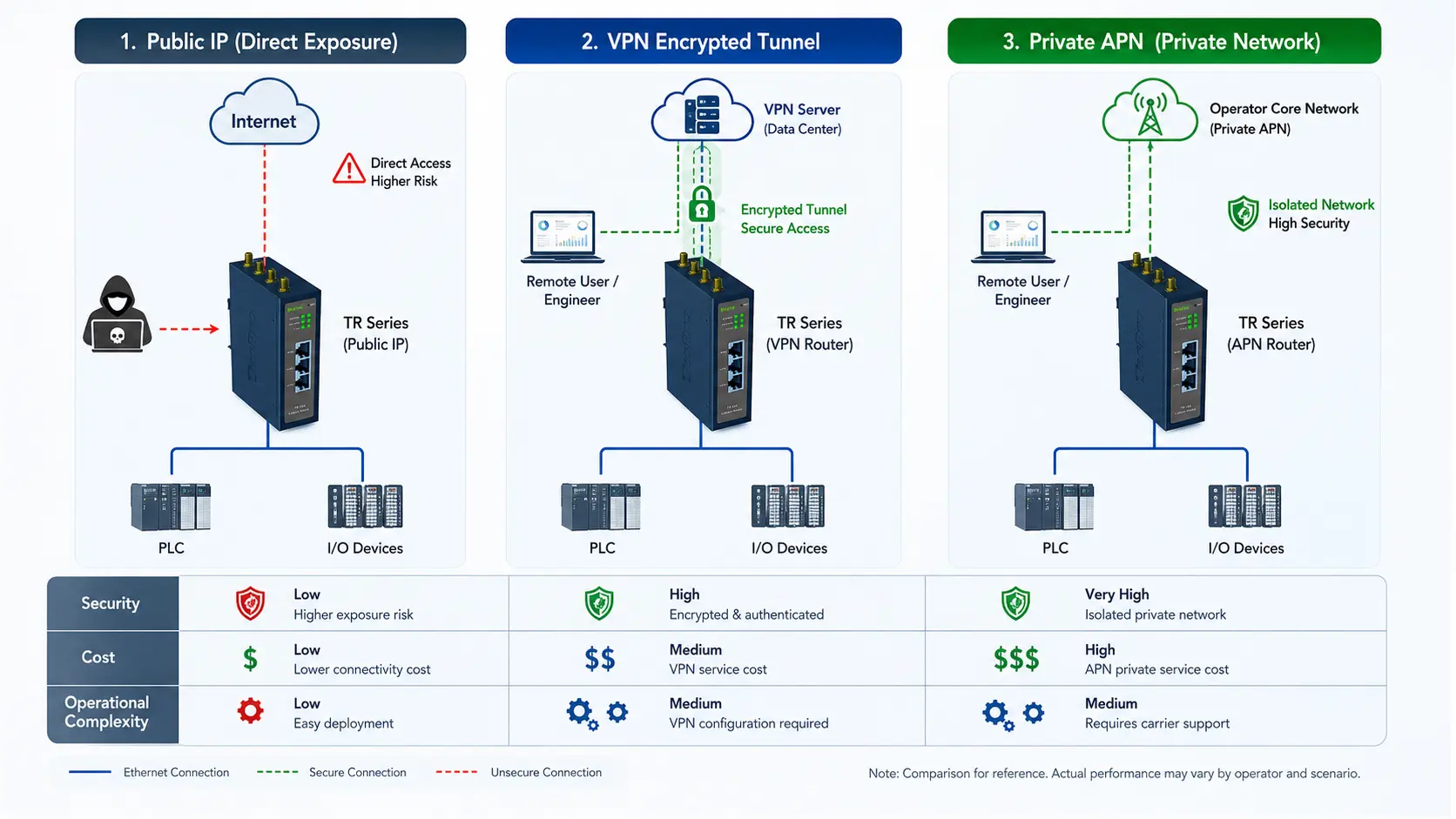

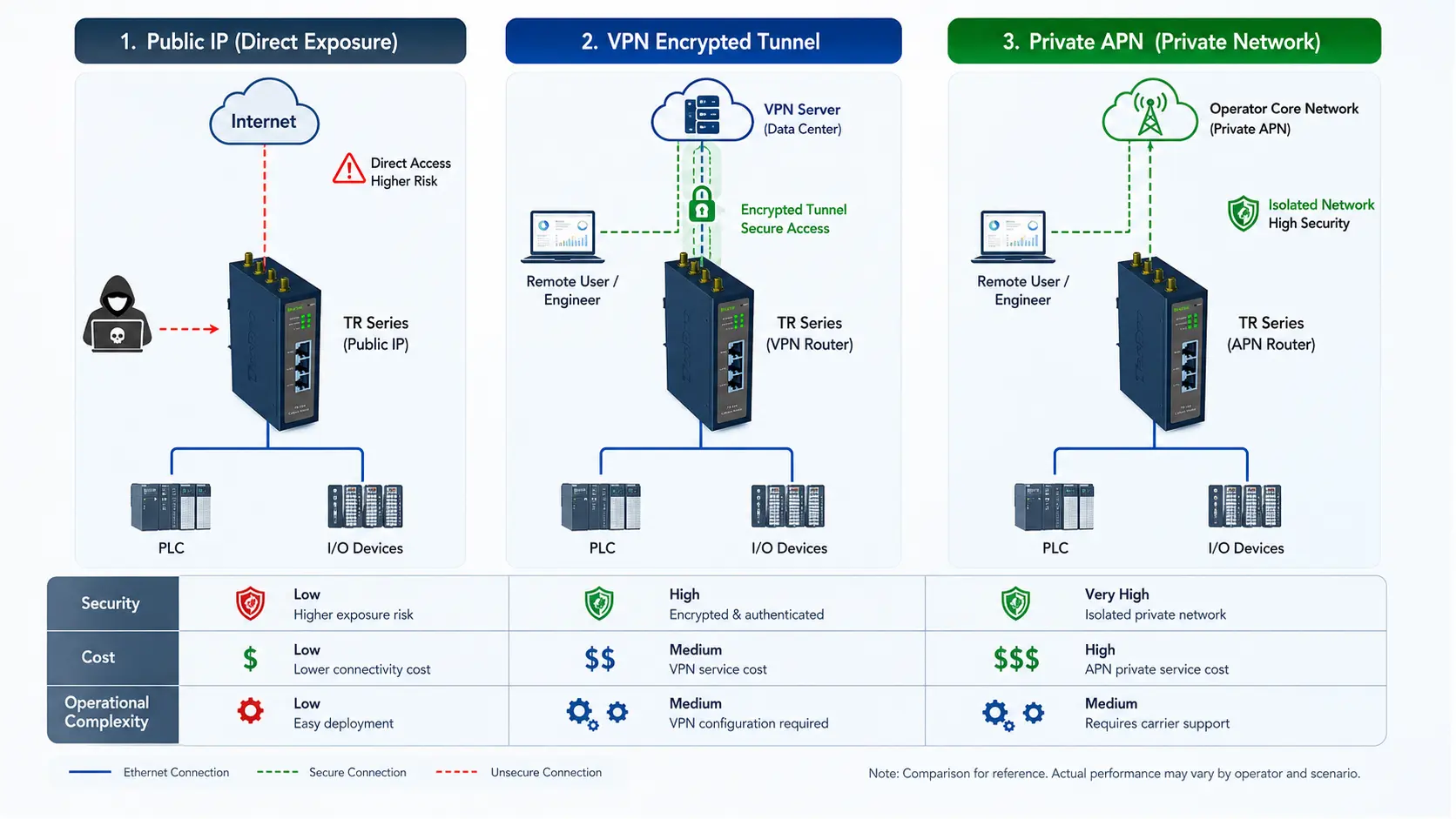
Public IP, VPN and private APN are not equivalent alternatives. A public IP provides reachability but increases exposure and management requirements. A VPN creates an encrypted, authorized path, while a private APN provides carrier-managed network separation. Industrial projects often combine them.
Key Takeaways
• A public IP is not a security control and is not required for every remote-access design.
• VPN must be combined with least privilege, firewall policy and account management.
• Private APN can suit large fleets but requires carrier, cost and regional evaluation.
What each option solves
A public IP lets the center locate the site directly. A VPN provides a controlled tunnel for the site or user. A private APN places SIMs in a carrier-managed private network. A central server, cloud platform or enterprise firewall may still be required.
Choose by connection direction
Device-initiated reporting usually does not require a public IP at the site. For center-initiated PLC access, the router can establish an outbound VPN or use a private APN connected to the enterprise network.
Security is more than a network label
Define users, subnets, ports, certificates, logs, maintenance windows and account revocation. Avoid exposing PLC services directly to the public internet in any design.
How Tespro Fits
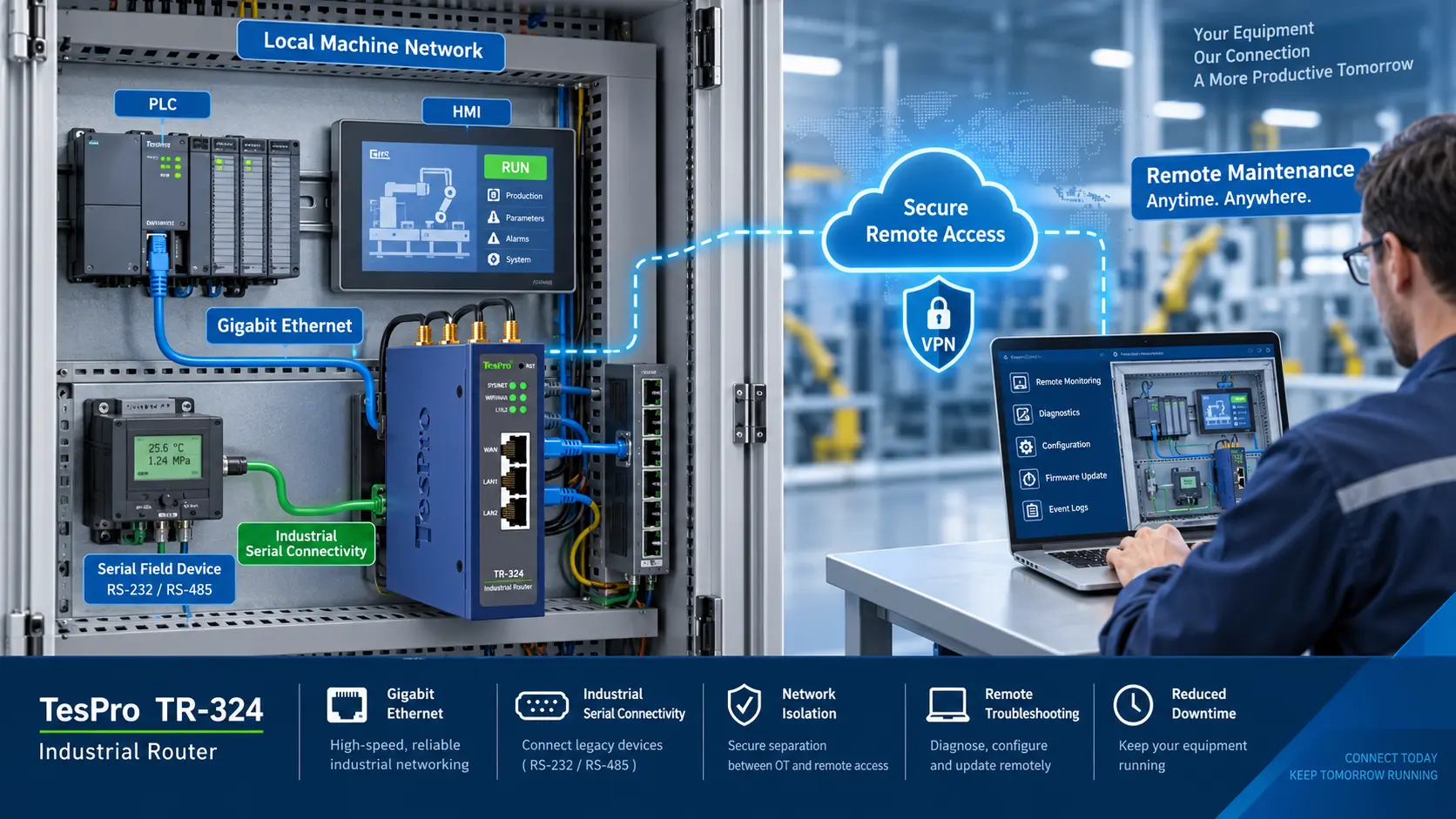
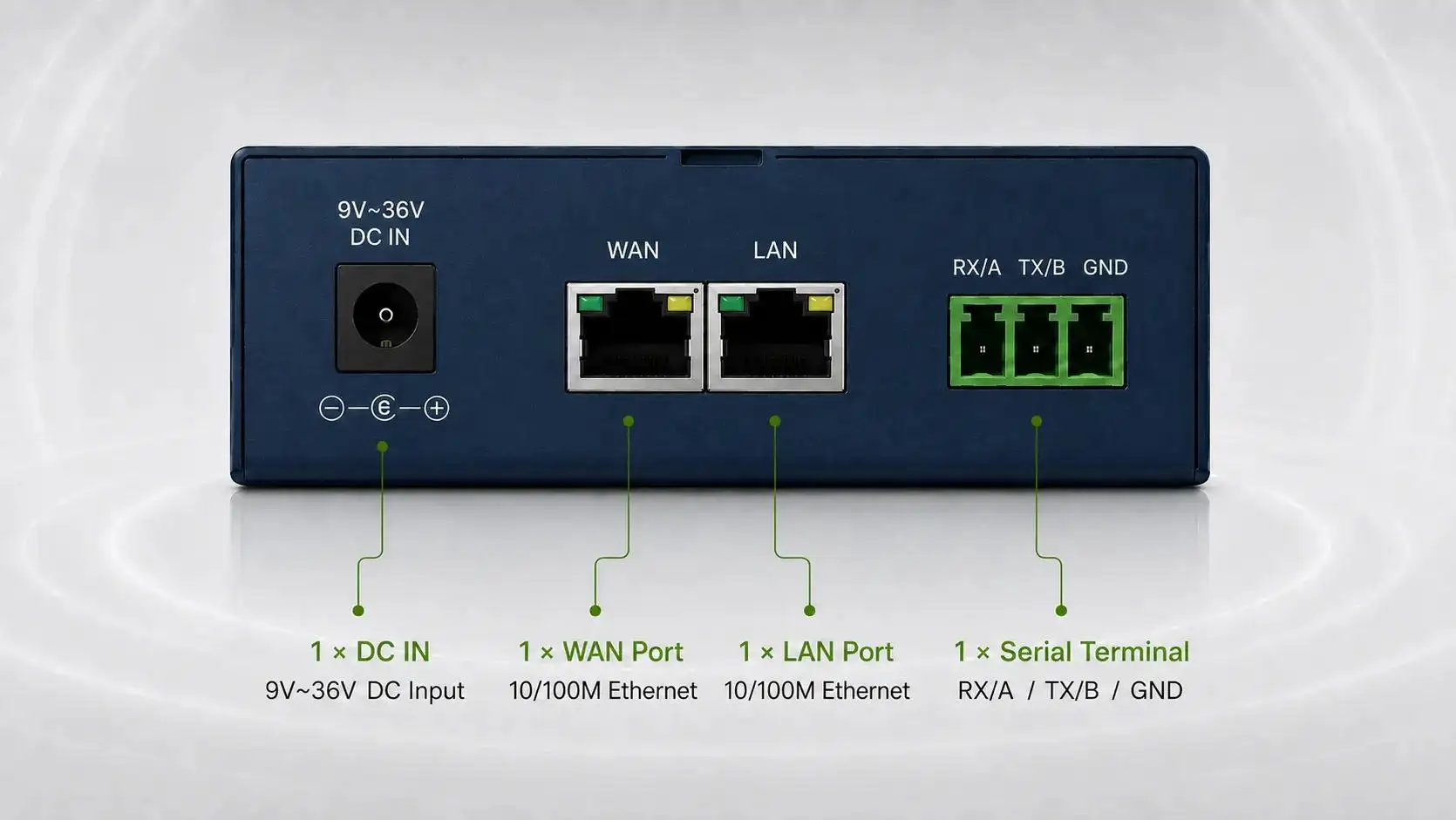
Tespro TR Series industrial routers can be evaluated for site-to-center or user-to-site VPN architectures. Confirm exact VPN types, server deployment and certificate functions by model and firmware. Public IP and private APN services are carrier-provided and must be designed together with router configuration and enterprise policy.
Compatibility and Selection Checklist
✓ Device reporting or center-initiated access
✓ Whether the site is behind carrier NAT
✓ User count, target devices and subnets
✓ VPN server, certificates and firewall
✓ Private-APN coverage, cost and interconnect
✓ Logging, approval and account lifecycle
Frequently Asked Questions
Q: Can a PLC be accessed without a fixed public IP?
A: Yes. A common design has the site router initiate a connection to an enterprise VPN or remote-management platform.
Q: Can private APN replace VPN?
A: Not always. APN provides network separation, while VPN provides end-to-end encryption and identity control. They can be combined.
Q: Is port forwarding the simplest option?
A: It is simple to configure but creates higher exposure and is generally not recommended for direct PLC or HMI access.
Next step: Provide the access direction, site count, carrier, enterprise network and security requirements so Tespro can help design a TR Series VPN architecture.