-1791966549842.webp)





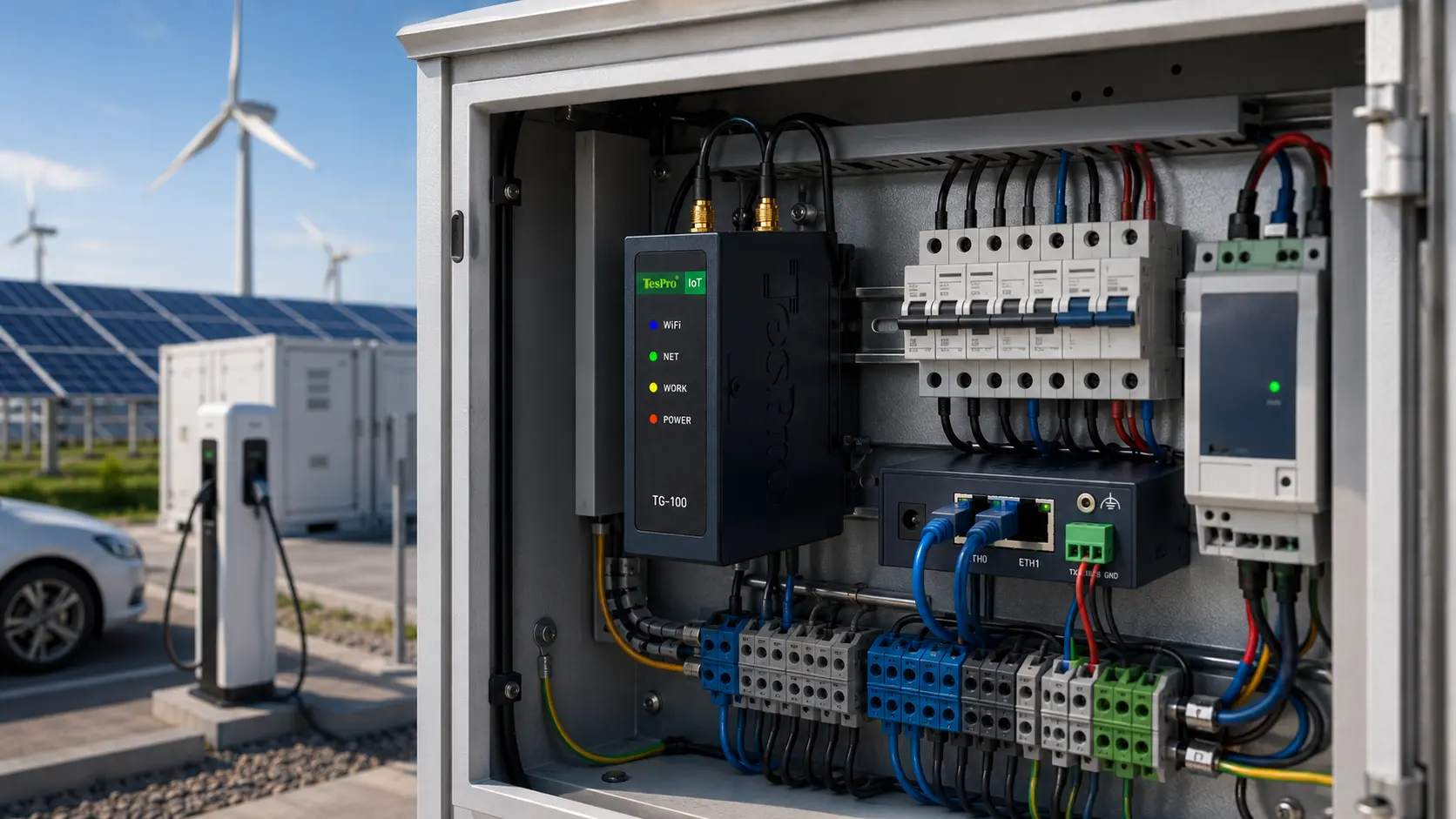

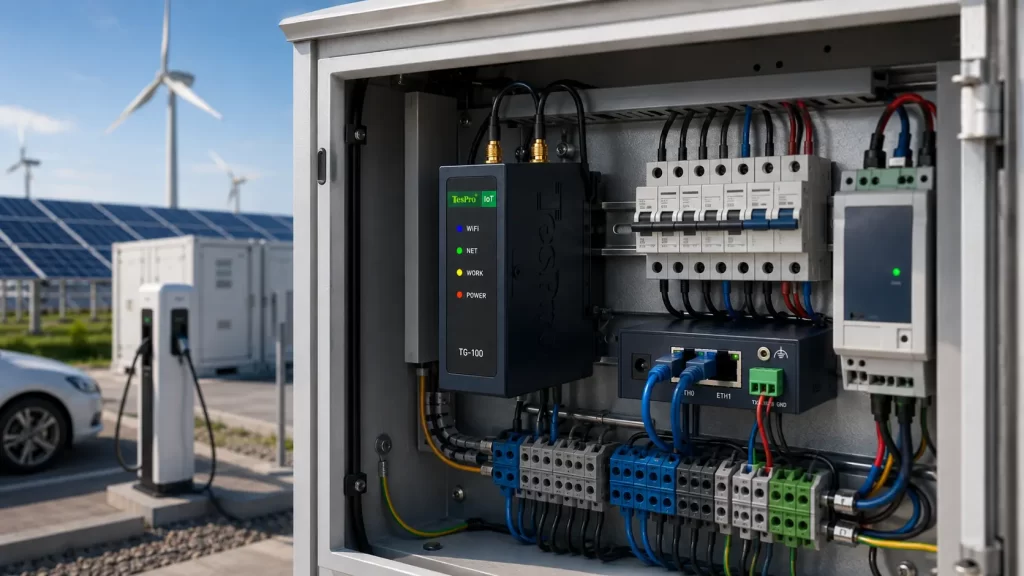
In buildings, factories and energy projects, working devices may remain isolated because BACnet, Modbus and OPC UA do not communicate directly. A protocol converter reads the source protocol, maps addresses, converts data types and exposes the target protocol. The Tespro TC-100 series focuses on protocol conversion with versions selected by direction. Relevant Tespro products include Tespro TC Series protocol converters and representative options such as TC-100, for BACnet, Modbus, and OPC UA interoperability for building and industrial integration.
Conversion is more than renaming messages
BACnet objects, Modbus registers and OPC UA nodes have different models. Define addresses, types, direction, scaling, units, refresh and quality.
Typical applications
Bridge BACnet building systems to Modbus energy systems or expose Modbus devices to an OPC UA platform without replacing controllers.
Introducing TC-100
Provide source devices, protocol documents, point tables, target system and read/write needs. New or proprietary combinations require feasibility review.
Selection and RFQ checklist
✓ Source and target protocols
✓ Object/register/node table
✓ Data types and scaling
✓ Polling, timeout and quality
✓ Write permissions and safety
✓ Interfaces and topology
Frequently asked questions
Q: Which Tespro protocol converter fits BACnet, Modbus, and OPC UA integration?
A: Tespro TC-100 can be evaluated according to the source and target protocols, RS485, RS232, or CAN option, Ethernet interfaces, point count, and polling cycle. Confirm the supported protocol scope from the current datasheet.
Q: Can a protocol converter replace a BMS or SCADA system?
A: No. A protocol converter bridges and maps data among systems such as BACnet, Modbus, and OPC UA, but it does not provide complete visualization, alarm management, historian, user workflows, or real-time control.
Q: Does protocol conversion add communication latency?
A: Yes. Polling, parsing, mapping, buffering, and network transport all add delay. Test the design against device count, point count, scan cycle, and control requirements, and do not use a non-real-time converter for unsuitable hard real-time loops.
Q: Can conversion be completed without protocol documentation?
A: It is difficult and risky. Device manuals, point or register maps, communication settings, packet samples, exception codes, and real-device tests are normally required. A proprietary protocol may also require support from the equipment vendor.