-1791966549842.webp)





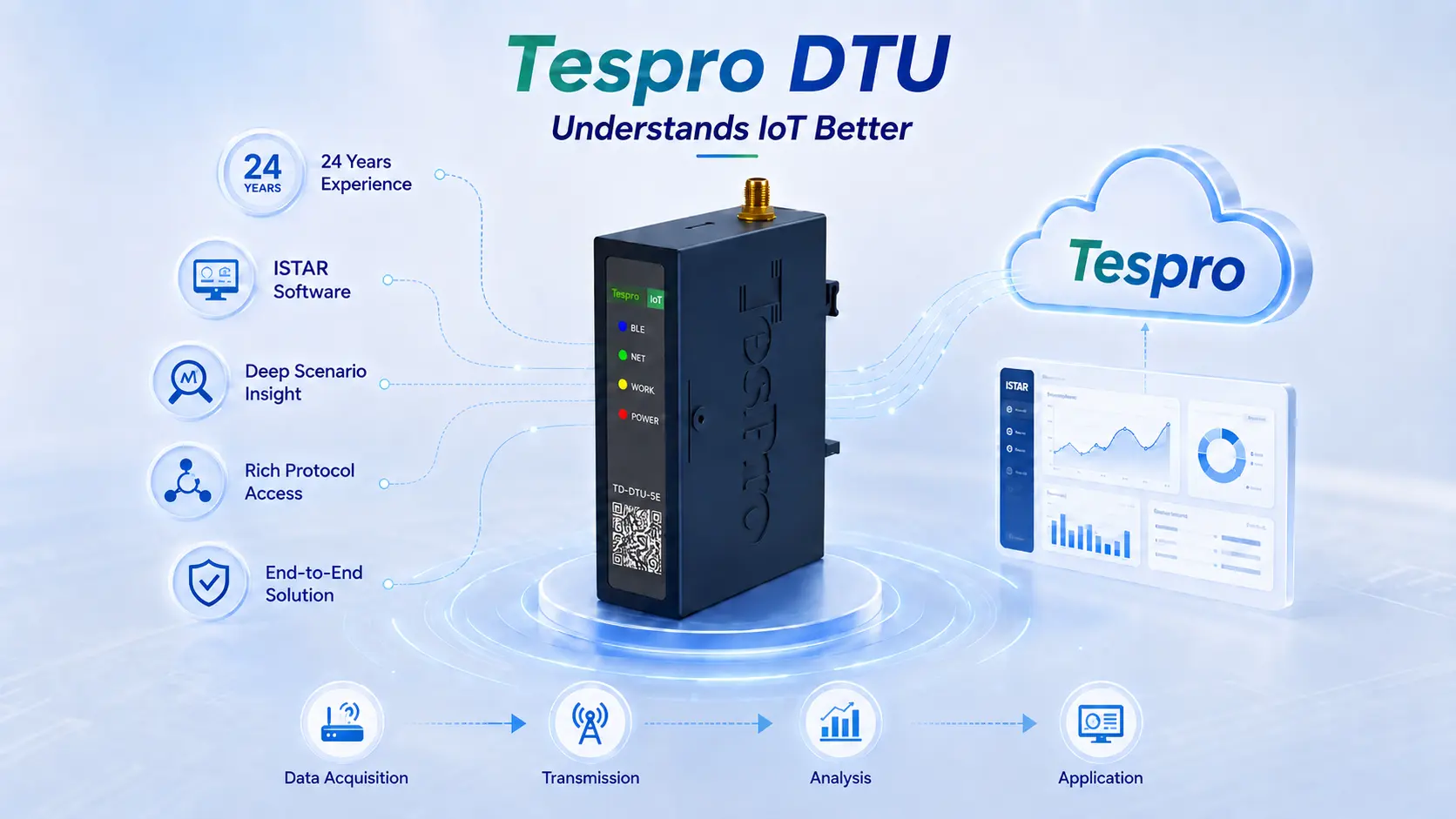

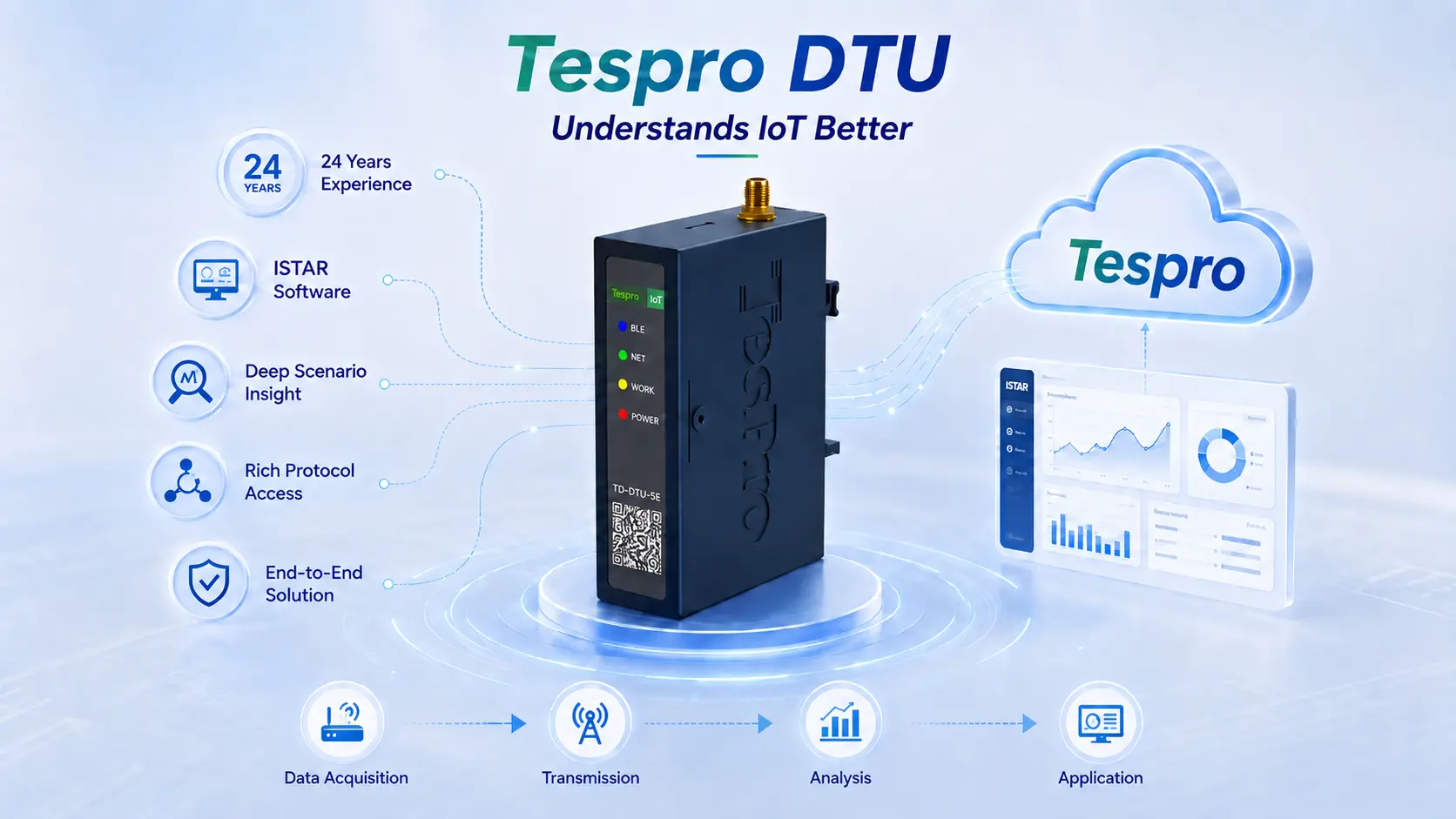
A 4G DTU connects distributed RS485 electricity meters, flow meters, heat meters or collectors to a head-end system. Several instruments may share a serial bus while the DTU initiates a cellular server connection. The design must address meter protocols, addresses, bus engineering, reconnection, offline retransmission and platform parsing. Relevant Tespro products include Tespro TD-DTU Series and representative options such as TD-DTU-SE、TD-DTU-PRO、TD-DTU-PLUS, for distributed meters, pump stations, equipment rooms, and remote-site data collection.
Scheduled upload or head-end pollingDesign the field bus first
Confirm protocol, IDs, baud, parity, cable, shielding, termination and device count. Different meter settings may require groups.
Scheduled upload or head-end polling
Scheduled upload controls platform load; polling supports on-demand reading but needs a stable session. Important records need timestamps and buffering.
TD-DTU with SEMS
Use TD-DTU when the platform parses raw meter protocols. Use a TG gateway when field parsing, aggregation or multi-protocol conversion is needed.
Selection and RFQ checklist
✓ Meter brand, protocol and address
✓ RS485 settings and wiring
✓ Upload or polling
✓ Server, APN and reconnect
✓ Timestamp, buffer and deduplication
✓ Site scale and SIM management
Frequently asked questions
Q: Which Tespro 4G DTU should be evaluated for remote meter reading?
A: TD-DTU-SE, TD-DTU-PRO, or TD-DTU-PLUS can be selected according to serial interfaces, cellular network, GNSS, installation space, power, and backup-battery requirements. Also confirm the meter protocol, bus topology, and platform connection method.
Q: How many meters can one DTU connect?
A: There is no universal number. Calculate from RS485 bus length, node addresses, baud rate, response time per meter, collection interval, frame length, power, and DTU capacity, then stress-test the target meters.
Q: Will meter data be lost during a cellular outage?
A: A configuration with local buffering and store-and-forward can reduce loss, while pure transparent transmission may not retain business data. Confirm buffer capacity, power-loss retention, replay order, and platform deduplication.
Q: Can meters from different brands share one DTU?
A: They can be evaluated when the physical interface, serial settings, addressing, and protocol are compatible. A Tespro TG Series gateway is normally more suitable when one site contains multiple protocols, complex point maps, or data-conversion requirements.