-1791966549842.webp)





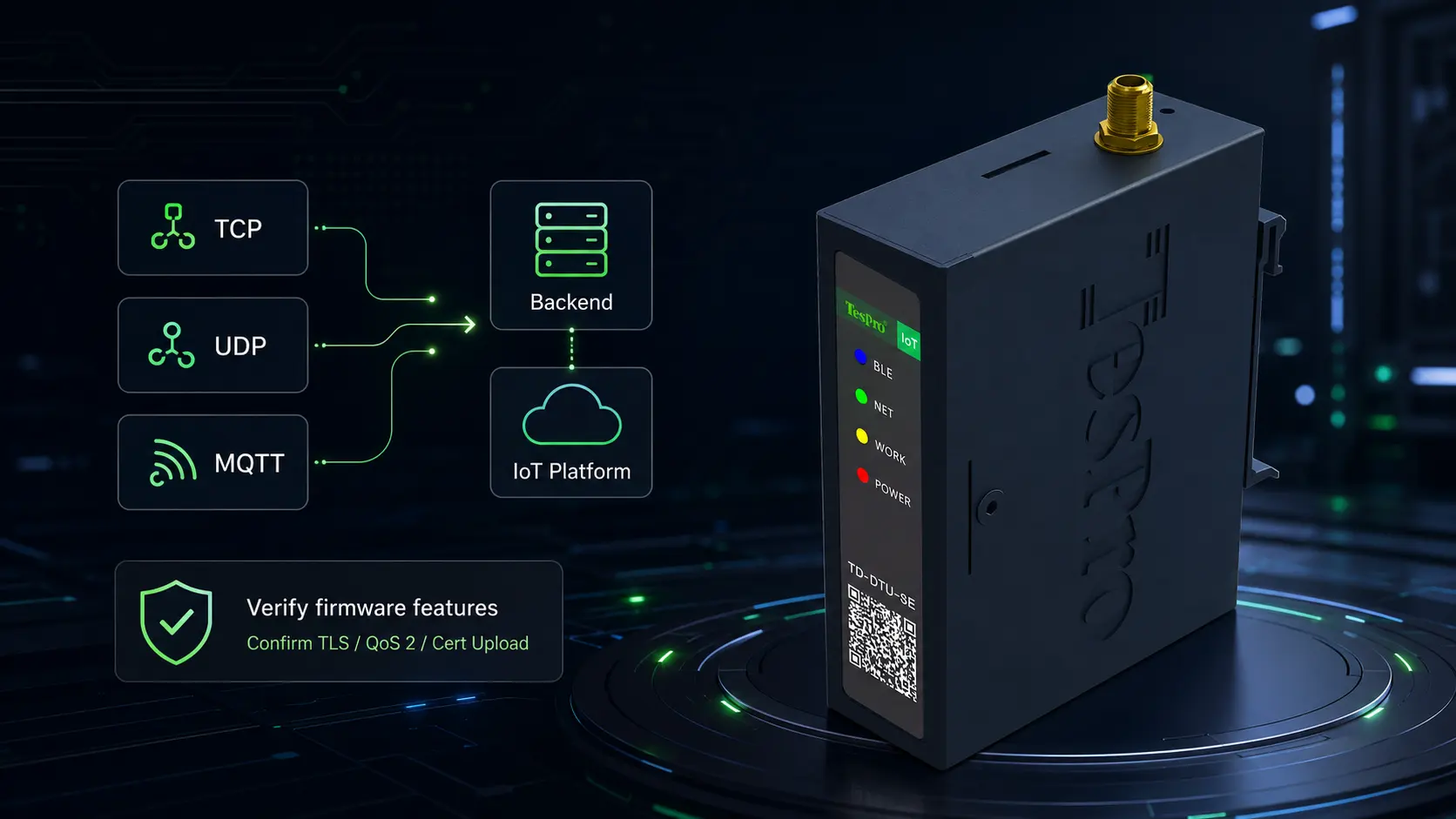

An industrial wireless DTU with MQTT can publish field data from meters or sensors to an IoT platform using a lightweight messaging method. Tespro DTU products can be evaluated for MQTT-based data transmission where the selected model, firmware and platform configuration support the required MQTT mode.
Key Takeaways
- This article should be careful with MQTT claims; verify model-level support.
- Explain MQTT benefits without saying it guarantees zero data loss.
- Mention QoS conditionally and accurately.
- Ask for broker address, port, topic, payload format and security requirements.
Why MQTT Is Used in DTU Projects
MQTT is a lightweight publish/subscribe protocol commonly used in IoT systems. It can help organize field data into topics and send messages to a broker, which then forwards data to applications.
For DTU projects, MQTT is useful when the customer already has an IoT platform or cloud broker that receives meter or sensor data.
Important Technical Conditions
MQTT behavior depends on broker configuration, QoS level, session settings, payload design, network quality and whether the DTU supports local buffering. If a device loses cellular signal before sending a message, the broker cannot store a message it never received.
Therefore, the article should avoid statements such as “MQTT always prevents data loss.” A safer statement is: MQTT can improve message handling when configured correctly.
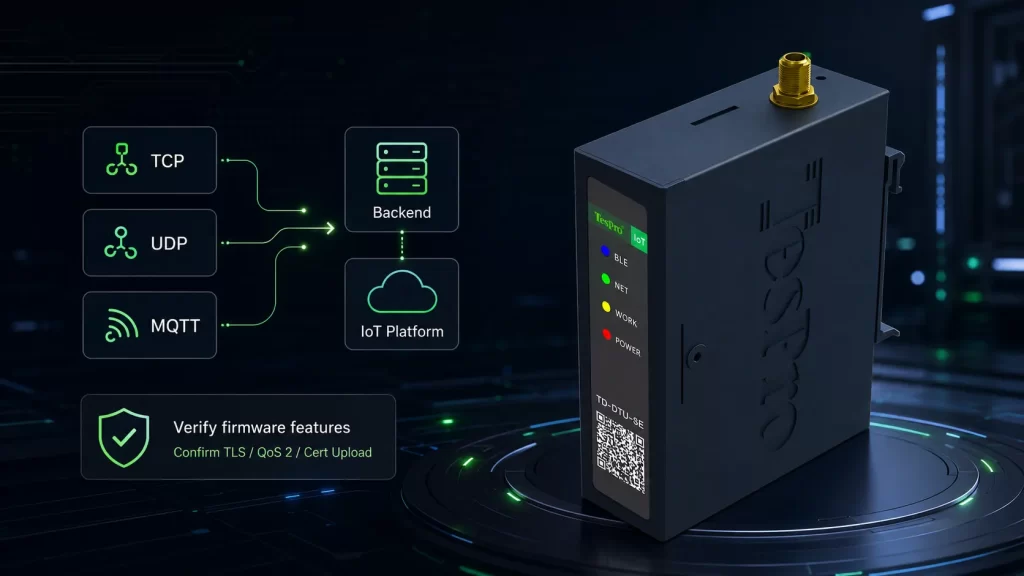
Tespro DTU Context
Tespro public DTU materials describe compatibility with TCP, UDP and MQTT for backend or IoT platform connectivity for selected DTU products. This makes MQTT a relevant topic for Tespro data transmission content.
Before publishing model-specific statements such as TLS, QoS 2 or certificate upload, confirm the firmware feature list.
Project Checklist
- MQTT broker address and port
- Client ID and authentication method
- Topic structure and payload format
- QoS requirement and session settings
- TLS or certificate requirement if used
- Reporting interval and offline buffering expectation
- IoT platform documentation
FAQs
Does MQTT require an Internet connection?
MQTT requires network connectivity between the DTU and the broker. The physical network may be cellular, Ethernet or another IP connection.
Does MQTT guarantee data delivery?
No. Delivery behavior depends on QoS, sessions, broker settings, network quality and local buffering support.
Can Tespro DTUs connect to any MQTT platform?
They can be evaluated for platforms that support the configured MQTT requirements. Compatibility must be confirmed by broker settings, security and payload format.
Need to Connect a DTU to an MQTT Platform?
Send Tespro your MQTT broker settings, topic format, payload format and security requirements. Tespro can help confirm DTU compatibility.