-1791966549842.webp)





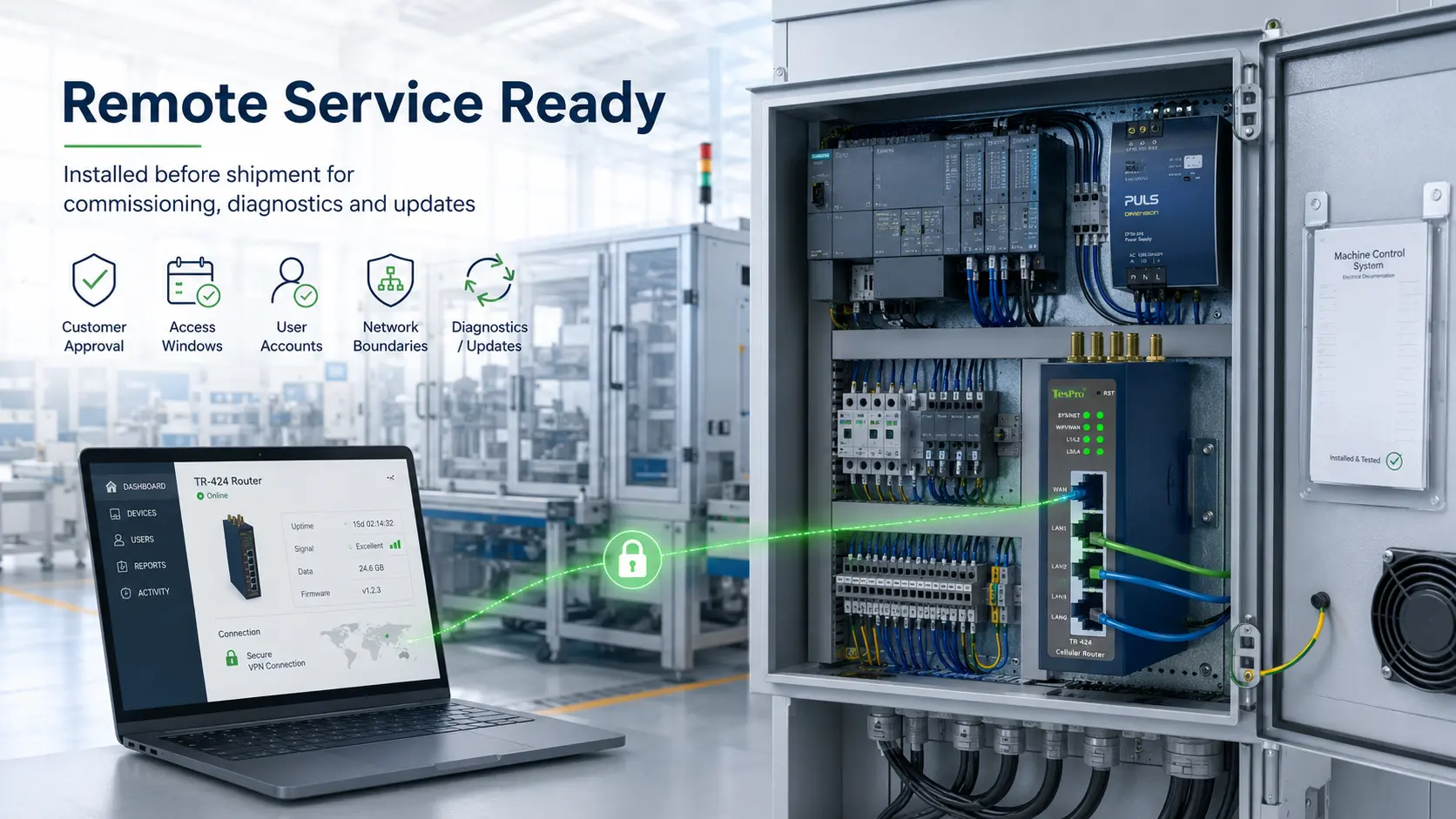

Machine builders can install an industrial router before shipment to create a standard remote service entry for commissioning, diagnostics and updates. The process must define customer approval, access windows, accounts and network boundaries.
Key Takeaways
- Standard hardware and configuration reduce service setup
- Remote service should be disabled by default or customer-authorized
- Site templates and asset records support scale
Why Do These Projects Commonly Fail?
Machine builders can install an industrial router before shipment to create a standard remote service entry for commissioning, diagnostics and updates. The process must define customer approval, access windows, accounts and network boundaries. In a real project, standard hardware and configuration reduce service setup and remote service should be disabled by default or customer-authorized must be considered in the same architecture. Begin with the workload, field devices and operating model rather than one marketing specification.
A practical sequence is to confirm destination countries and plc/hmi models, then verify customer network policy and remote-service workflow, and finally test site templates and asset records support scale with the real equipment. Record pass criteria so the design can be repeated across sites.
What Should the Pilot Cover?
Remote service becomes difficult to audit and maintain when engineers use different tools, shared accounts or ad-hoc port forwarding. Public content and project documents should therefore state model, firmware, regional network, options and environmental conditions and avoid unverifiable claims such as 'works for every project' or 'absolute reliability'.
How Tespro Fits
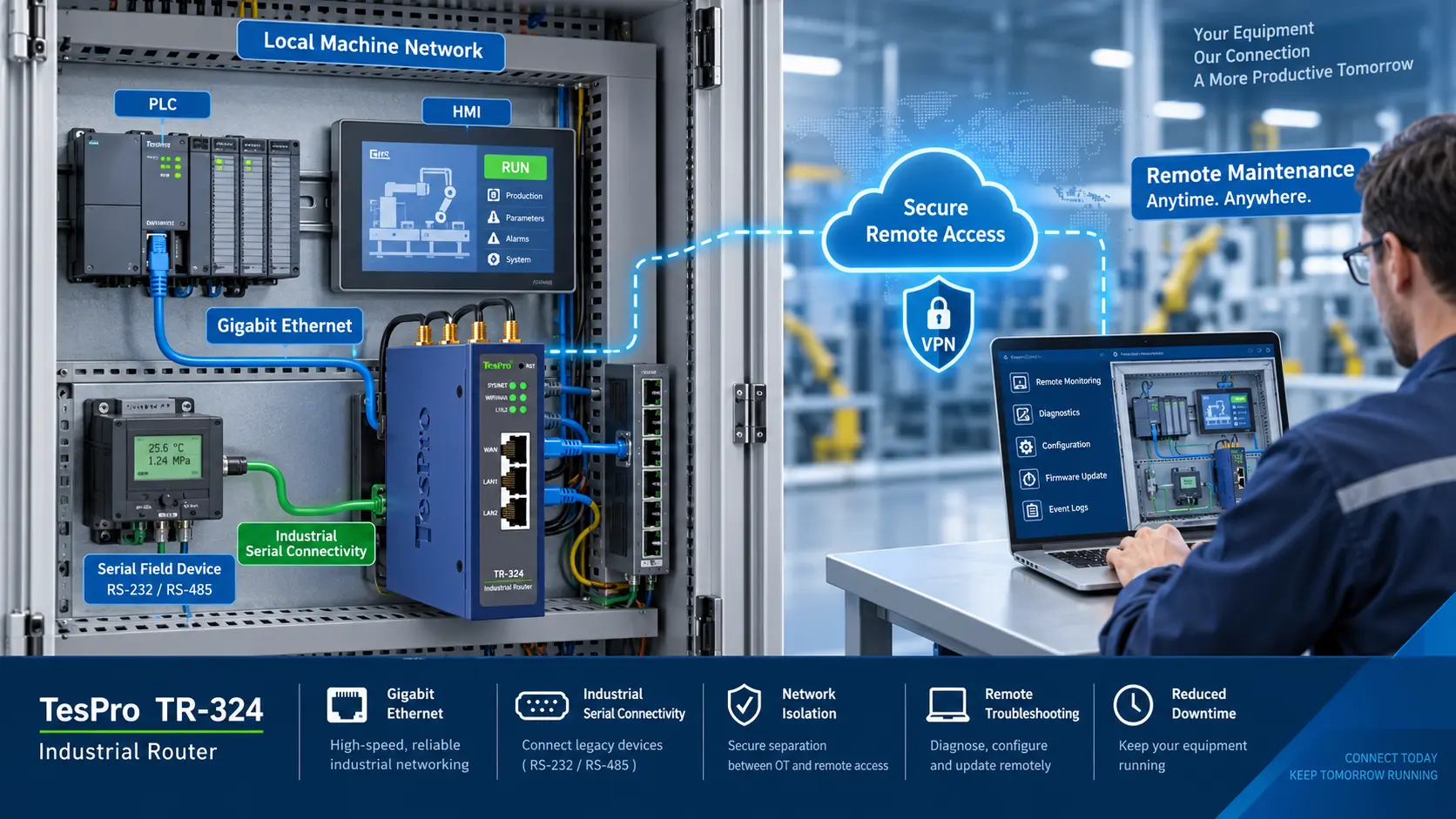
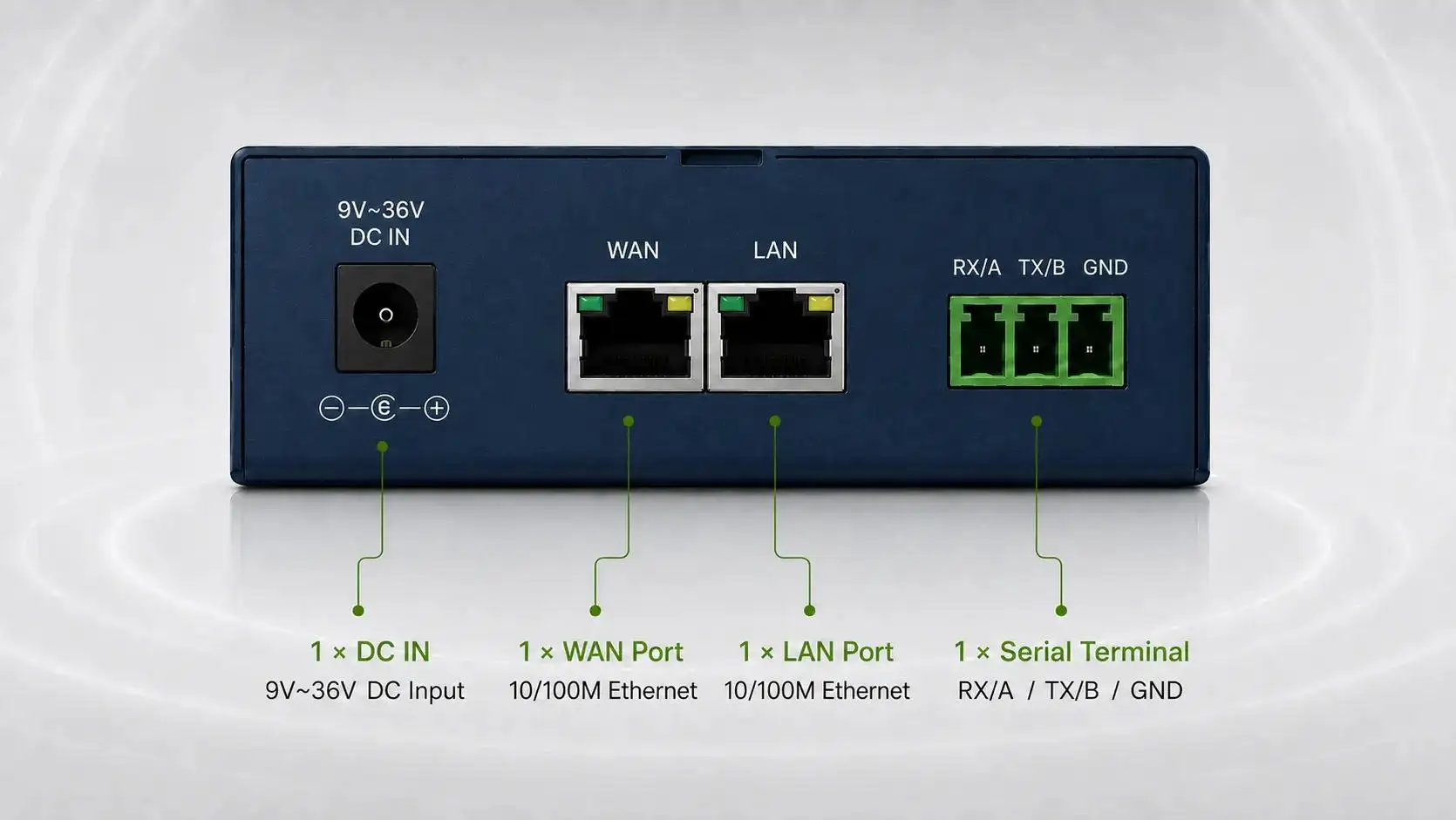
Tespro TR-400 Series provides machine OEMs with 4G/5G, Wi-Fi 6, Gigabit ports, serial interfaces and remote connectivity, with three- or five-port options by device count.
Decision and Verification Table
| Decision factor | What to verify |
| Standard hardware and configuration reduce service setup | Confirm against destination countries and document pass/fail criteria in the pilot or site test. |
| Remote service should be disabled by default or customer-authorized | Confirm against plc/hmi models and document pass/fail criteria in the pilot or site test. |
| Site templates and asset records support scale | Confirm against customer network policy and document pass/fail criteria in the pilot or site test. |
Compatibility and Selection Checklist
- ✓ Destination countries
- ✓ PLC/HMI models
- ✓ Customer network policy
- ✓ Remote-service workflow
- ✓ Users and permissions
- ✓ Fleet configuration needs
Frequently Asked Questions
Q: Must the customer open inbound firewall ports?
A: An outbound VPN or management connection can reduce the need for inbound openings.
Q: Can remote support replace all field service?
A: No. Hardware failure, installation, mechanical issues and safety work may still require on-site personnel.
Q: How can engineers be prevented from reaching other customer networks?
A: Use separate subnets, least privilege, firewall rules and a defined service boundary.