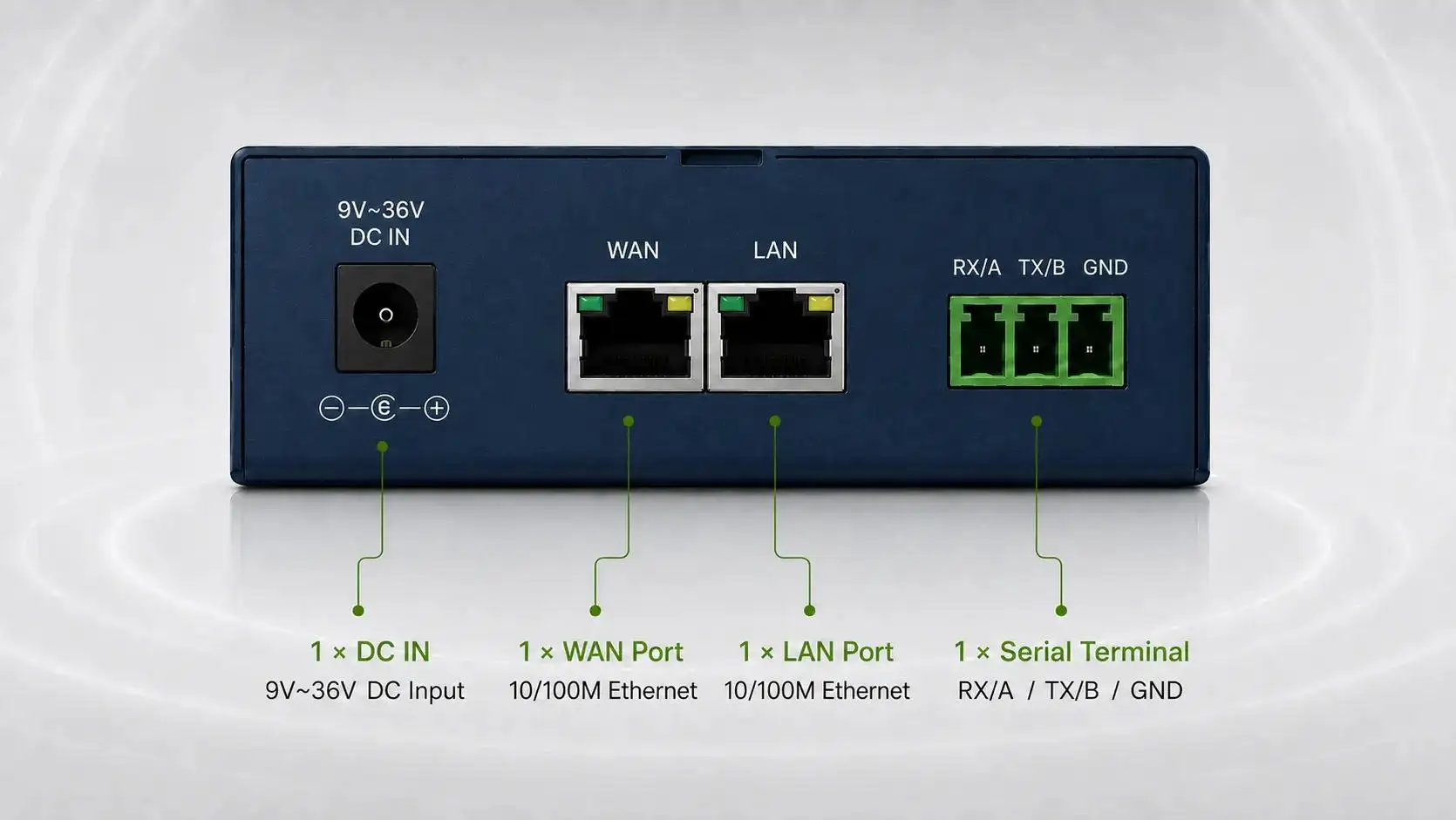
-1791966549842.webp)





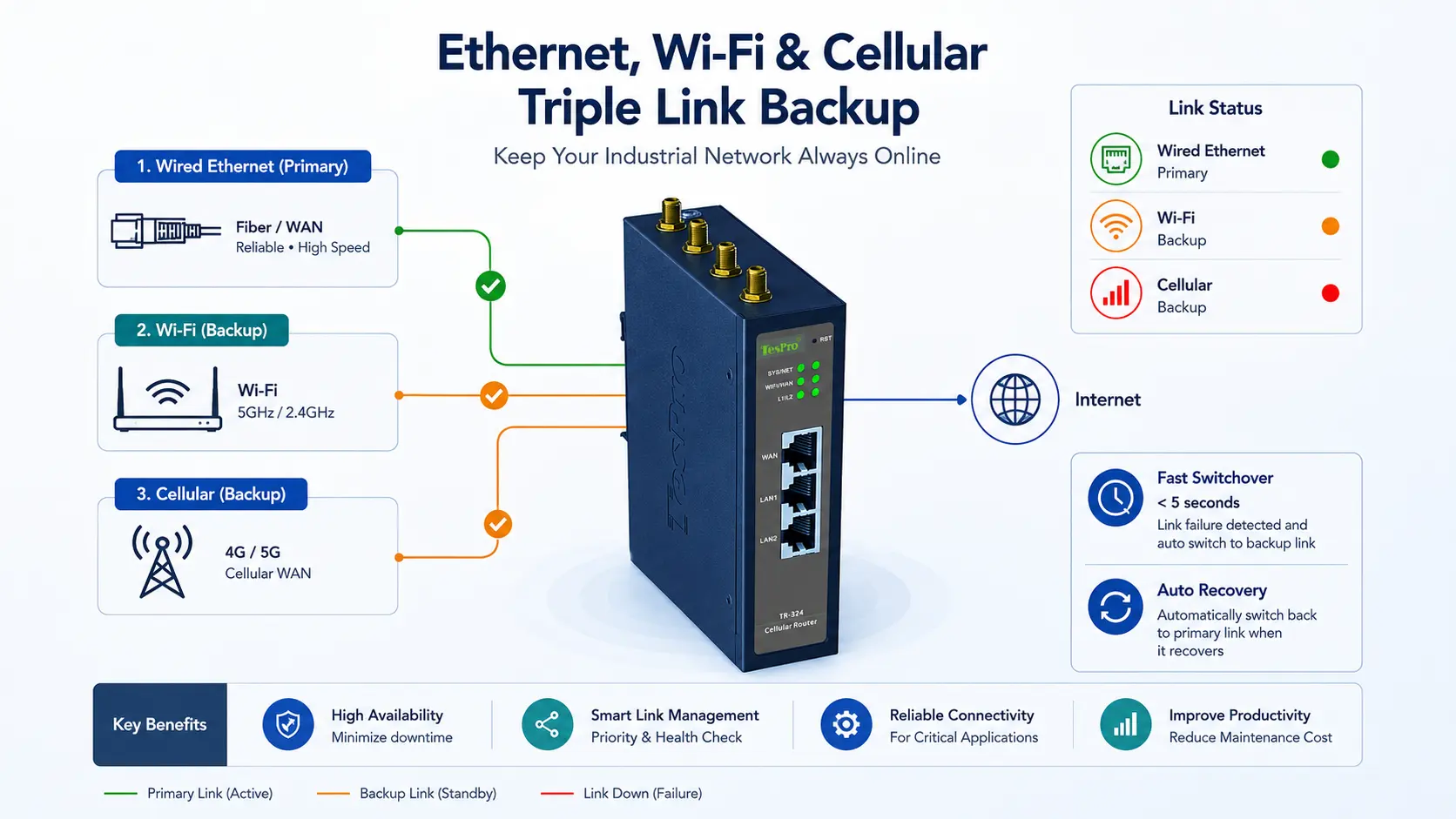

Multi-link failover uses path priority and health checks across wired, Wi-Fi and cellular connections. It can improve availability, but switching is not interruption-free. IP addresses, routes and VPN sessions may change, so thresholds, failback, session recovery and buffering must be designed.
Key Takeaways
• More backup links do not guarantee a good policy.
• Health checks should represent the real service, not only interface status.
• Failback that is too fast causes flapping; failback that is too slow increases cellular cost.
Health checks determine switching quality
The router may test a gateway, DNS, a specified server or an application heartbeat. Interval, failure count and timeout must balance outage time against false switching.
Priority and failback should include cost
A common design uses wired service first and cellular backup, with Wi-Fi as an optional intermediate path. Confirm that the primary link is stable before failback to avoid flapping and repeated VPN rebuilds.
Applications must expect the network to change
MQTT, SCADA, video and engineering software tolerate outages differently. Applications need retry, heartbeat, buffering, deduplication and session recovery.
How Tespro Fits
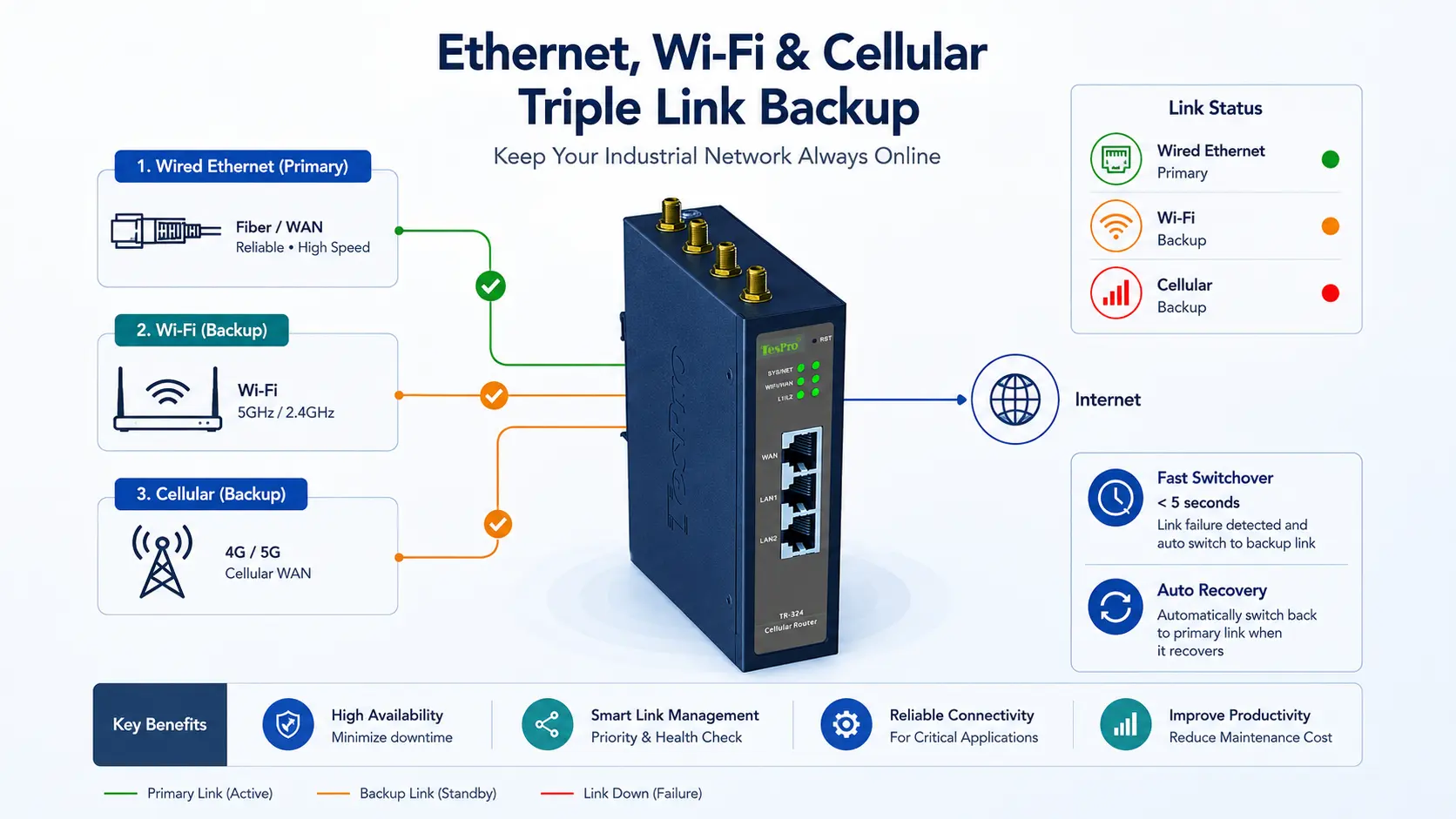
Selected Tespro TR Series models can be evaluated for wired, Wi-Fi and cellular paths together with dual-SIM redundancy. Confirm interfaces, health-check methods, policies and firmware functions from current documentation and test with the target carrier, VPN and application.
Compatibility and Selection Checklist
✓ Primary path, backup paths and priority
✓ Health target, interval, failure count and timeout
✓ Failover and failback conditions
✓ VPN, DNS and application recovery
✓ Cellular data and cost limits
✓ Buffering, replay and deduplication
Frequently Asked Questions
Q: Is dual SIM the same as three-link failover?
A: No. Dual SIM provides two cellular paths, while multi-link designs may also include wired and Wi-Fi connections.
Q: Can failover be completely seamless?
A: Usually not. Registration, routing or VPN may need to rebuild, so the application must recover.
Q: How can repeated failback be prevented?
A: Use a stability timer, failback threshold and anti-flapping logic before returning to the primary link.