-1791966549842.webp)





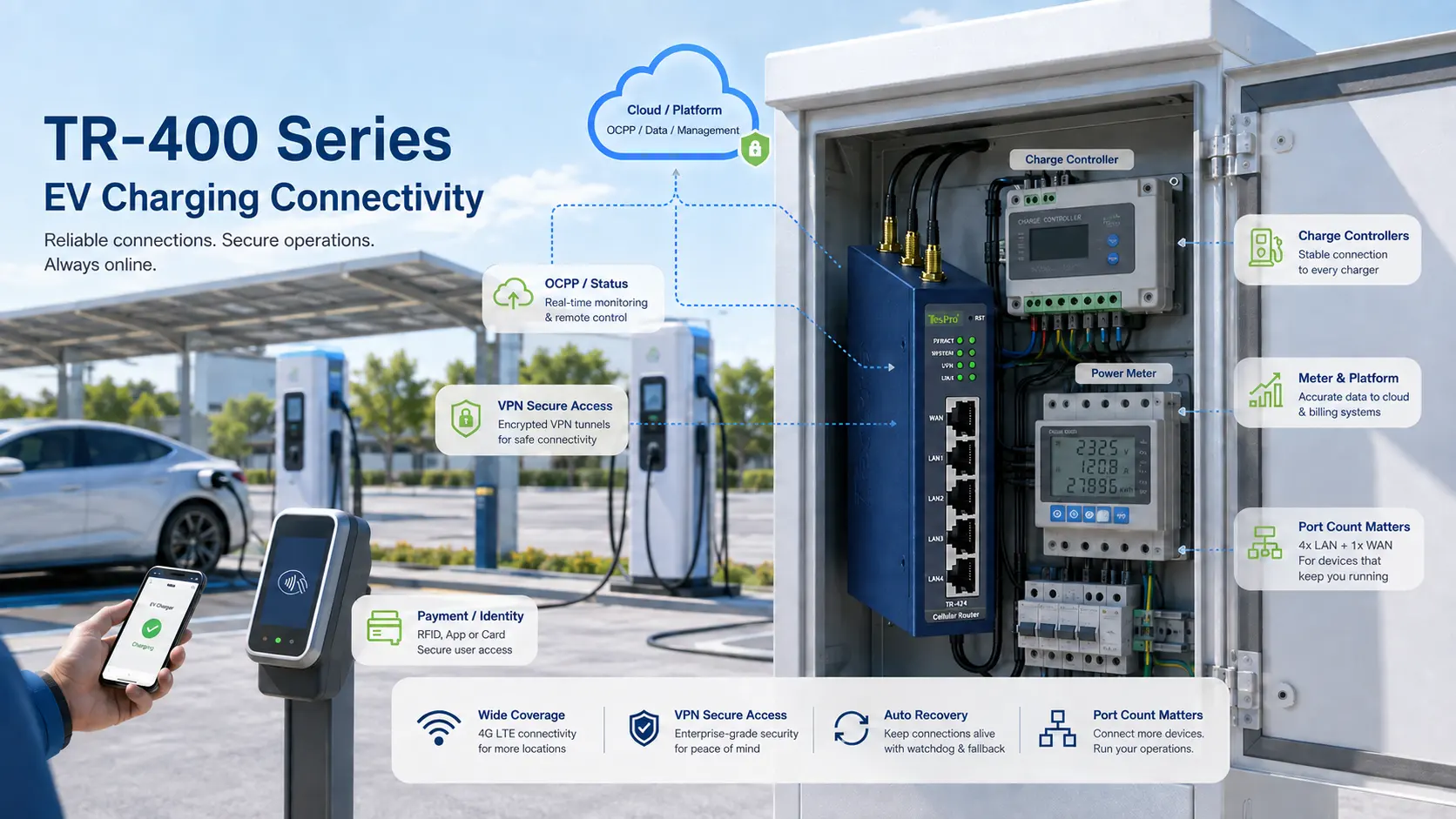

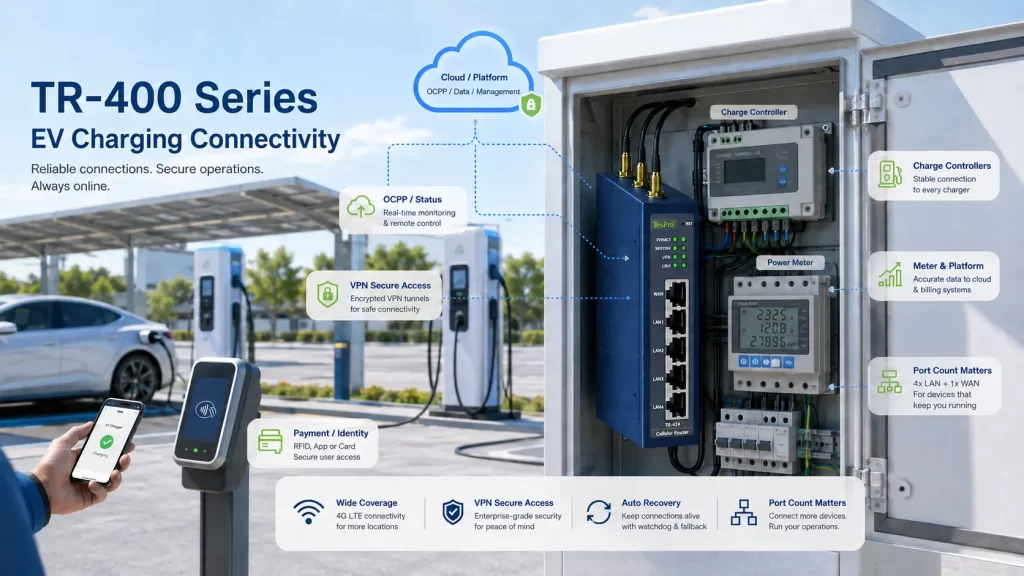
An EV charging router connects charge controllers, payment/identity systems, meters and platforms. Most OCPP and status traffic is modest, so coverage, VPN, recovery and port count often matter more than 5G peak speed.
Key Takeaways
- Charger count drives port and switching design
- Weak-signal unattended sites need automatic recovery
- Video and digital signage materially increase bandwidth
Start with the Application, Not the Model
An EV charging router connects charge controllers, payment/identity systems, meters and platforms. Most OCPP and status traffic is modest, so coverage, VPN, recovery and port count often matter more than 5G peak speed. In a real project, charger count drives port and switching design and weak-signal unattended sites need automatic recovery must be considered in the same architecture. Begin with the workload, field devices and operating model rather than one marketing specification.
A Clear Deployment Approach
A practical sequence is to confirm charger count and ocpp version and platform, then verify cameras/signage and carrier coverage, and finally test video and digital signage materially increase bandwidth with the real equipment. Record pass criteria so the design can be repeated across sites.
Operational and Maintenance Conditions
The router is not an OCPP server or charger controller; protocol logic belongs to the charger and platform. Public content and project documents should therefore state model, firmware, regional network, options and environmental conditions and avoid unverifiable claims such as 'works for every project' or 'absolute reliability'.
How Tespro Fits
Tespro TR-424/TR-444 fit 4G charging sites; TR-425/TR-445 fit sites needing 5G or higher uplink. Choose three or five ports by local device count.
Decision and Verification Table
| Decision factor | What to verify |
| Charger count drives port and switching design | Confirm against charger count and document pass/fail criteria in the pilot or site test. |
| Weak-signal unattended sites need automatic recovery | Confirm against ocpp version and platform and document pass/fail criteria in the pilot or site test. |
| Video and digital signage materially increase bandwidth | Confirm against cameras/signage and document pass/fail criteria in the pilot or site test. |
Compatibility and Selection Checklist
- ✓ Charger count
- ✓ OCPP version and platform
- ✓ Cameras/signage
- ✓ Carrier coverage
- ✓ Dual SIM
- ✓ Power and cabinet temperature
Frequently Asked Questions
Q: Do EV chargers require 5G?
A: Most charging control and billing data does not require 5G; additional video workloads may.
Q: Must the router understand OCPP?
A: Usually no. The router provides IP connectivity; OCPP is handled by the charger and platform.
Q: What value does dual SIM add?
A: It reduces single-carrier risk, but failover and platform-session recovery still require validation.