-1791966549842.webp)





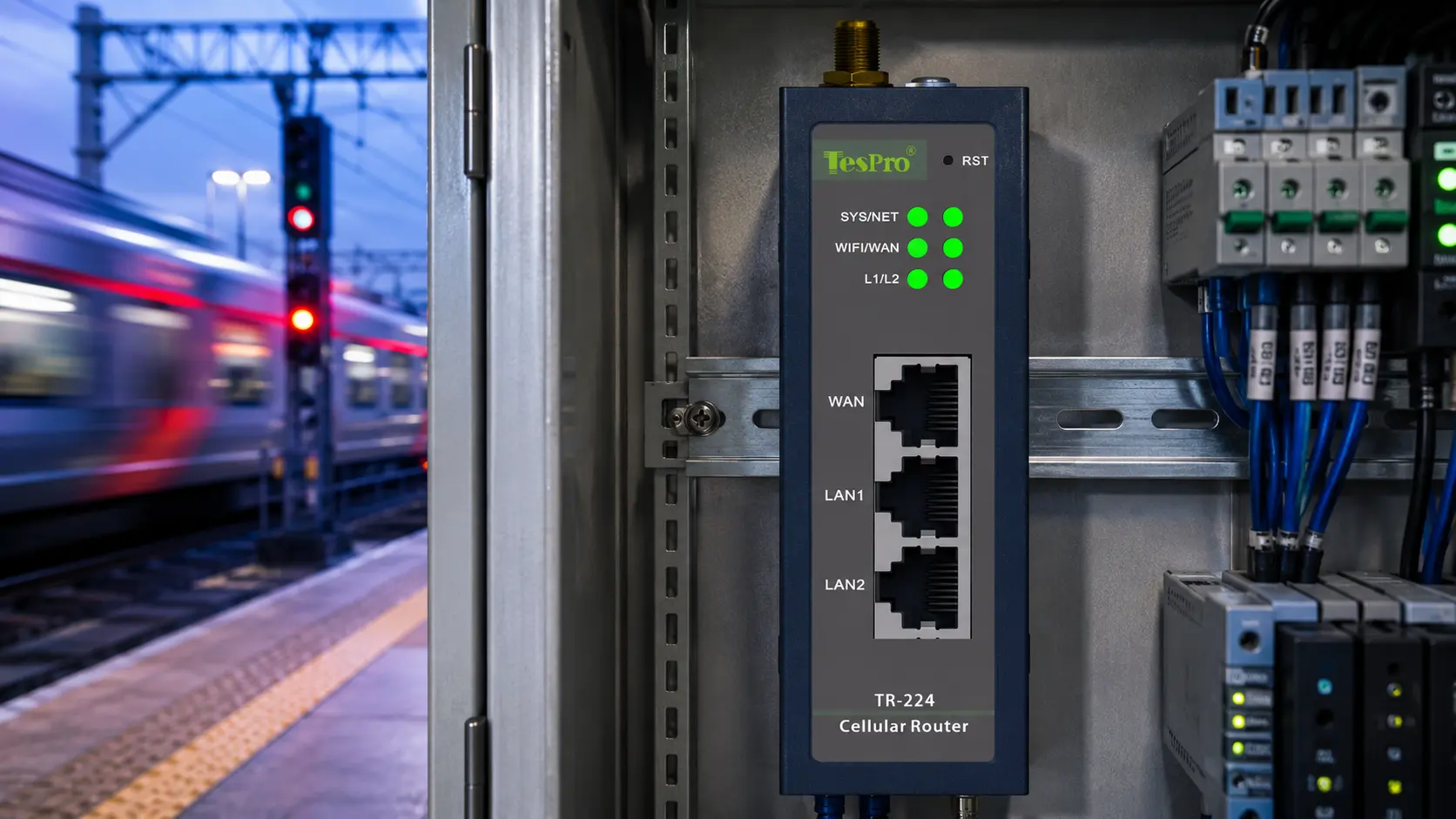

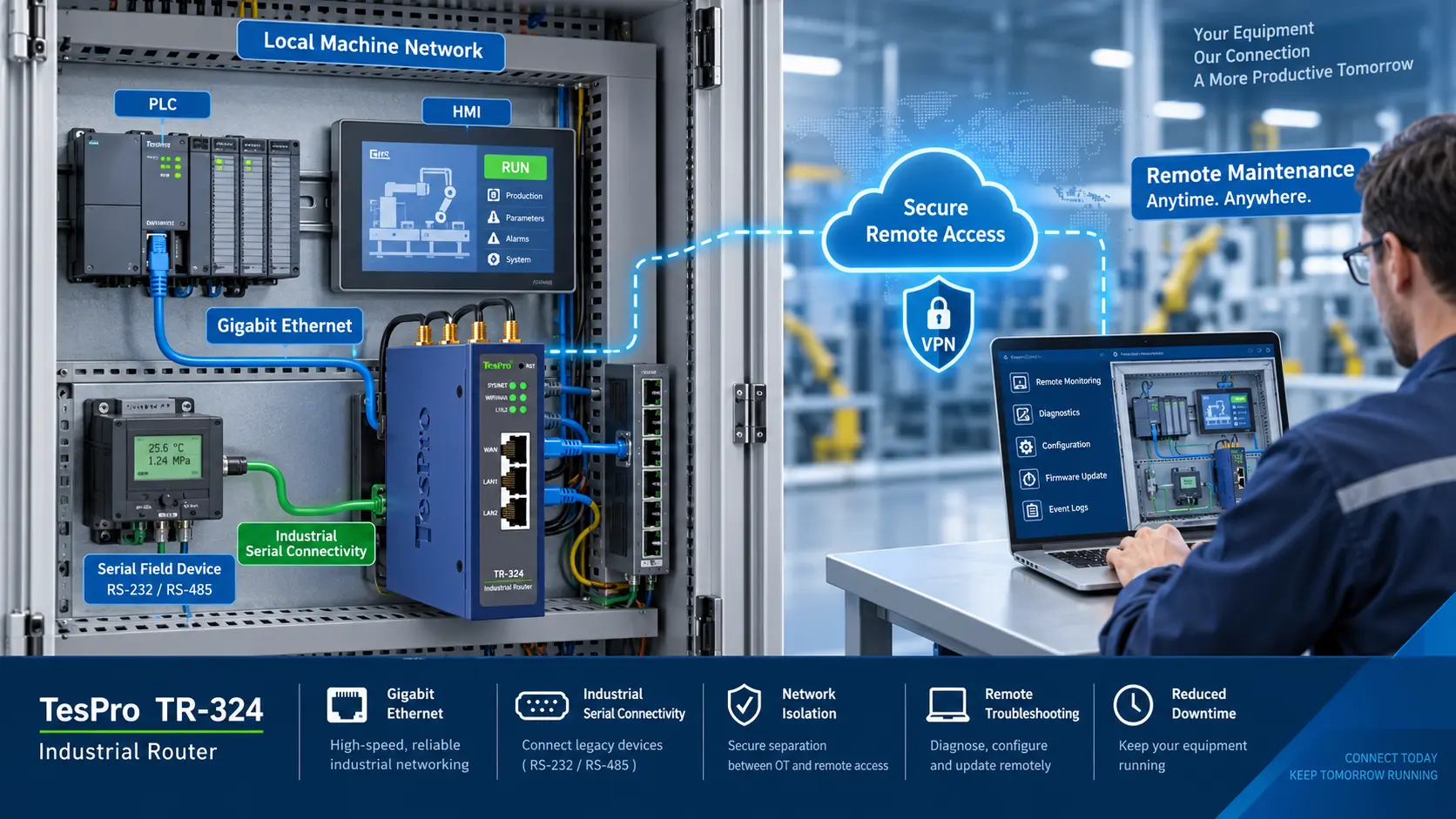
In industrial IoT projects, uptime is everything. A dropped connection can mean lost data, delayed alarms, or costly site visits. That is why buyers are asking what happens when the primary network fails. Tespro industrial routers are built around redundant connectivity, including dual SIM, Ethernet, Wi‑Fi, and automatic failover. If one link becomes unstable, the router switches seamlessly to another without manual intervention, typically within seconds. VPN support ensures secure communication even after a network change.
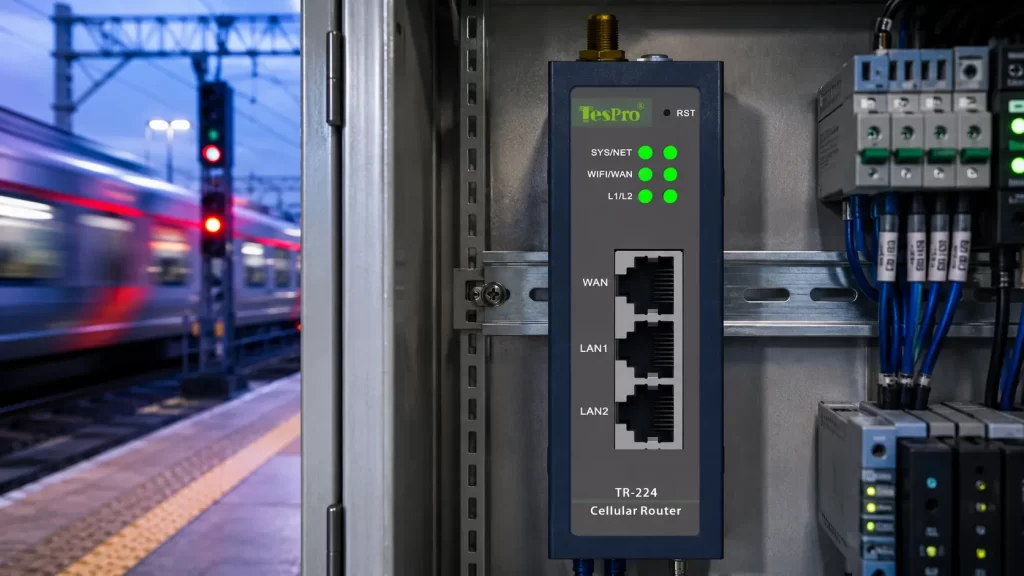
Network instability in industrial environments can arise from many causes, such as varying carrier signal quality in remote substations or solar farms, electromagnetic interference along highways, or voltage fluctuations from large equipment in industrial parks. Ordinary commercial routers often struggle with these conditions, but Tespro routers are designed specifically for real‑world scenarios and validated through numerous field deployments.
What happens if the network signal becomes unstable or drops?
Tespro routers automatically switch between dual SIMs or network types such as cellular, Ethernet, or Wi‑Fi to maintain continuous communication. They also support link quality detection, triggering failover when packet loss exceeds a set threshold.
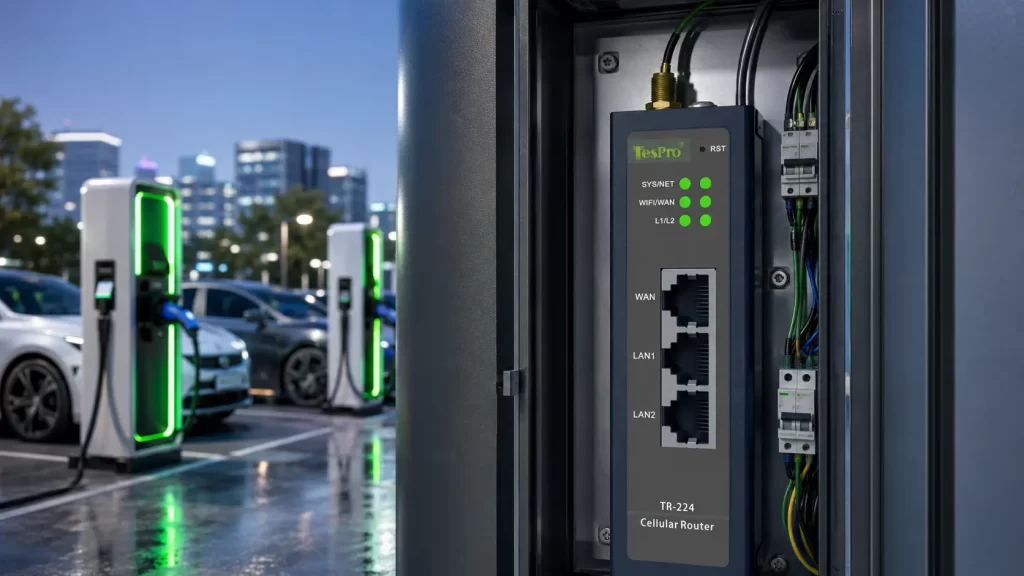
Real‑world benefits are clear. In a large desert solar farm where no single carrier offers perfect coverage, Tespro routers automatically switched between carriers day and night, transparent to the monitoring platform. In a smart water project with hundreds of underground pump rooms where 4G signals were weak, combining dual SIM with Ethernet backup raised data integrity from 92% to over 99.8%. Redundant connectivity directly reduces operational costs, as a single site visit can cost hundreds of dollars. With Tespro, you get operational certainty, not just a router.