-1791966549842.webp)





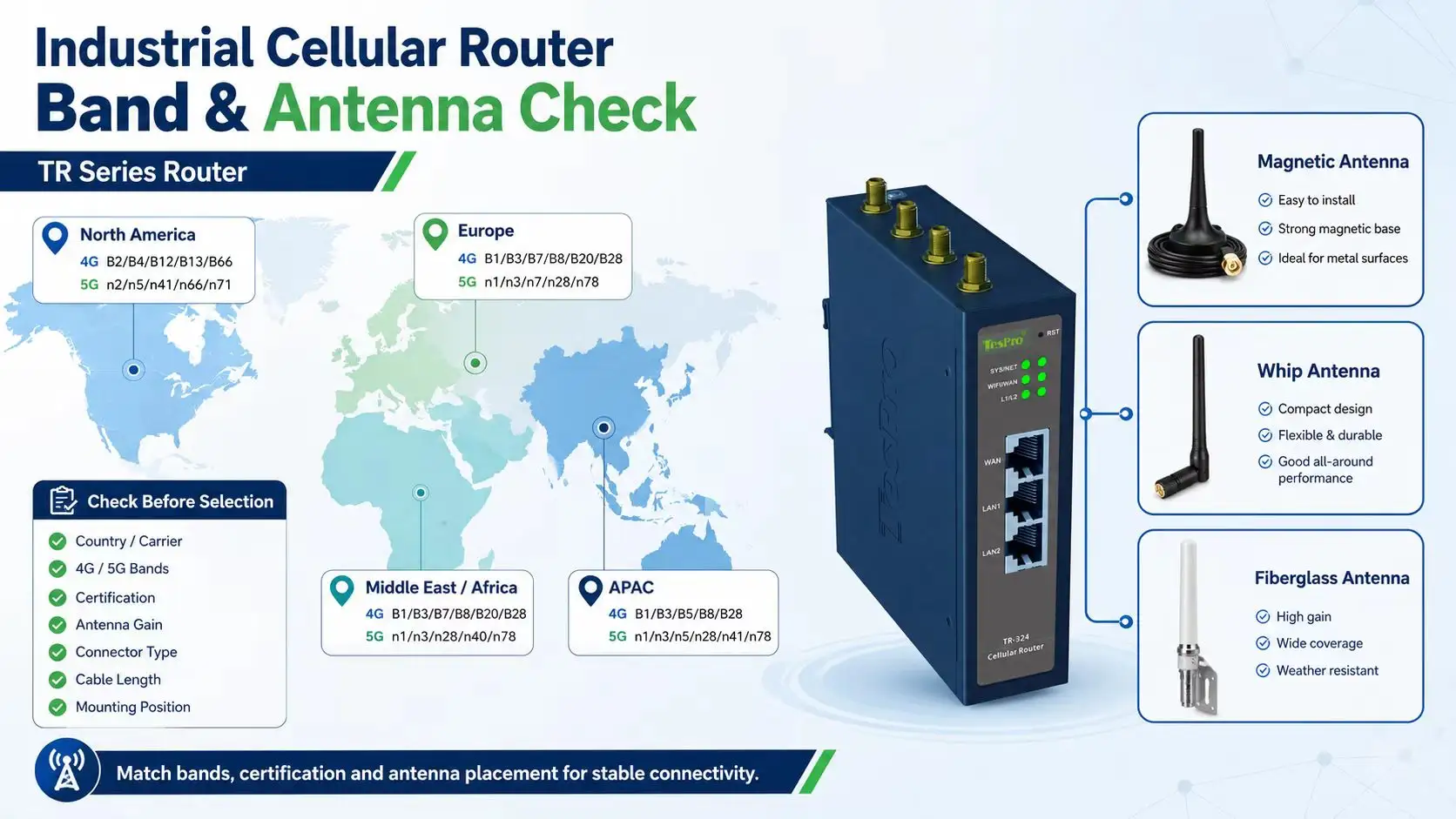

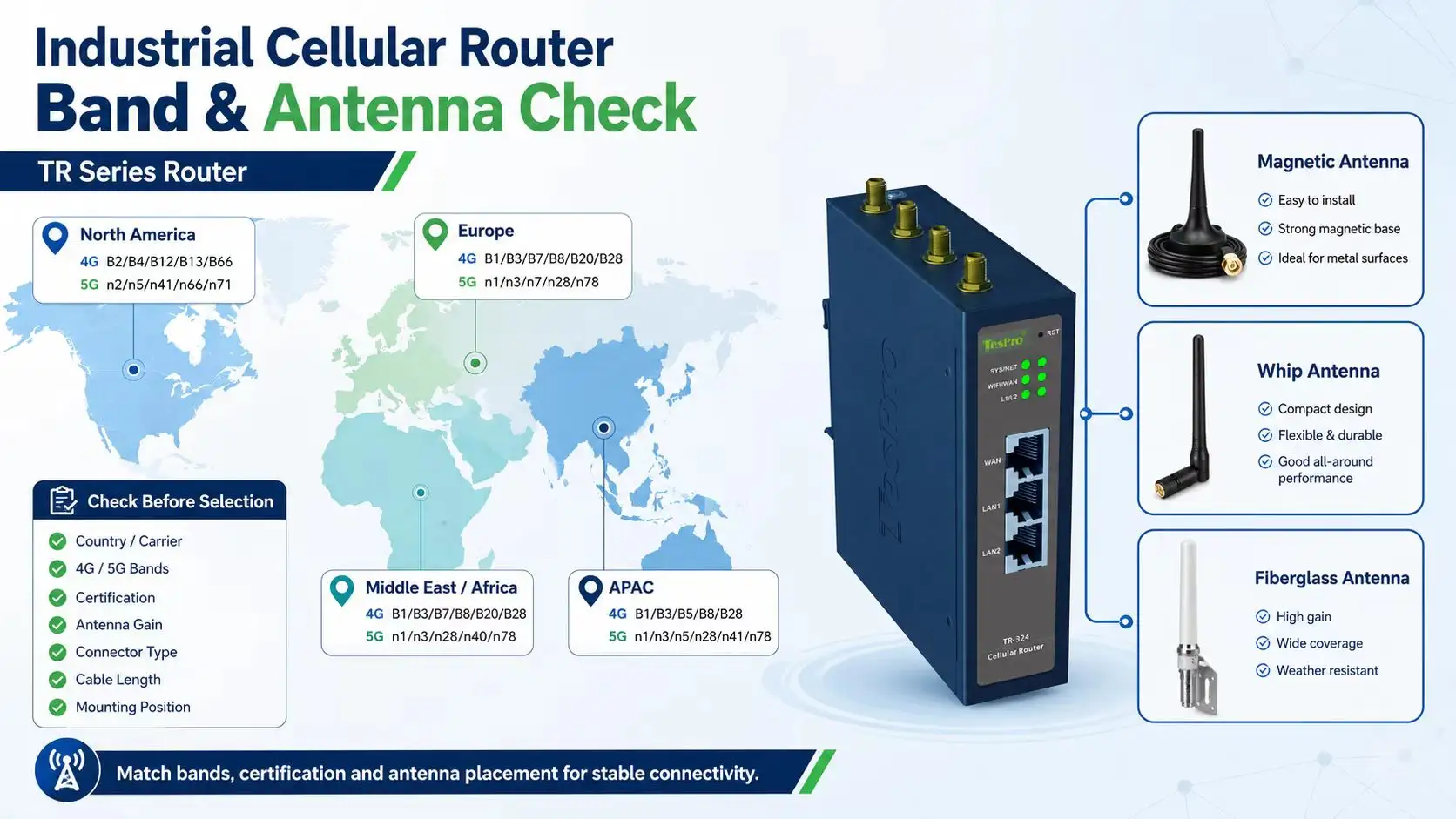
Whether an industrial cellular router works in a target country depends first on modem-band compatibility with the carrier, then on certification, SIM/APN settings, antenna coverage and installation. A “4G” or “5G” label is not enough; provide the country and carrier before purchase.
Key Takeaways
• Band compatibility is more specific and important than the generation label.
• Higher antenna gain is not always better; height, cable loss and coverage pattern matter.
• Regional configurations and certifications may use different part numbers even when the enclosure looks identical.
Start with country and carrier
One country may have several carriers with different band combinations. Consider public or private networks, roaming and planned shutdowns of older cellular generations.
The antenna is part of the system
The antenna must match the bands, connector and router port. Long feeder cables create loss, metal enclosures block signals, and multi-antenna systems require suitable spacing and orientation.
Record meaningful field-test data
Do not rely only on phone signal bars. Record RSRP, RSRQ, SINR, registration time, redial, throughput and handover behavior at the worst expected location.
How Tespro Fits
Tespro TR Series routers can be supplied in configurations intended for different regions. Sales and technical confirmation should use the target country, carrier and bands rather than assuming one configuration is universal. Antennas, connectors and certifications must be checked together.
Compatibility and Selection Checklist
✓ Country, region and main carrier
✓ 4G/5G bands and private-network needs
✓ SIM type, APN and roaming policy
✓ Certification, plug and power standards
✓ Antenna bands, gain, connector and cable
✓ Enclosure, site and worst-location testing
Frequently Asked Questions
Q: Are more supported bands always better?
A: Not necessarily. The important requirement is coverage of the actual carrier bands while meeting cost, certification and supply needs.
Q: Can a home-router antenna be used?
A: Only when frequency range, impedance, connector and installation match. A validated industrial antenna is preferred.
Q: Can one model have different regional specifications?
A: Yes. Modem, bands, certification and firmware may vary by regional part number.