-1791966549842.webp)






Introduction
Smart manufacturing and Industry 4.0 are based on the rapid, reliable, and secure transport of data from machine to control, to the cloud. Many of the traditional WAN architectures are cumbersome and costly and tend to have single points of failure. Where traditional WANs end is the beginning of the Industrial Router and SD-WAN (Software Defined Wide Area Networking). This combination can revolutionize the connectivity of factories, energy distribution, and logistics. This document will help you understand SD-WAN and its value to the automation of industries. Also, note the advanced features of Industrial Cellular Routers like the Tespro TR-324 and the ways this technology enabled Smart Networks in manufacturing.
1. What is SD-WAN? An Industry Simple Explanation
Within the WAN, the control layer and the hardware layer are typically coupled. In traditional WAN/MPLS, expensive and lengthy procedures to set the WAN are inevitable. SD-WAN intelligently directs the traffic over multiple links (4G/5G, Fiber, Broadband) through the use of software.
•Centralized management: Edge routers can be set and supervised from a single cloud-based dashboard. Even the on-site IT personnel can be reduced, if not eliminated.
•Dynamic path selection: The best link is selected for the traffic path.
•Reduced operational costs: SD-WAN brings costs associated with WAN down by as much as 60% when compared to MPLS, as it utilizes broadband and cellular links.
An Industrial Router with SD-WAN can, essentially, convert remote pumping stations, and even mobile AGVs, into intelligent network nodes that self-heal.
2. The Role of an Industrial Router in an SD-WAN Architecture
An Industrial Router is a part of an edge gateway and connects SD-WAN to factory equipment. An industrial router is different from a consumer/router in a factory setting because industrial routers need to handle dust, extreme temperatures, and different electromagnetic disruptions while also providing WAN options.
•Multi-link aggregation: 4G LTE, wired Ethernet, and Wi-Fi connections are bonded by the router and made available to WAN with no single point of failure.
•Embedded SD-WAN client: An Industrial Router is a SD-WAN client or supports SD-WAN services of tunneling and offers a variety of light protocols of IPsec, VxLAN, or GRE.
•Industrial protocol awareness: Some routers are able to accommodate SD-WAN by routing and prioritizing Modbus TCP, PROFINET or EtherNet/IP traffic.
If deployed to a Factory cell or a Remote terminal unit, the Industrial Router serves as the edge gateway to the SD-WAN and conveys telemetry to the Orchestrator.
3. How SD-WAN Optimizes Smart Manufacturing Networks (Using Industrial Routers)
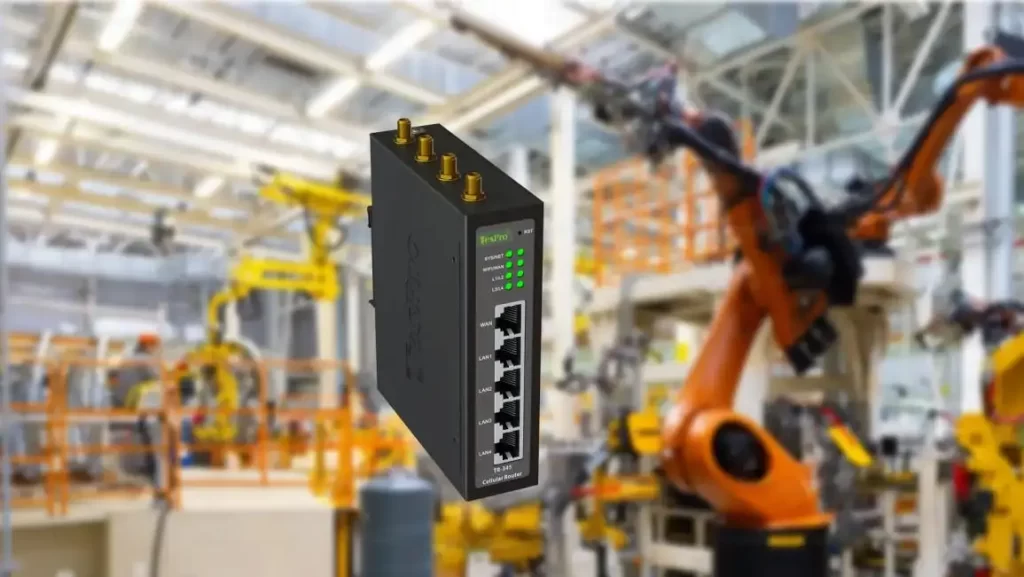
Smart Manufacturing has a need for requirements that are exactly met with the combination of SD-WAN and an Industrial Router. The requirements have to do with the need for low latency (less than 10ms for motion control) and the need for great reliability (greater than 99.999% uptime) coupled with secure, remote access. Here are the main optimization methods.
•Automatic failover for zero downtime: The production line is kept alive if SD-WAN detects a lost fiber or a failed 4G connection and automatically shifts traffic to a different port on Ethernet or to a different SIM.
•Intelligent QoS for critical traffic: the router can provide a higher or lower order of traffic for different tasks e.g. the highest for real-time PLC commands, mid for video surveillance, and low for firmware updates.
•SD-WAN and end-to-end encryption: For example, the Industrial Router can meet the IEC 62443 security standards by creating separate virtual tunnels (e.g. engineering access versus telemetry data).
•Edge breakout and reduced latency: SD-WAN enables the Industrial Router to cancel the backhaul of local data by allowing the backhaul to breakout to the Internet, reducing the round trip time to 30% to 50%.
•Remote troubleshooting simplified: SD-WAN's zero-trust overlay allows the Industrial Router to grant technicians secure access to a Robot Controller or Variable Frequency Drive without opening any inbound firewall ports.
Overall, a 2025 industry study reports that SD-WAN integrated into Industrial Routers decreased network-related stoppages by 72% during the first 6 months of deployment in a typical automotive assembly plant.
4. Key Elements of an SD-WAN Compatible Industrial Router
SD-WAN's full potential will only be realized if certain hardware and/or software elements are integrated into the Industrial Router as listed below:
•Dual active standby with dual SIM: Enables load-sharing and fail-over.
•Wide operating temperature (-40°C to 75°C): Enables continued operation in environments beyond room temperature.
•Multiple Gigabit Ethernet ports: At least 2 LAN ports and a WAN/LAN combo port.
•RS232/RS485 Ports: These are also critical to legacy Modbus or BACnet devices that also rely on SD-WAN.
•Hardware watchdog and dual power input These features are combined for self-recovery from software lockups. They also include redundant DC jack and terminal block power, so unexpected outages will not occur.
•VPN and tunneling support These protocols are all critical for constructing the SD-WAN overlay.
Without any of these protocols, the robustness of your SD-WAN deployment will be impacted.
5. Real-World Impact: SD-WAN + Industrial Router
Let's take as an example a large, international food and beverage company that has 20 of its own remote filling stations. All of these stations use an Industrial Router that connects a tank monitor, a flow meter, and a security camera to the corporate network over a 4G connection.
•Before SD-WAN: SIM cards would frequently lock up or disconnect among the many areas of weak signal coverage. This would result in a manual failover that would take 20 minutes to complete and would also cause the inventory to lose sync.
•After SD-WAN with smart industrial routers: The routers automatically switch between 2 carriers by the real-time signal strength. When the tank level alert needs to be transmitted in real time, the video traffic is deprioritized. The central IT team can provision new sites in under an hour using zero-touch deployment.
•The result: 99.96% uptime, 45% lower cellular data cost (using intelligent traffic shaping), and a fully visible industrial WAN.
6. Tespro TR-324: SD-WAN Industrial Router
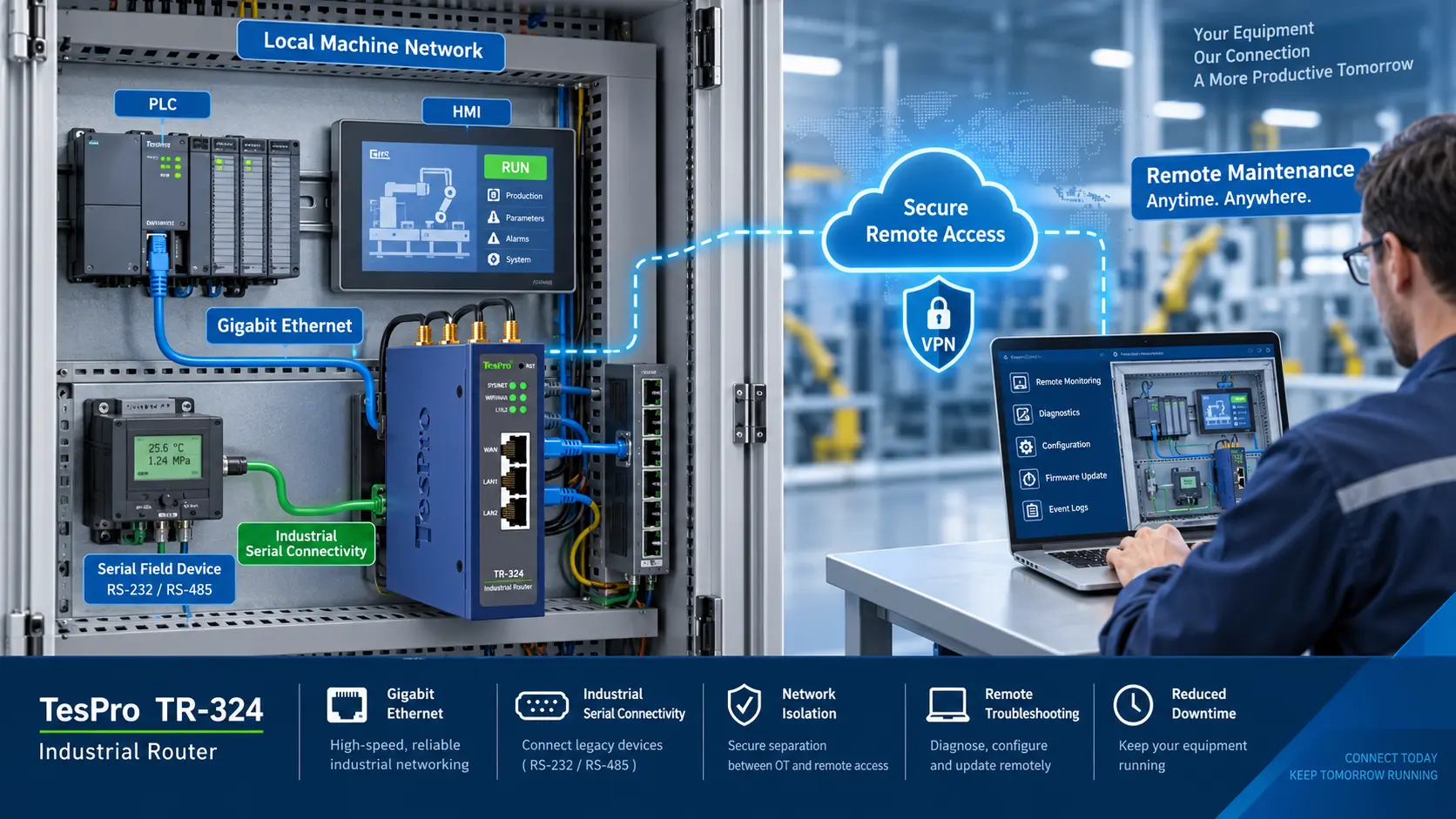
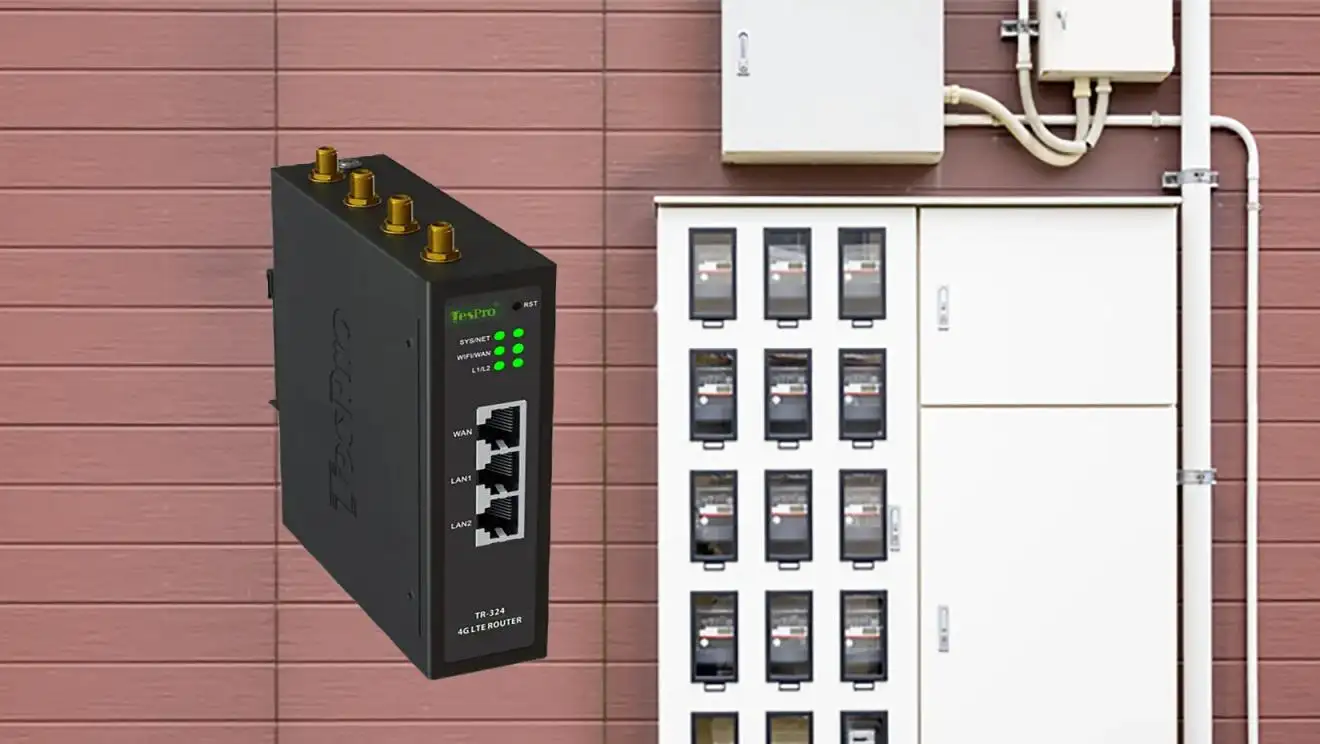
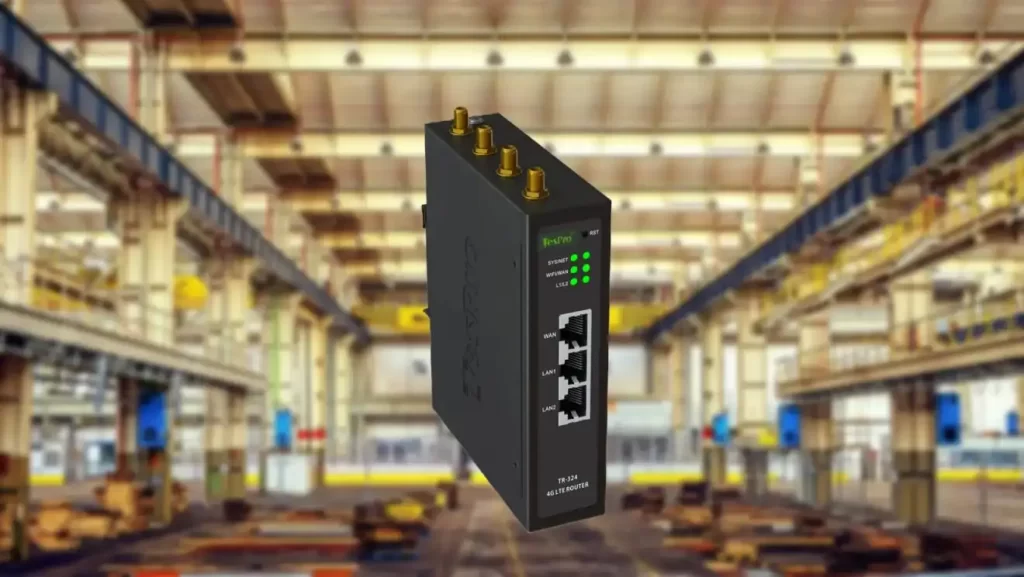
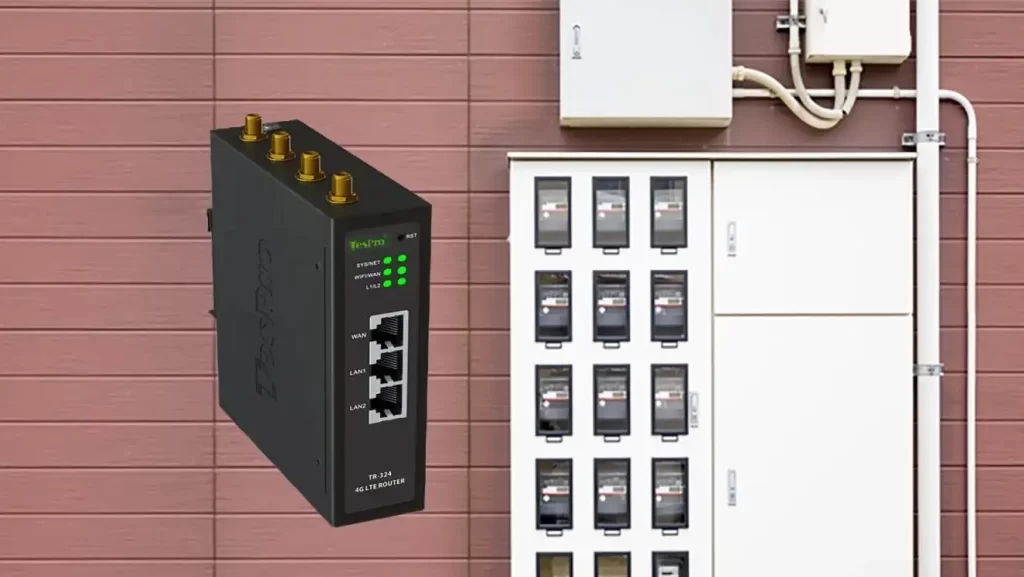
Smart manufacturing and SD-WAN require strong hardware support. The Tespro TR-324 smart-start industrial cellular router supports this need. The system provides traffic fine control and flexible connections and is compact enough to fit on a DIN-rail.
Significant design and technical features of the TR-324 include:
•Operating temperature range of -40°C to +75°C: The TR-324 can be located and will function reliably even in the extreme cold and next to a hot furnace. Industrial grade components are used in the TR-324 beyond the limits of standard components of a consumer grade router.
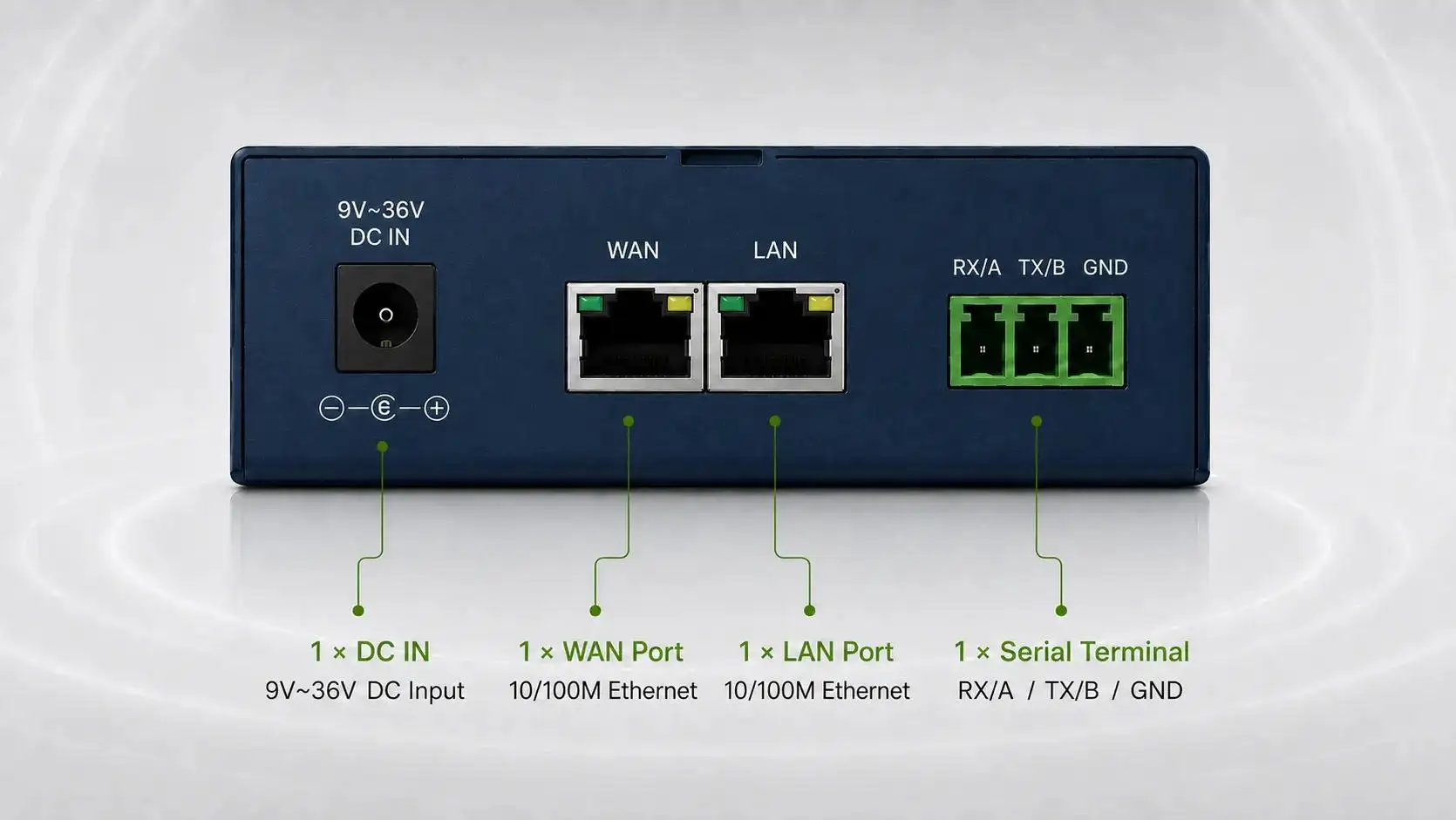
•Dual power redundancy (12-36V DC): Power can be supplied via a DC jack or a terminal block. Should one fail the other will supply power without a system shut down.
•Full network redundancy: Complete confidence in TR-324's support of SD-WAN is provided by full-band 4G LTE with dual SIM standby and triple backup (wired/Wi-Fi/4G) redundancy.
•Rich industrial interfaces: The TR-324 supports direct connection of legacy Modbus, BACnet, M-bus, or DLMS meters via 2 x RS485 and 1 x RS232. It is an SD-WAN ready router providing a seamless serial to IP data conversion to support legacy devices.
•2 x Gigabit LAN (1000Mbps) ports: High-speed WAN access for modern PLCs, vision systems, or local switches is provided. Flexible configurations can be made using the adaptive interface for WAN/LAN.
•Industrial-grade protection and compact design: The compact metal housing (93x118x24mm without antenna) mounts easily in space-restricted cabinets. It withstands vibration and humidity (5–95% non-condensing) as well as electrical noise – and provides IP30 protection.
•Low power consumption (<400mA): Ideal for remote and especially solar-powered installations.
•Broad protocol support: The TR-324 interfaces industrial protocols (Modbus RTU/TCP, BACnet, OPC UA) and electric meter protocols (DL/T 645, IEC 62056-21, IEC 61850) natively, and therefore reduces external protocol converters.
The Tespro TR-324, when deployed in an SD-WAN framework, functions as an intelligent edge node. It can prioritize real-time telemetry and bulk data, perform inter-carrier cellular switchover in the milliseconds, and establish secure VPN tunnels to any cloud orchestrated environment. With its wide operating voltage of -40°C to 75°C and 12-36V DC power, the unit can function in virtually any industrial scenario – from wind platforms in the North Sea to pipelines in arid climates.
Conclusion
SD-WAN has evolved from an “on the edge” IT technology to a core component of smart manufacturing, intelligent transportation and utility automation. With the deployment of a rugged Industrial Router like the Tespro TR-324, companies gain autonomous failover, application-aware routing, centralized control, and all at a reduced cost. Upgrading existing factories or implementing a new greenfield IIoT, the combination of SD-WAN and a purpose-built Industrial Cellular Router offers the most advanced competitive advantages of Industry 4.0.
FAQS
Q1: Tell me about SD-WAN.
SD-WAN optimizes traffic flow. It combines the best aspects of 4G, Ethernet, and Wi-Fi to modernize cost-effective traffic routing.
Q2: Why specifically industrial routers with SD-WAN? Why not regular routers?
Regular consumer-grade routers cannot handle the harsh environments of most factories and outdoors. Industrial routers come equipped with all of the necessary features such as wide temperature capabilities, dual SIM, serial, and much more.
Q3: Will SD-WAN industrial routers integrate with my PLCs and meters?
Yes. The Tespro TR-324 for example, has the capacity to support Modbus RTU, Modbus TCP, BACnet, M-Bus, OPC UA, DLMS, and much more for serial to IP conversions.
Q4: How does SD-WAN work to maximize network uptime on the factory floor?
SD-WAN's dual SIM, wired, Wi-Fi, and cellular links all work together to achieve the fastest possible automated failover, eliminating the potential of a complete standstill to production.
Q5: Is 5G a requirement for SD-WAN at industrial sites?
No. 5G is not a requirement. 4G LTE industrial routers already deliver sufficient bandwidth and latency for most IIoT applications; 5G is an optional upgrade for ultra‑low‑lag uses like real‑time robotics.