-1791966549842.webp)





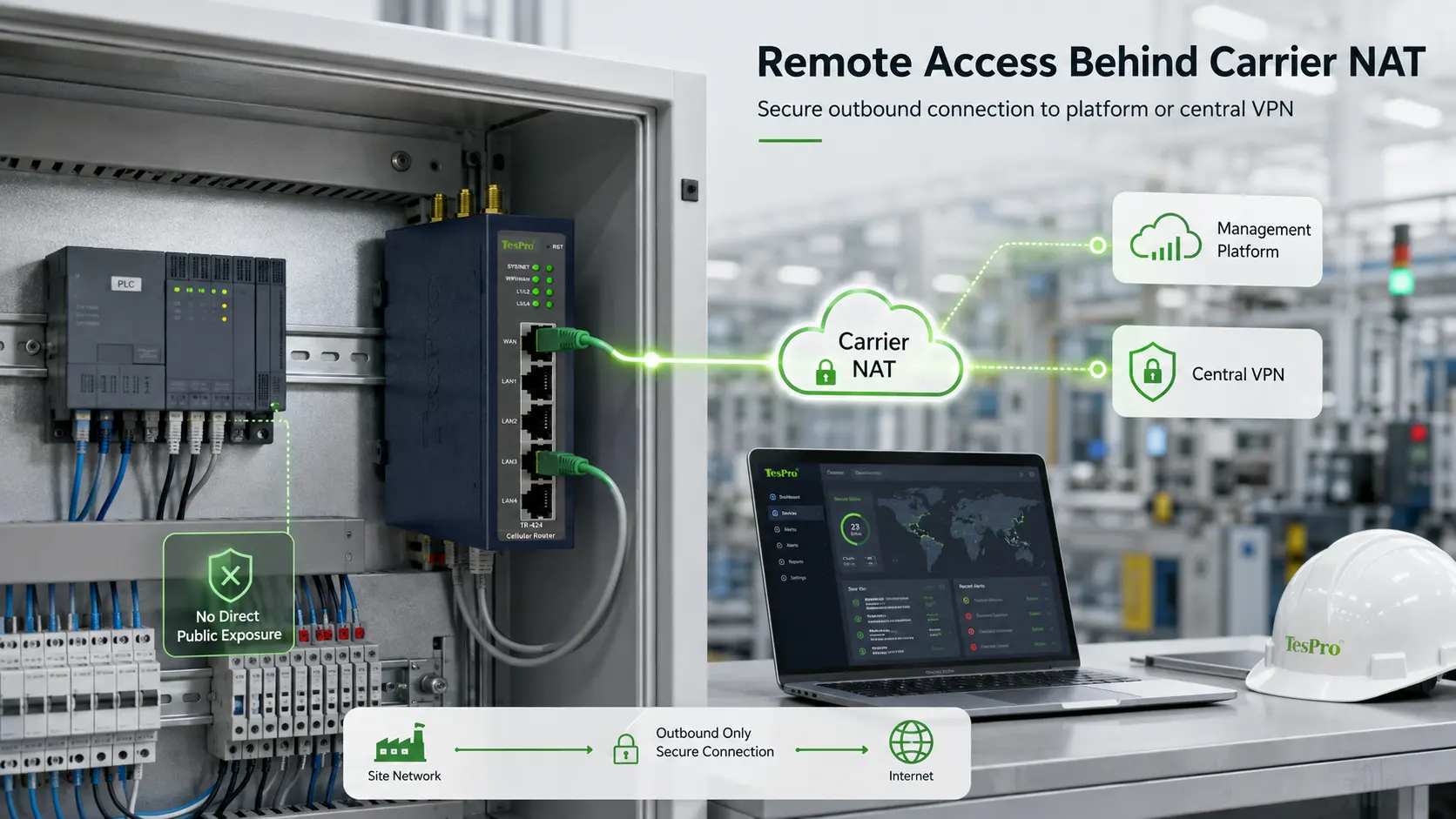

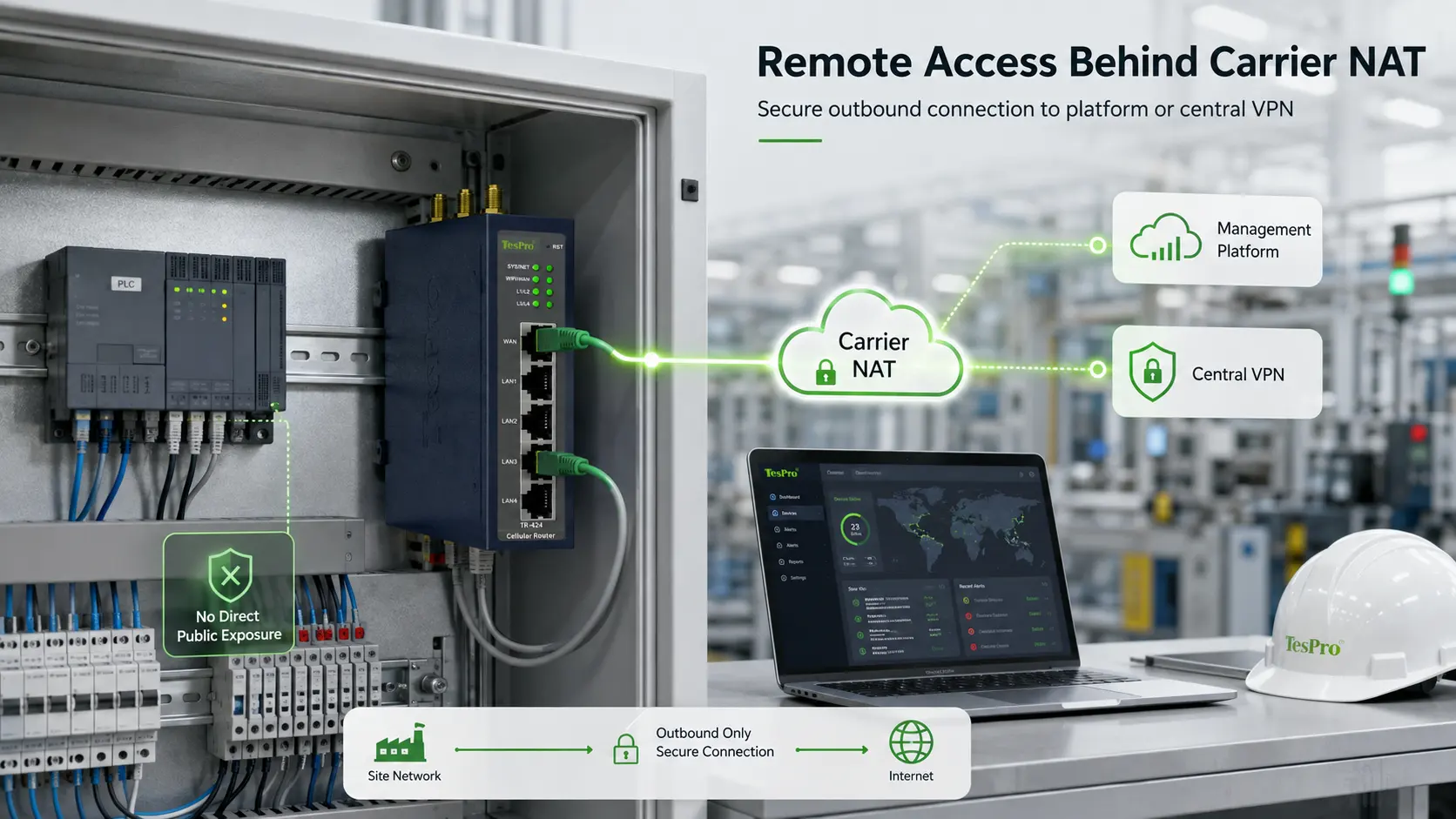
Behind carrier NAT, the site router can initiate a session to a management platform or central VPN. This avoids exposing the PLC directly to the public internet.
Key Takeaways
- Outbound-initiated connectivity generally avoids a site public IP
- Separate device management from operational data
- DNS, certificates and time synchronization affect tunnel stability
Start with the Application, Not the Model
Behind carrier NAT, the site router can initiate a session to a management platform or central VPN. This avoids exposing the PLC directly to the public internet. In a real project, outbound-initiated connectivity generally avoids a site public ip and separate device management from operational data must be considered in the same architecture. Begin with the workload, field devices and operating model rather than one marketing specification.
A Clear Deployment Approach
A practical sequence is to confirm carrier nat type and central server/vpn, then verify certificates and dns and user identity, and finally test dns, certificates and time synchronization affect tunnel stability with the real equipment. Record pass criteria so the design can be repeated across sites.
Operational and Maintenance Conditions
Controlling an on-site PC with remote desktop is only one method and does not replace network authorization and device identity. Public content and project documents should therefore state model, firmware, regional network, options and environmental conditions and avoid unverifiable claims such as 'works for every project' or 'absolute reliability'.
How Tespro Fits
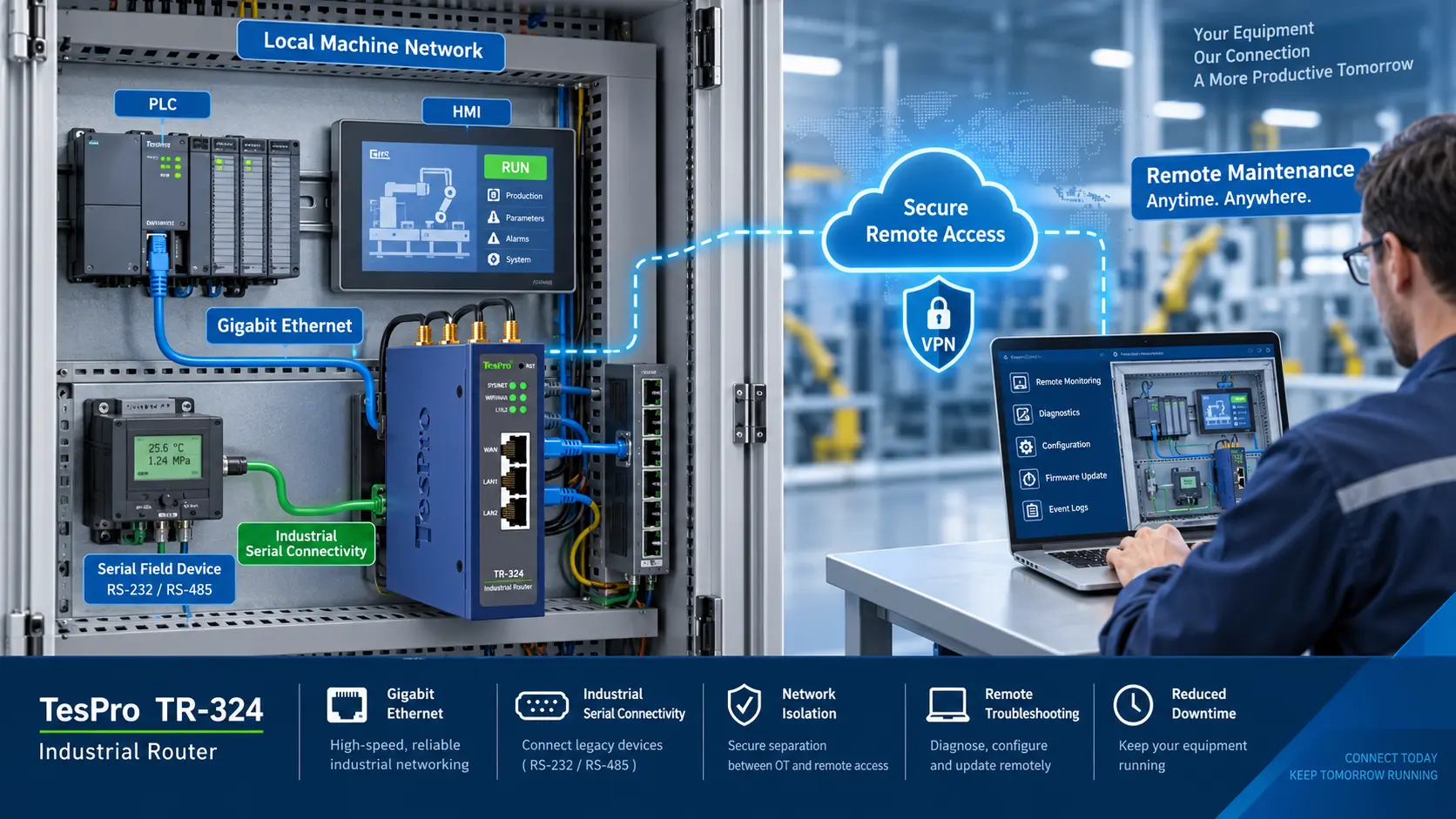
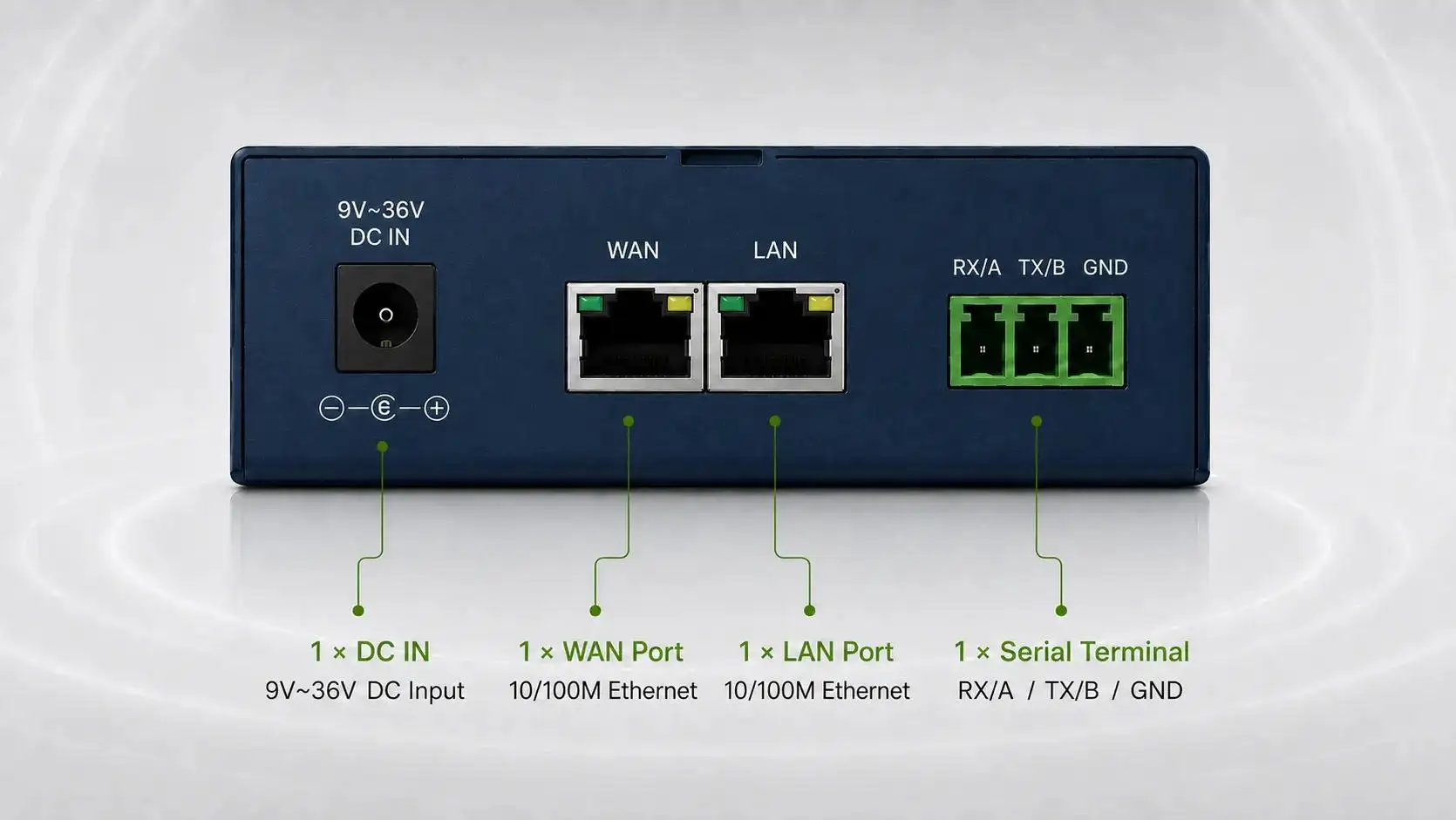
Tespro TR-400 Series can act as the industrial connectivity entry behind NAT, using VPN or TesproOS-related remote operations for controlled access. Availability depends on model and firmware.
Decision and Verification Table
| Decision factor | What to verify |
| Outbound-initiated connectivity generally avoids a site public IP | Confirm against carrier nat type and document pass/fail criteria in the pilot or site test. |
| Separate device management from operational data | Confirm against central server/vpn and document pass/fail criteria in the pilot or site test. |
| DNS, certificates and time synchronization affect tunnel stability | Confirm against certificates and dns and document pass/fail criteria in the pilot or site test. |
Compatibility and Selection Checklist
- ✓ Carrier NAT type
- ✓ Central server/VPN
- ✓ Certificates and DNS
- ✓ User identity
- ✓ Device subnet
- ✓ Reconnect requirement
Frequently Asked Questions
Q: Can a dynamic IP support remote maintenance?
A: Yes. The key is an outbound connection initiated and maintained by the site device.
Q: Is port forwarding required?
A: It is often unavailable under carrier NAT and direct exposure of industrial ports is not recommended.
Q: What is the difference between cloud management and VPN?
A: Cloud management focuses on device status and configuration, while VPN provides network-layer access; scope depends on platform and product.