-1791966549842.webp)






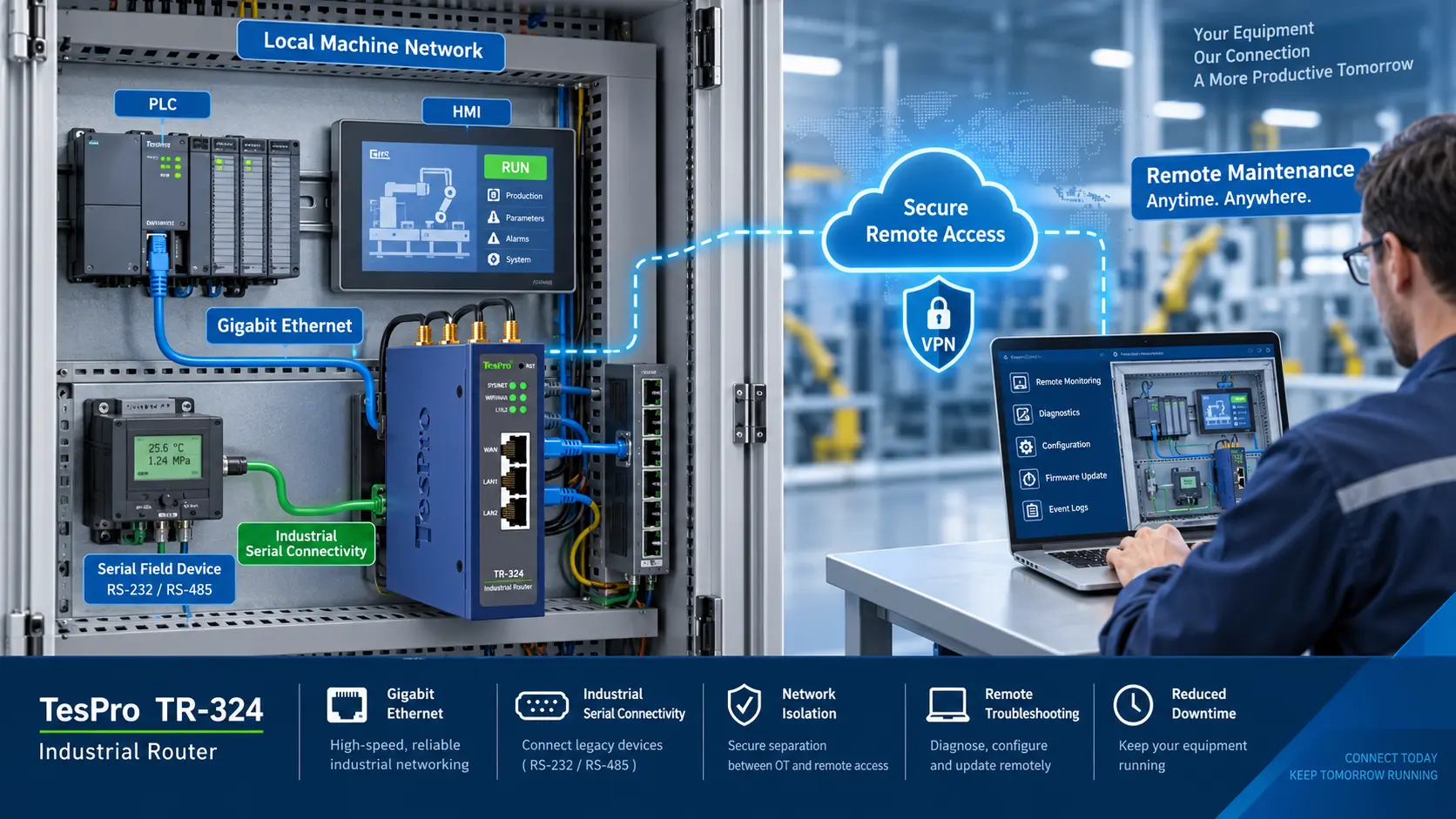
Green manufacturing relies on precise data, effective control, and iterative advancements. Unfortunately, there remain many manufacturing facilities with outdated machines and disconnected control systems utilizing disparate communication protocols. An Industrial IoT (Internet of Things) Gateway provides a solution by integrating tools linked to operational technology with systems related to energy management, cloud computing, and enterprise resource planning. It consolidates and standardizes data and provides some processing at the field location (the element of the system closest to the end-user). It sends data to higher-level platforms where more processing occurs.
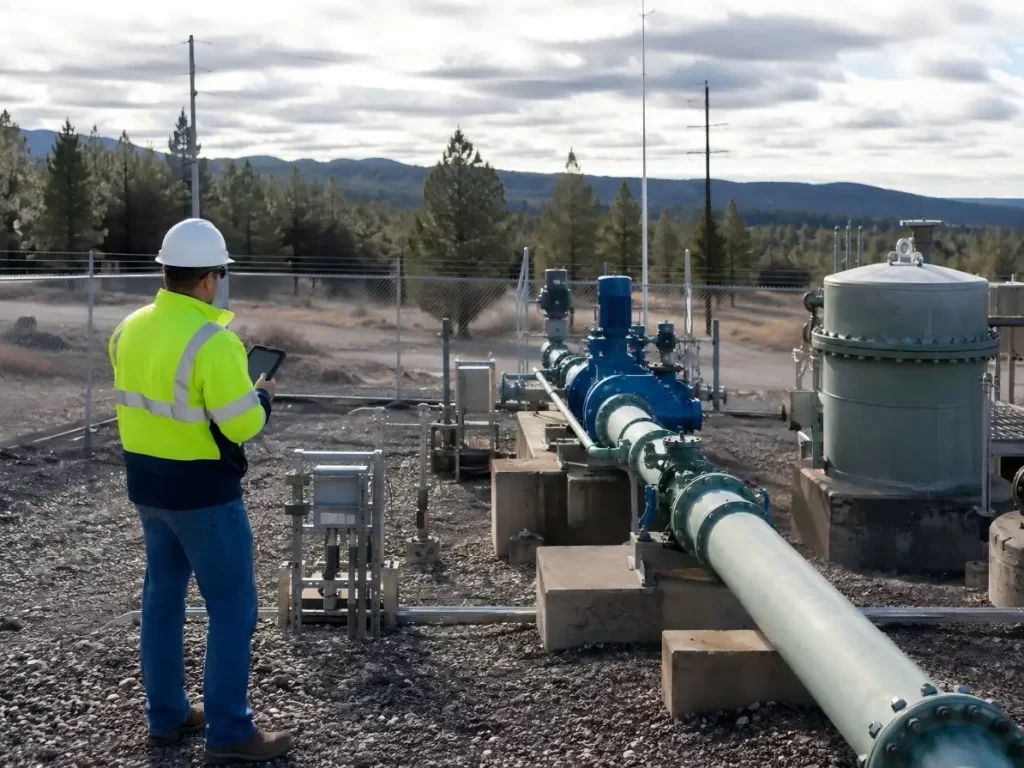
For energy monitoring and optimization of equipment and resource efficiency, an Industrial IoT Gateway offers a flexible, foundational, and implementable solution.
Why an Industrial IoT Gateway Matters for Sustainability
Factories cannot improve what they cannot measure. Electricity meters, flowmeters, HVAC controllers, PLCs, inverters, and environmental sensors may all use different interfaces and data formats.
An Industrial IoT Gateway offers the following integration opportunities to manufacturers:
• Monitor and collect data on electrical, water, gas, and thermal, and compressed air energy.
• Interface with legacy equipment without the required replacement of complete control systems.
• Harmonize data of disparate protocols and device types.
• Preprocess data by filtering and/or aggregating and/or analyzing prior to cloud upload.
• Generate alarms or automated control actions to halt or remove equipment when the defined limit is reached.
• Benchmark energy consumption of individual machines, entire production lines, or by shift or product.
An Industrial IoT Gateway does not consume less energy. It simply gives the control to see and measure where improvements and energy savings can be made.
How Edge Processing Helps Save Energy
Sending all data to the cloud can increase bandwidth and lead to latency on time sensitive tasks. An edge Industrial IoT Gateway can process data locally.
Some standard edge processing activities include the following:
• Converting meter data to standard engineering units.
• Estimating the hourly, work-shift, or production batch energy usage.
• Detecting the abnormal energy consumption/leak/idleness/demand spikes.
• Caching data and processing it after the communication is restored.
• Reporting important abnormal conditions and eliminating routine reporting.
• Processing rules locally for alarms or automatic load and equipment control when supported and validated.
Edge processing is especially useful in environments with intermittent connectivity or where very fast responses to changing conditions are required.
How Tespro TG-224 Supports Energy Monitoring and Industrial IoT Integration
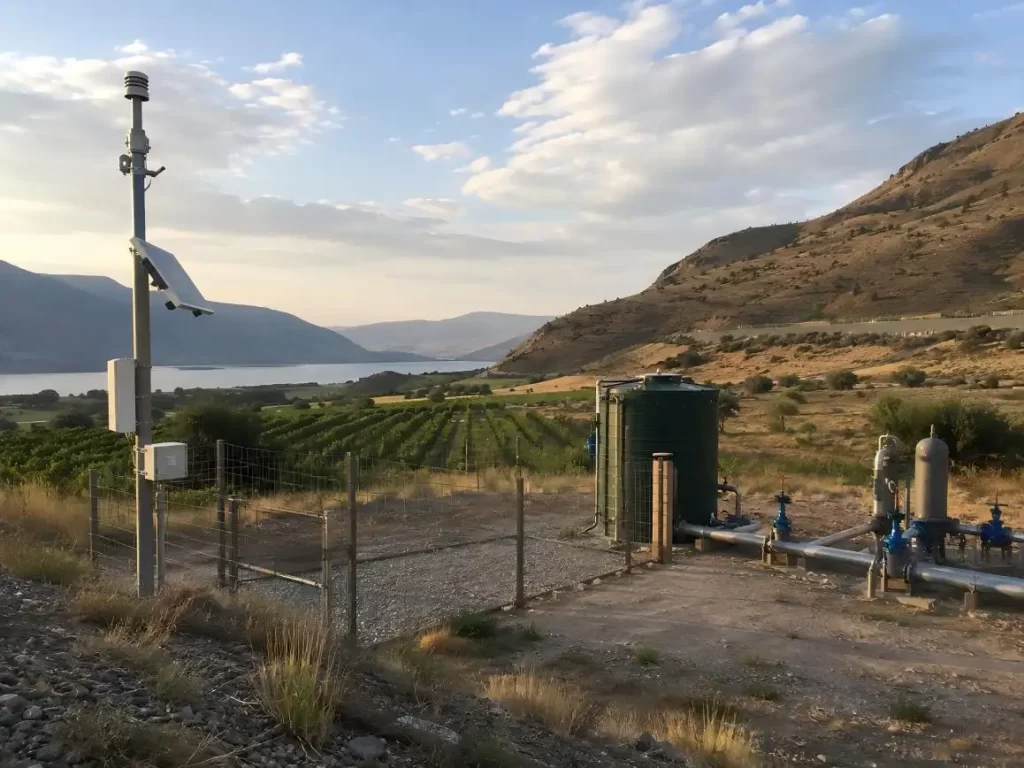
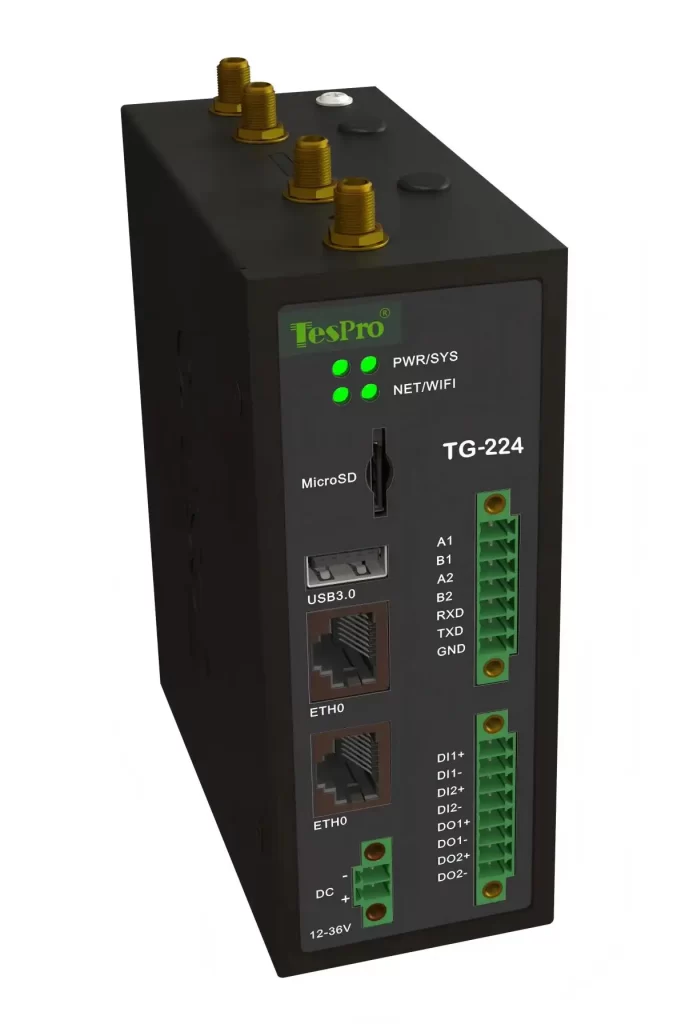
The Tespro TG-224 Industrial IoT Gateway gives manufacturers the tools to convert equipment data and gain important insights into energy data.
With cellular, Ethernet, RS485, and RS232 connectivity, this technology provides direct connections to meters, PLCs, sensors, drives, and legacy equipment. Factories can track the status of electricity, water, gas, and compressed air, as well as the status of machinery without having to replace their current assets to lower the cost of modernization and prolong the active service of their equipment.
The TG-224's OpenWrt/LEDE foundation allows for development in C/C++, Python, Go, and Lua. With regard to energy data, local processing can lead to:
• Reading aggregation for multiple meters
• Discovery of abnormal or unexpected usage
• Calculation of usage for a defined time or purpose, e.g. a production batch
• Automated alerts to notify users of active or continuous violations of usage thresholds
• Minimization of data sent to the cloud by eliminating unnecessary data
The TG-224 includes a wide operating temperature range and an abundance of interfaces, to help meet the data processing and control needs of energy management, and help enable the processes of modern green manufacturing. The TG-224 seeks to continually improve manufacturing by eliminating waste.
Applications of Green Manufacturing
1. Monitoring Energy Use In Factories
An Industrial IoT Gateway can communicate with power, water, and gas meters. It then sends the formatted data to the application for energy management.
With the application, manufacturers can pinpoint:
• Periods of Peak-demand
• Production lines with the highest energy consumption
• Energy consumption during time periods with no production
• Unusual consumption post machine maintenance
• The gap of planned vs. actual consumption of energy intensity.
The resultant data can assist with optimization of production schedules, enhancement of equipment, and establishing energy-performance baselines.
2. Optimization of Compressed-Air Systems
Loss of energy in compressed-air systems can be attributed to leaks, excessive use of compressed air, and use of compressed air at higher than required pressure.
Using an industrial IoT gateway and energy-management system, data on pressure, flow, and power of compressors can be used to identify the consumption patterns. Local rules can be used to set limits and if the limit is breached, can support alarms or approved control logic.
3. Management of Buildings and HVAC
An Industrial IoT Gateway can enable:
• Operating schedules that are based on occupancy
• Optimization of temperature and ventilation
• Monitoring of the HVAC system's energy performance
• Detection of faults and abnormal energy loads
When integrating existing building automation systems, special care needs to be taken to ensure the systems speak compatible protocols.
4. Solar, Storage, and Microgrid Monitoring
The gateway can collect data from solar inverters, battery systems, weather stations, and grid meters.
Edge calculations can support local visualization, alarm management, and operating decisions intended to increase onsite renewable-energy consumption. Advanced power balancing should remain under an appropriately designed energy-management or microgrid control system.
5. Remote Utility and Environmental Assets
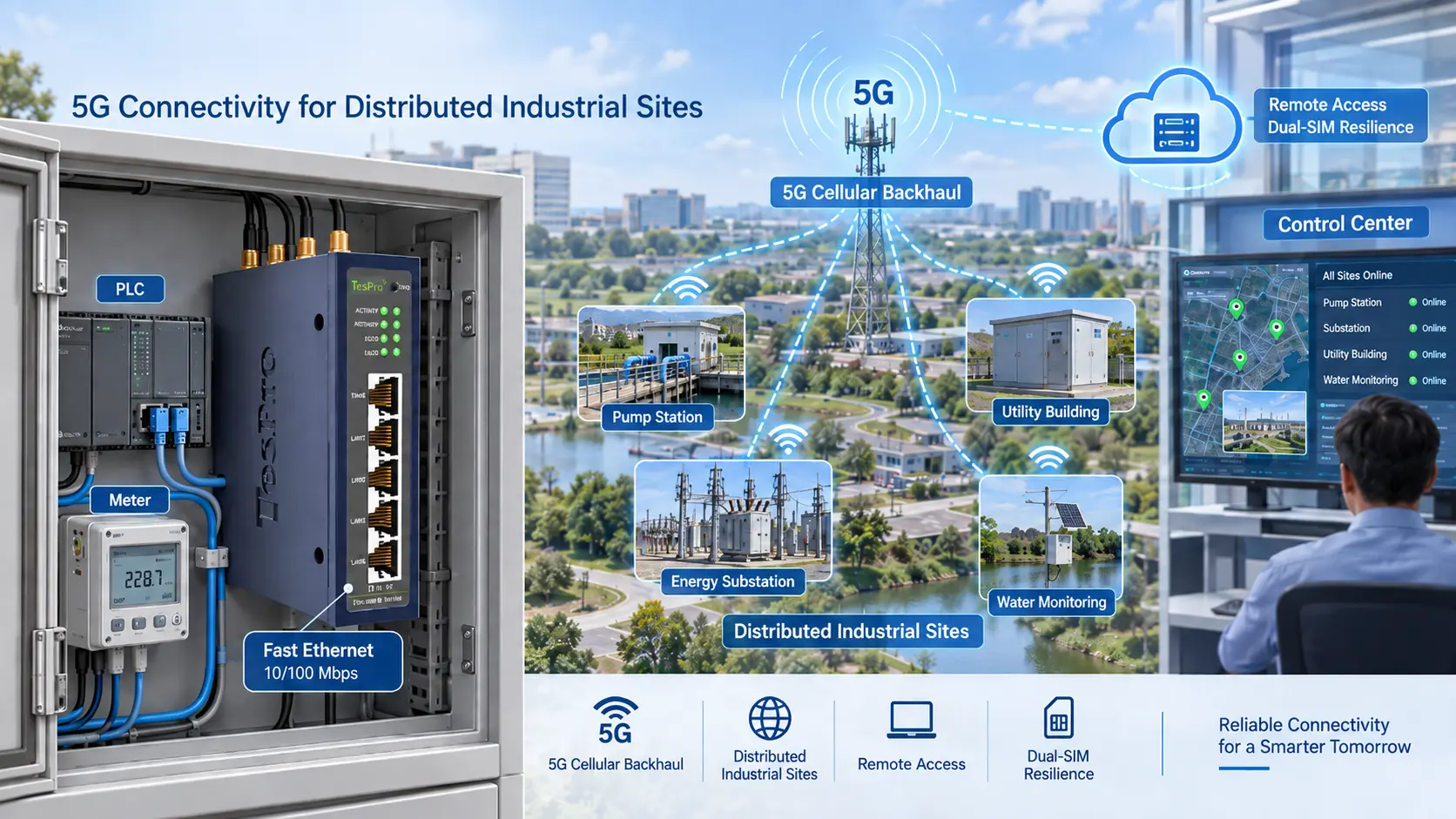
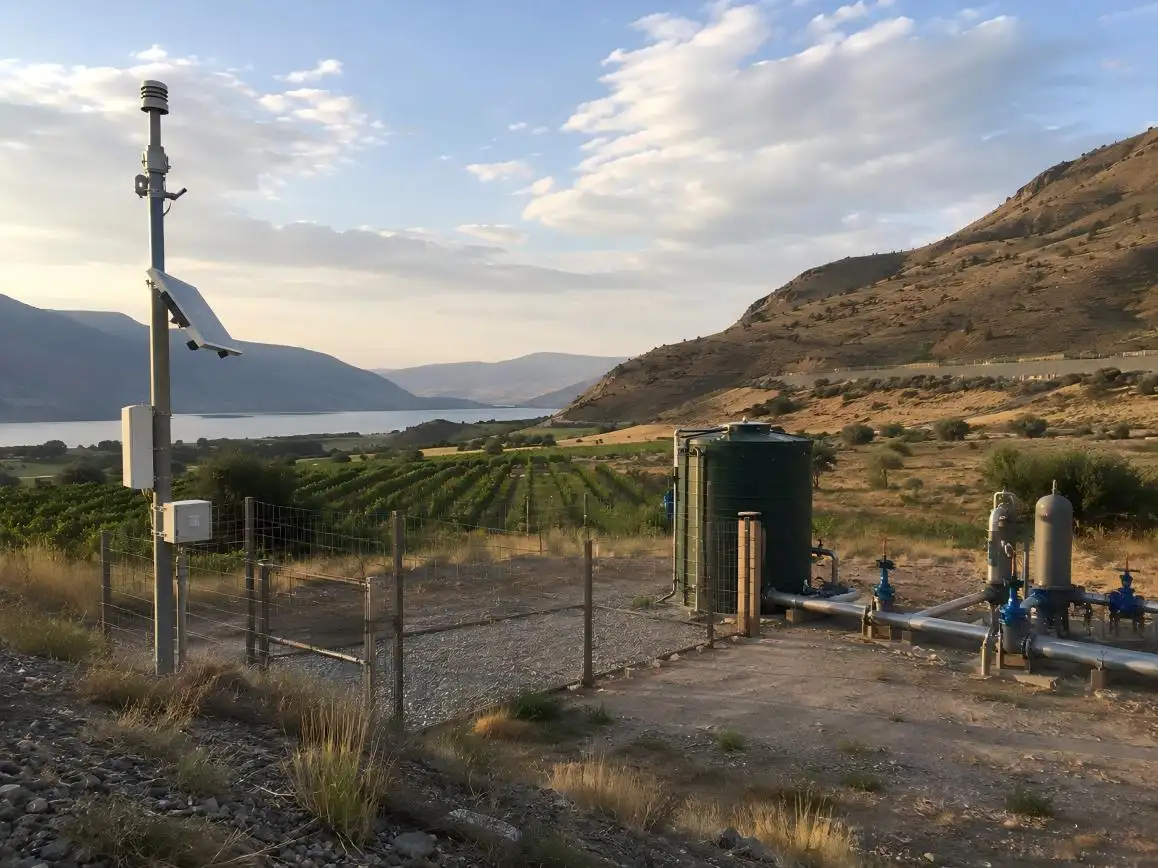
Cellular connectivity allows an Industrial IoT Gateway to support distributed pump stations, agricultural facilities, environmental monitors, and remote energy assets.
Data buffering and local processing help maintain monitoring continuity when network quality varies.
Industrial IoT Gateway Deployment Best Practices
To gain practical value from an Industrial IoT Gateway:
• Define energy KPIs before selecting devices and sampling intervals
• Verify electrical interfaces, protocols, register maps, and data units
• Position the gateway close to groups of meters and controllers
• Use edge processing for time-sensitive data handling where supported
• Segment OT networks and apply authentication, encryption, and access control
• Validate alarms and automated actions before enabling closed-loop control
• Measure results against a documented baseline rather than estimated savings
Final Words
An Industrial IoT Gateway is an enabling component of green manufacturing—not a standalone energy-saving solution. Its value comes from connecting fragmented equipment, improving data quality, supporting edge analysis, and enabling timely operational decisions.
With industrial interfaces, cellular connectivity, and an open development environment, the Tespro TG-224 illustrates how an Industrial IoT Gateway can support energy monitoring and resource optimization across factories, buildings, renewable-energy systems, and remote facilities.
The strongest results come from combining reliable gateway hardware with clear KPIs, secure system integration, and continuous performance review.
FAQs
Q1. How does edge computing positively impact energy efficiency?
Edge computing can reduce unnecessary data transmission and help detect inefficient operation earlier.
Q2. Is energy consumption measurement possible using the TG-224?
Yes. It is capable of interfacing with and collecting data from compatible electricity, water, and gas and liquid flow meters.
Q3. Does the gateway cut energy use by itself?
No. It provides data visibility and integration capability that help users identify optimization opportunities.
Q4. Are the TG-224's functionalities available in extreme conditions?
Yes. It can function in environments with temperatures between −40°C to +75°C.
Q5. What are the programming language options for the TG-224?
It provides the option to program in C/C++, Python, Go and Lua.