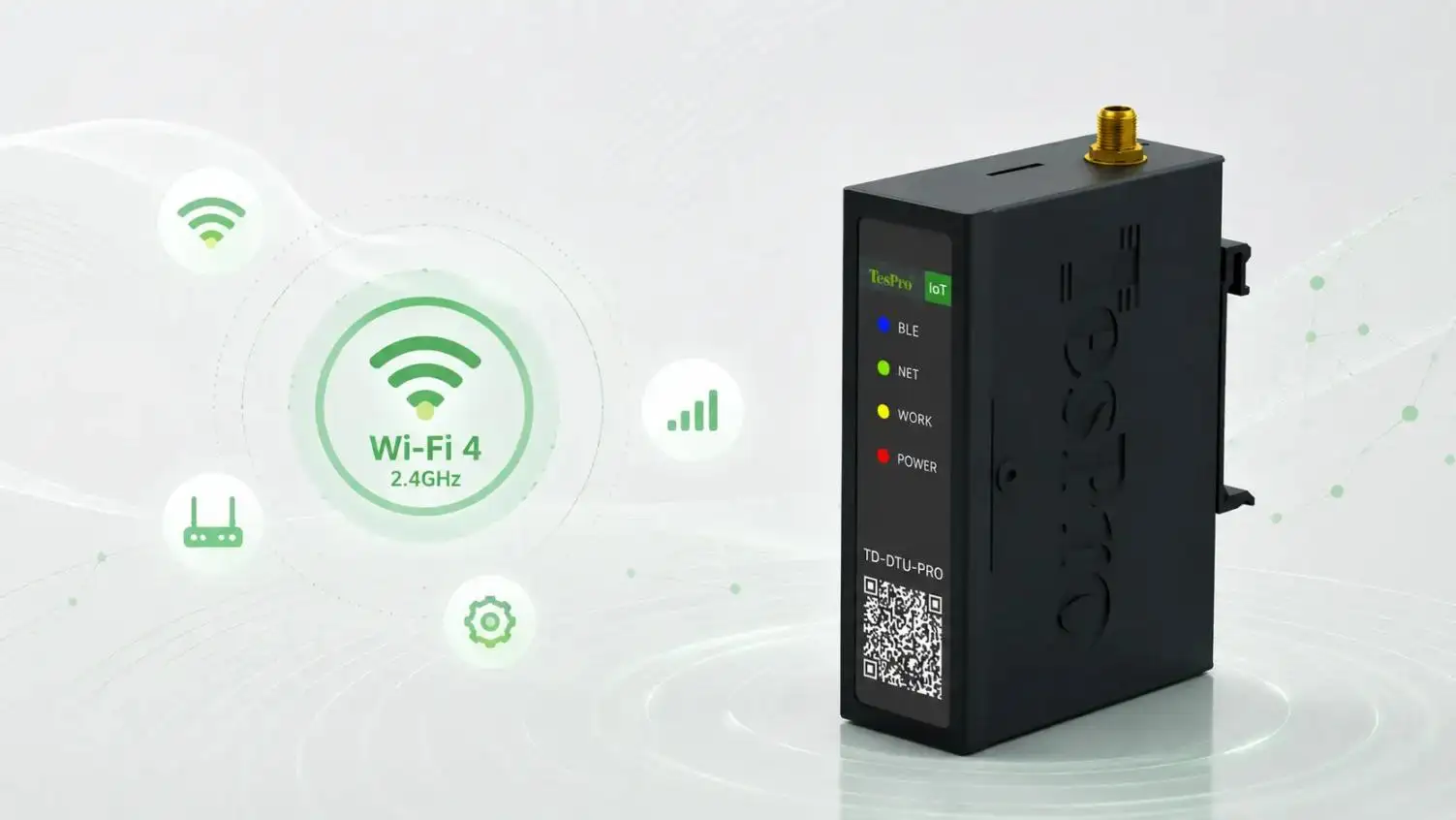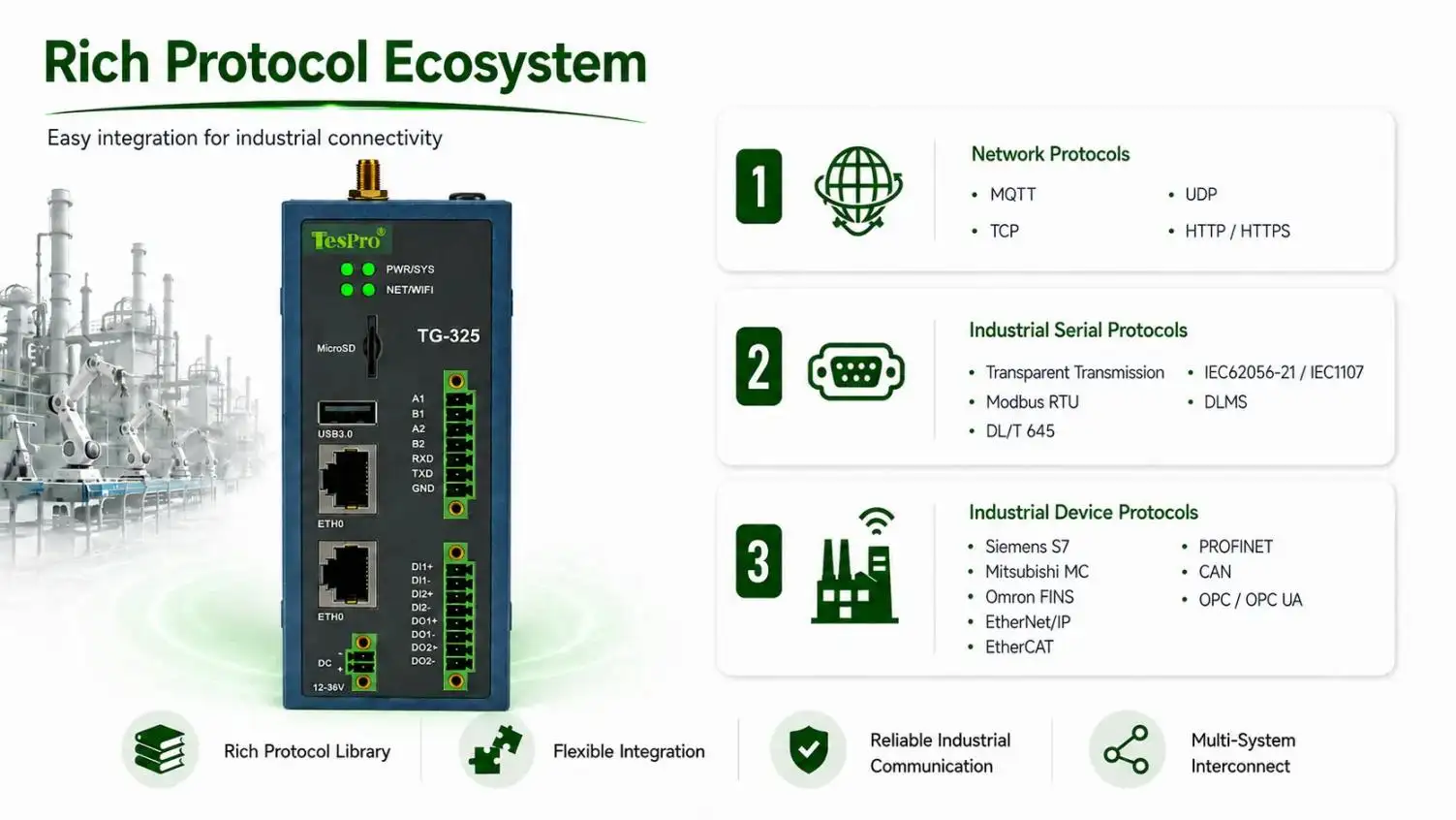



An Industrial IoT Gateway for Smart Factory Data Integration connects PLCs, sensors, energy meters, drives and legacy machines with SCADA, MES, ERP and cloud platforms. Unlike a basic router, it does more than forward network traffic: it acquires field data, translates industrial protocols, standardizes data structures, performs edge processing and securely publishes usable information to higher-level systems.
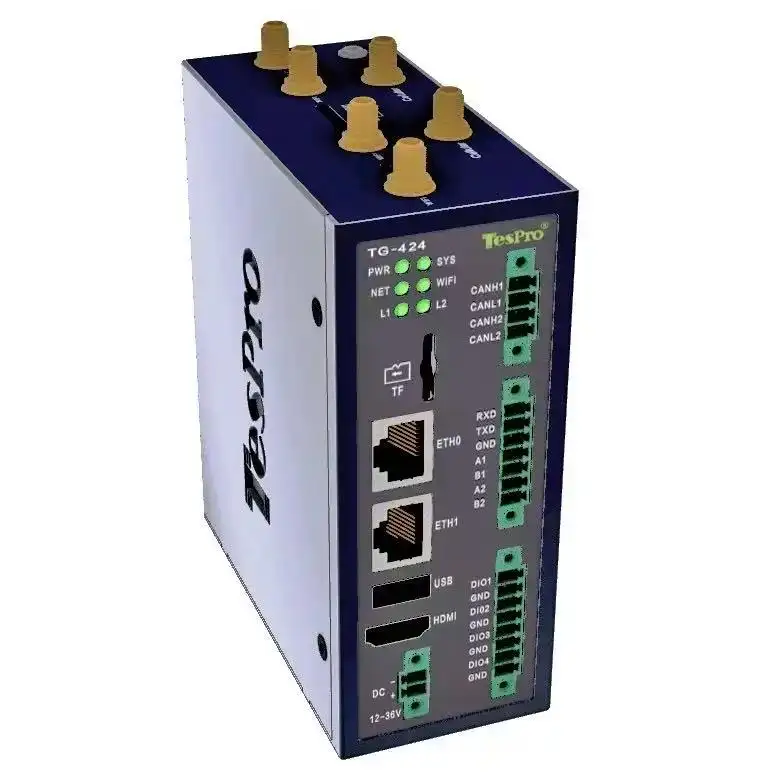
From Tespro's engineering perspective, successful integration begins with the complete data path—not simply with the number of protocols listed on a datasheet.
Why Smart Factory Data Remains Fragmented
Many factories operate equipment installed across different technology generations. A single production line may include an RS485 energy meter, a proprietary PLC, an Ethernet-connected CNC machine and sensors with digital outputs.
Typical integration barriers include:
• Different physical interfaces and electrical characteristics
• Incompatible PLC and fieldbus protocols
• Inconsistent tag names, units and data types
• Different register addresses and byte orders
• Unstable cellular or wireless connections
• Excessive raw data sent to the cloud
• Limited visibility into remotely deployed equipment
An Industrial IoT Gateway for Smart Factory Data Integration creates a controlled layer between these heterogeneous assets and the applications that consume their data.
Router, Protocol Converter or Industrial IoT Gateway?
These devices solve different engineering problems and should not be treated as interchangeable.
| Device | Primary Role | Protocol Translation | Local Data Processing | Remote Management |
| Industrial router | IP network connectivity | Limited | Limited | Network-focused |
| Protocol converter | Point-to-point protocol conversion | Yes | Basic | Usually limited |
| Industrial PC | Application-level computing | Software-dependent | Strong | Software-dependent |
| Industrial IoT gateway | Device-to-platform data integration | Yes | Yes | Integrated |
A router is appropriate when machines already communicate using compatible IP protocols. A protocol converter may be sufficient for a fixed one-to-one conversion. An industrial IoT gateway becomes more valuable when multiple device types, data formats, network paths and destination platforms must be managed together.
Four-Layer Smart Factory Integration Architecture
A professional Industrial IoT Gateway for Smart Factory Data Integration architecture normally contains four layers.
1. Field Device Layer
This layer includes PLCs, meters, sensors, variable-frequency drives, CNC machines and environmental controllers. Before gateway selection, the project team should document:
• Equipment manufacturer and exact model
• RS232, RS485, Ethernet or GPIO requirements
• Protocol version and register map
• Number of tags and required polling interval
• Read-only versus read/write requirements
Protocol support alone does not confirm compatibility. Proprietary register definitions and vendor-specific implementations must also be verified.
2. Data Acquisition Layer
The gateway polls or receives field data and converts raw values into usable variables. Reliable acquisition may require:
• INT, UINT, Float, HEX or ASCII decoding
• Signed and unsigned value handling
• ABCD, DCBA, CDAB or BADC byte-order conversion
• Scaling factors and engineering-unit conversion
• Communication timeout and retry settings
• Timestamp and data-quality assignment
This data-engineering stage prevents incorrect values from entering MES, energy-management or analytics systems.
3. Edge Processing Layer
Not all values from machines should be constantly sent to the cloud. The gateway can process some data as specified below.
• Dead-band filtering
• Data aggregation
• Threshold and alarm evaluation
• Event-based reporting
• Temporary storage during network interruption
• Local calculations and format conversion
An example is a vibration sensor which can produce a lot of readings in a short period of time. However, the cloud application is only concerned with the statistical values and alarm events. Edge processing in this case would be useful to remove the unnecessary traffic without removing the operational context.
4. Application Integration Layer
Normalized data can be published to SCADA, MES, ERP or cloud platforms through MQTT, OPC UA, HTTP(S) or APIs. A well-designed data model should preserve:
• Device identity
• Tag name and value
• Engineering unit
• Timestamp
• Data-quality status
• Production line or asset hierarchy
Key Gateway Sizing and Selection Criteria
Selecting an Industrial IoT Gateway for Smart Factory Data Integration requires more than comparing CPU speed.
| Engineering Dimension | Questions to Verify |
| Device capacity | How many devices and tags will one gateway collect? |
| Acquisition load | What polling intervals and timeout settings are required? |
| Interfaces | Are sufficient isolated serial, Ethernet and I/O ports available? |
| Protocols | Are both field protocols and northbound protocols supported? |
| Edge workload | Is filtering, scripting, buffering or local alarm evaluation required? |
| Network design | Will Ethernet, Wi-Fi, cellular or automatic failover be used? |
| Security | Are VPN, VLAN, certificate and role-based controls required? |
| Environment | What are the temperature, power, vibration and mounting conditions? |
| Lifecycle | Can logs, configurations and firmware be managed remotely? |
Engineers should also consider serial-bus loading. Devices sharing an RS485 bus must use compatible baud rates and addressing, while polling cycles must leave sufficient time for device response, retry and timeout handling.
OT Security and Network Reliability
Because the gateway connects production assets to IT or cloud systems, it should be deployed as part of an IEC 62443-style zone-and-conduit architecture.
Recommended controls include:
• Separate OT assets from enterprise networks using VLANs
• Allow only required device and platform traffic
• Use VPN tunnels for remote connections
• Apply certificate-based authentication where supported
• Restrict Web UI, CLI and SSH access
• Disable unused services and management ports
• Maintain configuration backups and event logs
• Test automatic reconnection after WAN failure
The gateway should not expose PLC ports directly to the public internet. Remote engineering access and routine telemetry should also use separate security policies.
Tespro TG-424 for Industrial Data Integration
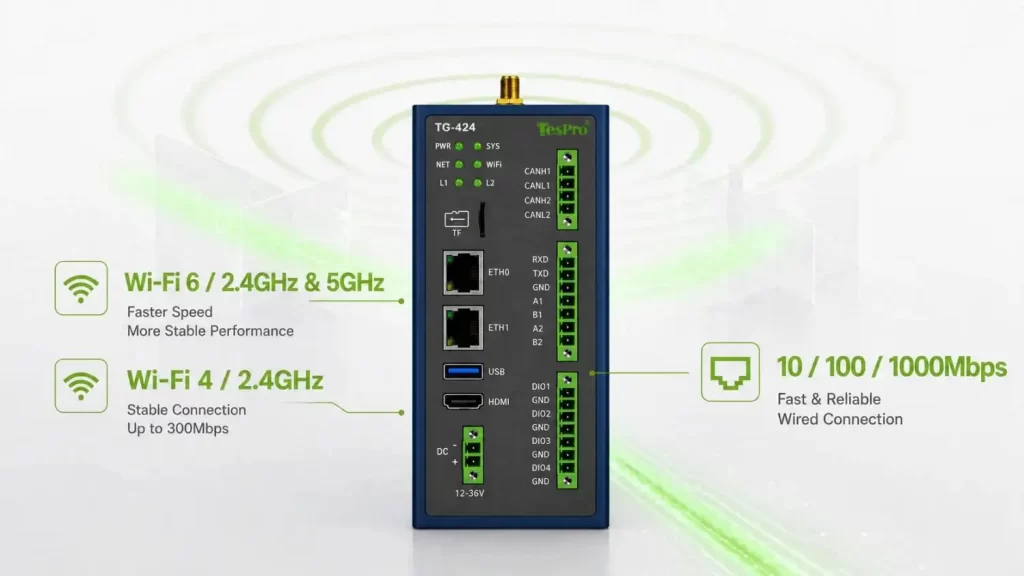
Tespro developed the TG-424 around the practical requirements of distributed industrial installations. Its hardware interfaces include:
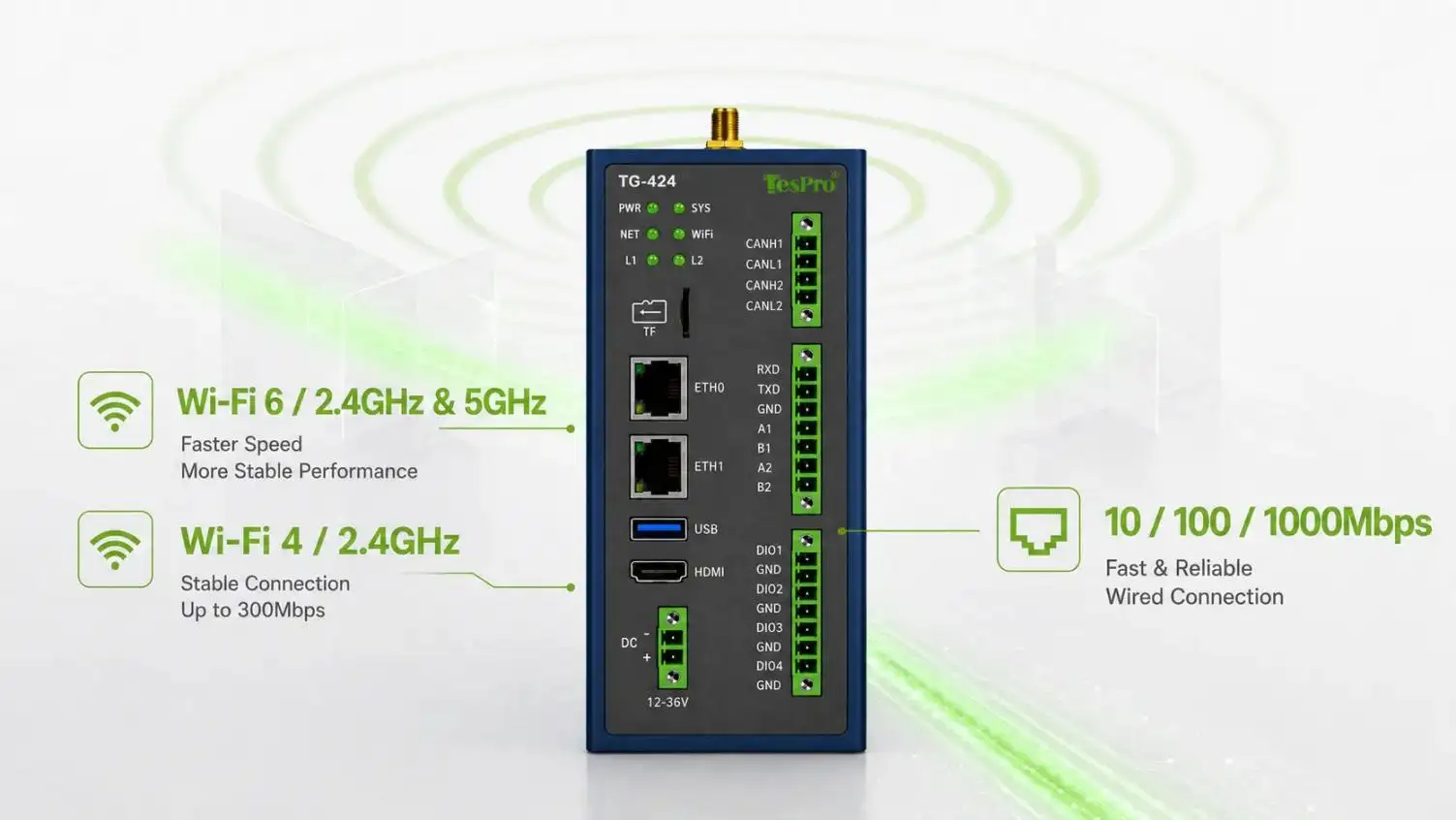
• 1 × RS232 and 2 × RS485 with 3 kV isolation
• 4 × configurable DI/DO interfaces
• 2 × 10/100/1000 Mbps Ethernet ports
• 4G LTE with dual SIM or dual eSIM options
• Wi-Fi 4 and dual-band Wi-Fi 6
• 12–36 VDC input with reverse-polarity protection
For protocol and data integration, the TG-424 supports Modbus RTU, Modbus TCP, BACnet, OPC UA and other industrial protocols. Northbound connectivity includes MQTT, HTTP(S), Azure MQTT and Web API. Lua scripting, custom register handling, multiple data types and byte-order conversion support more application-specific integration.
TesproOS provides web-based configuration, device-status monitoring, batch parameter management, log diagnostics and remote firmware upgrades. VPN options, VLAN isolation, firewall rules, certificates and access controls support secure OT-to-IT communication.
The fanless metal enclosure, DIN-rail or wall mounting, IP30 protection and specified −40°C to +75°C operating range are intended for industrial cabinets and distributed sites. CE, RoHS, EMC, shock and vibration specifications further support structured project qualification. Configuration-dependent functions should always be confirmed before deployment through the Tespro Industrial AI Gateway page.
Deployment and Acceptance Testing
A reliable rollout should follow a controlled sequence:
- Inventory devices, interfaces, protocols and data points.
- Define the MES, SCADA or cloud data model.
- Build a proof of concept using actual equipment.
- Test polling load, latency, data accuracy and byte order.
- Validate buffering, reconnection and power-loss recovery.
- Apply network segmentation and access policies.
- Create a standard configuration before batch deployment.
Acceptance criteria should include acquisition success rate, data completeness, end-to-end latency, reconnection time, resource utilization and remote-upgrade success.
Conclusion
The right Industrial IoT Gateway for Smart Factory Data Integration must fit the factory's physical interfaces, protocol stack, data model, edge workload, cybersecurity architecture and maintenance strategy.
Companies evaluating a smart factory project can share their device list, register documentation, tag volume, polling requirements and target platform with Tespro. The Tespro team can then assess protocol compatibility and determine whether the TG-424 Industrial AI Gateway is suitable for the intended integration architecture.
FAQs
Q1. What is the Tespro TG-424 Industrial IoT Gateway?
The TG-424 is an industrial edge gateway designed to collect data from PLCs, meters, sensors and legacy equipment. It supports protocol conversion, local data processing and secure transmission to SCADA, MES or cloud platforms.
Q2. Which physical interfaces does the TG-424 provide?
The TG-424 includes one RS232 port, two RS485 ports with 3 kV isolation, four configurable DI/DO interfaces and two 10/100/1000 Mbps Ethernet ports. This interface combination supports both legacy serial equipment and Ethernet-based industrial devices.
Q3. Which industrial protocols does the Tespro gateway support?
The gateway supports Modbus RTU, Modbus TCP, BACnet, OPC UA, M-Bus and other industrial or energy-related protocols. Compatibility should be confirmed using the exact equipment model, protocol version and register documentation.
Q4. Can the TG-424 convert Modbus data to MQTT or OPC UA?
Yes. The TG-424 can collect Modbus RTU or Modbus TCP data and publish standardized information through MQTT, OPC UA, HTTP(S) or Web API. Data types, register addresses and byte order must be configured for the connected device.
Q5. Can the Tespro gateway process data locally?
Yes. It supports local protocol parsing, data conversion, filtering, storage, alarm evaluation and Lua scripting. Local processing can reduce unnecessary cloud traffic and maintain selected functions when the external network is unstable.