-1791966549842.webp)





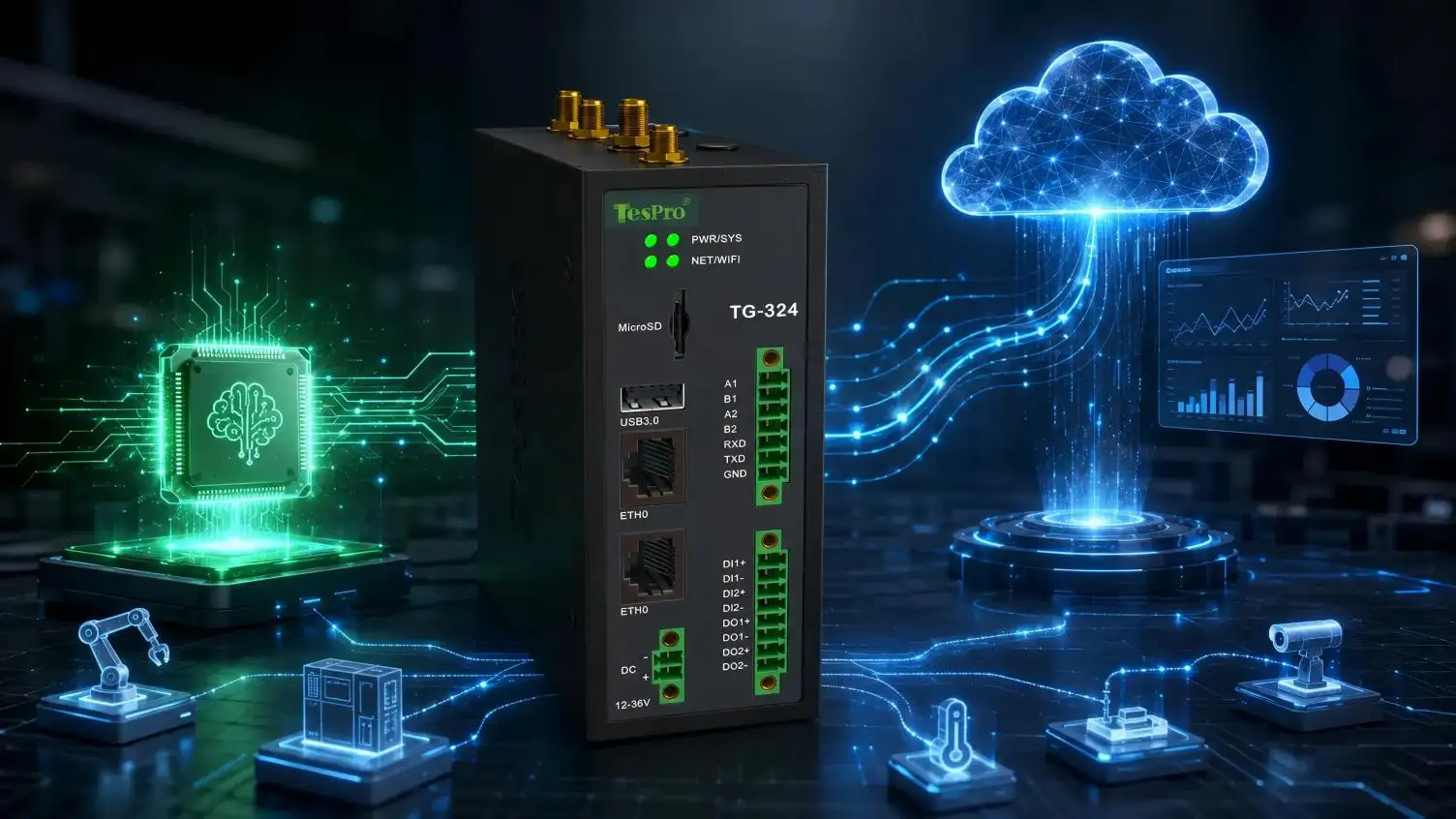

Industrial sites often combine legacy meters, PLCs, sensors, and modern IIoT devices. Moving their data to a cloud platform requires more than internet access. The system collects field data, normalizes industrial protocols, safeguards data in transit, and maintains operational reliability when the wide area network (WAN) connectivity is erratic.
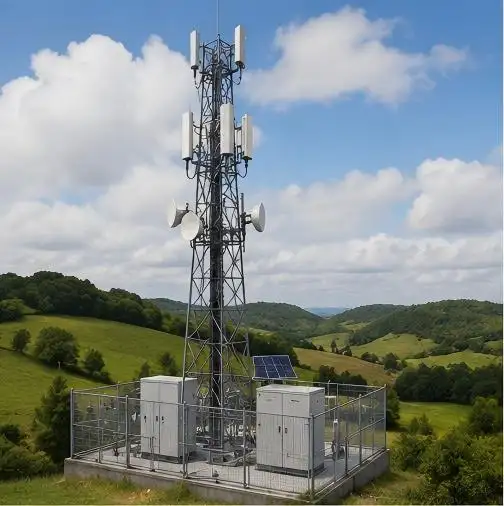
The Industrial Gateway with VPN Support is the integration layer that offers all these capabilities. It is positioned between the operational technology (OT) equipment and the cloud, and consolidates protocol adaptation, edge processing, secure connectivity, along with remote management, all within a single industrial device.
What Does an Industrial Gateway with VPN Support Do?
Typically, an Industrial Gateway with VPN Support has four main functions.
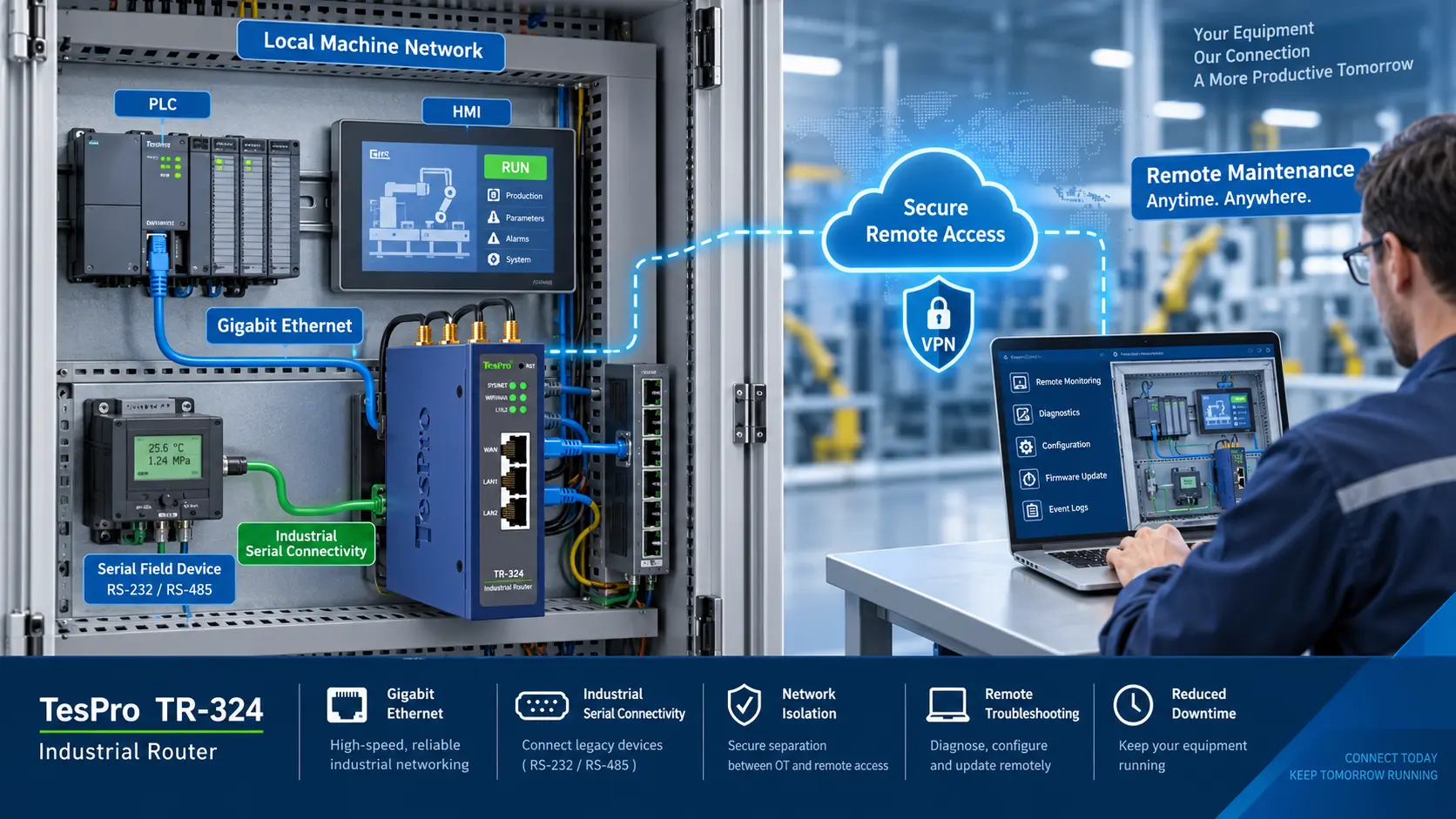
•Field Device Connectivity: This field level connectivity solution can interface with several devices like PLCs, Controllers and Meters over RS232, RS485 and Ethernet.
•Convert protocols: Translates field protocols such as Modbus RTU and TCP to services that can be used in the cloud such as MQTT, HTTPS, or OPC UA.
•Establishes a VPN tunnel to an approved corporate network, control center or cloud VPN server, where the selected gateway and firmware support the required VPN protocol
•Process data at the edge: While data is being transmitted, this can be selectively filtered, aggregated, or delayed, or a preliminary assessment can be carried out.
Despite the protective measures of a VPN, field devices are still vulnerable to exposure. A VPN does not eliminate the need for a firewall, rule enforcement, network segmentation, strong authentication, access control, and security monitoring.
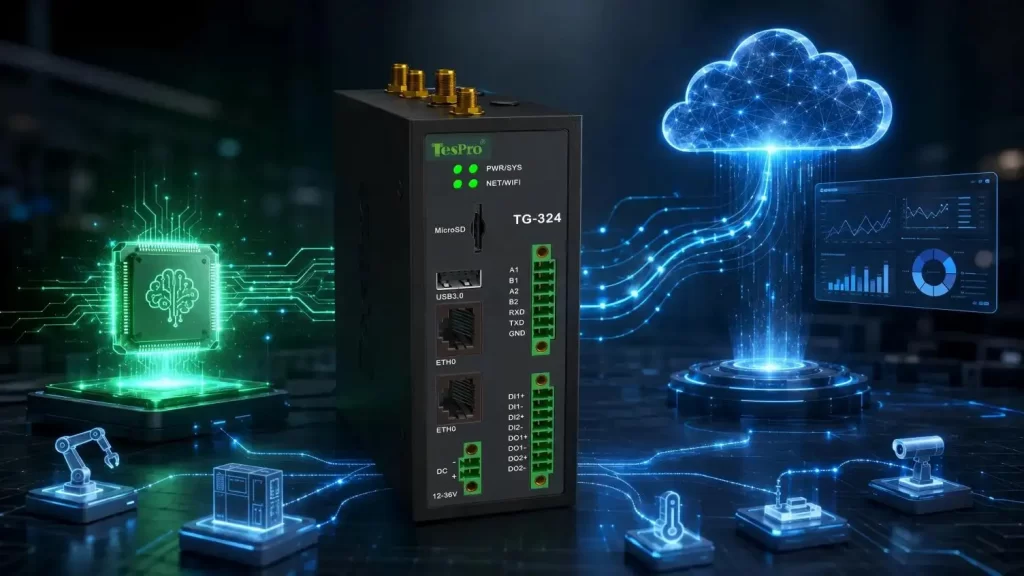
How Cloud Integration Works
1. Connect Field Equipment
The Industrial Gateway with VPN Support appears to connect local assets with cloud services over Ethernet or serial connections. This capability is of particular importance when working with legacy systems in brownfield plants where devices typically do not have the capability to connect with cloud services.
2. Normalize Industrial Data
The gateway interprets device registers or messages and translates them into a uniform data format. Based on the project, the data can be:
•Published to an MQTT broker
•Sent to the HTTPS API
•Exposed via OPC UA
•Forwarded to a SCADA or a server dedicated to energy management
For the selected gateway, firmware, and field device, ensure that the required protocols are supported.
3.Establish the VPN Tunnel
The gateway builds a tunnel which is authenticated to a remote endpoint that has been approved. The industrial architecture may utilize IPsec, OpenVPN, or a different VPN technology that is supported and may be flexible.
Considerations for selection of a VPN include:
•Policies and practices for customer cybersecurity
•Requirements for certificates and authentication
•Cloud vs. private server
•Design of routing and firewall
•Support of the gateway firmware
Not all models of a gateway support all VPN protocols by default. It is necessary to check the availability of the protocols, authentication methods, and the required firmware before deployment.
4. Data Delivery to Cloud
Once connected, the Industrial Gateway with VPN support sends telemetry, alarm and event data to the cloud.
The cloud can then offer:
•Operational dashboards
•Data analysis
•Energy or production
•Reports
•Maintenance analytics where the platform supports it
•Device monitoring
•Alarm management
Control of commands and configurations should be limited to the approved users and the approved paths.
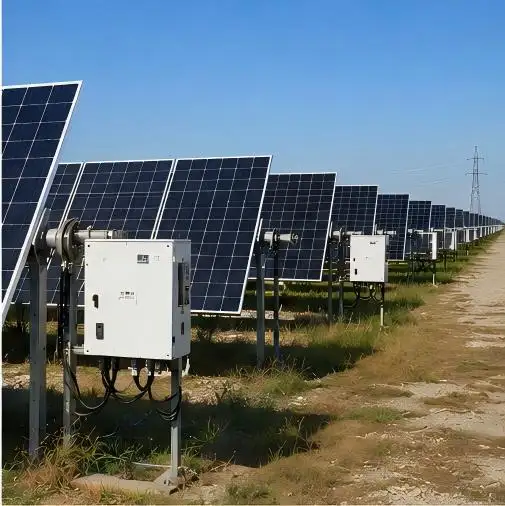
5. Keep Operations During WAN Failures
During temporary WAN interruptions, supported edge logic may continue local data collection, buffering or selected rules until connectivity is restored..
For the chosen hardware and software configuration, the buffer, retention time, and the store and forward behavior should be confirmed.
Advantages of Cloud-VPN Architecture
The Industrial Gateway with VPN support can create some advantageous solutions:
•Secured transport of site data to the cloud
•Retrofitting legacy serial devices
•Reduced routers and protocol converters
•Reduced cloud bandwidth with local filtering
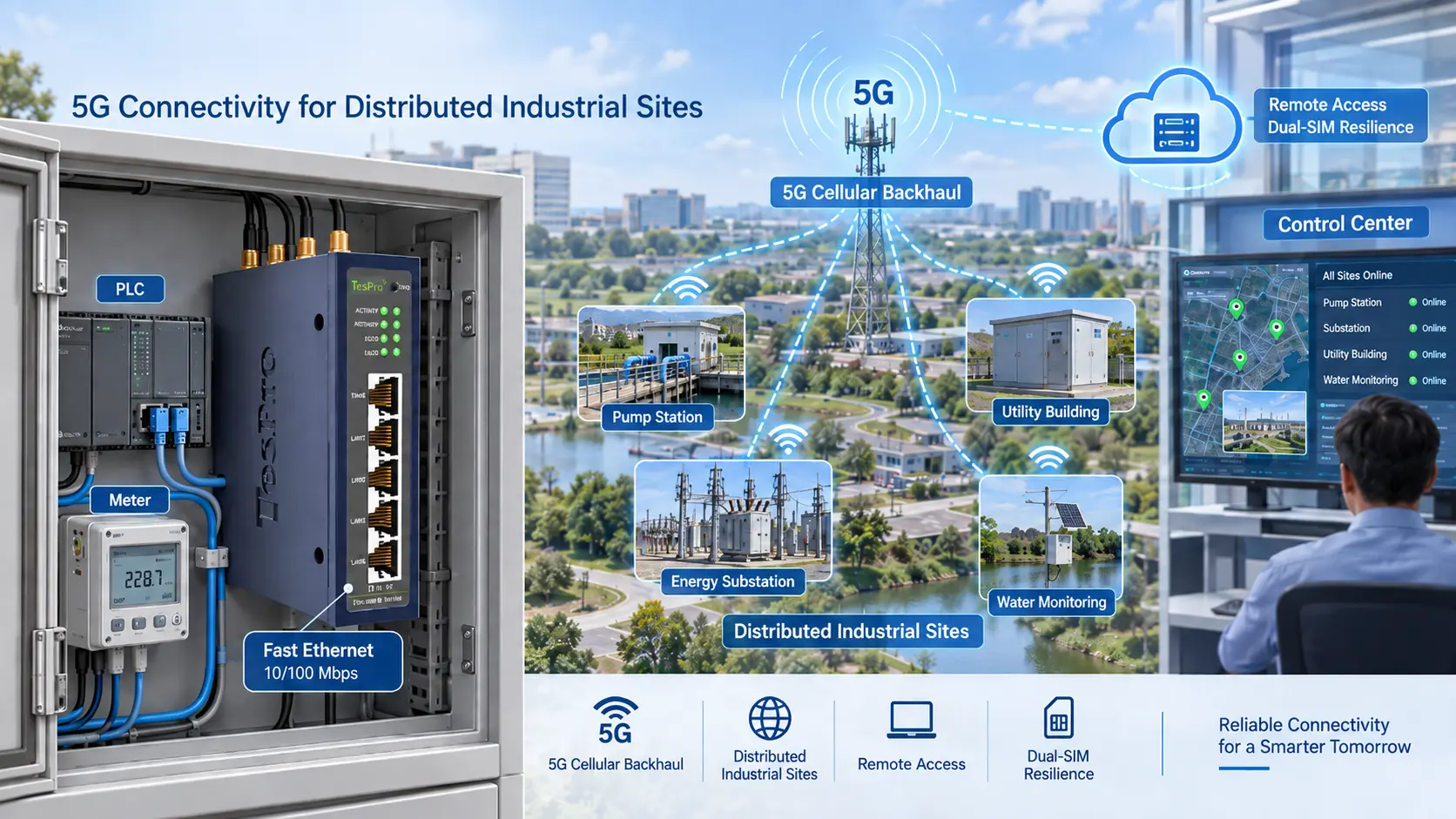
•Monitored remote sites
•Improved network interruption
•Secure remote access diagnostics and maintenance
•Improved multi-site installations
With the combination of Cloud-VPN, edge computing, and protocol handling, the Industrial Gateway decreases system complexity with the field devices and protects them from the internet.
How Tespro Supports Cloud Projects
Tespro's TG-324 industrial grade edge gateway is a 4G device for the collection, processing, and cloud transmission of industrial data.
Its hardware supports the following:
•2G, 3G and 4G cellular networks
•4 LAN ports, each Gigabit Ethernet
•2 RS485 ports, 1 RS232 port
•A 12-36 VDC power input
•-40 °C to +75 °C operating temperature
The TG-324 is designed to fit control cabinets and workshops in an industrial environment and utility sites where commercial networking products do not offer sufficient interfaces or fail to meet the required environment specifications.
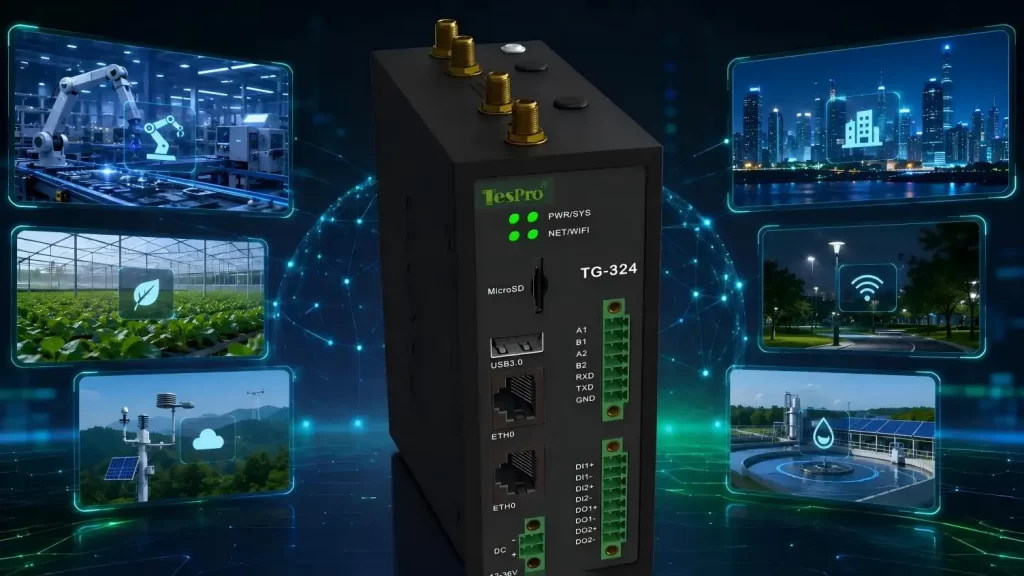
In a commercial campus, the TG-324 can interface with RS485, RS232, and Ethernet connected devices such as electricity and water meters, HVAC controllers and Environmental sensors.
The typical workflow is as follows:
•Local controllers and meters readings are collected by the TG-324.
•The gateway standardizes the disparate device interface protocols.
•Local edge policies define and synthesize the readings.
•Immediate notifications are generated by the defined thresholds.
•Only relevant data is sent over the 4G cellular network.
•Site-to-cloud transmission can be protected through VPN or other supported security methods when configured.
• The cloud platform displays dashboards, reports, and historical trends.
This architecture allows operators to retain existing field equipment while gaining centralized energy visibility, near-real-time alarms, historical consumption analysis, and lower cellular data usage.
Closing Words
An Industrial Gateway with VPN Support creates value by combining device connectivity, protocol handling, edge processing, secure transmission, and remote visibility within one industrial platform.
With 4G connectivity, four Gigabit LAN ports, multiple serial interfaces, industrial power input, and a wide operating temperature range, the Tespro TG-324 provides a practical foundation for cloud integration.
When its firmware, VPN architecture, device protocols, and cloud services are correctly matched to the project, it can help users lower retrofit costs, simplify deployment, reduce bandwidth consumption, and manage distributed industrial assets more efficiently.
FAQs
Q1. Does the TG-324 help with lowering cellular data costs?
Yes. With local filtering and data aggregation, the TG-324 can help reduce upstream cellular traffic through local filtering and aggregation where configured.
Q2. Does the TG-324 support connection to cloud services?
Yes. The TG-324 is capable of sending field data to supported cloud services or private cloud servers.
Q3. How many and what type of interfaces does the TG-324 have?
The TG-324 has 4 Gigabit Ethernet ports, 2 RS485 ports and 1 RS232 port.
Q4. Does the TG-324 help with connecting legacy devices?
Yes. The TG-324 has multiple serial interfaces to accommodate legacy meters, PLCs and controllers.
Q5. Is the TG-324 an edge computing device?
Yes. The TG-324 is capable of local data processing, filtering and aggregation, depending on the application.